Today is Kesley Grammer’s 69th birthday. In order to celebrate this event, here are three scenes from one of my favorite films, 2020’s Money Plane!
All of these scenes are short. They only last a handful of seconds. But all of them also feature Kelsey Grammer bringing the film to life as only he can.
And since I don’t do odd numbers, here’s a bonus clip of Frasier Crane reacting to Money Plane.
The 1999 film, Payback, opens with Porter (Mel Gibson) lying on a kitchen table while a grubby-looking doctor digs two bullets out of his back. The scene takes place in almost nauseating close-up, with the emphasis being put on the amount of pain that Porter endures to get rid of those bullets. Immediately, we know that Porter is not someone who can safely go to a regular hospital. Porter is someone who exists in the shadows of mainstream society.
He’s also someone who spends a lot of time getting beaten up. Even back when he was still a big star, Mel Gibson always seemed to spend a good deal of his films getting beaten up and tortured in various ways and that’s certainly the case with Payback. Porter gets punched. Porter gets shot. Porter has a encounter with an over-the-top dominatrix (played by Lucy Liu). At one point, Porter allows two of his toes to be smashed by a hammer, just so he can trick the his enemies into doing something dumb. As played by Gibson, Porter stumbles through the film and often looks like he’s coming down from a week-long bender. It’s interesting to think that Payback is a remake of 1967’s Point Blank, which starred Lee Marvin as Walker, an unflappable career criminal who never showed a hint of emotion or weakness. Porter, on the other hand, is visibly unstable and spends the entire film on the verge of a complete mental collapse. A lot of people try to kill Porter and Porter kills almost all of them without a moment’s hesitation.
(Of course, both Porter and Point Blank‘s Walker are versions of Parker, a career criminal who was at the center of several crime novels written by Donald “Richard Stark” Westlake.)
After helping to pull off a $140,000 heist from a Chinese triad, Porter was betrayed and left for dead by his former friend Val Resnick (Gregg Henry) and his wife, Lynn (Deborah Kara Unger). Porter, who just wants the $70,000 cut that he was promised, starts his quest for the money by tracking down Val and Lynn, and then continues it by going after the three bosses (played by William Devane, James Coburn, and Kris Kristofferson) of “The Outfit,” a shadowy organization that Val had gotten involved with. Along the way, Porter deals with a motely crew of corrupt cops, violent criminals, and sleazy middlemen. (David Paymer has a memorable bit as a low-level functionary with atrocious taste in suits.) Porter also hooks up with a prostitute named Rosie (Maria Bello), who might be the only person that he can actually trust.
I have mixed feelings about Payback. (So did director Brian Hegeland, who was reportedly fired towards the end of shooting and later released a far different director’s cut.) Though the film does a good job of capturing the visual style of a good neo-noir, the story itself is so violent and grim that it actually gets a little bit boring. The film’s advertising encouraged audiences to “Get ready to root for the bad guy,” but there’s really no reason to root for Porter. He’s an inarticulate and ruthless killer with no sense of humor. If anything, the people that he kills seem to be far more reasonable and likable than he does. In Point Blank, Lee Marvin may have been a bastard but he was good at what he did and you at least got the feeling that he wouldn’t go after any innocent bystanders. In Payback, Porter is such a mess that his continued survival is largely due to dumb luck. It’s hard to root for an idiot.
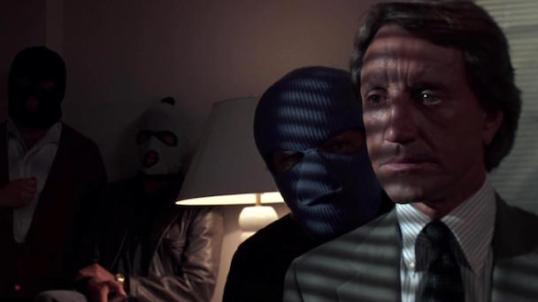
That said, the film does do a good job of capturing the feeling of people living on the fringes of society. The Outfit is not a typical Mafia family but instead, a collection of businessmen who work out of nice offices and, in the case of William Devane’s Carter, come across as being more of a senior executive than a crime boss. (James Coburn and Kris Kristofferson, meanwhile, come across as being two former hippies who made it rich on Wall Street. They’re elderly versions of Abbie Hoffman and Jerry Rubin.) The film does a good job of creating a world where no one trusts anyone and everyone is being watched by someone. In one memorable scene, the three men sent to watch for Porter discover that he’s been watching them the entire time. Never forget to look over your shoulder to see who might be following.
Flaws and all, this 1999 film does a good job of capturing the atmosphere of paranoia that, for many, would come to define the early part of the 21st Century.
4 Shots From 4 Films is just what it says it is, 4 shots from 4 of our favorite films. As opposed to the reviews and recaps that we usually post, 4 Shots From 4 Films lets the visuals do the talking!
Today, we celebrate what would have been the 99th birthday of the great director, Robert Altman! It’s time for….
4 Shots From 4 Robert Altman Films
The Long Goodbye (1973, dir by Robert Altman, DP: Vilmos Zsigmond)
Nashville (1975, dir by Robert Altman, DP: Paul Lohmann)
3 Women (1977, dir by Robert Altman, DP: Charles Rosher, Jr.)
Short Cuts (1993, dir by Robert Altman, DP: Walt Lloyd)
Today, we observe what would have been Sidney Poitier’s 97th birthday.
Today’s scene that I love comes from the 1967 Best Picture winner, In The Heat of the Night. In this film, Poitier plays Virgil Tibbs, a Northern cop who reluctantly finds himself helping a Southern sheriff (Rod Steiger) investigate a murder. Tibbs’s number one suspect is Eric Endicott (Larry Gates), who owns what was then a modern-day plantation.
In this scene, Tibbs interrogates Endicott, a paternalistic racist who simply cannot believe or accept that he is being questioned by a black man. When Endicott responds to one of Tibbs questions by slapping him, Tibbs slaps him right back.
While Endicott’s slap was in the original script, Tibbs’s response was not. At first, Tibbs was meant to turn the other cheek and leave the plantation without saying a word. Wisely, Poitier approached director Norman Jewison and objected to that, insisting that Tibbs would respond in kind. The scene was rewritten and it became one of Poitier’s best moments in the film.
When it comes to unfortunate and dumb ways to die, getting electrocuted while standing in a puddle of spilled milk would seem to rank fairly high on the list. Unfortunately, it’s exactly what happens to the wife of Cal Jamison (Martin Sheen) during the first few minutes of 1987’s The Believers.
Traumatized by his wife’s death (and probably also by all of the people asking, “Wait a minute, she was standing in milk?”), Cal relocates from Minneapolis to New York City. Accompanying him is his young son, Chris (Harley Cross). Upon arriving in New York, Cal starts a tentative new relationship with artist Jessica Halliday (Helen Shaver) and he also gets a job working a psychologist for the NYPD.
And several members of the NYPD are going to need a good psychologist because they are investigating a series of brutal and ritualistic murders. All of the victims are children around Chris’s age and the murders are so grisly that even a hardened cop like Lt. Sean McTaggart (Robert Loggia) finds himself traumatized. When Detective Tom Lopez (Jimmy Smits, in one of his first roles) discovers one of the bodies, he has an apparent mental breakdown and starts to rant and rave about an all-powerful cult that Tom claims is committing the murders.
After Tom commits suicide, his ravings are dismissed as being the product of a mentally ill man. However, Cal is not so sure and starts to investigate on his own. What he discovers is a cult made up of a motely mix of wannabe gangsters and members of high society. While his friends and lovers either die or lose their minds around him, Cal discovers that the cult is actually closer to both him and his son than he ever realized.
An odd film, The Believers. On the one hand, there’s plenty of creepy scenes, including one in which Jessica gets a truly disturbing skin condition. The scenes in which Cal discovers that his friends have lost their minds as a result of the Cult are frequently sad and difficult to watch. Robert Loggia has scene that brought tears to my eyes. The mix of street witchery and upper class power lust is nicely handled and, as always, Harris Yulin makes for an effective villain. The Believers creates an ominous atmosphere of paranoia, one in which you really do come to feel that no one in the film is quite who they say they are.
And yet, it’s obvious that director John Schlesinger — whose previous films included Darlingand the Oscar-winning Midnight Cowboy — had more on his mind than just making an effective Omen-style horror film. He also tries to deal with Cal coming to terms with the death of his wife and Chris coming to terms with the idea of Cal dating someone new and all of those scenes of straight-forward domestic drama feel out-of-place in what should have been an energetic and grisly B-movie. In those ploddingly earnest scenes, Schlesinger seems to be trying almost too hard to remind us that he’s not really a horror filmmaker and they just feel out of place.
If there was ever a movie that called for the unapologetic and wickedly sardonic directorial vision of David Cronenberg, it was The Believers. As it is, The Believers is an intriguing but frustratingly uneven mix of paranoia, witchcraft, and domestic melodrama.
The year is 1952 and one neighborhood in Brooklyn is on the verge of exploding.
A thug named Vinnie (Peter Dobson) holds court at a local bar. (His associates include the moronic Sal, who is played by a very young Stephen Baldwin.) Some nights, Vinnie and his associates mug people for money. Sometimes, they just attack people for fun.
A strike at the local factory has entered its sixth month, with management showing no sign of compromising and Boyce (Jerry Orbach), the head of the union, showing little concern for the men who are now struggling to feed their families. The local shop steward, Harry Black (Stephen Lang), is a self-important braggart who never stops talking about how he’s the one leading the strike. At home, Harry ignores his wife, with the exception of a violent quickie. On the streets, Harry embezzles money from the union and uses it to try to impress the men that he would rather be spending his time with. But even the men who Harry considers to be friends quickly turn on him when he is at his most pathetic.
Big Joe (Burt Young) is a proud union member who is shocked to discover that his teenage daughter (Ricki Lake) is 8-months pregnant. Despite being out-of-work and not caring much for Tommy (John Costelloe), Joe puts together the wedding that appears to be the social event of a shabby season. But even at the reception, violence lurks below the surface.
Georgette (Alexis Arquette) is a transgender prostitute who loves Vinnie, even after he and his idiot friends stab her in the leg while playing with a knife. Beaten at home by her homophobic brother (Christopher Murney), Georgette sinks into drug addiction.
Tralala (Jennifer Jason Leigh) is an amoral prostitute, one who specializes in picking up military men and then arranging from them to be mugged by Vinnie and his gang. Sick of being exploited by Vinnie, Tralala heads to Manhattan and meets Steve (Frank Military), an earnest soldier from Idaho. For the first time, Tralala is treated decently by a man but Steve is set to ship out to Korea in a few days and, as he continually points out, there’s a chance that he might not return. For all of the happiness she finds in Manhattan, Tralala is continually drawn back to her self-destructive life in Brooklyn.
First released in 1989 and directed by Uli Edel (who directed another film about desperation, Christiane F.), Last Exit To Brooklyn is based on a controversial novel by Hubert Selby, Jr. In fact, it was so controversial that the novel was banned in several countries and, for a while, was listed as being obscene by the U.S. Post Office. I read the novel in the college and it is indeed a dark and depressing piece of work, one that offers up very little hope for the future. It’s also brilliantly written, one that sucks you into its hopeless world and holds your interest no matter how bleak the stories may be. Due to its reputation, it took over 20 years for Last Exit to Brooklyn to be adapted into a film.
The film is actually a bit more positive than the book. One character who appears to die in the book manages to survive in the film. The wedding subplot was a minor moment in the book but, in the film, it’s made into a major event and provides some mild comedic relief. That said, the film is definitely dark. Almost every character is greedy and angry and those who aren’t are victimized by everyone else. Unfortunately, the film lacks the power of Selby’s pungent prose. As a writer, Selby held your attention even when you want to put the book away. When it comes to the film, the lack of Selby’s voice makes it very easy to stop caring about the characters or their stories. Even with the attempts to lighten up the story, the film is still so dark that it’s easy to stop caring. The non-stop bleakness starts to feel like a bit of an affectation.
And that’s a shame because there are some brilliant moments and some brilliant performances to be found in Last Exit To Brooklyn. An extended sequence where the police fight the striking workers is wonderfully directed, with the police becoming an invading army and the men on strike being transformed from just factory workers to rebels. The scene where Boyce informs Harry that he’s not as important as he thinks is wonderfully acted by both Jerry Orbach and Stephen Lang. As Tralala, Jennifer Jason Leigh gives a raw and powerful performance, whether she’s shyly accepting Steve’s kindness or drunkenly exposing herself to a bar full of lowlifes. In many ways, Tralala is the most tragic of all the characters to be found in Last Exit to Brooklyn. She’s tough. She’s angry. But, in the end, she’s ultimately the victim of men who are too stupid to understand anything other than aggression. The neighborhood applauds her when she confidently walks past a line of cops and strikebreakers but the same people who cheered for her later try to destroy her.
The film ends on an ambiguous note, with a peace that feels very temporary. The message seems to be that men are at their worst when they’re bored so perhaps it’s best to keep them busy, whether with a job or perhaps a wedding. It’s a flawed film but it sticks with you.
Since today is Presidents Day, I wanted to take a moment to acknowledge and honor my favorite president, Warren G. Harding of Ohio. The former newspaper editor-turned-Senator was elected in 1920, by one of the largest landslides in American history. (Interestingly enough, his opponent was another newspaper man from Ohio, James Cox.) Harding was elected on a platform that promised a “return to normalcy” after the authoritarian excesses of Woodrow Wilson. He was the first president to be elected in a national election in which all states allowed women to vote and he overwhelmingly won their vote. A politician who remembered his friends and who had little trouble entertaining his constituents in his office, Warren Harding epitomized everything that was fun about the early 1920s.
And we have actual newsreel footage of Warren Harding’s inauguration! For today’s blast of the past, here is newsreel footage of my favorite President renewing America’s greatness. This footage is over 100 years old and, in all seriousness, it shows why film is so important. The video below is not just a short movie of someone taking the oath of office in Washington, D.C. Instead, it’s a portal into the past. At a time when history itself is often altered to fit whatever the current narrative may be, it’s good that we can still see things for ourselves.
As some of our regular readers undoubtedly know, I am involved in hosting a few weekly live tweets on twitter and occasionally Mastodon. I host #FridayNightFlix every Friday, I co-host #ScarySocial on Saturday, and I am one of the five hosts of Mastodon’s #MondayActionMovie! Every week, we get together. We watch a movie. We snark our way through it.
Tonight, for #MondayActionMovie, the film will be 1981’s Smokey Bites The Dust! I picked it so you know it’ll be good.
Following #MondayActionMovie, Brad and Sierra will be hosting the #MondayMuggers live tweet. We will be watching Morgan Freeman in 2001’s Along Came A Spider! This film is also available on Prime!
It should make for a night of fun viewing and I invite all of you to join in. If you want to join the live tweets, just hop onto Mastodon, pull up Smokey Bites The Dust on YouTube, start the movie at 8 pm et, and use the #MondayActionMovie hashtag! Then, at 10 pm et, switch over to Twitter, start Along Came A Spider, and use the #MondayMuggers hashtag! The live tweet community is a friendly group and welcoming of newcomers so don’t be shy.
4 Shots From 4 Films is just what it says it is, 4 shots from 4 of our favorite films. As opposed to the reviews and recaps that we usually post, 4 Shots From 4 Films lets the visuals do the talking!
John Frankenheimer was born 94 years ago today, in New York City. He got his start working in live television and went on to become one of the best directors of thrillers around. After getting off to a strong start in the 60s, directing several classic films (many of which had a political subtext), Frankenheimer struggled in the 70s (though even that decade saw him directing the classic Black Sunday) before making a comeback in the 90s. (1998’s Ronin is regularly cited as having one of the best car chases ever captured on film.) He was also one of the first film directors to make the transition to regularly working for cable channels like TNT and HBO. Indeed, the films that he made for HBO played no small part in establishing HBO’s reputation as being a “prestige” network.
It’s time for….
4 Shots From 4 John Frankenheimer Films
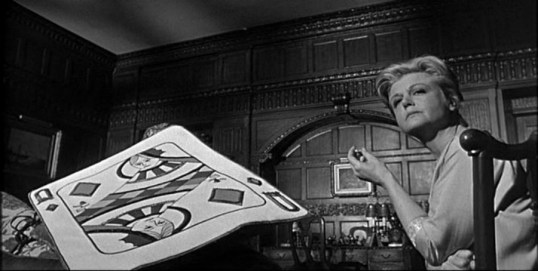
The Manchurian Candidate (1962, dir by John Frankenheimer, DP: Lionel Lindon)
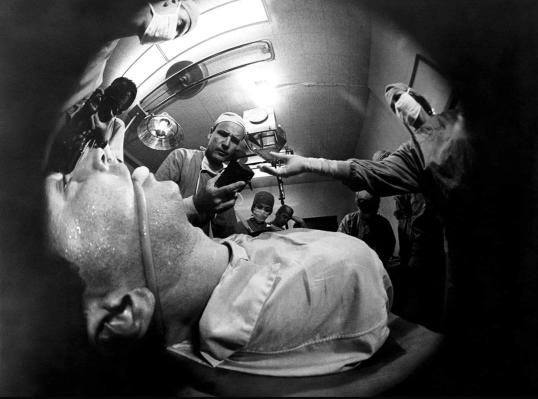
Seconds (1966, dir by John Frankenheimer, DP: James Wong Howe)
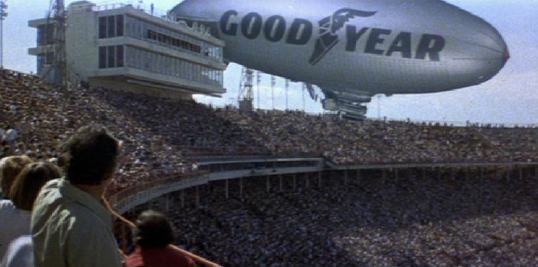
Black Sunday (1977, dir by John Frankenheimer, DP: John A. Alonzo)
52 Pick-Up (dir by John Frankenheimer, DP: Jost Vacano)
Continuing our tribute to Lee Marvin on what would have been his 100th birthday, our song of the day is a reminder that Lee Marvin was not just a tough guy actor.
He was also a singer who had a number one single in the UK and Ireland with this song from 1969’s Paint Your Wagon! The same two weeks that Lee Marvin had the number one spot, The Beatles had the number two spot with Let It Be.





 Through the Shattered Lens