Love On The Shattered Lens: Ladies’ Man (dir by Lothar Mendes)


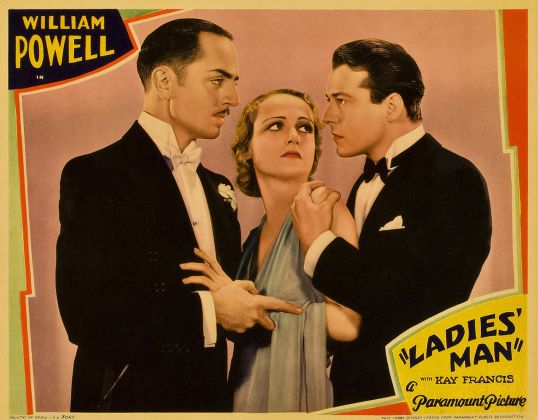
In the 1931 film Ladies’ Man, the always suave William Powell plays Jamie Darricott.

Jaimie may be suave but, when we first meet him, he’s faking it.  He lives in a tiny broom closet in a grand hotel and he only has two suits to his name.  The only thing that Jamie has going for him is that he’s charming and he’s handsome, in the way that only William Powell could be.  He’s like a much sleazier and far less likable version of Nick Charles.  Unfortunately, Jamie doesn’t have Nora Charles or Asta in his life.  He just has one valet and a lot of ambition.  It’s strange to see Powell play a bitter man but that’s what he does here.

Jamie starts spending time with the wealthy Mrs. Fendley (Olive Tell), despite the fact that she’s married to wealthy businessman Horace Fendley (Gilbert Emery).  Jamie starts to move up in the world.  He gets a much better room.  He gets a few more suits of clothes.  Soon, Jamie is also spending time with Mrs. Fendley’s daughter, the wild Rachel (Carole Lombard).  Rachel doesn’t care if prohibition is the law of the land.  She’s going to get as drunk as she wants every night.  And Rachel doesn’t care if society judges her for sleeping over in another man’s room despite not being married to him.  Rachel does what she wants!  And I have to admit that, at first, I liked Rachel.  She was a rebel and she made no apologies for her behavior and good for her!  (It helped she was also played by Carole Lombard, who was just starting her career but already had a lively screen presence.)  What’s interesting is that both Mrs. Fendley and Rachel seem to know that the other is seeing Jamie and they’re both pretty much okay with that.  And since Jamie is getting paid by both of them, he’s okay with it too.

This might sound a bit racy for a 1931 film and I suppose it is.  However, this is also a pre-code film.  Before the Production Code was instituted, films always portrayed New York society as being filled with gigolos and people who got drunk at nightclubs.  Pre-code films had the advantage of not only knowing what people wanted to see but also the freedom to give it to them.  Ladies’ Man is pretty open, if not particularly explicit, in detailing how Jamie makes his money.  And the message seems to be that no one can blame him.  There’s a depression going on!  Jamie has to do something to survive!  At least he’s not killing people Jimmy Cagney or Paul Muni!

However, when Jamie meets and falls for the kindly Norma Page (Kay Francis), he starts to reconsider his lifestyle.  And when Rachel finds out that Jamie is actually falling in love with Norma, she lets her father know about what’s going on.  It all leads to a rather sudden and surprisingly dark ending.  The film may have been pre-code but it was still a film from the era of DeMille and hence, all sinners had to be punished.

Seen today, Ladies’ Man is definitely a relic of a previous time.  It was made early enough in the sound era that it’s obvious that some members of the cast were still learning how to act with sound.  For a film with a 70-minute run time, it has a surprisingly large numbers of slow spots.  This is not the film to use if you want to introduce someone to the wonders of the pre-code era.  That said, I love William Powell and I love Carole Lombard.  This film was made before their brief marriage and it’s nowhere near as fun as their later collaboration, My Man Godfrey.  But it’s still enjoyable to see them together, bringing some much needed life to this scandalous tale.
Film Review: Soap Opera (dir by Andy Warhol)


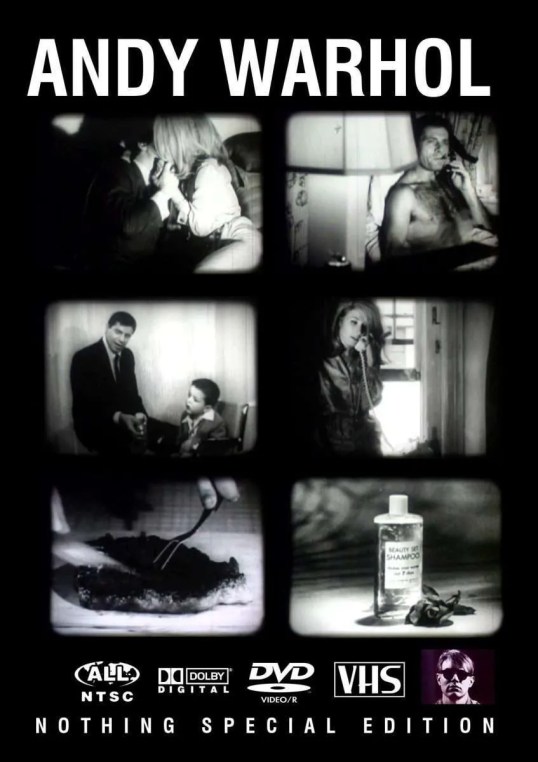
Directed by Andy Warhol, 1964’s Soap Opera features a plot that largely plays out in silence.

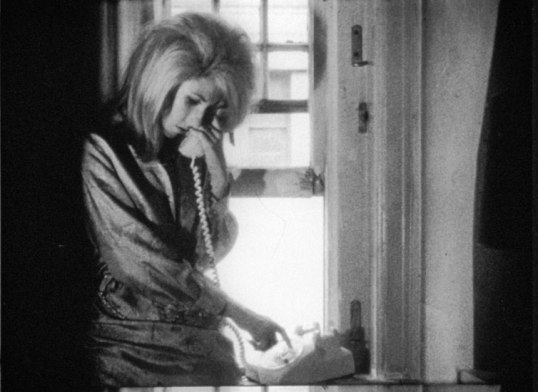
The silent, grainy black-and-white footage depicts what appears to be a love triangle between Warhol associate Rufus Collins, Sam Green, Ivy Nicholson, Gerard Malanga, and “Baby Jane” Holzer.  There’s a lot of kissing.  There’s a lot of slapping.  There’s a lot of scenes of our nameless characters giving each other suspicious and meaningful looks.  At one point, Jane Holzer makes what appears to be a very important phone call.  We don’t know who these people are or how they’re related but they certainly do seem to be intensely obsessed with each other.  The situations grow progressively more and more sexual and one gets the feeling that, if we could only hear the dialogue, we would have a chance to vicariously take part in a great melodrama.  Of course, the footage itself is so grainy that it’s sometimes hard to tell who is who.  Indeed, the characters often seem to be interchangeable.  That’s certainly true of real soap operas as well.  With new actors regularly stepping into old roles and one story’s hero becoming the next story’s villain, soap operas were all about accepting whatever was presented on the screen.  In real life, drama has real consequences.  In Warhol’s film and on television, melodrama is just something that happens without any real repercussions.

Janes Holzer in Soap Opera

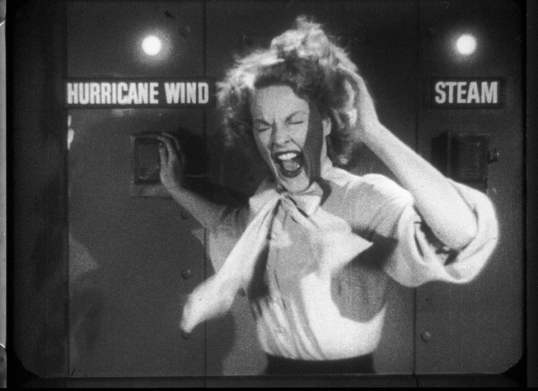
Fortunately, the film provides a few breaks from the repetitive cycle of nonstop, grainy drama.  Sprinkled throughout the film are commercials breaks, featuring actual commercials that were supplied to Warhol by Lester Persky, an advertising executive who later found greater fame as a Broadway producer.  (He produced Hair, amongst other productions.)  In between scenes of Ivy Nicholson kissing Sam Green and Rufus Collins looking shocked, we get a serious of very happy and very loud commercials.  Indeed, after watching the silent and grainy soap opera footage, it’s a bit jarring to have an expertly staged commercial suddenly blare forth in crisp black-and-white.  An obnoxious salesman tries to sell us things to make our home better and our meals tastier.  Jerry Lewis shows up with a child and tells us to be sure to contribute money to his telethon.  Model Rosemary Kelly is introduced by an announcer who tells us that Rosemary is going to tell us about the greatest adventure of her life.  That adventure?  Not conditioning her hair for five days.  Amazingly, her hair is still full and lustrous!  Even after swimming and sleeping on it!  Not even a broken steam valve can make her hair look bad!  This commercial is so effective that it’s actually featured twice and why not?  Even I want to know Rosemary’s secrets and my hair always looks good!

Rosemary Kelly in Soap Opera

Warhol subtitled this film The Lester Persky Story, both to thank Persky for supplying the commercials but also to point out that the commercials were really the whole point of the show.  The plot of any show, whether it’s a real one or the one in Warhol’s film, really only exists to keep you watching long enough to see the commercials.  And it must be said that the commercials are the most interesting part of this film.  After watching the Soap Opera actors for ten minutes, it’s a relief when Rosemary Kelly appears and, with a big smile on her face, starts enthusiastically talking about her hair.  We all complain about commercials but we still accept them as a fact of life and, in the end, it’s usually the commercials that people remember and try to pattern their lives after.  I mean, there’s a reason why I’m still singing that “Nothing is everything” song from the Skyrizi commercials.

And now, let’s check out how Rosemary Kelly’s hair is doing in hurricane winds!

Rosemary Kelly in Soap Opera


Live Tweet Alert: Join #ScarySocial for Ticks!


As some of our regular readers undoubtedly know, I am involved in a few weekly live tweets on twitter.  I host #FridayNightFlix every Friday, I co-host #ScarySocial on Saturday, and I am one of the five hosts of #MondayActionMovie!  Every week, we get together.  We watch a movie.  We tweet our way through it.

Tonight, at 9 pm et, Deanna Dawn will be hosting #ScarySocial!  The movie?  1993’s Ticks!

If you want to join us this Friday, just hop onto twitter, start the movie at 9 pm et, and use the #ScarySocial hashtag!  I’ll be there tweeting and I imagine some other members of the TSL Crew will be there as well.  It’s a friendly group and welcoming of newcomers so don’t be shy.

Ticks is available on Prime!

See you there!

Scenes That I Love: Who Was Really “The Man Who Shot Liberty Valance?”


John Ford was born 131 years ago today and it seems appropriate that today’s scene of the day should come from his final great film (even if it wasn’t the last film that Ford directed).

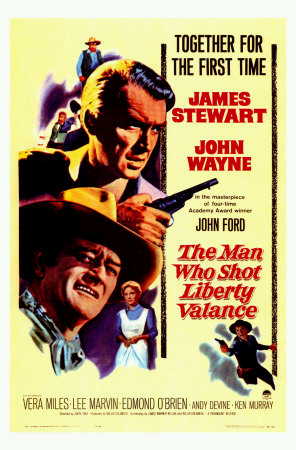
In 1962’s The Man Who Shot Liberty Valance, frontier lawyer Ransom Stoddard (James Stewart) comes to political prominence due to his notoriety for being the man who, in self-defense, gunned down notorious outlaw Liberty Valance (Lee Marvin).  Stoddard, an intellectual who opposes violence, is not happy about this.  When Stoddard considers refusing to be a delegate to the upcoming statehood convention, he is reprimanded by Tom Doniphon (John Wayne).  Stoddard and Doniphon are friends but they’re also romantic rivals, both being in love with Hallie (Vera Miles).  In this scene, Doniphon reveals the truth about who shot Liberty Valance.

MR. MAJESTYK (1974) and a shotgun butt to the nuts! Happy Friday!


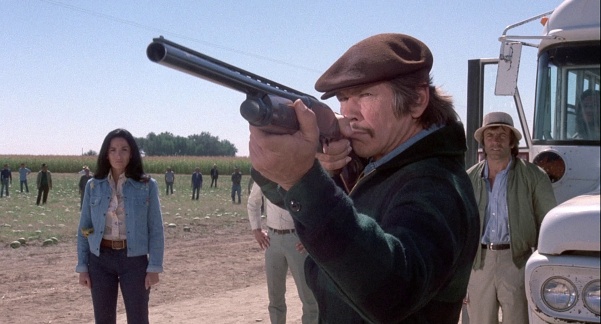
One of my favorite Charles Bronson films is MR. MAJESTYK, and one of my favorite scenes in any movie is this badass masterpiece. It encompasses just about everything I love in a movie. It has the beautiful Linda Cristal. It has the slimy Paul Koslo who doesn’t really understand who he’s dealing with. It has Bronson saying tough guy lines in a way that only he can say them…”you make sounds like you’re a mean little ass-kicker…” And finally it has that shotgun. It just doesn’t get any better than this. 

Enjoy my friends, and have a great weekend!! This should help! 

THE SEA WOLF (1993) – Charles Bronson vs. Superman!


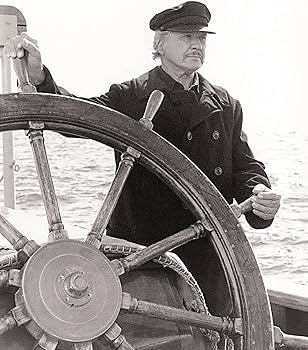
Back in the early 90’s, I was finishing up my high school years and starting up my college years, but I was still paying attention to every move my movie hero Charles Bronson was making. Bronson was at a very difficult place personally during those years as he was continuing to mourn the passing of his wife, Jill Ireland, and it really shows in his choice of roles. His first two films of the 90’s, THE INDIAN RUNNER and YES VIRGINIA, THERE IS A SANTA CLAUS, featured the aging star in the roles of a man dealing with great suffering and loss. Bronson’s third role, as Captain Wolf Larsen in the made for cable TV film, THE SEA WOLF (1993), featured him as the “thinking man’s megalomaniac” from Jack London’s work of classical literature. I couldn’t wait to see the film, but I had just one small problem. We didn’t have cable-TV in Toad Suck, Arkansas, so I would not be able to watch it on the night of its April 18th, 1993 premiere on the TNT channel. It was tough waiting a few months for that VHS release, but it was worth it! 

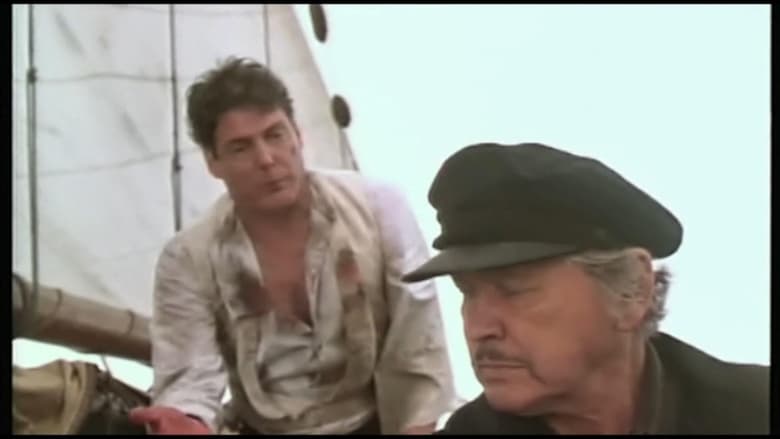
In a nutshell, Charles Bronson plays Wolf Larsen, the captain of the ship The Ghost, who saves shipwrecked aristocrat Humphrey Van Weyden (Christopher Reeve) and con woman Flaxen Brewster (Mary Catherine Stewart). He saves them, but once they’re on board his boat, they find out that Larsen rules over the crew with an iron fist. They also find out that he’s on a life or death mission to find his brother, Death Larsen, and exact revenge for past conflicts. Will they be able to survive this voyage?

Charles Bronson had mostly steered clear of roles that could be described as “villainous” later in his career, but it must have felt great to take on one of Jack London’s most famous characters. I remember the advertising would show him maniacally spouting lines like, “It’s better to reign in hell than serve in heaven!” Wolf Larsen is a man of contradictions. He’s ruthless and mad with power when it comes to the men and his boat, but he also appreciates great works of literature and philosophy. Even at 71 years of age, the icon is able to project arrogant menace and brute strength. Charles Bronson and Wolf Larsen almost seem made for each other, and he’s fantastic in the role. It’s his strongest performance of the 1990’s. 

There’s another great performance in the film, and it comes from Christopher Reeve as Humphrey Van Weyden. Most famous as Superman, Reeve was not having a lot of success at this point in his film career and was wanting meatier roles when he accepted this part. I was blown away with his performance as the intelligent and bullied aristocrat-turned-cabin boy who is forced to resort to some level of savage and barbaric behavior in order to survive Larsen’s boat! Christopher Reeve had really become a good actor at this point in his career, and he handles the role expertly. You believe his transformation throughout the course of the film as he adapts to the brutal conditions aboard the ship yet still retains his humanity. Reeve himself has been quoted as saying that THE SEA WOLF was a project “I really believed in and still think of as some of my best work.” I couldn’t agree more, Mr. Reeve. 

THE SEA WOLF was directed by veteran filmmaker Michael Anderson who had been working since the 1940’s with credits like AROUND THE WORLD IN 80 DAYS (1956) and LOGAN’S RUN (1976) to his name. He and Bronson were roughly the same age, and they’re both in fine form. In order for these types of films to work, you need a good director who can deliver a solid finished project and Anderson brings his A-game to this production. 

I’ve included the trailer for THE SEA WOLF below:

Live Tweet Alert: Join #FridayNightFlix For The Sword and the Sorcerer!


As some of our regular readers undoubtedly know, I am involved in a few weekly live tweets on Twitter and Mastodon.  I host #FridayNightFlix every Friday, I co-host #ScarySocial on Saturday, and I am one of the five hosts of #MondayActionMovie!  Every week, we get together.  We watch a movie.  We tweet our way through it.

Tonight, at 10 pm et, #FridayNightFlix presents one of my Arleigh’s favorite movies, The Sword and the Sorcerer!

If you want to join us this Friday, just hop onto twitter, start the movie at 10 pm et, and use the #FridayNightFlix hashtag!  It’s a friendly group and welcoming of newcomers so don’t be shy.

The Sword and the Sorcerer is available on Prime!  See you there!

Scenes That I Love: That Iconic Moment From Tough Guys Don’t Dance


Norman Mailer was better-known as a writer than a filmmaker but, over the course of his limited directorial career, he did come up with one scene that will never be forgotten.  That scene is a scene that I love from 1987’s Tough Guys Don’t Dance.

Take it away, O’Neal!

4 Shots From 4 Films: Special Norman Mailer Edition


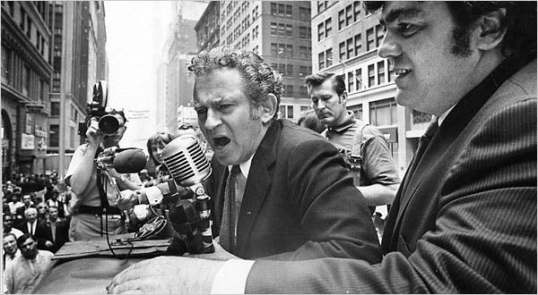
Norman Mailer, running for mayor of New York City in 1969

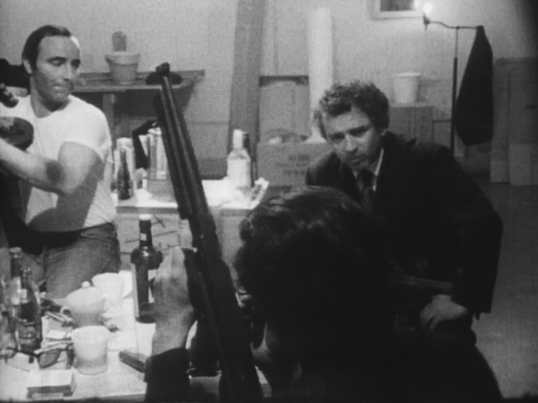
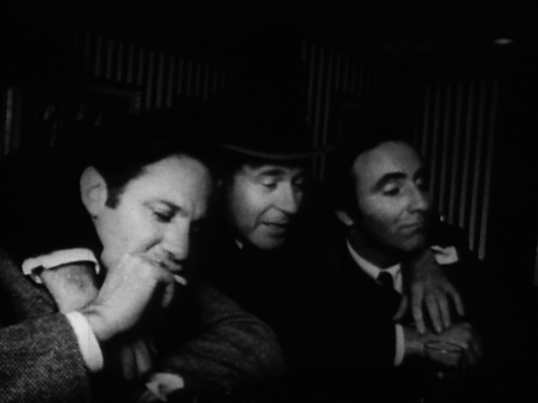
4 (or more) Shots From 4 (or more) Films is just what it says it is, 4 (or more) shots from 4 (or more) of our favorite films. As opposed to the reviews and recaps that we usually post, 4 (or more) Shots From 4 (or more) Films lets the visuals do the talking.

Norman Mailer wasn’t just a writer and symbol of New York City.  He was also an aspiring filmmaker, a director who made three experimental films in the 60s and one studio film in the 80s.  And while none of his films could really be described as being a hit with either audiences or critics, they do — to a certain extent — epitomize an era.  Plus, the story of Rip Torn hitting Mailer with a hammer during the filming of Maidstone will live forever.

In honor of Norman Mailer the director, here are….

4 Shots From 4 Norma Mailer Films

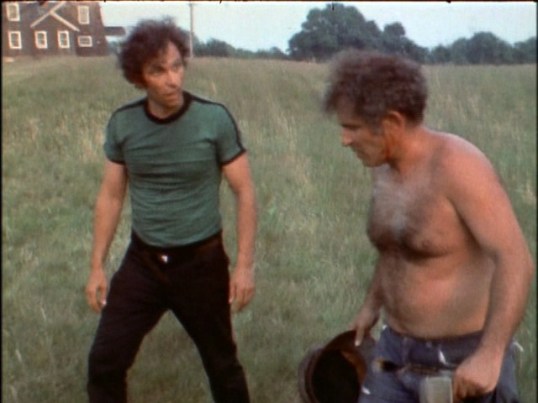
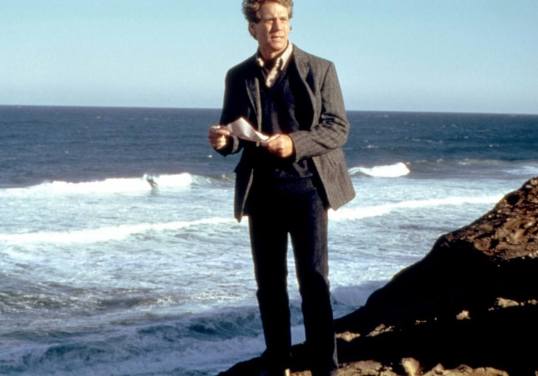
Wild 90 (1968, dir by Norman Mailer, DP: D.A. Pennebaker)

Beyond The Law (1968, dir by Norman Mailer, DP: D.A. Pennebaker)

Maidstone (1970, dir by Norman Mailer, DP: D.A. Pennebaker)

Tough Guys Don’t Dance (1987, dir by Norman Mailer, DP: Mike Moyer and John Bailey)

Scenes That I Love: The Nightmare From The Conversation


Today, we wish a happy 95th birthday to the great actor-turned-writer Gene Hackman!

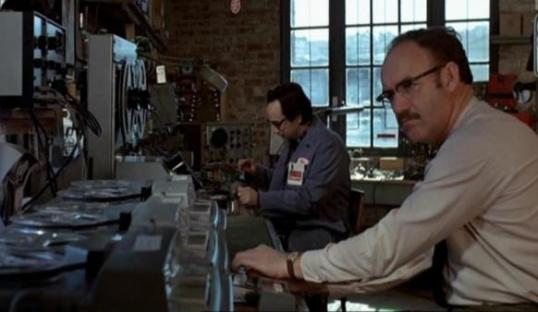
Today’s scene that I love comes from one of Hackman’s best films, 1974’s The Conversation.  In this scene, Hackman’s surveillance expert has a nightmare inspired by his fear that his latest job may cause two people to be murdered.  Hackman won two Oscars over the course of his career and was nominated several times.  The fact that he was not nominated for The Conversation was a huge oversight on the part of the Academy.