Who wouldn’t love to see a movie where a youngish Jack Nicholson played a French soldier who, while searching for a mysterious woman, comes across a castle that’s inhabited by both Dick Miller and Boris Karloff?
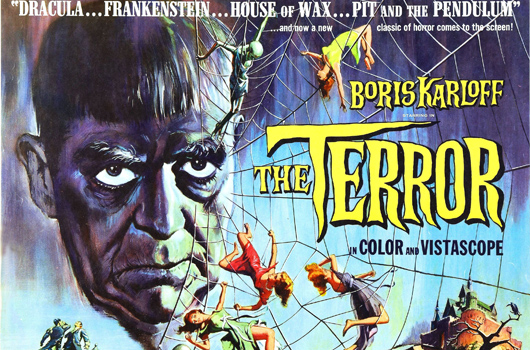
In Roger Corman’s 1963 film The Terror, New Jersey-accented Jack Nicholson is the least believable 19th century French soldier ever. However, it’s still interesting to watch him before he became a cinematic icon. His performance here is rather earnest, with little of the sarcasm that would later become his trademark. Boris Karloff is, as usual, great and familiar Corman actor Dick Miller gets a much larger role than usual. Pay attention to the actress playing the mysterious woman. That’s Sandra Knight who, at the time of filming, was married to Jack Nicholson.
Reportedly, The Terror was one of those films that Corman made because he still had the sets from his much more acclaimed film version of The Raven. The script was never finished, the story was made up as filming moved alone, and no less than five directors shot different parts of this 81 minute movie. Boris Karloff’s scenes were filmed first, with the other actors performing in front of a body double during their scenes. Among the many directors who filmed bits and pieces of TheTerror: Roger Corman, Jack Hill, Monte Hellman, Francis Ford Coppola, Coppola’s roommate Dennis Jakob, and even Jack Nicholson himself! (Despite this number of directors involved, Corman received the sole directorial credit.) Perhaps not surprisingly, the final film is a total mess but it does have a definite historical value.
(In typical Corman fashion, scenes from The Terror were later used in the 1968 film, Targets. In that film, Karloff plays a version of himself, an aging horror actor who watches The Terror and dismisses it as being “terrible.”)
Though the Academy of Motion Picture Arts and Sciences claim that the Oscars honor the best of the year, we all know that there are always worthy films and performances that end up getting overlooked. Sometimes, it’s because the competition too fierce. Sometimes, it’s because the film itself was too controversial. Often, it’s just a case of a film’s quality not being fully recognized until years after its initial released. This series of reviews takes a look at the films and performances that should have been nominated but were, for whatever reason, overlooked. These are the Unnominated.
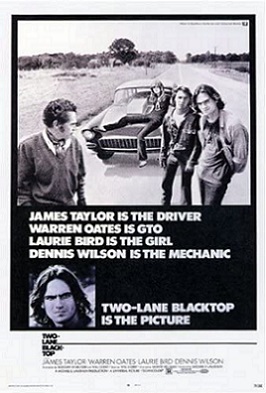
The 1971 road film, Two-Lane Blacktop, is a movie about four people whose real names are never revealed. Indeed, their names are never as important as what they’re driving.
Named after his car, GTO (Warren Oates) is a talkative man who likes to brag on himself and who picks up hitchhikers so he can talk to them. We don’t learn much about GTO’s background. For someone who talks as much as he does, GTO doesn’t reveal much about who he is when he’s not driving. It’s easy to imagine him as a salesman, traveling across the country and desperately trying to make his quota before the sun goes down. With the way that he picks up hitchhikers and his need to convince everyone of his own skill and prowess behind the wheel, it’s easy to imagine that he’s probably recently divorced and still dealing with suddenly being on his own. He seems to have something to prove, not only to everyone around him but especially to himself. One gets the feeling that the life he had suddenly collapsed and he took to the road to escape it all but he still hasn’t reached the point where he can handle truly being alone. For all of his talk, it doesn’t take long to notice that GTO isn’t quite as worldly as he claims he is.
A chance meeting leads to GTO getting into a cross-country race with The Driver (James Taylor) and the Mechanic (Dennis Wilson), two young men who are driving a 1955 Chevy and who make their money by engaging in street races. (They’re also quick to steal a license plate when no one’s looking.) The Driver and the Mechanic don’t talk a lot and, when they do, it’s in terse and somewhat awkward sentences. (Both Taylor and Wilson were musicians who made their acting debut with this film. Their natural stiffness and lack of emotion works well for their characters.) The Driver and the Mechanic seem to communicate solely through driving. They pick up The Girl (Laurie Bird) and both the Driver and the Mechanic seem to have feelings for her but it’s pretty obvious that their true love will always be for their car.
Two-Lane Blacktop is a road movie, a movie that really doesn’t have much of a plot (the cross-country race soon ceases to be a real race) but which does have some beautiful footage of America in 1971 and an outstanding performance from the great character actor, Warren Oates. EasyRider was advertised as being a film about a man who looked for America and couldn’t find it. That’s actually a better description of Two-Lane Blacktop, a film about three uniquely American men who have embraced the car culture that is at the center of life in America but who are still, more or less, lost in their home country. Oates, always talking and refusing to give up or even acknowledge the fact that he doesn’t really know much about how cars work, represents the so-called silent majority. Wilson and Taylor are the next generation, their long-hair branding them as outsiders while their skill with a car and their desire win represents what we’re told is the best of the American competitive spirit. What makes the film unsettling is the feeling that all three of them are using their cars as a way to avoid dealing with the reality of their lives.
Two-Lane Blacktop may sound a bit pretentious and it is. The metaphors get a bit heavy-handed. That said, as directed by Monte Hellman, it’s both a gorgeous travelogue and a valuable time capsule, a document of life in the late 60s and early 70s. Hellman directed the film on the road. When we see the Mechanic stealing a license plate so no one down south will know that he and the Driver are actually from California, it’s a powerful scene because it was actually filmed on location, in the South. This isn’t a film that was shot on a backlot. This is a film that was shot across America and it captures the country at a time when, much like today, no one was really sure what the future held for its politics or its culture. It may be a film about three men who are obsessed with cars but it’s also a portrait of a country in an almost directionless state of turmoil.
Two-Lane Blacktop was promoted as being the next Easy Rider but it turned out to be a notorious box office failure. James Taylor and Dennis Wilson never did another movie. Warren Oates continued as a busy character actor while Laurie Bird died of an intentional drug overdose in 1979. Director Monte Hellman’s directorial career continued but his days of being courted by the major studios were over. However, as the years passed, audiences started to discover Two-Lane Blacktop and now, it’s considered to be a cult classic.
Given its failure at the box office, Two-Lane Blacktop was ignored by the Academy. The Oscar for Best Picture went to another film that featured a memorable car chase, The French Connection. While Two-Lane Blacktop may not have deserved to win Best Picture (not over nominees like The French Connection, The Last Picture Show, Fiddler on the Roof, and A Clockwork Orange), it certainly is far more memorable movie than the fifth film nominated that year, Nicholas and Alexandra. If nothing else, Warren Oates deserved a nomination for his supporting performance. The Academy may not have embraced Two-Lane Blacktop but, fortunately, film lovers eventually would.
4 Or More Shots From 4 Or More Films is just what it says it is, 4 shots from 4 of our favorite films. As opposed to the reviews and recaps that we usually post, 4 Shots From 4 Films lets the visuals do the talking!
96 years ago today, the great director Monte Hellman was born in New York City. Though Hollywood never quite understood Hellman or his idiosyncratic vision, he and his films have inspired a countless number of independent filmmakers. Hellman started his career with Roger Corman and was one of the first directors to recognize the talent of actors like Jack Nicholson and Warren Oates. When Monte Hellman passed away in 2021, he was eulogized as one of the key figures of the Hollywood counterculture. Today, we celebrate Hellman and his films with….
4 Shots From 4 Monte Hellman Films
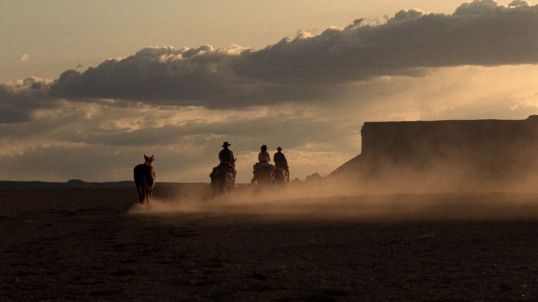
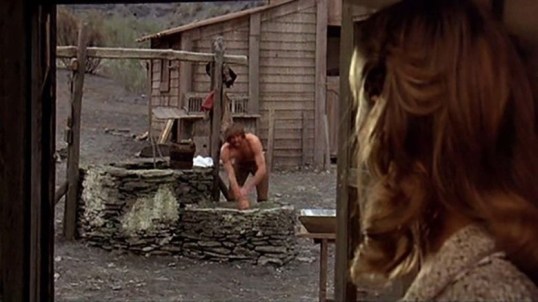
The Shooting (1966, dir by Monte Hellman, DP: Gregory Sandor)
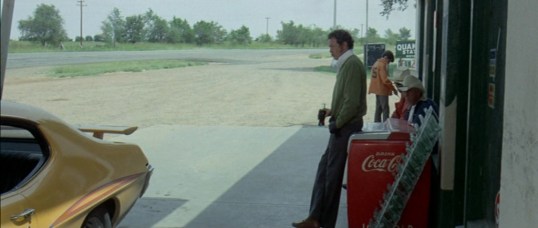
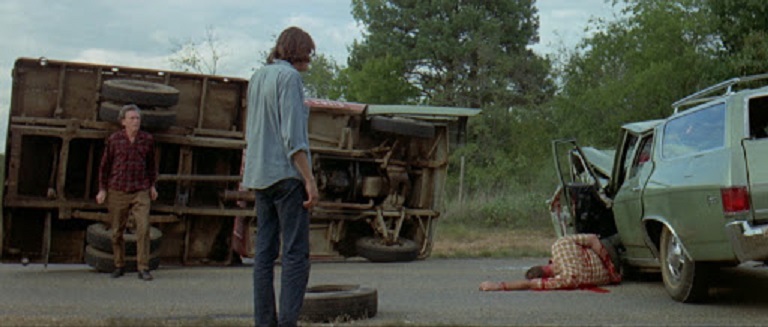
Two-Lane Blacktop (1971, dir by Monte Hellman, DP: Jack Deerson)
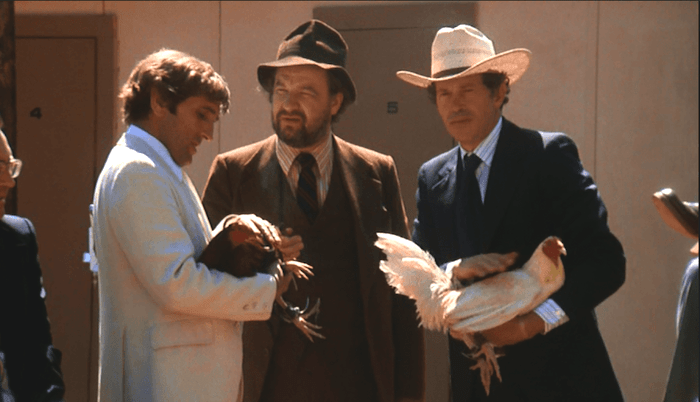
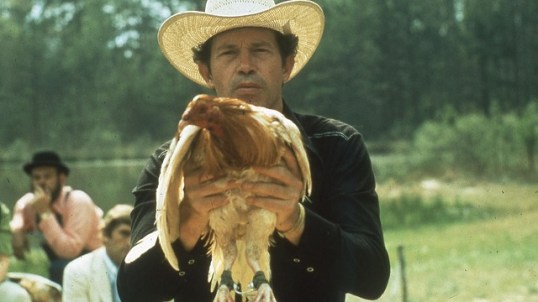
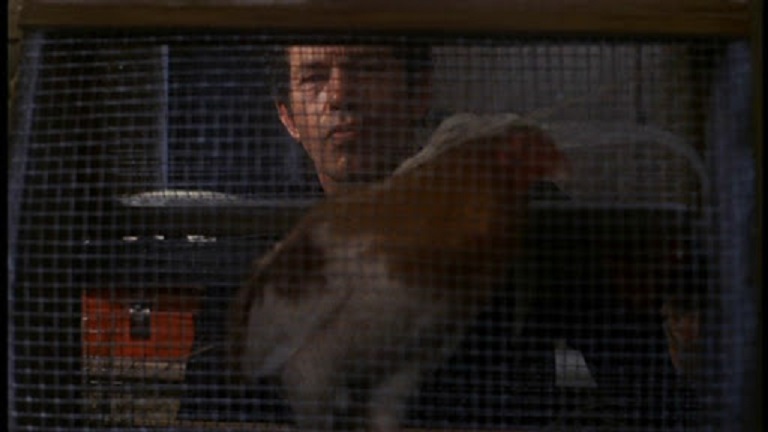
Cockfighter (1974, dir by Monte Hellman, DP: Nestor Almendros)
China 9, Liberty 38 (1978, dir by Monte Hellman, DP: Guiseppe Rotunno)
I read about the movie COCKFIGHTER many years ago, and I remember the review being very positive. I had never watched the film before, but with today being Warren Oates’ birthday and it being available on Amazon Prime, I decided I’d finally watch it.
Directed by Monte Hellman and based on Charles Willeford’s 1962 novel, COCKFIGHTER introduces us to Frank Mansfield (Warren Oates), a man completely obsessed with the southern “sport” of cockfighting. As we meet him, he’s in the process of losing a bet and a cockfight with Jack Burke (Harry Dean Stanton). The loss isn’t just a setback, it costs him all of his cash, his truck, his trailer, and his current girlfriend Dody White (Laurie Bird). We also notice in these early scenes that Frank only communicates through sign language and writing notes. It seems that he’s been living under a self-imposed vow of silence. Two years earlier, on the eve of the big, season-ending cockfighting grand finale, Frank’s big-mouthed braggadocio caused him to lose his prized cock, and the prestigious “Cockfighter of the Year” medal in a meaningless hotel bet, also against Jack Burke. Frank vows not to speak again until he wins that medal. Coming up with cash in the only way he can by selling his family’s home, Frank buys a new cock named White Lightning from Ed Middleton, played here by the film’s writer Charles Willeford. Armed with new fowl and a new, capital rich partner named Omar Baradansky (Richard B. Shull), Frank will not let anything stop him, including the love of his life Mary Elizabeth (Patricia Pearcy) or an axe wielding competitor (Ed Begley, Jr.), from being named “Cockfighter of the Year” and finally regaining his voice and the respect he desires!
COCKFIGHTER definitely has some things going for it. First and foremost, Warren Oates is so good in the lead role as the obsessed man who puts success in cockfighting above anything else in his life, including every other person. He literally sells the family home out from under his alcoholic brother Randall (Troy Donahue) in order to fund his next cock purchase after he’s gone bust. This sets up quite the sight gag for such a gritty and realistic film as a large truck and trailer drives away the family home taking up the entire state highway. When his long time fiancé asks him to give up cockfighting, he just gets up, leaves her shirtless and heads back out on the circuit. He writes her a letter from the road and tells her he loves her, but he also makes it clear that life without cockfighting is a life that he’s unwilling to live. Oates’ Frank Mansfield is not the kind of person you’d ever want to depend on in life, but he’s also an uncompromising individual who is determined to live life wholly on his own terms, accepting of the successes and failures that come with it. I watched the film because it features Warren Oates, and after having done so, I can say that his performance is truly special.
COCKFIGHTER is one of those movies that makes us feel like we’re watching real people, and that’s kind of fascinating even if they reside in a world that we don’t really want to live in. The primary credit for that has to go to director Monte Hellman and Oscar winning cinematographer Nestor Almendros (DAYS OF HEAVEN). The restraint that is shown in the storytelling, as well as the sweaty, ramshackle authenticity of the Georgia locations, brings the story to life. The supporting cast also does its part to create the world of COCKFIGHTER. Harry Dean Stanton as Jack Burke, Frank’s primary rival in the cockfighting game, is excellent as you might expect, and he seems a lot like a regular guy. I really like Richard B. Schull, who plays Frank’s outgoing and talkative partner Omar. His friendly and gregarious personality seems a little untrustworthy at first, but he turns out to be the most likable person in the film. And finally, I want to shoutout Charles Willeford. Not only did he write the source novel and screenplay for COCKFIGHTER, he also gives a solid performance as Ed Middleton, an old-timer in the game who treats Frank with honesty and decency when he’s hit rock bottom.
With all the positive things I’ve said above, I have to address the graphic depiction of cockfighting in COCKFIGHTER. This was the 70’s, and the scenes shown here are real and were very difficult for me to watch. It’s not fun to see animals fight and kill each other, and this is coming from a person who loves fried chicken and is not particularly an animal lover. The scenes are presented as matter of fact and in service of the story, but that still doesn’t make them easy to watch. Director Monte Hellman has gone on record to express his personal disgust at even filming these scenes. While a movie made in the 1970’s probably couldn’t have been made without these sequences, I just wanted to make it clear that this film is probably unwatchable for a lot of people.
Overall, COCKFIGHTER is a relic of the 1970’s. It’s a gritty and realistic film, featuring a great central performance from Warren Oates. It’s also an ethically troubling film that features real animal on animal violence. Based on that I don’t necessarily recommend the film. Rather, I just want to share my own thoughts, and you can determine if you want to watch it or not. That’s what I’ve tried to do above.
Have you ever woken up and thought to yourself, “I’d love to see a movie where a youngish Jack Nicholson played a French soldier who, while searching for a mysterious woman, comes across a castle that’s inhabited by both Dick Miller and Boris Karloff?”
Of course you have! Who hasn’t?
Well, fortunately, it’s YouTube to the rescue. In Roger Corman’s 1963 film The Terror, Jack Nicholson is the least believable 19th century French soldier ever. However, it’s still interesting to watch him before he became a cinematic icon. (Judging from his performance here and in Cry Baby Killer, Jack was not a natural-born actor.) Boris Karloff is, as usual, great and familiar Corman actor Dick Miller gets a much larger role than usual. Pay attention to the actress playing the mysterious woman. That’s Sandra Knight who, at the time of filming, was married to Jack Nicholson.
Reportedly, The Terror was one of those films that Corman made because he still had the sets from his much more acclaimed film version of The Raven. The script was never finished, the story was made up as filming moved alone, and no less than five directors shot different parts of this 81 minute movie. Among the directors: Roger Corman, Jack Hill, Monte Hellman, Francis Ford Coppola, and even Jack Nicholson himself! Perhaps not surprisingly, the final film is a total mess but it does have some historical value.
(In typical Corman fashion, scenes from The Terror were later used in the 1968 film, Targets.)
Have you ever woken up and thought to yourself, “I’d love to see a movie where a youngish Jack Nicholson played a French soldier who, while searching for a mysterious woman, comes across a castle that’s inhabited by both Dick Miller and Boris Karloff?”
Of course you have! Who hasn’t?
Well, fortunately, it’s YouTube to the rescue. In Roger Corman’s 1963 film The Terror, Jack Nicholson is the least believable 19th century French soldier ever. However, it’s still interesting to watch him before he became a cinematic icon. (Judging from his performance here and in Cry Baby Killer, Jack was not a natural-born actor.) Boris Karloff is, as usual, great and familiar Corman actor Dick Miller gets a much larger role than usual. Pay attention to the actress playing the mysterious woman. That’s Sandra Knight who, at the time of filming, was married to Jack Nicholson.
Reportedly, The Terror was one of those films that Corman made because he still had the sets from his much more acclaimed film version of The Raven. The script was never finished, the story was made up as filming moved alone, and no less than five directors shot different parts of this 81 minute movie. Among the directors: Roger Corman, Jack Hill, Monte Hellman, Francis Ford Coppola, and even Jack Nicholson himself! Perhaps not surprisingly, the final film is a total mess but it does have some historical value.
(In typical Corman fashion, scenes from The Terror were later used in the 1968 film, Targets.)
4 Or More Shots From 4 Or More Films is just what it says it is, 4 shots from 4 of our favorite films. As opposed to the reviews and recaps that we usually post, 4 Shots From 4 Films lets the visuals do the talking!
94 years ago today, the great director Monte Hellman was born in New York City. Though Hollywood never quite understood Hellman or his idiosyncratic vision, he and his films have inspired a countless number of independent filmmakers. Hellman started his career with Roger Corman and was one of the first directors to recognize the talent of actors like Jack Nicholson and Warren Oates. When Monte Hellman passed away in 2021, he was eulogized as one of the key figures of the Hollywood counterculture. Today, we celebrate Hellman and his films with….
4 Shots From 4 Monte Hellman Films
The Shooting (1966, dir by Monte Hellman, DP: Gregory Sandor)
Two-Lane Blacktop (1971, dir by Monte Hellman, DP: Jack Deerson)
Cockfighter (1974, dir by Monte Hellman, DP: Nestor Almendros)
China 9, Liberty 38 (1978, dir by Monte Hellman, DP: Guiseppe Rotunno)
Have you ever woken up and thought to yourself, “I’d love to see a movie where a youngish Jack Nicholson played a French soldier who, while searching for a mysterious woman, comes across a castle that’s inhabited by both Dick Miller and Boris Karloff?”
Of course you have! Who hasn’t?
Well, fortunately, it’s YouTube to the rescue. In Roger Corman’s 1963 film The Terror, Jack Nicholson is the least believable 19th century French soldier ever. However, it’s still interesting to watch him before he became a cinematic icon. (Judging from his performance here and in Cry Baby Killer, Jack was not a natural-born actor.) Boris Karloff is, as usual, great and familiar Corman actor Dick Miller gets a much larger role than usual. Pay attention to the actress playing the mysterious woman. That’s Sandra Knight who, at the time of filming, was married to Jack Nicholson.
Reportedly, The Terror was one of those films that Corman made because he still had the sets from his much more acclaimed film version of The Raven. The script was never finished, the story was made up as filming moved alone, and no less than five directors shot different parts of this 81 minute movie. Among the directors: Roger Corman, Jack Hill, Monte Hellman, Francis Ford Coppola, and even Jack Nicholson himself! Perhaps not surprisingly, the final film is a total mess but it does have some historical value.
(In typical Corman fashion, scenes from The Terror were later used in the 1968 film, Targets.)
Can you follow the plot of the 1963 horror film, The Terror?
If so, congratulations! You’ve accomplished something that even the people who made the film have admitted to being unable to do.
The film opens in 19th century Europe. Andre Duvalier is an earnest French soldier who has somehow gotten lost in Germany. Andre is played by a youngish, pre-stardom Jack Nicholson. Nicholson, that most contemporary, sarcastic, and American of actors, is thoroughly unconvincing as an idealistic Frenchman from 1806. Obviously unsure of what do with the character, Nicholson delivers his lines stiffly and does what he can to downplay the naturally sardonic sound of his voice. This is probably the only film where Jack Nicholson is a “nice young man.”
Andre meets a mysterious woman named Helene (played by Sandra Knight, who was Nicholson’s wife at the time). Helene appears to live in a castle with the Baron (Boris Karloff) and his servant, Stefan (Dick Miller, who makes no effort to come across as being, in anyway, European). However, Helene bears a distinct resemblance to the Baron’s long-dead wife, Ilse, who the Baron killed after discovering her with another man. However, a witch in the village claims that Ilse’s lover was her son so she put a curse on the Baron and the presence of Helene is a part of that curse. However, Stefan claims that the Baron isn’t actually the Baron and and that Ilse’s husband isn’t actually dead. However….
Yes, there’s a ton of plot twists in this movie, which is probably the result of the fact that the film was shot without a completed script. In fact, the only reason the movie was made was because Roger Corman had access to Boris Karloff and a castle set that he used for The Raven. When he discovered that he could use the set for two extra days, he shot some random footage with Boris Karloff and then he tried to build a movie around it. As a result, the cast and the directors largely made up the story as the filmed.
Yes, I said directors. While Corman shot the Karloff scenes, he no longer had enough money to use a union crew to shoot the rest of the film. Because Corman was a member of the DGA, he couldn’t direct a nonunion film. So, he assigned the rest of the film to one his assistants, an aspiring filmmaker named Francis Ford Coppola. Coppola shot the beach scenes and, in a sign of things to come, he went overbudget and got behind schedule. Coppola was meant to shoot for three days but instead went for eleven.
Though Coppola shot the majority of the film, he got a better job offer before he could do any reshoots. Coppola suggested that a friend of his from film school, Dennis Jakob, take over. Jakob shot for three days and reportedly used most of the time to shoot footage for his thesis movie.
Still feeling that the movie needed a few extra scenes to try to make sense of the plot, Corman then gave the film to Monte Hellman and, after Hellman got hired for another job, Jack Hill. Hellman would later go on to direct films like The Shooting and Two-Lane Blacktop. Jack Hill would later direct Spider Baby and several other exploitation films in the 70s. Reportedly, on the final day of shooting, even Jack Nicholson took some time behind the camera. It was Nicholson’s first directing job. (Nicholson, for his part, has often said that his original ambition in Hollywood was to become a director and not an actor.)
So, yes, the film’s a bit disjointed. The plot doesn’t make any sense. Nicholson shows little of his trademark charisma. But Dick Miller has a lot of fun as the duplicitous Stefan and Boris Karloff brings his weary dignity to the role of the Baron. Oddly, even though the Baron’s scene were shot before the script had even been written, they’re the ones that make the most sense. It’s a messy film but it plays out with a certain hallucinatory style. It’s a piece of Hollywood history and a testament to Roger Corman’s refusal to waste even two days of shooting. If you’ve got a star and a set for two days, you’ve got enough for a movie!
4 (or more) Shots From 4 (or more) Films is just what it says it is, 4 (or more) shots from 4 (or more) of our favorite films. As opposed to the reviews and recaps that we usually post, 4 (or more) Shots From 4 (or more) Films lets the visuals do the talking.
I just saw that Monte Hellman, one of the most interesting American directors of all time, passed away today. He was 88 years old. Hellman didn’t direct a lot of films but the ones that he did direct were some of the most unique American films of their time. The Shooting is perhaps the strangest western ever made. Two Lane Blacktop is one of the greatest road films. Cockfighter and China 9 Liberty 37 both suffered from distribution problems but they have since been rediscovered by audiences and critics. Even Silent Night Deadly Night 3 has its moments of uniquely deranged mayhem, though Hellman himself often said that he did the film strictly for the money.
In honor of Monte Hellman’s legacy, here are….
4 Shots From 4 Monte Hellman Films
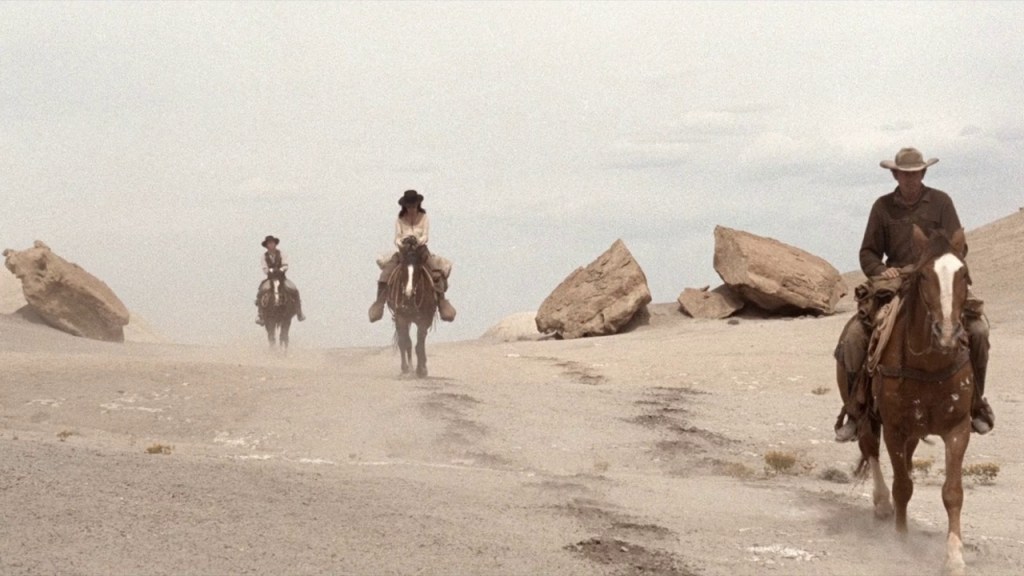
The Shooting (1966, dir by Monte Hellman, DP: Gregory Sandor)Two-Lane Blacktop (1971, dir by Monte Hellman, DP: Jack Deerson)Cockfighter (1974, dir by Monte Hellman, DP: Nestor Almendros)Road to Nowhere (2010, dir by Monte Hellman, DP: Josep M. Civit)




 Through the Shattered Lens