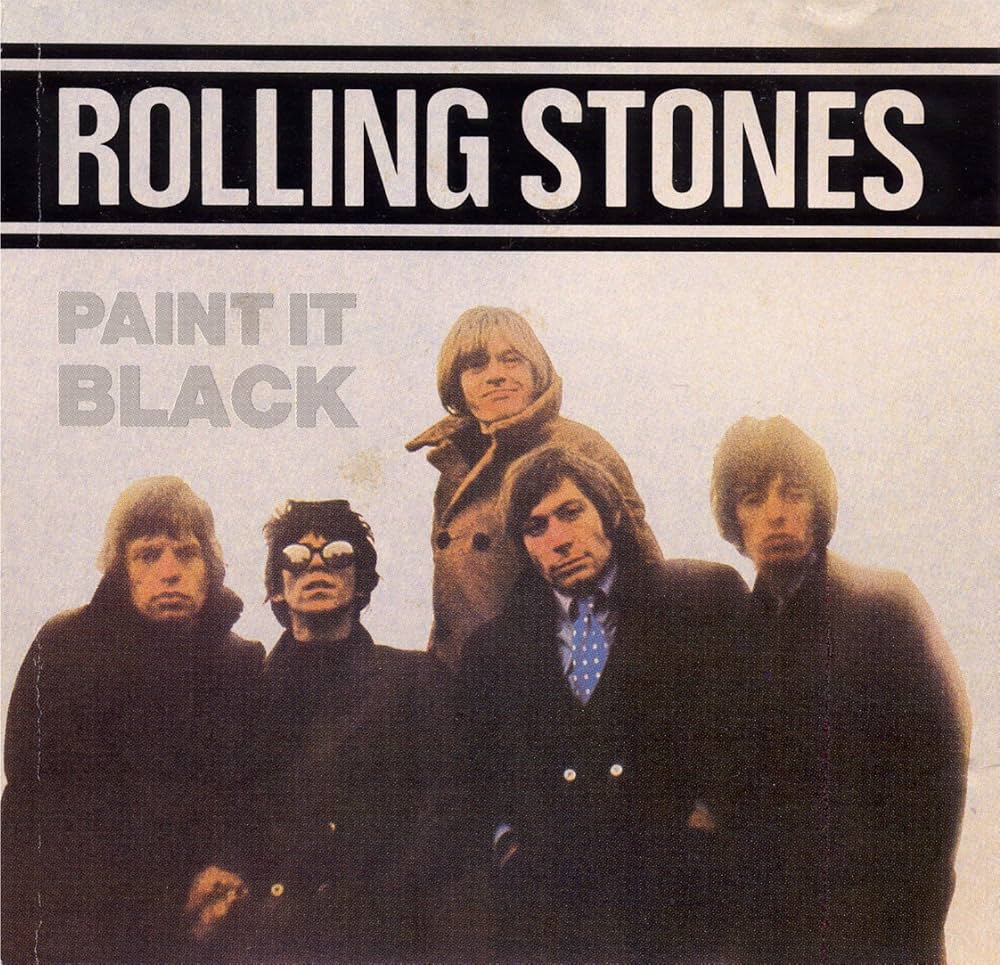
You ever notice how “Paint It Black” doesn’t really start so much as it unfolds—that strange sitar riff creeping in like a bad dream you can’t quite shake? The Stones captured something that feels less like heartbreak and more like a total emotional blackout. The sound is restless, paranoid even, like someone pacing around inside their own thoughts at 3 a.m. That’s what makes it such a sharp symbol of depression: it’s not just sadness, it’s this all-consuming fog where color, joy, and even meaning itself disappear.
The thing that always strikes me is how the song turns that private darkness into a worldview. The singer doesn’t only feel grief—he wants the whole world to match how he feels inside. That line between self and everything else completely breaks down. You can hear it in the drumming, that pounding rhythm chasing itself in circles, or the sitar’s looping melody that never resolves. It’s like he’s trapped in motion, unable to stop thinking or feeling, stuck in a spiral that makes sense only to him. It’s haunting because it sounds familiar to anyone who’s been that low.
And that’s why, even decades later, “Paint It Black” still feels so alive—so uncomfortably modern. Underneath the 60s cool, it taps into that quiet nihilism a lot of people still wrestle with today: the idea that maybe there’s nothing left worth looking at, so you might as well black it all out. But there’s something cathartic in that honesty. The song doesn’t try to fix anything or offer redemption; it just sits in the darkness. And sometimes, that’s what makes it hit harder than any happy ending could.
Paint It Black
I see a red door And I want it painted black No colors anymore I want them to turn black
I see the girls walk by Dressed in their summer clothes I have to turn my head Until my darkness goes
I see a line of cars And they’re all painted black With flowers and my love Both never to come back
I’ve seen people turn their heads And quickly look away Like a newborn baby It just happens everyday
I look inside myself And see my heart is black I see my red door I must have it painted black
Maybe then, I’ll fade away And not have to face the facts It’s not easy facing up When your whole world is black
No more will my green sea Go turn a deeper blue I could not foresee this thing Happening to you
If I look hard enough Into the setting sun My love will laugh with me Before the morning comes
I see a red door And I want it painted black No colors anymore I want them to turn black
I see the girls walk by Dressed in their summer clothes I have to turn my head Until my darkness goes
I wanna see it painted Painted black Black as night Black as coal I wanna see the sun Blotted out from the sky I wanna see it painted, painted, painted Painted black, yeah
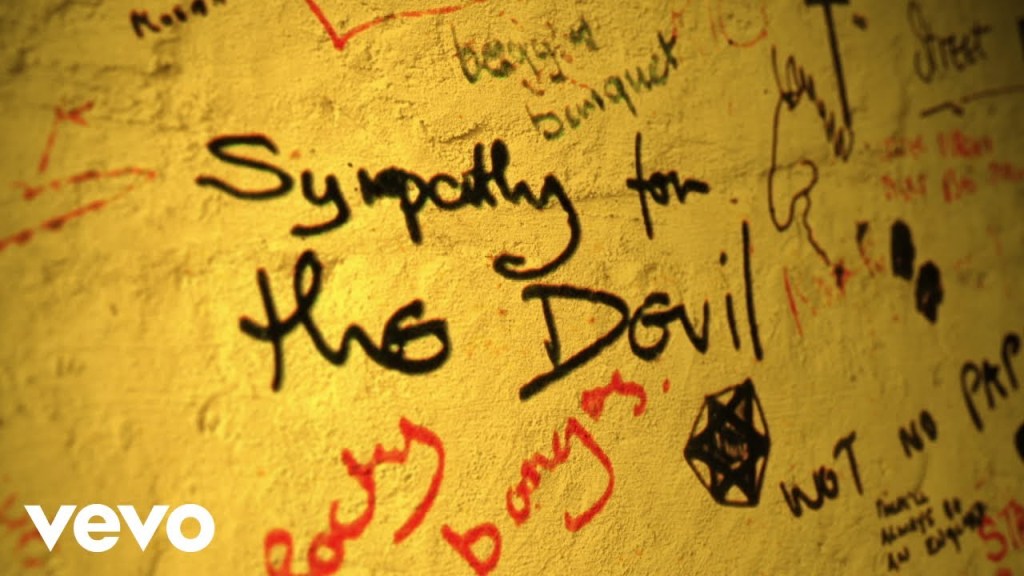
The latest “Song of the Day” is very near and dear to my blues-covered metal heart. I consider it one of the best rock ‘n’ roll songs ever created. It’s been covered by numerous bands in the decades since it’s initial release but I will always consider the original as the best. The latest song of the day is The Rolling Stones’ “Sympathy for the Devil”.
This song was released in the early days of December 1968. It was the opening track for The Rolling Stones’ latest album (Beggars Banquet) at that date. What makes this song so great is how simple the song really comes across. It doesn’t have the typical blues rock tone of previous Stones’ songs until Keith Richard’s guitar solo around the 2:55 mark. The song definitely sounds more like a combination of folk rock (by way of it’s spoken word-like lyrics) and a samba (due to the incorporation of additional percussions like the congas).
“Sympathy for the Devil” has been called a confession song while others see it as the narcissistic bragging of the narrator. Both viewpoints are quite valid and there are more as every listener of this song hears and imagines different themes. I always saw it as a combination of the two. It’s Lucifer’s confession and bragging about his role in the tumultuous and evil events in man’s history. It’s a song that its narrator wants to understand and admit that while he has been there through all those dark moments in history, he wouldn’t have been able to do what he’s done if not for people allowing him in and becoming complicit.
Sympathy for the Devil
Please allow me to introduce myself I’m a man of wealth and taste I’ve been around for a long, long years Stole many a man’s soul and faith
And I was ’round when Jesus Christ Had his moment of doubt and pain Made damn sure that Pilate Washed his hands and sealed his fate
Pleased to meet you Hope you guess my name But what’s puzzling you Is the nature of my game
I stuck around St. Petersburg When I saw it was a time for a change Killed the czar and his ministers Anastasia screamed in vain
I rode a tank Held a general’s rank When the blitzkrieg raged And the bodies stank
Pleased to meet you Hope you guess my name, oh yeah Ah, what’s puzzling you Is the nature of my game, oh yeah (woo woo, woo woo)
I watched with glee While your kings and queens Fought for ten decades For the gods they made (woo woo, woo woo)
I shouted out, “Who killed the Kennedys?” When after all It was you and me (who who, who who)
Let me please introduce myself I’m a man of wealth and taste And I laid traps for troubadours Who get killed before they reached Bombay (woo woo, who who)
Pleased to meet you Hope you guessed my name, oh yeah (who who) But what’s puzzling you Is the nature of my game, oh yeah, get down, baby (who who, who who)
Pleased to meet you Hope you guessed my name, oh yeah But what’s confusing you Is just the nature of my game (woo woo, who who)
Just as every cop is a criminal And all the sinners saints As heads is tails Just call me Lucifer ‘Cause I’m in need of some restraint (who who, who who)
So if you meet me Have some courtesy Have some sympathy, and some taste (woo woo) Use all your well-learned politesse Or I’ll lay your soul to waste, um yeah (woo woo, woo woo)
Pleased to meet you Hope you guessed my name, um yeah (who who) But what’s puzzling you Is the nature of my game, um mean it, get down (woo woo, woo woo)
Woo, who Oh yeah, get on down Oh yeah Oh yeah! (woo woo)
Tell me baby, what’s my name Tell me honey, can ya guess my name Tell me baby, what’s my name I tell you one time, you’re to blame
Oh, who woo, woo Woo, who Woo, woo Woo, who, who Woo, who, who Oh, yeah
What’s my name Tell me, baby, what’s my name Tell me, sweetie, what’s my name
Woo, who, who Woo, who, who Woo, who, who Woo, who, who Woo, who, who Woo, who, who Oh, yeah Woo woo Woo woo
Co-written with Keith Richards and Mick Jagger, Sister Morphine was originally recorded by Faithfull in 1969 but her recording was initially banned in the United Kingdom due to the song’s drug-related content. The Rolling Stones would go on to release a version of the song in 1971 and Faithfull would record and release the song a second time in 1979.
Here I lie in my hospital bed Tell me, Sister Morphine When are you coming around again? Oh I don’t think I can wait that long Oh you see that my pain is so strong
All the other patients say They’ve never seen a man with such pain Tell me, Sister Morphine When are you coming round again? Oh I don’t think I can wait that long Oh you see that I’m not that strong
The scream of the ambulance Is sounding in my ear So tell me, Sister Morphine How long have I been lying here? What am I doing in this place? Why does the doctor have no face? Oh I can’t crawl across the floor Can’t you see, Sister Morphine? Just tryin’ to score
Well the actions go to show Things are not what they seem Please, Sister Morphine Turn my nightmare into dream Oh can’t you see that I’m fading fast? And this shot will be the last
Please, cousin Cocaine Lay your cool hands on my head Hey, Sister Morphine You better make up the black bed ‘Cause you know and I know That you want me, I’ll be dead You sit around and watch The clean white sheets stained red
What do you get when you set David Bowie and Mick Jagger loose in an abandoned flour mill?
You get the video for their version of Dancing In The Street. Their cover of the classic tune by Martha Reeves and the Vandellas was recorded to raise money for the Live Aid famine relief charity. The video was shown twice during the Live Aid event and it also aired before theatrical showings of Ruthless People, a film for which Jagger had contributed to the soundtrack. The video was also a hit on MTV, where it helped to introduce both Bowie and Jagger to a new generation of listeners.
The video was directed by David Mallet, who did the majority of Bowie’s videos in the 80s and 90s.
Are you sick of the lockdowns? Are you tired of hearing about the Coronavrius? Do you really want to just get back to living your life and doing what you want without having to worry all the time?
Well, Mick Jagger and Dave Grohl feel the same way! They’ve written a song about it and made a video. Let’s listen and take a look, shall we?
Hell yeah!
Now, there’s some people on twitter (yes, I know) who are convinced that Mick is being serious when he says that the vaccine is going to allow Bill Gates to enter a person’s blood stream. Myself, I think it’s pretty clear that Mick is being sarcastic. I would say that this song speaks for all of us who are equally sick of both the scolds and the conspiracy theorists. Mostly this song is just about wanting to get on with one’s life and for the pandemic to just become a bad memory. Who can’t relate to that?
Yesterday was the 76th birthday of Sir Michael Phillip Jagger so it seems appropriate to give him today’s music video of the day slot. Visions of Paradise was the first video off of Mick Jagger’s fourth solo album, Goddess in the Doorway.
This video was directed by Dave Meyers, who is one of those music video directors who seems to have worked with everyone. If you look over the list of videos he’s directed, you’ll see everyone from Master P to Kid Rock to Pink and Taylor Swift.
After you watch Woodstock, you owe it to yourself to watch another documentary from 1970. This one is called Gimme Shelter and it deals with the infamous Altamont Free Concert. Taking place a few months after Woodstock, Altamont was originally envisioned as being Woodstock West but, as Gimme Shelter illustrates in disturbing detail, it ultimately became something far different.
Here are a few images from both Gimme Shelter and the Altamont Free Concert:
This is Mick Jagger, the lead singer of The Rolling Stones. The Rolling Stones were the final act to perform at the Altamont Free Concert and their performance was meant to be the conclusion of their 1969 American tour. Gimme Shelter was originally meant to be a documentary about the final days of the tour and clips of a confident and charismatic Jagger performing in Madison Square Garden are sprinkled throughout the first 40 minutes of the film. They provide a striking contrast to the chaos of the second half of the film, in which Jagger finds himself ineffectually trying to maintain order as fights break out in front of the stage.
This is Charlie Watts, the Rolling Stones’s drummer. Though Gimme Shelter is usually referred to as being a documentary about the Rolling Stones, the film pretty much centers around Mick and Charlie. Gimme Shelter‘s framing device involves Mick and Charlie watching a rough cut of the documentary itself. While Mick always seems to maintain an air of deliberate detachment, Charlie seems to be visibly disturbed by what happened during their performance at Altamont.
(In another memorable scene, the group is shown listening to their latest recording. While this rest of the group plays up to the filmmakers, Charlie quietly takes in the music and appears to be surprised when he notices that he’s being filmed.)
This is the Melvin Belli. An attorney, Belli appears throughout the first half of Gimme Shelter, making the arrangements for the Altamont Free Concert and obviously having a great time showing off for the camera. At one point, Belli makes a comment about opening for the Stones. While Belli’s joking, it’s obvious from the tone of his voice that he’d love nothing more than to do so. In fact, Belli is so busy being entertaining that he really doesn’t seem to notice that, even during the planning stages, the Altamont Free Concert doesn’t sound like a good idea.
This is Sonny Barger, a founding member of the Hell’s Angels. He’s standing on the Altamont stage, watching Mick Jagger perform. Why is Barger on stage? He’s there because, for some reason, someone thought it would be a good idea to hire the Hell’s Angels to handle security at the concert. (Barger is heard, in the film, saying that he was told that he could sit on the stage and drink beer and all he had to do was keep anyone else from approaching the musicians.)
What is Barger thinking as he watches Jagger perform? This is a question that I think anyone who has ever watched Gimme Shelter has asked themselves. Is he annoyed with or menacing Jagger or is he just doing his job and making sure that no one rushes the singer? Perhaps it’s all of the above.
The man in green is Meredith Hunter. This shot is the first time that Hunter appears in the film. The second time is when he’s getting stabbed to death by a member of the Hell’s Angels security force. Watching the documentary, Jagger asks to rewatch the scene of Hunter’s murder. The filmmakers slow down the scene and show him both the knife being held by the Hell’s Angel and the gun being held by Hunter.
Even before Hunter’s death, Gimme Shelter has already shown us enough to convince us that the counter culture dream of Woodstock was the exception as opposed to the rule. The final hour of Gimme Shelter takes place at the Altamont Free Concert and almost every scene feels like an angry rebuke to the positivity of Woodstock. The crowds were angrier. The scenery was far less aesthetically pleasing. (Woodstock took place on a farm. Altamont took place on a cement race track.) Whereas Woodstock famously featured warnings about the “brown acid,” Gimme Shelter features one of the concert promoters reacting to concerns about the bad acid circulating in the crowd by saying, “Tough shit.” Even the naked people at Altamont were far less attractive than the naked people at Woodstock. Jefferson Airplane played at both festivals. At Woodstock, they apparently had sound issues but otherwise, there were no problems. At Altamont, as the cameras rolled, lead singer Marty Balin was knocked unconscious by a Hell’s Angel with a pool cue.
(“I’d like to mention that the Hell’s Angels just smashed Marty Balin in the face and knocked him out for a bit. I’d like to thank you for that,” one of the members of the band announced.)
A few more images from Altamont:
Before the concert starts, this man cheerfully yelled “LSD! Mescaline!” at everyone walking by. I’m not sure if that was his dog or not. But speaking of dogs…
…this dog casually wandered across the stage during the Rolling Stones’s performance. It’s never clear where he came from or where he went after he left the stage.
Even with the Hell’s Angels beating up everyone in sight, a few people still enjoyed the concert. This is who I relate to in the film because she was determined to enjoy herself no matter how weird things got.
But then there’s this guy, who was standing only a few feet away from Jagger when he started to freak out:
If Woodstock is ultimately all about peace and life, Gimme Shelter is a film that is suffused with conflict and death. If you’re going to watch one, you owe it to yourself to watch the other. In the end, the two documentaries together provide us with a view of a counterculture that had so much potential but which couldn’t escape the darkness that hid behind the light.
(Interestingly enough, future director George Lucas was one of the cameramen at Altamont that day. Just as how Altamont was often cited as the end of the 60s, the blockbuster success of Lucas’s Star Wars would often be cited as the beginning of the 80s.)
I’ll end this review with a quote from Grace Slick, one that is still relevant today. As she said as she watched Altamont descend into chaos: “You don’t hassle with anybody in particular. You gotta keep your bodies off each other unless you intend love. People get weird, and you need people like the Angels to keep people in line. But the Angels also – you know, you don’t bust people in the head – for nothing. So both sides are fucking up temporarily; let’s not keep FUCKING UP!”
In the 1970 film Performance, a sadistic gangster named Chas (James Fox) goes on the run and ends up hiding out in a mansion that’s currently occupied by a burned-out rock star named Turner (Mick Jagger). Turner, we’re told, used to be great but then he “lost his demon.” Could Chas be his new demon?
Well, before the answer to that question can be revealed, Chas ends up under the influence of hallucinogenic mushrooms and that’s when he sees Turner transformed into a London mob boss and performing Memo From Turner, a song about his exploits.
Though this is a scene from a movie, it’s still most definitely a music video. In fact, it’s frequently cited as the first “true” music video. (I imagine that John’s Children, Procol Harum, and Nancy Sinatra would disagree.) Still, even if it’s not the first, it’s influence on subsequent videos is undeniable.
I have to admit that I’m always a little bit cynical whenever I hear various film fans bemoaning films that were never made. These are the films that were nearly made but ended up being abandoned because the production company ran out of money or maybe a lead actor died or maybe the studio refused to release it or else they released it in a heavily edited form. There’s a certain tendency among hipsters to decide that any movie that they will never be able to see would automatically have been the greatest film ever. It’s rare that anyone ever suggests that maybe it’s for the best that Stanley Kubrick never made his version of Napoleon or that maybe Ridley Scott’s version of I Am Legend would have been just as bad as the version that starred Will Smith or even that the footage that we have of Orson Welles’s unfinished The Other Side of The Wind doesn’t look that impressive.
In fact, some day, I want to see a documentary about an abandoned film where everyone says, “Oh my God, I’m glad that movie never got made. It would have sucked!”
However, that documentary is never going to be made. The great thing about praising a film that was never made was that you don’t have to worry about anyone watching the film and then going, “You have no idea what you’re talking about!”
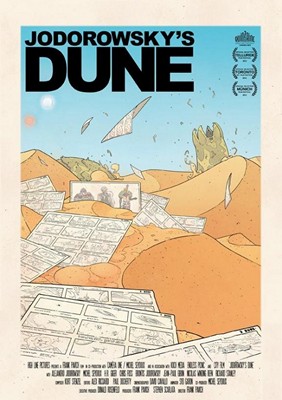
For instance, I recently watched an excellent documentary called Jodorowsky’s Dune. This film tells the story of how the iconoclastic director Alejandro Jodorowsky attempted to make a film out of the science fiction novel Dune in the mid-70s. During the documentary, Jodorowsky explains that his version of the story would, in many ways, be different from the book. Since I’ve never read the book nor have I seen any of the various adaptations that actually were eventually produced, I can’t say whether Jodorowsky’s changes would have been an improvement. For that matter, I can’t say whether or not Jodorowsky’s film would have been great or if it would have been a legendary misfire. I’ve seen El Topo and The Holy Mountain so I’m pretty sure that his version of Dune would have been uniquely his own. But there’s no way for me — or anyone else for that matter — to say whether or not the film would have been any good because, after assembling an intriguing cast (Orson Welles, Mick Jagger, Salvador Dali, and David Carradine) and recruiting several talented artists and technicians (H.R. Giger, Dan O’Bannon, Chris Foss, and Moebius), Jodorowsky was never able to make his film. The Hollywood studios took one look at Jodorowsky’s vision and said, “There’s no way were paying for that.”
However, the documentary goes on to make a very intriguing argument that Jodorowsky’s Dune may be the most influential film never made. Many of the people who collaborated with Jodorowsky would go on to work on other science fiction films and, when they did, they brought with them many of the ideas and concepts that were originally developed for Dune. The documentary not only suggests that this might be true but also offers up some pretty compelling evidence, showing us how everything from Raiders of the Lost Ark to Prometheus has featured scenes that originally appeared in Jodorowsky’s Dune storyboards.
I may not be totally convinced that Jodorowsky’s Dune would have been the greatest film ever made but I love this documentary. The majority of it is spent just listening as Jodorowsky, alternating between English and Spanish, tells us the story of what he hoped to do with Dune and how, ultimately, he could not do it. Jordorowsky’s love of film and art is obvious with each word that he says. Whether he’s talking about meeting Salvador Dali or passionately advocating for creativity and imagination, Alejandro Jodorowsky is never less than charming and inspiring.
If you love movies, you’ll love Jodorowsky’s Dune. If you don’t love movies, Jodorowsky’s Dune will change your mind.


 Through the Shattered Lens