Retro Television Review: St. Elsewhere 3.2 “Playing God: Part Two”


Welcome to Retro Television Reviews, a feature where we review some of our favorite and least favorite shows of the past! On Fridays, I will be reviewing St. Elsewhere, a medical show which ran on NBC from 1982 to 1988.  The show can be found on Daily Motion.
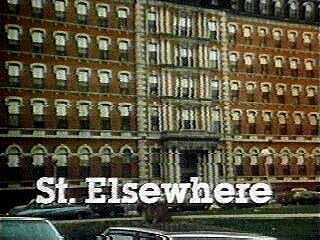
This week, the hospital is a depressing place.

Episode 3.2 “Playing God: Part Two”

(Dir by Bruce Paltrow, originally aired on September 26th, 1984)

There was a lot going on in this episode.

Sister Domenica demanded that Sister Theresa be taken off of life support and she threatened to sue the hospital if it didn’t happen.  This led to Dr. Westphall telling another long and depressing story about his dead wife.  I don’t mean to be flippant about anyone’s tragedies but it’s hard not to notice that almost everything seems to lead to Westphall telling a depressing story.  Westphall is one of the most saddest television characters that I’ve ever come across.

The nurses are closer to striking.  A labor negotiator named Richard Clarendon (Herb Edelman) is brought in by the nurses and it’s hard not to notice that he looks a lot like Helen Rosenthal’s ex-husband.  I think I can already guess where this is heading.

A sick child was brought in by a woman (Tammy Grimes) who claimed to be his fairy godmother.  This gave Fiscus an excuse to get a consultation from Kathy Martin, who has abandoned the morgue for psychiatry and who is no longer dressing exclusively in black.

At home, Dr. Craig struggled with impotence.  At the hospital, Dr. Ehrlich gave an awkward lecture about whether or not one can have sex after heart surgery.

The firefighters are still recovering from their burns.

Clancy got an abortion, despite Morrison’s objections.

And yet, all that drama was overshadowed by the fact that the Dr. Peter White — the drug-addicted rapist who nearly killed more than a few patients due to his own incompetence — is once again walking the halls of St. Eligius.  White won his lawsuit.  I’m not really sure that I understand what the basis of his lawsuit was.  St. Eligius could only ask a select number of residents to return and, even if you overlook the fact that White was accused of rape, it’s not as if Dr. White was ever an especially competent doctor.  It would seem that just his struggle with drug addiction would be enough to justify not asking him to return.  And yet, somehow, Dr. Peter White is once again a resident at St. Eligius.  (The ruling was probably handed down by a Carter judge.)

“You just can’t admit that you were wrong about me!” White snaps at Westphall.

Westphall replies that White is a terrible human being and not worthy of being a doctor and that he will not be allowed to work with any patients at the hospital.  And, for once, I wanted to cheer Dr. Westphall.  He may be depressing but he understands exactly who and what Peter White is.

Whatever the future may hold for the hospital, I have a feeling that it’s not going to be happy.  Two episodes in and the third season has already settled into a pit of melancholy.  That said, melancholy is perhaps the right mood for a medical show.  When it comes to hospitals, there aren’t many happy endings.
Retro Television Review: St. Elsewhere 3.1 “Playing God, Part One”


Welcome to Retro Television Reviews, a feature where we review some of our favorite and least favorite shows of the past! On Fridays, I will be reviewing St. Elsewhere, a medical show which ran on NBC from 1982 to 1988.  The show can be found on Daily Motion.

Today, we start the third season of St. Elsewhere with some new opening credits!

Episode 3.1 “Playing God, Part One”

(Dir by Bruce Paltrow, originally aired on September 19th, 1984)

The opening of the third season finds that St. Eligius is just as depressing as it’s ever been.

Fiscus leads a group of new residents, including Dr. Elliott Axelrod (played by new series regular Stephen Furst), through the hospital.  Fiscus comes across as being an arrogant jackass.  I guess that’s the appeal of being a second-year resident.  You get to look down on all of the first-years.

Jack is still dating Clancy (young Helen Hunt).  When Clancy tells Jack that she’s pregnant, he’s shocked when she says she’s planning on getting an abortion.  Jack proposes to her.  Clancy says she’s not ready to get married and she’s not ready to have a baby.

Dr. Craig is still yelling at Dr. Ehrlich.  Dr. Ehrlich is still annoying the nurses.

Speaking of the nurses, they’re going on strike!

Three firefighters (one of whom is played by Erin Hudson) are injured while on the job and are rushed to St. Eligius with severe burns.  Luckily, plastic surgeon Bobby Caldwell (Mark Harmon, without that terrible mustache he wore during season two) is on call.

Dr. Peter White is working in a shady clinic and is still suing for his right to be a resident.

A traffic accident leaves one nun in a coma and apparently brain-dead.  Sister Doemnica (Michael Learned) wants to take her off life-support.  Westphall (Ed Flanders), who seems even more depressed than usual, disagrees.  It looks like there’s going to be some conflict about this.  For once, I’m on Westphall’s side.  I’m believer in hope.

Auschlander is still battling his cancer.

In other words, it’s another day at St. Eligius.  The third season premiere did a good job of re-introducing viewers to the hospital.  The snarkiness of Fiscus’s tour nicely balanced all of the more dramatic moments in the episode.  If anything has me worried, it’s the possible return of the loathsome Peter White.  How is the hospital going to deal with the return of a man who they all know is a rapist, even if he was somehow acquitted?  I guess we’ll find out.

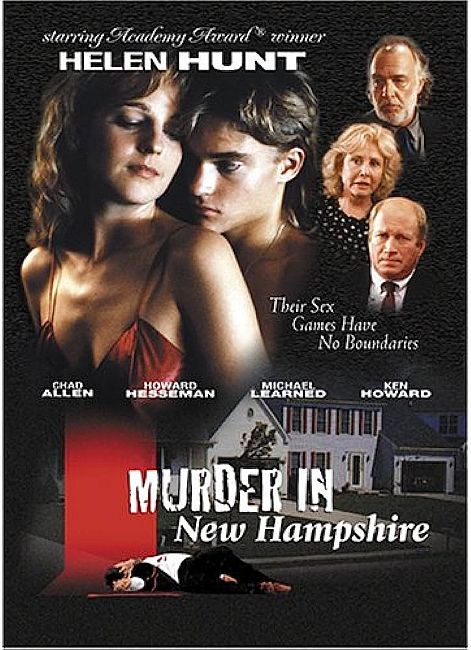
Retro Television Reviews: Murder In New Hampshire: The Pamela Smart Story (dir by Joyce Chopra)


Welcome to Retro Television Reviews, a feature where we review some of our favorite and least favorite shows of the past!  On Sundays, I will be reviewing the made-for-television movies that used to be a primetime mainstay.  Today’s film is 1991’s Murder In New Hampshire: The Pamela Smart Story!  It  can be viewed on YouTube!

When Pamela Wojas (Helen Hunt) first became engaged to Gregg Smart (Hank Stratton), she thought that they would never get older or settle down to a conventional life.  She thought that Gregg would always have long hair and that they would spend the rest of their lives following Van Halen around the country.  But then Gregg got a job with a New Hampshire insurance company and he cut his hair.  And then Pam failed in her attempts to get hired by the local news station and instead, she ended up accepting a job as the part-time media director at a local high school.

Pam spearheaded the school’s anti-drug campaign and ended up working closely with two students in particular, Billy Flynn (Chad Allen) and Cecelia Pierce (Riff Reagan).  Billy and Pam bonded over their shared love of Van Halen and soon, they were having an affair.  Was Pam just trying to relive her youth or was she already setting up Billy to murder her husband?

Based on the true story that also inspired Gus Van Sant’s To Die For, Murder In New Hampshire jumps back and forth through time.  The film opens with Gregg being shot and killed by Billy and one of his friends.  It then cuts to a courtroom, where a prosecutor (Howard Hesseman) tells the jury that Gregg was murdered on the orders of his own wife.  A very conservatively and modestly-dressed Pam sits in the courtroom and provides quite a contrast to the far more wild and hedonistic Pam who we see in the film’s frequent flashbacks.  While Gregg settles comfortably into life as a suburban insurance agent, Pam continually tries to hold onto her past.  While Gregg wins awards for selling the most insurance, Pam tells Billy that Gregg beats her and that he’s dangerous.

It’s difficult to watch Murder In New Hampshire without comparing it To Die For.  They both tell the same story and they even use the same flashback structure.  But if To Die For presented Nicole Kidman as being a soulless killer who was driven by her obsession with being a star, Murder In New Hampshire suggests that Pam’s main motivation was that she just couldn’t handle the idea of settling down and living a conventional, suburban life.  As well, To Die For presented Joaquin Phoenix’s gunman as being someone who was essentially incapable of thinking for himself.  In Murder In New Hampshire, Billy is far more active character.  Though he is undoubtedly manipulated by Pam, Billy is still portrayed as someone who made his own decision to get involved in Pam’s schemes.  If To Die For is a stylized satire of the true crime genre, Murder In New Hampshire is the epitome of what was being satirized.

That said, Murder In New Hampshire is a good example of the true crime genre, largely due to Helen Hunt’s wonderful performance as Pam Smart.  Hunt plays Pam as someone who has never grown up and who is so scared of being required to that she’ll even resort to murder to pull it off.  While Murder In New Hampshire never quite escapes the shadow of To Die For, it’s still an effective film when taken on its own terms.

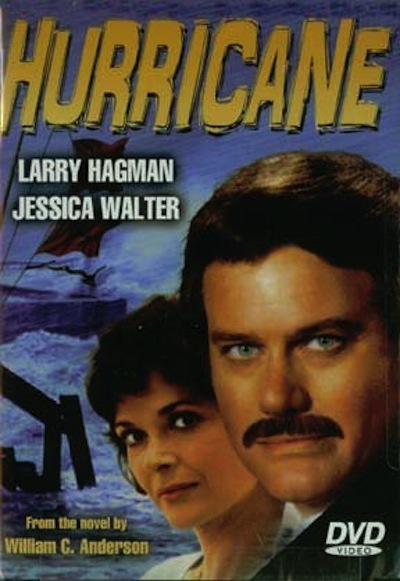
Hurricane (1974, directed by Jerry Jameson)


Hurricane Hilda is crashing down on the Gulf Coast and everyone in its path is about to get all wet.  While Will Geer and Michael Learned try to warn everyone about the approaching hurricane, coast guard pilot Martin Milner observes the storm from the air and tires to rescue everyone in its path.  Some people listen and some people don’t.  Milner’s own father, played by Barry Sullivan, ends up getting stranded in a cabin while Larry Hagman and Jessica Walter play a married couple on a boat who find themselves sailing straight into the storm.  On temporarily dry land, Frank Sutton (a.k.a. Gomer Pyle’s Sgt. Carter) plays a homeowner who refuses to evacuate because he’s convinced that he knows everything there is to know about hurricanes.  He and the neighbors have a drunken party while waiting for the storm.  When Patrick Duffy and his wife announce that they’re heading for safety, Sutton demands that they come in and have a beer with him.  When Hilda finally makes landfall, some survive and some don’t.

Hurricane is a by-the-numbers disaster movie.  It was made after The Poseidon Adventure and during the same year as The Towering Inferno and it hits all the usual disaster movie beats.  Survival is determined by karma, with Hilda going after anyone who was too big of a jerk during the first half of the movie.  It’s predictable stuff but it does feature footage from an actual hurricane so it’s at least not too dragged down by any of the bad special effects that always show up in made-for-TV disaster films.

This is one of those films where the cast was probably described as being all-star, even though most of them were just TV actors who needed a quick paycheck.  Seen today, the film feels like a MeTV reunion special.  Years before they played brothers in Dallas, both Larry Hagman and Patrick Duffy appeared in Hurricane, though neither of them shares any scenes.  Will Geer and Michael Learned were starring on The Waltons when they appeared in this movie and they’re in so few scenes that they probably shot their scenes over a weekend before returning to Walton’s Mountain.  The best performance is from Frank Sutton, who died of a heart attack just a few weeks after this movie aired.  He’s a convincing hothead, even if he doesn’t have Gomer around to yell at.

Hurricane may be bad but it’s still not as terrible as most made-for-TV disaster movies.  People who enjoy watching TV actors pretending to stare at a tidal wave of water about to crash down on them will find this film to be an adequate time waster.