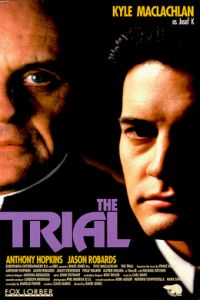
One morning, in turn of the century Prague, Josef K. (Kyle MacLachlan) wakes up to discover that two detectives are in his room. They tell him that he is under arrest but they do not tell him the charges. Josef remains free to go about his everyday life but he must report to the court whenever the court deems to see him. No matter where Josef turns or who he talks to, he cannot get any answers concerning what he has been charged with. Even his disinterested attorney (Jason Robards) can not give him a straight answer on why he is being prosecuted. No matter how much Josef protests that he is innocent of whatever has been accused of, his fate has already been decided.
On paper, this film version of Franz Kafka’s classic novel sound like it should be a masterpiece. The film was shot on location in Prague, the script was written by Harold Pinter, and Kyle MacLachlan seems like the perfect choice for Josef K. Unfortunately, director David Jones takes a very straightforward approach to the material and does not exploit the story’s nightmarish qualities. This is a version of Kafka that could easily play on Masterpiece Theater. (The perfect choice to direct The Trial would have been MacLachlan’s frequent director, David Lynch.) MacLachlan does well as Josef K. but he is overshadowed by a steady and distracting stream of cameos from actors like Anthony Hopkins, Alfred Molina, and David Thewlis.
Despite not being totally faithful to its source material, Orson Welles’s 1962 adaptation, which stars Anthony Perkins as Josef K., remains the version to see.
So, you want to be a rock and roll star? Then listen now to what I say: just get an electric guitar and take some time and learn how to play. And when your hair’s combed right and your pants fit tight, it’s gonna be all right.
If you need any more help, try watching these four films:
The Idolmaker (1980, directed by Taylor Hackford)
The Idolmaker is a movie that asks the question, “What does it take to be a star? Who is more interesting, the Svengalis or the Trilbys?” The year is 1959 and Vinny Vacari (Ray Sharkey, who won a Golden Globe for his performance but don’t let that dissuade you from seeing the movie) is a local kid from New Jersey who dreams of being a star. He has got the talent. He has got the ambition and he has got the media savvy. He also has a receding hairline and a face like a porcupine.
Realizing that someone who looks like him is never going to make hundreds of teenage girls all scream at once, Vinny instead becomes a starmaker. With the help of his girlfriend, teen mag editor Brenda (Tovah Feldshuh) and a little payola, he turns saxophone player Tomaso DeLorussa into teen idol Tommy Dee. When Tommy Dee becomes a star and leaves his mentor, Vinny takes a shy waiter named Guido (Peter Gallagher) and turns him into a Neil Diamond-style crooner named Cesare. Destined to always be abandoned by the stars that he creates, Vinny continually ends up back in the same Jersey dive, performing his own songs with piano accompaniment.
The Idolmaker is a nostalgic look at rock and roll in the years between Elvis’s induction into the Army and the British invasion. The Idolmaker has some slow spots but Ray Sharkey is great in the role of Vinny and the film’s look at what goes on behind the scenes of stardom is always interesting. In the movie’s best scene, Tommy performs in front of an audience of screaming teenagers while Vinny mimics his exact moments backstage.
Vinny was based on real-life rock promoter and manager, Bob Marcucci. Marcucci was responsible for launching the careers of both Frankie Avalon and Fabian Forte. Marcucci served as an executive producer on The Idolmaker, which probably explains why this is the rare rock film in which the manager is more sympathetic than the musicians.
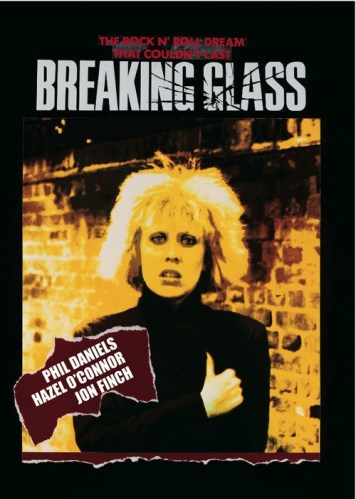
Breaking Glass (1980, directed by Brian Gibson)
At the same time that TheIdolmaker was providing American audiences with a look at life behind-the-scenes of music stardom, Breaking Glass was doing the same thing for British audiences.
In Breaking Glass, the idolmaker is Danny (Phil Daniels, who also starred in Quadrophenia) and his star is an angry New Wave singer named Kate (Hazel O’Connor). Danny first spots Kate while she is putting up flyers promoting herself and her band and talks her into allowing him to mange her. At first, Kate refuses to compromise either her beliefs or her lyrics but that is before she starts to get famous. The bigger a star she becomes, the more distant she becomes from Danny and her old life and the less control she has over what her music says. While her new fans scare her by all trying to dress and look like her, Kate’s old fans accuse her of selling out.
As a performer, Hazel O’Connor can be an acquired taste and how you feel about Breaking Glass will depend on how much tolerance you have for her and her music. (She wrote and composed all of the songs here.) Breaking Glass does provide an interesting look at post-punk London and Jonathan Pryce gives a good performance as a sax player with a heroin addiction.
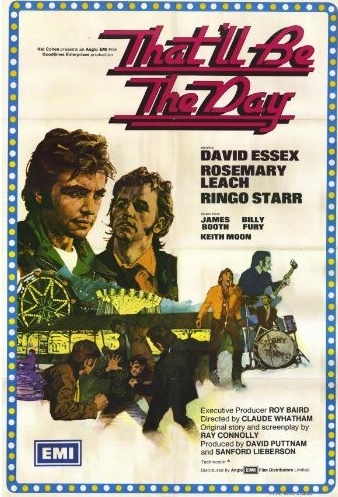
That’ll Be The Day (1973, directed by Claude Whatham)
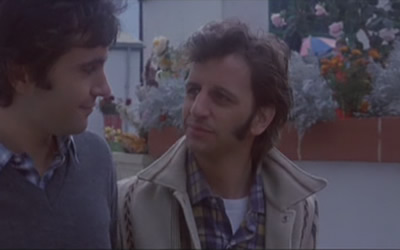
Real-life teen idol David Essex plays Jim MacClaine, a teenager in 1958 who blows off his university exams and runs away to the Isle of Wright. He goes from renting deckchairs at a resort to being a barman to working as a carny. He lives in squalor, has lots of sex, and constantly listens to rock and roll. Eventually, when he has no other choice, he does return home and works in his mother’s shop. He gets married and has a son but still finds himself tempted to abandon his family (just as his father previously abandoned him) and pursue his dreams of stardom.
Based loosely on the early life of John Lennon, the tough and gritty That’ll Be The Day is more of a British kitchen sink character study than a traditional rock and roll film but rock fans will still find the film interesting because of its great soundtrack of late 50s rock and roll and a cast that is full of musical luminaries who actually lived through and survived the era. Billy Fury and the Who’s Keith Moon both appear in small roles. Mike, Jim’s mentor and best friend, is played by Ringo Starr who, of all the Beatles, was always the best actor.
That’ll Be The Day ends on a downbeat note but it does leave the story open for a sequel.
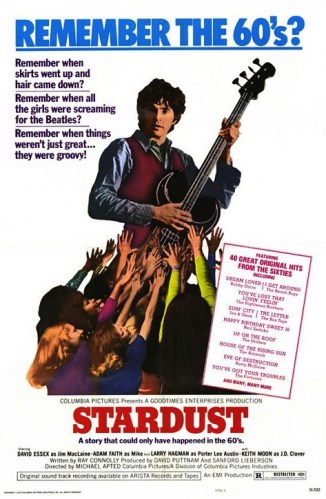
Stardust (1974, directed by Michael Apted)
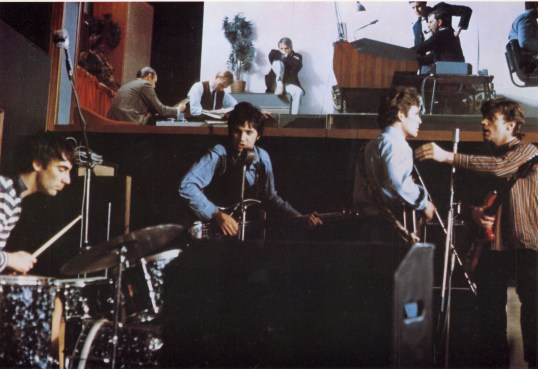
Stardust continues the story of Jim MacClaine. Jim hires his old friend Mike (Adam Faith, replacing Ringo Starr) to manage a band that he is in, The Straycats (which includes Keith Moon, playing a far more prominent role here than in That’ll Be the Day). With the help of Mike’s business savvy, The Stray Cats find early success and are signed to a record deal by eccentric Texas millionaire, Porter Lee Austin (Larry Hagman, playing an early version of J.R. Ewing).
When he becomes the breakout star of the group, Jim starts to overindulge in drugs, groupies, and everything that goes with being a superstar. Having alienated both Mike and the rest of the group, Jim ends up as a recluse living in a Spanish castle. Even worse, he gives into his own ego and writes a rock opera, Dea Sancta, which is reminiscent of the absolute worst of progressive rock. Watching Jim perform Dea Sancta, you understand why, just a few years later, Johnny Rotten would be wearing a homemade “Pink Floyd Sucks” t-shirt.
Stardust works best as a sad-eyed look back at the lost promise of the 1960s and its music. Watch the movie and then ask yourself, “So, do you really want to be a rock and roll star?”
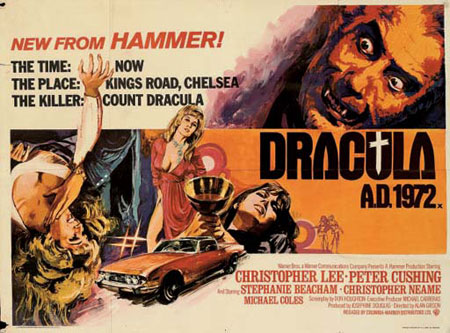
Dracula A.D. 1972 opens in 1872 with a genuinely exciting fight on a runaway carriage that ends with the death of both Count Dracula (Christopher Lee) and his nemesis, Prof. Van Helsing (Peter Cushing). However, as Van Helsing is buried, we see one of Dracula’s disciples (played by Christopher Neame, who had an appealingly off-kilter smile) burying Dracula’s ashes nearby. The camera pans up to the clear Victorian sky and, in a sudden and genuinely effective jumpcut, we suddenly see an airplane screeching across the sky.
Well, it’s all pretty much downhill from there. Suddenly, we discover that a hundred years have passed and we are now in “swinging” London. The city is full of red tourist buses, hippies wearing love beads, and upright policemen who always appear to be on the verge of saying, “What’s all this, then?” We are introduced to a group of hippies that are led by a creepy guy named Johnny Alculard (also played — quite well, actually — by Christopher Neame). One of those hippies (Stephanie Beacham) just happens to be the great-great-granddaughter of Prof. Van Helsing. Apparently, she’s not really big on the family history because she doesn’t notice that Alculard spells Dracula backwards. Then again, her father (played by Peter Cushing, of course) doesn’t either until he actually writes the name down a few times on a piece of a paper.
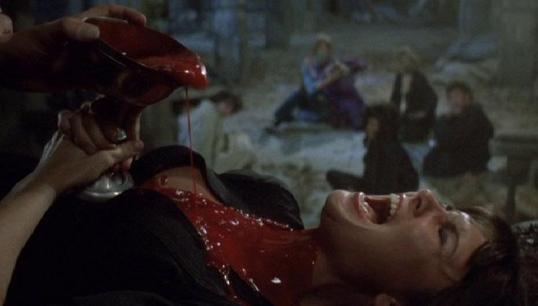
Anyway, the film meanders about a bit until finally, Alculard convinces all of his hippie friends to come take part in a black mass. “Sure, why not?” everyone replies. Well, I don’t have to tell you how things can sometimes get out-of-hand at black mass. In this case, Dracula comes back to life, kills a young Caroline Munro, and eventually turns Johnny into a vampire before then setting his sights on the modern-day Van Helsings.
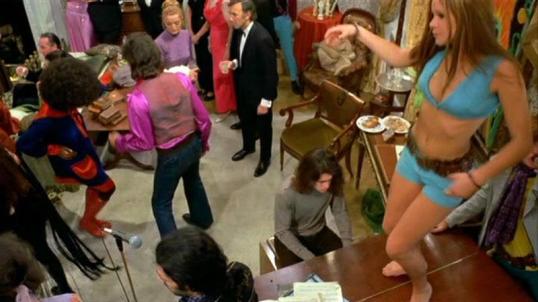
Dracula A.D. 1972 was Hammer’s attempt to breathe some new life into one of its oldest franchises and, as usually happens with a reboot, its critical and (especially) commercial failure ended up helping to end the series. Among even the most devoted and forgiving of Hammer fans, Dracula A.D. 1972 has a terrible reputation. Christopher Lee is on record as regarding it as his least favorite Dracula film. And the film definitely has some serious flaws. Once you get past the relatively exciting pre-credits sequence, the movie seriously drags. There’s a hippie party sequence that, honest to God, seems to last for about 5 hours. As for the hippies themselves, they are some of the least convincing middle-aged hippies in the history of fake hippies. You find yourself eagerly awaiting their demise, especially the awkward-looking one who — for some reason — is always dressed like a monk. (Those crazy hippies!) But yet…nothing happens. All the fake hippies simply vanish from the film. Yet, they’re so annoying in just a limited amount of screen time that the viewer is left demanding blood. Add to that, just how difficult is it to notice that Alculard is Dracula spelled backwards? I mean, seriously…
To a large extent, the charm of the old school Hammer films comes from the fact that they’re essentially very naughty but never truly decadent. At their heart, they were always very old-fashioned and actually quite conservative. The Hammer films — erudite yet campy, risqué yet repressed — mirrors the view that many of my fellow Americans have of the English. For some reason, however, that Hammer naughtiness only works when there’s the sound of hooves on cobblestone streets and when the screen is populated by actors in three-piece suits and actresses spilling out of corsets. Dracula A.D. 1972 did away with the support of the corset and as a result, the film is revealed as a formless mess with all the flab revealed to the world.
Still, the film isn’t quite as bad as you may have heard. First off, the film — with its middle-aged hippies — has a lot of camp appeal. It’s the type of film that, once its over, you’re convinced that the term “groovy” was uttered in every other scene even though it wasn’t. As with even the worst Hammer films, the film features a handful of striking images and Christopher Neame is surprisingly charismatic as Alculard.
As with the majority of the Hammer Dracula films, the film is enjoyable if just to watch the chemistry between Christopher Lee and Peter Cushing. Both of these actors — so very different in image but also so very stereotypically English — obviously loved acting opposite of each other and whenever you see them on-screen together, it’s difficult not to enjoy watching as each one tried to top the other with a smoldering glare or a melodramatic line reading. As actors, they brought out the best in each other, even when they were doing it in a film like Dracula A.D. 1972. In this film, Cushing is like the father you always you wished you had — the stern but loving one who protected you from all the world’s monsters (both real and cinematic).
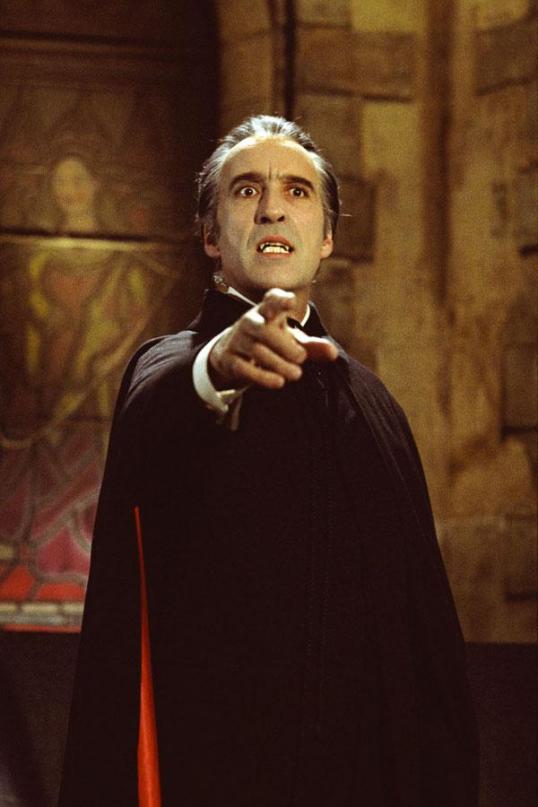
As for Lee, he’s only in six or seven scenes and he has even fewer lines but, since you spend the entire film wondering where he is, he actually dominates the entire movie. Lee apparently was quite contemptuous of the later Hammer Dracula films and, oddly enough, that obvious contempt is probably why, of all the Draculas there have been over the years, Lee’s version is the only one who was and is actually scary. F0rget all of that tortured soul and reluctant bloodsucker crap. Christopher Lee’s Dracula is obviously pissed off from the minute he first appears on-screen, the embodiment of pure destructive evil. And, for whatever odd reason, the purity of his evil brings a sexual jolt to his interpretation of Dracula that those littleTwilight vampires can only dream about. Even in a lesser films like Dracula A.D. 1972, Christopher Lee kicks some serious ass.
So, in conclusion, I really can’t call Dracula A.D. 1972 a good film nor can I really suggest that you should go out of your way to see it.. I mean, I love this stuff and I still frequently found my mind wandering whenever Cushing or Lee wasn’t on-screen. However, it’s not a terrible movie to watch if you happen to find yourself trapped in the house with 90 minutes to kill.
 One morning, in turn of the century Prague, Josef K. (Kyle MacLachlan) wakes up to discover that two detectives are in his room. They tell him that he is under arrest but they do not tell him the charges. Josef remains free to go about his everyday life but he must report to the court whenever the court deems to see him. No matter where Josef turns or who he talks to, he cannot get any answers concerning what he has been charged with. Even his disinterested attorney (Jason Robards) can not give him a straight answer on why he is being prosecuted. No matter how much Josef protests that he is innocent of whatever has been accused of, his fate has already been decided.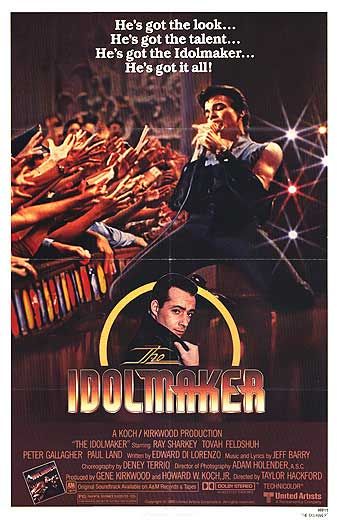
 Through the Shattered Lens