Brad reviews BREAKING IN (1989), starring Burt Reynolds!


BREAKING IN (1989) opens with veteran safecracker Ernie Mullins (Burt Reynolds) pulling a job at a rich guy’s house, only to be surprised when a young, amateurish thief named Mike (Casey Siemaszko) turns up at the same place to raid the fridge. Immediately taking a liking to the kid, Ernie decides to offer Mike a chance to learn his trade. Thus begins a partnership, and odd-couple friendship, where the two men pull a series of jobs together, with Ernie passing on his knowledge to his young protege who seems to be enjoying the sudden influx of cash into this life. Unfortunately, the generation gap causes some problems as Mike doesn’t necessarily take heed to Ernie’s advice to never being too greedy or flashy. Soon, Mike is renting high rise apartments and buying fancy cars with cash. When they pull a big job on the 4th of July, will Mike’s less than frugal ways drag them both down?!

Written by the excellent, independent writer and director John Sayles (MATEWAN, EIGHT MEN OUT) and directed by Scottish director Bill Forsyth (LOCAL HERO), BREAKING IN is a reminder of just how great Burt Reynolds is in the right role. In his 50’s at the time this was filmed, Reynolds gives a relaxed, lived-in, character performance that comes across as effortlessly cool, and he does it without having to rely on his trademark charm and big grin. The late 80’s were a time when Burt was no longer a box office superstar, and BREAKING IN seems to be an unjustly forgotten entry in his hugely successful career. After this, Burt would find TV success on EVENING SHADE, and he’d be nominated for an Oscar for his role in BOOGIE NIGHTS (1997), but his Ernie Mullins stands out to me as one of his last great film roles. Casey Siemaszko is good as Mike, but this is Reynolds’ show and he’s overshadowed even in a solid performance. As far as the other supporting performances, Sheila Kelley stood out to me as a sharp-tongued prostitute who Siemaszko falls in lust with. The poem she shares about a man’s “balls” is a highlight of the film as far as I’m concerned, and further illustrates the quality of Sayles’ screenplay!

I like the way that BREAKING IN feels low-key, even as the characters engage in their various criminal heists. This can be credited to director Bill Forsyth who turns what could have been a standard master / apprentice crime film into something that feels somewhat realistic. The pacing is slow as Reynolds passes on his knowledge, and for some people it may be too slow, but that’s one of the things I really liked about the movie. The two men really get to know each other. That way, when they have disagreements and blow ups a couple of times, they’re still able to respect each other and patch things up. That’s how things are in the real world, as opposed to most movies where a simple disagreement will almost certainly lead to ridiculous consequences. BREAKING IN respects its characters in a way that’s unique to most crime films. 

At the end of the day, BREAKING IN is a gem that is at its best as a lighthearted character study of a professional thief whose time is passing him by. Burt Reynolds rarely got to play roles this subtle, and I think he made the most of the opportunity. As a big fan of Reynolds, I highly recommend this one. 

October True Crime: The Hunt For The BTK Killer (dir by Stephen Kay)


Dennis Rader is pure evil.

I feel confident saying that, though I’ve never met him.  He’s currently eighty years old and in prison, serving several life sentences for a series of murders he committed in the 1970s, the 80s, and the 90s.  Because he committed the murders at a time when Kansas did not have the death penalty, he escaped being executed.  That said, he won’t be eligible for parole until the next century so we can rest assured that Dennis Rader will die in prison.

Dennis Rader was a serial killer who decided to give himself a nickname.  He wrote letter to the local media in Wichita, Kansas and demanded to be known as The BTK Killer — for Bind Them, Torture Them, and Kill Them.  It was a dumbass nickname but it stuck.  Everything about the BTK case is disturbing but one that always gets me is that nearly got away with it.  His last known victim was an elderly woman who he killed in 1991.  By the time the current century rolled around, The BTK Case had gone cold and was being forgotten about.  Rader couldn’t handle that so he started writing the local media and eventually the police again in 2004.  Rader, being a moron, didn’t consider that he was mailing a DNA sample with every letter.  Eventually, he sent the cops as floppy disk of his “writings.”  What he didn’t realize is that the metadata from a deleted Word Document was still stored on the disk.

Dennis Rader was a deacon in his local church.  He was also an dog catcher and compliance officer for Park City, Kansas.  You know the self-important jerks who send you a letter threatening to fine you if you don’t mow your grass?  Dennis Rader was one of those guys.  When Rader was finally arrested, he was described as being a trusted member of his local community but let’s be honest.  Everyone hates their local compliance officers.  Most serial killers are driven by a need to control and dominate.  Perhaps one reason why Rader had stopped killing was because he was able to channel his sadism into his job.

After he was arrested in 2005, he was on television constantly and he was such a continual presence that he even worked his way into a few of my nightmares.  Rader confessed to his crimes in court, giving a monologue in which he dryly discussed each murder.  Later, one of the primetime news shows interviewed Rader in prison and again, Rader discussed each murder in a flat tone and only showed emotion when he talked about the prospect of never leaving prison.  It was disturbing to watch and listen to and sadly, the media made sure that we heard and listened to it a lot.

The Hunt For The BTK Killer was a made-for-television movie about Dennis Rader (played by Gregg Henry) and the detective (Robert Forster) who eventually arrested him.  It aired in 2005, the same year that Rader was captured and eventually sentenced for his crimes.  It’s a movie that was obviously shot very quickly to capitalize on the media attention that the case was receiving.  As is often the case with the movies like this, it was filmed up in Canada.  (Canadian film mainstay Maury Chaykin appears as a true crime writer.)  All that said, it’s still an effective film.  Gregg Henry, under a ton of makeup, plays Dennis Rader as being the type of busybody who gets off on telling people what to do and who believes that being a deacon at his church will absolve him from the murders that he committed.  It’s a good performance and Henry is well-matched with Robert Forster.  Forster’s naturally world-weary vibe made him the ideal choice for playing detectives who have seen the worst that humanity had to offer.  Most importantly, the film shows how fear can change a community.  When BTK is on the loose and sending taunting letters to the newspapers and the local television station, the people of Wichita soon start to suspect their neighbors and what was one a friendly town becomes a place where even Forster is at risk of getting accidentally stabbed by his terrified wife.

Dennis Rader was someone who obviously enjoyed the fear that he generated.  He cried when he went to prison and hopefully, he’s still crying now.

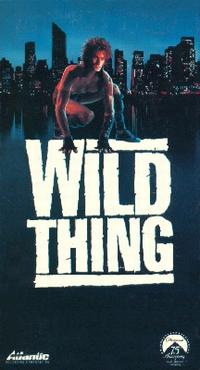
Wild Thing (1987, directed by Max Reid)


After his hippie parents are murdered by a drug dealer named Cutter (Robert Davi!), a young boy is taken in and raised by a homeless woman (Betty Buckley).  The boy eventually grows up to be Wild Thing (Robert Knepper), an urban Tarzan who jumps from rooftop to rooftop at night and who protects the neighborhood for evil doers (like Cutter).  A social worker (Kathleen Quinlan) hears the legend of Wild Thing and eventually finds him.  She continues his education, explaining to him why people do the “body bump.”  Carrying a bow and arrow and accompanied by a surprisingly loyal cat, Wild Thing fights the bad guys and seeks revenge for his parents.

Wild Thing is one of those movies that should be incredibly bad but somehow it isn’t.  John Sayles was one of three writers to work on the script (Sayles was the only one to get credit) and the film has a self-aware sense of humor similar to the scripts that Sayles wrote for films like Alligator, Battle Beyond The Stars, and Piranha.  A young Robert Knepper is probably about as convincing as anyone could be as an urban Tarzan who speaks broken English and who carries a bow and arrow as he makes his way across the rooftops of his neighborhood.  As always, Robert Davi is a good villain.  Davi knows that he’s appearing in a live action comic book and he gives an appropriate performance.

Wild Thing is a surprisingly enjoyable movie and yes, the song Wild Thing is heard in the movie but not as much as you might think.  There’s a few scenes where the song starts to play and is then cut off, as if the movie is teasing our expectations.  I just wish Sam Kinison had been invited to perform his version.


Brad reviews DEATH HUNT (1981), starring Charles Bronson, Lee Marvin, Carl Weathers, and Andrew Stevens! 


Today is actor Andrew Stevens’ 70th birthday. I grew up watching Stevens in the Charles Bronson films 10 TO MIDNIGHT (1983) and DEATH HUNT (1981), the movie I’m reviewing today. I also enjoyed watching him in Brian De Palma’s THE FURY (1978). Later in his career he stepped behind the camera where he produces and directs mostly low budget films. As of this writing, he’s still going strong, and he’s built quite a nice career. And for me, my appreciation all started because he worked with Charles Bronson when he was in his twenties!

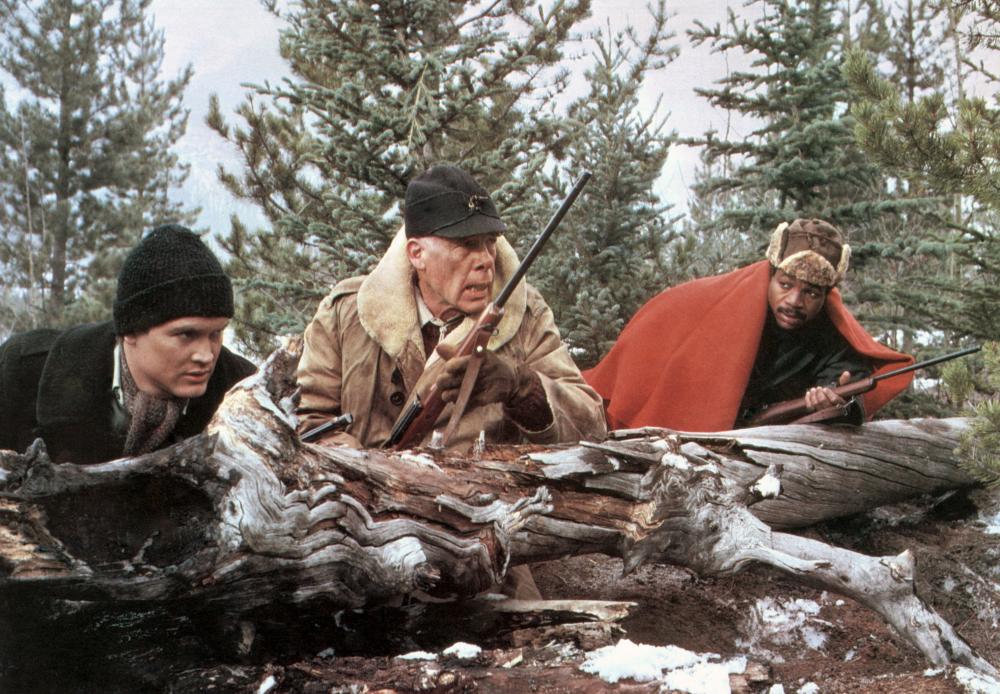
In the “based on a true story” DEATH HUNT, Charles Bronson plays trapper Albert Johnson, who lives in the Yukon Territory in the year of 1931 and just wants to be left alone. Early in the film, Johnson comes across a vicious dogfight and rescues one of the participants who’s almost dead. The problem is that the dog belongs to a piece of shit named Hazel (Ed Lauter), and even though Johnson pays him for the dog, Hazel heads to town and tells Sergeant Edgar Millen (Lee Marvin), of the Royal Canadian Mountain Police, that Johnson stole his dog. Millen doesn’t have time for Hazel’s B.S., so he tells him to go on. Millen would rather drink whiskey and hang out with his friends and co-workers in town. These people include the experienced tracker Sundog, aka George Washington Lincoln Brown (Carl Weathers), a young fresh-faced constable with the RCMP named Alvin Adams (Andrew Stevens), his latest lover Vanessa McBride (Angie Dickinson), and everyone’s favorite sidepiece, the Buffalo woman (Amy Marie George). Not willing to let things slide, Hazel and his men go up to Johnson’s cabin and start some more trouble, and one of his buddies gets his scalp shot off by the more than capable Johnson. Even though the entire mess has been started by Hazel and his crew of goons, who include character actors William Sanderson and Maury Chaykin, Millen is forced to try to bring Johnson in, so they can straighten everything out. When it seems Johnson may be about to go in with Millen, one of Hazel’s dumbass men opens fire, and all hell breaks loose. In the aftermath, Johnson escapes, kicking off a massive manhunt across the mountains and wilderness of the Yukon Territory! 

DEATH HUNT is an awesome film, primarily because it pairs Charles Bronson, as the tough mountain man, against Lee Marvin, as the seasoned lawman who probably has only one chase left in him. This is a match made in heaven, and even though the two stars share little screen time, the icons dominate each frame of the film. Their characters respect each other and you get the feeling the two men, who couldn’t be more different in real life, probably felt the same way about each other. The remainder of the cast is filled with so many recognizable names and faces. I’d say the the best performances outside of Bronson and Marvin come from Carl Weathers, Andrew Stevens and Ed Lauter. I like the camaraderie that Weathers shares with Marvin, and of course he’s a lot of help when the action starts. Initially, Stevens seems like he’s going to be another “new kid” who’s too inexperienced to be of much help, but he proves to be more than capable by the end of the film. And good grief is Lauter good at playing a piece of crap! Everything about Hazel is cruel, sadistic, and ignorant, and he plays the part perfectly. A scene where a bullying Hazel gets his comeuppance at the hands of the young Adams (Stevens), is a highlight of the film. Sadly, Angie Dickinson, one of the most beautiful women in the history of cinema, is somewhat wasted in her small, unimportant role. I still like seeing her though, even if the part is beneath her. 

Aside from the phenomenal cast that Director Peter R. Hunt (DR. NO and THUNDERBALL) was able to assemble, there are other good reasons to watch DEATH HUNT. I love movies that are filmed outside of the city, and you can’t get much further out of the city than the Canadian Rocky Mountains. This setting provides plenty of beauty, but its frozen landscape and bitter conditions also allow for a sense of loneliness, isolation and desperation to seep in for the various characters as the manhunt stretches out over time. There is also some rugged and violent action spread out through the film. I was caught off guard the first time I watched the film by some of the more graphic violence in the action scenes. I’ve already mentioned Bronson’s character basically blowing a guy’s head off, and there’s another scene involving William Sanderson getting his arm caught in a trap. These scenes make my toes curl up just thinking about them. The action highlight occurs when the men think they have killed Johnson in an explosion, to only have him emerge from the smoke and flames of his decimated cabin with slow motion shotgun blasting. It’s an incredibly badass moment in the movie and in Bronson’s overall filmography. Finally, the story is interested in contrasting the old ways of doing things, as exemplified by Bronson and Marvin, versus the new ways of doing things, as exemplified by the young Stevens and a hotshot pilot (Scott Hylands) who is called in to help with the search. Edgar Millen is somewhat of a dinosaur who isn’t ready to truly move into the 20th century. He wants to catch Johnson through old-fashioned, out maneuvering him in the wilderness, while Stevens’ character brings in a radio and the expertise to use it, and Hylands tries to locate him and gun him down from high in the sky. These two schools of thought clash and play out to varying degrees of success and failure as the chase rushes toward its conclusion.

DEATH HUNT is not a perfect film by any stretch of the imagination, but it’s been one of my favorite Bronson films since I first saw it the mid to later 80’s. Just seeing Bronson and Marvin together on screen, in a rugged, violent, badass story, goes a long way with me. It’s as simple as that! See the trailer below:

The Art Of War (2000, directed by Christian Duguay)


In The Art of War, Wesley Snipes plays Neil Shaw, an UN operative who is framed for the assassination of a Chinese diplomat and who must uncover the real conspiracy while also proving his innocence.  Proving his innocence means engaging in a lot of conflict while using investigation techniques that were cribbed from the Mission Impossible films.

Featuring a lot of war but not much art, The Art of War has a few good action scenes and an overly convoluted storyline that sometimes makes the film feel like a retread of another film in which Snipes was framed for a crime he did not commit, U.S. Marshals.  It’s hard to take seriously any action hero who works for the United Nations but Wesley Snipes is credible in the action scenes and he could deliver a one-liner with the best of them.  (Of all the bad things you can say about the IRS, the worst is that it put one of our best action stars in prison.  Unforgivable!)  The supporting cast is good, featuring Donald Sutherland, Maury Chaykin, Anne Archer, and Michael Biehn.  The final battle between Snipes and the person who is revealed to be the main villain is exciting but, overall, The Art of War is overlong and overcomplicated.  Neil Shaw is cool but he’s no Blade.

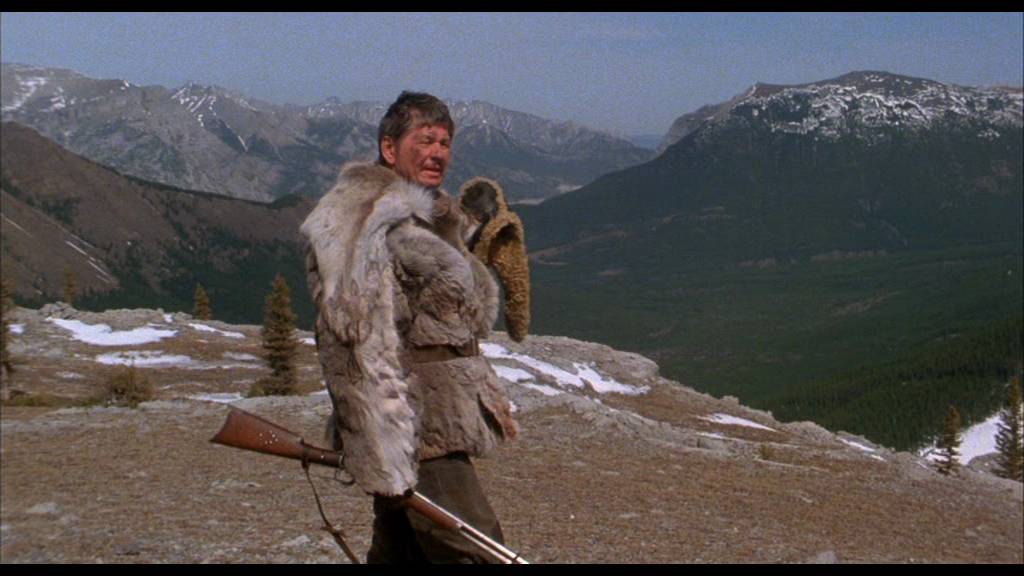
Charles Bronson in DEATH HUNT (1981) – Keep warm my friends!


If you’re in Texas or Arkansas today, I hope you’re keeping as bundled up as Charles Bronson in DEATH HUNT. It’s cold out there people! Keep safe and stay home if at all possible! We don’t know how to drive in this weather!

Enjoy DEATH HUNT’s trailer below! Charles Bronson and Lee Marvin are as tough as it gets!

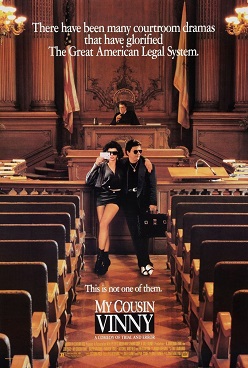
MY COUSIN VINNY (1992) – Joe Pesci heads way down south!


There are certain movies in my life that I consider “comfort movies.” These are the movies that I love so much that they always help me relax because I feel better just by watching them. I often turn on a comfort movie when I really need to fall asleep. Examples in my life include most of Charles Bronson’s filmography, RIO BRAVO, the ZATOICHI films, THE OTHER GUYS, and pretty much anything directed by Alex Kendrick. MY COUSIN VINNY fits comfortably under my categorization of a comfort movie.

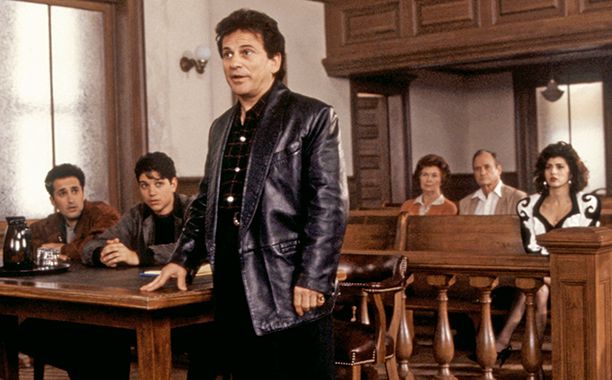
The movie opens with friends Bill Gambini (Ralph Macchio) and Stanley Rothenstein (Mitchell Whitfield) taking the scenic route down south as part of a cross-country trip to attend college at UCLA. Unfortunately, while in Alabama, the two are arrested soon after leaving a convenience store. Thinking they are being charged for accidentally shoplifting a can of tuna, it turns out the actual charges are robbery and murder as the place was robbed and the clerk killed soon after they left. Knowing they are in big trouble, Bill calls his cousin Vinny Gambini (Joe Pesci), who’s pretty much the only lawyer that he knows. The problem, Vinny has never actually tried a murder case. Vinny heads down south with his fiance Mona Lisa Vito (Marisa Tomei) where he must contend with a judge (Fred Gwynne) who doesn’t like him, a prosecutor (Lane Smith) who has way more experience than him, and a mountain of circumstantial evidence that he has almost no hope of contradicting. Will Vinny be able to prove his cousin’s innocence before they end up with life in prison, or even worse?

There are many reasons that I love MY COUSIN VINNY. The cast consists of a couple of my personal favorite actors in Joe Pesci and Ralph Macchio. GOODFELLAS is certainly one of the best movies ever made, and Joe Pesci gives an unbelievably powerful performance, a performance that would win him the Academy Award. Pesci took a short break from filming MY COUSIN VINNY to attend the Acadamy Award ceremony and pick up the gold. He even took the statue to the set to show the cast and crew. Maybe that helped inspire Marisa Tomei to give her own Academy Award winning performance in this film. My favorite scene of the entire movie is when Vinny is treating Mona Lisa as a hostile witness on the stand, just before she proceeds to prove that nobody knows more about cars than she does. It’s such a satisfying scene as she makes the prosecutor’s “expert” look like a novice. As for Ralph Macchio, many times in my life I’ve made the statement that I wanted to be the karate kid when I was growing up. I think I was in the fifth grade when I saw the film for the very first time. I’ve been a fan of Ralph Macchio, and in love with Elisabeth Shue, ever since. It’s the kind of movie I’d just sit around thinking about when I was a kid. I even wanted to learn karate, but being just a little over 4 feet tall at the time, I didn’t need to be getting into any fights. I also like that MY COUSIN VINNY was partially filmed in the town of Covington, GA. My wife and I were driving from Arkansas to Myrtle Beach back in 2020 and we stayed the night in Covington. I had done a little research while I was looking for a place to stop for the night, and I found out that Covington is sometimes referred to the “Hollywood of the South” due to the large number of movies and TV shows that are filmed there. We snapped a couple of shots of the downtown before heading on down the road. But I think the thing I love most about MY COUSIN VINNY is also the reason I love movies like THE KARATE KID and ROCKY so much. I love movies where a person is completely underestimated, and rightfully so. But then, through some combination of intelligence, hard work, heart, and will, that same person is able to rise to the occasion and prevail against those very same people who underestimated them. Vinny has no business in the courtroom, but somehow, he’s able to win the case, and he does it in a smart, funny and exciting way. I love an underdog, and MY COUSIN VINNY just makes me feel good!  

Film Review: My Cousin Vinny (dir by Jonathan Lynn)


In the 1992 film, My Cousin Vinny, two college students from New York City, Bill Gambini (Ralph Macchio) and Stan Rothstein (Mitchell Whitfield), make the mistake of driving through Alabama.  The two students stop off at a convenience store.  When the clerk is subsequently shot dead during a robbery, Bill and Stan are arrested for the crime.  The viewers know they’re innocent.  Bill and Stan know they’re innocent.  But the entire state of Alabama seems to be determined to send Bill and Stan to prison for life.

Fortunately, Bill’s cousin, Vinny (Joe Pesci, star of Half Nelson), is a lawyer.  Unfortunately, he just recently passed the bar exam and he has yet to actually try a case.  Still, Vinny and his fiancée, Mona Lisa Vito (Marisa Tomei), come down to Alabama.  Vinny takes the case, lying to the judge (Fred Gwynne) about his qualification as a trial attorney.  Vinny is momentarily impressed when the prosecutor (Lane Smith) shares with him all of the files about the case.  “It’s called disclosure, dickhead!” Lisa snaps at him, revealing that she actually has more common sense than Vinny.  That becomes increasingly important as Vinny tries to keep Bill and Stan from spending the rest of their lives in prison.

To be honest, considering how much I complain about stereotypical portrayals of the South, I really shouldn’t like My Cousin Vinny as much as I do.  Almost every character in the film is a stereotype to some extent or another, from the farmers and rednecks who take the witness stand to Fred Gwynne’s no-nonsense judge who rules that Vinny is in contempt of court because he’s wearing a leather jacket.  Fortunately, though, the Southern stereotypes don’t bother me because both Vinny and Lisa are New York stereotypes.  Just as the judge and the townspeople seem to confirm every prejudice that someone like Vinny would have against the South, Vinny seems to be the epitome of everything that people in the South dislike about the North.  When Vinny first shows up on the scene, he’s loud and brash and obnoxious.  But, as the film progresses, Vinny reveals himself to not only be a better attorney than anyone was expecting but he also calms down and adjusts to the more relaxed pace of life in the country.  Just as Vinny reveals himself to be not as bad as everyone originally assumed, both the Judge and the prosecutor are also allowed to reveal some hidden depths.  Neither one is the cardboard authority figure that viewers might expect.  The Judge does sincerely want justice to be done and the prosecutor sincerely wants to keep the county safe, even if he is prosecuting two innocent men.  Just as Vinny learns not to be too quick to judge them, they learn not to be too quick to judge Vinny.  The end message is that everyone is innocent until proven guilty and deserves a fair hearing, whether in a court of law or just in the courts of public and private opinion.  It’s not a bad message.  In fact, it’s one that more than a few people could still stand to learn today.

Of course, the best thing about the film is Marisa Tomei, who not brings a lot of energy to the film but whose hair is amazing and whose clothes are to die for.  Tomei won an Oscar for her performance in My Cousin Vinny, a victory that was so controversial that there were unfounded rumors that presenter Jack Palance had read the wrong name by mistake.  (As we all learned a few years ago when Warren Beatty and Faye Dunaway actually did read the wrong winner, the accountants aren’t going to let anyone get away with that.)  Watching the film last night, it was obvious to me that Tomei deserved that Oscar because Lisa is the heart of the film.  Pesci, Gwynne, and Lane Smith are all give good performances but, without Marisa Tomei’s performance, My Cousin Vinny would ultimately just be another culture clash comedy.  A lesser actress would have just played Lisa as being a stereotype.  But Tomei turned Lisa into the most believable and sincere character in the film.  While Lisa won the case, Tomei saved the movie.

(And needless to say, I’m a fan of any movie that features a Lisa saving the day.)

My Cousin Vinny holds up as an enjoyable film.  Watch it the next time you’re losing faith in humanity.

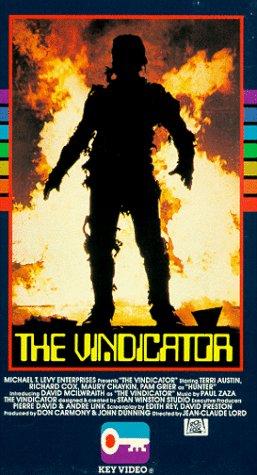
The TSL’s Grindhouse: The Vindicator (dir by Jean-Claude Lord)


The 1986 film, The Vindicator, is one of those Canadian exploitation films that doesn’t make much sense but is still memorable just because of how dedicated it is to being utterly incoherent.

Basically, an evil corporate guy named Alex Whyte (played by Richard Cox) wants to design a space suit that will turn people into rage-filled assassins. Or something like that. To be honest, I had a hard time following just what exactly Alex was trying to do. When one of his scientists, Carl Lehman (David Mcllwraith), figures out that Alex is up to something sinister, Alex blows him up. Alex then puts Carl’s charred body into the suit and Carl is transformed into a cyborg who flies into a murderous rage whenever anyone gets too close to him. That’s not exactly what Carl was hoping to spend the rest of his life doing so Carl breaks free from the lab and seeks revenge while also trying to protect his wife (Terri Austin) and his daughter (Catherine Disher). Unfortunately, because of the whole rage thing, Carl can’t allow himself to get close to them but somehow, he figures out how to speak to them through the synthesizer that’s sitting in the living room.

Now that Carl is wandering around Canada and killing all of his former co-workers, Alex decides that he needs to do something to take Carl out of commission so he hires an assassin known as Hunter. Hunter is played by Pam Grier. Yes, that’s right — the Pam Grier! Soon, Hunter and her team are pursuing Carl across Canada and, in the process, they end up killing almost as many people as Carl. And those people who aren’t killed by Carl or Hunter fall victim to the types of accidents that could only happy in a Canadian exploitation film. For instance, in one scene, a truck drives over a guard rail and immediately explodes.

Meanwhile, Carl’s friend, Bert (played by Maury Chaykin because this is a Canadian film), is falling in love with Carl’s wife and plotting to try to take her away from her cyborg husband. At first, Bert appears to be a sympathetic character and then, about an hour into the movie, Bert is suddenly not sympathetic at all. The same can actually be said for just about everyone in the film, which will lead most viewers to wonder just why exactly we should care about whether or not Carl is ever stopped.

It’s a messy film. For a relatively short and presumably low-budget film, there’s a lot of characters in The Vindicator and it’s not always clear how everyone is related. Since Carl kills most of them, I can only assume that they’re all bad but still, you can’t help but wonder if maybe Carl is being a bit too quick to assume that everyone was okay with him getting blown up. Carl is one judgmental cyborg.

Supposedly, special effects maestro Stan Winston was involved with the production of The Vindicator and, to give credit where credit is due, Carl does look like what I guess most people would expect a cyborg to look like. In fact, when I watched the movie, I originally assumed that it was a Robocop rip-off but then I discovered that The Vindicator actually came out a year before Robocop. That’s not to say, of course, that The Vindicator was, in any way, an influence on Robocop. Beyond the cyborg-theme, the two films really have nothing in common. Robocop is a satirical commentary on fascism. The Vindicator is …. well, I’m not really sure what it’s supposed to be.

The Vindicator is a mess. It’s one of those films where no one’s motivations make any sense and it is often next to impossible to actually keep track of who is who. (The actors playing Alex and Carl looked so much alike that it took me a few minutes to figure out that Carl was the one who got blown up.) And yet, like many Canadian exploitation films from the 80s, The Vindicator is also compulsively watchable. The actions move quickly. The entire plot has a make-it-up-as-you-go-along feel to it that’s kind of entertaining. Plus, Pam Grier’s in the film, openly rolling her eyes at just how silly it all is. The Vindicator isn’t exactly good but it did hold my interest. All things considered, maybe that’s vindication enough.

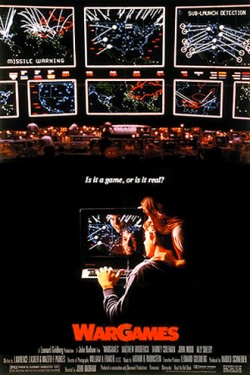
Film Review: Wargames (dir by John Badham)


If you thought Tom Cruise nearly started a war in Top Gun, you should see what Matthew Broderick did three years earlier in Wargames!

In Wargames, Broderick plays David Lighter, a dorky but likable teenager who loves to play video games and who spends his spare time hacking into other computer systems.  (Of course, since this movie was made in 1983, all the computers are these gigantic, boxy monstrosities.)  Sometimes, he puts his skills to good use.  For instance, when both he and Jennifer (Ally Sheedy) are running the risk of failing their biology class, he hacks into the school and changes their grades.  (At first, Jennifer demands that he change her grade back but then, a day later, she asks him to change it again.  It’s kind of a sweet moment and it’s also probably the way I would have reacted if someone had done that for me in high school.)  Sometime, David’s skills get him into trouble.  For instance, he nearly destroys the world.

Now, keep in mind, David really didn’t know what he was doing.  He was just looking for games to play online.  He didn’t realize that he had hacked into NORAD and that Global Thermonuclear War was actually a program set up to allow a gigantic computer named WOPR to figure out how to properly wage a thermonuclear war.  David also doesn’t know that, because humans have proven themselves to be too hesitant to launch nuclear missiles, WOPR has, more or less, been given complete control over America’s nuclear arsenal.

(Wargames actually starts out with a chilling little mini-movie, in which John Spencer and Michael Madsen play two missile technicians who go from joking around to pulling guns on each other during a drill.  Of course, Madsen’s the one ready to destroy the world.)

Of course, the military folks at NORAD freak out when it suddenly appears as if the Russians have launched a nuclear strike against Las Vegas and Seattle.  (Not Vegas!  Though really, who could blame anyone for wanting to nuke Seattle?)  In fact, the only thing that prevents them from launching a retaliatory strike is David’s father demanding that David turn off his computer and take out the trash.  However, WOPR is determined to play through its simulation, which pushes the world closer and closer to war.  (One of the more clever — and disturbing — aspects of the film is that, even after the military learns that the Russians aren’t planning the attack them, they still can’t go off alert because the Russians themselves are now on alert.   Once the war starts, it can’t be stopped even if everyone knows that the whole thing was the result of a mistake.)

With the FBI looking for him, David tries to track down the man who created WOPR, Dr. Stephen Falken (John Wood).  However, Falken is not easy to find and not as enthusiastic about saving the world as one might hope….

Watching Wargames was an interesting experience.  On the one hand, it’s definitely a dated film.  (Again, just look at the computers.)  At the same time, its story still feels relevant.  In Wargames, the problem really isn’t that WOPR wants to play a game.  It’s that men like Dr. John McKittrick (well-played by Dabney Coleman) have attempted to remove the human element and have instead put all of their faith in machines.  The appeal of a machine like WOPR is that it has no self-doubt and does whatever needs to be done without worrying about the cost.  But that’s also the reason why human beings are necessary because the world cannot be run on just algorithms and cold logic.  That’s a theme that’s probably even more relevant today than it was in 1983.

Wargames is also an exceptionally likable film.  In fact, it’s probably about as likable as any film about nuclear war could be.  On the one hand, you’ve got everyone at NORAD panicking about incoming missiles and then, on the other hand, you’ve got David and Jennifer having fun on his computer and trading flirty and silly quips.  Matthew Broderick and Ally Sheedy are both likable in the two main roles.  Broderick brings a lot of vulnerability to the role of David.  (David Lightner is a far more believable teenager than Ferris Bueller.)  He handles the comedic scenes well but he’s even better as David grows increasingly desperate in his attempts to get the stubborn adults around him to actually listen to what he has to say.  When it appears the only way to save the world is to swim across a bay, David is forced to admit that he’s never learned how to swim because he always figured there would be time in the future.  Yes, it’s a funny scene but the way Broderick delivers the line, you understand that David has finally figured out that there’s probably not going to be a future.  It’s not that he doesn’t know how to swim.  It’s that he’ll never get the chance to learn or do anything else for that matter.

Wargames is definitely a film of its time but its themes are universal enough that it’s a film of our time as well.