Scenes that I Love: Marlon Brando as Mark Antony in Julius Caesar


Beware the Ides of March!

The scene below is from the 1953 film, Julius Caesar.  This Oscar-nominated Shakespearean adaptation had a cast that was full of distinguished actors.  James Mason played Brutus.  The great John Gielgud played Cassius.  Louis Calhern was Caesar while other roles were filled by Deborah Kerr, Greer Garson, Edmond O’Brien, George Macready, John Hoyt, Edmund Purdom. and a host of other distinguished thespians.  And yet, the best performance in the film came from an actor who, at the time, no one considered to be a Shakespearean.  Marlon Brando brought his method intensity to the role of Mark Antony and the result was a performance that is still electrifying today.

On YouTube, someone referred to this as being “the world’s greatest speech delivered by the world’s greatest actor.”  Sounds good to me!

Here is Marlon Brando in Julius Caesar:

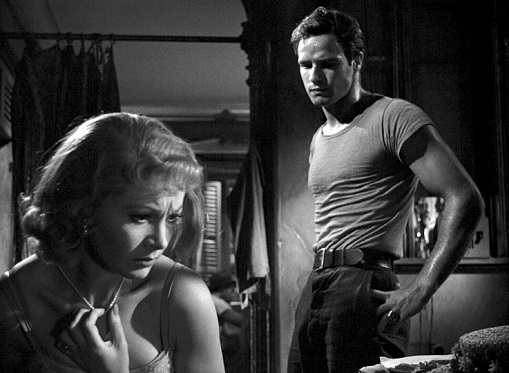
Lisa Reviews An Oscar Nominee: A Streetcar Named Desire (dir by Elia Kazan)


Poor, tragic Blanche DuBois.

In 1951’s A Streetcar Named Desire, the emotionally fragile Blanche (played by Vivien Leigh) has come to New Orleans to live with her younger sister, Stella (Kim Hunter).  From an old and formerly wealthy Southern family, Blanche has recently lost both her job as a teacher and the plantation where she and Stella grew up.  Even before that, she lost her husband to suicide.  And now Blanche has been reduced to living with Stella in the run-down apartment that she shares with her brutish husband, Stanley Kowalksi (Marlon Brando).

Stanley is tough and blue-collar, an earthy gambler whose bad manners stand in sharp contrast to Blanche’s attempts to present herself as being an elegant Southern belle.  Stanley, who is convinced that Blanche has money that she’s hiding from her sister, goes out of his way torment Blanche.  Stella, who is pregnant, tries to keep the peace between her sister and the man who claims to love her, his family, and the Napoleonic code.  (“Stella!” Stanley yells at one point, the cry of a wounded animal who desperately needs his mate.)  Blanche ends up going on a tentative date with Mitch (Karl Malden), one of Stanley’s co-workers,  Stanley, who sees Blanche as a threat to the life that he’s created for himself, goes out of his way to destroy even that relationship.  Blanche has secrets of her own and Stanley is determined to dig them up and use them to his own advantage.  When Blanche refuses to allow Stanley to destroy the fantasy world that she’s created for herself, Stanley commits an act of unspeakable violence.

Based on the play by Tennessee Williams, A Streetcar Named Desire is a recreation of the film’s legendary Broadway production.  Elia Kazan, who directed the theatrical production, does the same for the film.  Marlon Brando, Kim Hunter, and Karl Malden recreate their stage roles and many of the minor characters are also played by the same actors who played them on stage.  The only major change to the cast is Vivien Leigh, who replaces Jessica Tandy in the role of Blanche.  Tandy had won a Tony for playing the role of Blanche but the film’s producer insisted on an actress who had more box office appeal.  After both Bette Davis and Olivia de Havilland (both of whom would have had too strong of a personality to be believably pushed around by Stanley) declined the role, Vivien Leigh was cast.  Leigh has played Blanche on the London stage and, perhaps even more importantly, her own fragile mental health mirrored much of what Blanche had gone through before moving to New Orleans.

A few changes were made to the play.  In the play, it’s made clear that Blanche’s husband committed suicide after he was caught having an affair with another man.  In the film, Blanche simply says that her husband was too sensitive.  The film also includes a few scenes that are set outside of the apartment in an attempt to open up the play.  (That said, the film still comes across as being rather stagey.)  In the play, it’s made clear what Stanley does to Blanche while Stella is at the hospital.  The film leaves it ambiguous, though still providing enough hints for the audience to figure it out on their own.  Finally, the film ends with a suggestion that Stanley will ultimately suffer for his bad behavior.  It’s hardly a happy ending but it’s still not as dark as what happens in the play.

The film definitely retains its theatrical origins.  It’s very much a filmed play and again, it can feel rather stagey.  But the performance are so strong that it really doesn’t matter.  A Streetcar Named Desire was the first film to win three of the acting awards, with Oscars going to Hunter, Malden, and Leigh.  Marlon Brando was nominated for Best Actor but did not win, largely because he was competing against Humphrey Bogart who, himself, had never won an Oscar.  (The Brando snub would be rectified when he later won for On The Waterfront.)  Brando’s performance as Stanley still holds up today.  He’s so ferociously charismatic that it’s actually a bit scary to watch him.  One can see what drew Stella to him, even though Stanley is very much not a good man.  It’s a performance that will definitely take by surprise anyone who knows Brando only from his later years, when he was known for his weight and his oft-stated boredom with acting.  A Streetcar Named Desire shows just how brilliant an actor Marlon Brando was at the start of his career.  The intensity of Brando’s method acting matches up perfectly with Vivien Leigh’s more traditional style of acting and the film becomes not just the story of a domineering brute and a fragile houseguest but also a metaphor for the death of the antebellum South.  If Blanche represents a genteel past that may have never existed, Stanley represents the brutality of the 20th Century.

Along with the similarly dark A Place In The Sun, A Streetcar named Desire was considered to be a front runner for the 1951 Best Picture Oscar.  In the end, though, the voters went for the much less depressing An American In Paris.

A Streetcar Named Desire (1951, dir by Elia Kazan, DP: Harry Stradling)

Scenes That I Love: Vito and Michael In The Godfather With Dialogue By Robert Towne


Yesterday, it was announced that the legendary screenwriter Robert Towne had passed away.  One of the premier talents of Hollywood’s second Golden Age, Towne was rightly remembered as the man who wrote the intelligent and challenging scripts for films like Chinatown, The Last Detail, and Shampoo.

Towne was also a well-known script doctor, one whose work was not always credited but which always contributed to the overall quality of the films to which he contributed.  In 1971, when Francis Ford Coppola realized that he needed a scene for The Godfather that would allow Vito to open up to his son and successor, Michael, Robert Towne was the man who wrote the scene.  The result was one of the best moments in a film that is full of great dialogue.

Scene That I Love: Vito Corleone and Johnny Fontane in The Godfather


Continuing our tribute to the great Marlon Brando, today’s scene that I love comes from The Godfather.

In this scene, a self-pitying Johnny Fontane (Al Martino) discusses his career problems with Marlon Brando’s Vito Corleone.  Johnny is losing his voice.  Johnny is up for a role in a big movie but he worries that the producer will never allow him to appear in the film.  Johnny says he doesn’t know what to do and he sheds a tear….

….and that’s not a smart thing to do when you’re talking to Don Corleone.

This scene contains some of the best moments of The Godfather.  Al Martino was a professional singer with little acting experience.  (While Johnny Fontane was a major character in Mario Puzo’s book, he only appeared in two scenes in the film version.  Coppola later said that he thought the Johnny Fontane chapters were so poorly written that he would have turned down the film if he had to include too much of the character.)  In order to get an effective performance out of Martino, Brando did not warn him that he would actually be slapping him.  During one take, Brando got so aggressive that he knocked off Martino’s toupee and caused Robert Duvall to start laughing.  It was all worth it, though.  Martino was thoroughly convincing as Johnny Fontane and Marlon Brando won (but did not accept) his second Oscar for Best Actor.

4 Shots From 4 Films: Special Marlon Brando Edition


4 Or More Shots From 4 Or More Films is just what it says it is, 4 shots from 4 of our favorite films. As opposed to the reviews and recaps that we usually post, 4 Shots From 4 Films lets the visuals do the talking!

One hundred years ago and on this date, Marlon Brando was born in Omaha, Nebraska.  One of the greatest of American actors and one of the main reasons why so many young actors became enamored with the Method, Marlon Brando played many roles in our culture.  When he was young, he was a Broadway bad boy.  When he went out to Hollywood, he became a legitimate movie star.  In the 60s, he was a cautionary tale as his career suffered a series of notorious flops.  In the 70s, he made a comeback and, in during the final years of his career, he was as known for his eccentricities as for his talent.  It’s a shame that those eccentricities overshadowed Brando as an actor.  When he wanted to be, he was one of the best to ever appear on stage or in the movies.

In honor of the wonderful, tragic, and talented Marlon Brando, it’s time for….

4 Shots From 4 Marlon Brando Films

A Streetcar Named Desire (1951, dir by Elia Kazan, DP: Harry Stradling)

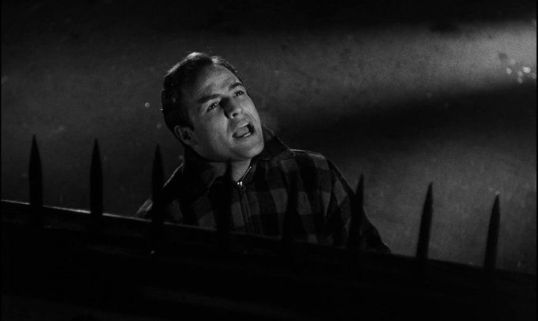
On The Waterfront (1954, dir by Elia Kazan, DP: Boris Kaufman)

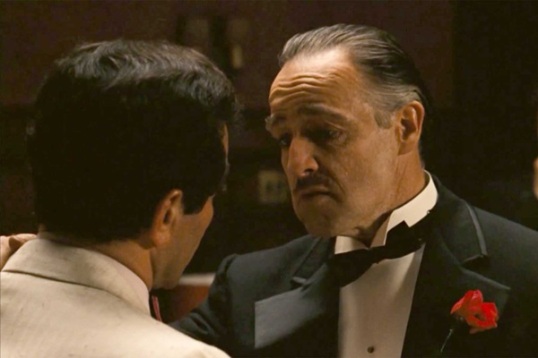
The Godfather (1972, dir by Francis Ford Coppola, DP: Gordon Willis)

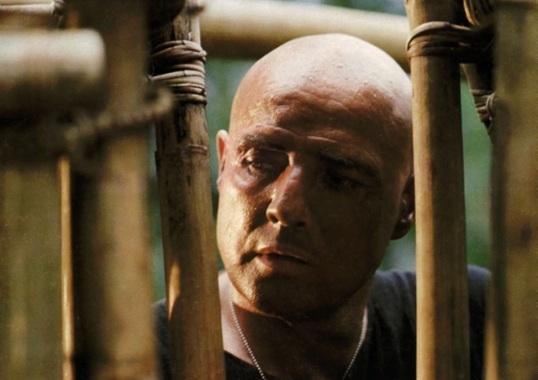
Apocalypse Now (1979, dir by Francis Ford Coppola, DP: Vittorio Storaro)

Scenes That I Love: Luca Brasi Is Just Happy To Be At The Wedding


97 years ago, on this date, Lenny Montana was born in Brooklyn, New York.

Montana started out as a boxer and a wrestler.  He eventually ended up working as a bouncer and a bodyguard for the leadership of the Colombo Crime Family.  However, Montana achieved his immortality as a result of veteran tough guy actor Timothy Carey turning down the role of Luca Brasi in The Godfather.  Brasi was the Corleone Family’s most feared enforcer and Carey, who had made a career out of playing psychos, was one of the most feared men in Hollywood, one who was rumored to have pulled a gun on more than a few directors.  (For the record, Stanley Kubrick loved him.)  When Carey turned down the role in favor of doing a television series, Francis Ford Coppola offered the role to Lenny Montana.  Montana may not have had Carey’s screen acting experience but he brought real-life authenticity to the role.  When Michael says that Luca Brasi is a “very scary man,” one look at Lenny Montana confirms it.  Unfailingly loyal to the family and willing to do anything for the Don, Luca Brasi represents the Family’s strength.  When Luca Brasi is killed, you know that the old era of the Corleones is ending as well.  Without Luca, the Corleones are in deep trouble.

My favorite Luca Brasi scene comes at the beginning of the film.  Surprised to be invited to Connie’s wedding, Luca wants to thank the Don personally.  Nervous about acting opposite Marlon Brando, Montana flubbed his lines.  The scene, with the flub, was kept in the film and it served to humanize both Luca and Don Corleone.  (The Don’s smile was due to the fact that Marlon Brando was having trouble not laughing.)  It’s a nice little scene, one that reminds us that even gangsters are human.

Scenes that I Love: Marlon Brando as Mark Antony in Julius Caesar


Beware the Ides of March!

The scene below is from the 1953 film, Julius Caesar.  This Oscar-nominated Shakespearean adaptation had a cast that was full of distinguished actors.  James Mason played Brutus.  The great John Gielgud played Cassius.  Louis Calhern was Caesar while other roles were filled by Deborah Kerr, Greer Garson, Edmond O’Brien, George Macready, John Hoyt, Edmund Purdom. and a host of other distinguished thespians.  And yet, the best performance in the film came from an actor who, at the time, no one considered to be a Shakespearean.  Marlon Brando brought his method intensity to the role of Mark Antony and the result was a performance that is still electrifying today.

On YouTube, someone referred to this as being “the world’s greatest speech delivered by the world’s greatest actor.”  Sounds good to me!

Here is Marlon Brando in Julius Caesar:

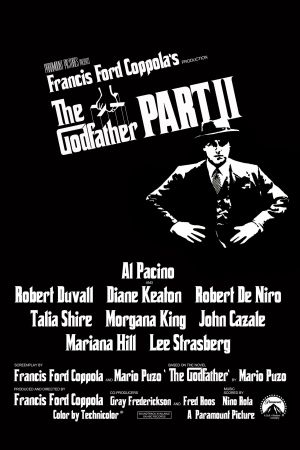
What Could Have Been: The Godfather, Part II


Years ago, I wrote a post called What Could Have Been: The Godfather, in which I discussed all of the actors and the directors who were considered for The Godfather. 

It remains one of the most widely viewed posts that we’ve ever had on this site.  I guess that shouldn’t be a surprise.  People love The Godfather and they love playing What If?  Would The Godfather still have been a classic if it had been directed by Otto Preminger with George C. Scott, Michael Parks, Burt Reynolds, and Robert Vaughn in the lead roles?  Hmmm …. probably not.  But, in theory, it could have happened.  All of them were considered at one point or another.

However, in the end, it was Francis Ford Coppola who directed The Godfather and it was Marlon Brando, Al Pacino, James Cann, and Robert Duvall who brought the Corleone family to life.  The Godfather, as everyone knows, was a huge hit and it went on to win the Oscar for Best Picture of the year.  As the film ended with the future of the Corleone family still up in the air, there was obviously room for a sequel.

When Paramount Pictures first approached Coppola about writing and directing a sequel, he turned them down.  He said he was done with The Godfather and didn’t see any way that he could improve on the story.  It’s debatable whether or not Coppola truly felt like this or if he was just holding out for more money.  It is known that Coppola did suggest to Paramount a possible director for Part II and that director’s name was Martin Scorsese.

What would Martin Scorsese’s The Godfather Part II have looked like?  It’s an intriguing thought.  At the time, Scorsese was best-known for Mean Streets and it’s probable that Scorsese’s film would have been a bit messier and grittier than Coppola’s version.  If Coppola made films about the upper echelons of the Mafia, Scorsese’s interest would probably have been with the soldiers carrying out Michael’s orders.  While Scorsese has certainly proven that he can handle a huge productions today, he was considerably younger and much more inexperienced in the early 70s.  To be honest, it’s easy to imagine Scorsese’s Godfather Part II being critically and commercially rejected because it would have been so different from Coppola’s.  A failure of that magnitude would have set back Scorsese’s career and perhaps even led to him returning to Roger Corman’s production company.  As such, it’s for probably for the best that Coppola did eventually agree to shoot the sequel, on the condition that Coppola be given creative control and Paramount exec Robert Evans not be allowed on the set.  While Coppola was busy with Godfather Part II, Scorsese was proving his versatility with Alice Doesn’t Live Her Anymore.

After Coppola was signed to direct, the next best question was whether or not Marlon Brando would return to play the role of Vito Corleone.  The film’s flashback structure would ensure that Vito would remain an important character, despite his death in the first film.  Coppola reportedly considered offering Brando the chance to play the younger version of Vito but he changed his mind after he saw Robert De Niro in Scorsese’s Mean Streets.  Still, it was felt that Brando might be willing to show up in a cameo during the film’s final flashback, in which Michael tells his family that he’s enlisted in the army.  Frustrated by Brando’s refusal to commit to doing the cameo, Coppola told him to show up on the day of shooting if he wanted to do the film.  When Brando didn’t show, the Don’s lines were instead rewritten and given to Tom Hagen.  It’s hard not to feel that this worked to the film’s advantage.  A last-minute appearance by Brando would have thrown off the film’s delicate balance and probably would have devalued De Niro’s own performance as the younger version of the character.

Brando wasn’t the only member of the original cast who was hesitant about returning.  Al Pacino held out for more money, which makes sense since he was literally the only cast member who could not, in some way, be replaced.  Richard Castellano, who played Clemenza in the first film, however learned that he that hard way that he was not quite as indispensable as Al Pacino.  In Part II, Clemenza was originally meant to have a large role in both the flashbacks and the present-day scenes.  However, when Castellano demanded more money and the right to rewrite his own lines, the older Clemenza was written out the film and replaced by the character of Frankie Petangeli (played by Michael V. Gazzo).

It’s impossible to find fault with Gazzo’s performance but it’s still hard not to regret that Castellano didn’t return.  Imagine how even more poignant the film’s final moments would have been if it had been the previously loyal Clemenza who nearly betrayed Michael as opposed to Frankie?  Indeed, even after the part was rewritten, many of Frankie’s lines deliberately harken back to things that Clemenza said and did during the first film.  Because Clemenza is a very prominent character during the film’s flashbacks, his absence in the “modern” scenes is all the more obvious.

When the role of Young Clemenza was cast, it was still believed that Richard Castellano would be appearing in that film.  One of the main reasons that Bruno Kirby was selected for the role of Young Clemenza was because Kirby had previously played Castellano’s son in a television show.  Also considered for the role was Joe Pesci, who was working as a singer and a comedian at the time.  (His partner in his comedy act was Frank Vincnet.)  If Pesci had been cast, he would not only have made his film debut in The Godfather Part II but the film also would have been his first pairing with Robert De Niro.  (Interestingly enough, Frank Sivero — who played Pesci and De Niro’s henchman, Frankie Carbone, in Goodfellas, also had a small role in Godfather Part II, playing Vito’s friend, Genco.)

As for the film’s other new major character, there were several interesting names mentioned for the role of gangster Hyman Roth.  Director Sam Fuller read for the role and Coppola also considered Elia Kazan.  Perhaps the most intriguing name mentioned as a possible Roth was that of James Cagney.  (Cagney, however, made it clear that he was content to remain retired.)  In the end, the role was offered to Al Pacino’s former acting teacher, Lee Strasberg.  Like Gazzo, Strasberg made his film debut in The Godfather Part II and, like Gazzo, he received his only Oscar nomination as a result.

The legendary character actor Timothy Carey (who was courted to play Luca Brasi in the first film) met with Coppola to discuss playing Don Fanucci, the gangster who is assassinated by Vito.  A favorite of Stanley Kubrick’s, Carey reportedly lost the role when he pulled out a gun in the middle of the meeting.

Originally, the film was supposed to end in the mid-60s, with a now teenage Anthony Corleone telling Michael that he wanted nothing to do with him because he knew that Michael had Fredo murdered.  (That famous scene of Michael bowing his head was originally supposed to be in response to Anthony walking out on him as opposed to the sound of Fredo being shot.)  Cast in the role of teenage Anthony was actor Robby Benson so perhaps it’s for the best that the scene was ultimately not included in the film.

Some of the smaller roles in Part II were played by actors who were considered for larger roles in the first film.  The young Tessio was played by John Aprea, who was also considered for the role of Michael.  Peter Donat, who played the lead Senate counsel in Part II, was considered for the role of Tom Hagen.  The rather tall Carmine Caridi, who played Camine Rosato in Part II, was originally cast as Sonny until it was discovered that he towered over everyone else in the cast.  And, of course, Robert De Niro famously read for the role of Sonny and was cast in the small role of Paule Gatto before he left The Godfather to replace Al Pacino in The Gang Who Couldn’t Shoot Straight.  (Of course, the whole reason that Pacino left The Gang Who Couldn’t Shoot Straight was so he could play the role of Michael in The Godfather.  In the end, it all worked out for the best.)

Finally, former teen idol Troy Donahue played Connie Corleone’s second husband, Merle Johnson.  Merle Johnson was Troy Donahue’s real name.

Personally, I think The Godfather Part II is one of the few films that can be described as perfect. Still, it’s always fun to play what if.

Film Review: The Chase (dir by Arthur Penn)


The Chase, a small-town Texas melodrama from 1966, opens with Robert Redford escaping from prison.

Redford is playing Bubber Reeves. Bubber, we’re told, has spent the last few years in a tough Texas prison, convicted of a murder that he didn’t commit. Now, he’s on the run and he’s probably returning to his hometown. His wife, Anna (Jane Fonda), still lives there, though Anna is now having an affair with Jake Rogers (James Fox). Jake is the son of the most powerful man in town, Val Rogers (E.G. Marshall). Jake also used to be Bubber’s best friend but now, he’s wracked with guilt about his affair with Anna.

Meanwhile, the townspeople are all worried that Bubber is going to seek revenge on the people who were responsible for him going to prison. Some of them know that he was actually innocent and some of them think that he’s actually the killer that he’s been made out to be but what they all have in common is that they’re worried about what Bubber’s gong to do when he shows up. Maybe they should have thought about the possibility of him getting mad and vengeful before they gave him a nickname like Bubber.

Anyway, Sheriff Calder (Marlon Brando) is convinced that Bubber is innocent but the townspeople still want him to allow them to gun Bubber down as soon as they see him. Sheriff Calder, however, is determined to keep the peace and make sure that the law prevails. He’s a man of unimpeachable integrity, working in a town full of people who are too cowardly to concern themselves with doing the right thing.

As everyone waits for Bubber to arrive. tempers come to the surface, a good deal of alcohol is consumed, and secrets are revealed. It all ends in tragedy, of course. One of the final scenes clumsily recreates the assassination of Lee Harvey Oswald. The Chase wouldn’t be an achingly self-serious film from 1966 if it didn’t.

There’s a few obvious problems with The Chase, the main one being that Robert Redford, who was 30 years-old when The Chase was released, looks surprisingly good for someone who has spent the last few years locked away in a tough Texas prison. Redford manage to escape from prison and run through a swamp without getting one single hair out of place. There’s nothing particularly dangerous about Redford in this film, which is surprising when you consider that The Chase was made just three years before Redford’s convincing turn as a laconic (if charming) killer in Butch Cassidy and the Sundance Kid. For The Chase to work, Bubber Reeves would have to be a force of nature but, whenever Redford’s on screen, you just find yourself wondering how someone who looks that good got stuck with a nickname like Bubber. The townspeople talk about Bubber like he’s a wild outlaw but Redford is just too laid back to pull it off. He comes across less like a wanted criminal and more like a California surfer who has somehow found himself in rural Texas.

As for the rest of the cast — well, there’s a lot of them. It’s a big ensemble film and good luck to anyone trying to keep track of who is related to who. Surprisingly enough, Marlon Brando is very convincing as a Texas sheriff, never allowing Sheriff Calder to turn into a stereotype. Less surprising is the fact that Robert Duvall, playing an frustrated husband, is also convincing in his role. Brando and Duvall, of course, would both go on to co-star in The Godfather. (Supposedly, when shooting of The Godfather began, Duvall was the only member of the cast with no fear of joking around with Brando, largely because they had bonded while working on The Chase.) Unfortunately, as good as Brando and Duvall are, they’re both let down in the hair department. Brando gets stuck with a hairpiece while Duvall is forced to go with a comb-over.

Some of the other performers are good and some of them are bad but none of them are particularly convincing as the residents of a small Texas town. James Fox, for instance, is very British. Jane Fonda and Angie Dickinson (cast as Calder’s wife) seem to be bored. E.G. Marshall is believably rich but never believably Southern. The other performers all tend to overact, especially once the people in town start drinking, shooting, hitting, and, in some cases, dancing. Somehow, Shelley Winters is not in the film, even though it seems like she should be.

The Chase was directed by Arthur Penn and written by Lillian Hellman. (The screenplay was based on a play and novel by Horton Foote.) Penn would follow up The Chase with Bonnie and Clyde and Alice’s Restaurant, two films that also dealt, for more successfully, with The Chase‘s themes of violence, community hypocrisy, and outlaw romanticism. Jane Fonda would go on to play Lillian Hellman in the 1977 film, Julia. For Julia, Fonda was nominated for an Oscar. For The Chase, she was not.

The Chase is one of those films that wants to say something important but doesn’t seem to be quite sure what. It’s a long and dramatic movie that doesn’t really add up to much. In the end, I think the main lesson to be learned here is not to allow your children to get a nickname like Bubber. There’s just no escape from a bad nickname.

Scenes I Love: Marlon Brando and Robert Duvall in The Godfather


96 years ago today, Marlon Brando was born in Omaha, Nebraska.

Unfortunately, Brando is one of those actors who, later in his life, became better known for his eccentricities than for his performances.  Though Brando never stopped being a good actor, it’s undeniable that some of his later performances reveal an actor who often did seem to be a bit bored with the films that he was making.  It’s sad to think that there’s people out there who might only know Brando because they stumbled across The Island of Dr. Moreau on Starz at like 3 in the morning.

Regardless of the reputation that he developed in his later years, Marlon Brando was one of the best actors of all time.  His early performances are still exciting to watch and, even when his work was becoming progressively more eccentric in the 70s and 80s, he still continued to give performances that could grab your attention and leave you surprised by their power.

Of course, my favorite Brando film remains The Godfather so it only makes sense to share a scene from that film on Brando’s birthday.  In this beautifully acted scene, Tom Hagen (Robert Duvall) informs Don Vito (Brando) that Sonny has been killed.  Of course, first, Tom has to have a drink.  This scene might not be as iconic as some of the other scenes in The Godfather but it’s wonderfully performed by both actors and it reminds us that The Godfather is powerful not because it’s a crime film but because it’s a film about family.