In the days leading up to World War I, spoiled rich kid Thad Walker (Tab Hunter) flees Boston after getting hit with a car theft charge and ends up in Paris. He befriends a group of American expatriates (including David Janssen, Will Hutchins, Jody McCrea, and William Wellman, Jr.) and eventually joins the French Air Force as a members of the Lafayette Escadrille. Thad also falls in love with a French prostitute named Renee (Etchika Choureau) and, after Thad strikes a French officer, he goes on the run with her.
I always wonder how many people have watched this film over the years because of the presence of a young Clint Eastwood in the cast, just to discover that he doesn’t get many lines and his character is largely interchangeable with the other young actors playing the members of the Lafayette Escadrille. This is a Tab Hunter movie, meaning that the action is dominated by Hunter’s sincere but bland screen persona. Director William Wellman wanted to cast Paul Newman in the lead role and that would have been something to see. Instead, the studio insisted on Hunter. They also insisted that Wellman change the film’s ending so that Hunter could survive instead of getting shot down on his very first mission. William Wellman was so disgusted with the studio that he retired from directing.
What had to make it all especially galling for the director was that LafayetteEscadrille was based on his own life. His son, William Wellman Jr., plays “Bill Wellman” in the film and Thad was based on actual friend of Wellman’s. The film was meant to be a tribute to his friends, many of whom did not survive World War I. Instead, the studio insisted that it be just another Tab Hunter service comedy. The best scenes are the ones where it’s just Thad and his friends trying to make it through basic training. Unfortunately, those scenes are overshadowed by Thad on the run.
The film is still there for those of us who enjoy catching future stars. Clint Eastwood, David Janssen, Tom Laughlin, Will Hutchins, Brett Halsey, and Jody McCrea are all present and accounted for. Rumor has it that James Garner can spotted in the background but I couldn’t find him and Garner had already co-starred with Brando in Sayonara when this move was made so I doubt he was doing background work. Tab Hunter’s blandness sinks the production but the rest of the cast would go on to better things.
The year is 1910 and the sports world is in a panic. For the first time, a black man has won the title of the heavyweight champion of the world. Jack Jefferson (James Earl Jones) had to go to Australia because no American city would agree to host the fight but he came out of it victorious. The proud and outspoken Jefferson finds himself targeted by both the white establishment and black activists who claim that Jefferson has not done enough for his community.
It’s not just Jefferson’s success as a boxer that people find scandalous. It’s also that the married Jefferson has a white mistress, a socialite named Eleanor Brachman (Jane Alexander, in her film debut). While boxing promoters search for a “great white hope” who can take the title from Jefferson, the legal authorities attempt to arrest Jefferson for violating the Mann Act by supposedly taking Eleanor across state lines for “immoral purposes.” Jefferson and Eleanor end up fleeing abroad but even then, their relationship is as doomed as Jefferson’s reign as the heavyweight champ.
Based on a Pulitzer-winning stage play by Howard Sackler, The Great White Hope features Jones and Alexander recreating the roles for which they both won Tonys. Both Jones and Alexander would go on to receive Oscar nominations for their work in the film version. It was the first nomination for Alexander and, amazingly, it was the only nomination that Jones would receive over the course of his career. (It surprises me that he wasn’t even nominated for his work in Field Of Dreams.) Both Jones and Alexander give powerful performances, with Jones dominating every scene as the proud, defiant, and often very funny Jack Jefferson. Jones may not have had a boxer’s physique but he captured the attitude of a man who knew he was the best and who mistakenly believed that would be enough to overcome a racist culture. (Speaking of racist, legendary recluse Howard Hughes reportedly caught the film on television and was so offended by the sight of Jones kissing Alexander that he thought about buying NBC to make sure that the movie would never be aired again.) Hal Holbrook, Chester Morris, Moses Gunn, Marcel Dalio, and R.G. Armstrong all do good work in small roles.
Unfortunately, The Great White Hope still feels like a filmed stage play, despite the attempts made to open up the action. Martin Ritt was a good director of actors but the boxing scenes are never feel authentic and the middle section of the film drags. Jones and Alexander keep the film watchable but The Great White Hope is never packs as strong of a punch as its main character.
On tonight’s episode of One Step Beyond, Cloris Leachman plays Rita Wallace, an American photographer in France. She’s looking for a model whose face will serve as the ultimate symbol of the country. One day, a haunted-looking man (Marel Dalio) shows up at her apartment. She thinks he’s a model. The truth, needless to say, is something quite different….
This episode features good performances from both Leachman and Dalio. In real life, Dalio was an icon of French cinema and a favorite of Jean Renoir’s. When the Nazis invaded France, the Jewish Dalio fled Paris and, after a harrowing journey, eventually made it to America. In America, he played the croupier in Casablanca and appeared in several other films. Tragically, the rest of his family did not escape and were murdered by the Nazis. Dalio returned to France after the end of the war and remained an in-demand character actor for several more decades, making his final film appearance in 1980.
The Darkroom originally aired on February 10th, 1959.
On tonight’s episode of One Step Beyond, Cloris Leachman plays Rita Wallace, an American photographer in France. She’s looking for a model whose face will serve as the ultimate symbol of the country. One day, a haunted-looking man (Marel Dalio) shows up at her apartment. She thinks he’s a model. The truth, needless to say, is something quite different….
This episode features good performances from both Leachman and Dalio. In real life, Dalio was an icon of French cinema and a favorite of Jean Renoir’s. When the Nazis invaded France, the Jewish Dalio fled Paris and, after a harrowing journey, eventually made it to America. In America, he played the croupier in Casablanca and appeared in several other films. Tragically, the rest of his family did not escape and were murdered by the Nazis. Dalio returned to France after the end of the war and remained an in-demand character actor for several more decades, making his final film appearance in 1980.
The Darkroom originally aired on February 10th, 1959.
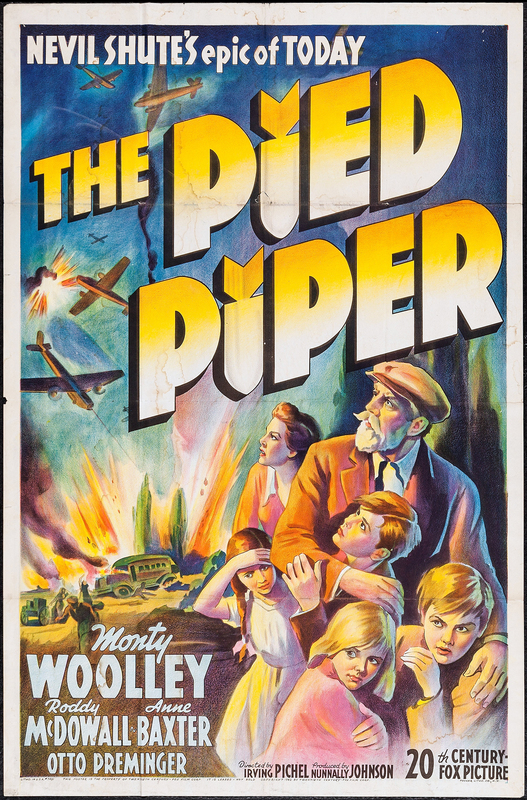
The 1942 Best Picture nominee, The Pied Piper, opens in Eastern France, shortly after the outbreak of World War II.
John Sidney Howard (played by Monty Woolley) is an Englishman on holiday. He says that he just wants to enjoy some fishing before the entire continent of Europe descends into chaos. He knows that France is going to be invaded at some point and he even suspects that the country will probably fall to the Nazis. In his 70s and still mourning the death of his son (who was killed during an air battle over occupied Poland), Mr. Howard just wants to enjoy France one last time. Despite the fact that the bearded Howard bears a resemblance to a thin Santa Claus, he’s quick to declare his dislike of both children and humanity in general. He’s a misanthrope, albeit a rather friendly one.
Howard’s plans change when the Nazis invade France sooner than he expected. With his vacation canceled, Howard just wants to get back to England. Complicating matters is that a diplomat named Cavanaugh (Lester Matthews) has asks Howard to take his children, Ronnie (Roddy McDowall) and Sheila (Peggy Ann Garner), back to England with him. Despite his self-declared dislike of children, Howard agrees. However, it turns out that getting out of France won’t be as easy as Howard assumed. After their train gets diverted by the Nazis, Howard, Ronnie ,and Sheila are forced to take a bus. After almost everyone else on the bus is killed in a surprise Nazi attack, Howard and the children are forced to continue on foot and rely on the kindness of a young French woman, Nicole Rougeron (Anne Baxer).
Throughout the journey, Howard keeps collecting more and more children. Everyone wants to get their children to a safe place and Howard soon has a small entourage following him. Unfortunately, he also has Gestapo Major Diessen (an excellent Otto Preminger) watching him. How far is Howard willing to go to ensure the safety of the children?
The Pied Piper is an interesting film, in that it starts out as something of a comedy but it then gets progressively darker as events unfold. At the beginning of the film, it appears that the whole thing is just going to be Howard getting annoyed with the precocious Ronnie and Sheila. But then that bus is attacked and Howard find himself accompanied by a young boy who has been left in a state of shock by the attack. When the group is joined by a young Jewish child named Pierre, it’s a reminder that, though the film itself may have been shot on an American soundstage, the stakes and the dangers in occupied Europe were all too real.
The Pied Piper was nominated for Best Picture of the year. Viewed today, it may seem like an unlikely nominee. It’s a well-made movie and Monty Woolley gives a good performance as John Sidney Howard. It’s the type of film that, due to the sincerity of its anti-Nazi message, should bring tears to the eyes of the most hardened cynic but, at the same time, there’s nothing particularly ground-breaking or aesthetically unique about it. Still, from a historical point of view, it’s not a surprise that this competent but conventional film was nominated. With America having just entered the war, The Pied Piper was a film that captured the national spirit. Other World War II films nominated in 1942 included 49th Parallel, Wake Island, and the eventual winner, Mrs. Miniver.
In fact, one could argue that The Pied Piper is almost a cousin to Mrs. Miniver. Both films are not only anti-German but also unapologetically pro-British. Just as Greer Garson did in Mrs. Miniver, Monty Woolley is meant to be less of an individual and more of a stand-in for Britain itself. When both Mrs. Miniver and Mr. Howard refused to surrender in the face of German aggression, these movies were proudly proclaiming that the British would never lose hope or surrender either.
(With the Oscars scheduled to be awarded on March 4th, I have decided to review at least one Oscar-nominated film a day. These films could be nominees or they could be winners. They could be from this year’s Oscars or they could be a previous year’s nominee! We’ll see how things play out. Today, I take a look at the 1937 best picture nominee, Grand Illusion!)
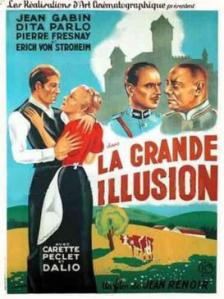
A few things to consider when watching Jean Renoir’s La Grande Illusion:
It is considered to be one of the greatest French films of all time and yet, at the outbreak of World War II, it was banned by France pour la durée des hostilités. It was also banned by Nazi Germany, with Joseph Goebbles declaring it to be “Cinematic Public Enemy No, 1.” Italy followed suit, banning the film as well.
It’s a pacifist film but all of the main characters are soldiers.
It’s a war film but we never see any battles. We hear about them, of course. Characters cheer when they hear that their country has taken another town. Towards the end of the film, when a gun finally is fired, it’s jarring because it’s the first gunshot that we’ve heard throughout the entire film.
It’s a film about change, specifically the change brought about by the First World War. Captain de Boeldieu (Pierre Fresnay) may be French and Major von Rauffenstein (Erich van Stroheim) may be German but they both share the bond of being aristocrats. (After Rauffenstein captures Boeldieu, the two of them have a friendly conversation about their shared acquaintances.) Both of them serve in the army, not for ideological reasons but because they consider themselves to be patriots and tradition holds that aristocrats go to war for their countries. At the start of the film, both Boeldieu and Rauffenstein seem to be above the fighting but, in the end, both realize that the old ways — their ways — will not survive in the new world that’s being created by the Great War.
(In another scene, a group of Russian soldiers are excited to receive a care package from “the Czarina,” just to open up the box and discover that, instead of Vodka, they’ve been sent used textbooks. The soldiers respond by setting the box on fire. For audiences in 1937, it would be impossible to watch this scene without reflecting on the fact that the Czarina herself would soon be dead, executed by revolutionaries.)
Grand Illusion tells the story of three French officers, prisoners of war who hope to somehow escape and make their way to neutral Switzerland. Unlike the aristocratic Boeldieu, Marechal (Jean Gabin) is a member of the working class, a mechanic. Lt. Rosnethal (Marcel Dalio) comes from a wealthy family but, as a Jew, he is still viewed as an outsider. (Reportedly, Renoir specifically made Grand Illusion‘s most sympathetic and generous character Jewish as a specific rebuke to Nazi Germany and their policies.) It’s Rosenthal who gives meaning to the film’s title when he says, regarding the belief that the great war will end all other wars, “That’s just an illusion.”
All three of them are moved from prison camp to prison camp, until they eventually find themselves at the camp commanded by the man who first captured both Boeldieu and Marechal, Major van Rauffenstein. Rauffenstein explains that he was given his new post after being seriously wounded in combat and his movements are sometimes so stiff that he almost resembles a marionette, suggesting that war has reduced this proud man to merely being a puppet for his government’s war machine.
Grand Illusion is a film about the forgotten people who get caught up in the madness of war. The French POWs may say they want to return to the front but, when they meet a woman who has lost her husband and three brothers to the war, they are reminded that even “victory” comes with a steep price. Rauffenstein and Boeldiue may share much in common but ultimately, the only thing that the world cares about is that one is French and one is German. Grand Illusion was Jean Renoir’s eloquent plea for peace, issued a mere two years before Europe plunged into World War II.
In 1938, Grand Illusion was the first foreign-language film to receive an Oscar nomination for best picture. However, it lost to Frank Capra’s You Can’t Take It With You.
(This review contains spoilers but seriously, you should know all of this already.)
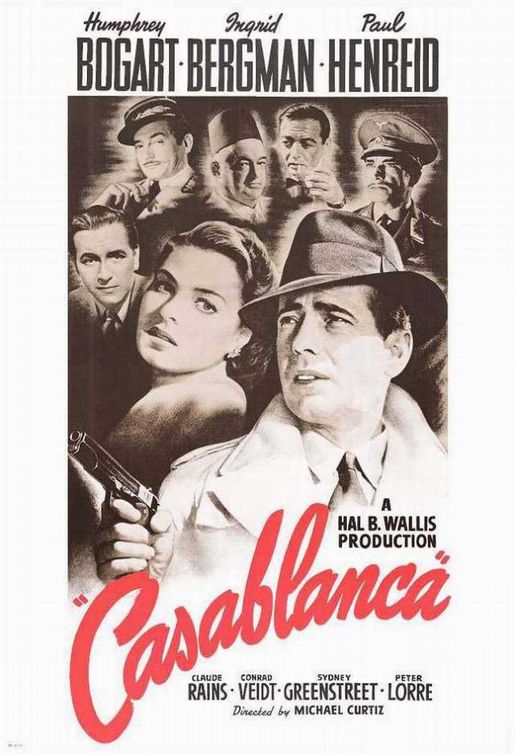
Is there anything left to be said about Casablanca?
Probably not.
As a film reviewer, I’m not supposed to admit that. I’m supposed to come up with some sort of new, out-of-nowhere, batshit crazy way to look at Casablanca. I’m supposed to argue that Rick was actually meant to be a survivor of abuse or that Victor Laszlo was some sort of precursor to President Obama or something. Or, if that doesn’t work, I’m supposed to intentionally troll everyone by writing something like, “10 reasons why Casablanca is overrated” or “I hate Casablanca and I don’t care who knows it!”
But I’m not going to do that.
The fact of the matter is that Casablancais as good a film as everyone says it is. It is a film that everyone should see. It is a film that quite rightfully was named best picture of 1943. It deserves to be celebrated. It deserves to be seen. In fact, stop reading this review right now and go watch it. Don’t let me waste another second of your time.
The thing with Casablanca is that it’s such an iconic film that everyone knows what happens, regardless of whether they’ve actually watched the entire film or not. They know that the film takes place in Casablanca during World War II. They know that Casablanca is full of refugees, spies, and people who are hiding from their past. They know that Casablanca is policed by the charmingly corrupt Capt. Louis Renault (Claude Rains). They know that Major Strasser (Conrad Veidt) is the Nazi in charge. (I nearly said that Strasser was the “evil Nazi in charge” but when you identify someone as a Nazi, is it really necessary to add that they’re evil?) They know that Rick (Humphrey Bogart) is the American expatriate who owns Rick’s Cafe Americain and that everyone comes to Rick’s. They know that Rick’s slogan is that he doesn’t stick his neck out for anyone but they also know that his cynicism hides the fact that he’s still in love with Ilsa (Ingrid Bergman). They know that when Ilsa shows up at Rick’s and needs him to help her husband, Victor Laszlo (Paul Henreid), escape from Occupied Europe, Rick is forced to decide whether or not to get involved in the resistance.
And, whether you’ve seen the film or not, you know that it all ends on a foggy airstrip. Ilsa wants to stay in Casablanca with Rick but Rick tells her that she has to get on the plane with Laszlo because, if she doesn’t, she’ll regret it. Ilsa goes with Laszlo, leaving Rick behind.
And it may have been the right thing to do but how many viewers would have done the same if they had been in Ilsa’s high heels? Throughout the entire movie, we hear about how wonderful Laszlo is but, whenever he actually shows up on screen, it’s always a little bit surprising to discover just how boring a character Victor Laszlo really is. Unlike the troubled and deceptively cynical Rick, there’s not much going on underneath the surface with Laszlo. Just as Rick overshadows Laszlo, Bogart’s performance overshadows Paul Henreid’s. Bogart and Bergman have all the chemistry and the charisma. Henreid, on the other hand, comes across as stiff and a little dull. But, as the film suggests, World War II was not a time for self-doubt and self-interest. World War II was a time when the world needed straight-forward, determined men like Victor Laszlo.
And, if the world needed Laszlo and Laszlo needed Ilsa, then that meant Ilsa had to get on that plane.
That said, I’ve always liked to think that Ilsa ended up leaving Laszlo in 1945 and immediately made her way back to Morocco. Rick and Ilsa belonged together.
But until Ilsa comes back, Rick has his friendship with Renault. “Louis,” he says, “I think this is the beginning of a beautiful friendship.” Did Bogart realize, when he delivered that line, that literally thousands of people would be repeating it decades later? Bogart’s performance is probably one of the most imitated performances of all time. Anyone who sees Casablanca thinks that they can talk about gin joints and hills of beans in Bogart’s trademark style. Of course, they can’t and it’s a testament to the power of Bogart’s performance that it remains effective even after being endlessly imitated.
On Valentine’s Day of 2014, I saw Casablanca at the Alamo Drafthouse in Austin. It was an amazing and romantic experience. See Casablanca on the big screen. It’ll make you love life and bring life to your love.
Needless to say, Casablanca is an intimidating film to review. So, I’ll just say this: Casablanca is even better than you think it is. If you haven’t seen it, go watch it. If you have seen it, go watch it again.
Just resist the temptation to say, “Play it again, Sam,” in your best Bogart-like voice.
Because, seriously, Rick never actually says that line.
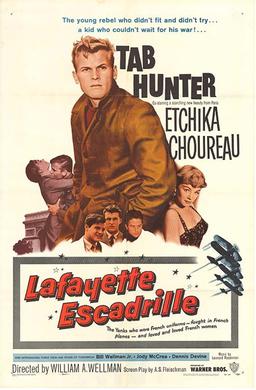 In the days leading up to World War I, spoiled rich kid Thad Walker (Tab Hunter) flees Boston after getting hit with a car theft charge and ends up in Paris. He befriends a group of American expatriates (including David Janssen, Will Hutchins, Jody McCrea, and William Wellman, Jr.) and eventually joins the French Air Force as a members of the Lafayette Escadrille. Thad also falls in love with a French prostitute named Renee (Etchika Choureau) and, after Thad strikes a French officer, he goes on the run with her.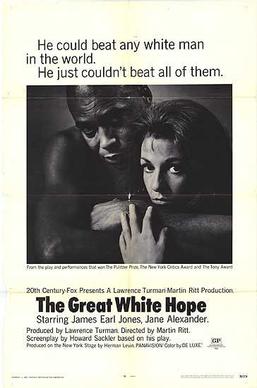


 Through the Shattered Lens