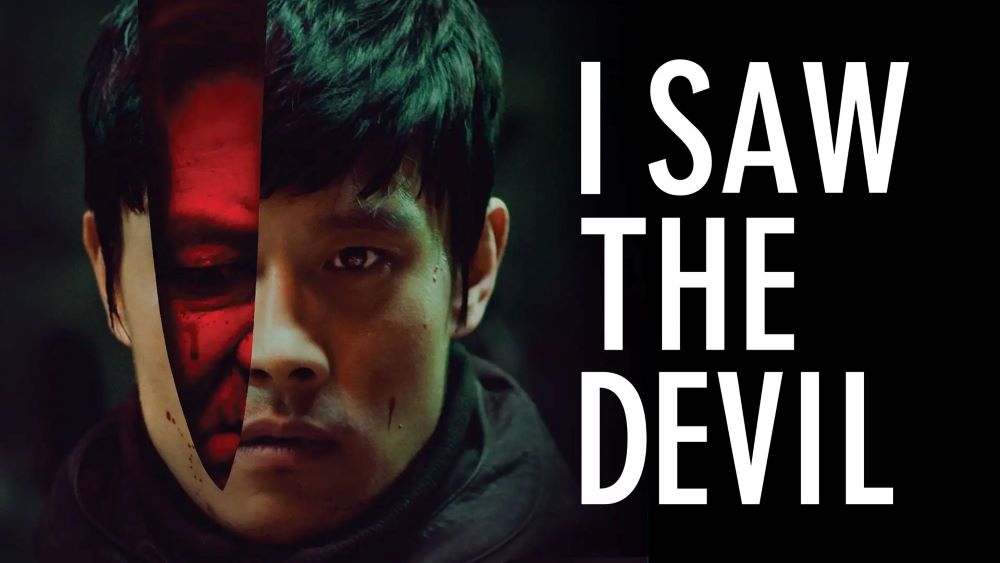
Horror Review: I Saw the Devil (dir. by Kim Ji-woon)


“Revenge is a fire that burns you the most.”

I Saw the Devil (2010) is a film that refuses to play by the rules of typical revenge thrillers. Instead, it pushes the boundaries into some of the most brutal and unflinching territory South Korean cinema has to offer. Directed by Kim Ji-woon, the movie blends elements of horror and psychological thriller, creating a hybrid that’s as disturbing as it is compelling. Much like Kingdom, it blurs the lines between genres—what starts as a revenge story quickly morphs into something darker and more extreme, turning familiar tropes into a raw exploration of evil’s destructive power.

The story follows Soo-hyeon (Lee Byung-hun), an intelligence agent whose fiancée becomes the victim of a sadistic serial killer named Kyung-chul (Choi Min-sik). Instead of a straightforward pursuit of justice, Soo-hyeon dives into a nightmarish game of cat and mouse. His goal? To inflict suffering on Kyung-chul in return, not for closure but for unleashing a kind of revenge that is almost self-destructive. Repeatedly capturing and releasing Kyung-chul, Soo-hyeon becomes trapped in a cycle of violence that steadily erodes his moral boundaries.

That cyclical pattern forms the backbone of the film, adding a rhythm that oscillates between moments of calm and bursts of brutal violence. Scenes of horror are often tinged with dark humor, adding an unsettling layer to the narrative. One standout moment occurs in a remote farmhouse, where Kyung-chul meets his twisted friend Tae-joo, a cannibalistic serial killer who treats violence like a casual dinner conversation. This scene exemplifies the film’s unsettling ability to find morbid humor in the most horrific circumstances, emphasizing how evil—when normalized—becomes almost banal.

Choi Min-sik’s performance in I Saw the Devil is chilling, showcasing his ability to embody pure evil. It’s a stark contrast to his role in Oldboy, where he played Oh Dae-su, a man seeking revenge for his own suffering. Here, Choi’s Kyung-chul is the embodiment of savagery—an inhuman predator with no remorse, no moral compass, just pure chaos. The role reversal highlights the incredible range of an actor whose presence can turn the screen into a nightmare. This flip from sympathetic avenger to monstrous villain makes the film’s exploration of morality even more compelling.

The film’s approach to violence is unabashed and graphic. Scenes of sexual assault, torture, and murder are depicted in unflinching detail, sparking inevitable debates about whether it’s gratuitous or necessary. Kim Ji-woon doesn’t hold back — he wants you to feel the full weight of evil in its most visceral form. This isn’t horror for shock’s sake; it’s a brutal mirror held up to the darker sides of human nature, exploring how unchecked vengeance can corrupt and destroy everything in its path.

Beyond the violence, I Saw the Devil probes deeper questions about morality and obsession. Soo-hyeon’s transformation from devastated lover to relentless avenger is portrayed with subtlety—they’re not just chasing a killer; they’re unraveling themselves. Lee Byung-hun brings a quiet intensity to his role, capturing the tragic descent into obsession and madness. The film makes you ask: how far can you go to punish someone before you become what you hate? And is vengeance ever truly justified? These aren’t easy questions, but I Saw the Devil forces you to sit with them.

Visually, the film is bleak and cold—mirroring its themes of alienation and moral decay. Kim Ji-woon keeps things straightforward, focusing on clear visuals that highlight the starkness of both urban and rural settings. The action scenes are brutal but precise, often choreographed with a sense of dark beauty that enhances their impact. The pacing is tight—about two hours—delivering a relentless story that never quite lets go of the tension.

The soundtrack and sound design don’t overshadow the visuals but add to the sense of dread. Quiet moments are ominous; violent sequences are thunderous, immersing viewers fully into this nightmare landscape. Every detail, from lighting to camera angles, emphasizes the film’s mood: raw and unsettling from start to finish.

The themes extend beyond personal revenge, touching on broader issues of societal trauma and the cyclical nature of violence. Korea’s history of brutal trauma and social upheaval echoes in the film’s exploration of how wounds—personal or national—can perpetuate more violence if left unresolved. It’s a brutal reminder that revenge can become a self-fulfilling prophecy, devouring everyone involved.

But make no mistake: I Saw the Devil is a challenging film. It doesn’t shy away from explicit content or disturbing themes. It’s brutal, unrelenting, and sometimes hard to watch. But that’s its power. It forces viewers out of their comfort zones and confronts uncomfortable truths about justice, evil, and our capacity for cruelty.

I Saw the Devil is a landmark in Korean cinema—an uncompromising look at revenge as a corrosive force. Its fusion of extreme horror and psychological drama creates a haunting experience that stays with you long after the credits roll. It’s not just a revenge story; it’s a primal reflection on what it means to be human—and what it costs to seek vengeance in a world full of monsters.

REC 4: Apocalypse (Official Trailer)


rec4post

Found footage horror films have always been hit or miss with me. When done well they’re quite effective horror films that really pulls an audience in. When done as a way to exploit the current craze for it then one just gets nauseous both intellectually and physically (I think Lisa Marie would agree).

The [REC] found footage horror franchise by Jaume Balagueró has been leading the way of late, but a decision to switch from found footage to traditional filming halfway into the third film in the series was a disappointment to fans. With the fourth film now set for a U.S. release such fans may find themselves yearning for the franchises found footage roots as the fourth and final installment will dump the found footage technique altogether and just go for straight out traditional style.

REC 4: Apocalypse also sees the return of the franchises heroine from the first two films, Manuela Velasco, as the trailer shows her being on a ship out to sea for testing. Anyone who has watched the first two films in the franchise knows that she may or may not be a carrier of the demonic plague accidentally cooked up by Vatican researchers who wanted to find the biological source for demonic possession.

REC: Apocalypse is set for an early January 2015 release at selected theaters in the US.

Horror Trailer: V/H/S (Red Band)


This film has already been making the film festival circuit so for genre fans it’s nothing new, but for the general public are probably still not aware that it even exists.

V/H/S is another one of those “found footage” films that everyone either hates or loves. I’m sort of straddling the fence between the two. I can dig well made ones, but some have been awful. From what I’ve been hearing about this horror anthology the reactions seem to run the gamut of it being good to almost great. I keep hearing and reading that despite flaws and unevenness in the way the five stories were told (each with it’s own filmmaker directing the segment) the film overall should satisfy genre fans everywhere. Like having so many different segments with a different filmmaker and storytelling style should give at least someone watching one good thing to like if not more.

The one thing about this film that has me interested in making it one of my must-see for this October is the fact that one of the filmmakers doing a segment in the film is none other than Ti West. His horror work has been sparse but eah one he’s released has become favorite of mine. Here’s to hoping his segment in V/H/S is not one of the flawed ones.

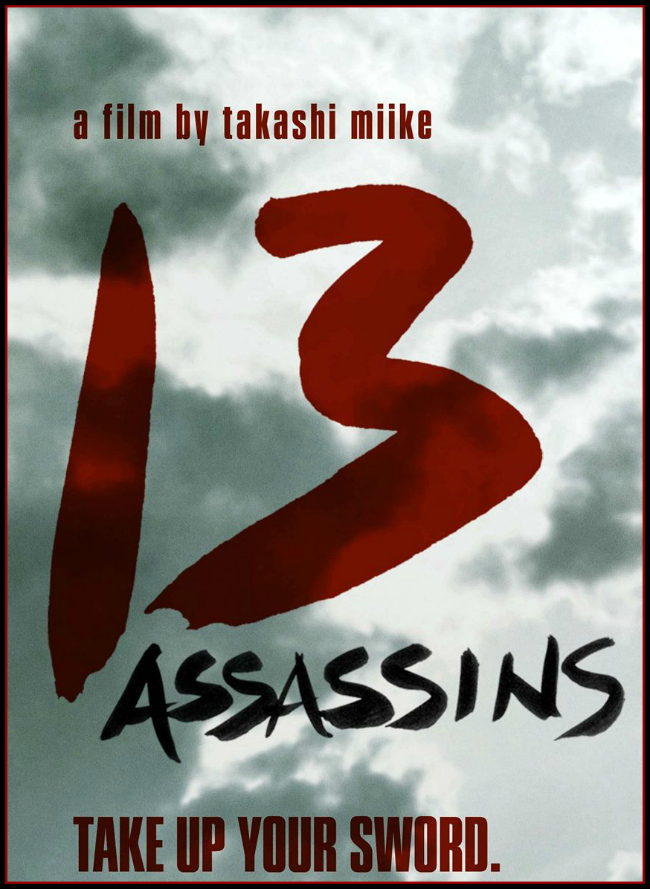
Review: 13 Assassins (dir. by Miike Takashi)


“…being a samurai is a burden.” – Shimada Shinzaemon

Miike Takashi (Takashi Miike to those in the West) has always been one of my favorite filmmakers and I consider him one of the most unique directors working. To say that he has an extensive body of work would be an understatement. This is a man who is quite at home at releasing 2-3 films a year. He has dabbled in all sorts of genres from drama, thrillers, horror, scifi, musicals and even children’s stories. Those who discovered him in the West mostly remember him for his more extreme films such as Audition, Ichi the Killer and his Dead or Alive epic. He’s taken extreme film-making to some unpredictable plac. While some of his films never work one could never say that they were ever boring or uninteresting.

In 2010, Miike released what I can only say is one of his best films to date with his remake of Tengan Daisuke’s 1963 film of the same name. 13 Assassins is Miike’s take on the classic jidaigeki (Japanese Edo period pieces…think of it as similar in idea to Merchant-Ivory period pieces) which incudes such great films as Kurosawa’s Seven Samurai, Rashomon and Yojimbo to name a few. This film also shares some similarities to the “men on a mission” war films which were quite popular during the early 60’s which included one of my other top action films in The Dirty Dozen.

The film is loosely based on some historical characters from the Tokugawa Shogunate era mainly that of Lord Naritsugu of the Akashi clan. In this film he’s portrayed as a sadistic young noble whose familial ties to the ruling Shogun allows him to kill and rape both commoners and nobles alike with impunity. When a high government official fears for the government and the country should Naritsugo ever ascends to a higher position in the Shogunate he takes it upon himself to hire a trusted friend and veteran samurai, Shinzaemon (Kōji Yakusho), to plan and pull off the assassination of Lord Naritsugo.

From this moment on the film takes it’s time in introducing the men who would form the film’s title. It doesn’t linger or take too long with each man, but we learn enough of these 13 assassins to form some sort of attachment to each and everyone that the loss of each man, once the battle begins between Shinzaemon’s assassins and Naritsugu’s 200 bodyguards, has emotional impact and meaning. Even knowing that this mission ultimately becomes a suicide task still doesn’t stop the surprise when one of these men falls to the blades of their enemies.

The assassins themselves were quite a diverse group of characters that could’ve been lifted off your typical “men on a mission” film. We have the goofballs with the talent for explosives, younger samurai eager to prove themselves in battle and to their masters, veteran samurai looking to do one more last job before they retire from the life right up to the last-minute addition of a fool whose unique skill sets becomes integral to the missions success.

13 Assassins begins the final 45 minutes of its running time with a non-stop battle which rivals anything we’ve seen put out by Hollywood in the past ten years. Unlike the sturm und drang actionfests from Michael Bay and those who seem to emulate his style of action film-making, Miike takes a much more restrained approach to the proceedings. This is not to say that the action in this film was boring. He allows the audience to know exactly what’s going on with long takes and minimal amount of edits. I don’t think he ever used too many quick cuts to help simulate chaos during the fight. Instead he lets the practical stunt choreography and the inventive set design of the village turned killing field to dictate the flow of the action. It’s quite interesting to note how a filmmaker such as Miike whose reputation in the West has been built on his style of extreme visuals and imagery on film would be quite adept at such a thing as traditional filmmaking that eschews heavy-usage of CGI, quick-cut editing and unnecessary montages to help propel not just the action but the film’s narrative.

Again, unlike the Bay-fest the West has been flooded with the last decade or so this film also has as one of it’s strength’s the story all the action revolves around. The story itself is quite simple when one really boils it down to it’s most basic premise. Evil lord sows chaos around the countryside and a group of honor-bound fighting men band together for one reason or another to stop this evil. It’s a story as old as Beowulf and as recent as 2010’s trio of such films with The Losers, The A-Team and the Expendables. What this film does with it’s characters which helps it stand out from that trio is how well Miike was able to balance not just the action with the story but how to make each character in the film seem unique despite being so stereotypical of such films at first glance.

The acting by the ensemble cast (a who’s-who of performers in Japanese, but mostly unknown to Western audiences) adds just the right mix of melancholy and dark humor not to mention some rock star-like work from it’s lead antagonist. Gorô Inagaki (himself not just a talented actor but one of Japan’s more popular pop star singers) as Lord Naritsugu brings energy as the evil lord to every scene he’s in not because of being so over-the-top but the opposite. He plays this villain as a noble bored with the peaceful days enjoyed by everyone and could only enjoy what life has to offer when he brings chaos to the proceedings. The fact that this involves him raping the women of a fellow noble and cutting off the limbs of a nameless young girl just shows how much out of touch he is with reality and at the same time romanticizes the age of war hundreds of years in the past. The rest of the cast does an admirable job in their own roles. To say that it was difficult to see one of them die on-screen would be an understatement.

13 Assassins was released in 2010, but really got it’s major showing in the United States in early 2011. Despite all of that and with the eclectic group of films I was fortunate enough to have seen in 2011 that made my “best of” list it would be this film that ranks as one of the best of 2011 and also one of my favorite films of recent times. Miike Takashi has shown himself to be now just a filmmaker provocateur whose reputation for shocking audiences have bee well-earned, but also cemented the true fact that he is a filmmaker (both in and out of Hollywood) who has the skills and know-how to escape being labeled as only a filmmaker of a particular genre. His restraint and decision to remake a classic film in the jidaigeki genre shows that while he hasn’t lost his panache for extreme brutality (and this film has them to satiate action and gore fans everywhere) he can also create a film using the subtle brushstrokes of traditional, old-school filmmaking. With this film he has made one of finest and cements his place in the roll call of best filmmakers of the last quarter-century.