
Days of Paranoia: Edmond (dir by Stuart Gordon)


Based on a one-act play by David Mamet, 2005’s Edmond tells the story of Edmond Burke (William H. Macy).

Edmond shares his name (if not the actual spelling) with the philosopher Edmund Burke.  Edmund Burke was a strong believer that society had to put value in good manners to survive and that religious and moral institutions played an important role in promoting the idea of people treating each other with respect and decency.  Edmund Burke knew what he believes and his writings continue to influence thinks to this day.  Edmond Burke, on the other hand, doesn’t know what he believes.  He doesn’t know who he wants to be.  All he knows is that he doesn’t feel like he’s accomplished anything with his life.  “I don’t feel like a man,” he says at one point to a racist bar patron (played by Joe Mantegna) who replies that Edmond needs to get laid.

On a whim, Edmond steps into the shop of a fortune teller (Frances Bay), who flips a few Tarot cards and then tells Edmond that “You’re not where you’re supposed to be.”  Edmond takes her words to heart.  He starts the night by telling his wife (played by Mamet’s wife, Rebecca Pidgeon) that he’s leaving their apartment and he won’t be coming back.  He goes to the bar, where he discusses his marriage with Mantegna.  He goes to a strip club where he’s kicked out after he refuses to pay $100 for a drink.  He goes to a peep show where he’s frustrated by the glass between him and the stripper and the stripper’s constant demand that he expose himself.  He gets beaten in an alley by three men who were running a three-card monte scam.  Edmond’s problem is that he left home without much cash and each encounter leads to him having less and less money.  If he can’t pay, no one wants to help him, regardless of how much Edmond argues for a little kindness.  He pawns his wedding ring for $120 but apparently, he just turns around and uses that money to buy a knife.  An alley-way fight with a pimp leads to Edmond committing his first murder.  A one-night stand with a waitress (a heart-breaking Julia Stiles) leads to a second murder after a conversation about whether or not the waitress is actually an actress leads to a sudden burst of violence.  Edmond ends up eventually in prison, getting raped by his cellmate (Bookem Woodbine) and being told, “It happens.”  Unable to accept that his actions have, in one night, led him from being a businessman to a prisoner, Edmond says, “I’m ready to go home now.”  By the end of the film, Edmond realizes that perhaps he is now where he was meant to be.

It’s a disturbing film, all the more so because Edmond is played by the likable William H. Macy and watching Macy go from being a somewhat frustrated but mild-mannered businessman to becoming a blood-drenched, racial slur-shouting murderer is not a pleasant experience.  Both the play and the film have generated a lot of controversy due to just how far Edmond goes.  I don’t see either production as being an endorsement of Edmond or his actions.  Instead, I see Edmond as a portrait of someone who, after a lifetime of being willfully blind to the world around him, ends up embracing all of the ugliness that he suddenly discovers around him.  He’s driven mad by discovering, over the course of one night, that the world that is not as kind and well-mannered as he assumed that it was and it all hits him so suddenly that he can’t handle it.  He discovers that he’s not special and that the world is largely indifferent to his feelings.  He gets overwhelmed and, until he gets his hands on that knife, he feels powerless and emasculated.  (The knife is an obvious phallic symbol.)  It’s not until the film’s final scene that Edmond truly understands what he’s done and who he has become.

Edmond is not always an easy film to watch.  The second murder scene is truly nightmarish, all the more so because the camera remains on Edmond as he’s drenched in blood.  This is one of William H. Macy’s best performances and also one of his most disturbing characters.  That said, it’s a play and a film that continues to be relevant today.  There’s undoubtedly a lot of Edmonds out there.
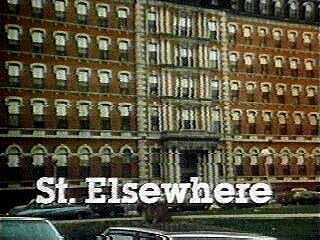
Retro Television Review: St. Elsewhere 1.4 “Cora and Arnie”


Welcome to Retro Television Reviews, a feature where we review some of our favorite and least favorite shows of the past! On Fridays, I will be reviewing St. Elsewhere, a medical show which ran on NBC from 1982 to 1988.  The show can be found on Hulu!

This week’s episode made me cry.

Episode 1.4 “Cora and Arnie”

(Dir by Mark Tinker, originally aired on November 23rd, 1982)

While orderly Luther (Eric Laneuville) practices his karate moves in the hallway and anesthesiologist Vijay (Kavi Raz) composes a letter to his family in India and Dr. Fiscus continues his sex-only relationship with Kathy Martin, four patients learn about life and death at St. Eligius.

One of them is an unnamed man (Lionel Mark Smith) who comes in with a complaint of backpain.  Fiscus examines him and discovers that the man has been shot in the back.  The man announces that he’s on parole and he doesn’t feel like going back to prison.  Fiscus offers to admit him under an assumed name but the man says he already gave his real name to the front desk.  The man tries to leave the hospital but collapses from pain and blood loss.  Later, when the man wakes up, Fiscus tells him that the bullet has been removed and he’ll be fine.  The man says he won’t be fine because he’s going to go back to prison as soon as he leaves the hospital.

Meanwhile, Kathleen McAllister, who has been in a coma ever since Andrew Reinhardt set off a bomb at a bank, finally dies.  Reinhardt, when he’s informed of the news, sneers.  He doesn’t care that she died.  He’s all about the class struggle.  (If this show was made today, he’d have thousands of followers on Bluesky.)  When Dr. Beale tries to examine him to determine if he’s mentally ill, Reinhardt spits in his face.  Reinhardt is convinced that nothing will ever happen to him but, after Kathleen dies, he’s informed that he’s being taken to prison.  As Reinhardt is rolled out of his hospital room, Kathleen’s husband (Jack Bannon) appears in the hallway and shoots him dead.

George (Bernard Behrens) and Lillian Rogers (Anne Gerety) are tourists who are visiting Boston.  When Lillian faints in her hotel room, George rushes her to the hospital.  Lillian says she’s feeling fine but she still goes through a series of tests to determine why she fainted.  In the end, the tests are inconclusive.  No one can figure out why she fainted so she’s told to just see her family doctor when she returns home.  When George and Lillian check out of the hospital, they are presented with the bill for all the tests.  George freaks out when he sees that he’s being charged …. $1,380.90!

Now, admittedly, that is $1,380.90 in 1982 money.  If George received the same bill today, it would be for $4,517.10.  Still, considering all the tests that Lillian had done, that seems remarkable cheap, even by today’s standards.  My father died in August and the majority of his medical costs were covered by insurance but his estate is still receiving bills from various hospitals, specialists, and ambulance services.  I’ve been told that the same thing happened when my mom passed away in 2008.  (Personally, I think if someone dies while in your care, you’ve forfeited your right to be paid.)  By today’s standards, having to pay less that $5,000 feels like a bargain!

Finally, and most heart-breakingly, Dr. Morrison takes care of a homeless woman named Cora (Doris Roberts), who comes into the hospital with her companion, Arnie (James Coco).  Due to a head injury, Arnie is almost childlike.  While Cora learns that a case of gangrene is going to kill her unless she gets her foot amputated, Arnie repeatedly asks, “Can we go now?”  In the end, Cora chooses not to have the surgery, leaving the hospital with Arnie.  As she explains to Dr. Morrison, someone has to take care of Arnie and she can’t do that with just one foot.  When Morrison tells Cora that she’s probably going to die in a year, Cora shrugs and says it won’t be any great loss.

OH MY GOD!  Seriously, I was in tears at the end of this episode.  The Cora and Arnie story had the potential to be a bit too schmaltzy for its own but Doris Roberts and James Coco both gave such incredibly moving performances that I couldn’t help but get emotionally involved in their plight.  And I understood why Cora made the decision that she did.  Having been rejected by both her family and society, Cora knew that there wouldn’t be anyone around to take care of her after the operation.  So, she decided to accept things the way that they were and spend her last year with the one person who didn’t judge her, Arnie.  (I’m getting teary-eyed just writing about it.)  Playing out against all the other petty dramas going on at the hospital, this storyline was emotionally devastating.

This was a powerful episode.  Watching it, I understood why St. Elsewhere is so often described as being one of the best medical shows of all time.