Cleaning Out The DVR: Class Action (dir by Michael Apted)


Sometimes, it takes a really good actor to give a really bad performance.

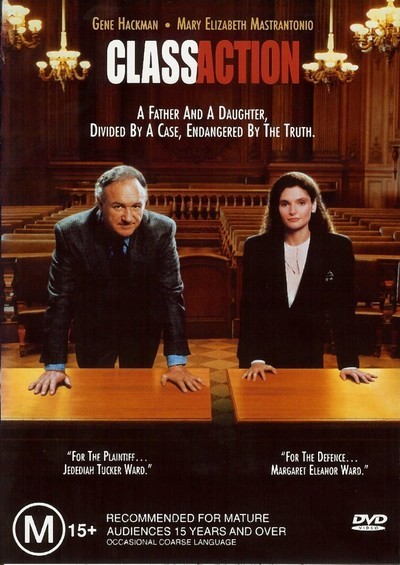
That’s what I found myself considering tonight as I watched the 1991 film, Class Action. I recorded this film off of Starz a few months ago, mostly due to the fact that I usually enjoy legal dramas. Class Action is about a father and a daughter, both of whom are attorneys, who find themselves facing each other in court. Gene Hackman plays Jedediah Ward Tucker while Mary Elizabeth Mastrantonio played Maggie, his daughter.

From the very first scenes, Jed Tucker is portrayed as being a firebrand, a crusader who stands up for the little guy against big corporate interests. (“Jed Ward is a great man!” one his clients exclaims while the other lawyers nod along in agreement.) Tucker is flamboyant, loud, perpetually outraged, in love with attention, and determined to make the world a better place. This is the type of role that would probably encourage any actor to overact just a bit. However, when you cast someone like Gene Hackman in the role, the performance becomes a masterclass in overacting. Gene Hackman was never a particularly subtle actor to begin with and casting him as Jed Tucker guarantees about two hours of Hackman bellowing, smirking, occasionally flirting, and basically coming across less like Gene Hackman and more like someone doing a particularly antic impersonation of Gene Hackman. Hackman goes so over overboard in the role that it becomes rather fascinating to watch. You watch and you ask yourself, “How much louder can he get? He much more obviously can he telegraph his intentions? Just how Gene Hackmanish is Gene Hackman going to get in this film?” Don’t get me wrong, Gene Hackman was a great actor. (He famously retired in 2004, after the indignity of appearing in Welcome to Mooseport.) One need only watch Bonnie and Clyde, The French Connection, Unforgiven, and The Royal Tennenbaums to see that Gene Hackman was a great actor. But sometimes, it takes a great actor to give a memorably bad performance.

Gene Hackman’s performance, as overbaked as it may be, is actually the only interesting thing about Class Action. It’s a well-made but ultimately rather silly mix legal maneuvering and family drama. Jed was a terrible father so Maggie becomes a corporate attorney in order to spite him. Class Action so embraces the idea that all professional women are motivated by daddy issues that even Aaron Sorkin would probably look at it and say, “Whoa, that’s really demeaning.” At one point, Maggie says to her father, “Have you ever considered that I might be a good attorney?,” just to have her father smirk and say that’s only because he’s her father. Jed’s response is to be expected, as he’s kind of an arrogant windbag. The problem is that the movie itself doesn’t seem to be willing to consider that Maggie could be a good attorney.

The other problem, of course, is that Class Action makes its good guys and its bad guys so painfully obvious that it’s hard to take any of the conflicts seriously. Of course, the big corporate law firm is going to be evil and of course, Jed Ward’s associates are going to be saints even if Jed isn’t. Laurence Fishburne plays Jed’s protégée and he gets stuck with all of the worst lines. Far more entertaining is future U.S. Senator and presidential contender Fred Dalton Thompson, playing a doctor who explains why it actually costs less for a car company to settle a lawsuit than to fix a design flaw.

Class Action is a forgettable film, not so much terrible as just bland. That said, if you want to hear some vintage Gene Hackman-style yelling, this might be the film for you.

Film Review: The Mule (dir by Clint Eastwood)


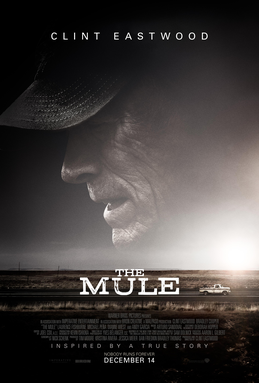
In The Mule, Clint Eastwood plays Earl Stone.

In some ways, Earl is typical of the characters that Eastwood has played during the latter part of his career.  He’s grouchy.  He’s alienated almost everyone who was previously close to him.  He drives an old pickup truck and he has no idea how to text and he seems to literally snarls whenever he sees anyone under the age of 60.  He served in the Korean War and he’s not scared of guns.

In other ways, Earl is not a typical Eastwood character at all.  First off, he’s on the verge of financial ruin.  Earl may not be the first Eastwood character to not know how to responsibly handle money but he is perhaps the first one to be on the verge of homelessness as a result.  (He’s perhaps the first of Eastwood’s modern character to face real-world consequences for his flaws.)  Secondly, Earl often seems to be lost in the 21st century world.  In Gran Torino and Trouble With The Curve, Eastwood played grumpy old men who could still hold their own when it came to dealing with younger people.  But, in The Mule, Earl seems to be defeated by life.  The only thing that he really has going for him is his reputation as a horticulturist and, as the film makes clear, that’s not a skill that’s going to bring in much money.

That all changes when Earl has a chance meeting with Rico (Victor Rasuk), a friend of his granddaughter’s.  Knowing that Earl is desperate for money, Rico tells him that he could make a quick payday by transporting a package for some friends.  After giving it some thought, Earl agrees.  When Earl meets Rico’s friends, everyone is shocked at how old he is.  They’re even more shocked when Earl says that he doesn’t know how to text.  Earl is given a phone and told to answer it whenever it rings but to never use it to call anyone.  A package is put in the back of Earl’s pickup truck.  It’s suggested that Earl not look in the package.

Does Earl know that he’s transporting drugs?  At first, it’s hard to say.  While it seems obvious to us, Earl is from a different time.  Still, once Earl does eventually learn that he’s being used as a drug mule, it doesn’t seem to bother him.  If nothing else, Earl actually seems to get a kick out of being a real-life outlaw.  He continues to make his runs and he continues to make money and, perhaps most importantly, he now has a purpose in life.  In a strange way, the drug runners even become his new family.  (They call him Tata, which is Spanish for grandfather.)  Of course, they’re a family that makes it cleat that they’ll kill Earl if he’s ever late delivering the package but that doesn’t seem to matter to Earl.

Meanwhile, the DEA (represented by Laurence Fishburne, Bradley Cooper, and — somewhat inevitably — Michael Pena) are hearing reports about a new drug mule who has been nicknamed Tata.  What they don’t suspect, of course, is that Tata is a 90 year-old man who has no criminal record and who is always very careful to obey all the traffic laws.  Even when Earl is pulled over by the police, he’s such a nice old man that they let him go without bothering to really search his vehicle.  It seems like Earl’s got a perfect thing going but, unfortunately, things are never as good as they seem and eventually, the reality of Earl’s situation intrudes on his fantasy….

It’s been said that The Mule is going to be Eastwood’s final film as an actor and he gives an excellent performance as Earl.  The Mule, which feels, in many ways, like a good-natured companion piece to Gran Torino, features Eastwood at both his most vulnerable and, probably not coincidentally, his most likable and sympathetic.  In this film, Eastwood makes clear that he’s no longer the righteous Dirty Harry or the mythological Man With No Name.  Now, he’s just a man nearing the end of his life and trying to come to terms with the mistakes and the decisions of the past.  Eastwood plays Earl like a man who knows that his time is limited.  Smuggling drugs gives him a chance to feel like he’s alive again but, throughout it all, there’s still a deep sadness.  Earl can use his money to pay his bills and to fix up the local VFW hall but he still can’t buy his family’s forgiveness.  Watching the film, it’s impossible not to feel for Earl.  You’re happy that he found at least a little satisfaction with his criminal career, even though you immediately suspect that things probably aren’t going to turn out well for him.

Admittedly, there is one cringe-worthy scene in which it’s suggested that the 90 year-old Earl has had a threesome with two twenty year-olds (and one gets the feeling that the scene would not have been included if not for the fact that the film’s star was also the director).  For the most part, though, this is a thoughtful film that features a poignant performance from Eastwood and which is directed in a restrained, but empathetic manner.  If this is Eastwood’s swan song as an actor, it’s a good note to go out on.

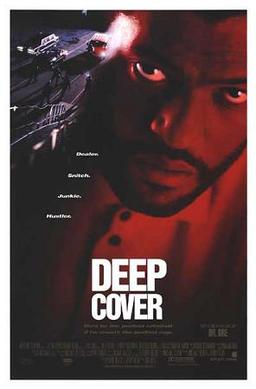
Deep Cover (1992, directed by Bill Duke)


When Russell Stevens was 10 years old, he saw his father get gunned down while holding up a liquor store.  Now, 20 years later, Russell (Laurence Fishburne) is a cop who is so straight that he doesn’t even drink.  But because of his father’s background, a psychological profile that indicates Russell is unique suited to understand how the criminal mind works, and the fact that he has no loved ones at home, he is recruited to work undercover.  His weaselly handler, Carver (Charles Martin Smith), explains that going undercover means that Russell is going to have to become a criminal 24/7.  He can’t just do his job for 8 hours a day and then go back to his normal life at night.

With the government’s money, Russell sets himself up as a dealer, buying and selling the drugs that are destroying his community.  It does not take long before Russell meets David Jason (Jeff Goldblum), a lawyer and aspiring drug kingpin.  At first, David makes Russell as being an undercover cop but, after Russell is arrested by the righteous but clueless Detective Taft (Clarence Williams III), David changes his mind and brings Russell into the operation.  The line between being a cop and a criminal starts to blur, especially after David and Russell start to bond over their mutual dislike of their boss, Felix (Gregory Sierra).  It doesn’t take long for Russell to get in over his head.

There have been a lot of films made about undercover cops losing themselves in their new criminal identity but few take the story to its logical conclusion like Deep Cover does.  Russell may start out as a straight arrow but, by the end of the movie, he’s killed a dealer in cold blood and broken his own personal pledge to never do cocaine himself.  He also discovers that David is often a more trustworthy partner than his own colleagues in law enforcement.  Fishburne and Goldblum both give excellent, spot-on performances as Russell and David and they’re supported by an able cast of weasels and tough guys.  I especially liked Charles Martin Smith’s performance as Carver.  (When Russell asks Carver if he’s ever killed a man, Carver laughs and says that he went to Princeton “just to avoid that shit.”)  Gregory Sierra is also great in the role of Felix and I loved that, of all people, Sidney Lassick played one of Felix’s henchmen.  That’s like seeing John Fiedler play the Godfather.

One of the best crime thrillers of the 90s, Deep Cover is not only a detective film but it’s also a politically-charged look at why America’s war on drugs was doomed to failure.  No sooner does Russell get into position to catch the man behind Felix’s operation than he’s told to drop the case because the State Department thinks that the drug lord could be politically helpful to them in South America.  As Russell discovers, the War on Drugs is more interested in taking out the soldiers on the streets than the generals in charge.  While men like Carver sit in their offices and move people around like pieces on a chess board, people like Russell are left to clean up the mess afterward.

Music Video Of The Day: White Lines by Melle Mel (1983, directed by Spike Lee)


This song, one of the first hit rap songs about drugs, is often mistakenly described as being a collaboration between Grandmaster Flash and Melle Mel.  Grandmaster Flash actually had nothing to do with the song.  He had already left Sugar Hill Records before the song was even recorded.  When the single was first released, it was credited to “Grandmaster and Melle Mel,” in order to create the impression that Flash was involved.  In his autobiography, Flash wrote that he once heard the song was while he was on the way to buy crack and, at that moment, he felt that Melle Mel was specifically speaking to him.

This song was recorded at a time when much of America — specifically, white America — was either unaware of or unconcerned with the drug epidemic that was ravaging America’s poorest neighborhoods.  White Lines attacks both cocaine and a legal system that punishes poor black kids more harshly than rich, white businessmen.  “The businessman who is caught with 24 kilos” is a reference to car manufacturer John DeLorean, who was arrested after trying to buy 24 kilos from an undercover FBI agent.  DeLorean was later acquitted after he made the case that the FBI agent had entrapped him.

(DeLorean today is best remembered for designing the car made famous by Back to the Future.  Between 1981 and 1983, 9,000 Deloreans were manufactured and 6,500 of them are reported to still be in working condition.  I once came across a classified ad from someone who was looking to sell his DeLorean.  I called and offered him a thousand dollars.  He laughed and hung up.)

This video was shot by Spike Lee, who was a film student at NYU at the time and yes, that is Laurence Fishburne.  Fishburne appeared in this video shortly after playing Cutter in Death Wish II and he has the same look in the video as he did in the movie.

Enjoy!


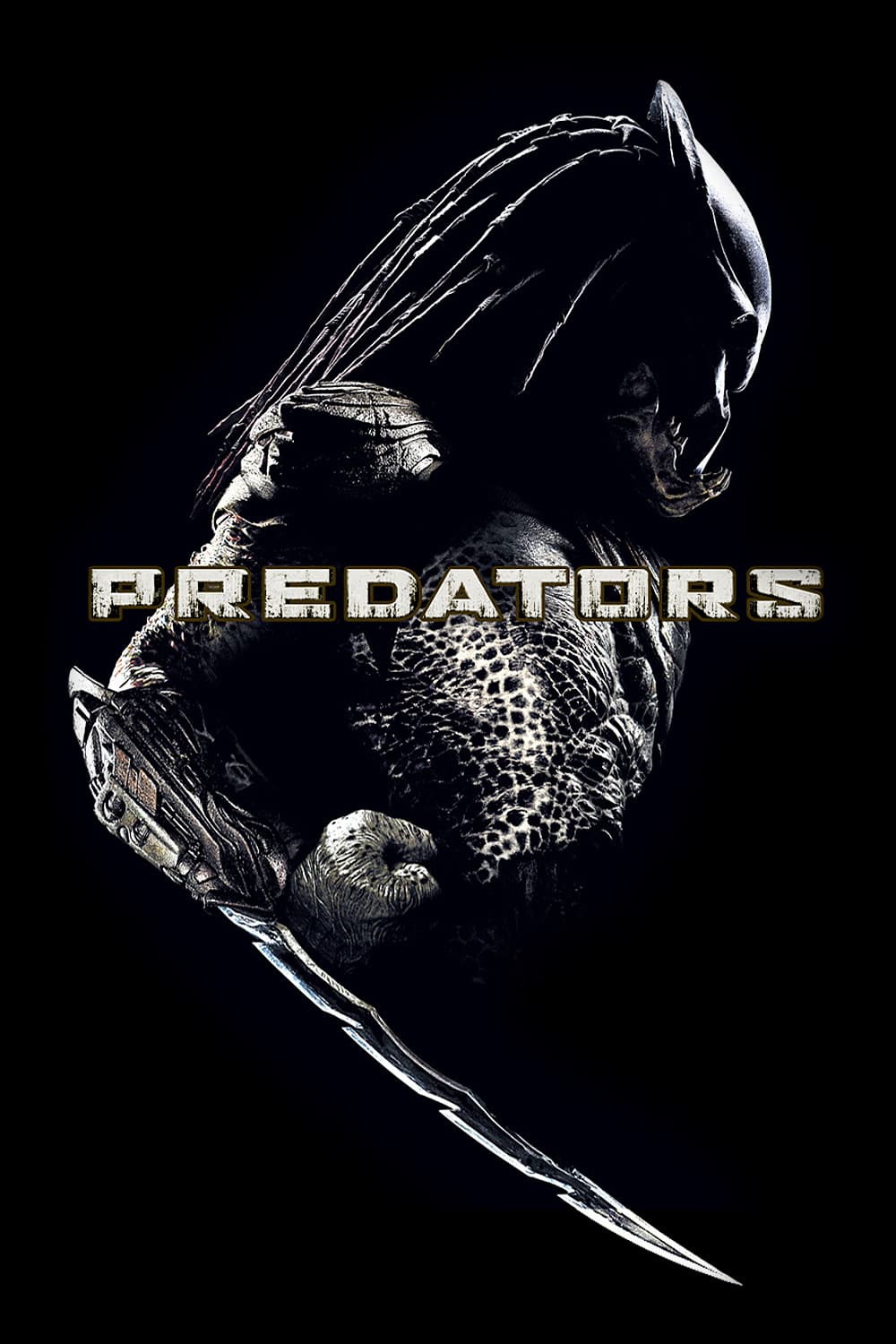
Review: Predators (dir. by Nimrod Antal)


Predators

It would be twenty years before those space-faring hunters, the Predators, would return to the big screen. Sure, they appeared in the two Aliens vs. Predator films of the early 2000s, but I don’t count those as part of the Predator franchise—mostly because they weren’t the headliners. Plus, those two mash-up films were all kinds of awful.

2010’s Predators, directed by Nimród Antal and produced by Robert Rodriguez, set out to breathe new life into the sci-fi action franchise that the two AvP entries had drained of excitement. From the early 1990s until this film’s release, the Predator mythology had steadily expanded through novels, comics, and games, creating a world as rich as any in science fiction. Longtime fans came to understand the Predators’ culture, mindset, and technology.

For some, that world-building stripped away the mystery that made the Predator such an iconic monster. Others felt it helped establish consistent rules, allowing future stories to build on a solid foundation instead of endlessly one-upping what came before.

Predators embraced this expanded lore while adding a new wrinkle: the introduction of the so-called “Super Predators,” bigger, faster, and meaner than the classic hunters we’d seen over the decades. Another new element placed the story on an unnamed planet serving as an extraterrestrial game preserve, where Predators could hunt their chosen prey on familiar ground.

This setup lent a new dimension to the narrative. The humans being hunted had nowhere to run, and whatever advantage they might have enjoyed on Earth vanished instantly. They were now being hunted on Predator turf—a cruel inversion of game hunting, like a safari where the prey has no chance against its well-equipped pursuers.

Despite these new additions to the lore, the film mostly works as an action-thriller. We get the requisite band of misfits, murderers, and killers—the worst humanity has to offer, but the best at what they do. They range from black-ops mercenaries and elite snipers to cartel enforcers and even a serial killer.

Leading this reluctant ensemble is the enigmatic Royce, played by Oscar-winner Adrien Brody, who surprisingly pulls off the wiry, cold-hearted black-ops soldier. The film hinges on his performance. He’s not a team player, nor is he likable—he fits the antihero mold perfectly, willing to sacrifice anyone if it means surviving another hour. Yet he understands that his best chance lies in keeping others alive, if only as tools for his own survival. He’s the audience surrogate, the one who rolls his eyes as everyone else makes one bad decision after another.

Antal’s action direction recalls the McTiernan era. He favors long, sweeping takes that clearly define the geography of each battle—a quality too rare in modern action cinema, where quick cuts and shaky edits often stand in for real dynamism. Where the film falters is in its reliance on exposition-heavy dialogue. After nearly every action set piece, the momentum stalls as characters explain what’s happening. Laurence Fishburne even appears in a role that exists purely to deliver exposition.

Now, about those Super Predators: they’re an intriguing trio who expand the series’ creature variety, though at the cost of making the classic Predator seem almost obsolete. There’s the Tracker, who uses alien hunting dogs to flush out prey; the Falconer, who employs a cybernetic drone that feels straight out of the Marvel Cinematic Universe; and the Berserker, the biggest and most brutal of the three, relying on raw power rather than skill or strategy.

They look fantastic but slightly diminish the menace of the original Predator design. Against this new breed, the traditional hunters seem almost helpless.

Still, Predators stands several notches above what audiences got from the two AvP movies. Despite an exposition-heavy script and a bold but polarizing decision to downplay the classic Predator’s threat, Antal’s entry injects enough adrenaline and fresh lore to reenergize the series. It’s unfortunate that the AvP films’ lingering stench colored its reception, but over time, more fans have come to appreciate Predators for what it is: a fun, muscular, and engaging slice of sci-fi action.

Bronson’s Back!: Death Wish II (1982, directed by Michael Winner)


To quote John McClane, “How can the same shit happen to the same guy twice?”
It has been eight years since Paul Kersey (Charles Bronson) lost his wife and single-handedly cleaned up New York City.  The first Death Wish ended with Paul in Chicago, preparing to gun down a new group of criminals.  I guess Chicago didn’t take because, at the start of Death Wish II, Paul is in Los Angeles and he’s working as an architect again.  He has a new girlfriend, a bleeding heart liberal reporter named Geri (Jill Ireland, Bronson’s real-life wife) who is against the death penalty and who has no idea that Paul used to be New York’s most notorious vigilante.  Having finally been released from the mental institution, Carol (Robin Sherwood) is living with her father but is now mute.

Crime rates are soaring in Los Angeles and why not?  The legal system is more concerned with the rights of the criminals than the victims and Paul has retired from patrolling the streets.  But when a group of cartoonish thugs rape and kill his housekeeper and cause his daughter to fall out of a window while trying to escape them, Paul picks up his gun and sets out for revenge.

Death Wish II was not the first sequel to Death Wish.  Brian Garfield, the author of the novel on which Death Wish was based, never intended for Paul to be seen as a hero and was disgusted by what he saw as being the film’s glorification of violence.  As “penance,” he wrote a sequel called Death Sentence, in which Paul discovered that he had inspired an even more dangerous vigilante.  When Menahem Golan and Yoram Globus bought the rights to produce a second Death Wish film, they decided not to use Garfield’s sequel and instead went with a story that was co-written by Golan.

It’s the same basic story as the first film.  Again, Paul is a mild-mannered architect who is a liberal during the day and a gun-toting reactionary at night.  Again, it’s a home invasion and a death in the family that sets Paul off.  Again, Paul gets help from sympathetic citizens who don’t care that the police commissioner (Anthony Franciosa) wants him off the streets.  Jeff Goldblum played a rapist with a switch blade in the first film.  This time, it’s Laurence Fishburne who fills the role.  (Fishburne also carries a radio, which he eventually learns cannot be used to block bullets.)  Even Detective Ochoa (Vincent Gardenia) returns, coming down to Los Angeles to see if Paul has returned to his old ways.

The main difference between the first two Death Wish films is that Death Wish II is a Cannon film, which means that it is even less concerned with reality than the first film.  In Death Wish II, the criminals are more flamboyant, the violence is more graphic, and Paul is even more of a relentless avenger than in the first film.  In the first Death Wish, Paul threw up after fighting a mugger.  In the second Death Wish, he sees that one of the men who raped his daughter is wearing a cross, leading to the following exchange:

“Do you believe in Jesus?”

“Yes, I do.”

“Well, you’re going to meet him.”

BLAM!

Death Wish II is the best known of the Death Wish sequels.  It made the most money and, when I was a kid, it used to show on TV constantly.  The commercials always featured the “You believe in Jesus?” exchange and, every morning after we saw those commercials, all the kids at school would walk up to each other and say, “You believe in Jesus?  Well, you’re going to meet him.”  It drove the teachers crazy.

Overall, Death Wish II is a lousy film.  Michael Winner, who was always more concerned with getting people into the theaters than anything else, directs in a sledgehammer manner that makes his work on the first film look subtle.  He obscenely lingers over every rape and murder, leaving no doubt that he is more interested in titillating the audience than getting them to share Paul’s outrage.  The script is also weak, with Geri so poorly written that she actually gets more upset about Paul going out at night than she does when she learns that Paul’s daughter has died.  When Paul sets out to track down the gang, his method is to merely wander around Los Angeles until he stumbles across them.  It doesn’t take long for Paul to start taking them out but no one in the gang ever seems to be upset or worried that someone is obviously stalking and killing them.

There are a few good things about the film.  Charles Bronson was always a better actor than he was given credit for and it’s always fun to watch Paul try to balance his normal daily routine with his violent night life.  Whenever Geri demands to know if he’s been shooting people, Paul looks at her like he is personally offended that she could possibly think such a thing.  Also, the criminals themselves are all so cartoonishly evil that there’s never any question that Paul is doing the world a favor by gunning them down.  For many otherwise sensible viewers, a movie like Death Wish II may be bad but it is also cathartic.  It offers up a simple solution to a complex issue.  In real life, a city full of Paul Kerseys would lead to innocent people getting killed for no good reason.  But in the world of Death Wish II, no one out after nightfall is innocent so there’s no need to worry about shooting the wrong person.

Finally, the film’s score was written by the legendary Jimmy Page.  The studio wanted Isaac Hayes to do the score but Winner asked his neighbor, Page.  Page took the film, retreated into his studio, and returned with a bluesy score that would turn out to be the best thing about the movie.  The soundtrack was the only one of Page’s solo projects to be released on Led Zeppelin’s record label, Swan Song Records.

Tomorrow, Bronson returns with Death Wish 3!

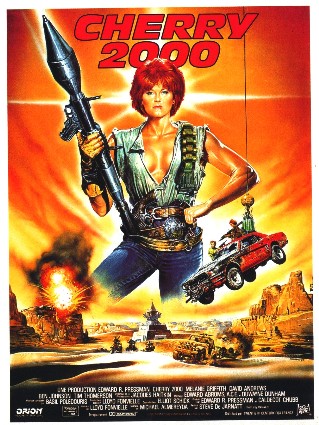
Film Review: Cherry 2000 (dir by Steve De Jarnatt)


Okay, so this one is kind of weird.

Remember how, a few nights ago, I watched and reviewed something called Prison Planet?  No?  Well, I don’t blame you.  I wish I could forget about it too.  Anyway, the movie that aired right before Prison Planet was yet another futuristic tale that was largely set in a desert wasteland.  This movie was originally released in 1988 and the title was Cherry 2000.

Cherry 2000 takes place in 2017, or perhaps I should say that it takes place in 2017 as imagined by someone in 1988.  In this film’s version of 2017, both the economy and the environment are a mess, America is divided into warring urban and rural zones, and all human emotion and creativity is being stifled by government bureaucracy.  In short, Cherry 2000‘s version of 2017 is a lot like the real world’s version of 2017…

In the future, everyone’s still obsessed with getting laid but all of the bureaucratic red tape has made things difficult.  Having sex now means first getting a lawyer to draw up a contract.  In order to avoid all of the legal complications, men are now marrying specially designed sex robots.  Again, this probably seemed way out there in 1988 but, in the current world, it just looks like my twitter timeline.

(Do they have sex robots for women in the world of Cherry 2000?  As far as I could tell, all of the sex robots in the film were designed for men’s pleasure, which doesn’t seem quite fair.)

Anyway, Sam Treadwell (David Andrews) is a business executive who thinks that he is deeply in love with his robot wife, Cherry 2000 (Pamela Gidley).  However, a mix of sex and a broken washing machine causes Cherry to short-circuit.  When Sam tries to get her repaired, he’s told that it’s a lost cause.  Cherry is beyond repair.  Add to that, apparently the Cherry 2000 model is no longer being manufactured.  If Sam wants a new Cherry, he’s going to have to go into Zone 7 and get one out of an abandoned factory.

So, of course, that’s what Sam does.  The only problem is that Sam is a business guy and Zone 7 is the most dangerous place in the world.  Why is it so dangerous?  Because it’s ruled by a warlord named …. Lester.  (No offense meant to anyone named Lester but that’s not exactly the most intimidating name in the world.)  Lester is played by B-movie mainstay Tim Thomerson, who appears to be having fun whenever he appears on-screen.

To help guide him through Zone 7, Sam hires E (Melanie Griffith).  E is the film’s saving grace, largely because she kicks everyone’s ass.  The great thing about E is that, from the minute she first appears, she makes no secret of the fact that she finds Sam and his sex robot to be just as pathetic and ridiculous as we do.  Griffith plays the role with just the right mix of humor and annoyance.  If I ever have to guide anyone through a desert wasteland to a sex robot factory, I hope that I can do it with half as much style and panache as E.

Anyway, Cherry 2000 is a weird little mix of the western and science fiction genres.  For a film about sex robots, it actually has a rather goofy and almost innocent feel to it.  It’s a film that raises a lot of issues but which is also smart enough not to spend too much time on any of them.  Director Steve De Jarnatt also directed one of my favorite 80s movies, the charming apocalyptic love story Miracle Mile.  Cherry 2000 may be a mess but it’s definitely a watchable mess.

The African American Film Critics Association Names Get Out The Best of 2017!


Earlier today, the African American Film Critics Association announced their picks for the best of 2017!

  • BEST PICTURE: GET OUT (Universal Pictures)
  • BEST DIRECTOR: JORDAN PEELE – GET OUT (Universal Pictures)
  • BEST ACTOR: DANIEL KALUUYA – GET OUT (Universal Pictures)
  • BEST ACTRESS: FRANCES McDORMAND – THREE BILLBOARDS OUTSIDE EBBING MISSOURI (Fox Searchlight)
  • BEST SUPPORTING ACTOR: LAURENCE FISHBURNE – LAST FLAG FLYING (Amazon Studios/Lionsgate)
  • BEST SUPPORTING ACTRESS: TIFFANY HADDISH – GIRLS TRIP (Universal Pictures)
  • BEST COMEDY: GIRLS TRIP (Universal Pictures)
  • BEST ENSEMBLE: DETROIT (Annapurna Pictures)
  • BEST INDEPENDENT: CROWN HEIGHTS (Amazon Studios/IFC Films)
  • BEST ANIMATED: COCO (Disney/Pixar)
  • BEST DOCUMENTARY: STEP (Fox Searchlight)
  • BEST FOREIGN: THE WOUND (Kino Lorber)
  • BEST SCREENPLAY: GET OUT (Universal Pictures)
  • BEST SONG: “IT AINT FAIR” — DETROIT – THE ROOTS featuring BILAL (Motown Records)
  • BEST NEW MEDIA: MUDBOUND (Netflix)
  • BEST TV SERIES (COMEDY): BLACKISH (ABC)
  • BEST TV SERIES (DRAMA): QUEEN SUGAR (OWN)
  • BREAKOUT: LAKEITH STANFIELD – CROWN HEIGHTS (Amazon Studios/IFC Films)

AAFCA TOP 10 FILM – 2017

  1. GET OUT (Universal Pictures)
  2. THREE BILLBOARDS OUTSIDE EBBING MISSOURI (Fox Searchlight)
  3. COCO (Disney/Pixar)
  4. GIRLS TRIP (Universal Pictures)
  5. DETROIT (Annapurna Pictures)
  6. CALL ME BY YOUR NAME (Sony Pictures Classics)
  7. THE SHAPE OF WATER (Fox Searchlight)
  8. GOOK (Samuel Goldwyn Films)
  9. CROWN HEIGHTS (Amazon Studios/IFC Films)
  10.  MARSHALL (Open Road Films)

A Movie A Day #265: Hoodlum (1997, directed by Bill Duke)


1930s.  New York City.  For years, Stephanie St. Clair (Cicely Tyson) has been the benevolent queen of the Harlem underworld, running a successful numbers game and protecting her community from outsiders.  However, psychotic crime boss Dutch Schultz (Tim Roth) is determined to move into Harlem and take over the rackets for himself.  With the weary support of Lucky Luciano (Andy Garcia), Schultz thinks that he is unstoppable but he did not count on the intervention of Bumpy Johnson (Laurence Fishburne).  Just paroled from Sing Sing, Bumpy is determined to do whatever has to be done to keep Schultz out of Harlem.

When I reviewed The Cotton Club yesterday, I knew that I would have to do Hoodlum today.  Hoodlum and The Cotton Club are based on the same historic events and both of them feature Laurence Fishburne in the role of Bumpy Johnson.  Of the two, Hoodlum is the more straightforward film, without any of the operatic flourishes that Coppola brought to The Cotton Club.  Fisburne is surprisingly dull as Bumpy Johnson but Tim Roth goes all in as Dutch Schultz and Andy Garcia is memorably oily as the Machiavellian Luciano.  Hoodlum is about forty minutes too long but the gangster action scenes are staged well.  Bumpy Johnson lived a fascinating life and it is unfortunate that no film has yet to really do him justice, though Clarence Williams III came close with his brief cameo in American Gangster.  (Interestingly enough, Williams is also in Hoodlum, playing one of Shultz’s lieutenants.)

One final note: Hoodlum features William Atherton in the role of District Attorney Thomas E. Dewey.  Atherton plays Dewey as being a corrupt and sleazy politician on Luciano’s payroll.  In real life, Dewey was known for being so honest that Dutch Schultz actually put a contract out on his life after he discovered that Dewey could not be bribed.  I am not sure why Hoodlum decided to slander the subject of one of America’s most famous headlines but it seems unnecessary.

A Movie A Day #264: The Cotton Club (1984, directed by Francis Ford Coppola)


The time is the 1930s and the place is New York City.  Everyone wants to get into the Cotton Club.  Owned by British gangster Owney Madden (Bob Hoskins), the Cotton Club is a place where the stage is exclusively reserved for black performers and the audience is exclusively rich and white.  Everyone from gangsters to film stars comes to the Cotton Club.

It is at the Cotton Club that Dixie Dwyer (Richard Gere) meets everyone from Dutch Shultz (James Remar) to Gloria Swanson (Diane Venora).  Shultz hires Dixie to look after his girlfriend, Vera (Diane Lane).  Swanson arranges for Dixie to become a movie star.  Meanwhile, Dixie’s crazy brother, Vincent (Nicolas Cage), rises up through the New York underworld.  Meanwhile, dancing brothers Sandman and Clay Williams (played by real-life brothers Gregory and Maurice Hines) are stars on stage but face discrimination off, at least until Harlem gangster Bumpy Rhodes (Laurence Fishburne) comes to their aid.

The Cotton Club was a dream project of the legendary producer, Robert Evans, who was looking to make a comeback after being famously charged with cocaine trafficking in 1980.  Having commissioned a screenplay by his former Godfather collaborators, Mario Puzo and Francis Ford Coppola, Evans originally planned to direct the film himself.  At the last minute, Evans changes his mind and asked Coppola to direct the film.  After working with him on The Godfather, Coppola had sworn that he would never work with Evans again. (When he won an Oscar for The Godfather‘s screenplay, Coppola pointedly thanked everyone but Robert Evans.)  However, by 1984, a series of box office flops had damaged Coppola’s standing in Hollywood.  Needing the money, Coppola agreed to direct The Cotton Club.

Evans raised the film’s $58 million budget from a number of investors, including Roy Radin.  Roy Radin was best known for putting together Vaudeville reunions in the 70s and being accused of raping an actress in 1980.  Radin and Evans were introduced to each other by a drug dealer named Lanie Jacobs, who was hoping to remake herself as a film producer.  During the production of The Cotton Club, Radin was murdered by a contract killer who was hired by Jacobs, who apparently felt that Radin was trying to muscle her out of the film production.

While all of this was going on, Coppola fell into his familiar pattern of going overbudget and falling behind schedule.  This led to another investor filing a lawsuit against Orion Pictures and two other investors, claiming fraud and breach of contract.  When the film was finally released, it received mixed reviews, struggled at the box office, and only received two Oscar nominations.

With all of the murder and drama that was occurring offscreen, it is not surprising that the film itself was overshadowed.  The Cotton Club is a disjointed mix of gangster drama and big production numbers.  As always with post-Apocalypse Now Coppola, there are flashes of brilliance in The Cotton Club.  Some of the production numbers are impressive and visually, this movie has got style to burn.   However, among the leads, neither Richard Gere nor Diane Lane seem to be invested in their characters while the talented Hines brothers are underused.  The supporting cast is full of good character actors who are all in a search of a better script.  A few do manage to make an impression: James Remar, Bob Hoskins and Fred Gwynne as veteran gangsters, Nicolas Cage as the film’s stand-in for Mad Dog Coll, and Joe Dallesandro as Lucky Luciano.  The Cotton Club is sometimes boring and sometimes exciting but the onscreen story is never as interesting as what happened behind the scenes.