Made-For-TV Horror: The Initiation of Sarah (dir by Robert Day)


Oh, poor Sarah.

Sarah (Kay Lenz) is attending college with her sister, Patty (Morgan Brittany).  Patty is pretty and popular and everyone wants to be her friend.  Sarah is withdrawn and a bit moody and people seem to go out of their way to avoid her.  Sarah, however, has a secret.  She can move and break things with her mind.  When a guy on the beach tries to force himself on Patty, Sarah uses her powers to push him away.  Later, when Sarah’s upset, she stares at a mirror until it cracks.

When Patty and Sarah visit their mother’s old sorority, Patty is a hit but Sarah is less popular.  The bitchy president of the Sorority, Jennifer Lawrence (Morgan Fairchild), is happy to invite Patty to join but she doesn’t want Sarah to be anywhere near her.  Sarah ends up joining the outcast PDE sorority.  Jennifer, however, remains obsessed with humiliating and destroying Sarah.  And Sarah, when she gets angry, has a tendency to cause things to happen….

This film, which aired in 1978, probably sounds like a rip-off of Carrie and, in many ways, it is.  For whatever reason, Sarah’s bullies seem to be obsessed with making her as miserable as possible.  In Carrie, one reason you hated the bullies was because Sissy Spacek gave such a heart-breaking, vulnerable and empathetic performance as Carrie White.  The bullies were terrible to begin with but then to pick on someone as fragile as Carrie?  It sucked William Katt had to die but there’s still a reason why the prom inferno makes as many people applaud as scream.  In The Initiation of Sarah, Kay Lenz is not particularly sympathetic as Sarah.  Even before the bullies start picking on her, Sarah comes across as being angry and bitter about …. well, everything.  Patty goes out of her way to take care of her sister but Sarah never seems to appreciate it.  Bullies still suck, of course.  There’s no excuse for being a bully and Jennifer really does go overboard when it comes to going after Sarah.  But Sarah herself still doesn’t necessarily come across as being someone you would want to join your sorority.

What sets The Initiation of Sarah apart from other Carrie rip-offs is the character of Mrs. Hunter (Shelley Winters).  Mrs. Hunter founded PDE when she was a student and now, as the school’s resident expert on paganism, she’s the housemother of PDE.  As soon as Sarah joins, Mrs. Hunter starts to talk about how Sarah is destined to lead PDE to glory.  When another member of PDE, Mouse (Tisa Farrow), takes a look in Mrs. Hunter’s room, she discovers a Satanic altar that is guarded by a fierce looking dog….

That’s right!  This isn’t just a rip-off of Carrie.  It’s a rip-off of The Omen as well!

Kay Lenz might be a bit on the dull side as Sarah but this film is worth watching for the performance of Morgan Fairchild and, especially, Shelley Winters.  As played by Fairchild, Jennifer is more than just a bitch.  She’s a sociopath with great hair.  Meanwhile, Shelley Winters — especially once the 70s started — was never a particularly low-key or subtle actress.  When you cast her as an overbearing housemother who happens to be the high priestess of a cult, you know that you’re going to get something worth watching.  Winters attacks the role with a ferocity that is occasionally over-the-top and almost funny but always entertaining.

The Initiation of Sarah is an enjoyable made-for-TV movie.  Watch it the next time you’re feeling nostalgic for college life.
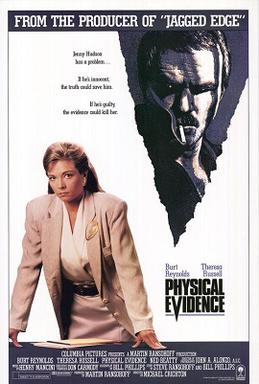
Physical Evidence (1989, directed by Michael Crichton)


Ex-cop Joe Paris (Burt Reynolds) is arrested for the murder of a small-time criminal.  Joe swears that he’s being framed but his public defender, Jenny Hudson (Theresa Russell), isn’t sure that she believes him.  While Jenny’s boyfriend (Ted McGinley) makes a fortune trading stocks and Joe’s former mistress (Kay Lenz) tries to keep her mobster boyfriend from finding out about the affair, Jenny tries to outsmart prosecutor James Nicks (Ned Beatty) and Joe tries to find the real killer.

Tubi sent me to this film after I finished up Raw Justice.  When I saw that it was a Burt Reynolds films, I figured that I would take a chance with it but this one turned out to be one of Burt’s lesser films.  Joe Paris feels like he might be distantly related to the cop that Burt played in Sharky’s Machine but Physical Evidence doesn’t have any of that movie’s style or grit.  Burt doesn’t come across like he wants to be in the movie and he and a very miscast Theresa Russell have next to zero chemistry onscreen.  This was Michael Crichton’s last film as a director and he directs in a stolid, made-for-television manner.

Supposedly, this was originally meant to be a sequel to the thriller Jagged Edge, with Glenn Close and Robert Loggia reprising their roles from the earlier film.  When that fell through, the movie was refurbished into Physical Evidence, with Theresa Russell and Burt Reynolds replacing Close and Loggia.  I think the film would have worked with Close and Loggia because, based on Jagged Edge, they were believable as people who had a close relationship and would do anything to help each other.  Burt Reynolds and Theresa Russell come across like they can’t even stand to be in the same room together.  Better get a new lawyer, Burt!  This one seems like she might be planning on framing you herself.

FAST-WALKING – James Woods and Kay Lenz light up the screen!


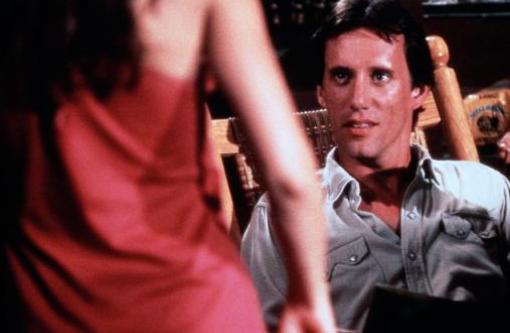
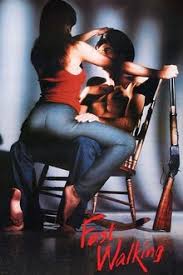
One of the first movies I ever watched starring James Woods is COP. It’s a 1988 action thriller about a police detective on the trail of a serial killer. I really enjoyed the movie, which was directed by James B. Harris. Harris is a producer and director whose various credits include THE KILLING (1956), PATHS OF GLORY (1957), LOLITA (1962) and TELEFON (1977, with Charles Bronson). Harris also directed James Woods in a movie from 1981 called FAST-WALKING. 

FAST-WALKING is about a prison guard named Frank “Fast-Walking” Minniver. He loves to smoke pot and dream about a future life in a beautiful part of Oregon. In order to make that move, though, he needs to make some money. When a black revolutionary named William Galliot is transferred to his prison, he finds himself with some options, as he receives offers of money from two different sides. On one side is his cousin Wasco, a prison trustee who offers Fast-Walking $25,000 to kill the revolutionary as part of a staged prison race riot. On the other side is Galliot’s own people who offer him a bag of money containing $50,000 if he’ll help Galliot escape. The biggest obstacle to taking the bigger payday is that Wasco threatens to kill Fast-Walking’s lady love Moke, if he doesn’t make the right choice.

The cast is phenomenal in FAST-WALKING beginning with James Woods as the title character. In his best roles, Woods is somewhat morally ambiguous, and we hope he makes the right decisions at the end. This definitely fits that mold. Kay Lenz was sexy as hell as Moke. We’re not supposed to be sure if she’s just using Fast-Walking or if she truly loves him. She plays that balance well. In a surprising turn of events, M. Emmet Walsh gives the most memorable performance of his career, and it doesn’t have a thing to do with his acting. Rather, he does a full frontal nude scene. I’d like to forget this performance, but it’s burned into my psyche at this point. Tim McIntire was the revelation to me, though, as Fast-Walking’s inmate cousin Wasco. This is the only role I really know him from, and he absolutely nails it. The fate of his character is one of the most satisfying parts of the entire film. Unfortunately, McIntire would suffer from drug and alcohol addiction and would pass away a few years after completing his role in FAST-WALKING. I can’t help but think there could have been more great performances if his career would have been longer. 

I recommend FAST-WALKING. It’s not a perfect film, but James Woods, Kay Lenz, and Tim McIntire all make it worth watching. 

STRIPPED TO KILL – 35 years later!


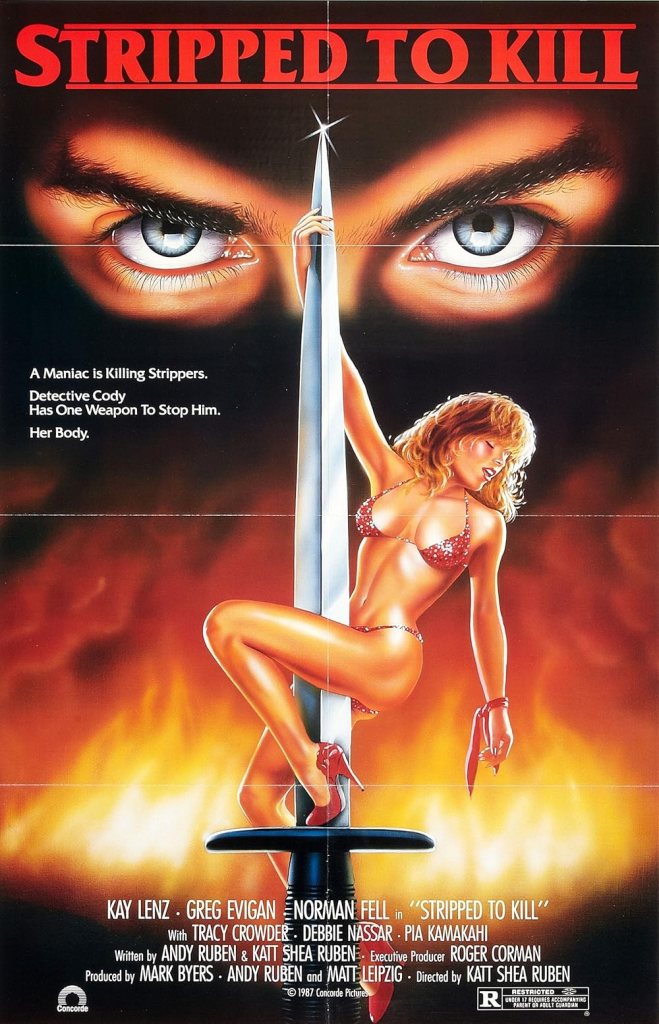
If you were a teenage boy in the 80’s, and you spent time at video stores, there’s no doubt in my mind that you noticed the VHS box for STRIPPED TO KILL. I certainly did! The box art promised violence and sexy women, and I was all in. I’m guessing that I watched the film when I was around 15 or 16 years old, and I hadn’t seen it since then. A few weeks back, we were recording an episode of our THIS WEEK IN CHARLES BRONSON PODCAST when actress Kay Lenz came up in reference to her part in DEATH WISH 4: THE CRACKDOWN. One of my buddies also mentioned her part in STRIPPED TO KILL. With that seed planted, I decided to give it another viewing and find out what sort of difference an additional 35 years would make in the viewing experience. 

Not surprisingly, STRIPPED TO KILL opens with a beautiful young lady named Angel performing a striptease act to an extremely 80’s song called “Deny the Night.” I’ll give Larry Steicher his credit because he was singing the hell out of the song on the soundtrack. A little later, the stripper gets a phone call from someone she knows asking her to meet. When she shows up to meet this mystery person, they throw gasoline on her and burn her alive. Detective Cody Sheenan (Kay Lenz) and her partner Detective Heineman (Greg Evigan) are working undercover in the area and come across this assault and murder in the act, but the killer gets away. When the two cops find out that the victim was a stripper at the Rock Bottom Dance Club, they want the case. Through a series of events, including Cody winning an “Amateur Night” contest, she’s able to go undercover at the club where she gets to know the dancers. Detective Heineman hangs out as well in order to protect her, and I think, to get a look at her performances. Our two undercover cops immediately begin to learn the backgrounds of the ladies at the club, and they also investigate any suspicious characters they see hanging around. When another stripper is murdered, and with several suspects beginning to emerge, it’s a race against time to see if they can catch the killer before other strippers have to die! 

I will say right off the bat that STRIPPED TO KILL delivers on the box art. There are multiple strippers killed, and by my count, there are 12 different striptease performances of various quality and duration throughout the course of the 88 minute film. And the cast is downright impressive for a low-budget B-movie like this. Kay Lenz is a fine actress with an impressive resume of TV and films, including productions like Clint Eastwood’s BREEZY, WHITE LINE FEVER with Jan-Michael Vincent, THE GREAT SCOUT & CATHOUSE THURSDAY with Lee Marvin, and FAST-WALKING with James Woods. As referenced in an earlier paragraph, she co-starred with Charles Bronson in DEATH WISH 4: THE CRACKDOWN the same year that she filmed STRIPPED TO KILL. Two classics in the same year is something every actor should hope for, and she doesn’t hold back in her performance here! Greg Evigan was in a show I liked very much when I was a kid called B.J. AND THE BEAR. I also remember him in that show MY TWO DADS when I was a teenager as well. He’s not a great actor, but he’s fine here. And then there’s Norman Fell, Mr. Roper himself, as the manager of the strip club. I have a soft spot for Norman because he played Charles Bronson’s boss in the 1973 film THE STONE KILLER, a film that also features John Ritter in a small role. Norman probably needed the paycheck, but he’s definitely a welcome presence in the film. 

This is the directorial debut of actress Katt Shea. She co-wrote the script for STRIPPED TO KILL with her then husband Andy Ruben. She apparently got the idea for the film when she lost a bet with Andy and ended up actually going to a strip club. She was so impressed with some of the performances that she wanted to make a movie showing the ladies in that world. Katt Shea would later direct films like POISON IVY with Drew Barrymore and THE RAGE: CARRIE 2. And, of course, the biggest factor in getting the movie made, Katt Shea was able to convince the legendary Roger Corman to produce the film. STRIPPED TO KILL would turn into a financially successful film for Corman. It was particularly successful overseas and on the home video market. Nice investment, Mr. Corman!

Overall, STRIPPED TO KILL delivers exactly what it promises, and it does so in 1 hour and 28 minutes. That’s a pretty nice combination in my book. I think I felt the same way in 1989 as well!

DEATH WISH 4: THE CRACKDOWN – a missed opportunity in my life!


I’m on Day 4 of my discussion of Charles Bronson’s DEATH WISH series in chronological order. This series has brought me countless hours of entertainment over the last 40 years, so enjoy and let me know your thoughts!

DEATH WISH 4: THE CRACKDOWN was a bit of a missed opportunity in my early years of Bronson fandom. Let me explain. In the mid-80’s I became Charles Bronson’s biggest fan, an honor I possibly share with a few others. As a part of that fandom, a 14-year-old Brad would scour every available source for information about my hero, which at that time was mainly the entertainment section of the Arkansas Democrat, my grandma’s tabloids, and, when I could get a ride, the magazine rack at the Hastings Entertainment Superstore. This in-depth search for information eventually lead to me discovering that DEATH WISH 4: THE CRACKDOWN would be playing at the movie theater in Conway, AR in November of 1987. I was so excited that I might actually get to see Charles Bronson on the big screen for the first time ever. Unfortunately, there were several factors working against me. First, it was rated R, so I was completely dependent on an adult taking me. Second, it was released in November which was in the heart of basketball season, and the only thing that was above Bronson in my life was the basketball court, especially since my dad was my coach. And third, my parents would only consider taking me to the movies on “dollar night,” which was Tuesday and almost always conflicted with my basketball game schedule. I remember driving by the theater and seeing DEATH WISH 4: THE CRACKDOWN listed on the marquee and longing to go see it.  Alas, the stars, and the factors above, all aligned against me, and I would not be able to watch the film during its 2-week run in Conway, Arkansas. At this point in his career, Cannon would give Bronson’s films a short theatrical release and then release them to the home video market where Bronson was still a true moneymaking superstar.  DEATH WISH 4 earned the equivalent in today’s dollars of around $20,000,000 at the box office before going on to sale over 100,000 VHS cassettes to rental stores. It was Bronson’s most successful rental release of the franchise.  

DEATH WISH 4: THE CRACKDOWN opens with Paul Kersey (Charles Bronson) having nightmares about the man he has become after a decade of meting out vigilante justice. He has moved back to Los Angeles where he keeps himself busy with his work as an architect, as well as his relationship with his new lady friend, Karen (Kay Lenz). When Karen’s daughter Erica dies of a drug overdose, Kersey immediately finds the drug dealer who sold her the stuff and shoots him dead. Unfortunately, soon after it seems that someone has pictures of Kersey doing his vigilante deeds, and he finds himself being coerced by millionaire Nathan White (John P. Ryan) into pitting the two primary criminal drug organizations against each other in a turf war in an attempt to get them to take each other out. Nathan White’s own granddaughter had been destroyed by drugs, and this is his way of getting back at the criminals responsible for her death. Kersey begins killing drug dealers, suppliers, day laborers, security detail, you name it; if you’re associated with drugs in any way, whether it be at a video store, fish packing plant, fine restaurant, or skyscraping apartment complex, you are fair game for death. Kersey is able to sufficiently convince the heads of the competing drug organizations that they are at war with each other. This all culminates at the oil fields, where Kersey, armed with a high-powered rifle, is perched above the meeting of the two gangs. With one fateful shot, he is able to ignite the all-out war he and Nathan White have been looking for. Finally, the streets of Los Angeles are free from the drugs that are sucking the life out of its citizens, right. Or are they?

It was on VHS in April of 1988 that I finally got to see DEATH WISH 4: THE CRACKDOWN. It’s the first movie in the series not directed by Michael Winner. J. Lee Thompson took over the reins and created a slick action film that lacked the odd, but interesting touches that Winner provided, but made up for it with stronger craftmanship. DEATH WISH 4 is a balls to the wall action extravaganza that barely rests long enough for the audience to catch their breath. My personal favorite scene of the film is the oil field shootout that produced some really cool, iconic images of Bronson walking with his rifle as he was finishing off the bad guys. I’ve heard DEATH WISH 4 referred to as the “lost Death Wish” film because it is spoken of less than parts 1, 2, or 3, and that may even be true, but it’s actually a very strong entry in the series.  

As Paul Harvey might say, this is the “rest of the story” of me finally getting to see Charles Bronson on the big screen.  After DEATH WISH 4 ended its run, I don’t know of another Bronson film playing at my local theater from that point forward, and I would have to settle to watch MESSENGER OF DEATH, KINJITE, THE INDIAN RUNNER, and DEATH WISH V all on home video. Then, in the summer of 2022, I became aware that the Mahoning Drive-In in Lehighton, PA was programming a Charles Bronson night featuring THE MECHANIC, MR. MAJESTYK and DEATH WISH 3.  My wife and I drove 17 hours from our home in Arkansas to watch those three movies on the big screen.  It was the greatest “movie-night” of my life and something I’ll never forget.  So, all’s well that ends well!

BONUS: Jesse Dabson had a part in DEATH WISH 4: THE CRACKDOWN. Jesse was interviewed on the THIS WEEK IN CHARLES BRONSON PODCAST, where he told my partner Eric Todd, and fellow Buchinsky Boys Chris Manson and Ryan Voss, about his experiences working on DEATH WISH 4, as well as other projects like PLATOON LEADER and ONE FALSE MOVE. Give it a listen if you get a chance!

Live Tweet Alert: Join #FridayNightFlix for White Line Fever!


As some of our regular readers undoubtedly know, I am involved in a few weekly live tweets on twitter and I hope to continue to be until the site finally becomes unusable.  (It’s going to happen eventually so enjoy it while you can!)  I host #FridayNightFlix every Friday, I co-host #ScarySocial on Saturday, and I am one of the five hosts of #MondayActionMovie!  Every week, we get together.  We watch a movie.  We tweet our way through it.

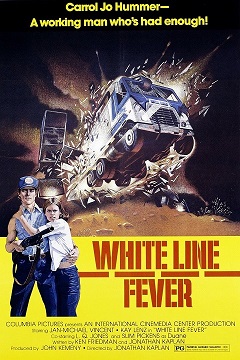
Tonight, at 10 pm et, #FridayNightFlix has got 1975’s White Line Fever!  Jan-Michael Vincent is an independent trucker, determined to do things his way!

If you want to join us this Friday, just hop onto twitter, start the movie at 10 pm et, and use the #FridayNightFlix hashtag!  It’s a friendly group and welcoming of newcomers so don’t be shy.

White Line Fever is available on Prime!  See you there!

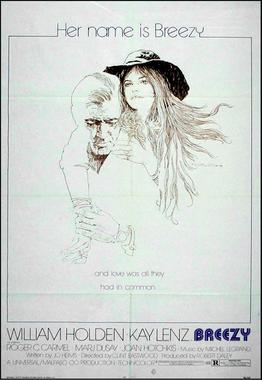
Cleaning Out The DVR: Breezy (dir by Clint Eastwood)


1973’s Breezy tells the story of two seemingly different people.

Breezy (Kay Lenz) is a teenage girl who moves to California after she graduates high school.  Breezy is intelligent and free-spirited.  She’s also practically homeless, moving from bed to bed and never getting tied down to anyone.  Many people assume that Breezy is a runaway but her parents died a long time ago and her aunt approves of Breezy pursuing her own happiness.  Many people also assume that Breezy is a hippie but Breezy doesn’t consider herself to be one and doesn’t even smoke weed.  She may hang out with hippies and runaways but, for the most part, Breezy just wants to be herself, free of all of society’s labels and hang-ups.

Frank Harmon (William Holden) is a fifty-something real estate agent.  He drives a nice car.  He owns a lovely home.  He has money but he’s also freshly divorced and obviously in love with his best friend, Betty (Marj Dusay).  Most people would consider Frank to be a part of the establishment, though it soon becomes clear that he’s as disillusioned as any long-haired protestor.  Frank has reached the point of his life where he looks at everything that he has and he asks, “Is this all there is?”

Together …. they solve crimes!

No, actually, they fall in love.  Breezy ends up outside of Frank’s house after escaping a creepy man who had earlier offered her a ride.  When she sees that Frank is getting into his car and driving into the city, she decides that Frank can give her a ride too.  She also decides to keep hanging out near Frank’s house.  Though Frank is initially annoyed by Breezy’s presumptuousness, he still allows her to spend the night when a sudden storm comes up.  Frank and Breezy become unlikely friends and eventually, even more.  But Frank continues to worry about the difference in their ages, especially when his friends find out that Breezy is living with him.

Really, Breezy is a film that should not work and it does run the risk of turning into a typical midlife crisis fantasy, with Breezy having no concerns beyond keeping Frank happy.  That the film does work is largely a testament to the performances of William Holden and Kay Lenz and the sensitive and nonexploitive direction of Clint Eastwood.  When screenwriter Jo Heims first wrote the script for Breezy, she envisioned Eastwood in the role of Frank.  Reading the script, Eastwood said that he could relate to Frank’s disillusionment but that he felt he was too young for the role.  Instead, Eastwood directed the film and he cast William Holden as Frank.  Breezy was Eastwood’s third film as a director and the first in which he didn’t star.  It was also nobody’s idea of what a Clint Eastwood film would be and it struggled at the box office.  That said, it’s a film that has a legion of devoted fans.  Paul Thomas Anderson is one of those fans and even worked a few references to the film into Licorice Pizza.

Holden and Lenz both give excellent performances, with Lenz playing Breezy as being free-spirited but not foolish.  Holden, meanwhile, captures Frank’s boredom without giving a boring performance.  (It helped that, while Holden was the right age of the role, he still retained enough of his good looks and his movie star swagger that it was believable that Breezy would find him attractive.)  Wisely, the film doesn’t make the mistake of idealizing either Frank or Breezy.  They’re both complex characters, with their own individual flaws and strengths.  At the end of the film, one can be forgiven for having doubts about whether or not they’ll still be together in a year or two but one does definitely wish them the best, no matter what happens.

Though politically conservative, Breezy reveals that Clint Eastwood had some sympathy for the counter-culture.  Eastwood has always straddled the line between being a member of establishment and being a rebel.  Like Breezy and Frank, he belongs to both worlds.

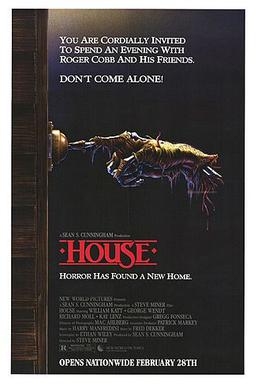
Horror Film Review: House (dir by Steve Miner)


Yesterday, I didn’t get to watch or review any horror films because the air conditioner at the house stopped working.  While I know that a lot of people up north think that AC is a luxury that’s going to destroy the world, I live in Texas and an air conditioner is a necessity down here.  So, if that leads to glaciers melting and me getting a lecture from some obnoxious little brat …. well, fine.

Anyway, we were able to get the air conditioner fixed.  It took a while but it’s now working again.  Once the AC was again blowing cool air into the house, I started to think about how it could be worse.  I mean, the house could be haunted.  We always tend to assume that ghosts are going to be nice but really, there are some nasty ghosts out there.

Take the 1986 film, House, for instance.  House stars William Katt as Roger Cobb, a horror author who needs a best seller.  Cobb is dealing with a lot.  He’s wife (Kay Lenz) has left him.  His son has vanished.  His aunt has recently committed suicide, leaving behind her house.  On top of all that, Cobb is still haunted by his experiences during the Vietnam War, when he was forced to leave behind a gravely wounded soldier named Big Ben (Richard Moll).  Cobb wants to write about his Vietnam experiences but his agent is aghast.  No one wants to talk about the war!

So, Roger moves into his aunt’s old house.  He was originally planning on selling it but, for whatever reason, he thinks living in an abandoned house that drove its last owner to suicide will be a good idea.  Roger thinks that living in the house will help him finish his book.  The House has different ideas.

Soon, Roger finds himself dealing with a series of incidents that feel as if they were lifted from other, more cohesive horror movies.  In a scene that feels like it was inspired by the Evil Dead, his wife turns into an otherworldly creature and tries to attack him.  Weird gremlin creatures, which could have come from Troll or Ghoulies, keep showing up and trying to kidnap an obnoxious neighbor child.  Roger’s neighbor (George Wendt) thinks that it’s possible that Roger is a murderer and that he’s buying his victims out in the backyard.  Even worse, a decaying and pissed off Big Ben starts to show up.

House is an occasionally likable attempt to mix horror and comedy.  Most of the comedy comes from Roger’s attempts to keep anyone else from noticing just how crazy things have gotten in the house.  (Disposing of a demon’s body turns out to be not as easy as one might imagine.)  William Katt does a good job with selling the comedy, though he never quite convinces you that he’s a best-selling horror author.  That said, the horror aspect is far more interesting, if just as a metaphor for Roger’s PTSD.  At its best, the film suggests that the house is feeding off of the lingering trauma of Roger’s war experiences.  It’s an interesting idea but not one that’s really explored as much as you might like.  Unfortunately, the film struggles to balance the horror and the comedy.  Just when it really starts to scare you, it remembers that it’s supposed to be a comedy.  Sam Raimi would have been the ideal director for House.

That said, House is entertaining, if a little bland.  If nothing else, watching it made me feel better about my own house.  My air conditioner may have gone down for a few hours yesterday but at least it didn’t open a portal to Hell.

Fast-Walking (1982, directed by James B. Harris)


Frank Miniver (James Woods) is the prison guard that everyone calls Fast-Walking.  He’s involved in almost every vice that a man living in a small town in Oregon can be involved in.  He takes bribes.  He usually shows up for work stoned and what he doesn’t smoke, he sells to the prisoners and the other guards.  He’s got a second job, running a trailer park brothel behind his cousin’s general store.

Frank’s cousin, Wasco (Tim McIntire), has been incarcerated and he expects Frank to help him take over the prison.  At first, Frank has no problem working with Wasco and letting his cousin have free reign of the cell block.  Wasco has soon established himself as the most powerful man behind bars.  When a black power activist named Galliot (Robert Hooks) arrives at the prison, Wasco wants to arrange for him to be assassinated.  Meanwhile, Galliot has offered Frank even more money to help him escape from the prison.

While Frank tries to keep both sides happy and make off with some money for himself, he’s also sleeping with Wasco’s accomplice on the outside, Moke (Kay Lenz).  Originally, Wasco ordered Moke to seduce Frank in order to keep Frank in line but, as Moke and Frank’s relationship continues, Wasco starts to get jealous and starts plotting to put Frank back in his place.

Fast-Walking is a gritty film that features a good deal of dark humor.  Unfortunately, the film’s many different parts never really come together and the film never strikes the right balance between comedy and drama.   James Woods is perfectly cast as Frank and the underrated Kay Lenz does wonders with an underwritten role but Tim McIntire is a less than ideal Wasco.  McIntire was a good actor but, physically, he’s all wrong for a character who is supposed to be so intimidating that he can walk into a prison and automatically take it over.  Wasco is written and played as being such a cartoonish character that it’s difficult to take him or his plots seriously.  The movie works best when it’s just focuses of James Woods’s nervy performance and Frank’s attempts to keep the other prison guards (including M. Emmett Walsh) from discovering his own racket.

Drive-In Saturday Night 4: WHITE LINE FEVER (Columbia 1975) & HIGH-BALLIN’ (AIP 1978)


gary loggins's avatarcracked rear viewer

Breaker One-Nine, Breaker One-Nine, it’s time to put the hammer down with a pair of Trucksploitation flicks from the sensational 70’s! The CB/Trucker Craze came to be because of two things: the gas crisis of 1973 and the implementation of the new 55 MPH highway speed limit imposed by Big Brother your friendly Federal government. Long-haul truckers used Citizen’s Band radios to give each other updates on nearby fueling stations and speed traps set up by “Smokeys” (aka cops), and the rest of America followed suit.

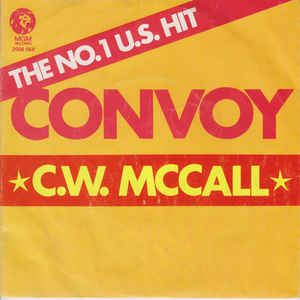
Country singer C.W. McCall had a massive #1 hit based on CB/trucker lingo with “Convoy”, and the trucker fad was in full swing. There had been trucker movies made before – THEY DRIVE BY NIGHT, THIEVES’ HIGHWAY, HELL DRIVERS, and THE WAGES OF FEAR come to mind – but Jonathan Kaplan’s 1975 WHITE LINE FEVER was the first to piggy-back on the new gearjammer…

View original post 793 more words