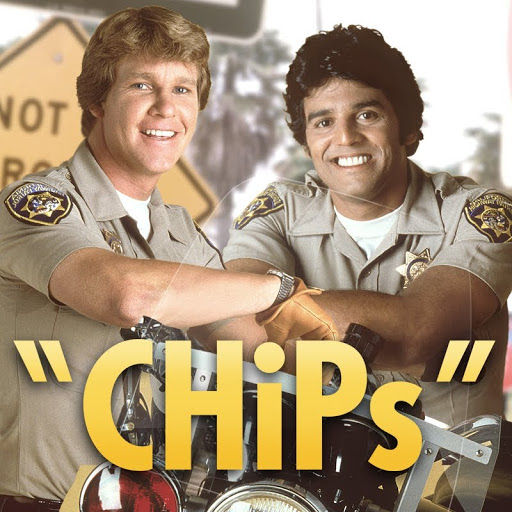
Welcome to Late Night Retro Television Reviews, a feature where we review some of our favorite and least favorite shows of the past! On Mondays, I will be reviewing CHiPs, which ran on NBC from 1977 to 1983. The entire show is currently streaming on Prime!
This week, the fourth season comes to an end.
Episode 4.21 “A Special Operation”
(Dir by Leslie H. Martinson., originally aired on May 17th, 1981)
Season 4 comes to an odd end with A Special Operation.
Getraer is injured when he crashes his motorcycle. He takes a piece of metal to the face and he nearly loses his eyesight. Luckily, the abrasive but brilliant Dr. Patterson (James Sloyan) is able to save both Getraer’s eye and his ability to see with it. However, the idealistic young Dr. Rhodes (A Martinez) worries that Patterson may have missed something. Can Patterson set aside his ego long enough to listen to his younger colleague?
Hey, wait a minute, isn’t this CHiPs?
I don’t have any way to prove this but there’s a part of me that strongly suspects the season finale of CHiPs was also a backdoor pilot for a medical show. So much time is spent with Patterson, Rhodes, and the nurses at the local hospital that it just feels like there was some hope that viewers would call in and demand to see more of Dr. Rhodes. A Martinez even gives a very Erik Estrada-style performance in the role of Rhodes.
Speaking of Estrada, he’s barely in this episode. (Ponch, we’re told, is preparing for to testify in a big court case.) It largely falls to Jon Baker to stop the assassin (Eugene Butler) who has been hired to try to take Getraer out of commission. This, of course, leads to the assassin stealing an ambulance and Baker chasing him. The ambulance flips over in slow motion but somehow, the assassin survives to that Baker can arrest him.
It was a strange end for a season that’s largely been dominated by Erik Estrada and his performance as Ponch. (Larry Wilcox, I will say, looked happy to have the finale to himself.) For the most part, Season 4 was an uneven season. The writing so favored Estrada over Wilcox that the show sometimes felt like it was turning into a parody of itself. The show that started out about two partners on motorcycles became a show about how Ponch could literally walk on water and do no wrong.
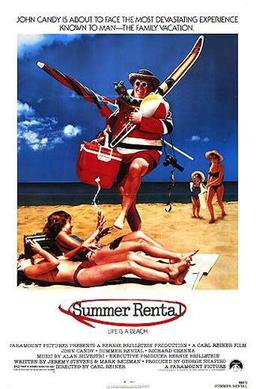
After a blow-up at work, air traffic controller John Chester (John Candy) is given five weeks of paid leave. He takes his family to Florida, where they rent a beach house and discover that their summer town is controlled by snobbish sailing champion Al Pellett (Richard Crenna). It’s the snobs vs slobs as Pellett tries to kick John and his family out of their summer rental and John tries to prove himself to his son and daughter (Joey Lawrence and Kerri Green) by winning the local sailing championship. Luckily, John has Sully (Rip Torn), a modern-day pirate captain, on his side.
John Candy was a remarkable talent. It’s just a shame that he didn’t appear in more good films. He will always be remembered for films like Splash, Uncle Buck, Planes, Train, and Automobiles, and Only The Lonely but unfortunately, most of his starring roles were in lightweight, forgettable far like Summer Rental. Candy is likable as John Chester and sympathetic even when he’s losing his temper over every minor inconvenience. But the film itself never really does much to distinguish itself from all of the other 80s comedies about middle class outsiders taking on the richest man in town. Candy is stuck playing a role that really could have been played by any comedic actor in 1985. It’s just as easy to imagine Dan Aykroyd or even Henry Winkler in the role. It feels like a waste of Candy.
The best thing about the film is Rip Torn’s performance as Sully. Torn’s performance here feels like a dry run for his award-winning work as Artie on The Larry Sanders Show. I would have watched an entire movie about Sully. As it is, Summer Rental is inoffensive and forgettable.
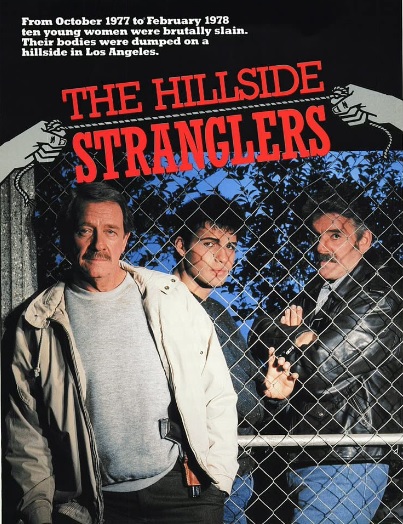
1989’s The Case of the Hillside Stranglers is based on the killing spree of Angelo Buono and Kenneth Bianchi, two cousins who terrorized Los Angeles in the late 70s. Buono owned his own garage and aspired to be a tough and macho pimp. Bianchi was an aspiring police officer who supported himself as a security guard. Over the course of just five months, they murdered ten women. They probably would never have been caught if not for the fact that Buono eventually tired of Bianchi and kicked him out of his house. Bianchi moved up to Washington where he committed two murders on his own. When he was arrested, he attempted to convince the cops that he was suffering from dissociative identity disorder and that the murders were committed by his other personalities.
The Case of the Hillside Stranglers starts with the murder spree already in progress. Buono is played by Dennis Farina while Bianchi is played by a very young Billy Zane. Both of them are well-cast, with Farina especially making an impression as a misogynistic bully who thinks that he is untouchable. (In real life, Farina spent 18 years as a Chicago cop and, watching his performance in this film, it’s hard not to get the feeling that he had to deal with more than one guy like Angelo Buono over the course of his time on the force.) For all of their cockiness, the film emphasizes that neither Angelo nor Kenneth were particularly clever. The fact that they got away with their crimes for as long as they did was largely due to a combination of luck and witnesses who did not want to get involved. Early on in the film, one woman who is harassed and nearly abducted by Buono and Bianchi refuses to call the police afterwards because she doesn’t want to relive what happened.
That said, the majority of the film actually focuses on Bob Grogan (Richard Crenna), the tough veteran detective who heads up the Hillside Strangler taskforce and who becomes so obsessed with tacking down the elusive killers that he soon finds himself neglecting both his family and his own health. Whenever we see Grogan trying to enjoy any quality time with his children, we know that his beeper is going to go off and he’s going to have to search for a telephone so that he can call into headquarters. (Remember, this film was set in the 70s.) His children are a bit miffed about it, which I can understand though I really do have to say that his son, in this film, really does come across as being a brat. (“Just ignore it, Dad,” he says, as if there aren’t two serial killers murdering innocent people in the city.) The recently divorced Grogan pursues a tentative romance with a woman (played by Karen Austin) who, at one point, decides to investigate Angelo on her own. Crenna, not surprisingly, is sympathetic as Grogan. The film works best as an examination of what it does to one’s soul to spend all day investigating the worst crimes that can be committed. Grogan gets justice but, the film suggests, he does so at the sacrifice of his own peace of mind.
It’s a well-made and well-acted film, one that will probably appeal more to fans of the police procedural genre as opposed to those looking for a grisly serial killer film. In real life, Bianchi is serving a life sentence and Angelo Buono died in prison. And the real Bob Grogan? He appeared in this movie, slapping the handcuffs on Billy Zane.
There are several lessons that can be learned from watching horror films. One that is often overlooked is the importance of staying out of trailer parks. Seriously, I have lost track of how many horror films have taken place within the confines of a trailer park. Once you see someone surrounded by RVs and mobile homes, you know that they’re probably doomed.
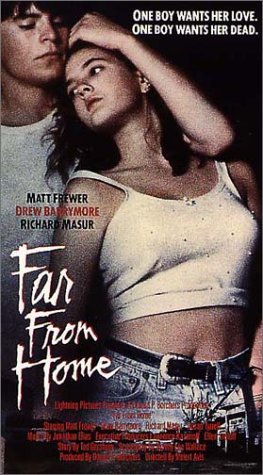
Take 1989’s Far From Home, for instance.
Far From Home is set in perhaps the sleaziest trailer park in America. This place sits in the middle of the Nevada desert and is run by chain-smoking Agnes Reed (Susan Tyrrell), who has a voice like a bullfrog, a daughter (Stephanie Walski) who is obsessed with watching TV and eating fishsticks, and a delinquent teenage son named Jimmy (Andras Jones).
The only law is provided by Sheriff Bill Childers (Dick Miller), who has a squad car but apparently no deputies. Childers is gruff but not that bad of a guy once you get to know him. However, he’s also played by Dick Miller and we all know better than to depend on Dick Miller to maintain the peace.
There’s a gas station nearby. A mellow Vietnam vet named Duckett (Richard Masur) owns it. Duckett is always willing to be helpful but he rarely has any gas. This is one of those small towns where the gas truck apparently only rolls in every two months or so. Still, Duckett’s a nice guy and he’s full of stories about how the government used to do atomic bomb tests in the surrounding desert.
(The scenes where Duckett drives around the desert feel somewhat out of place but they’re still enjoyable, due to Masur’s eccentric performance.)
Living in the trailer park, there’s a lot of odd people. Some of them are permanent residents while some of them are just temporarily stranded. 14 year-old Pinky (Anthony Rapp, who would go on to appear in Dazed and Confused and Rent) lives with his mother and is a permanent resident. His mother is rarely seen, though occasionally she can be glimpsed through a window, propped up in front of the TV. Pinky says that, when he was a kid, he and Jimmy were best friends. But now, Jimmy and Pinky are enemies.
And then there’s Amy (Jennifer Tilly) and Louise (Karen Austin), who are just waiting for enough gas to come in to be able to get Amy’s car to start running again. Louise is intelligent and responsible. Amy is flighty and undependable. As soon as one of them accidentally pulls the handle off the driver’s side door, you just know one of them is going to end up getting trapped in that car at a bad moment.
When Far From Home opens, two newcomers have moved into the trailer park. Writer, divorced father, and self-described “former angry young man” Charlie Cox (Matt Frewer) has just spent a month with his 13 year-old daughter, Joleen (Drew Barrymore, who was 14 when she made Far From Home). It hasn’t exactly been a great vacation and it doesn’t get any better when Charlie’s car runs out of gas. Joleen is about to turn fourteen and she doesn’t want to spend her birthday in a crummy trailer park with her incredibly dorky dad.
However, both Jimmy and Pinky are happy that Joleen will be spending at least a day or two at the trailer park. At first, Joleen crushes on Jimmy and then, after Jimmy reveals himself to be aggressive and unstable, she crushes on Pinky, who protects her from Jimmy. One of the two boys is so obsessed with Joleen that he is willing to commit murder to keep her from leaving the trailer park. But which one?
(It’s actually pretty obvious but you probably already guessed that.)
Far From Home is a film about which I have mixed feelings. On the one hand, the movie’s totally predictable. Characters do dumb things for no real reason beyond needing to move the plot forward. Charlie’s parenting abilities change drastically from scene to scene. A traumatized character goes from catatonic to recovered to catatonic again with no real explanation.
One of my main issues with the film is that there’s no real surprise about who the killer turns out to be. Even worse, once the killer’s identity is revealed, the killer suddenly turns into one of those psychos who can come up with a dozen one-liners while trying to kill someone. I mean, seriously, who does that? Are movie psychos required to take a year’s worth of improv clubs and do an apprenticeship with the Upright Citizens Brigade before they’re allowed to pick up a knife? If I was the type to commit murder (and I’m not but let’s just say that I was), I would be too busy trying to make sure everyone was dead to be witty. I’d save the jokes until I was safely on a beach somewhere, drinking pink lemonade and keeping an eye out for Ben Gardner’s boat. That’s just me, I guess.
And yet, there’s a part of me that really likes this stupid, stupid movie. It’s a surprisingly well-directed film, full of artfully composed shots. The trailer park really does take on a life of its own and the film also makes good use of a nearby abandoned apartment building. It’s a great location and, occasionally, it lends the film a dash of surrealism. (Of course, I guess you could legitimately ask who would build an apartment complex in the middle of the desert, especially one that’s still humming with radiation from the Atomic bomb tests, but let’s not.) Richard Masur, Dick Miller, and Susan Tyrrell all give good performances. For that matter, the same is true of Anthony Rapp and Andras Jones. Neither Rapp nor Jones are to blame for the fact that they were let down by a weak script.
Though I doubt either one of them would describe Far From Home as being their proudest cinematic achievement, Matt Frewer and Drew Barrymore are totally believable as father and daughter. In the end, that’s why I like this movie. Whenever I’ve watched Far From Home, I’ve always been able to relate to Joleen. When I was thirteen, I basically was Joleen.
Fortunately, though, I was never found myself stranded in a trailer park full of homicidal maniacs.
 Through the Shattered Lens