Godzilla Film Review: Godzilla Final Wars (dir by Ryuhei Kitamura)


2004’s Godzilla: Final Wars once again reboots the Godzilla franchise.

Godzilla: Final Wars opens with a narrator explaining that a series of environmental disasters have led to giant monsters attacking various cities over the course of the 20th Century.  Perhaps the most fearsome of those monsters was a giant dinosaur named Godzilla that breathed radioactive fire.  The same environmental disasters that created the monsters also gave rise to a group of mutant humans who had psychic powers.  The mutants were recruited into Earth Defense Force to battle the monsters.  Godzilla was finally imprisoned in the ice of Antarctica as the result of an attack led by a heroic American Douglas Gordon (Don Frye).

It may seem like Earth is in good hands but, after Gordon is suspended for damaging EDF property during a battle with a monster, the mummified remains of Gigan are found.  This somehow leads to an appearance of those two annoying little girls who always follow Mothra around.  A battle of good vs evil is coming, they explain.  Everyone will have to choose a side.  Okay, I choose the side of good.  Hey, that was easy!

Soon, aliens arrive.  Led by the fanatical Controller (Kazuki Kitamura), they cause all of the other monsters to attack every major city on Earth.  Cue scenes of the Statue of Liberty in ruins, the Eiffel Tower getting destroyed, and the Sydney Opera House getting crushed.  Almost every monster from every previous films shows up, even the American version of Godzilla!  While the members of the EDF attempt to fight the aliens, the monsters appear to be unstoppable.  Maybe Godzilla needs to be freed from Antarctica.  Too bad the paper pushers at the EDF suspended Major Gordon….

Oh, how I love Godzilla: Final Wars.  It’s over two-hours of nonstop action, nonstop monsters, and Kazuki Kitamura giving one of the most insanely over-the-top performances that I’ve ever seen.  It’s a big, colorful celebration of the entire Godzilla franchise and it features cameos from every monster that matters.  (It also features that lame son of Godzilla but nothing’s perfect.)  Ghidorah makes an appearance towards the end.  It’s not a Godzilla film without a final battle with Ghidorah.

Godzilla: Final Wars is terrifically entertaining.  Surprisingly, it was also the last Godzilla film for ten years.  When Godzilla returned, it would again be in an American film.  In fact, it would be 12 years before there was another Japanese Godzilla film.

Previous Godzilla Reviews:

  1. Godzilla, King of the Monsters (1958)
  2. Godzilla Raids Again (1958)
  3. King Kong vs Godzilla (1962)
  4. Mothra vs. Godzilla (1964)
  5. Ghidorah: The Three-Headed Monster (1964)
  6. Invasion of the Astro-Monster (1965)
  7. Godzilla vs. The Sea Monster (1966)
  8. Son of Godzilla (1967)
  9. Destroy All Monsters (1968)
  10. All Monsters Attack (1969)
  11. Godzilla vs Hedorah (1971)
  12. Godzilla vs Gigan (1972)
  13. Godzilla vs Megalon (1973)
  14. Godzilla vs Mechagodzilla (1974)
  15. The Terror of Mechagodzilla (1975)
  16. Cozilla (1977)
  17. Godzilla 1985 (1985)
  18. Godzilla vs. Biollante (1989)
  19. Godzilla vs King Ghidorah (1992)
  20. Godzilla vs. Mothra (1992)
  21. Godzilla vs Mechagodzilla 2 (1994)
  22. Godzilla vs SpaceGodzilla (1994)
  23. Godzilla vs. Destoroyah (1995)
  24. Godzilla (1998)
  25. Godzilla 2000 (1999)
  26. Godzilla vs Megaguirus (2000)
  27. Godzilla, Mothra, and King Ghidorah: Giant Monsters All-Out Attack (2001)
  28. Godzilla Against Mechagodzilla (2002)
  29. Godzilla: Tokyo S.O.S. (2003)
  30. Godzilla (2014)
  31. Godzilla: Planet of the Monsters (2017)
  32. Godzilla, King of the Monsters (2019)
  33. Godzilla vs Kong (2021)
  34. Godzilla Minus One (2023)

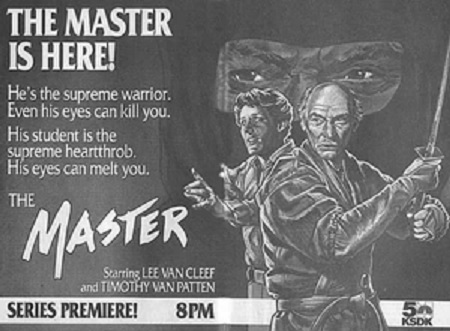
Retro Television Reviews: The Master 1.13 “A Place To Call Home”


Welcome to Retro Television Reviews, a new feature where we review some of our favorite and least favorite shows of the past! On Fridays, I will be reviewing The Master, which ran on NBC from January to August of 1984.  The show can be found on Tubi!

This week, The Master comes to an end.

Episode 1.13 “A Place To Call Home”

(Dir by Gordon Hessler, originally aired on August 31st, 1984)

The Master ends in much the same way that it began, with Max and John Peter McAllister in a small town that is controlled by an evil businessman.  In this case, land developer Mark Richards (Jock Mahoney) wants to run the local orphanage out of town so that he can steal the land and expand his uranium mine.  Max and McAllister not only help Kim Anderson (Susan Woollen) save her orphanage but they also provide some much-needed mentoring to two of the orphans, Mike (Doug Toby) and Bobby (played by Kane Kosugi).  Bobby, it turns out, has some martial arts skills of his own!  It’s amazing how McAllister and Max were always traveling to small towns that just happened to be home to other people who knew karate.

Though his son plays Bobby, Sho Kosugi does not appear in this episode, which is a shame considering that it would be turn out to be the show’s finale.  For that matter, the show ends with McAllister having yet to find his daughter.  In fact, Terri McAllister is only mentioned briefly at the end of the episode, when McAllister says that he and Max have to get back on the road because “I’m looking for my daughter.”  Considering that the whole premise of the show was that McAllister was searching for Terri while Okassa was searching for McAllister, it seems like neither was really in a hurry to accomplish their goals.

A Place To Call Home feels like a greatest hits package, duplicating the plot of the pilot while tossing in a bit of the union episode‘s political subtext.  Even the scene where McAllister attempts to hop onto a helicopter feels a bit reminiscent of the ghost town episodeThe Master ended with an episode that resolved nothing and didn’t really bring anything new to show’s format.

Why did The Master end after thirteen episodes?  When taken as a whole, the show wasn’t as bad as its reputation.  While the stunt doubles did most of the work, Lee Van Cleef and Tim Van Patten still managed to develop a likable chemistry over the course of 13 episodes.  At first, the show’s writer stried too hard to play up the idea of Max Keller being a rebel with a chip on his shoulder but, after the first few episodes, it appears that they realized that Van Patten’s greatest strength as an actor was that he had a sort of amiable goofiness to him.  The stories were predictable but the fight scenes were usually (if not always) well-choreographed and entertaining.  The stunt people earned their paycheck.

In the end, though, I think The Master never quite figured what it wanted to be.  Did it want to be a straight action show?  Did it want to be a goofy buddy comedy?  In some episodes, McAllister was apparently a famous and well-known figure.  In others, he was a total unknown.  In some episodes, finding Terri was the most important thing in his life.  In others, he really didn’t seem to care.  The best episodes were the ones that winked at the audience and acknowledged just how ludicrous the whole thing was.  But, far too often, The Master became a generic crime show that just happened to feature martial arts.

The Master is finished and, to my surprise, I’m going to kind of miss it.  It had potential.  But, it’s time to move on to a new series.  Get ready because next week, it’s time for T & T!

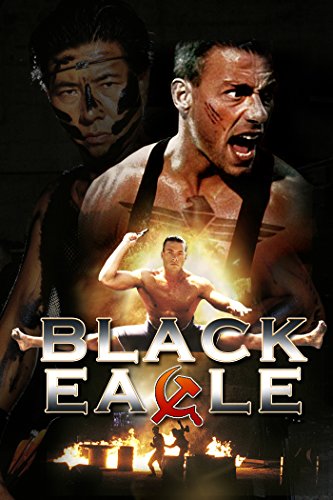
What Lisa Marie Watched Last Night #223: Black Eagle (dir by Eric Karson)


Last night, I watched the 1988 “action” film, Black Eagle!

Why Was I Watching It?

Last night, I watched Black Eagle as a part of the Monday Action Movie live tweet.  Going into the film, I knew that it starred Sho Kosugi and Jean-Claude Van Damme and that was enough for me.  As the film started, I was happy to see that it took place in Malta.  I spent the summer after I graduated from high school in Europe and I spent a few days visiting Malta, its museums, and especially its beaches.  I have good memories of the Malta days and especially the Malta nights.

What Was It About?

I’m not really sure what the film was about.  I watched all 100 minutes of it and, as far as I could tell, an American airplane crashed off the coast of Malta so the CIA brought in Ken Tani (Sho Kosugi) to dive into the sea and retrieve something important from the plane.  However, a Russian named Andrei (Jean-Claude Van Damme) also wanted whatever it was that was on the plane so he and his people ended up chasing Ken all over Malta, an island that I have visited.

Ken was also on vacation so, when he wasn’t killing people, he was hanging out with his two sons, Brian (Kane Kosugi) and Denny (Shane Kosugi).  The CIA helpfully sent along one of their agents, Patricia Parker (Doran Clark), and she acted a sort of nanny while Ken was busy fighting the Russians.  Also helping Ken was a Jesuit (Bruce French) who also happened to be an explosive expert.  I don’t think the Vatican would approve of a priest blowing up boats and building but everyone knows better than to argue with a Jesuit.

What Worked?

Jean-Claude Van Damme didn’t really do much in this movie but he still looked good and he got to do the splits a few times.  In fact, it was kind of funny to watch him actively search out any possible excuse to do a split.  I had a lot of fun imagining that Andrei only became an international spy so that he could show off his gymnastic abilities.  It’s too bad he missed out on Gymkata.

The Maltese scenery was lovely, even if the film itself was a bit grainy.  Have I mentioned that I’ve been to Malta?

What Did Not Work?

Oh, that Sho Kosugi.  He was great when he was fighting people and tossing them off of buildings but whenever he had to actually deliver dialogue and try to show emotion …. AGCK!  There’s a reason why Sho Kosugi’s most popular American films — Enter the Ninja, Ninja III: The Domination — feature him playing a villain.  Even when Kosugi was acting opposite his children, he seemed to be in a fairly bad mood.

At one point, Ken asked the priest how he became an expert in demolitions.  “Ever hear of a place called Vietnam,” the Jesuit replied and I groaned as I realized that Ken had made one of the biggest mistakes of his life.  If there’s one thing that I understand as a result of being raised Catholic, it’s that you never ask a Jesuit for his origin story unless you’ve got a few hours to kill.

To be honest, the film could have used even more scenes about Malta, a lovely place of which I have many good memories.

“Oh my God!  Just like me!” Moments

I’ve been to Malta.

Lessons Learned

Definitely go to Malta if you get a chance.

The TSL’s Grindhouse: Revenge of the Ninja (dir by Sam Firstenberg)


After his wife and most his family is murdered by a rival clan, ninja Cho Osaki (Sho Kosugi) leaves Japan for the United States.  Not only is he leaving his home country but he’s also abandoning his ninja heritage.  As he explains to his mother (Grace Oshita), he no longer has any use for the violent old ways.  From now on, he just wants to sell dolls!

In America, Cho prospers and his mother continues to teach Cho’s young son, Kane (Kane Kosugi), how to defend himself.  When Kane is confronted by a bunch of bullies while walking home from school, he kicks their asses while his grandmother watches approvingly.  GO, KANE!  Seriously, there’s nothing wrong with a movie that opens with a bunch of obnoxious 11 year-olds getting beaten up by a 9 year-old.

Cho has found success opening art galleries and selling dolls.  He’s proven that he doesn’t need to be an elite assassin in order to be happy.  However, Cho’s mother doesn’t trust Cho’s business partner, Braden (Arthur Roberts).  She says that there’s something obviously evil about Braden but Cho doesn’t agree.  Well, it turns out that mom’s right!  Braden is evil.  He’s using the dolls to smuggle heroin into the country!  When the local mob boss (Mario Gallo) refuses to agree to Braden’s terms, Braden decides to wage war on the Mafia. It turns out that Braden is a ninja himself!

When members of the Mafia turning up dead in weird ways, the police bring in a local martial arts instructor named Dave (Keith Vitali).  Confused by the murders, Dave decides to consult with a friend of his to determine whether or not a ninja could be responsible.  That friend just happens to turn out to be Cho, who confirms that there is obviously a ninja in America but who also refuses to fight that ninja because Cho has abandoned the violence of the past and, as he explains it, he’s got a new art gallery opening soon.  Of course, what Cho doesn’t know is that the ninja is his own business partner….

The 1983 film Revenge of the Ninja has an overly complicated plot but the story that it tells is relatively simple.  Cho is done being a ninja.  Then, his family and his girlfriend Cathy (Ashley Ferrare) end up getting caught in the middle of a turf war between Braden and the Mafia and Cho is forced to break his pledge to lead a life of non-violence.  Revenge of the Ninja was produced by Cannon films.  It was preceded by Enter the Ninja, which featured Kosugi as a villain who fought Franco Nero, and it was followed by Ninja III: The Domination, in which Kosugi played a ninja assassin whose spirit ended up possessing a young aerobics instructor.  Of the three Cannon Ninja films, Revenge of the Ninja is the least interesting, as it doesn’t feature a star as charismatic as Franco Nero or a plot twist as wild as an aerobics instructor getting possessed.  Revenge of the Ninja does, however, feature several exciting fight scenes and Sho Kosugi’s athletic prowess goes a long way to making up for the fact that he’s not a particularly expressive actor.  Fans of low-budget but kinetic martial arts action should get a kick and a punch out of Revenge of the Ninja.

Finally, Revenge of the Ninja may not be the best ninja film ever made but it is a Cannon Film and therefore, it’s worth watching.