Film Review: Transformers: The Movie (dir. by Nelson Shin)


1986 was such a fantastic year.

With movies like Top Gun, Labyrinth and Ferris Bueller’s Day Off already out, the summer would give us Big Trouble in Little China, Aliens, & The Fly (Which at one point you could catch as a double feature with Aliens). The two best announcements at home were that a new baby was on the way and Transformers: The Movie was coming out. By August, we knew the baby would be a boy and a name was already set aside for him. We were naming him after a fallen Officer who was a friend of my father’s on the Force.

Impending older brotherhood was nice, but for 11 year old me, it all took a backseat to the Death of Optimus Prime. Up until then, the most shocking fictional event we had in school was either Return of the Jedi closing the book on Star Wars some years prior, K.I.T.T. getting destroyed (and rebuilt with Super Turbo Boost) in Knight Rider, or Rico losing Angelina in a car bomb during the Season Finale of Miami Vice just a few months back.

I didn’t get a chance to see Transformers: The Movie during the film’s initial run, simply because there wasn’t anyone at home who wanted to sit through it with me. My older brother, through other means, managed to score a VHS copy of the film within the first week or so of its theatrical release. I watched and re-watched that video so many times, and would even pause it to try to draw some of the characters. Eventually, I was able to catch a re-release for the film’s 30th Anniversary.

After two full seasons of the show, Transformers: The Movie was basically Hasbro’s way of cleaning house from the 1984 Generation 1 toy line to introduce a new set. The show sold figures, and the hopes were that the film would do the same. Granted, there were already a large number of Transformers to work with by the time the movie came out. With nearly 50 Autobots and about 35 Decepticons to choose from, the film focused on a few, such as the Insecticons, Dinobots and some of the G1 favorites like Soundwave, Starscream, Jazz & Bumblebee. The Constructicons (and Devestator)were the only group set to be featured in the movie. The Stunticons & Aerialbots would sit this one out. Hasbro really didn’t care too much about the impact of any of these changes on the movie’s plot. While most of the trailers asked “Does Optimus Die?”, their toy commercial line already introduced Rodimus Prime.

Produced by De Laurentiis Entertainment Group (Near Dark, Blue Velvet), Transformers: The Movie takes us to the future of 2005. The Autobots and Decepticons are still fighting it out, with a few changes in the war. The Decepticons own the Transformers home planet of Cybertron, but the Autobots have control of two of Cybertron’s Moons and a city on Earth. Lead by Optimus Prime (Peter Cullen, Eeyore on The Adventures of Winnie the Pooh), the plan is get back to Earth and then handle the Decepticons from there. Of course, the Decepticons and their leader, Megatron (Frank Welker, The Golden Child) find out about this and intercept an Autobot shuttle, outright killing classic show staples Prowl, Brawn, Rachet and Ironhide. I can’t imagine what it was like to be a kid, bring your favorite toy to the movies, only to see the character it’s based on killed on screen. To make things worse, a planet eating transformer named Unicron threatens both parties, including Cybertron. Can Unicron be stopped?


It wasn’t a total loss. We were introduced to new Autobots in the rookie Hot Rod (Judd Nelson, The Breakfast Club), the war hero Kup (Lionel Stander, TV’s Hart to Hart), the fast talking Blurr (John Moschitta, Jr., Dick Tracy), would be leader Ultra Magnus (Robert Stack, Airplane), an Autobot First Lady in Arcee (Susan Blu), and Triple Changer Springer (Neil Ross). The two most famous vocal additions were Leonard Nimoy (Invasion of the Body Snatchers) the new Deception leader Galvatron and Orson Welles (The Third Man) as Unicron. As a kid, it was pretty awesome to know that both Spock and the “No Wine Before It’s Time” guy were joining in all of this. It made Transformers seem a bit larger. My parents would point out that Orson Welles was “the” Orson Welles, but as Citizen Kane wasn’t on my radar (despite my Dad owning and watching it), I associated him with Wine commercials. To both their credit, Nimoy and Welles did just fine with their vocal talents.

While the animation for Transformers was never fantastic, the movie was a bit of an improvement. It never quite reached the levels of anime films like Fist of the North Star & Golgo 13: The Professional. The Soundtrack was ultimately where the film shined, with a mix of rock music from bands like Lion and Stan Bush and a score by Vince DiCola. Coming off of Staying Alive and Rocky IV, DiCola’s work on Transformers: The Movie was great, and remains a go to album for me when music is needed for a situation.

The Death of Optimus Prime was a bit of a shock to the audiences that saw (and cared about) it. Hasbro would eventually bring Prime back temporarily as a Zombie in an episode of the show’s 3rd Season, and then again to lead in the season’s 2 part finale, “The Return of Optimus Prime”.

After seeing the film, I asked me parents for some of the movie based Transformers. Christmas was put on hold by my Mom as she went into labor around Christmas Eve. I was able to open just one gift before Christmas. This happened to be a Hot Rod figure that I found in a toy store back in November, which was quickly snatched and wrapped for the Christmas Pile before I could get to open it. She had my little brother on Christmas Morning, and we eventually celebrated the holiday half a week later. Bless her heart, she gave me almost the entire Movie line – Galvatron, Rodimus Prime, Springer, Cyclonus, and the Predacons (who weren’t in the movie). Playing with them took a backseat to diaper detail, but hey, that Christmas was one of the best.

Overall, Transformers: The Movie is one of those films I happily return to from time to time. It’s not incredible in any major way, but it takes me back to one element of a magical year.
The Eric Roberts Collection: Strange Frequency (dir by Mary Lambert and Bryan Spicer)


2001’s Strange Frequency is an anthology film.  Usually, I hate anthology films because it always seems like the viewer ends up with one good story and three mediocre ones.  As well, the anthology format is one that sometimes seems to be specifically designed to bring out the worst tendencies in otherwise talented directors.  Often times, they seem to treat the anthology format as a lark, an excuse to show off their technical mastery without really paying much attention to anything else.  The results often feel thematically shallow.

Well, guess what?  I liked Strange Frequency.  It was a lot of fun.  Each of the four stories mixed horror with music.  The first story features two heavy metal fans (Erik Palladino and Danny Masterson) who, after a car accident, find themselves in a club where disco is played nonstop.  For them, it’s Hell.  For me, it sounds like a fun afterlife.  (Yes, it’s not easy to watch Danny Masterson nowadays but he does suffer in this story.)  The second story is about a middle-aged serial killer (Eric Roberts) who targets younger hitchhikers, specifically because he dislikes their taste in music.  However, when he picks up a young grunge fan (Christopher Kennedy Masterson), he suddenly finds himself being targeted.  It turns out that this hitchhiker targets old people who won’t shut up about Woodstock.  They then meet an older man who has never forgiven the baby boomers for rejecting big band music.  In the third story, a rock star (John Taylor) who enjoys destroying hotel rooms is confronted by a maid (Holland Taylor) who can literally clean up any mess.  (“I want my headlines!” the rock star shouts as he realizes he’s never going to get credit for destroying his current room.)  Finally, the fourth story stars Judd Nelson as an A&R man who has the ability to find up-and-coming stars but whose discoveries inevitably end up dying.

All three of the stories were well-done and genuinely clever.  My favorite was the second story, which featured Eric Roberts giving an enjoyably unhinged performance as the Woodstock refugee with a hatred for Lollapalooza.  The story was both clever and suspenseful and it actually had something to say about the cultural differences between the generations.  As you get older, you really do come to hate whatever music came after the artists you grew up listening to.  Eventually, all the Swifties will be in their 40s and 50s, wondering why the younger generation doesn’t appreciate good music about feelings.

Strange Frequency was a pilot for a series that aired on VH-1 in 2001.  How come I don’t remember this show?  The pilot was actually really good!  Thank you to Australia’s own Mark V for telling me about this pilot and letting me know that it was on YouTube!  Check it out if you get a chance.

Previous Eric Roberts Films That We Have Reviewed:

  1. Star 80 (1983)
  2. Runaway Train (1985)
  3. Best of the Best (1989)
  4. Blood Red (1989)
  5. The Ambulance (1990)
  6. The Lost Capone (1990)
  7. Best of the Best II (1993)
  8. Love, Cheat, & Steal (1993)
  9. Voyage (1993)
  10. Love Is A Gun (1994)
  11. Sensation (1994)
  12. Dark Angel (1996)
  13. Doctor Who (1996)
  14. Most Wanted (1997)
  15. Mercy Streets (2000)
  16. Raptor (2001)
  17. Rough Air: Danger on Flight 534 (2001)
  18. Wolves of Wall Street (2002)
  19. Border Blues (2004)
  20. Mr. Brightside (2004)
  21. Six: The Mark Unleased (2004)
  22. We Belong Together (2005)
  23. Hey You (2006)
  24. Depth Charge (2008)
  25. Amazing Racer (2009)
  26. In The Blink of an Eye (2009)
  27. Bed & Breakfast (2010)
  28. Enemies Among Us (2010)
  29. The Expendables (2010) 
  30. Sharktopus (2010)
  31. Beyond The Trophy (2012)
  32. The Dead Want Women (2012)
  33. Deadline (2012)
  34. The Mark (2012)
  35. Miss Atomic Bomb (2012)
  36. Assault on Wall Street (2013)
  37. Bonnie And Clyde: Justified (2013)
  38. Lovelace (2013)
  39. The Mark: Redemption (2013)
  40. The Perfect Summer (2013)
  41. Self-Storage (2013)
  42. A Talking Cat!?! (2013)
  43. This Is Our Time (2013)
  44. Inherent Vice (2014)
  45. Road to the Open (2014)
  46. Rumors of War (2014)
  47. Amityville Death House (2015)
  48. Deadly Sanctuary (2015)
  49. A Fatal Obsession (2015)
  50. Las Vegas Story (2015)
  51. Stalked By My Doctor (2015)
  52. Enemy Within (2016)
  53. Joker’s Poltergeist (2016)
  54. Prayer Never Fails (2016)
  55. Stalked By My Doctor: The Return (2016)
  56. The Wrong Roommate (2016)
  57. Dark Image (2017)
  58. Black Wake (2018)
  59. Frank and Ava (2018)
  60. Stalked By My Doctor: Patient’s Revenge (2018)
  61. Clinton Island (2019)
  62. Monster Island (2019)
  63. The Reliant (2019)
  64. The Savant (2019)
  65. Seven Deadly Sins (2019)
  66. Stalked By My Doctor: A Sleepwalker’s Nightmare (2019)
  67. The Wrong Mommy (2019)
  68. Exodus of a Prodigal Son (2020)
  69. Free Lunch Express (2020)
  70. Her Deadly Groom (2020)
  71. Top Gunner (2020)
  72. Deadly Nightshade (2021)
  73. The Elevator (2021)
  74. Just What The Doctor Ordered (2021)
  75. Killer Advice (2021)
  76. Night Night (2021)
  77. The Poltergeist Diaries (2021)
  78. The Rebels of PT-218 (2021)
  79. A Town Called Parable (2021)
  80. Bleach (2022)
  81. My Dinner With Eric (2022)
  82. 69 Parts (2022)
  83. D.C. Down (2023)
  84. Aftermath (2024)
  85. Bad Substitute (2024)
  86. Devil’s Knight (2024)
  87. The Wrong Life Coach (2024)
  88. When It Rains In L.A. (2025

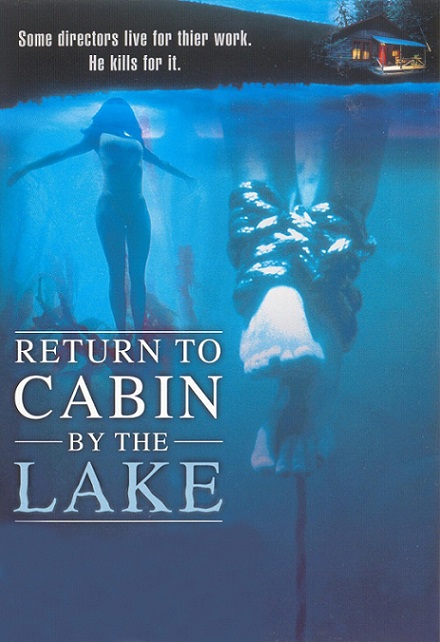
Retro Television Reviews: Return To Cabin By The Lake (dir by Po-Chih Leong)


Welcome to Retro Television Reviews, a feature where we review some of our favorite and least favorite shows of the past!  On Sundays, I will be reviewing the made-for-television movies that used to be a primetime mainstay.  Today’s film is 2001’s Return To Cabin By The Lake!  It  can be viewed on YouTube.

Stanley Caldwell (Judd Nelson) is back!

At the end of Cabin By The Lake, screenwriter Stanley had managed to escape from the police by faking his own drowning.  Return to Cabin By The Lake finds Stanley using a variety of disguises and fake identities in his effort to once again become a part of the film industry.  He is particularly interested in the fact that his previous murder spree is being turned into a movie.  He’s considerably less happy about the fact that everyone involved in the movie continually disparages his work as a screenwriter.  He’s even less happy when he hears them speculating that there was a sexual-motive behind Stanley’s murders or that Stanley was acting out against his mother.  For someone who spent the previous movie drowning innocent women and then visiting their bodies in the lake, Stanley sure does seem to be shocked to discover that most people don’t have a high opinion of him.  You’re a murderer, Stanley.  People don’t like murderers.

Anyway, as a master of disguise, Stanley is able to work his way into the production of the film.  Even though everyone on the set is spending 24 hours a day obsessing on and recreating the crimes of Stanley, no one is suspicious of the guy who looks just like Stanley and who keeps saying stuff like, “Stanley would never do that!”  Stanley becomes obsessed with script writer Andrea (Dahlia Salem).  He also comes to resent the film’s shallow director, Mike Helton (Brian Krause, giving the film’s best performance).  Stanley decides that he would be a better director of the film so he buries Mike alive and then takes over direction.

Return To Cabin By The Lake is a bit more deliberately humorous than the first film.  If Cabin By The Lake was full of pleasant townspeople and earnest police officers, Return To Cabin By The Lake is populated with caricatures of various Hollywood phonies.  Everyone involved in Return To Cabin By The Lake‘s film-within-a-film is blithely unconcerned with the feelings of the the victim’s loved ones nor do they really care about telling the story accurately.  Helton’s only concern is that the script have enough sex.  That Stanley not only takes over as director but turns out to be a pretty good at it would appear to be Return To Cabin By The Lake’s ultimate statement on the film industry.

Judd Nelson is a bit more energetic in the sequel than he was in the first film.  That said, Return To Cabin The By The Lake makes the mistake of asking us to buy the idea of Stanley being a master of disguise.  Judd Nelson is always going to look and sound like Judd Nelson, regardless of whether he’s wearing a wig or not.

Though it’s a bit constrained by being a made-for-TV movie, Return To Cabin By The Lake is a marked improvement on the first film, one that has more humor and a better performance from its lead.  The film ends with an opening for another sequel but it was apparently never to be.

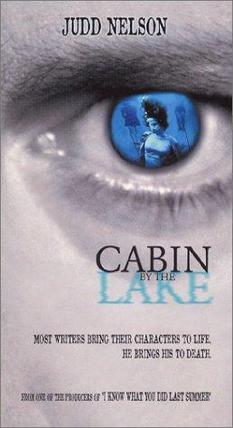
Retro Television Reviews: Cabin By The Lake (dir by Po-Chih Leong)


Welcome to Retro Television Reviews, a feature where we review some of our favorite and least favorite shows of the past!  On Sundays, I will be reviewing the made-for-television movies that used to be a primetime mainstay.  Today’s film is 2000’s Cabin By The Lake!  It  can be viewed on YouTube.

Screenwriter Stanley Caldwell (Judd Nelson) has been hired to write a slasher film and, to the concern of both the film’s director (Bernie Coulson) and Stanley’s agent (Susan Gibney), Stanley is taking his time to write the script.  Stanley says that he’s determined to write something more than just a typical “dead teenager” film.  His script is about a murderer who kills his victims and then dumps them into a nearby lake.  The killer spends his time tending his underwater garden.

What is taking Stanley so long?  Stanley is doing research, which means that he’s kidnapping women, holding them prisoner in his cabin, and then dumping their bodies into the lake.  Along the way, he’s observing how the victims act and he’s incorporating his research into his script.  Though Stanley tells himself that he’s just doing research, it’s obvious that the script is no longer his main concern.  Now, Stanley is just enjoying working in his garden.

Stanley’s latest victim is Mallory (Hedy Burress), a young woman who works at the town’s movie theater and who has a long-standing fear of the water.  While Stanley is holding Mallory captive and studying both her and her fear of water, Deputy Boone Preston (Michael Weatherly) is searching for Mallory.  And, of course, Stanley is running out of time to finish his script.

Cabin In The Lake was produced by and originally aired on the USA Network and, as a result, it has a much darker sense of humor than one might otherwise expect to find in a made-for-tv horror movie from 2000.  Most of the humor centers around the pretensions of the film industry, with both Stanley and his film’s director trying to turn their little slasher movie into something more than just another dead teenager film.  A good deal of the film centers around a group of special effects and makeup artists, who are recruited to help capture the killer and they’re all likable in their dorky way.  The scenes of Stanley’s underwater garden achieve a certain dream-like grandeur and, as someone who has a morbid fear of drowning, I could certainly relate to Mallory’s fear of the water.

That said, this is one of those films where the parts are definitely greater than the whole.  I think the film’s biggest problem was that Judd Nelson was a bit bland in the role of Stanley, flatly delivering his lines and barely bothering to show a hint of emotion.  If anything, Nelson appears to be a bit bored with the film.  Hedy Burress is sympathetic as Mallory and Michael Weatherly is believable as the upstanding deputy but a film like this lives or dies based on its villain and Nelson sleepwalks through the role.  As well, for all the humorous moments that do work, it soon becomes obvious that this is a one-joke film and portraying Hollywood as being a place full of shallow people is not creative enough a joke to sustain an entire film.  The end result is a film that is ultimately frustratingly uneven.

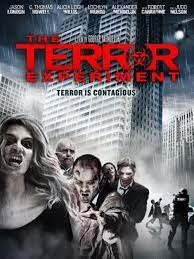
The Terror Experiment (2010, directed by George Mendeluk)


At the Houston Federal Building, a disgruntled domestic terrorists sets off a bomb that not only rocks the building but also unleashes a government-designed nerve gas that turns anyone exposed to it into an animalistic, rage-fueled zombie who attacks everyone that they see.  Soon, the building is full of former friends and co-workers who are now obsessed with ripping each other to shreds.  The few people who were not exposed to the nerve gas are hiding on the top floor.  Under the reluctant leadership of Cale (Jason London), they try to figure out how to escape from the building.

Meanwhile, on the outside, Police Chief Grosso (C. Thomas Howell) and Fire Chief Lohan (Lochlyn Munro) attempt to rescue as many people as they can before the building is blown up.  The scientist on the scene (Robert Carradine) sees all of this as a research opportunity while a sinister government agent (Judd Nelson) conspires to keep word about what has happened from reaching the public.

With its images of suit-and-tie wearing madmen trying to kill everyone in the building, The Terror Experiment may seem like it would have much in common with The Belko Experiment (which came out a few years after Terror Experiment) but actually, The Terror Experiment is mash-up of Die Hard and 28 Days Later, with Jason London and Lochlyn Munro filling in for Bruce Willis and Reginald Veljohnson.  With its frequent scenes of formerly normal people suddenly going mad and turning into homicidal maniacs, The Terror Experiment has its effective moments and Jason London does the best that anyone probably could with the role of the film’s reluctant hero.  But the film also suffers because you never really get to know who any of these people were before they were trapped in the building and there aren’t really any emotional stakes to whether or not they’ll manage to get out.  As well, the scenes outside the building often fill like filler that was included so that some “name” actors could be recruited to appear in the film.  Howell, Carradine, and Nelson are all fine in their roles but the only thing they add to the movie is an opportunity to recreate the one of the most crowd-pleasing moments from the finale of Die Hard.

The Terror Experiment is occasionally diverting but it’s hard not to feel that it never really reaches its potential.

The Eric Roberts Collection: Road to the Open (dir by Cole Claassen)


In 2014’s Road to the Open, Eric Roberts and John Schneider play, respectively, Tim and Rob Gollant.

The Gollant brothers are wealthy, smug, and athletic.  At the local country club, they’re not only the best golf players but also the best tennis players.  They’re the type who taunt their opponents while they’re losing.  No one really likes the Gollant brothers but people put up with them because the Gollant brothers are extremely rich.  When they tell you to get off of their bench at the club, it’s because it really is their bench.  Their names are literally on the bench.

The Gollant Brothers aren’t exactly likeable but they are fun to watch, specifically because they’re played by John Schneider and Eric Roberts.  Roberts and Schneider give perfect performances as two men who have never actually had to grow up.  They’re the type of overage high school bullies who wouldn’t stand a chance in the real world but who, fortunately, can spend all of their time hiding out at their country club.

Of course, the Gollants are not the heroes of Road to the Open.  Instead, they’re the obstacle standing in the way of Jerry McDonald (Troy McKay) and Miles Worth (Philip DeVova).  Jerry and Miles are lifelong friends who enjoy playing tennis together.  Overweight, balding, and mild-mannered, Jerry is not a typical athlete and he knows it.  Haunted by the death of his wife and raising his daughter on his own, Jerry doesn’t so much fear losing as much as he fears letting everyone down.  Miles, meanwhile, is a typical athlete, right down to the anger management issues.  Fortunately, Miles has been seeing a somewhat eccentric therapist (Judd Nelson) and he may have finally learned how to control his temper.

There’s a lot of tennis in Road to the Open but, ultimately, it’s about Jerry and Miles’s friendship and Jerry trying to find the strength to move on with his life.  Even though he meets and falls in love with Sam (Michelle Gunn), Jerry still feels as if he’s betraying the memory of his wife and, at times, he feels guilty for feeling any sort of happiness.  There’s a lot of comedy to be found in Road to the Open but, ultimately, this film is a heartfelt and rather sweet testament to friendship and love.  It’s also a well-acted film, with McKay, DeVova, and Gunn bringing a lot of likable energy to their roles.

I watched Road to the Open on Tubi.  It turned out to be a nice surprise.

Previous Eric Roberts Films That We Have Reviewed:

  1. Star 80 (1983)
  2. Blood Red (1989)
  3. The Ambulance (1990)
  4. The Lost Capone (1990)
  5. Love, Cheat, & Steal (1993)
  6. Love Is A Gun (1994)
  7. Sensation (1994)
  8. Doctor Who (1996)
  9. Most Wanted (1997)
  10. Mr. Brightside (2004)
  11. Six: The Mark Unleased (2004)
  12. Hey You (2006)
  13. In The Blink of an Eye (2009)
  14. The Expendables (2010) 
  15. Sharktopus (2010)
  16. Deadline (2012)
  17. Miss Atomic Bomb (2012)
  18. Lovelace (2013)
  19. Self-Storage (2013)
  20. Inherent Vice (2014)
  21. Rumors of War (2014)
  22. A Fatal Obsession (2015)
  23. Stalked By My Doctor (2015)
  24. Stalked By My Doctor: The Return (2016)
  25. The Wrong Roommate (2016)
  26. Stalked By My Doctor: Patient’s Revenge (2018)
  27. Monster Island (2019)
  28. Seven Deadly Sins (2019)
  29. Stalked By My Doctor: A Sleepwalker’s Nightmare (2019)
  30. The Wrong Mommy (2019)
  31. Her Deadly Groom (2020)
  32. Top Gunner (2020)
  33. Just What The Doctor Ordered (2021)
  34. Killer Advice (2021)
  35. The Poltergeist Diaries (2021)
  36. My Dinner With Eric (2022)

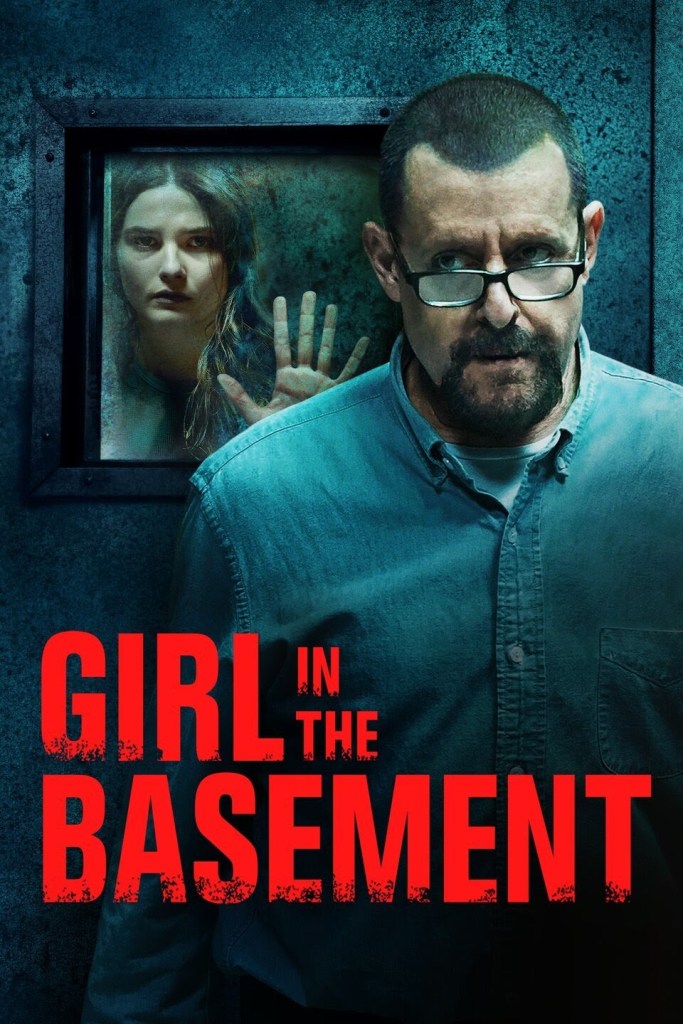
Lifetime Film Review: Girl In The Basement (dir by Elisabeth Rohm)


When Sara (Stefanie Scott) disappears shortly before her 18th birthday, her mother (Joely Fisher) and her older sister (Emily Topper) are naturally concerned. Significantly less concerned is her creepy father, Don (Judd Nelson). Don says that Sara has always been irresponsible and has always placed her own wants and desires above what’s best for her family. Don goes on to say that Sara had long been threatening to go on a road trip and that her plan was to see all 50 states before returning home.

The years pass and Sara never returns home. Don says that it’s obvious that Sara has decided never to return and that it’s best not to even worry about her. When Sara’s mother suggests maybe hiring a private detective, Don angrily says that he doesn’t want to hear another word about it. Sara has made her decision and he doesn’t want to talk about it anymore.

And the years continue to pass.

Of course, Don knows exactly where Sara is. He knows that, years ago, he tricked her into the going into the basement and that he then locked her in a secret room. Everyday, he takes her some food. He rewards her if he feels that she’s being good. He punishes her if he feels that she’s still being rebellious. As the years pass, Sara has several children, all fathered by Don. They live in the basement with Sara.

It’s a disturbing story, made all the more disturbing by the fact that it’s based on actual events. For 24 years, Elizabeth Fritzl was trapped, by her father, in a basement. Girl In The Basement is Lifetime’s take on the story. It was directed by Elisabeth Rohm, who has starred in several Lifetime films herself. Girl In The Basement is relentlessly grim, as it should be. It’s not particularly a fun film to watch but it’s impossible not to be inspired by the fact that the Sara, the film’s stand-in for Elizabeth Fritzl, managed to survive, no matter how terrible the situation became. She never gave up. Rohm does a good job of capturing the oppressive claustrophobia of Sara’s existence and Joely Fisher, Emily Tapper, and Stefanie Scott all did good job of showing how the victims of abuse often make excuses for their abusers. Even before he locks Sara in the basement, everyone in the family knows that Don is a monster but they’ve all come to accept it. They’ve all come to feel as if “That’s just Don.” Like most abusers, Don knows how to manipulate and how to gaslight his victims into accepting almost anything.

Judd Nelson does a good job in the role of Don. Unfortunately, we’re so used to seeing Judd Nelson play creeps that it was impossible to be surprised when he turned out to be one in this movie. The casting was a bit too on-the-nose and, whenever Nelson was onscreen, I found myself thinking about all over the other films that I’ve seen that featured Judd Nelson as a villain. That said, Nelson brought enough authenticity to Don’s sudden mood swings that he was convincingly menacing. It’s not just that Don locks his daughter in the basement and abuses her for 24 years while insisting that the family should just forget that she ever existed. It’s that he’s so damn proud of himself after he does it.

Girl in the Basement is well-done Lifetime true crime film, albeit not a particularly pleasant one to watch.

Relentless (1989, directed by William Lustig)


Buck Taylor (Judd Nelson) is the son of an LAPD cop who has never gotten over the bitterness he feels over being rejected by the force himself.  Determined to get revenge on a world that refuses to look beyond the dark circles under his eyes, Buck becomes a serial killer.  He picks his victims at random from the phone book.  Because his father was a cop and he studied to join the force, Buck knows all the tricks of the trade.

Pursuing Buck are two cops.  Bill Malloy (Robert Loggia) is a veteran detective who is supposed to be laid back though Robert Loggia was one of those actors who never seemed like he had been laid back a day in his life.  Malloy’s new partner is Sam Dietz (Leo Rossi).  Dietz has just transferred to Los Angeles from New York and he’s having a hard time adjusting.  Everyone is just too laid back.

When Buck starts to target the two cops who are investigating him, the case gets personal and relentless.

Relentless is a movie that I’ve been meaning to review for five years now.  In the past, I’ve always been deterred by the fact that reviewing Relentless would mean rewatching Relentless.  But, having just spent two weeks watching all of the Witchcraft films, I now feel like I can handle anything.  Relentless is a movie that I always remember as being better than it actually is.  The murders are creepy but Judd Nelson gives such a one-note performance as the killer that it’s impossible to believe that he could have gotten away with them.  As played by Nelson, Buck Taylor is such an obvious serial killer that I’m surprised that he wasn’t already in jail, having been accused of every single unsolved murder on the books.  There’s nothing compelling about this killer and films like this pretty much live and … ahem … die based on the quality of their villain.

Why do I always remember Relentless as being better than it is?  Most of the credit for that probably goes to Leo Rossi, an underappreciated character actor who gives such a good performance as Sam Dietz that he makes the entire movie better.  Rossi even got a brief franchise out of his performance in Relentless, as Dietz returned for three sequels.  Robert Loggia is also good as Malloy and it’s unfortunate that the movie doesn’t do as much with the character as it could have.

Rossi and Loggia aside, Relentless doesn’t live up to its potential.  But it was still popular enough to launch a direct-to-video franchise.  Tomorrow: Relentless 2.

White Rush (2003, directed by Mark L. Lester)


Five friends, while on their annual camping trip outside of Salt Lake City, stumble across a cocaine deal gone bad.  They think that all of the drug dealers have been killed and Chick (Louis Mandylor), who happens to be a police detective, suggests that they should take the cocaine for themselves and sell it to the local drug lord.  Everyone agree but Eva (Tricia Helfer), a former addict who is so disgusted by Chick’s plans that she runs away from the group.

While she’s stumbling through the wilderness, Eva runs into Brian Nathanson (Judd Nelson), the sole survivor of the drug deal.  Determined to get his cocaine back, Brian convinces Eva to help him out by explaining to her that there’s an even worse drug dealer than him who also wants the cocaine.  In fact, that even worse drug dealer has already sent a sexy assassin named Solange (Sandra Vidal) to kill everyone involved in the botched drug deal.  The obvious solution would be to just return the drugs to Brian and let him take the fall but Chick and his friends aren’t that smart.

A film starring Judd Nelson and directed by Mark L. Lester, the man behind such classics as Class of 1984 and Commando?  Sounds pretty good, right?  Actually, the film isn’t bad.  Or, at least, it’s better than you’d expect from a low budget, direct-to-video Judd Nelson movie.  Even though the plot may be full of holes that you could drive a semi-trailer truck through, Mark L. Lester doesn’t waste any time getting the story rolling and he keeps the action moving.  Lester knows better than to pretend that this movie is anything more than just a B-action movie.  Judd Nelson gives one of his better performances as Brian, playing him as if John Bender grew up and became a drug dealer.  (We all knew that was going to happen, no matter what happened at the end of The Breakfast Club.)  Finally, Sandra Vidal is sexy and convincingly lethal as Solange.

White Rush is currently available on Tubi and Prime.

Film Review: Billionaire Boys Club (dir by James Cox)


http://www.youtube.com/watch?v=XkdZzOM2VGA

Have patience.  This is kind of a long story.

Billionaire Boys Club, a fact-based film about two murders that occurred back in the greed and cocaine-filled 80s, was first announced in 2010.  After five years of pre-production, the film started shooting in 2015.  It featured up-and-coming stars Ansel Elgort and Taron Egerton in the lead roles and Emma Roberts in a key supporting role.  It also featured a certain two-time Oscar-winning actor, who we will talk about shortly.  There was speculation that Billionaire Boys Club could be an Oscar contender.  At the very least, that two-time Oscar-winning actor might pick up another supporting nomination.  Shooting started in December of 2015 and wrapped in January of 2016.

And then …. nothing.

What happened?

Kevin Spacey happened.  On October 29th, 2017, Anthony Rapp told how, when he was 14, an intoxicated Kevin Spacey made a sexual advance towards him.  Subsequently, 15 other people came forward with stories about Spacey making similar advances towards them.  At the time, the Oscar-wining actor had key supporting roles in two upcoming films: All The Money In The World and Billionaire Boys Club.  The producers of All The Money In The World replaced Spacey with Christopher Plummer and hastily refilmed all of his scenes.

Unfortunately, that really wasn’t an option for the producers of Billionaire Boys Club.  Whereas Spacey’s role in All The Money In The World was basically an extended cameo, he was a key part of Billionare Boys Club.  Spacey had been cast as Ron Levin, a flamboyant con man whose murder led to the collapse of an 80s investment firm.  There was really no feasible way to replace Spacey without reshooting the majority of the film.  As a result, Billionaire Boys Club sat a while in limbo before finally getting an extremely limited release back in July.  On opening day, the film made a total of $126.  (The final weekend gross was $618.)

As for the film itself, the behind the scenes drama is far more interesting than anything that actually happens on screen.  Elgort and Egerton play Joe Hunt and Dean Karny, two middle-class guys who want to be rich in the 80s.  They do this by starting an investment firm called Billionaire Boys Club and, for a few months, everything seems to be perfect.  They appear to be making money.  They drive nice cars and live in big mansions and throw big parties.  There’s all the usual stuff that you expect to see in films about rich twentysomethings: cocaine, swimming pools, black lingerie, and fast cars.  In fact, that’s kind of the problem with the film.  There’s nothing surprising about what happens to Joe and Dean.  If you’ve seen Wolf of Wall Street, you’ve seen it all before.  In fact, if anything, the film’s recreation of greed-fueled decadence is almost too tame.  I mean, sure — we get the shot of the lines of cocaine getting snorted off a counter top but it’s hardly the mountain of coke that usually shows up in a movie like this.  If anything, this movie needed more cocaine.

Of course, everything eventually falls apart.  It turns out that Ron Levin, their main financial backer, was actually a con man who had managed to trick everyone into thinking that he was a millionaire.  In the end, it all leads to two murders, one prison sentence, and one new life in the witness protection program.

The film tries to critique the culture of greed but it fails because it never seems to understand why that culture would be so attractive to two guys like Joe and Dean in the first place.  Despite the efforts of Elgort and Egerton, Joe and Dean just come across as being two ciphers who maybe watched Wall Street one too many times.  It’s never clear what made these two click or why they were able to trick so many people into believing in them.  Unlike something like The Wolf of Wall Street, Billionaire Boys Club is so busy scolding everyone for being greedy that it never acknowledges that being rich can also be a lot of fun.  (It doesn’t help that Billionaire Boys Club features first person narration, which often leads to the film telling us what it should be showing us.)

As for Kevin Spacey, he gave the same performance that he gave in any number of similar films.  He’s arch and sarcastic and sometimes ambiguously flamboyant.  He gets upset whenever anyone says anything against his dog.  When he announces that he’s a “hustler” and brags about how he can get away with anything because he’s convinced people that he’s something that he’s not, it’s hard not to cringe.  It’s not really a bad performance, as much as it just kind of a predictable one.  It feels destined to be remembered only for being Spacey’s final appearance in a feature film.

Billionaire Boys Club will be making its Showtime premiere later tonight.  It’s not a terrible film but it’s not a particularly memorable one either.