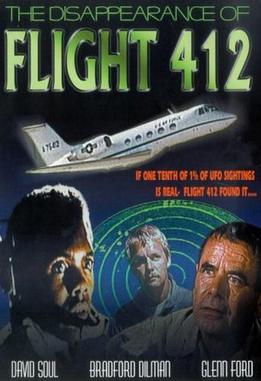
I Watched Defending Santa (2013, Dir. by Brian Skiba)


After finding a portly man with a big white beard passed out in a snowbank, small town Sheriff Scott Hanson (Dean Cain) brings him to the hospital.  When the man wakes up, he says that his name is Kris Kringle (Bill Lewis) but you can call him Santa Claus.  Kris uses his powers to give the children in the hospital what they want.  (He creates a miniature pony for one girl.)  District Attorney Robert Nielson (Gary Hudson) thinks that Kris is a public danger and wants to have him put in the mental ward.  Public defender Sarah Walker (Jud Taylor) defends Kris and falls back in love with her ex-boyfriend, Scott.  Santa Claus spreads his magic across town.  He detoxifies the town drunk but not even Santa can save the life of a dying child.  That scene was very sad.

Have you ever wanted to see Santa Claus play football with Dean Cain and Full House‘s Jodie Sweetin?  This is the movie for you!  Santa Claus plays in the park and even does a front flip.  Go Santa Claus Go!  But then old St. Nick also uses his powers to cause another player’s pants to fall down during a key play, which allows Dean Cain’s team to win the game.  That’s cheating, which I was always told put you on the naughty list.

Speaking of being on the naughty list, it doesn’t ever make sense that the district attorney is so obsessed with putting Kris Kringle.  Santa Claus never hurt anyone.  Trying to put Santa Claus in jail before Christmas is definitely worth a lump of coal in your stocking!  Defending Santa is an okay Hallmark Christmas movie but don’t spend too much time trying to make it make sense.

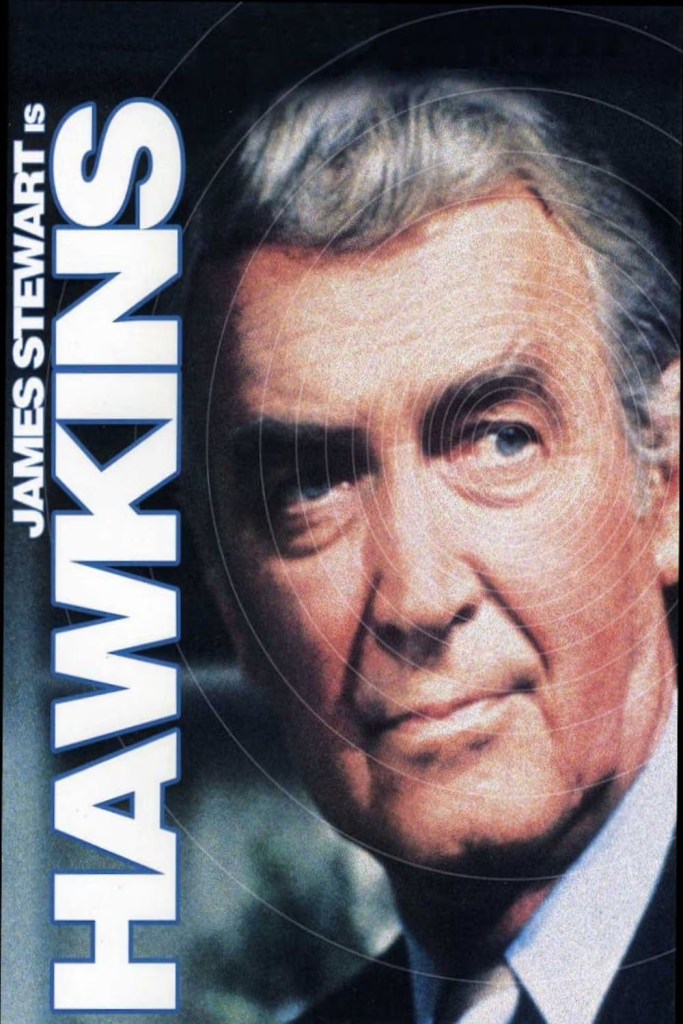
HAWKINS: Death and the Maiden (1973) – starring Jimmy Stewart!


In this pilot episode of the TV-Movie series HAWKINS, Jimmy Stewart plays Billy Jim Hawkins from the fictional town of Beauville, West Virginia, who just happens to be the best defense lawyer in the business. A former prosecutor who changed sides, he has a perfect record for getting his clients off. Billy Jim gets a call to come out to Los Angeles when an heiress, Edith Dayton-Thomas (Bonnie Bedelia), is charged with the murder of her dad, stepmom, and stepdaughter. Billy Jim and his team, which is basically just his cousin R.J. Hawkins (Strother Martin), set about getting to know all the people in her life. There’s the family lawyer Carl Vincent (Robert Webber) who’s been dipping his hand in the family till while also carrying on an affair, much to the chagrin of his wife Vivian (Antoinette Bower). There’s Edith’s aunt Julia (Kate Reid), who doesn’t seem to have a very strong opinion of her now deceased brother in law and was seen arguing with him on the day of his murder. And there’s Edith herself, whose diary would indicate that she hated her dad and her stepmom so much that she wanted them dead. She also just happens to have the reputation for being a little strange and / or crazy. The evidence seems to be stacked against Edith, but Billy Jim doesn’t get to charge those extremely high legal fees for nothing. If anyone can get to the bottom of the case, it’s him. 

I’ll just go ahead and say that Jimmy Stewart and the character of Billy Jim Hawkins are a match made in heaven. Any person who has seen him in the classic Otto Preminger film ANATOMY OF A MURDER (1959) knows how great he is at playing a down home defense attorney. He excels in the role, and he’s reason alone to invest in the DVD collection from Warner Brothers Archive like I did several years back. It’s so fun watching him question people in his easy going, slow talking, country boy way which almost always leads to the discovery of exactly what he needs to know. And Strother Martin is perfect as his cousin and associate, one of 174 first cousins, according to Billy Jim himself. You see, one of the interesting things about Billy Jim’s family is that he’s one of 14 kids, with 52 nieces and nephews to go along with all those first cousins. That’s some fun character history for a guy like me, whose mom is one of 15 kids, and I also have tons of first cousins. Stewart and Martin are a perfect duo, and their sharing of different theories as the episodes progress make up some of the best scenes. Add to Stewart and Martin a solid group of guest stars in this episode including Bonnie Bedelia (DIE HARD), Robert Webber (THE DIRTY DOZEN), Kate Reid (THIS PROPERTY IS CONDEMNED), and Antoinette Bower (THE EVIL THAT MEN DO), and you can’t help but have an entertaining show. There’s never any doubt that Stewart is going to uncover the murderer, but the fun of course is in seeing how he puts all the clues together. 

HAWKINS: Death and the Maiden is the first of eight “Hawkins” TV movies starring Jimmy Stewart in 1973 and 1974. The character of Billy Jim Hawkins is a clear pre-cursor to the character of Matlock that Andy Griffith would have so much success with a little over a decade later. In a strange move at the time, CBS chose to alternate HAWKINS on Tuesday nights with a series of SHAFT TV movies. Imagine wanting to watch SHAFT only to turn on your TV to discover Jimmy Stewart and Strother Martin solving murder mysteries, or Vice-Versa. Conventional wisdom suggests that this release strategy was probably confusing to the respective audiences for the shows based on their vastly different demographics. I personally think they both sound awesome, but I can see how pairing such different shows in this way could have been a problem for the ratings. Regardless of its short lived tenure, if you’re a fan of Jimmy Stewart, you need to watch HAWKINS. Each episode is a joy to behold. 

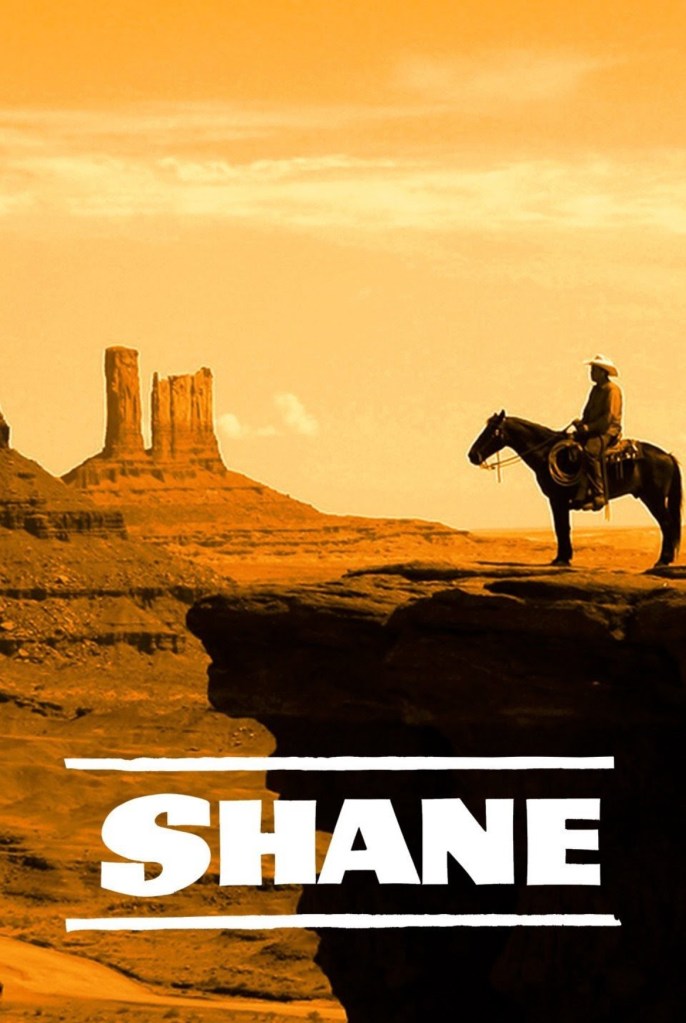
SHANE (The TV Series) – Episode 7: Day of the Hawk (originally aired October 22nd, 1966)


Episode 7 begins with two drunk cowboys, who work for Rufe Ryker (Bert Freed), raising cane and deciding they’ll go harass some sodbusters just for the hell of it. On this day, they ride over to Ira Jackson’s (Jason Wingreen) ranch, where Marian Starett (Jill Ireland) is there visiting Ira’s daughter Elizabeth (Catherine Ferrar). As the cowboys ride around the house, hooping and hollering and shooting off their guns, a frustrated Ira opens the door and fires a blast from his shotgun. The cowboys shoot back toward the house, hitting a kerosene lamp in the kitchen and starting a fire. Ira gets the ladies out of the house and then commences to fighting with the cowboys, who now realize what they’ve done and are wanting to help put out the fire. While the men and Marian are distracted with the fight, Elizabeth runs back into the house to try to save her calico cat, where she is engulfed by the flames and dies. 

We move on to Elizabeth’s funeral and see Shane (David Carradine) ride up with Reverend Harry Himber (James Whitmore). Rufe Ryker is there and he tells Shane and the Reverend that he’s sorry about what happened, that he had nothing to do with it, and that he doesn’t want any trouble. Shane isn’t in much mood to listen to Ryker so he moves on. Reverend Himber, who we will come to find out is a pacifist, begins the service by saying that Elizabeth would want everyone there to remember the good times they had together with her, as well as look inward to find forgiveness and understanding. Hellbent on revenge, Ira just screams “No!”

That night, after chewing his two cowhands out, Ryker decides he’s going to pay them two months wages and send them out of town. He would rather lose a couple of good cowboys as fight a war with Ira. As one of the men, the young Hoke (Dee Pollock), is on his way out of town, Ira shoots him down from the hillside with his rifle. The remainder of the episode consists of Shane and Tom Starett (Tom Tully) trying to protect Ira and the other local farmers from the wrath of Ryker and his men, while Reverend Himber tries to get everyone to talk it out to avoid more killings in the valley. 

In episode 7, the character of Rufe Ryker takes center stage, along with Shane and the visiting Reverend Himber, played here by guest star James Whitmore in an incredible performance. This is probably the deepest episode we’ve dealt with thus far, with each character showing some level of moral complexity. Neither Shane or Ryker want a fight, but they both prepare to get bloody for different reasons. Ryker makes it clear that he will protect his men and fight for them even when they’re wrong. Shane makes it clear that he will fight for the sodbusters against powerful men like Ryker even when he thinks they’re wrong. And then there’s Reverend Himber, the pacifist who is willing to do whatever it takes to stop a fight. During the episode we find out that he had been forced to kill six enemy soldiers when they raided the hospital he was working at during the war. This episode drives home the fact that a man’s ideals will at times contrast harshly with the realities of the positions they find themselves in. Each of these three men finds himself in a situation that has grown bigger than him, with both Ryker and Shane recognizing the deal and preparing for the worst. Reverend Himber, on the other hand, tries to take control of the situation, only to be the catalyst for more tragedy. We have all been in situations where we hope for the best, but we’re smart enough to prepare for the worst, because some of the biggest fools alive are the ones who think they can control other people. 

Overall, the “Day of the Hawk” is a strong episode that has a surprisingly powerful and emotional conclusion. The storyline belongs to Shane, Ryker and the Reverend, so Shane’s relationship with Marian takes a back seat this time around. I don’t think they look at each other longingly a single time, which did make me a little sad. Here’s hoping they’ll double that up in Episode 8! 

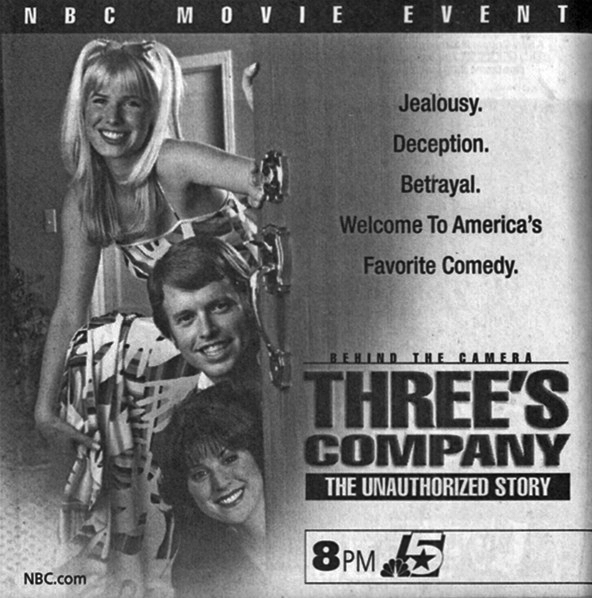
Behind the Camera: The Unauthorized Story of Three’s Company (2003, directed by Jason Ensler)


Do you remember Three’s Company?

The sitcom was a big hit when it aired in the 70s and 80s and it still gets a lot of play in syndication today.  Based on a British sitcom (and you would really be surprised to how closely the first season followed the original series), Three’s Company starred John Ritter as Jack Tripper, an aspiring chef who moved in with two single women, Janet (Joyce DeWitt) and Chrissy (Suzanne Somers).  Because their impotent landlord (Norman Fell) didn’t want people of the opposite sex living with each other unless they were married, Jack pretended to be gay.  Every episode centered around a misunderstanding, though it was Suzanne Somers’s performance as the perpetually bouncy and braless Chrissy Snow that made the show a hit.  The show fell apart when Somers asked for more money, Ritter and DeWitt got angry with her, and the studio bosses lied to everyone.  Today, the show is legendary as an example of how backstage tension can end even a popular series.

Behind The Camera: The Unauthorized Story of Three’s Company attempts to dramatize the success and eventual downfall of Three’s Company.  Joyce DeWitt appears at the beginning and the end to talk about how important she thinks the show was.  In the movie, she is played by Melanie Paxson.  John Ritter is played by a lookalike actor named Bret Anthony while an actress named Jud Taylor plays Somers.  Brian Dennehy plays ABC president Fred Silverman and other executives are played by Daniel Roebuck, Wallace Langham, Gary Hudson, and Christopher Shyer.  The movie recreates all of the drama that went on during Three’s Company without offering much insight or really anything new to the story.  Even though the movie was co-produced and hosted by Joyce DeWitt, Suzanne Somers is really the only sympathetic character in the movie.  DeWitt comes across as being jealous while Anthony plays John Ritter as being a bland nonentity who chooses his own success over being honest with his costars.  The network executives are more interesting, just because watching them provides a glimpse into how real producers and showrunners picture themselves.  They just wanted to make a good show about a sex addict pretending to be gay so he could live with two attractive, single women but the agents and the network presidents just keep getting in the way!  Won’t someone please think of the mid-level network executives?

Bland though this recreation was, it was enough of a rating hits that NBC went on to produce several more Behind The Camera films.  Three’s Company was only the beginning.

Retro Television Reviews: Suddenly Single (dir by Jud Taylor)


Welcome to Retro Television Reviews, a feature where we review some of our favorite and least favorite shows of the past!  On Sundays, I will be reviewing the made-for-television movies that used to be a primetime mainstay.  Today’s film is 1971’s Suddenly Single!  It  can be viewed on YouTube.
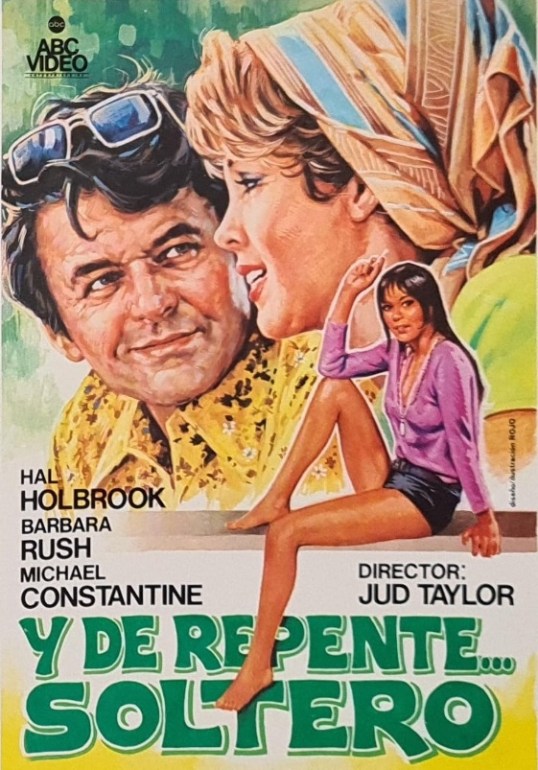
Suddenly Single opens with middle-aged Larry Hackett (Hal Holbrook) loading his suitcases into the back of his car.  His neighbors (David Huddleston and Pamela Rodgers) come over to say goodbye.  Larry has just gotten divorced and, as a result, he’s lost his perfect house in the suburbs.  Now, he’s going to have to move into the city and start a new life but he assures his neighbors that he’ll be okay and that there aren’t any hard feelings between him and his ex, Joanne (Cloris Leachman).  Sometimes, marriages just don’t work out….

Then Joanne shows up….

With her new husband, Ted (Fred Bier)!

While Larry can only watch, Ted insists on picking up Joanne and carrying her over the threshold of what used to be Larry’s house.  As it dawns on him that Joanne was having an affair during the final days of their marriage, Larry is understandably miffed.

Larry just isn’t ready to find himself in the world of the early 70s.  He’s an extremely conservative pharmacist who will now have to deal with hippies and the single scene.  His co-worker (Harvey Korman) encourages Larry to hit the bars.  Marlene (Agnes Moorehead) encourages him to figure out what he wants to do with his life.  His new and much younger neighbor, Jackie (Margot Kidder), tells him that he needs to get a gym membership and be more open-minded.  At first, Larry pursues a relationship with the classy Evelyn Baxter (Barbara Rush) but then he’s drawn to Jackie.  And Jackie, oddly enough, is drawn to him….

Quicker than you can say Breezy, Larry is dating the much younger Jackie and he’s starting to wear hip clothes and hang out with cool, long-haired people.  When he runs into his old neighbors on the street, he discovers that he no longer has much in common with them.  However, Larry still finds himself becoming jealous and possessive of Jackie, who is not the type of to give up her freedom for a relationship.  In the end, Larry is forced to admit that, while he has become more open-minded following his divorce, he still can’t magically change who he is.

Suddenly Single has a great cast and it’s not surprising that it’s a well-acted film.  At the same time, Larry can be a bit of a jerk.  Evelyn is the nicest person in the entire movie and Larry basically breaks her heart so that he can pursue an obviously doomed relationship with the younger Jackie.  It’s a bit sad to watch because everyone but Larry can see what he’s doing.  Larry may be wiser by the end of the film but that’s small solace to Evelyn.  Suddenly Single is about flawed characters and, as such, it can be easy to get annoyed with Larry and Jackie while also appreciating the fact that, like all of us, they’re just trying to figure out life as they go along.

Suddenly Single acts as a bit of time capsule and watching it is as probably as close as one can get to 1971 without a time machine.  It’s a trip to the past with some of the best actors of the era.
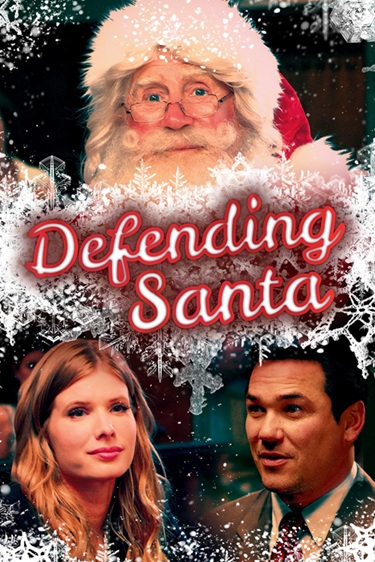
October True Crime: Out of the Darkness (dir by Jud Taylor)


The 1985 film, Out of the Darkness, takes place in New York City.

It begins in 1977 and it ends in 1978.  As the opening title card informs us, it’s a film about a city that was living in fear of the gunman known as the Son of Sam.  One of the first images that we see is an a handgun being fired at two people who are making out inside of a car.  We then cut to a police station where a homicide detective (played by Sam McMurray) reads aloud the letter that the Son of Sam sent to Jimmy Breslin.

That said, David Berkowitz, the killer who claimed that he was told to murder by a dog before later changing his story and claiming that he was a part of a Satanic conspiracy, spends most of the film in the shadows.  His name isn’t even mentioned until the film’s final third.  Instead, the majority of the film focuses on Ed Zigo (Martin Sheen), a New York City detective who tries to balance his desire to catch the Son of Sam with taking care of his wife (Jennifer Salt), who is due to have surgery for her heart condition.  Ed Zigo is dedicated and intelligent New York cop, the type who has no problem walking into a Mafia-controlled bar and asking the owner if his son has any connections to the family business.  He’s also a dedicated family man who freaks out when his daughter goes out on a date.  When his wife dies after surgery, Ed Zigo deals with his grief by throwing himself into his work but, as he tells his priest (Hector Elizondo), he no longer has his old confidence.  He fears that he’s going to make a mistake that’s either going to put his partner (Matt Clark) in harm’s way or allow the Son of Sam to continue to killing.

And really, it’s not a problem that the film focuses less on the killer and more on the people trying to track him down.  Martin Sheen gives a strong and sincere performance as the dedicated Ed Zigo, perfectly capturing not only his dedication but also his fear and his weariness.  (In many ways, his performance here feels like a forerunner to his performance in The Departed.)  The film captures the feel of living in a city where no one trusts anyone and it is also a good example of a “New Yorkers will be rude to anyone” film.  Even with a killer running around, no one wants to listen to a word the police have to say.  When David Berkowitz does show up, he’s played by an actor named Robert Trebor who gives an appropriately creepy performance.

Interestingly enough, Joe Spinell also appears in Out of the Darkness, playing the small but important role of an early Son of Sam suspect.  Though he only appears in two scenes, Spinell makes a memorably seedy impression.  Of course, today, Spinell is remembered for playing a character based on the Son of Sam in the infamous 1980 grindhouse shocker, Maniac.

(Trivia fans will also want to note that Charlie Sheen has a wordless cameo as a man who shuts his apartment door in the face of Martin Sheen and Matt Clark when they attempt to ask him if he witnessed the latest murder.  “Nice guy,” Martin says, in response.)

If you’re looking for a film in which Berkowitz is cursed out by a dog, Summer of Sam is probably the one to go for.  However, if you’re looking for a more low-key but realistic portrayal of Berkowitz’s reign of terror, Out of the Darkness is a good one to go with.

The Disappearance of Flight 412 (1974, directed by Jud Taylor)


Because of recent electrical surges aboard its aircrafts, the commander of the Whitney Air Force Base 458th Radar Test Group sends a four-man crew up in Flight 412 to try to figure out what’s happening.  Colonel Pete Moore (Glenn Ford) and Major Mike Dunning (Bradford DIllman) assume that it will just be a routine flight.  Instead, they find themselves at the center of a government cover-up when Captain Bishop (David Soul) and the other members of the crew spot what appears to be a UFO.  When two jets are sent out to intercept the object, the jets vanish.

Suddenly, Flight 412 is ordered to land at a seemingly deserted military base in the desert.  When they do, the airplane is impounded and the crew is forced to undergo an 18-hour debriefing led by government agents.  The agents demand that the crew members sign a statement saying that they didn’t see anything strange in the air before the jets vanished.  Until all four of the men sign the release, the crew of Flight 412 are officially considered to be missing and will not be released until they agree to deny what they saw.

Meanwhile, Col. Moore tries to learn what happened to his men but the government, led by Col. Trottman (Guy Stockwell), is not eager to tell him.

This movie was made-for-television, at a time when people claiming to have been abducted by aliens was still a relatively new phenomenon.  It was also made during the Watergate hearing and in the wake of the release of the Pentagon Papers, so the film’s sinister government conspiracy probably felt relevant to viewers in a way that it wouldn’t have just a few years earlier.  I appreciated that the movie took a semi-documentary approach to the story but that it tried to be serious and even-handed.  The film shows how witnesses can be fooled or coerced into saying that they saw the opposite of what they actually did see.  Unfortunately, The Disappearance of Fight 412 is ultimately done in by its own cheapness.  The overreliance on familiar stock footage doesn’t help the film’s credibility and there’s too many familiar faces in the cast for the audience to forget that they’re just watching a TV movie.  The Disappearance of Flight 412 doesn’t really succeed but it is still interesting as an early attempt to make a serious film about the possibility of alien abduction and the government covering up the existence of UFOs..  Three years after this film first aired, Steven Spielberg would introduce these ideas to an even bigger audience with Close Encounters of The Third Kind.

Griffith Gets Serious: Winter Kill (1974, directed by Jud Taylor)


Eagle Lake, a mountain resort town in California, has a problem.  It’s almost tourist season and there is a sniper stalking through the night, using his rifle to pick off citizens and painting messages like “The First” and “The Second” in the snow.  It’s up to police chief Sam McNeill (Andy Griffith) to figure out the killer’s motives and capture him before the vacation season begins!  To catch the killer, McNeill is going to have to investigate his friends and neighbors, all of whom have secrets that they don’t want to have revealed.

1974 was a busy year for Andy Griffith.  Best-known for playing the folksy and reassuring Sheriff Taylor for over ten years on The Andy Griffith Show, Griffith tried to change his image by appearing in three unexpectedly dark made-to-TV movies.  In Pray For The Wildcats and Savages, Griffith played the villain.  In Winter Kill, he’s back in a more familiar role.  He is once again playing a lawman, though this one carries a gun and doesn’t have time to sit on his porch and play the guitar while Aunt Bea makes dinner.  Instead, he’s getting pressure from all sides to capture a psycho sniper who, at the start of the movie, shoots an old woman after throwing pebbles at her bedroom window.  Eventually, the sniper even ends up kidnapping Chief McNeill’s girlfriend!  This never happened in Mayberry!

Winter Kill is a pretty good mystery.  It’s not strictly a horror film but the sight of the masked sniper, making his way through the night and coldy gunning down unsuspecting victims is scary enough that it might as well be.  Andy Griffith was surprisingly tough and gritty as Chief McNeill.  He might be a good guy in this movie but you still know better than to mess with him.  The rest of the cast is made up of television regulars but keep an eye out for a youngish Nick Notle playing a cocky ski instructor.

Winter Kill was actually meant to be a backdoor pilot for a show where Chief McNeill would battle crime on a weekly basis.  Though that didn’t happen, the concept was later retooled and became a short-lived series called Adams of Eagle Lake.