Lisa Watches An Oscar Nominee: A Few Good Men (dir by Rob Reiner)


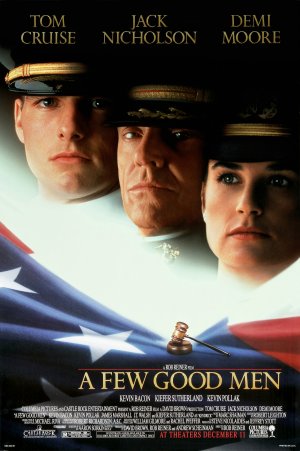
A_Few_Good_Men_poster

So, late Saturday night, I turned over to TCM’s 31 Days Of Oscar and I was watching the 1992 best picture nominee, A Few Good Men, and I noticed that not only was there only one woman in the entire film but she was also portrayed as being humorless and overwhelmed.  While all of the male characters were allowed to speak in quippy one liners and all had at least one memorable personality trait, Lt. Commander Joanne Galloway (Demi Moore) didn’t get to do much beyond frown and struggle to keep up.

“Hmmmm…” I wondered, “why is it that the only woman in the film is portrayed as basically being a humorless scold?”  Then I remembered that A Few Good Men was written by Aaron Sorkin and it all made sense.  As I’ve discussed on this site before, Aaron Sorkin has no idea how to write woman and that’s certainly evident in A Few Good Men.  Joanne (who goes by the masculine Jo) is the one character who doesn’t get to say anything funny or wise.  Instead, she mostly serves to repeat platitudes and to be ridiculed (both subtly and not-so subtly) by her male colleagues.  You can tell that Sorkin was so busy patting himself on the back for making Jo into a professional that he never actually got around to actually giving her any personality.  As a result, there’s really not much for her to do, other than occasionally scowling and giving Tom Cruise a “that’s not funny” look.

(“C’mon,” Tom says at one point, “that one was pretty good.”  You tell her, Aaron Tom.)

A Few Good Men, of course, is the film where Tom Cruise yells, “I want the truth!” and then Jack Nicholson yells back, “You can’t handle the truth!”  At that point in the film, I was totally on Nicholson’s side and I was kinda hoping that the scene would conclude with Cruise staring down at the floor, struggling to find the perfect come back.  However, this is an Aaron Sorkin script which means that the big bad military guy is never going to have a legitimate point and that the film’s hero is always going to have the perfect comeback.  Fortunately, the scene took place in a courtroom so there was a wise judge present and he was able to let us know that, even if he seemed to be making the better point, Nicholson was still in the wrong.

As for the rest of the film, it’s a courtroom drama.  At Guantanamo Bay, a marine (Michael DeLorenzo) has died as the result of a hazing.  Two other marines (Wolfgang Bodison and James Marshall) have been accused of the murder.  Daniel Kafee (Tom Cruise), Joanne Galloyway (Demi Moore), and Sam Weinberg (Kevin Pollack) have been assigned to defend them.  Jack Ross (Kevin Bacon) is prosecuting them.  Kafee thinks that the hazing was ordered by Col. Nathan Jessup (Jack Nicholson) and Lt. Kendrick (Kiefer Sutherland).

We know that Kendrick’s a bad guy because he speaks in a Southern accent and is religious, which is pretty much the mark of the devil in an Aaron Sorkin script.  We know that Jessup is evil because he’s played by Jack Nicholson.  For that matter, we also know that Kafee is cocky, arrogant, and has father issues.  Why?  Because he’s played by Tom Cruise, of course.  And, while we’re at it, we know that Sam is going to be full of common sense wisdom because he’s played by Kevin Pollack…

What I’m saying here is that there’s absolutely nothing surprising about A Few Good Men.  It may pretend to be about big issues of national security but, ultimately, it’s a very slick and somewhat hollow Hollywood production.  This, after all, is a Rob Reiner film and that, above all else, means that it’s going to be a very conventional and very calculated crowd pleaser.

Which isn’t to say that A Few Good Men wasn’t enjoyable.  I love courtroom dramas and, with the exception of Demi Moore, all of the actors do a good job.  (And, in Demi’s defense, it’s not as if she had much to work with.  It’s not her fault that Sorkin hates women.)  A Few Good Men is entertaining without being particularly memorable.
Shattered Politics #62: Bulworth (dir by Warren Beatty)


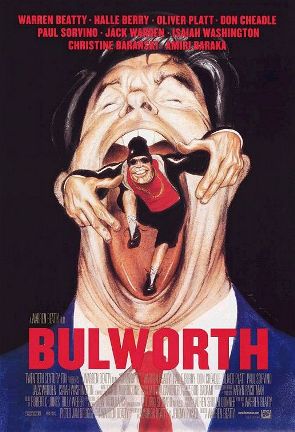
BulworthSo, if you’ve ever wondered what happened to Robert Redford’s Bill McKay after he was elected to the U.S. Senate at the end of The Candidate, I imagine that he probably ended up becoming something like the protagonist of 1998’s Bulworth, U.S. Sen. Jay Bulworth.

As played by Warren Beatty, Bulworth is a veteran senator.  A former liberal firebrand, he may still decorate his office with pictures of him meeting Bobby Kennedy and Martin Luther King but Bulworth sold out a long time ago.  Now, he just says whatever has to say in order to get elected, including pretending to have a happy marriage. He has become a part of everything that’s wrong with Washington.

Sick of both politics and life in general, Bulworth decides that he’d rather be dead.  But, in order to make sure that his daughter collects on his $10,000,000 life insurance policy, Bulworth cannot commit suicide.  Instead, he arranges for a contract to be taken out on his life.  In two days, Bulworth will be assassinated.

Returning to California for his campaign, Bulworth gets drunk and suddenly starts to say what he actually believes.  He attacks the Washington establishment.  He attacks the voters.  He attacks the insurance companies and comes out for single payer health insurance.  With his desperate press secretary (Oliver Platt) chasing behind him, Bulworth spends the night dancing at a club where he discovers marijuana and meets a girl named Nina (Halle Berry).

(Platt, meanwhile, discovers that he really, really likes cocaine.)

Soon, Nina and Bulworth are hiding out in the ghetto, where Bulworth meets both Nina’s brother (Isiah Washington) and local drug dealer, L.D. (Don Cheadle), and gets a lesson about how economics actually work in the ghetto.  Soon, Bulworth is appearing on CNN where he raps his new political platform and suggests that the solutions for all of America’s problems would be for everyone to just keep having sex until eventually everyone is the same color.

Of course, what Bulworth doesn’t know is that Nina also happens to be the assassin who has been contracted to kill him…

I have mixed feelings about Bulworth.  On the one hand, the film starts out strong.  You don’t have to agree with the film’s politics in order to appreciate the film’s passion,  Bulworth is an angry film and one that’s willing to say some potentially unpopular things.  It’s a film about politics that doesn’t resort to the easy solutions that were proposed by some of the other films that I’ve reviewed for Shattered Politics.  Warren Beatty does a pretty good job of portraying Bulworth’s initial mental breakdown and Oliver Platt is a manic wonder as he consumes more and more cocaine.

But, once Warren Beatty starts rapping, the film starts to fall apart and becomes a bit too cartoonish for its own good.  You get the feeling that Warren Beatty, at this point, is just trying to live out the liberal fantasy of being the only wealthy white man in America to understand what it’s like to be poor and black in America.

Bulworth starts out well but ultimately, it begins better than it ends.

http://www.youtube.com/watch?v=-0SgQKpWGD4

Shattered Politics #56: The American President (dir by Rob Reiner)


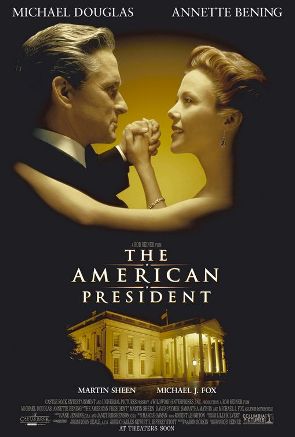
The_American_President_(movie_poster)

Way back in October, around the same time that I first decided that I would do a series of reviews of political films and that I would call it Lisa Gets Preachy (subsequently changed to Shattered Politics), I noticed that the 1995 film The American President was scheduled to be shown on TVLand.

“Hey,” I said, “I’ve definitely got to watch and review that!”

So, I set the DVR and I recorded The American President.

And then, I just left it there.

You have to understand that it’s rare that I ever leave anything unwatched on my DVR.  Usually, within an hour of recording a program, I’ll be watching it.  I have even been known to go so far as to make out very long lists of everything that I have on the DVR, just so I can make check them off after I’ve watched.  As a general rule, I am way too obsessive compulsive to just leave anything sitting around.

But, for whatever reason, I could never work up any enthusiasm for the prospect of actually watching The American President.  I knew that, eventually, I would have to watch it so that I could review it.  Unlike those folks criticizing American Sniper on the basis of the film’s trailer, I never criticize or praise a film unless I’ve actually watched it.  But  I just couldn’t get excited about The American President.

Can you guess why?  I’ll give you a hint.  It’s two words.  The first starts with A.  The second starts with S.

If you guessed Aaron Sorkin, then you are correct!  Yes, I do know that Sorkin has a lot of admirers.  And, even more importantly, I know that it’s dangerous to cross some of those admirers.  (I can still remember Ryan Adams and Sasha Stone insanely blocking anyone who dared to criticize the underwritten female characters in Sorkin’s script for The Social Network.)

But what can I say?  As a writer, Aaron Sorkin bothers me.  And since Sorkin is such an overpraised and powerful voice, he’s that rare scriptwriter who can actually claim auteur status.  The Social Network, for instance, was not a David Fincher film.  It was an Aaron Sorkin film, through and through.

And, after having to deal with three seasons of the Newroom and countless Aaron Sorkin-penned op-eds about why nobody should be allowed to criticize Aaron Sorkin, I’ve reached the point where dealing with all of Aaron Sorkin’s signature quirks is a bit like listening to the drill while strapped into a dentist’s chair.  I am weary of pompous and egotistical male heroes who answer every question with a sermon.  I am tired to endless scenes of male bonding.  I have had enough with the quippy, quickly-delivered dialogue, all recited as characters walk down an endless hallways.  I have no more sympathy for Sorkin’s nostalgic idealism or his condescending, rich, white dude version of liberalism.

Most of all, I’m sick of people making excuses for an acclaimed, award-winning, highly-paid screenwriter who is apparently incapable of writing strong female characters.  I’m tired of pretending that it doesn’t matter that Aaron Sorkin is apparently incapable of viewing female characters as being anything other than potential love interests or silly distractions who need to be told to go stand in a corner while the menfolk solve all the problems of the world.

Fortunately, as a result of The Newsroom, quite a few critics are finally starting to admit what they always knew to be the truth.  Aaron Sorkin is not the messiah.  Instead, he’s a somewhat talented writer who doesn’t understand (or, in my opinion, particularly like) women.  At his best, he’s occasionally entertaining.  At his worst, he’s pompous, didactic, and preachy.

And, of course, Aaron Sorkin is the man who wrote The American President.

So, The American President just sat there until a few days ago when I sighed to myself and said, “Okay, let’s watch this thing.”  As I watched it, I promised myself that I would try to see past the fact that it was an Aaron Sorkin-penned film and just try to judge the film on its merits.

But here’s the thing.  It’s nearly impossible to separate one’s opinion of Sorkin from The American President.  If you didn’t know that Sorkin had written The American President, you’d guess it after hearing the first few lines of dialogue.  The film, itself, was directed by Rob Reiner but it’s not as if Reiner is the most interesting of directors.  (What’s odd is that Reiner’s first films — This Is Spinal Tap, The Princess Bride, Stand By Me — are all so quirky and interesting and are still so watchable decades after first being released that you have to wonder how Reiner eventually became the man who directed The Bucket List.)  In short, The American President is totally an Aaron Sorkin film.

President Andrew Shepherd (Michael Douglas) is a liberal Democrat who, as he prepares to run for a second term, has a 63% approval rating.  However, when Shepherd decides to push through a gun control bill, he finds that approval rating threatened.  And then, when he listens to environmental lobbyist Sydney Wade (Annette Bening) and tries to push through legislation to reduce carbon emissions, his approval rating is again threatened.  And then, to top it all off, he starts dating Sydney.  It turns out that Sydney has protested American policy in the past.  And, since this is an Aaron Sorkin film, everyone outside of the Northeast is scandalized that President Shepherd is having premarital sex in the White House.

And, to top it all off, there’s an evil Republican named Bob Rumson (Richard Dreyfuss) who wants to be President and is willing to use the President’s relationship with Sydney to further his own evil Republican ambitions.

But, ultimately, it’s not just those evil Republicans who make it difficult for Sydney and the President to have a relationship.  It’s also the fact that the President agrees to a watered down crime bill and that he does not hold up his end of the bargain when it comes to reducing carbon emissions.

“You’ve lost my vote!” Sydney tells him.

But — fear not!  There’s still time for President Shepherd to give a speech that will be so good and so brilliant that it will, within a matter of minutes, totally change every aspect of American culture and save the day.  How do we know it’s a great speech?  Because it was written by Aaron Sorkin!

Actually, I’m being too hard on the film and I’ll be the first admit that it’s because I’m personally not a huge fan of Aaron Sorkin’s.  But, to be honest, The American President is Aaron Sorkin-lite.  This film was written before the West Wing, before the Social Network, before that Studio Whatever show, and before The Newsroom.  In short, it was written before he became THE Aaron Sorkin and, as such, it’s actually a lot less preachy than some of his other work.  It’s true that, much like The Newsroom, The American President is definitely Sorkin’s fantasy of how things should work but at least you don’t have to deal with Jeff Daniels throwing stuff or Emily Mortimer not knowing how to properly forward an email.

Instead, it’s a film that will probably be enjoyed by those who share its politics.  (And, make no mistake, The American President is more interested in politics than it is in the love story between Andrew and Sydney.)  Michael Douglas does well in the role of the President.  Meanwhile, Annette Bening is so likable and natural as Sydney that it almost make up for the fact that she’s yet another Sorkin woman whose existence is largely defined by looking up to her man while inspiring him to do the right thing and forgiving him when he doesn’t.  Personally, I would have been happy if the film had ended with Sydney telling the President, “Thanks for finally doing the right thing but I have a life of my own to lead.”

But that wouldn’t be the Sorkin way.