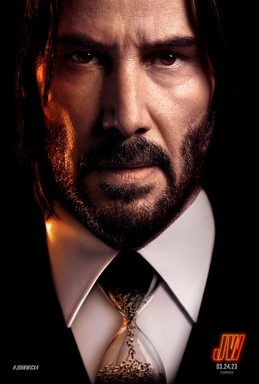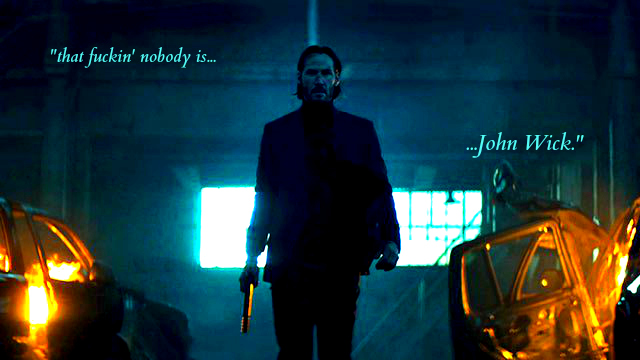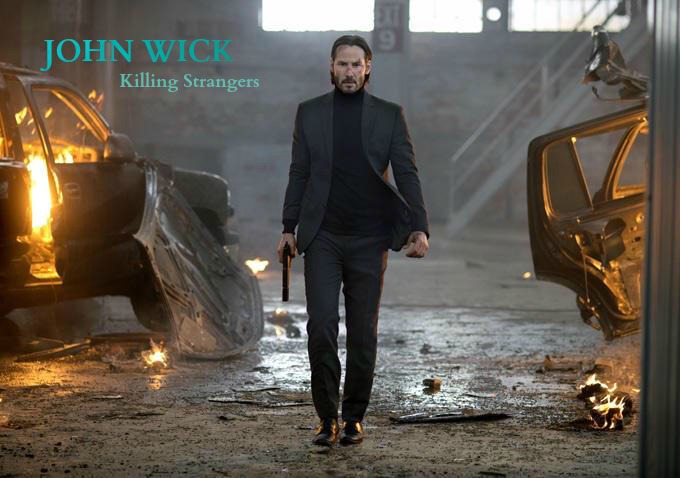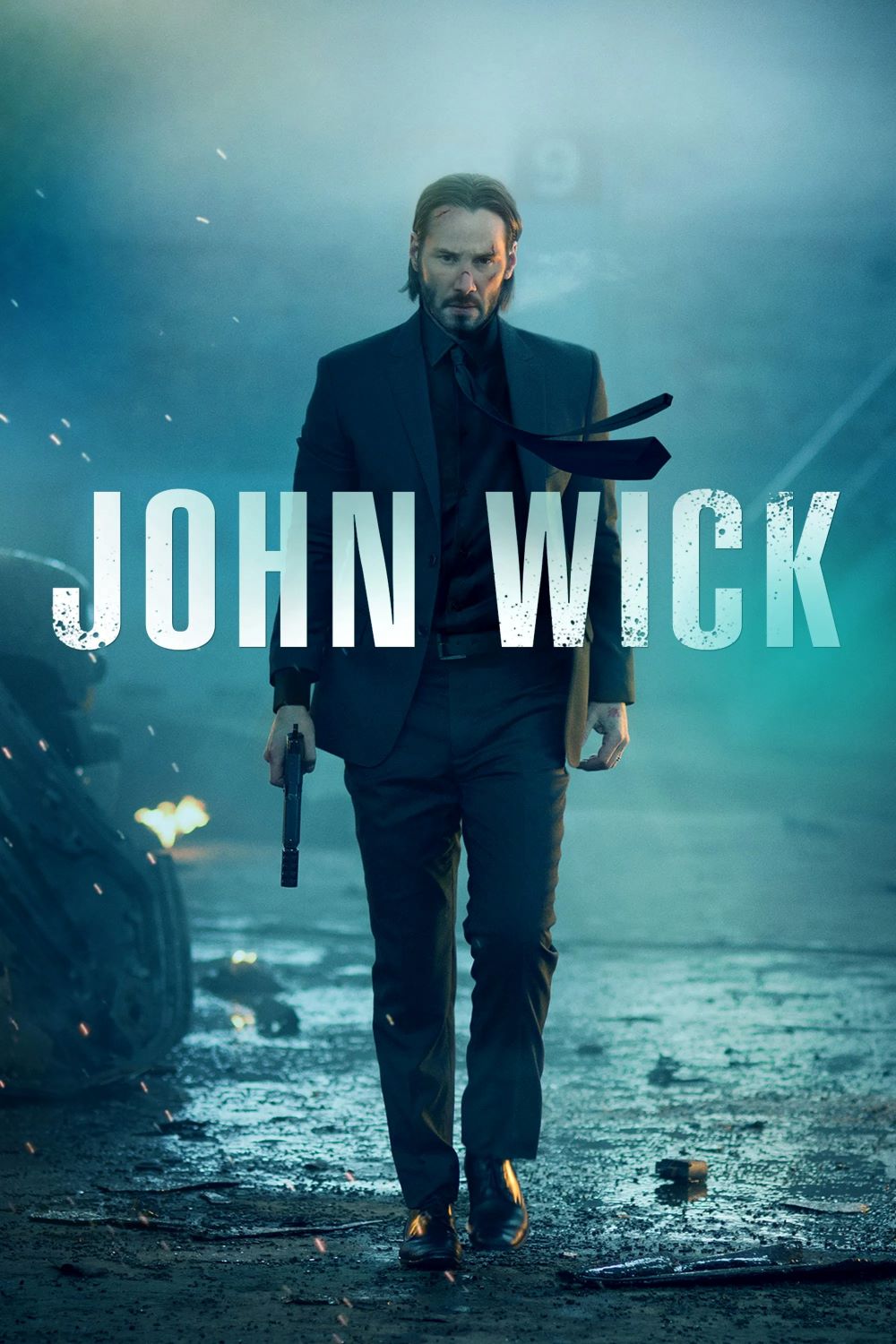
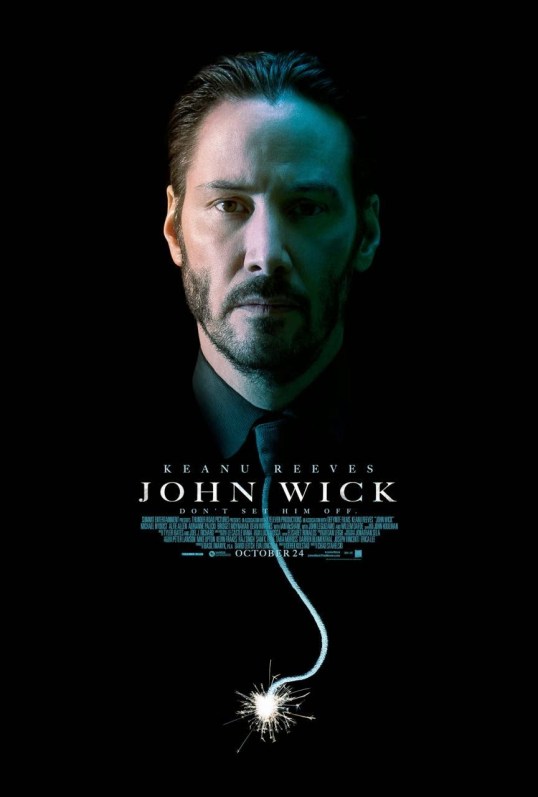
Review: John Wick (dir. by Chad Stahelski)


“John is a man of focus, commitment, sheer will… something you know very little about. I once saw him kill three men in a bar… with a pencil, with a fucking pencil.” — Viggo Tarasov

John Wick kicks off with a simple, gut-punching premise that hooks you right away. Keanu Reeves plays the titular character, a retired hitman trying to leave his bloody past behind after the death of his wife. She leaves him a beagle puppy as a final gift, symbolizing a chance at normalcy, but some punk Russian mobsters steal his prized Mustang and kill the dog, setting off a revenge rampage. It’s a revenge story done right—straightforward, no frills, and fueled by raw emotion rather than convoluted twists. Directed by Chad Stahelski and David Leitch, who share a stunt background, the film feels like a love letter to classic action flicks from the ’80s and ’90s, but with a modern polish.

What sets John Wick apart from the glut of forgettable action movies is its relentless focus on craftsmanship. The action sequences are balletic and brutal, blending gun-fu—a mix of precise gunplay and martial arts—with practical stunts that avoid overreliance on CGI. This gun-fu draws directly from the Center Axis Relock (CAR) system, a real-world self-defense close-combat technique where the pistol is held close to the chest at a forward cant for better retention and control in tight quarters. Reeves, at 50 when the film was made, moves like a man possessed, his long-limbed frame perfect for the choreography. Watch the nightclub shootout: bodies drop in waves as Wick reloads with one hand while pistol-whipping foes with the other, all grounded in CAR’s principles that have since become a staple in action films. It’s exhilarating, almost musical in rhythm, thanks to a thumping soundtrack featuring artists like Aloe Blacc and Kaiser Chiefs that amps up the tension without overpowering the visuals.

Keanu Reeves carries the film on his stoic shoulders, and it’s one of his best turns since The Matrix. John Wick isn’t a chatterbox; he’s all simmering grief and quiet menace, his thousand-yard stare conveying depths of loss that words don’t touch. That opening montage of him and his wife—tender beach walks, her terminal illness—hits hard because it’s so understated. Reeves sells the puppy’s death not with histrionics but a single, shattered sob, making his vengeance feel earned. Supporting players elevate the mix too: Michael Nyqvist chews scenery as the mob boss Viggo, Willem Dafoe shines as a sympathetic mentor figure, and Ian McShane adds suave authority as the Continental hotel’s manager. Alfie Allen, pre-Game of Thrones fame, nails the cocky antagonist role without caricature.

The world-building is another standout, introduced efficiently without info-dumps. The Continental Hotel emerges as a neutral ground for assassins, complete with gold coins as currency and strict no-business-on-premises rules—hints at a larger universe that sequels would expand. It’s a clever nod to pulp noir and spy thrillers, giving the violence a code of honor. Stahelski’s visual style, with its neon-drenched nights and stark lighting, evokes The Raid while carving its own path. The Mustang chase is a highlight: tires screech, bullets ping off chrome, and Wick dispatches goons from the driver’s seat with cold efficiency. Production design shines in details like the mobsters’ gaudy mansions contrasting Wick’s minimalist home, underscoring his outsider status.

John Wick isn’t flawless. The plot is paper-thin, essentially “bad guys kill dog, hero slaughters 100 dudes,” with little character depth beyond Wick. Supporting characters get one-note arcs; Viggo monologues about Wick’s legend, but we learn more through reputation than growth. Some viewers find the 101-minute runtime padded by repetitive shootouts—after the first dozen kills, the thrill dips into redundancy for all but the most action-addicted. Women are scarce and sidelined: Wick’s wife appears mostly in flashbacks, and the few female roles are functional at best. It’s a dude-bro fantasy at heart, prioritizing spectacle over substance, which alienates if you’re craving nuance or social commentary.

Pacing stumbles early too. The first act drags with somber setup, mourning the wife and puppy, before exploding into chaos. Once it hits gear, though, it rarely brakes, building to a cathartic finale at Viggo’s compound. Some criticize the violence as gratuitous—headshots galore, blood sprays like a Tarantino wet dream—but it’s stylized, not sadistic, with clear rules (headshots for efficiency) that heighten tension. Compared to contemporaries like Taken, which leaned on gruff one-liners, John Wick opts for silence, letting deeds speak. It’s refreshing, but purists might miss emotional beats amid the bullet casings.

Stylistically, the film borrows heavily yet innovates. Influences from Hong Kong cinema (Hard Boiled, John Woo) shine in the balletic-style of action, while the “gun fu” term coined by critics fits perfectly, elevated by that CAR-inspired hold that’s now echoed in blockbusters everywhere. Cinematographer Jonathan Sela’s work—wide lenses for spatial awareness in fights—makes every room a battlefield, unlike shaky-cam hacks. The music for the film was courtesy of Tyler Bates and Joel L. Richard, pulsing with industrial beats that sync to gunfire like a heartbeat. Budgeted at $20-30 million, it grossed over $86 million worldwide, proving audiences craved this stripped-down revenge tale amid superhero fatigue.

Reeves’ commitment deserves props; he trained rigorously in judo, jiu-jitsu, and firearms, selling every beatdown with authentic CAR posture. Stahelski, his longtime stunt double, directs with intimacy, framing close-quarters brawls to feel visceral. The film’s legacy? It revived Reeves’ career, birthed a franchise (now four films deep, plus spin-offs), and influenced action design industry-wide—expect “John Wick”-style choreography, complete with Center Axis Relock grips, in everything from Netflix shows to indies. Yet its simplicity invites backlash: online threads buzz with “overhyped” takes, arguing it’s style sans soul. Fair point—it’s not Heat‘s operatic depth—but as popcorn entertainment, it delivers uncut adrenaline.

Culturally, John Wick taps male grief mythology: the Baba Yaga legend (Wick as unstoppable boogeyman) mirrors real loss through mythic fury. No preachiness, just catharsis. Drawbacks persist—predictability (you know Wick wins), thin Russian accents straining credulity, and a sequel-bait ending that feels calculated. Still, it revitalized the genre post-Avengers dominance, proving solo heroes endure. For fans of Die Hard or Léon, it’s essential; others might yawn at the body count.

In a landscape of quippy Marvel flicks, John Wick stands tall for earnestness. It doesn’t pretend to be profound, owning its B-movie roots with A-grade execution. Reeves mourns, fights, repeats—rinse with blood. Flaws and all, it’s a blast: taut, stylish, and unapologetic. If action’s your jam, dive in; just don’t expect Shakespeare.

Weapons used by John Wick throughout the film

  • Heckler & Koch P30L: His signature primary pistol (custom compensator), used throughout—from the home invasion to the Red Circle club.
  • Glock 26: Backup compact pistol, pulled out during the bathhouse shootout when ammo runs low.
  • Coharie Arms CA-415: Short-barreled rifle (HK416 clone) for the church assault and parking lot shootout.
  • Kel-Tec KSG: Bullpup shotgun commandeered from goons after church assault and parking lot shootouts.

Scenes That I Love: Keanu Reeves in John Wick


Today, we wish a happy sixty-first birthday to the one and only Keanu Reeves!

Today’s scene that I love comes from the film that made Keanu an icon for a whole generation of moviegoers who had blocked The Matrix sequels from their collective memories, John Wick.  In this scene, Keanu explains that it wasn’t just a dog that he lost.

There’s not a pet owner in the world who doesn’t understand exactly what John Wick is saying here.  And it must be said that Keanu, who has definitely grown a good deal as an actor over the years, really sells the emotions in this scene.

Film Review: From the World of John Wick: Ballerina (dir. by Len Wiseman)


It seems almost inevitable that Ana de Armas would make it into the John Wick franchise. Having worked with Keanu Reeves in multiple films since 2015’s Knock Knock, she has great chemistry with him on camera. De Armas has also proven she can handle action both with 2021’s No Time to Die and 2023’s Ghosted, with the latter also boasting a bit of comedy. From the World of John Wick: Ballerina (or just Ballerina for the sake of this writing) puts Ana in the mix of all the madness as Eve Maccaro. While it doesn’t have the tightest story in the world when compared to the rest of the John Wick saga, Ballerina does hold its own at least as a showcase for the stunt work. If you enjoyed Atomic Blonde or any of the Underworld films, you really won’t have any problems here.

The story for Ballerina takes place during the events of John Wick 3 – Parabellum. As a child, when Eve loses her father to a crew of armed men sporting a brand on their wrists, she is taken in by The Continental’s Winston (Ian McShane). Winston introduces her to the tribe of killers known as the Ruska Roma, lead by The Director (Anjelica Houston), who train her to become like them. Those familiar with the John Wick franchise will recall that the Ruska Roma was John’s tribe before some action caused a split between him and them.

In addition to her pointe practices (which look painful), she’s trained with knives, guns and other tactics. Unlike the assassins that normally frequent The Continental, the Ruska Roma aren’t fully ruthless and can be a force of good. After handling various tests, she discovers a clue leading to the people who killed her father and the man who leads them (ironically played by Point of No Return’s’ Gabriel Byrne, given the film moves in similar circles). Can Eve get her vengeance in the shadow of the legendary Baba Yaga?

While Eve’s story is a still a tale of vengeance as much as Wick’s, there are two distinct differences. As taught by her trainer Nogi (Sharon Duncan Brewster, Dune: Part One), being a girl has some merits and flaws. She might not have the strength to go toe to toe with some of her male opponents (and try telling Ana this, she throws herself deep into the stuntwork), she can move for weakpoints and cheat her way though to victory. “Fight like a girl” becomes the motto. The other difference is that Eve has to work within both the rules of the Ballerinas as well as those the High Table puts on their Hotels. I thought that was an interesting touch to things.

With those stunts, I really would like to know if Ana or any of the stunt team were hurt in any way making this film. Eve goes through a lot and doesn’t have that protective Armani suit of Wick’s. Into walls, over dressers, through glass and even fire, but she keeps getting up and giving that damage right back to her targets. I hope this becomes a contender for the Academy’s new award for stunts. It’s an easy lock for a Nomination.

Casting-wise, you’ll see some familiar faces. Winston and Charon (the late Lance Reddick) are both on hand, as well as stuntman/actor Daniel Bernhardt (The Matrix Reloaded, Nobody, that awesome “ronny/lily’ episode of HBO’s Barry). Some new faces include Norman Reedus (The Walking Dead) and Anne Parillaud (Innocent Blood, La Femme Nikita).

Len Wiseman hasn’t directed a feature film since 2012’s Total Recall, but watching Ballerina you really couldn’t tell. Some of the locales do look like they were borrowed from Wiseman’s Underworld films, but that actually works in Ballerina‘s favor. The film flows well from scene to scene and the action is visible enough that there’s little to miss. There are very few lulls in the action. Though the film was written by both Derek Kolstad and Shay Hatten, who both previously worked on pretty much the entire Wick Franchise along with Nobody, it’s a different flavor to things. You won’t any any major info on the High Table and how all that works, though. This more of a contained story that flutters through the rest of the universe.

I only had one major problem with Ballerina, which was the way in which they chose to cameo Keanu Reeves as John Wick. Unless I’m wrong, I think the story makes a mistake in the John Wick timeline at some point by bringing Wick and Eve face to face (and the trailers already alluded to this). Their meeting appears to occur after Wick’s branding and ex-communication from the Ruska Roma (“You can never come back.”, she told him in John Wick 3), so the events leading up to the meeting didn’t entirely make sense to me (though it was wonderful to watch). It doesn’t mar the film, it’s still enjoyable. It’s just that tiny question that digs in the back of your skull like “If Old Biff gave young Biff the Almanac, and Young Biff changed the future, how did Old Biff exist long enough to return the DeLorean back to a 2015 timeline that shouldn’t exist anymore?” – a question I still ask every now and then.

Overall, Ballerina is a pretty good addition to the John Wick franchise. Ana de Armas gives it her all and deserves all the kudos for that work she puts in. Here’s hoping that we get a bit more of her action (and of that universe) down the road.

Ana de Armas visits the Continental in the Ballerina Trailer!


It seems rather fitting to see Ana de Armas taking the lead in a story within John Wick’s universe. After all, she’s has a knack for action with films like No Time to Die and Ghosted, and she’s worked with Keanu Reeves in both Knock Knock and Exposed. The real question with Ballerina is whether audiences will want to see a John Wick-like film with a female lead. I can already imagine the incel crowd chirping about how John Wick is now tainted with the touch of – (Ick!! Dare I say it….) – Women. That same crowd may also have forgotten about Adrianne Palicki’s assassin in the first film, and Halle Berry’s character with her dogs in the third. Female Assassins are as old at the Kunoichi. Perhaps even far older than that. There are so many tales to be told, especially in this universe.

I’m excited to see how this turns out. With a look that mirrors Le Femme Nikita and Point of No Return, de Armas’ Eve looks to be just as dangerous as her predecessor, possibly as one of the Ballerina assassins referenced in John Wick 3. The trailer has the feel of the other movies, but we’ll have to wait and find out when it releases. Len Wiseman has the directing duties on this one. It’s been a while since he made a movie, but I did enjoy the style of 2012’s Total Recall. Hopefully, he’ll do good here.

The only thing that I find odd is the name – audiences all know it has to do with John Wick. Does it have to have that whole “From the World of John Wick” in the title? I’m pretty sure your average movie viewer will put things together once they see the Continental, Winston (Ian McShane) or Charon (Lance Reddick, in one of his final roles). Also on hand are Norman Reedus (The Bikeriders) and of course, Keanu Reeves, which could just be a cameo.

From the World of John Wick: Ballerina will be in cinemas in 2025.

Scenes That I Love: Keanu Reeves in John Wick


Today, we wish a happy sixtieth birthday to the one and only Keanu Reeves!

Today’s scene that I love comes from the film that made Keanu an icon for a whole generation of moviegoers who had blocked The Matrix sequels from their collective memories, John Wick.  In this scene, Keanu explains that it wasn’t just a dog that he lost.

There’s not a pet owner in the world who doesn’t understand exactly what John Wick is saying here.  And it must be said that Keanu, who has definitely grown a good deal as an actor over the years, really sells the emotions in this scene.

Film Review: John Wick: Chapter Four (dir by Chad Stahelski)


Yesterday, I finally watched the hit film of March 2023, John Wick: Chapter Four.  It left me overwhelmed and I mean that in the best possible way.

The film picks up where the last film left off.  John Wick (Keanu Reeves), the dog-loving, formerly retired professional hit man, is still traveling the world and killing the leaders of the High Table.  As becomes apparent from the start of the film, it’s a bit of a fool’s errand as killing one leader only leads to another leader being installed.  When John travels to Morocco to kill the leader known as “The Elder,” he discovers that the Elder he knew is gone and has been replaced with a new Elder.  He still kills the new Elder because that’s what John Wick does.  He kills people.  He’s a literal killing machine, one who audiences like because he loves dogs, is still mourning for his dead wife, and he’s played by Keanu Reeves.  On paper, the relentless and ruthless character of John Wick is horrifying.  But, when he’s played by Keanu Reeves, he becomes the killing machine that audiences can’t help but love.

The arrogant and brilliantly named Marquis Vincent Bisset de Gramont (Bill Skarsgard, giving a wonderfully hissable performance) is currently in charge of the efforts to track down and kill John.  The Marquis establishes himself as being evil by not only killing Charon (Lance Reddick) but also blowing up the Continental.  Upset by the murder of Charon and the destruction of his business, Winston (Ian McShane, playing his role with the perfect amount of wounded dignity) tells John that he can end his entire war with the High Table by challenging the Marquis to a duel.  Unfortunately, to do that, John has to convince another criminal organization to sponsor him and just about criminal organization on the planet wants John did.  To make things even more difficult, the Marquis has brought the blind assassin, Caine (the incredible Donnie Yen), out of retirement to track down John.  Caine and John are old friends but Caine knows that his daughter will be killed unless he kills John.

Clocking in at 169 minutes, John Wick: Chapter Four is a big, flamboyant, and at times overwhelming production.  John Wick travels across the world and every country in which he finds himself is home to someone who wants him dead.  And since everyone that John Wick knows seems to have a unlimited supply of guards and henchmen, the fights are nonstop and the violence is over the top but the film is so energetic and cheerfully excessive that it’s never boring.  Each fight scene feels like it could be a separate film on its own, with each member of the cast getting a chance to show off what they can do.  The water-filled fight in a Berlin night club is the film’s best moment but it’s closely followed by an extended combat sequence that’s set in a hotel in Japan.  With its vivid cinematography and ornate production design and its spectacular stunts, John Wick Chapter 4 is a work of pure cinema, an thrill ride of glorious excess.  Along with providing an ending to John Wick’s story, it also pays tribute to everything that audiences love about action cinema.  It’s a film for people who love action and, even more importantly, it’s film that has as much love for its audience as it does for itself.

The film ends on a note of apparent finality, one that becomes more ambiguous the more that one examines it.  This may be the last chapter of John Wick’s story or it may not.  (Considering the film’s box office and critical success, I suspect that it will not be the last.)  John Wick Chapter Four serves as a fitting (if perhaps temporary) end to the saga and also a tribute to both the action aesthetic and Keanu Reeves’s innate likability. 

John Wick: Chapter 2 Cordially Invites All to A Party In Rome


In 2015, a little film from Lionsgate came out during that time between the summer blockbuster and the awards seasons. It’s sort of the time of the cinematic year when a film is not good enough to be a blockbuster and not enough pedigree to be seen as awards-worthy.

This film was John Wick and it starred Keanu Reeves. It was also directed by two filmmakers more well-known for choreographing fights and action scenes than a full feature film.

John Wick had the last laugh as it surpassed everyone’s expectations to become one of the best action films of recent memory. It helped resurrect Keanu Reeves as a bonafide action star once again.

At this year’s New York Comic-Con the first teaser trailer for the second chapter of the John Wick story dropped to the howling delights of all attending.

We still have to wait until 2017 for John Wick: Chapter 2, but until then let’s stare in awe at John Wick doing what he does best.

Scenes I Love: John Wick


JohnWickBabaYaga

“John wasn’t exactly the boogeyman. He’s the one you sent to kill the fucking boogeyman.” — Viggo Tarasov

To finish off the trifecta of all things John Wick I would like to share one of my favorite scenes from this excellent film. The scene arrives once the introductory session showing the title character’s domestic life away from the world of assassins, gun molls and erudite crime lords.

Most films that uses exposition to explain a certain plot point or describe a character tend to fall flat and forced. It stops whatever momentum a film’s narrative has gained. It becomes the tool of a lazy writer and in the hands of an average to bad director it’d turn out to be a scene killer.

This particular scene from John Wick falls under exposition done right. We see the Russian crime lord Viggo relating to his idiot son his disappointment at what he’d done to John Wick. Of course, the son doesn’t know who this John Wick fella is, but good ol’ Dad was more than willing to tell him a sort of bedtime story that describes John Wick in epic and mythical terms.

It’s a scene that builds up the title character through anecdotal examples. This is a crime lord who rules all he surveys, but the notion that his son has started a chain of events involving John Wick terrifies him. The fact that the son tries to put up a brave front to fix the problem gets a reaction that was one of the funniest bits in the entire film.

John Wick is a film that perfectly shows that a film doesn’t have to be overly complex in it’s plot. Even the simplest narrative of a man out for revenge could be turned into a full on romp of entertaining mayhem.

Song of the Day: Killing Strangers (by Marilyn Manson & Tyler Bates)


JohnWickManson

John Wick wasn’t just a surprise hit (relative to it’s modest budget) of 2014, but it was also one of the best films of that year. It was part of a renaissance in action film making that was ushered in by the two-punch combo of The Raid and The Raid 2 that came out of the mind of Gareth Evans.

This Keanu Reeves revenge action thriller didn’t just excel in the visual mayhem and the alternative world the title character lived and killed in, but it also was accompanied by a kick-ass soundtrack created by the underrated film composer Tyler Bates.

“Killing Strangers” is one of the songs from the film’s soundtrack. A song that perfectly captures the character of John Wick that’s sung by Marilyn Manson and composed by Bates himself.

Killing Strangers

This world doesn’t need no opera
We’re here for the operation
We don’t need a bigger knife
(Cause we got guns)
We got guns, we got guns
We got guns, you better run
(you better run, you better run, you better run)

We’re killing strangers
We’re killing strangers, so we don’t kill the ones that we
Love
We’re killing strangers
We’re killing strangers,
We’re killing strangers, so we don’t kill the ones that we
Love, love, love, love

We pack demolition
We can’t pack emotion
Dynamite, we just might
So blow us a kiss, blow us a kiss
Blow us a kiss, and we’ll blow you to pieces

We’re killing strangers
We’re killing strangers, so we don’t kill the ones that we
Love, love, love, love

We got guns, we got guns
Motherfuckers better, better run
We got guns, we got guns
Motherfuckers better run
And we got guns, we got guns
Motherfuckers better, better, better run
We got, we got guns
Motherfuckers better run

We’re killing strangers
We’re killing strangers, so we don’t kill the ones that we (better run!)

We’re killing strangers (we got guns!)
We’re killing strangers, so we (we got guns!) don’t kill the ones that we
Love, love, love, love
Love, love, love

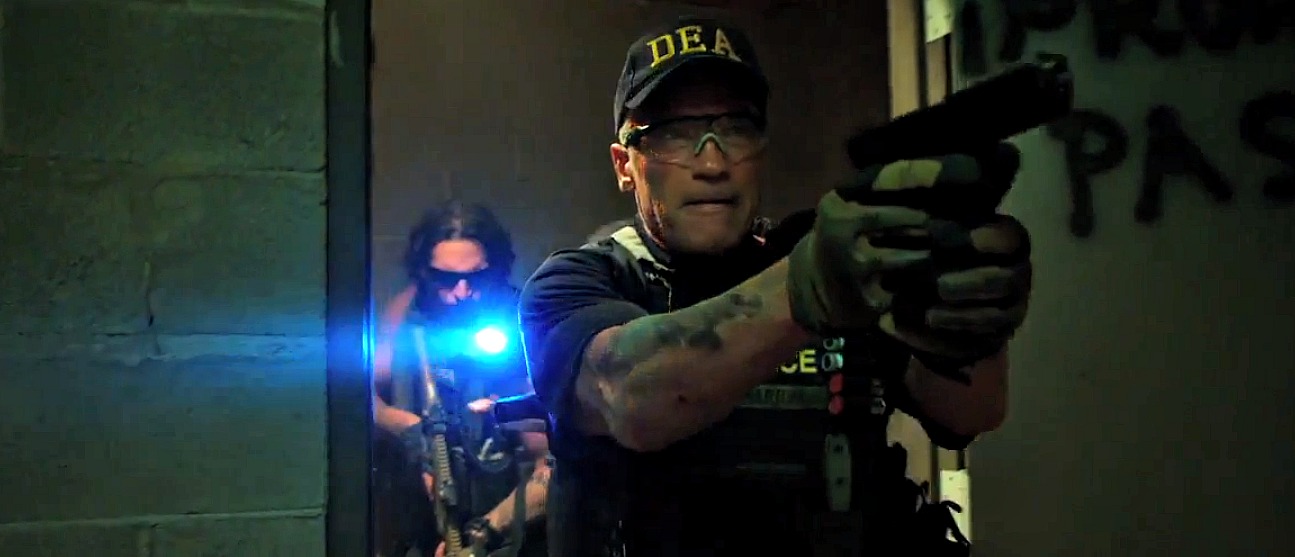
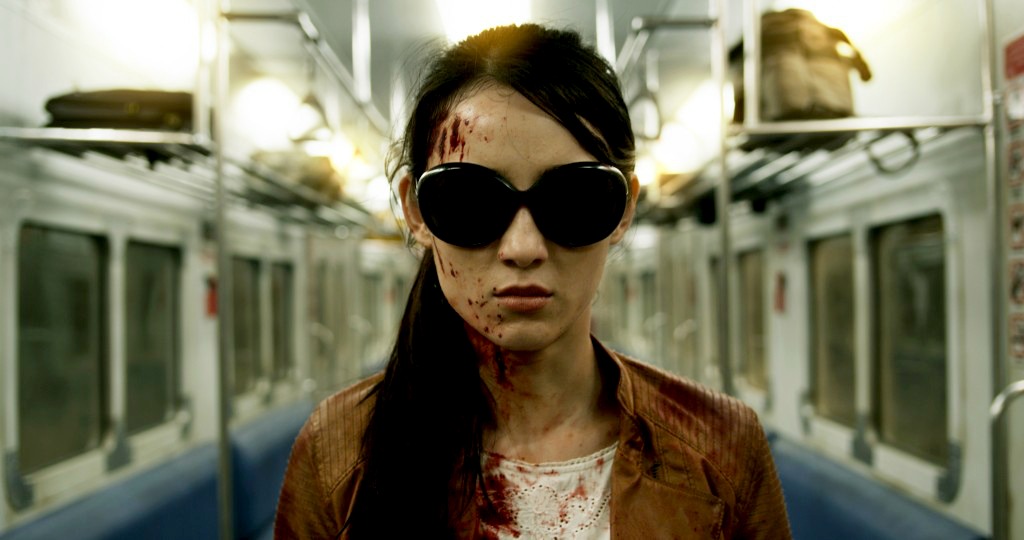
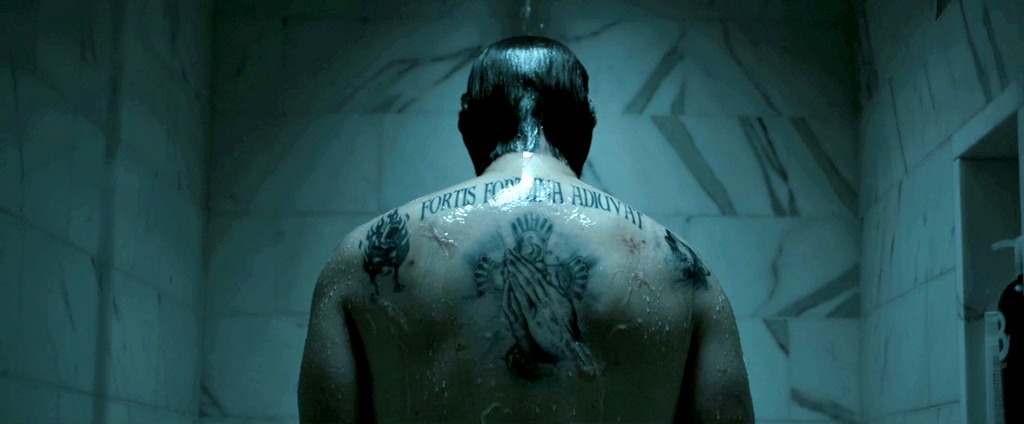
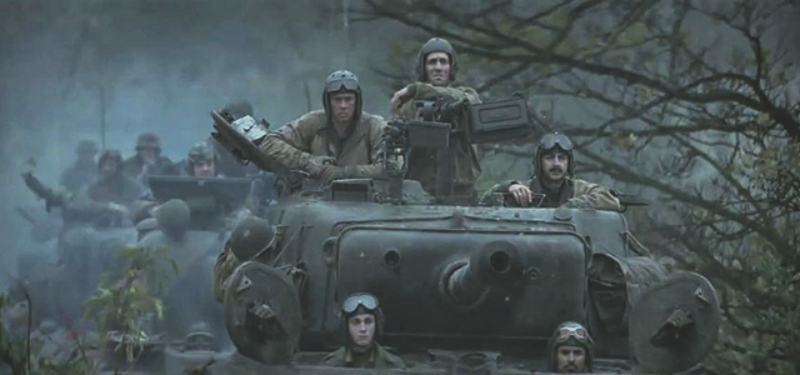
4 Shots From 4 Films: Sabotage, The Raid 2, John Wick, Fury


2014 had it’s share of very good action films and here are four that I was particularly drawn to. While the film themselves were of varying degrees of quality in terms of storytelling. These 4 films all had one thing that I enjoyed despite their films’ flaws. They all had action scenes that I thought were quite excellent.

You have gritty present-day action thriller, an operatic gangster epic, a revenge thriller and a war film. One stars an aging action star back from playing politician. Another a foreign film whose filmmaker and star have set the bar for all action films for years to come. Then there’s the stunt coordinators and 2nd unit directors finally making their mark with their first feature-length film. Lastly, a war film that brings the brutality of World War II tank warfare to the forefront.

4 SHOTS FROM 4 FILMS

Sabotage (dir. by David Ayer)

Sabotage (dir. by David Ayer)

John Wick (dir. by Chad Stahelski & David Leitch)

John Wick (dir. by Chad Stahelski & David Leitch)