Why did the Roman Empire fall?
Well, historically, there were several reasons but they can all basically be boiled down to the fact that the Empire got too big to manage and that having two separate capitols certainly didn’t help matters. The Empire got so large and overextended that the once fabled Roman army was no match for the barbarians.
Of course, if you’ve ever watched a movie about the Roman period, you know exactly why the Empire fell. It all had to do with decadence, gladiators, human sacrifices, and crazed emperors with unfortunate names like Caligula and Commodus. The Roman Empire fell because the imperial government descended into soap opera, complete with love triangles, betrayals, and whispered plotting inside the Senate.
Another thing that we’ve learned from the movies is that the fall of the Roman Empire was damn entertaining. Between the orgies and the men wearing those weird helmets with the brushes on top of them, there’s nothing more fun that watching the Roman Empire fall.
Case in point: the 1964 film, The Fall of the Roman Empire.
This three and a half hour epic begins with the last of the good Roman emperors, Marcus Aurelius (Alec Guiness), battling to keep the Germanic barbarians from invading the empire. Marcus is a wise man and a great leader but he knows that his time is coming to an end and he needs to name a successor. His daughter, Lucilla (Sophia Loren), is an intelligent and compassionate philosopher but, on the basis of her sex, is not eligible to succeed him. His son, Commodus (Christopher Plummer), may be a great and charismatic warrior but he’s also immature and given to instability. Marcus’s most trusted adviser, Timonides (James Mason), would never be accepted as a successor because of his Greek birth and background as a former slave. (Add to that, Timonides is secretly a Christian.)
That leaves Livius (Stephen Boyd). Livius is one of Marcus’s generals, a man who is not only renowned for his honesty and integrity but one who is also close to the royal family. Not only is he a former lover of Lucilla’s but he’s also been a longtime friend to Commodus. Unfortunately, before Marcus can officially name Livius as his heir, the emperor is poisoned. Commodus is named emperor and things quickly go downhill. Whereas Marcus ruled with wisdom and compassion, Commodus is a tyrant who crushes anyone who he views as being a potential threat. Lucilla is married off to a distant king (Omar Sharif). Timonides is declared an enemy after he suggests that the conquered Germans should be allowed to peacefully farm on Italian land. Rebellion starts to ferment in every corner of the Empire and Livius finds himself trapped in the middle. Which side will he join?
Despite all the drama, Commodus is not necessarily an unpopular emperor. One of the more interesting things about The Fall of the Roman Empire is that Commodus’s popularity grows with his insanity. The crueler that he is, the more the people seem to love him. Soon, Commodus is fighting as a gladiator and having people burned at the stake. While some Romans are horrified, many more love their emperor no matter what. People love power, regardless of what it’s used for. Perhaps that’s the main lesson and the main warning that the final centuries of the Roman Empire have to give us.
The Fall of the Roman Empire is surprisingly intimate historical epic. While there’s all the grandeur that one would normally expect to see in a film about the Roman Empire, the film works best when it concentrates on the characters. While Boyd and Loren do their best with their thinly drawn roles, the film is stolen by great character actors like Alec Guinness, James Mason, and Christopher Plummer. Plummer, in particular, seems to be having a blast playing the flamboyantly evil yet undeniably charismatic Commodus. Even with the Empire collapsing around then, both Plummer as an actor and Commodus as a character seems to be having a blast. Add to that, there’s all of the usual battles and ancient decadence that you would expect to find in a film about the Roman Empire and the end result is a truly enjoyable epic.
As I watched The Fall of the Roman Empire, it was hard for me not to compare the film to Ridley Scott’s Gladiator. That’s because they’re both basically the same damn movie. The main difference is that The Fall of the Roman Empire is far more entertaining. The Fall of the Roman Empire, made in the days before CGI and featuring real people in the streets of Rome as opposed to animated cells, feels real in a way that Gladiator never does. If Gladiator felt like a big-budget video game, The Fall of the Roman Empire feels like a trip in a time machine. If I ever do go back to 180 A.D., I fully expect to discover James Mason giving a speech to the Roman Senate while Christopher Plummer struts his way through the gladiatorial arena.
Finally, to answer the question that started this review, why did the Roman Empire fall?
It was all Christopher Plummer’s fault, but at least he had a good time.


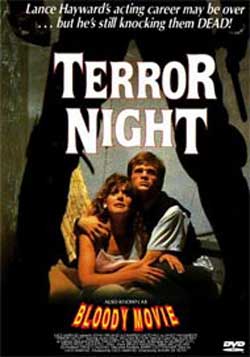
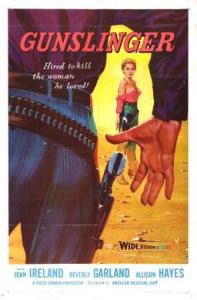 Welcome to Oracle, Texas. It’s a dusty little town in the old west. Marshal Scott Hood (William Schallert) may uphold the law but everyone knows that the town is actually run by Erica (Allison Hayes), the owner of the local saloon. Erica knows that a railroad may be coming to town so she comes up with a plan to buy all the land around Oracle. She sends her lackey, Jake (Jonathan Haze), to each landowner. Jake buys the land then murders the landowner so that he can get the money back.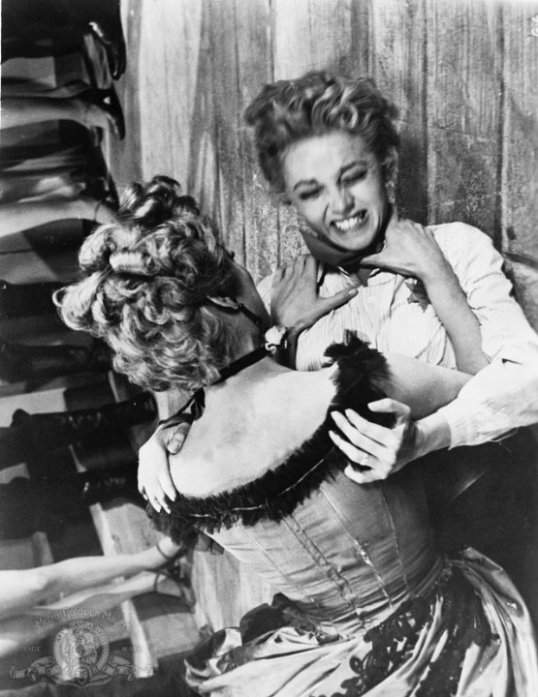
 In rural Colorado, the three wives and all the children of Orville Beecham (Charlie Dierkop) have been murdered. Veteran journalist Garret Smith (Charles Bronson) discovers that Orville is the son of an excommunicated Mormon fundamentalist named Willis Beecham (Jeff Corey). Willis, who lives on a heavily armed compound, practices polygamy and wants nothing to do with the outside world. However, Willis’s brother, Zenas (John Ireland), long ago split with Willis and set up a compound of his own. At first, Garret suspects that Orville’s family was killed by Zenas. As Zenas and Willis go to war, Garret discovers that there’s actually a bigger conspiracy at work, one dealing with corporate greed and water rights. (Forget it, Bronson, it’s Chinatown.)
 James Cooper (John Ireland) is a non-violent bank robber in the old west. He wants to hold up one last bank and then retire to his farm with his wife (Gloria Milland) and daughter (Nadia Marconi). However, he is double-crossed by his partner, Moxon (Mirko Ellis), who kills everyone who works at the bank and tries to steal the money for himself. After Cooper throws Moxon over the side of a cliff and hides the loot, he is approached by Miguel (Antonio Sabato, Sr.), a young artist who had just deposited his money moments before the bank was robbed. Miguel explains that he’s been saving up for a future exhibition in New York and he convinces Cooper to give him back his money.



 Through the Shattered Lens