Brad reviews CURLY SUE (1991), starring James Belushi and Kelly Lynch!


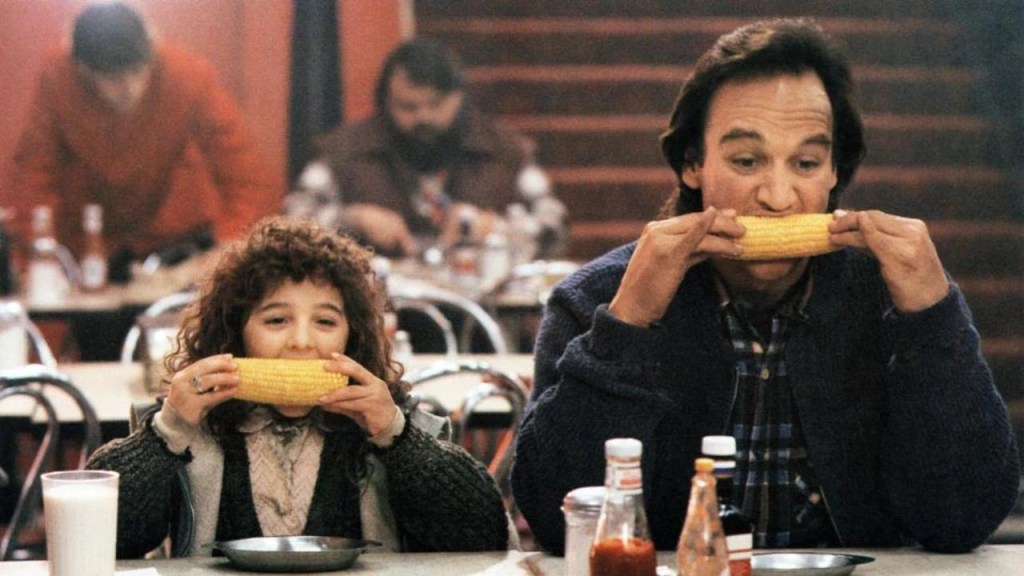
Bill Dancer (James Belushi), a homeless drifter and small-time con artist, and his 9 year old companion Curly Sue (Alisan Porter), survive by running somewhat harmless scams against rich people. While traveling through Chicago they target Grey Ellison (Kelly Lynch), a rich, career-focused divorce attorney, tricking her into thinking that she ran over Bill with her Mercedes. Normally the pair are just after a free meal and maybe a little cash, but Bill doesn’t have the heart to take too much from Grey since she’s so darn pretty. Through a variety of circumstances, she actually does run over Bill the next day. This time she brings him and Curly Sue up to her fancy apartment so he can recover, despite the objections from her snobby boyfriend Walker (John Getz). As the three get to know each other, Grey forms an especially close connection with Curly Sue, and learns that Bill isn’t her actual dad, even though he’s raised her since she was a baby. Knowing that Grey can give Curly Sue a better life than he can, Bill thinks about leaving. But can he ever leave the girl he sees as a daughter? And can Grey discover a compassion for others and the maternal instinct that she’s been missing? 

As is often the case with movies I choose to write about, I had a sense of nostalgic warmth while watching CURLY SUE this morning for the first time in three decades. I saw CURLY SUE at the movie theater with my high school girlfriend in the fall of 1991. I remember enjoying the film and even buying it on VHS as a gift for my mom because I knew she would like it. In the years before she could record her Hallmark movies on her DVR, Mom watched that VHS tape many times. 

Quite different from his classic teen comedies, CURLY SUE, which is the final film directed by John Hughes, can only be described as unapologetically sentimental. Sure the movie is formulaic and pure syrup, but I still enjoy it anyway. This heartwarming fairy tale will make you believe that an unconventional, loving family can emerge from the most unexpected of circumstances. It will suggest that there are some things more important than any amount of money can buy. It will make you laugh out loud at times, and yes, it will even bring a tear to your eye as some of the more emotional scenes play out. CURLY SUE wants to manipulate its audience’s emotions, and it will happen if you just go with it. On the down side, if you catch this film in the wrong kind of mood, or if you’re feeling especially cynical, that magic will disappear and you probably won’t enjoy the movie at all. 

As for the performances, as a fan of James Belushi, I like him as the gruff but likable Bill. I also enjoy Kelly Lynch as the she evolves from a person married to her work to someone who starts to care deeply about the people around her. Probably the most important performance in the film comes from Alisan Porter as Curly Sue. If you don’t find her cute and adorable, then you’ll probably have a hard time watching the movie. I personally found her to be quite precious so that was not a problem for me. Once again, the movie version of early 90’s Chicago as our setting is something I enjoy as well. 

Overall, CURLY SUE is not in the same league as Hughes’ best work like PLANES, TRAINS AND AUTOMOBILES, and there will be many who downright dislike the schmaltzy nature of the film. However, if you’re in a nostalgic mood for an earnest, early ‘90s heart-tugger, this movie might just hit the spot.

4 Shots From 4 Films: Special 1985 Edition


4 Shots From 4 Films is just what it says it is, 4 shots from 4 of our favorite films. As opposed to the reviews and recaps that we usually post, 4 Shots From 4 Films lets the visuals do the talking!

Today, let us take a look back at a classic cinematic year.  It’s time for….

4 Shots From 4 1985 Films

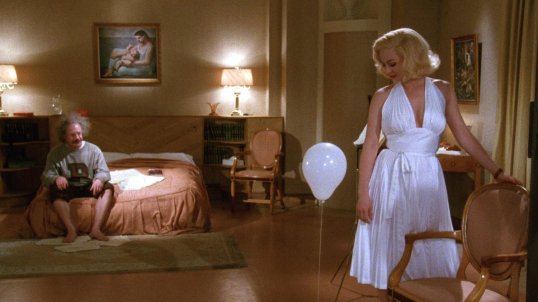
Insignificance (1985, directed by Nicolas Roeg, DP: Peter Hannan)

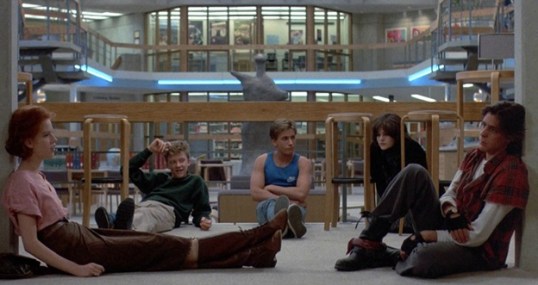
The Breakfast Club (1985, dir by John Hughes, DP: Thomas Del Ruth)

Rambo: First Blood Part II (1985, dir by George Pan Cosmatos, DP: Jack Cardiff)

Brazil (1985, dir by Terry Gilliam, DP: Roger Pratt)

Scene That I Love: The Ending of Pretty In Pink


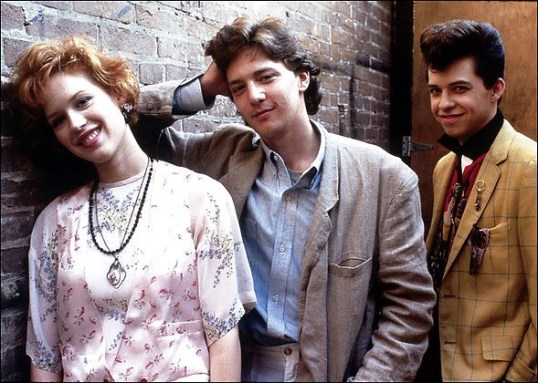
Today’s scene that I love comes from 1986’s Pretty In Pink, starring Molly Ringwald, Andrew McCarthy, Jon Cryer, and James Spader and written by John Hughes.

In the final scene, we discover Andie at prom with Duckie.  Fortunately, Blaine shows up.  Listen, I know that there are a lot of people who think that Andie should have ended up with Duckie.  That’s how the script was originally written and the film’s ending was reshot after test audiences literally booed the idea of Andie going to prom with her best friend.  In this case, though, the test audience was correct.  Duckie was sweet but he wasn’t a prom date.  Andie and Blaine belonged together.

4 Shots From 4 Films: Special John Hughes Edition


4 Or More Shots From 4 Or More Films is just what it says it is, 4 shots from 4 of our favorite films. As opposed to the reviews and recaps that we usually post, 4 Shots From 4 Films lets the visuals do the talking!

Director John Hughes would have been 75 years old today.  It’s time for….

4 Shots From 4 John Hughes Movies

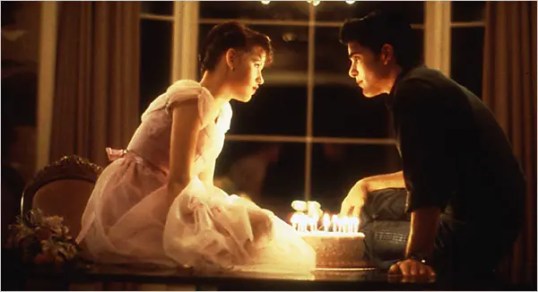
Sixteen Candles (1984, dir by John Hughes, DP: Bobby Byrne)

The Breakfast Club (1985, dir by John Hughes, DP: Thomas Del Ruth)

Ferris Bueller’s Day Off (1986, dir by John Hughes, DP: Tak Fujimoto)

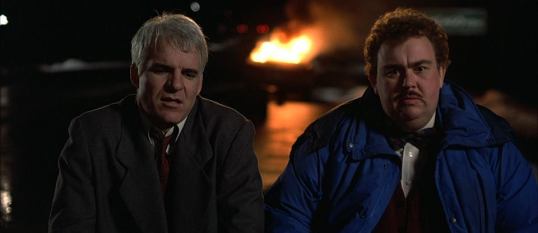
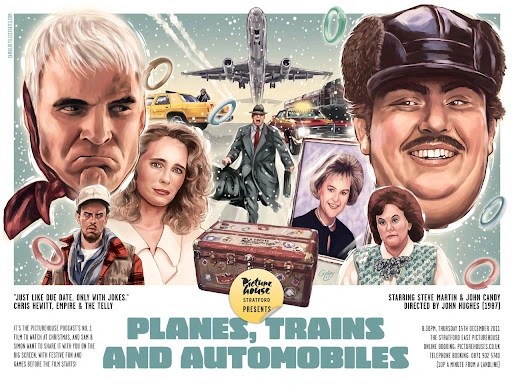
Planes, Trains, and Automobiles (1987, dir by John Hughes, DP: Donald Peterman)


PLANES, TRAINS AND AUTOMOBILES and our family’s traditions.


I love Thanksgiving because I love spending time with my family. My Mom is one of 15 kids from a large Catholic family in central Arkansas, so this is the time of year that I get to see a big part of that extended family. A lot of people are spread out across the state and country so we don’t get to see everyone at Thanksgiving, but we do get to see a lot of people. We go to my aunt Jo Ellen’s house, and I get to hang out with a bunch of my aunts, uncles and cousins. We’ll have a giant feast from a potluck of items we’ve grown to love over the years…Aunt Jo Ellen’s turkey and dressing, Mom’s candied yams, Aunt Connie’s deviled eggs, the giant table of desserts, etc. Our family is all about traditions, and this is the time of year we share those with each other. I just love it! 

One of our movie-watching traditions is watching PLANES, TRAINS AND AUTOMOBILES together. And we do it every year. We still laugh at all the right parts…Kevin Bacon getting Steve Martin’s cab thanks to a mysteriously large trunk on the curb, John Candy reading The Canadian Mounted, Doobie’s Taxiola, “Those Aren’t Pillows,” Owen’s strange facial expressions and throat noises, “a couple of balls and an extra set of fingers,” the runway crossing, the car rental counter meltdown, “you’re going the wrong way,” the hotel destruction getaway, and the indestructible car radio. Odds are many of you are smiling as you read this quick summary of some of my favorite parts. We’ll watch the movie together while we’re settling in back at Dad and Mom’s house after a wonderful Thanksgiving lunch. It’s a guarantee that Dad will be snoring at some point. 

As much as I love to eat, to me, Thanksgiving is all about spending time with the ones I love. We’ll tell a lot of the same stories that we’ve told many times over the years, and we’ll laugh at them all over again. We’ll truly enjoy our time together. Our family is not perfect, and we don’t always see eye to eye on everything, but we love each other and that is more important than just about anything else. That’s a Crain family tradition passed down from my parents. One of the best things about PLANES, TRAINS AND AUTOMOBILES is that there are times when the laughs die completely down, and that’s when the movie reveals its heart. The same can be said for my family, and that’s something I’m truly thankful for.

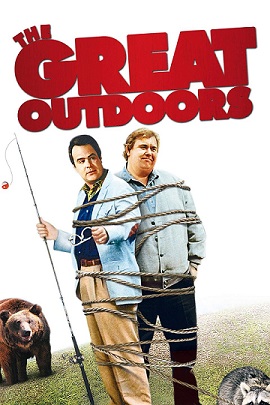
The Great Outdoors (1988, directed by Howard Deutch)


Chet Ripley (John Candy) wants to have a nice vacation up at the lake with his wife (Stephanie Faracy) and their two sons, Buck (Chris Young) and Ben (Ian Giatti).  Unfortunately, no sooner has he arrived than the vacation is crashed by Chet’s sister-in-law (Annette Bening, making her film debut) and her husband, Roman (Dan Aykroyd).  Roman represents everything that that the mild-mannered Chet hates.  Roman is loud, obnoxious, and obsessed with showing off his wealth.  Roman knows nothing about how to survive in the great outdoors and he treats Chet like he’s a loser but, for the sake of giving his family a good vacation, Chet tries to get along with Roman.  At first, it doesn’t work but eventually, Chet and Roman have to team up to find Roman’s daughters and deal with not only a bear but also talking raccoons.  Meanwhile, Buck falls in love with local girl, Cammie (Lucy Deakins).  I imagine the same can be said of a lot of people who caught this film on HBO when they were twelve.

The Great Outdoors is very much a comedy of the late 80s.  Roman may be a crass Yuppie but it doesn’t appear that Chet is suffering financially either.  The humor is broad and physical but the film never resorts to the gross-out style that has since come to define cinematic comedy.  It’s a film that makes fun of the obligations of family life while also celebrating them and you won’t be shocked to learn that the script was written by John Hughes.  John Candy is likable and Dan Aykroyd has a demented twinkle in his eye.

It’s not a bad movie but I just wish it had been funnier.  Don’t get me wrong.  When you’re a kid and you come across The Great Outdoors on cable, it’s hilarious because it’s got John Candy waterskiing and a bear and, of course, the talking raccoons.  Watching it as an adult, though, it’s easier to see just how much the material and the film’s family-safe approach holds back both Candy and especially Aykroyd.    Both of them were capable of being wild comedic performance but, in The Great Outdoors, the movie doesn’t let either one of them really go crazy and that’s too bad.  Instead of being a showcase for the best of SNL and SCTV, it becomes an amusing but ultimately very safe family comedy.  (Arguably, Hollywood never really figured out the best way to use Candy and Aykroyd’s comedic talents, though Candy’s films before his untimely death suggested that he was on the verge of a genuine breakthrough.)

I did laugh when I rewatched The Great Outdoors but I didn’t laugh as much as I did when I was a kid.  Now, I feel old and I’m thinking about how unfortunate it is that John Candy died before production could start on the biopic of Fatty Arbuckle that Candy was tentatively set to star in.  Much like Phil Hartman, it’s hard to watch John Candy today without thinking about how he was taken when he was on the verge of probably doing what would have been his best work.

Time to cheer myself up with What About Bob?

6 Good Films That Were Not Nominated For Best Picture: The 1980s


Rob Lowe and Snow White perform at the 1989 Oscars

Continuing our look at good films that were not nominated for best picture, here are 6 films from the 1980s.

Out of the Blue (1980, dir by Dennis Hopper)

After spending several years in the cultural wilderness, Dennis Hopper directed his best film, this downbeat study of a young girl, her junkie mother, and her irresponsible father.  From the film’s first scene, in which Hopper crashes his truck into a school bus to the film’s explosive ending, Out of the Blue is a fascinating trip into the heart of American darkness.  It was definitely too dark for the Academy.

Fast Times At Ridgemont High (1982, dir by Amy Heckerling)

Fast Times would appear to take place in a totally different universe from Out of the Blue.  Still, it’s an unexpectedly intelligent look at growing up in the suburbs and it’s influenced practically every high school film that’s come after.  Plus, this may be the only movie in which Sean Penn was intentionally funny.  Despite good reviews and a cast full of future stars, Fast Times At Ridgemont High received not a single nomination.

Once Upon A Time In America (1984, dir by Sergio Leone)

Sergio Leone’s final film, this epic gangster film might be a look at how America grew and changed over the first half of the 20th Century.  It might be a trenchant critique of capitalism.  It might be an homage to the classic gangster films of the 30s.  Or it might just be a hallucination that Robert De Niro is having while visiting an opium den.  That critics are are still debating just watch exactly this film actually means says a lot about the power of Once Upon A Time In America.  However, because the film was originally released in a severely edited form, Once Upon A Time In America received not one nomination.

Brazil (1985, dir by Terry Gilliam)

Much like Once Upon A Time In America, Brazil is a brilliant film that was betrayed by the studio that distributed it.  Convinced that Terry Gilliam’s satire was too strange for American audiences, Universal Pictures initially released the film in a severely edited version.  Fortunately, Gilliam’s version was eventually released but the controversy undoubtedly hurt Brazil when it came time for the members of the Academy to select their nominees for Best Picture.

The Breakfast Club (1985, dir by John Hughes)

Perhaps the Academy understood just how unfair it was that Anthony Michael Hall had to write the essay while everyone else got either a makeover or a new romance.  For whatever reason, this classic high school film — perhaps the classic high school film — received not a single nomination.

Blue Velvet (1986, dir by David Lynch)

David Lynch was nominated for Best Director but the film itself proved to be just a bit too controversial for the Academy to give it a Best Picture nomination.  David Lynch described this film as being “the Hardy Boys In Hell” and it would have been an uncoventional, though very worthy, nominee for Best Picture.

Up next, in an hour or so, the 90s!


Never Nominated: 16 Directors Who Have Never Received An Oscar Nomination


It’s a sad fact of life that not everyone who deserves an Oscar gets one.  For instance, Alfred Hitchcock received five nominations for best director but never won once.

That said, at least Hitchcock was nominated!  Some of our greatest directors have never even been nominated!  This list below is hardly exclusive but still, these 16 directors have somehow never been nominated.  Ten of them could still be nominated in the future.  Sadly, for six, the opportunity has forever passed.
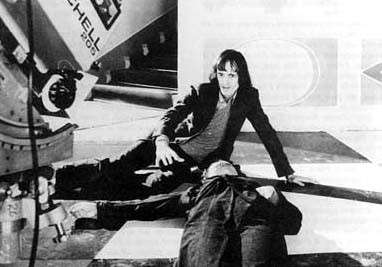
  1. Dario Argento

Sadly, Dario Argento will probably never be nominated for best director.  None of his films — even the early, acclaimed work — were typical Oscar films.  But, consider this: Argento is one of the most influential directors of all time.  Regardless of what might be said about some of Argento’s more recent films, his earlier films are classics of their genre.  Deep Red, Suspiria, Inferno, Tenebrae — his work on any of these films would have been worthy of a nomination.

2. Andrea Arnold

This British director is responsible for two of the best films of the past ten years — Fish Tank and American Honey.  She deserved a nomination for both of them (and a win for American Honey).  Hopefully, she will be recognized in the future.

3. Tim Burton

I’m not the world’s biggest Tim Burton fan but he has a fan base that will follow him almost anywhere.  It seems like every year, we hear that Burton has finally made the film that will win him some Oscar recognition.  Remember Big Eyes?  As I said, I’m not a huge Burton fan but, if I was to nominate him, it would probably be for his work on Sweeney Todd.

4. John Carpenter

Carpenter deserved all sorts of nominations for his work in the 70s and the 80s.  Being the rebel that he is, Carpenter will probably never get the Oscar recognition that he deserves.  (He did win an Academy Award for Best Live Action Short.)

5. David Cronenberg

It’s hard to believe that this Canadian director has never been nominated.  While it’s obvious that the Academy would never recognize Cronenberg’s earlier work (even if he did deserve some recognition for that exploding head in Scanners), it still seems like he’s destined to be nominated eventually.

6. Terry Gilliam

Much like Tim Burton, Gilliam sadly seems to be destined to be one of those directors who will have to be content with a devoted fan base.  Sadly, as of late, Gilliam’s become better known for the film projects that were canceled than the ones that were actually produced.  I would have nominated him for Brazil.

7. Werner Herzog

How has Werner Herzog gone his entire career without receiving at least one nomination for Best Director!?  I would nominate him for the chance to hear the acceptance speech alone.

8. Christopher Nolan

Christopher Nolan is another director who I’m shocked to realize has never been nominated.  He certainly deserved a nomination for Inception.  Maybe, just maybe, he’ll finally get some recognition for Dunkirk.

9. Lars Von Trier

With his controversial aesthetic and his talent for offending the masses, Lars Von Trier will never be nominated, no matter how much he might deserve it.

10. Joe Wright

Personally, I think that Joe Wright is responsible for two of the best films of the past ten years, Hanna and Anna Karenina.  Unfortunately, both were left out of their respective best picture races.  Even when Atonement was nominated for best picture, Wright did not receive a corresponding nomination.  Fortunately, with Darkest Hour, Wright will have another chance this year.

Best Director Joe Wright

And here are six directors who are no longer with us.  Sadly, these six will never have a chance to receive their first Oscar nomination:

  1. Mario Bava

Much like Dario Argento, there was never really any chance that the Academy would actually honor Mario Bava.  That’s a shame because Bava truly was one of the greatest directors of all time.  Check out Black Sabbath and Shock for proof.

2. Stanley Donen

It’s hard to believe that Donen wasn’t even nominated for Singin’ In The Rain.

3. John Frankenheimer 

It’s also hard to believe that Frankenheimer never received a nomination.  While he directed his share of bad films, he also directed Seven Days in May, The Manchurian Candidate, Seconds, and Ronin.

4. John Hughes

Not even for The Breakfast Club or Ferris Bueller’s Day Off!  Hughes may have been snubbed by the Academy but his films practically invented an entire genre.

5. Michael Powell and Emeric Pressburger

This directing team was a major influence on Martin Scorsese.  Black Narcissus remains one of the most visually stunning films of all time.  The Red Shoes was nominated for best picture but Powell/Pressburger were snubbed.

6. Nicholas Ray

Everyone knows that Ray directed Rebel Without a Cause.  Personally, I think his work on Bigger than Life was even more worthy of a nomination.
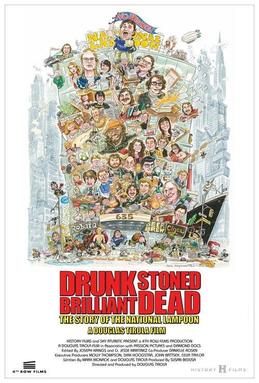
No Safe Space: Drunk Stoned Brilliant Dead: The Story Of The National Lampoon (2015, directed by Douglas Tirola)


Drunk_Stoned_Brilliant_Dead_PosterThe documentary Drunk Stoned Brilliant Dead pays tribute to National Lampoon.  Founded in 1970, National Lampoon was published for 28 years and, at the height of its popularity, its sensibility redefined American comedy.  When it came to National Lampoon, nothing was sacred and nothing was off-limits.  The success of National Lampoon led to a stage show called Lemmings and The National Lampoon Radio Hour, which featured everyone from John Belushi and Bill Murray to Chevy Chase and Harold Ramis.  Michael O’Donoghue, famed for his impersonations of celebrities having needless inserted into their eyes, went from writing for the Lampoon to serving as Saturday Night Live‘s first head writer.  National Lampoon’s Animal House, Vacation, and Caddyshack are three of the most influential film comedies ever made.  Everyone from P.J. O’Rourke to John Hughes to The Simpsons‘ Al Jean got their start at National Lampoon.
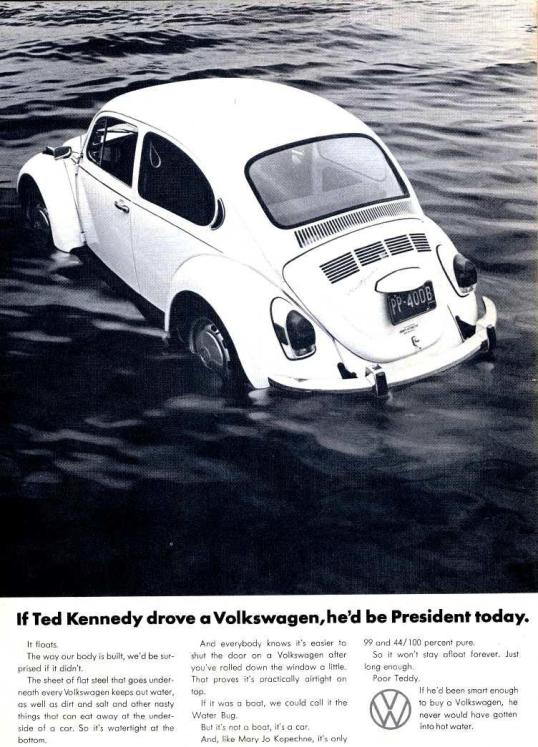
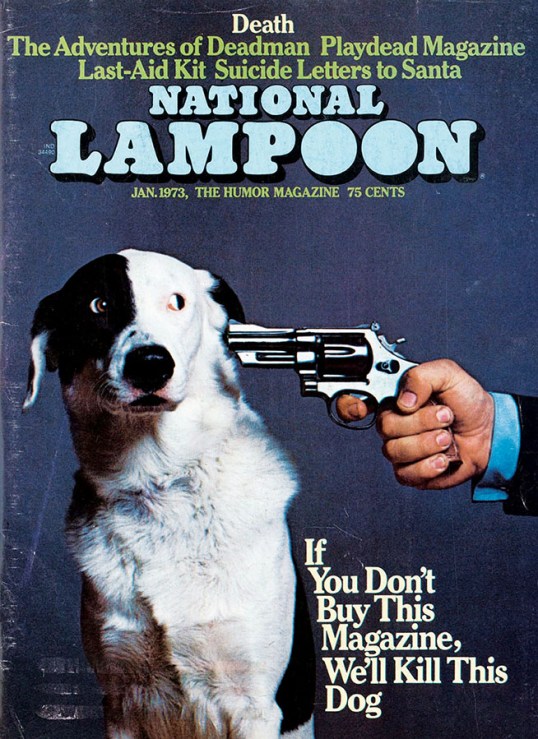
As influential as it was, National Lampoon is a magazine that would not be able to exist today’s world.  Just looking at the cover of most issues of National Lampoon would reduce today’s special little snowflakes to the point of hysteria.  In Drunk Stoned Brilliant Dead, National Lampoon‘s publisher claims that the Lampoon ultimately ceased publication because the religious right threatened to boycott any company that advertised in the magazine.  Today, it would be the “safe space” crowd complaining that the magazine did not come with proper trigger warnings.  Lena Dunham would look at one issue and go into a rage spiral.  Salon would publish a hundred hand-wringing think pieces about how National Lampoon was the worst thing since Ted Cruz.  Colleges would ban it and religious groups would still burn it.  National Lampoon was a magazine that went out of its way to be offensive to both the left and the right but, as editor-in-chief Tony Hendra puts it, the job of satire is to make those in power feel uncomfortable.  By poking fun at everything and challenging its readers, National Lampoon exposed the absurdity behind both the country’s prejudices and some of its most sacred beliefs.

Kennedy VW Ad

Drunk Stoned Brilliant Dead follows the National Lampoon from its founding to its ignominious end.  Along with interviews with Lampoon alumni, it also features archival footage of both Lemmings and The Radio Show, providing glimpses of  Christopher Guest, Bill Murray, John Belushi, Gilda Radner, and Harold Ramis before they became famous.  There are also interviews with celebrity admirers of the Lampoon who talk about how the magazine inspired their own work.  It makes sense that Judd Apatow was interviewed and Kevin Bacon made his screen debut in Animal House but what was Billy Bob Thornton doing there?

Unfortunately, drunk, stoned, brilliant, and dead describes some of the most important and talented figures in the Lampoon‘s history.  The documentary especially focuses on Doug Kenney, the Lampoon’s co-founder.  Everyone interviewed agrees that Kenney was a comedic genius who was also often emotionally troubled and who would vanish for months on end.  After the initial critical failure of Caddyshack, Kenney disappeared in Hawaii.  His body was later discovered at the bottom of the cliff.  Did Kenney jump or did he slip or, as director John Landis suggests, was he murdered by a drug dealer?  Nobody seems to know but Kenney’s ghost haunts the documentary.  This collection of very funny people get very serious when it comes time to talk about Kenney’s death.  Even Chevy Chase briefly redeems himself after years of bad publicity when he gets choked up.

Drunk Stoned Brilliant Dead is tribute to both a magazine and a bygone era.  See it before it gets banned.

How_I_Killed_Lampoon_6_embed

Back to School #44: Some Kind of Wonderful (dir by Howard Deutch)


some_kind_of_wonderful

For the past two and a half weeks, I’ve been reviewing, in chronological order, some of the best, worst, most memorable, and most forgettable teen films ever made.  We started with two films from 1946 and now, we find ourselves coming to the close of the decade that is often considered to be the Golden Age of teen films, the 1980s.  For our 44th entry in Back to School, we take a quick look at 1987’s Some Kind of Wonderful.

Why a quick look?

Because, quite frankly, there’s not that much to say about it.

Some Kind of Wonderful is a story about an artistic, lower-class misfit who has a crush on one of the popular kids.  The only problem is that the popular kid is being cruelly manipulated by one of the richest students in school.  The misft also has a best friend who is totally in love with the misfit but the misft has somehow failed to notice this.  Eventually, the misfit does get to date the popular kid.  Both the popular kid and the misft are given a hard time by the members of their collective clique but they still manage to go on one truly amazing date.  Finally, the film ends with a big show down at a party and two people kissing outside.

Sound familiar?

If it does, that probably means that you’ve seen Pretty In Pink.  Some Kind of Wonderful is basically a remake of Pretty In Pink, the only difference being that the genders have been reversed and that the film is a lot more heavy-handed (and predictable) when it comes to examining class differences.   (Not coincidentally, both films were written by John Hughes and directed by Howard Deutch and it must be said that when it comes to Some Kind of Wonderful, it’s easy to feel that both of them were simply going through the motions.)  The misfit is an aspiring painted named Keith (Eric Soltz).  His best friend is a drummer named Watts (Mary Stuart Masterson).  The object of Keith’s affection is Amanda (Lea Thompson).  Unfortunately, even though she lives in the same poor neighborhood as Keith and Watts, Amanda is dating the rich (and therefore, evil) Hardy (Craig Sheffer).

Some-Kind-of-Wonderful-some-kind-of-wonderful-2841626-1024-768

When Keith finally works up the nerve to ask out Amanda, he doesn’t realize that she’s just broken up with Hardy and is on the rebound.  Watts is skeptical, telling Keith, “Don’t go mistaking paradise for a pair of long legs,” and I’m just going to admit that, as the proud owner of a pair of long legs, that line really annoyed me.  I guess it’s because I’ve known people like Watts, who always act like there’s something wrong with wanting to look good.

Shut up, Watts.

Shut up, Watts.

With the help of Watts and Duncan (Elias Koteas), the school bully that Keith managed to befriend in detention, Keith takes Amanda out on an amazing date and shows her a wonderful portrait that he’s painted of her.  At the same time, Hardy — angry because someone from a lower class is now dating his ex-girlfriend — starts to plot his own revenge…

There are some positive things about Some Kind of Wonderful.  There are two really good and memorable scenes that, momentarily, manage to elevate the entire film.  There’s the moment when Keith shows Amanda the painting.  And then there’s the erotically charged scene in which Keith and Watts practice how to kiss.  Koteas, Thompson, and Masterson all gives good performances.  Eric Stoltz is, at times, a bit too intense to sell some of the film’s more comedic moments but overall, he’s well-cast here.  (In fact, the only performance that I really didn’t care for was Craig Sheffer’s.  Sheffer one-dimensional villain only served to remind me of how good James Spader was in Pretty In Pink.)

That's no James Spader

That’s no James Spader

And yet, there’s just something missing from Some Kind of Wonderful, something that keeps this film from being … well, wonderful.  I have to wonder if I had never seen Pretty In Pink, would I have thought more of Some Kind of Wonderful?  Perhaps.  Whereas Pretty In Pink was full of the type of small details and clever moments that make it a joy to watch and rewatch, Some Kind of Wonderful is one of those films that you can watch once and enjoy it without ever necessarily feeling the need to ever watch it again.

Eric Stoltz is going to kill someone