Hi, everyone! Well, as you can tell by looking around the site today, it’s October and it’s also the start of our annual Horrorthon here at the Shattered Lens! This is my favorite time of year and one of the things that truly makes it special is that it provides me with an excuse to write about some of my favorite horror films. When it comes to Horrorthon, there’s always time for one more story.
Today’s Horror Scene of the Day is the opening of John Carpenter’s 1980 classic, The Fog. When John Houseman says that there’s time for one more ghost story, you know you better listen.
Our first Horrorthon song of the day probably seems like an obvious choice. That’s okay, though. Thanks to John Carpenter, this sweet little song about teen love became an anthem of impending horror. None of the Chordettes are with us anymore. I would love to know what they may or may not have thought about Carpenter’s use of their song in Halloween.
I’d like to think they would have appreciated it. Michael Myers may not have had hair like Liberace but he did have a mask that looked a lot like William Shatner.
Mr. Sandman, bring me a dream (bom, bom, bom, bom)
Make him the cutest that I’ve ever seen (bom, bom, bom, bom)
Give him two lips like roses and clover (bom, bom, bom, bom)
Then tell him that his lonesome nights are over
Sandman, I’m so alone (bom, bom, bom, bom)
Don’t have nobody to call my own (bom, bom, bom, bom)
Please turn on your magic beam
Mr. Sandman, bring me a dream
Mr. Sandman, bring me a dream
Make him the cutest that I’ve ever seen
Give him the word that I’m not a rover
Then tell him that his lonesome nights are over
Sandman, I’m so alone
Don’t have nobody to call my own
Please turn on your magic beam (woah)
Mr. Sandman, bring me a dream
Mr. Sandman (yes?) bring us a dream
Give him a pair of eyes with a “come-hither” gleam
Give him a lonely heart like Pagliacci
And lots of wavy hair like Liberace
Mr. Sandman, someone to hold (someone to hold)
Would be so peachy before we’re too old
So please turn on your magic beam
Mr. Sandman, bring us
Please, please, please, Mr. Sandman
Bring us a dream
Songwriters: Clifford Smith / Robert F. Diggs / Jason S. Hunter
4 Or More Shots From 4 Or More Films is just what it says it is, 4 shots from 4 of our favorite films. As opposed to the reviews and recaps that we usually post, 4 Shots From 4 Films lets the visuals do the talking!
Today, we pay tribute to the year 1978! It’s time for….
4 Shots From 4 1978 Films
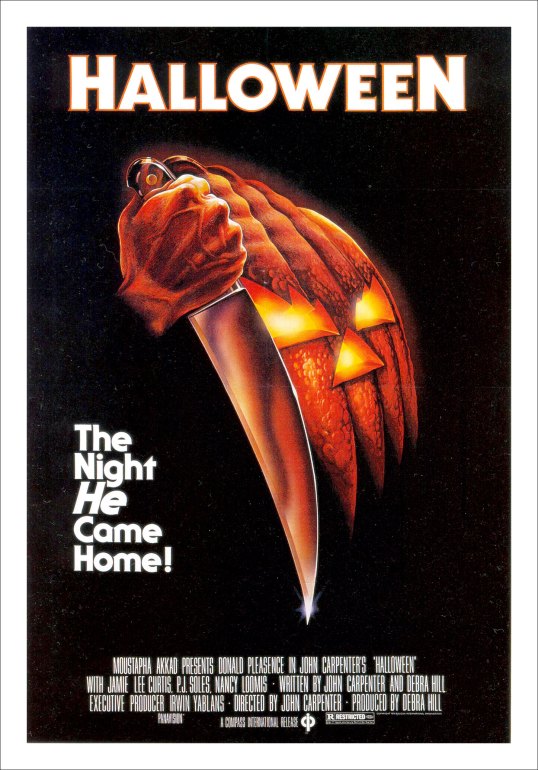
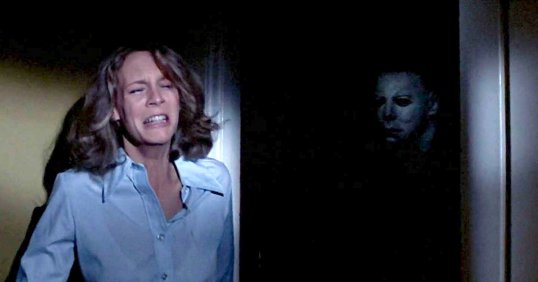
Halloween (1978, dir by John Carpenter, DP: Dean Cudney)
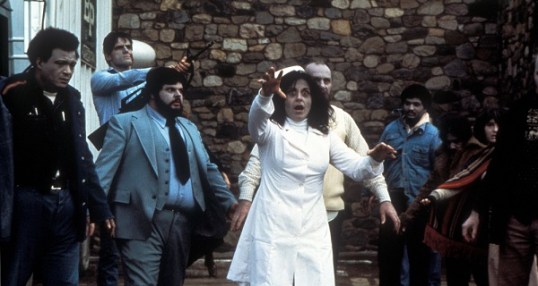
Dawn of the Dead (1978, dir by George Romero, DP: Michael Gornick)
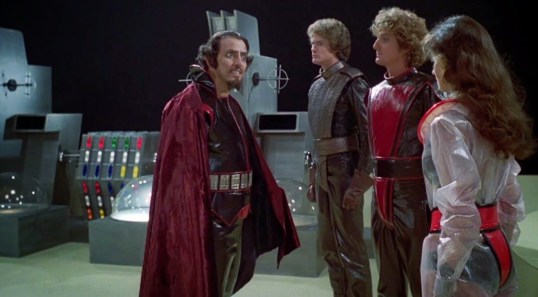
Starcrash (1978, dir by Luigi Cozzi, DP: Paul Beeson and Roberto D’Ettorre Piazzoli)
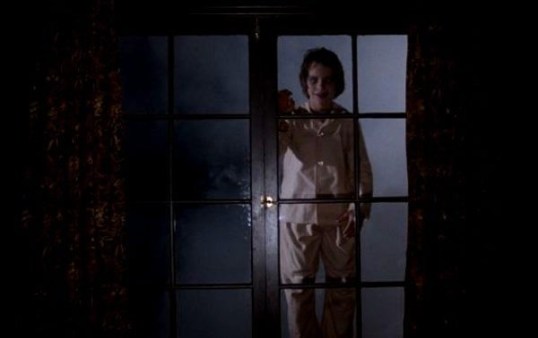
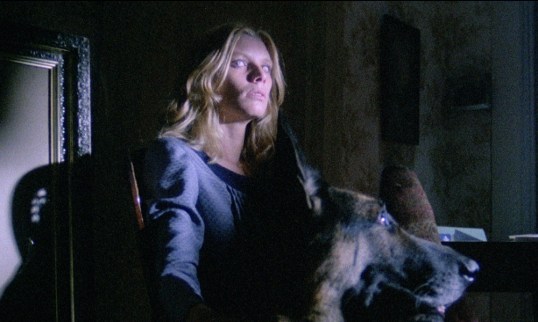
Salem’s Lot (1978, dir by Tobe Hooper, DP: Jules Bremmer)
4 Or More Shots From 4 Or More Films is just what it says it is, 4 shots from 4 of our favorite films. As opposed to the reviews and recaps that we usually post, 4 Shots From 4 Films lets the visuals do the talking!
Today, we celebrate Bruce Campbell’s birthday! It’s time for….
4 Shots From 4 Bruce Campbell Films
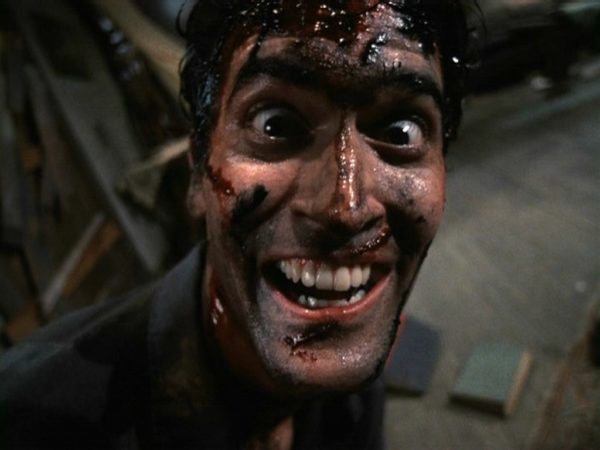
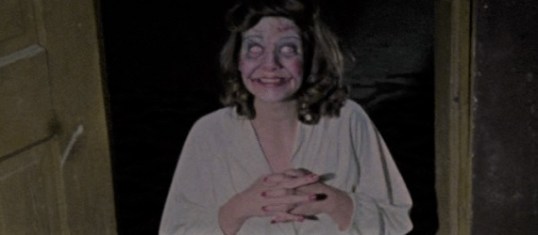
Evil Dead II (1987, dir by Sam Raimi, DP: Peter Deming)
Army of Darkness (1992, dir by Sam Raimi, DP: Bill Pope)
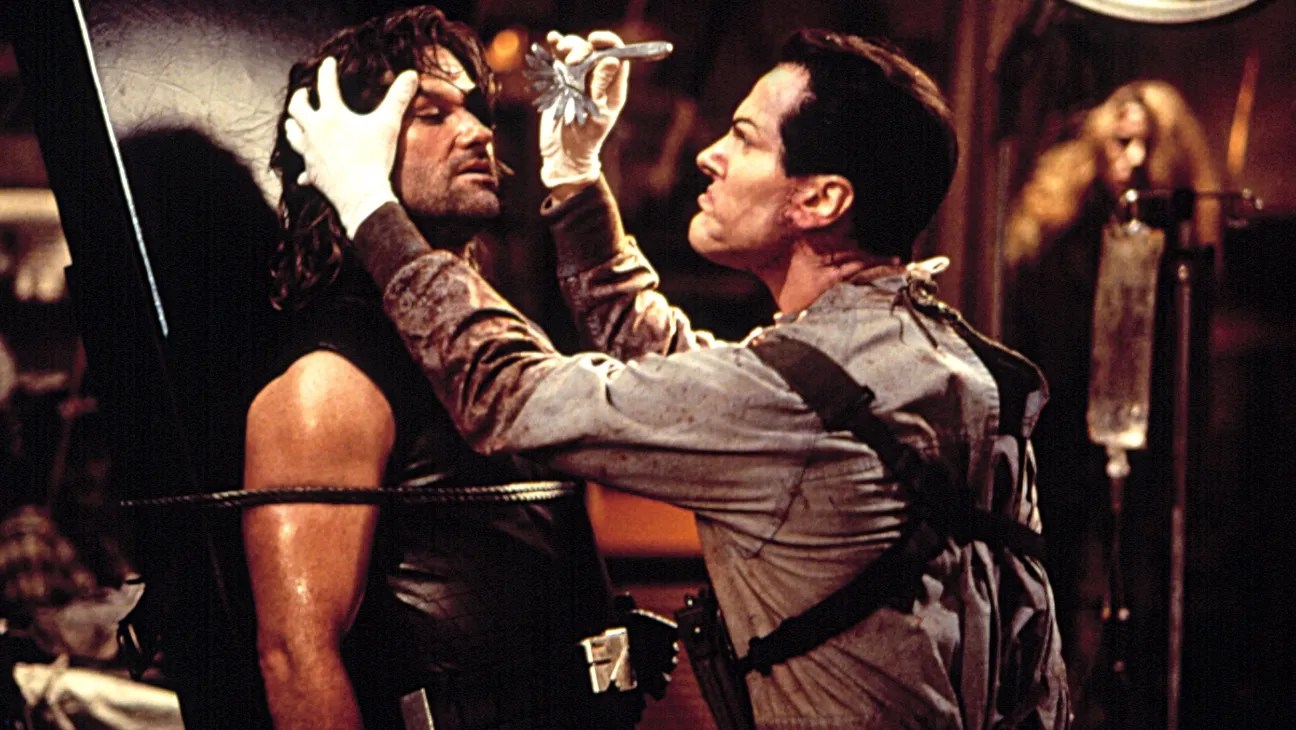
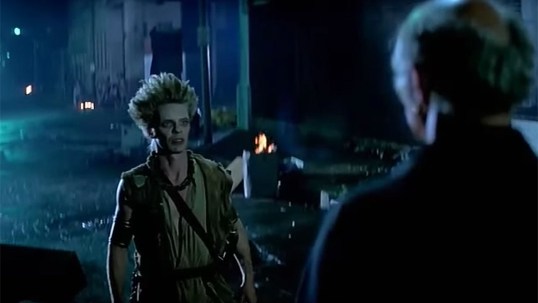
Escape From L.A. (1996, dir by John Carpenter, DP: Gary B. Kibbe)
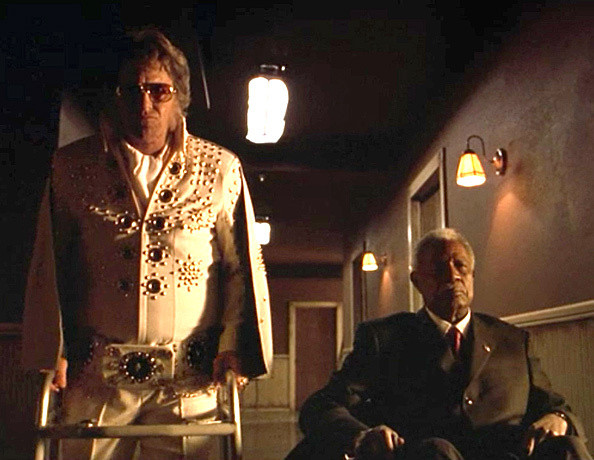
Bubba Ho-Tep (2002, dir by Don Coscarelli, DP: Adam Janiero)
4 Or More Shots From 4 Or More Films is just what it says it is, 4 shots from 4 of our favorite films. As opposed to the reviews and recaps that we usually post, 4 Shots From 4 Films lets the visuals do the talking!
Today, we pay tribute to the year 1981 with….
4 Shots From 4 1981 Films
Christiane F. (1981, dir b Uli Edel, DP: Justus Pankau and Jürgen Jürges)
The Beyond (1981, dir by Lucio Fulci, DP; Sergio Salvati)
Escape From New York (1981, dir by John Carpenter, DP: Dean Cundey)
4 Shots From 4 Films is just what it says it is, 4 shots from 4 of our favorite films. As opposed to the reviews and recaps that we usually post, 4 Shots From 4 Films lets the visuals do the talking!
The aliens are here …. or are they?
4 Shots From 4 Alien Invasion Films
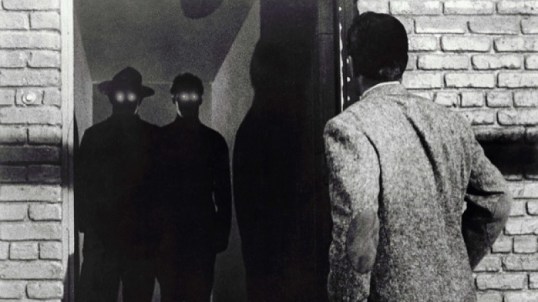
It Came From Outer Space (1953, dir by Jack Arnold, DP: Clifford Stine)
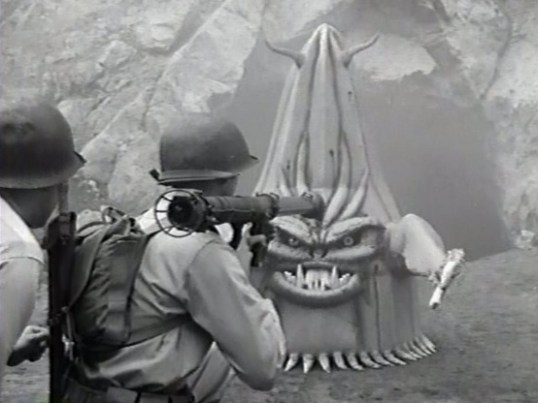
It Conquered The World (1956, dir by Roger Corman, DP: Fred E. West)
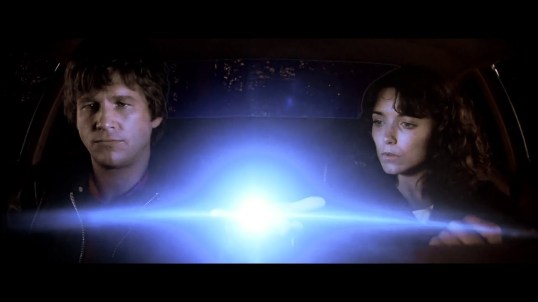
Starman (1984, dir by John Carpenter. DP: Donald M. Morgan)
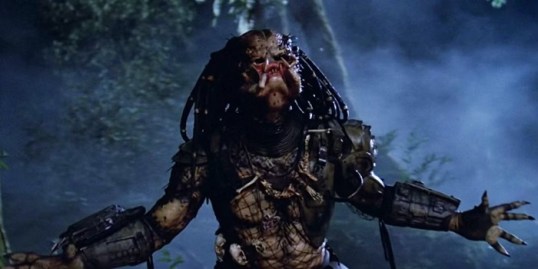
Predator (1987, directed by John McTiernan, DP: Donald McAlpine)
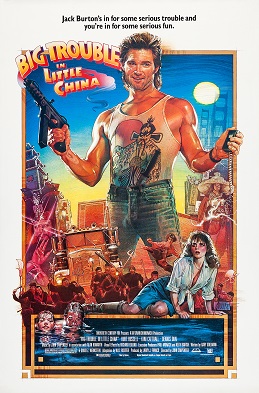
Jack Burton (Kurt Russell) is not a complicated person. He drives a truck for a living. He’s loyal to his friends. He likes a good beer and a pretty girl. He tries to do the right thing so when the fiancée of his best friend, Wang Chi (Dennis Dun), is kidnapped, he teams up with Wang to rescue her. And when Jack’s truck gets stolen after he runs over an evil, ancient Chinese sorcerer named Lo Pan (James Hong), Jack just wants to get his truck back. Instead, Jack finds himself in the middle of an ancient battle between good and evil as Lo Pan searches for a green-eyed woman to sacrifice so that he can defeat a curse that was put upon him centuries ago.
Big Trouble In Little China is one of John Carpenter’s most exuberant films. It mixes kung fu action with special effects and a good dose of physical humor from Kurt Russell. When Lisa and I watched this movie a few months ago, Lisa commented that this film was Kurt Russell’s “Bruce Campbell movie,” and the more I think about it, the more I agree. Russell plays Jack with a mix of cockiness and klutziness that should be very familiar to anyone who has followed the adventures of Ash Williams. While Dennis Dun gets to do the typically heroic stuff that you would expect from the star of a movie like this, Russell is just someone who wants to get his truck back and who is consistently weirded-out by the magic around him. Carpenter makes sure that the movie is full of action as he pays tribute to the kung fu films that he watched when he was still in film school. James Hong is great villain and the rest of the cast, including Kim Cattrall as lawyer Gracie Law, all match the energy of Russell, Hong, and Dun. Complete with flying swordsmen, demons with glowing eyes, and a lightning-wielding warrior that probably inspired Mortal Kombat‘s Raiden, Big Trouble In Little China is a fun slice of 80s action.
Unfortunately, the film was not appreciated when it was first released. Stung by the critical reaction to the film, Carpenter abandoned working for the studios and instead become an independent filmmaker. Big Trouble In Little China, however, has stood the test of time and has become better appreciated with age. Today, it’s rightly viewed as one of Carpenter’s best films.
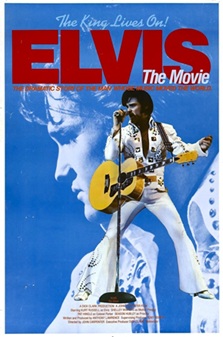
Made for television, it was the first of many biopics to be made about the King of Rock and Roll. Seeing as how it went into production just a year after Elvis’s death and that its script was vetted and approved by Priscilla Presley herself, it’s not surprising that Elvis doesn’t really delve into the darker aspects of his life. Elvis shoots a television, gets frustrated with his bad movies, and wonders who he can trust but we don’t see him get fat nor do we see him popping pills. The movie ends with Elvis making his comeback in 1969, allowing a happy ending for the title character.
The film was directed by John Carpenter. It was his first film to be released after the monster success of Halloween, though Carpenter actually started work on Elvis before Halloween was released. Though the film’s television origins means there aren’t many examples of Carpenter’s signature style in Elvis, Carpenter does a good job recreating Elvis’s performances and, most importantly, he comes up with a film that holds your interest for three hours.
Finally, the role of Elvis is played by Kurt Russell, who was at the time still struggling to prove himself as being something more than just a Disney star. Russell, who made his film debut kicking Elvis in the shins, throws himself into playing the role and captures the look, the swagger, and the voice of Elvis without ever descending into caricature. His singing voice is dubbed for the performances but Russell is still convincing as the King. It takes skill to wear that white jumpsuit without looking like you’re wearing a bad Halloween costume. While this film showed that Russell was capable of more than just Disney films, it even more importantly launched his friendship with John Carpenter. Escape From New York, The Thing, and Big Trouble In Little China all began with Elvis.
The movie doesn’t really tell us anything that we didn’t already know about Elvis but its entertaining and it has a big, colorful cast that include Pat Hingle as Tom Parker, Shelley Winters as Elvis’s mother, and Bing Russell (Kurt’s father) as Elvis’s father. Priscilla is played by the beautiful Season Hubley, who married Kurt Russell shortly after filming. (They divorced in 1983.) Joe Mantegna, Ed Begley Jr., Ellen Travolta, and Dennis Christopher all appear in small roles and do their part to bring Elvis’s world to life. Elvis is a fitting tribute to the King of Rock and Roll, one that gave Elvis a happy ending and started a great collaboration between a director and his star.
As some of our regular readers undoubtedly know, I am involved in a few weekly live tweets on Twitter and Mastodon. I host #FridayNightFlix every Friday, I co-host #ScarySocial on Saturday, and I am one of the five hosts of #MondayActionMovie! Every week, we get together. We watch a movie. We tweet our way through it.
Tonight, at 10 pm et, #FridayNightFlix presents the original 1976 Assault on Precinct 13, from director John Carpenter!
If you want to join us this Friday, just hop onto twitter, start the movie at 10 pm et, and use the #FridayNightFlix hashtag! It’s a friendly group and welcoming of newcomers so don’t be shy.
Assault on Precinct 13 is available on Prime and Tubi! See you there!
John Carpenter has directed 18 features film, from 1974’s Dark Starto 2010’s The Ward. Some of his films have been huge box office successes. Some of his films, like The Thing, were box office flops that were later retroactive recognized as being classics. Carpenter has made mainstream films and he’s made cult favorites and, as he’s always the first to admit, he’s made a few films that just didn’t work. When it comes to evaluating his own work, Carpenter has always been one of the most honest directors around.
Amazingly, Carpenter has only directed one film that received an Oscar nomination.
That film was 1984’s Starman and the nomination was for Jeff Bridges, who was one of the five contenders for Best Actor. (The Oscar went to F. Murray Abraham for Amadeus.) Bridges played the title character, an alien who is sent to Earth to investigate the population and who takes on the form of the late husband of Jenny Hayden (Karen Allen). The Starman takes Jenny hostage, though its debatable whether or not he really understands what it means when he picks up her husband’s gun and points it at her. He and Jenny drive across the country, heading to Arizona so that he can return to his ship. Pursued by the government (represented by the sympathetic Charles Martin Smith and the far less sympathetic Richard Jaeckel), the Starman learns about emotions, eating, love, and more from Jenny. Jenny goes from being fearful of the Starman to loving him. Carpenter described the film as beingIt Happened One Night with an alien and it’s not a bad description.
After Jenny and the alien visitor make love in a boxcar, the Starman says, “I gave you a baby tonight,” and that would be an incredibly creepy line coming from a human but it’s oddly charming when uttered by an alien who looks like a youngish Jeff Bridges. Bridges definitely deserved his Oscar nomination for his role here. Speaking with an odd accent and moving like a bird who is searching for food, Bridges convincingly plays a being who is quickly learning how to be human. The Starman is constantly asking Jenny why she says, does, and feels certain things and it’s the sort of thing that would be annoying if not for the way that Bridges captures the Starman’s total innocence. He doesn’t mean to be a pest. He’s simply curious about everything.
Bridges deserved his nomination and I would say that Karen Allen deserved a nomination as well. In fact, it could be argued that Allen deserved a nomination even more than Bridges. It’s through Allen’s eyes that we see and eventually come to trust and then to love the Starman. Almost her entire performance is reactive but she makes those reactions compelling. I would say that Bridges and Allen deserved an Oscar for the “Yellow light …. go much faster” scene alone.
Carpenter agreed to make Starman because, believe it or not, The Thing had been such a critical and commercial flop that it had actually damaged his career. (If ever you need proof that its best to revisit even the films that don’t seem to work on first viewing, just consider Carpenter’s history of making films that were initially dismissed but later positively reevaluated. Today, The Thing, They Live, Prince of Darkness, and In The Mouth of Madness are all recognized as being brilliant films. When they were first released, they all got mixed reviews.) Carpenter did Starman because he wanted to show that he could do something other than grisly horror. Starman is one of Carpenter’s most heartfelt and heartwarming films. That said, it also features Carpenter’s trademark independent streak. Starman not only learns how to be human but, as a result of the government’s heavy-handed response to his arrival, one can only assume that he learns to be an anti-authoritarian as well.
Starman is one of Carpenter’s best films and also a wonderful showcase for both Karen Allen and Jeff Bridges.



 Through the Shattered Lens