There’s one rule in life that should never be forgotten.
Any movie that opens with Susan Lucci casting a hex that causes a man’s head to explode is going to be worth watching.
That’s certainly the case with Invitation to Hell, a 1984 made-for-TV movie that was directed by Wes Craven and which casts Lucci as Jessica Jones, an insurance agent who lives and works in an upper class suburb in Southern California. Jessica not only sells insurance but she also runs the ultra-exclusive Steaming Springs Country Club! Anyone who is anyone in town is a member of Steaming Springs! That include Matt Winslow (Robert Urich) and his family. Matt soon comes to suspect that something strange might be happening at the club. Fortunately, Matt’s spacesuit comes with a flame thrower, a laser, and a built-in computer that can determine whether or not someone is actually a human being. (Wearing the space helmet means viewing the world like you’re the Terminator.) Soon, it’s science vs. magic as Matt dons the suit and tries to rescue his family from country club living!
Totally ludicrous and a lot of fun, this is a film that has a little bit for everyone — familiar television actors, flamethrowers, space suits, demonic possession, exploding cars, and even a little bit of social satire as the film suggests that living in the suburbs is a terror even without weird country clubs and chic spell casters.
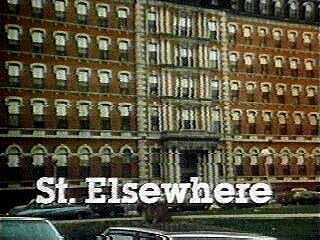
Welcome to Retro Television Reviews, a feature where we review some of our favorite and least favorite shows of the past! On Fridays, I will be reviewing St. Elsewhere, a medical show which ran on NBC from 1982 to 1988. The show can be found on Hulu and, for purchase, on Prime!
This week, Peter White faces the judgment of the medical board.
Episode 2.12 “Hearing”
(Dir by Charles Braverman, originally aired on February 1st, 1984)
At his disciplinary hearing for giving a controlled substance to an undercover officer, Dr. White lies to protect Shirley Daniels. Even though Shirley tossed him the keys to the drugs on that night, White says that he took the keys without Shirley noticing. It’s a rare case of Dr. White actually trying to help someone else. It gets Shirley off the hook but it leads to Dr. White receiving a two-year suspension from working in an ER or prescribing medicine. Westphall and Auschlander both agree that Dr. White’s career is probably over but Westphall, who has been White’s biggest supporter since he returned from rehab, says that they’ll find a place for him in the hospital.
The new X-ray tech, Lee Tovan (Robert Daniels), cannot hear. His supervisor (Raymond Singer) claims that Lee is too difficult to work with. Westphall pledges to support Lee, no matter how much his supervisor complains.
Victor meets Roberta’s wealthy parents and, to everyone’s shock (especially his), he manages to charm them. Victor also asks Dr. Craig if he can use his house for the wedding. Dr. Craig misunderstands and thinks that Victor is asking him to be his best man. Victor explains that he’s already asked his friend, “Dogger,” to be best man. Craig rolls his eyes but agrees to let Victor use the house.
Finally, Dr. Auschlander asks Fiscus to help him get some marijuana to help with his chemo side effects. Fiscus tries and fails to call his old college weed guy and then asks Luther if he knows anyone who deals drugs. Luther rightly points out that Fiscus is stereotyping him but he still manages to get Auschlander a baggie of joints. Auschlander gets high. For a first time smoker, he gets REALLY high! He also ultimately decides that marijuana is not for him.
This episode was a bit uneven. I liked the irony of White saving Shirley, just to potentially lose his own career as a result. (Saying that he stole the keys probably didn’t help his case.) Victor’s wedding storyline has been kind of dragged out more than it needs to be but it’s still entertaining to watch Dr. Craig get frustrated with him. Norman Lloyd was adorable playing stoned. But the storyline about the deaf x-ray tech was sabotaged by some very bad acting and some very heavy-handed writing. That was a shame.
Though the Academy of Motion Picture Arts and Sciences claim that the Oscars honor the best of the year, we all know that there are always worthy films and performances that end up getting overlooked. Sometimes, it’s because the competition too fierce. Sometimes, it’s because the film itself was too controversial. Often, it’s just a case of a film’s quality not being fully recognized until years after its initial released. This series of reviews takes a look at the films and performances that should have been nominated but were, for whatever reason, overlooked. These are the Unnominated.
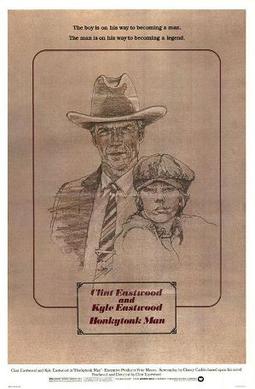
1982’s HonkytonkMan was a Clint Eastwood film that I had never heard of, until I came across it on Prime. I decided to take a chance and I rented it. I’m glad that I did because it turned out to be one of Eastwood’s best films.
Clint stars as Red Stovall, a country singer turned farmer during the Great Depression. Kyle Eastwood stars as Red’s nephew, 14 year-old Whit “Hoss” Wagoneer. When Red gets an opportunity to perform at the Grand Old Opry, he decides to head for Tennessee. Since Red is dying of tuberculosis and barely knows how to drive a car, he is accompanied by Grandpa Wagoneer (John McIntire) and Whit. Whit may be young but he knows how to drive and soon, he’s driving Red and Grandpa across the country. When a highway patrolman (Tim Thomerson) stops them, he says that Whit is too young to drive. After watching a speeding Red struggle to keep the car in the right lane, the patrolman pulls up beside them and says, “Let the kid drive.”
HonkytonkMan features an unexpected performance from Eastwood. Typically, we think of Eastwood’s characters as being the epitome of cool. Red is definitely not that. Red is a screw-up, someone who gets arrested while trying to steal chickens and who frequently gets conned by those that he meets during his journey. When the car breaks down in Arkansas, Red is too busy drinking to remember to catch the bus to Tennessee. He spends the night with a hitchhiker named Marlene (Alexa Kernin). The next morning, Whit wakes Red up and informs him that he only has a few minutes before the next bus leaves. Marlene announces that she’s pregnant. “HOLD THE BUS!” Red yells as he hastily puts on his clothes.
That said, Whit loves his uncle and the two Eastwoods, Clint and Kyle, both give excellent performances in HonkytonkMan. In fact, his performance here is probably the best that Clint Eastwood has ever given. Clint plays with his own image here. Initially, the film almost feels like a satire of Clint’s hypermasculine persona. (There is one scene where Eastwood handles a gun but it doesn’t play out the way that you might expect it to.) But, as the film progresses and Red’s illness grows worse, we start to understand Red and his way of looking at the world. Red is flawed but he loves his nephew and he loves music and, in the end, what’s important is not whether or not his song were recorded but instead that he spent his final days with Whit. The film may start out as a comedy but it ultimately becomes a meditation on aging and how one faces the inevitability of death.
As a director, Eastwood takes his time. He lets the movie play out slowly, with the casual pace of country story. It’s a film full of wonderful performance and beautiful visuals and it more than earns our patience. Wisely, Eastwood the director realizes that this story really isn’t about Red. The story is about Whit (or Hoss, as he asks to be known) and his experiences with his uncle. Whit worships his uncle but he also comes to learn that the most important thing is to be able to respect yourself. In this film, Clint Eastwood knows the story that he’s telling and he knows exactly how to tell it.
HonkytonkMan went unnominated as far as the Oscars are concerned. In the year when the well-intentioned but dramatically inert Gandhi dominated the awards and the nominations, HonkytonkMan was forgotten. That’s a shame.
Today’s horror on the lens is a made-for-tv movie directed by Wes Craven.
First televised in 1984, Invitation to Hell is a wonderfully over-the-top depiction of what happens when an engineer (Robert Urich) sells out and goes to work for a big evil corporation. Long story short, Satan (in the form of Susan Lucci) takes over his family. Admittedly, this film does start slowly but, in the end, it’s a lot of fun.
The 1982 film Missing takes place in Chile, shortly after the American-backed military coup that took out that country’s democratically elected President, Salvador Allende.
Of course, the film itself never specifically states this. Instead, it opens with a narrator informing us that the story we’re about to see is true but that some names have been changed “to protect the innocent and the film.” The film takes place in an unnamed in South America, where the military has just taken over the government. Curfew is enforced by soldiers and the sound of gunfire is continually heard in the distance. Throughout the film, dead bodies pile up in the streets. Prisoners are held in the National Stadium, where they are tortured and eventually executed. Women wearing pants are pulled out of crowds and told that, from now on, women will wear skirts. The sky is full of helicopters and, when an earthquake hits, guests in a posh hotel are fired upon when they try to leave. About the only people who seem to be happy about the coup is the collection of brash CIA agents and military men who randomly pop up throughout the film.
Again, the location is never specifically identified as Chile. In fact, except for the picture of Richard Nixon hanging in the American embassy, the film never goes out of its way to point out that the film itself is taking place in the early 70s. If you know history, of course, it’s obviously meant to be Chile after Allende but the film itself is set up to suggest that the story its telling is not limited to one specific place or time.
Charlie Horman (John Shea) is an American who lives in the country with his wife, Beth (Sissy Spacek). Charlie is a writer who occasionally publishes articles in a local left-wing newspaper. In the aftermath of the coup, Charlie is one of the many people who go missing. All that’s known is that he was apparently arrested and then he vanished into the system. The authorities and the American ambassador insist that Charlie probably just got lost in the confusion of the coup and that he’ll turn up any day. Even though thousands have been executed, everyone assumes that Charlie’s status as an American would have kept him safe. As brutal as the new government may be, they surely wouldn’t execute an American….
Or, at least, that’s what Ed Horman (Jack Lemmon) believes. Ed is Charlie’s father, a businessman from New York who simply cannot understand what’s going on. He can’t understand why his son and his daughter-in-law went to South America in the first place. He can’t understand why his government is not doing more to find his son. And, when he eventually arrives in South America himself, Ed cannot understand the violence that he sees all around him.
Working with Beth, Ed investigates what happened to his son. At first, Ed blames Beth for Charlie’s disappearance and Beth can barely hide her annoyance with her conservative father-in-law. But, as their search progresses, Beth and Ed come to understand each other. Beth starts to see that, in his way, Ed is just as determined an idealist as Charlie. And Ed learns that Charlie and Beth had good reason to distrust the American government…
Costa-Gavras is not exactly a subtle director and it would be an understatement to say that Missing is a heavy-handed film. The Embassy staff is so villainous that you’re shocked they don’t all have mustaches to twirl while considering their evil plans. When, in a flashback, Charlie meets a shady American, it’s not enough for the man to be a CIA agent. Instead, he has to be a CIA agent from Texas who heartily laughs after everything he says and who brags on himself in the thickest accent imaginable. When Charlie talks to an American military officer, it’s not enough that the officer is happy about the coup. Instead, he has to start talking about how JFK sold everyone out during the Bay of Pigs.
As the same time, the film’s lack of subtlety also leads to its best moments. When Beth finds herself out after curfew, the city turns into a Hellish landscape of burning books and dead bodies. As Beth huddles in a corner, she watches as a magnificent white horse runs down a dark street, followed by a group of gun-toting soldiers in a jeep. When Ed and Beth explore a morgue, they walk through several rooms of the “identified” dead before they find themselves in a room containing the thousands of unidentified dead. It’s overwhelming and heavy-handed but it’s also crudely effective. While the film itself is a bit too heavy-handed to really be successful, those scenes do capture the horror of living under an authoritarian regime.
(Interestingly, Missing was a part of a mini-genre of films about Americans trapped in right-wing South American dictatorships. While you can’t deny the good intentions of these films, it’s hard not to notice the lack of films about life in Chavez’s Venezuela or the political dissidents who were lobotomized in Castro’s Cuba.)
Missing won the Palme d’Or at the 1982 Cannes Film Festival (an award that it shared, that year, with the Turkish film Yol) and it also received an Oscar nomination for best picture of the year. (It lost to Gandhi.)
Here’s a good example of why I need to clean out my DVR more regularly:
I recorded the 1983 legal thriller, The Star Chamber, off of Starz on March 14th. I know what you’re saying. “Big deal! That wasn’t that long ago.” Well, did I mention that it was March 14th, 2017?
That’s right! The Star Chamber sat on my DVR for over a year before I finally got around to watching it last night. You’d be justified in asking why it took me so long and I’m afraid that I really couldn’t give you a definite answer. I can, however, tell you the four main reasons why I recorded it in the first place:
I’m always intrigued whenever I come across a movie of which I haven’t previously heard.
The movie was described as being about a conflicted judge and I just happen to love legal films.
I really, really liked the title. The Star Chamber? Did that mean it took place in a room full of stars?
Before I recorded The Star Chamber, I only had 55 films on the DVR. Since I don’t like odd numbers, recording The Star Chamber took care of that problem.
As for the film itself, The Star Chamber is another one of those movies where a group of vigilantes end up getting pissed off because liberal California judges are letting too many murderers go free because of pesky, constitutional technicalities. The twist here is that the vigilantes are the same judges who keep tossing out evidence and ruling that confessions are inadmissible in court. After spending their day setting free the dregs of society, the judges all gather in a nearby house and review the evidence before voting on whether or not they believe the accused was actually guilty. If the verdict is guilty, the judges promptly hire a hit man who proceeds to clean up the streets.
The newest member of this tribunal is Judge Steven R. Hardin (Michael Douglas). Hardin is haunted by the technicalities that forced him to toss out a case against two accused of child murderers. (Making things even worse, the child’s father commits suicide afterward.) Despite his initial reservations, Judge Hardin signs off on hiring an assassin to take the two men out. But, when it becomes apparent that the two men actually were innocent, Judge Hardin is horrified to discover that there’s no way to call off the hit…
The Star Chamber is an oddly constructed movie. When the movie starts, it feels like a typical police procedural. From there, the movie turns into a rather talky examination of the U.S. legal system, with Judge Hardin trying to balance his idealism with the often frustrating reality of what it takes to uphold the law. The movie then briefly turns into a conspiracy film, featuring middle-aged men in suits holding secret meetings and debating whether or not they’re serving the greater good. And then, towards the end of the movie, it turns into an action film, with Judge Hardin being chased by two drug dealers, a contract killer, and a suspicious police detective (Yaphet Kotto). Judge Hardin may start the movie as a conflicted liberal but he ends at someone who can blow up the entire second floor of a drug lab. In many ways, The Star Chamber is a deeply silly film but, as directed and co-written by Peter Hyams, it’s also just pulpy enough to be entertaining. The dialogue may be over-the-top but so is Michael Douglas’s performance so it all evens out in the end.
It may have taken me a while to get around to watching The Star Chamber but I’m glad that I finally did. It’s a ludicrous film and all the more entertaining as a result.
Much like yesterday’s offering of Summer of Fear, today’s horror on the lens is a made-for-tv movie directed by Wes Craven.
First televised in 1984, Invitation to Hell is a wonderfully over-the-top depiction of what happens when an engineer (Robert Urich) sells out and goes to work for a big evil corporation. Long story short, Satan (in the form of Susan Lucci) takes over his family. Admittedly, this film does start slowly but, in the end, it’s a lot of fun.



 Through the Shattered Lens