Lisa Reviews An Oscar Nominee: Great Expectations (dir by David Lean)


“My Christian name was Philip Pirrip, which I pronounced Pip….”

SHUT UP, PIP!

Seriously, there’s a lot of good things that can be said about Charles Dickens’s Great Expectations but most readers simply can’t get past the fact that the narrator insists on being called Pip.  I don’t necessarily blame them, as Pip might be a good nickname for a child but, by the time you’re 16, you should be demanding that everyone call you Phil.  That said, I’ve always liked Great Expectations.  Despite the fact that Charles Dickens could be a terribly pedantic writer, the plot of Great Expectations is genuinely interesting and the book is full of interesting characters, the majority of whom don’t demand to be known by their childhood nicknames.  Plus, I’ve always related to Estella.

The 1946 film adaptation of Great Expectations was at least the third movie to be made from the novel and it would be followed by many more.  (In 1998, there was a modernized version where Pip was wisely renamed Finn.)  Still, the 1946 adaptation is the best.  As directed by David Lean (and based on a stage version that was put together by none other than Alec Guinness), Great Expectations remains true to the source material while, at the same time, cutting away a lot of extraneous material.  As a result, Lean’s film version of the story maintains a clear narrative momentum, which is something that eluded Dickens in his sprawling original.

John Mills plays Pip, an orphan who is being raised by his wicked aunt and her husband, the simple but kind-hearted blacksmith, Joe Gargery (Bernard Miles).  One night, Pip helps out an escaped convict named Magwitch (Finlay Currie) and, though Magwitch is eventually recaptured, that one act of kindness will determine the rest of Pip’s life.

Pip is invited to visit the mansion of a recluse named Miss Havisham (Martita Hunt) and it’s there that he first meets and falls in love with the beautiful but rather cold-hearted Estella (Jean Simmons and then, after Estella grows up, Valerie Hobson).  Of course, what Pip doesn’t realize is that Miss Havisham has specifically raised Estella to destroy the hopes and dreams of every man that she meets.

Eventually, Pip grows up and discovers that he has a mysterious benefactor who feels that Pip should be transformed into a gentlemen so that he might be able to meet the “great expectations” that the benefactor has for him.  Pip, of course, assumes that it’s Miss Havisham but even those who haven’t read the book will probably suspect that there’s more to it than just that.  Pip moves to London, where he stays with Herbert Pocket (Alec Guinness), a pale young man (for that’s how Dickens described him) who teaches Pip that a gentleman does not use his knife as a fork.  Herbert was always my favorite character in the book and he’s my favorite character in the film, largely because he’s played by the totally charming Alec Guinness.

Anyway, Pip becomes a bit of a snob but eventually, he discovers the truth about his benefactor and the last few years of his life.  It causes him to not only rip down a lot of curtains but also to reconsider what it truly means to be a a gentleman.

It’s all very well-done, largely because David Lean doesn’t allow the fact that he’s making a film out of a great novel get in the way of telling a good story.  The film is well-acted by a wonderful cast of British thespians, all of whom manage to make even the most artificial of scenes and lines seem naturalistic and believable.  Even though Pip is a bit of a jerk, John Mills manage to turn him into a sympathetic character.  (Mills plays Pip as if he himself cannot stand the fact that he’s turned into such a snob.)  Both Jean Simmons and Valerie Hobson do a wonderful job of bringing the potentially problematic character of Estella to life and Bernard Miles is wonderfully empathetic in the role of the Joe Gargery.  The scene where a nervous Gargery first meets Pip after Pip has become a gentleman is a true example of great acting.

Not surprisingly, Lean also does a great job of bringing 19th century England to life.  Watching this film is a bit like stepping into a time machine and going back to the Dickensian era.  As filmed by Lean, London is as bright and vibrant as Pip’s childhood home is dark and constraining.  When Pip finds Magwitch on the beach, Lean directs the scene as if it were from a film noir.  When Pip enters the darkened home of Miss Havisham and meets the beautiful but destructive Estella, the film flirts with becoming a Rebecca-style gothic romance.  And when it’s just Pip and Herbert Pocket talking, it becomes a comedy of manners.  Not surprisingly, Great Expectations won Oscars for both its art design and its gorgeous black-and-white cinematography.

Great Expectations was also nominated for Best Picture.  However, it lost to Gentleman’s Agreement.

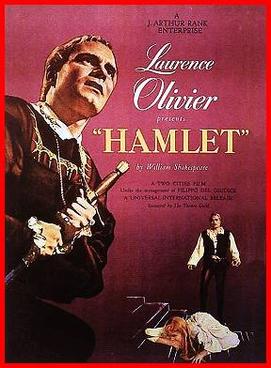
Lisa Reviews An Oscar Winner: Hamlet (dir by Laurence Olivier)


(With the Oscars scheduled to be awarded on March 4th, I have decided to review at least one Oscar-nominated film a day.  These films could be nominees or they could be winners.  They could be from this year’s Oscars or they could be a previous year’s nominee!  We’ll see how things play out.  Today, I take a look at the 1948 best picture winner, Hamlet!)

Hamlet is a film of firsts.

It was the first British production to win the Oscar for Best Picture.  In winning, it beat out three American films (Johnny Belinda, The Snake Pit, and The Treasure of the Sierra Madre) and one other British film (The Red Shoes).

It was also the first adaptation of Shakespeare to win Best Picture.  Of course, it wasn’t the first Shakespeare adaptation to be nominated.  That honor would go to 1935’s A Midsummer Night’s Dream.  Adaptations of Romeo and Juliet would be nominated in 1936, 1961, and 1968.  Henry V (which, like Hamlet, was directed by and starred Laurence Olivier) was a 1946 nominee.  Then there was 1953’s Julius Caesar.  The Dresser featured scenes from Shakespeare.  Shakespeare in Love imagined the circumstances behind the writing of Romeo and Juliet.  However, Hamlet was the first to win.

It also remains the only traditional Shakespearean adaptation to win.  West Side Story updated Romeo and Juliet while Shakespeare in Love … well, let’s just not get into it.

It was the first Best Picture winner to be directed by the man starring in the movie.  Laurence Olivier was nominated for both Best Director and Best Actor.  He lost the directing Oscar to John Huston but he won for his performance as Hamlet.  In winning, he became the first actor to direct himself to an Oscar.

Finally, Hamlet was the first of 24 films to feature both Peter Cushing and Christopher Lee!  In fact, this was Lee’s film debut.  Now, before anyone gets too excited, I should point out that Cushing and Lee don’t actually interact.  In fact, Lee doesn’t even speak in the film.  He appears in the background as a Spear Carrier and it’s pretty much impossible to spot him.  He has no dialogue and wasn’t even listed in the final credits.  From what I’ve read, I don’t think Lee and Cushing even knew each other at the time and, when they later met, they were surprised to learn that they had both appeared in the film.  For his part, Cushing plays Osiric, the courtier who everyone remembers because he had such a cool name.

It’s always fun to play “what if.”  Rosencrantz and Guildenstern do not appear in Olivier’s adaptation of the play.  To modern audiences, that might seem strange but, really, that’s just because we’re all familiar with the two characters from Tom Stoppard’s Rosencrantz and Guildenstern Are Dead.  When Olivier filmed Hamlet, he excised portions of the play in the interest of time.  (Hamlet uncut runs over four hours.  Olivier’s version clocks in at nearly three.)  Rosencrantz, Guildenstern, Fortinbras, and the second gravedigger are all dropped from Olivier’s version and, to be honest, none of them are particularly missed.

And yet … as I watched Hamlet, I found myself wondering what would have happened if Olivier had kept Rosencrantz and Guildenstern around and had cast Cushing and Lee in those roles.  It probably wouldn’t have happened, of course.  Cushing maybe but Lee was a total unknown at the time.  Still, how amazing would that have been?

As for the actual film, Olivier’s Hamlet turned out to be far more cinematic than I was anticipating.  Olivier’s camera snakes through the darkened hallways of Elsinore Castle while Olivier’s Hamlet veers between self-righteous fury and apparent madness as he seeks revenge on his Uncle Claudius (Basil Sydney).  As Hamlet grows more obsessed with death and vengeance, the castle seems to grow darker and the hallways even more maze-like, as if the castle’s changing shape to conform with the turmoil in Hamlet’s mind.  Among the cast, Jean Simmons is poignantly fragile as Ophelia while Eileen Herlie is the perfect Gertrude, despite being 12 years younger than the actor playing her son.  Olivier gives a wonderfully physical performance as Hamlet, killing Polonious with a demented gleam in his eye and literally leaping towards his uncle at the end of the film.

If you’re one of those people who thinks that Shakespeare is boring … well, Olivier’s Hamlet probably won’t change your mind.  One thing I’ve noticed about the “Shakespeare is boring” crowd is that nothing can change their minds.  But, for the rest of us, Olivier’s Hamlet is an exciting adaptation of Shakespeare’s more difficult play.

You won’t miss Rosencrantz and Guildenstern at all.  And seriously, Fortinbras who?

http://www.youtube.com/watch?v=9G8LjlR60bw

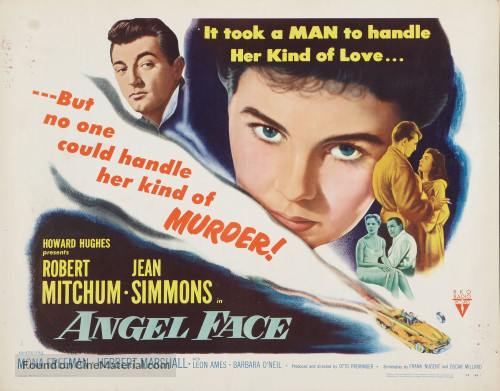
Devil in Disguise: ANGEL FACE (RKO 1952)


gary loggins's avatarcracked rear viewer

angelface1

I saved ANGEL FACE for last in this week’s look at RKO/Robert Mitchum films because it’s been  hailed as a near-classic by many film noir fans. It’s certainly different from HIS KIND OF WOMAN and MACAO; much darker in tone, and features an unsympathetic performance by Mitchum. It’s more in the noir tradition of bleak films like DETOUR and BORN TO KILL. But better than the other two? That depends on your point of view. Let’s take a look:

An ambulance screams its way to the Tremayne home in ritzy Beverly Hills. The wealthy Mrs. Catherine Tremayne has been subjected to a gas leak of unknown origin. One of the ambulance drivers, Frank Jessup, comes across beautiful Diane playing the piano. She bursts into hysterics, and Frank smacks her, receiving one in return.  After she calms down, Frank and his partner Bill head home. Frank has a date with his girl Mary…

View original post 709 more words

Lisa’s Thoughts On 10 Best Picture Nominees That She’s Recently Seen: The Alamo, Becket, Elmer Gantry, Gaslight, Gladiator, Kramer Vs. Kramer,Marty, Of Mice and Men, Out of Africa, and Wilson


Since it’s Oscar weekend, I’ve been watching past and present Best Picture nominees like crazy.  Here are my thoughts on ten of them.
The Alamo (1960, directed by John Wayne, lost to The Apartment) — I’m a Texan which means that I’m legally required to watch both this film and the 2004 remake whenever they show up on television.  Both films are way too long and feature way too many characters speaking speeches as opposed to dialogue but, if I had to choose, I would have to go with the 1960 version of the story.  The original Alamo might be heavy-handed, poorly paced, and awkwardly acted but at least it’s sincere in its convictions.  I always cry when Richard Widmark dies.

Becket (1964, directed by Peter Glenville, lost to My Fair Lady) — This one is a personal favorite of mine.  The film is about the friendship and the eventual rivalry of King Henry II (Peter O’Toole) and Thomas Becket (Richard Burton).  Becket and Henry II start out the film drinking and whoring but eventually, Henry makes Becket Archbishop of Canterbury.  Becket, however, rediscovers his conscience and soon, Henry is famously asking, “Who will rid me of this troublesome priest?”  Becket is an exciting historical drama and Peter O’Toole is at his absolute best as the flamboyantly decadent Henry.
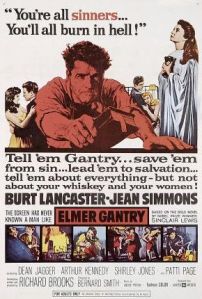
Elmer Gantry (1960, directed by Richard Brooks, lost to The Apartment) — Burt Lancaster plays Elmer Gantry, a traveling salesman and con artist who ends up falling in love with a saintly evangelist (played by Jean Simmons).  Gantry soon starts preaching himself and soon has an army of loyal followers.  However, Gantry’s new career is threatened when an ex-girlfriend-turned-prostitute (Shirley Jones) pops up and starts telling people how Gantry “rammed the fear of God into” her.  With its unapologetically corrupt lead character and its looks at how commerce and religion are often intertwined, Elmer Gantry makes a perfect companion piece to Paul Thomas Anderson’s There Will Be Blood.  Lancaster won an Oscar for his powerful and intense performance in the title role.
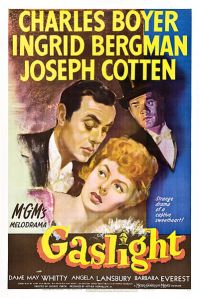
Gaslight (1944, directed by George Cukor, lost to Going My Way) — Evil Charles Boyer marries Ingrid Bergman and then attempts to drive her crazy.  Luckily, Inspector Joseph Cotten is on the case.  Gaslight is, in many ways, an old-fashioned melodrama but it’s still a lot of fun to watch.  Boyer is a suave devil and Joseph Cotten (one of my favorite of the old film actors) is a dashing hero.
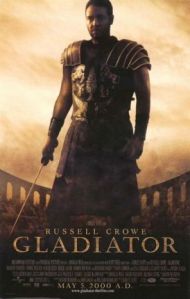
Gladiator (2ooo, directed by Ridley Scott, won best picture) — One thing that I’ve recently discovered is that men love Gladiator.  Seriously, they obsess over this film and hold Russell Crowe’s surly gladiator up as some sort of mystical ideal and if you dare to say a word against it in their presence, be ready for big and long argument.  So, I won’t criticize Gladiator too much other than to say that the film has always struck me as being kinda overlong, that the CGI is occasionally cartoonish, and that, despite his fearsome reputation, Russell Crowe is a lot more interesting as an actor when he plays a thinker as opposed to a fighter.  Joaquin Phoenix, playing the Emperor Commodus, is a lot of fun to watch.
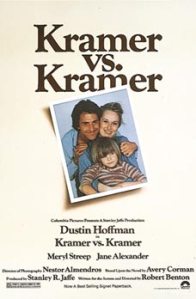
Kramer Vs. Kramer (1979, directed by Robert Benton, won best picture) — Dustin Hoffman plays a workaholic New York advertising executive who, after his wife Meryl Streep leaves him, ends up as a single father.  Kramer Vs. Kramer won best picture in 1979 but I have to admit that I didn’t care much for it.  Then again, I don’t think that I was the intended audience.  Instead, Kramer vs. Kramer appears to have been made to appeal to men frustrated with women wanting to have a life outside of being a domestic servant.  The film is well-acted though Hoffman’s character becomes insufferably smug once he gets comfortable with being a single father.
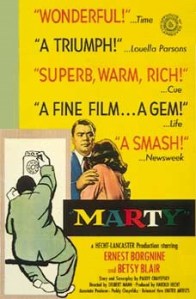
Marty (1955, directd by Delbert Mann, won best picture) — Lonely butcher Marty (Ernest Borgnine) romantically pursues a shy school teacher named Clara (Betsy Blair).  However, Marty’s friends and his family don’t like Clara and Marty soon finds himself having to choose between them.  Marty is a bit of an anomaly when it comes to best picture winners.  It’s not an epic, it doesn’t claim to solve any of the world’s problems, and it’s based on a tv show.  However, it’s also a sincerely sweet and heartfelt  film and also features excellent performances from Borgnine and Blair.
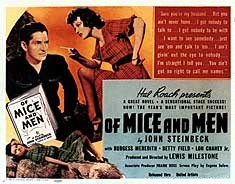
Of Mice and Men (1939, directed by Lewis Milestone, lost to Gone With The Wind) — “Tell me about the rabbits, George.”  Yes, it’s that film.  Smart and little George (Burgess Meredith) and big but simple Lenny (Lon Chaney, Jr.) are migrant farm workers who get a job working at ranch where Lenny ends up accidentally killing the rancher’s daughter-in-law.  Despite the fact that we all now tend to naturally smirk when we hear anyone say “Tell me about the rabbits, George,” Of Mice and Men remains an effective tear-jerker and both Meredith and Chaney give strong performances.
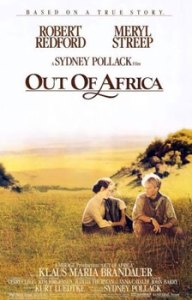
Out of Africa (1985, directed by Sydney Pollack, won best picture) — I recently sat down to watch this film because 1) my aunts love this film and get excited whenever they see that it’s going to be on TV and 2) Out of Africa was named the best film of the year I was born.  So, I sat down and watched it and then three or five hours later, I realized that the film was nearly over.  Anyway, the film is about a Danish baroness (Meryl Streep) who moves to a plantation in Africa and ends up having an affair with a British big game hunter.  The hunter is played by Robert Redford, who refuses to even try to sound British. (USA! USA! USA!)  Anyway, the film is pretty in that generic way that most best picture winners are but the film ultimately suffers because its difficult to care about any of the characters.  Streep acts the Hell out of her Danish accent but she and Redford (who seems to be bored with her) have absolutely no chemistry. I saw one review online that dismissed Out of Africa as a “big budget Lifetime movie” but Lifetime movies are a lot more fun.
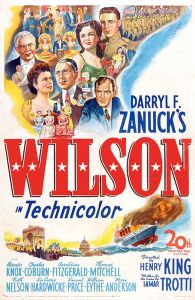
Wilson (1944, directed by Henry King, lost to Going My Way) — Wilson is a two-and-a-half biopic about Woodrow Wilson and his presidential administration.  Wilson is well-played by Alexander Knox, who later showed up in countless exploitation films.  Wilson shows up on cable occasionally and every time I’ve seen it, I’ve had mixed feelings about it.  The critical part of me tends to be dismissive of this film because it’s way too long, extremely stagey, and it glosses over the fact that Wilson was a virulent racist who idolized the Ku Klux Klan.  However, as a secret history nerd, I can’t help but enjoy seeing a film where Vincent Price plays the Secretary of the Treasury.
A Quickie With Lisa Marie: The Robe (dir. by Henry Koster)


As part of my mission to view every film — good or bad — ever nominated for best picture, I spent last night watching 1953’s The Robe (which was nominated for best picture but lost to From Here To Eternity.)  The Robe is an old school biblical epic, the type of film that used to regularly get nominated for best picture but which you don’t see much of anymore.  If you’re wondering why that genre hasn’t stood the test of time, I’d suggest watching The Robe.

Richard Burton stars as Marcellus, a womanizing Roman centurion who falls in love with young, pure noblewoman Diana (Jean Simmons).  Unfortunately, Diana is set to marry the decadent Caligula (Jay Robinson).  (Yes, that Caligula…)  Burton’s rivalry with Caligula leads to him being reassigned to Jerusalem where he not only witnesses the crucifixion but also wins Jesus’ robe in a dice game.  However, Marcellus soon finds himself being haunted by nightmares of the crucifixion and he discovers that he can’t even wear the robe without having a seizure.  His slave, Demetrius (played by musclebound Victor Mature) has secretly become a Christian and steals The Robe before disappearing into the Holy Land.  As Marcellus, who believes that only by destroying the robe can he free himself from his guilt, searches for Demetrius, he is reunited with Diana and, since this is an old school biblical epic, he also ends up converting as well.  Unfortunately, he does all this around the same time that Caligula becomes Emperor and (in this film if not in actual history) begins to persecute the early Christians.

The Robe was the first film to made in “Cinemascope” and, while that may have been an amazing development back in 1953, when watched today, it’s obvious how much of the film is really just made up of filler designed to show off the new process.  Again, it may have been amazing at the time but today, it just seems like a slow movie.  Even more importantly, The Robe itself is so reverent and respectful of its subject that it’s just not that interesting.  Speaking as a nonbeliever, I’ve still sometimes feel that a lot of contemporary films make it a point to ridicule Christians because they’re an easy target.  Unlike a certain other world-wide religion, most Christians aren’t going to blow you up just because you featured an image of Jesus in your movie.  However, movies like The Robe were not only extremely reverent and respectful but they went out their way to let you know how reverent and respectful they were being.  The result is a film that lack any hint of nuance or anything that might actually challenge the audience.  It’s like Avatar with Jesus

Since he’s best known for being an alcoholic and marrying Elizabeth Taylor, Richard Burton might seem like an odd choice to play an idealistic Christian martyr.  And, quite frankly, he is.  Throughout the film, he’s visibly uncomfortable and, quite frankly, he didn’t have the legs necessary to pull off the ancient Roman look either.  Jean Simmons is also stuck playing a stock character — the virtuous maiden.  As with a lot of the old school biblical epics, the lead characters are so boring that you can’t help but feel they had more fun as pagans.  Meanwhile, poor Victor Mature wanders through the film struggling to show anything resembling emotion.   I mean, he tries so hard that its impossible not to like him.  At the very least, The Robe proves that any film featuring Victor Mature will have some sort of camp value. 

(As I watched The Robe, I kept thinking about a comment that Groucho Marx supposedly made.  Apparently, he said he wouldn’t watch any movie starring Victor Mature because “I won’t watch any movie where the guy’s tits are bigger than the girl’s.”)

The Robe does feature some interesting supporting performances from several wonderful B-movie character actors.  Jay Robinson is obviously having the time of his life playing the Emperor Caligula.  Robinson’s version isn’t quite as effective as Malcolm McDowell’s but Robinson is a  lot more fun to watch.  Richard Boone is effectively slovenly in the role of Pilate and there’s a nice little throw-away scene where Pilate absent-mindedly washes his hands twice.  Meanwhile Ernest Thesiger (who played Dr. Pretorious in the Bride of Frankenstein) is an oddly benevolent Emperor Tiberius while Michael Rennie, the alien from the original The Day the Earth Stood Still, plays none other than St. Peter.  Even Jeff Morrow (from This Island Earth) has a small role.

Like most of the old school Hollywood biblical epics, The Robe seems pretty hokey when viewed today and I get the feeling it probably seemed hokey when it was first released back in 1953.  Still, I remember that my Grandma Meehan used to love to watch these movies whenever they would show up on television.  She would have deep theological debates with the images that flickered across the screen.   I can still remember spending multiple Easters listening to her argue with The Ten Commandments.  I don’t know if Grandma ever saw The Robe but I do know that she believed that the Holy Tunic was presently located in France and not at the Cathedral of Trier in Germany.  Seriously, you did not want to question her on this point. 

To be honest, watching this type of film is always an odd experience for me.  Up until recently, I described myself as a “fallen Catholic” and I always felt so proud of myself afterward.  I could spend hours telling you why I no longer believed in the faith of my childhood and I could get quite smug about it.  I guess I still can but, as of late, I’ve discovered that humility goes well with a lack of faith.  I’ve also been forced to admit that when you’re raised Catholic, you’re a Catholic for life regardless of whether you believe in the Holy Trinity or not.  If pressed, I guess I’d call myself “an agnostic Catholic.”  I’m the type of nonbeliever who still feels the need to go to confession after a long weekend.  It’s not so much that I doubt my doubt as much as I wish that I could still go back to a time in my life when I actually could have faith without feeling like I was in denial.  So, even as I openly scoff at these films, there’s always that small part of my heart that wants to embrace the film in all of its simplistic and hokey glory.

That said, it’s also true that The Robe is a lot easier to resist than a film like Pasolini’s The Gospel According to Saint Matthew or, for that matter, The Exorcist.