Retro Television Review: Homicide: Life on the Street 4.8 “Sniper, Part One”


Welcome to Retro Television Reviews, a feature where we review some of our favorite and least favorite shows of the past!  On Sundays, Lisa will be reviewing Homicide: Life On The Street, which aired from 1993 to 1999, on NBC!  It  can be viewed on Peacock.
This week, a sniper terrorized Baltimore.

Episode 4.8 “Sniper, Part One”

(Dir by Jean de Segonzac, originally aired on January 5th, 1996)

This week, Bayliss investigates a red ball!

Actually, the case turns out to be a red ball within a red ball!

And then it turns into a third red ball!

A red ball is a term used for a case that is going to draw a lot of media attention and which is going to result in pressure from the guys in command.  It’s an actual term, one that was introduced in the David Simon book that served as the inspiration for Homicide.  I’m pretty sure that the term was also used in The Wire, though perhaps not as much as it was used in Homicide.

It’s hard not to notice that, starting with the third season, there have been a lot of red balls on Homicide.  If one were to judge solely based on seasons 3 and 4, one might be justified in thinking that Baltimore was the serial killer capitol of the world.  That’s not really a complaint because most of the red ball episodes have been pretty entertaining.  Still, it’s very much a contrast to the first two seasons, where the emphasis was always put on gritty realism and the recurring theme was that, outside of the Homicide detectives, the media didn’t really care about the majority of the murders taking place in Baltimore because the victims were almost always minorities in economically disadvantaged neighborhoods.

This latest red ball involves a sniper who is gunning down people at random and leaving behind a hangman game at each location.  He’s trying to figure out a 9-letter word.  It’s an odd motivation but serial killers are odd people.  Bayliss, who is suffering from back pain and popping muscle relaxants like candy, gets the case because, as he continually reminds us, he was the one who answered the phone.  (Somehow, Bayliss does manage to get through the investigation without bringing up Adena Watson.)

While Bayliss tries to find a killer who shoots people at random, Russet deals with the brass.  Colonel Barnfather, who was originally quite enthusiastic about promoting her, now suddenly hates her and the episode ends with Russert getting demoted back down to being a detective.  (So, I guess that Giardello’s homicide squat will be getting a new investigator.)  Russert’s demotion felt like it came out of nowhere but, from a dramatic point of view, it made sense.  This show already has Giardello as the beloved boss.  It didn’t also need Russert in the role.

As for the killer, he is tracked down by his signature on the receipt that he signed when he purchased his chalk.  He turns out to be a nervous insurance agent who has a big house in the suburbs and who is playing a hangman game in his study.  When Bayliss attempts to negotiate with him and asks him to leave the study, the insurance agent asks for a letter.  “Uhmm …. B,” Bayliss says.  B turns out to be just the letter that was needed and the insurance agent promptly shoots himself in the head.

The word that he was trying to come up with turns out to be Eromitlab.  Look at in a mirror.

This was a good episode, even if it did sometimes go a bit over the top with everyone shouting, “We’ve got a red ball!” and the nonstop montages of the detectives swarming the streets of Baltimore.  I’ve really grown to love Kyle Secor’s performance as Tim Bayliss and this episode featured Bayliss at his loopy best.  For an episode about a serial sniper who ended up killing eight people, there was a rather odd sense of humor running through it.  This is an episode that started with Jay Leno coming in the Waterfront Bar.  (Munch tells Bayliss that Leno is probably sick of people treating him like he’s famous so they decide to ignore him until Leno gets mad and leaves the bar.)  When the first shooting is called in, the phone rings several times before anyone is able to answer, leading to Munch to question whether a murder has actually occurred if no one answers the phone.  Bayliss obsesses on his upcoming back surgery.  “Its says a possible side effect is death!” Bayliss exclaims, looking over the information about the operation.  Meanwhile, Brodie gets on everyone’s nerves with his big video camera.

Ominously, this episode with a second sniper climbing up to the roof of the building.  The red balls continue.


6 Shots From 6 Films: Special 1996 Edition


6 Shots From 6 Films is just what it says it is, 6 shots from 6 of our favorite films. As opposed to the reviews and recaps that we usually post, 6 Shots From 6 Films lets the visuals do the talking!

Today, we take a look at a classic cinematic year.  It’s time for….

6 Shots From 6 1996 Films

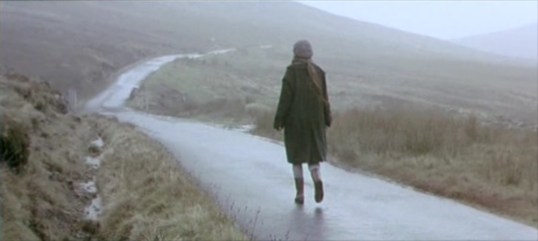
Breaking the Waves (1996, dir by Lars Von Trier, DP: Robby Muller)

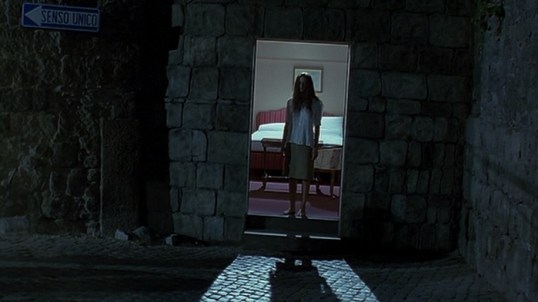
The Stendhal Syndrome (1996, dir by Dario Argento, DP: Giuseppe Rotunno)

Fargo (1996, dir by the Coen Brothers, DP: Roger Deakins)

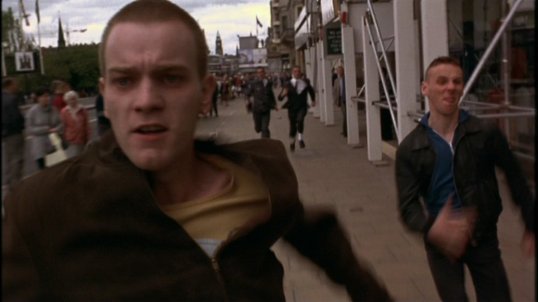
Trainspotting (1996, dir by Danny Boyle, DP: Brian Tufano)

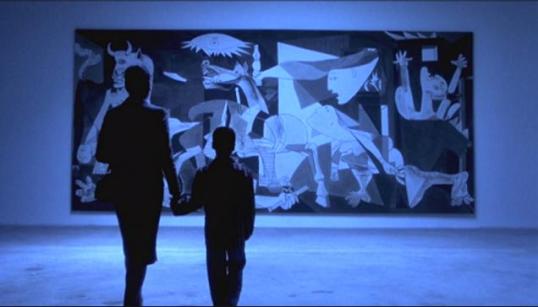
Basquiat (1996, dir by Julian Schnabel, DP: Ron Fortunato)

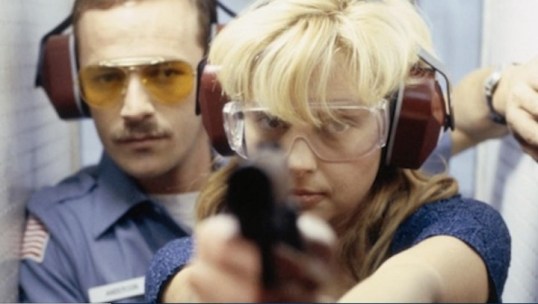
Normal Life (1996, dir by John McNaughton, DP: Jean de Segonzac)

4 Shots From 4 Film: Special John McNaughton Edition


4 Shots From 4 Films is just what it says it is, 4 shots from 4 of our favorite films. As opposed to the reviews and recaps that we usually post, 4 Shots From 4 Films is all about letting the visuals do the talking.

Today is the birthday of director John McNaughton!  It’s time for….

4 Shots From 4 John McNaughton Films

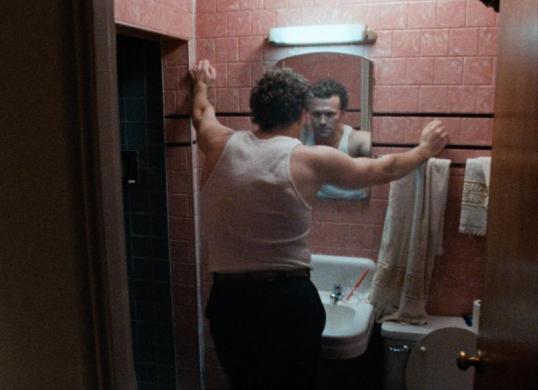
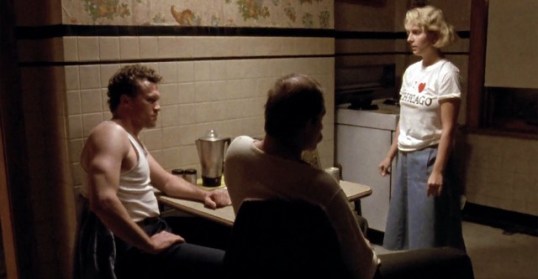
Henry: Portrait of a Serial Killer (1986, dir by John McNaughton, DP: Charles Lieberman)

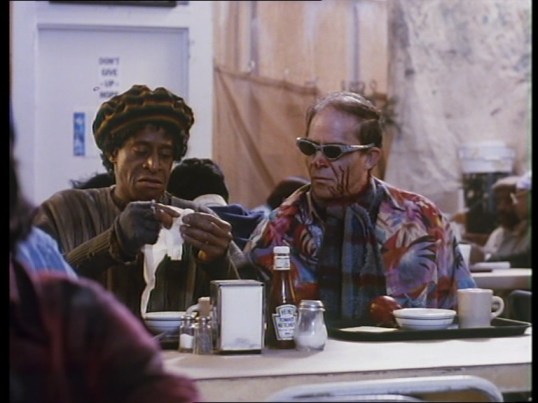
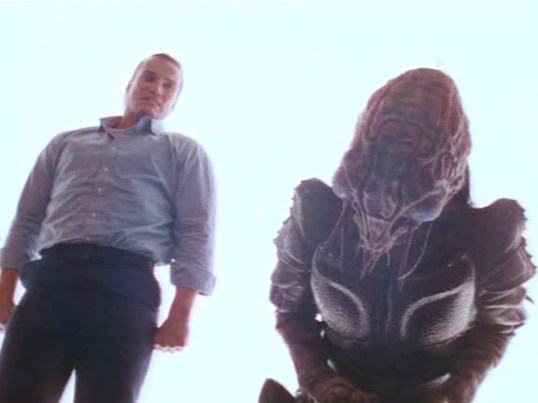
The Borrower (1991, dir by John McNaughton, DP: Julio Mucat and Robert C. New)

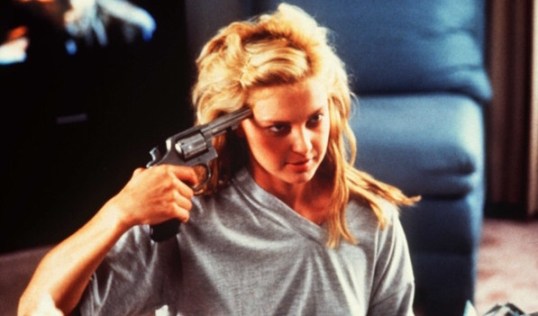
Normal Life (1996, dir by John McNaughton, DP: Jean de Segonzac)

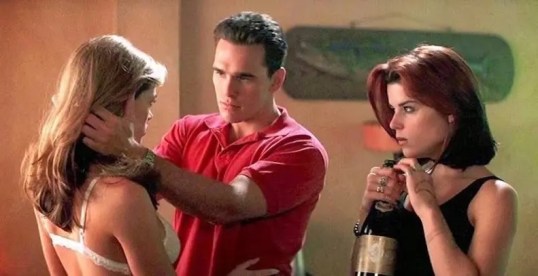
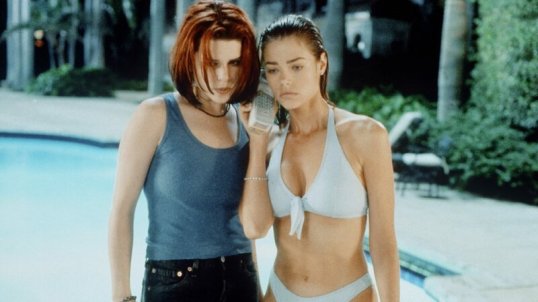
Wild Things (1998, dir by John McNaughton, DP: Jeffrey L. Kimball)

4 Shots From 4 Film: Special John McNaughton Edition


4 Shots From 4 Films is just what it says it is, 4 shots from 4 of our favorite films. As opposed to the reviews and recaps that we usually post, 4 Shots From 4 Films is all about letting the visuals do the talking.

Today is the birthday of director John McNaughton!  It’s time for….

4 Shots From 4 John McNaughton Films

Henry: Portrait of a Serial Killer (1986, dir by John McNaughton, DP: Charles Lieberman)

The Borrower (1991, dir by John McNaughton, DP: Julio Mucat and Robert C. New)

Normal Life (1996, dir by John McNaughton, DP: Jean de Segonzac)

Wild Things (1998, dir by John McNaughton, DP: Jeffrey L. Kimball)

4 Shots From 4 Films: Special Uli Edel Edition


4 Or More Shots From 4 Or More Films is just what it says it is, 4 shots from 4 of our favorite films. As opposed to the reviews and recaps that we usually post, 4 Shots From 4 Films lets the visuals do the talking!

Today, the Shattered Lens wishes a happy 76th birthday to German director, Uli Edel!  It’s time for….

4 Shots from 4 Uli Edel Films

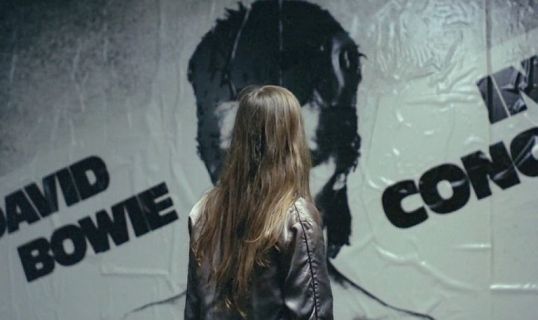
Christiane F. (1981, dir b Uli Edel, DP: Justus Pankau and Jürgen Jürges)

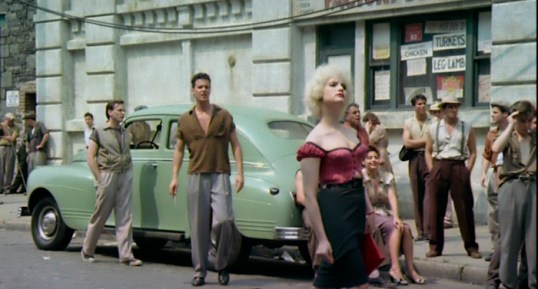
Last Exit to Brooklyn (1989, dir by Uli Edel, DP: Stefan Czapsky)

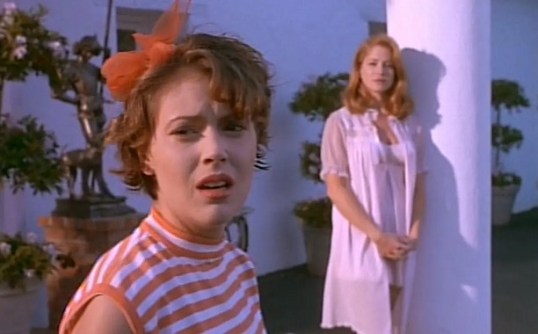
Confessions of a Sorority Girl (1994, dir by Uli Edel, DP: Jean de Segonzac)

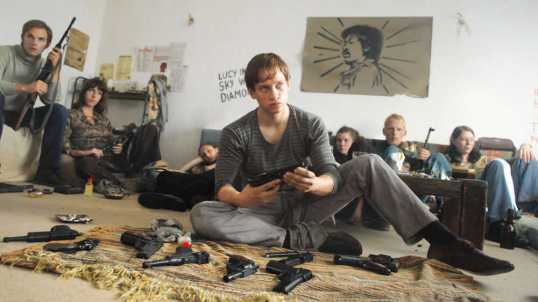
The Baader Meinhof Complex (2008, dir by Uli Edel, DP: Rainer Klausmann)

Homicide: The Movie (2001, directed by Jean de Segoznac)


Before The Wire, there was Homicide: Life On The Streets.

Based on a non-fiction book by the Baltimore Sun’s David Simon, Homicide: Life on the Streets aired for seven seasons on NBC, from 1993 to 1999. For five of those seasons, Homicide was the best show on television. Produced and occasionally directed by Barry Levinson, Homicide was filmed on location in Baltimore and it followed a group of Homicide detectives as they went about their job. From the start, the show had a strong and diverse ensemble, made up of actors like Andre Braugher, Ned Beatty, Jon Polito, Melissa Leo, Kyle Secor, Clark Johnson, Richard Belzer, Daniel Baldwin, and Yaphet Kotto. When Polito’s character committed suicide at the start of the third season (in a storyline that few other shows would have had the courage to try), he was replaced in the squad by Reed Diamond.

Homicide was a show that was willing to challenge the assumptions of its audiences. The murders were not always solved. The detectives didn’t always get along.  Some of them, like Clark Johnson’s Meldrick Lewis, had such bad luck at their job that it was cause for alarm whenever they picked up the ringing phone. As played by Andre Braugher, Frank Pembleton may have been the most brilliant detective in Baltimore but his brilliance came with a price and his non-stop intensity even led to him having a stroke while interrogating a prisoner. Kyle Secor played Pembleton’s partner, Tim Bayliss.  Bayliss went from being an idealistic rookie to a mentally unstable veteran murder cop in record time, spending seven seasons obsessing on his first unsolved case. Homicide dealt with big issues and, much like its spiritual successor The Wire, it refused to offer up easy solutions.

Despite the critical acclaim and a much hyped second season appearance by Robin Williams (playing a father who was outraged to hear the detectives joking about the murder of his family), Homicide was never a ratings success. After five seasons of perennially being on the verge of cancellation, the producers of Homicide finally caved into NBC’s demands.  The storylines became more soapy and the cases went form being random and tragic to being what the detectives had previously dismissively called “stone cold whodunits.”   New detectives joined the squad and the focus shifted away from the more complex veterans. Not only did this not improve ratings but also those who had been watching the show from the start were not happy to see Pembleton and Bayliss being pushed to the side for new characters like Paul Falsone (Jon Seda) and Laura Ballard (Callie Thorne). Falsone, in particular, was so disliked that there was even an “I Hate Falsone” website. At the end of the sixth season, Andre Braugher left the show and that was the end. The seventh season limped along, with Bayliss growing increasingly unstable.  The show ended with the implication of Bayliss turning into a vigilante and resigning from the Baltimore PD. It was not a satisfying ending. Richard Belzer’s John Munch moved to New York and became a regular on Law & Order: SVU but the rest of the detectives and their fates were left in limbo.

Fortunately, on February 13th, 2000, NBC gave Homicide another chance to have a proper conclusion with Homicide: The Movie.

Homicide: The Movie opens with a montage of Baltimore at its best and its worst, a reminder that Homicide never abandoned the city that had supported it for seven years.  While other shows recreated New York or Chicago on a soundstage, Homicide was always an authentic product of Baltimore. Lt. Al Giardello (Yaphet Kotto) is now running for mayor on a platform calling for drug legalization. When Giardello is shot at a campaign stop, all of the current and former members of the Homicide Unit come together to investigate the case.   While Giardello fights for his life, Pembleton and Bayliss partner up for one final time.

Homicide: The Movie fixes the main mistake that was made by the final two seasons of the show. Though all of the detectives get their moment in the spotlight (and all true Homicide fans will be happy to see Richard Belzer and Ned Beatty acting opposite each other for one final time), the focus is firmly on Pembleton and Bayliss. It doesn’t take long for these two former detectives, both of whom left the unit for their own different reasons, to start picking up on each other’s rhythms. Soon, they’re talking, arguing, and sometimes joking as if absolutely no time has passed since they were last partnered up together. But, one thing has changed. Bayliss now has a secret and if anyone can figure it out, it will be Frank Pembleton. What will Pembleton, the moral crusader, do when he finds out that Bayliss is now a killer himself?

The movie follows the detectives as they search for clues, interview suspects, and complain about the state of the world.  However, in the best Homicide tradition, the investigation is just a launching point to investigate what it means to be right or wrong in a city as troubled as Baltimore.  In the movie’s final half, it becomes more than just a reunion movie of a show that had a small but fervent group of fans. It becomes an extended debate about guilt, morality, and what it means to take responsibility for one’s actions. The final few scenes even take on the supernatural, allowing Jon Polito and Daniel Baldwin a chance to appear in the reunion despite the previous deaths of their characters.

Despite being one the best shows in the history of television, Homicide: Life on the Streets is not currently streaming anywhere, not even on Peacock.   (Considering how many Homicide people later went on to work on both Oz and The Wire, it would seem like it should be a natural fit for HBOMax.) From what I understand, this is because of the show’s signature use of popular music would make it prohibitively expensive to pay for the streaming rights. Fortunately, every season has been released on home video.   Homicide: The Movie is on YouTube, with the music removed.  The movie’s final montage is actually more effective when viewed in complete silence.

Horror on TV: Twilight Zone 1.6 “Night Route” (dir by Jean de Segonzac)


Tonight’s televised horror is another episode from the 2002 revival of The Twilight Zone!

In Night Route, Ione Skye nearly gets hit by a car and, afterward, finds herself haunted by visions of a mysterious bus.  Featuring atmospheric direction from Jean de Segonzac and a good performance from Ione Skye, this episode of the Twilight Zone makes a nice companion piece to tomorrow’s horror on the lens!

Enjoy!