Brad reviews STRAIGHT TALK (1992), starring Dolly Parton and James Woods! 


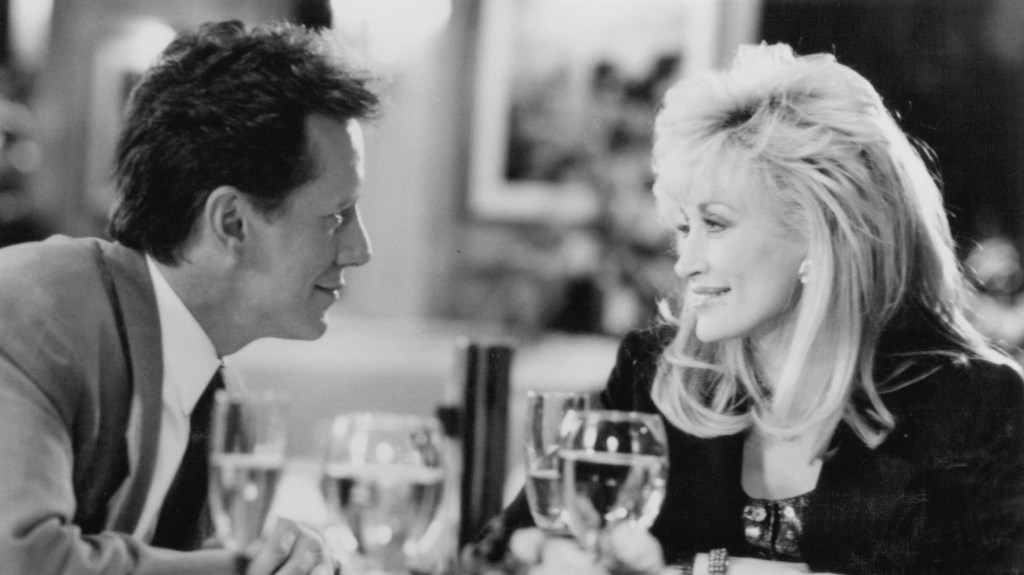
STRAIGHT TALK opens with Shirlee Kenyon (Dolly Parton) having a bad day in the town of Flat River, Arkansas. First, she gets fired from her job at a dance studio because she likes to talk to the customers more about their problems than she does teaching them to dance. Then she goes home to her lazy, unemployed boyfriend Steve (Michael Madsen), who’s more interested in drinking beer and bowling than talking to her. She tells him she wants to leave town and go to Chicago for a fresh start. He heads to the bar, so she packs her bags and heads to the Windy City. Upon arriving, she finds a job as a receptionist at a local radio station. Through a case of mistaken identity that can only happen in the movies, Shirlee finds herself on air as “Dr. Shirlee,” where she begins fielding calls from people with all kinds of problems. With her homespun wisdom, Dr. Shirlee soon finds herself to be the toast of Chicago. Feeling guilty that the station is advertising her as a “Doctor” when she’s not, Shirlee reluctantly continues on when her boss Alan (Griffin Dunne) convinces her she’s a “doctor of the heart.” Alan takes that simple lie and creates an entire fake public identity for Shirlee. When reporter Jack Russell (James Woods), in serious need of a story, senses that something’s not adding up with Dr. Shirlee, he convinces his editor Milo Jacoby (Jerry Orbach) to let him try to get close to the city’s new star to see if he can dig up some dirt. As he gets to know her, however, he’s charmed just like the rest of city and the two begin to fall in love. With Shirlee feeling guilty about being marketed as someone she’s not, and with Jack feeling bad about deceiving her for a scoop, is there any chance that their love can survive when the truth finally comes out?

STRAIGHT TALK is one of those movies that lives or dies based on whether or not you like its stars. This early 90’s romantic comedy was made for Dolly Parton’s fans, of which there are many. She looks beautiful, she has a great wardrobe, she sings the catchy soundtrack tunes, and she dispenses down-home country wisdom in a way that only Dolly can. And then there’s James Woods as the cynical reporter / love interest. Not traditionally handsome or known for his performances in romantic comedies, he brings his unique style to the role, and somehow it really works. As a huge fan of Woods, I may be a little biased, but I think that he has a great chemistry with Dolly. There does seem to be some basis for my claim as the two seemed to really enjoy each other on the set. Dolly has been quoted as saying that he’s “a great kisser” and a “thrill to be around.” Woods recently posted on social media that “Dolly Parton is the nicest person I’ve ever worked with…. She’s everything you imagine and so much more. Anybody who’s ever spent any time with her absolutely adores her.” I think these genuine feelings show through on the screen and provide levels of entertainment that transcend what’s on the pages of the script.

Aside from the excellent chemistry of its leads, STRAIGHT TALK does lean hard into romantic comedy cliches, and honestly that’s okay with me. I enjoyed the familiar plot lines… Will Shirlee become a star in the big city? Will reporter Jack expose her past? Will the two fall in love? Will her old boyfriend Steve show up? Will her “on-air” advice cause some unexpected problems? Well, of course, on all accounts! As these well worn stories play out against the backdrop of an early 90’s movie version of Chicago, I enjoy the movie for what it is, an entertaining fluff piece. The interesting supporting cast (Griffin Dunne, Michael Madsen, Jerry Orbach, John Sayles, Spalding Gray, etc.) do their jobs well, further enhancing my appreciation of the movie. 

With all that said, I do recognize that the joy of movies is purely a subjective experience, and if you’re not a fan of Dolly Parton, you probably won’t enjoy STRAIGHT TALK. It’s not a great movie in traditional terms, but it is a great “Dolly Parton” movie. I like Dolly, and I especially enjoy her relationship with James Woods within the film, so this is another one of those movies from my youth that I like to watch every few years. I enjoy it every single time. 

Horror Film Review: C.H.U.D. (dir by Douglas Cheek)


There’s something living under the streets of New York City.

That’s the basic idea behind 1984’s C.H.U.D., a film that opens with an upper class woman and her little dog being dragged into the sewers by a creature the reaches out of a manhole.  People are disappearing all over the city but the authorities obviously aren’t revealing everything that they know.  Even after the wife of NYPD Captain Bosch (Christopher Curry) disappears, the city government doesn’t seem to be too eager to dig into what exactly is happening.

Instead, it falls to two activists.  Photographer George Cooper (John Heard) specializes in taking picture of the homeless, especially the one who live underground in the New York subways.  He’s like a well-groomed version of Larry Clark, I guess.  Social activist A.J. “The Reverend” Shepherd (Daniel Stern) runs a homeless shelter and is convinced that something is preying on the most vulnerable citizens of New York.  When the police won’t do their job, George and the Reverend step up!

So, what’s living in the sewers?  Could it be that there actually are cannibalistic humanoid underground dwellers out there?  Everyone in New York City has heard the legends but, much like stories of the alligators in the Chicago sewers, most people chose not to believe them.  Or could the disappearance have something to do with the cannisters labeled Contamination Hazard Urban Disposal that are being left in the sewers by the Nuclear Regulatory Commission?  Wilson (George Martin) of the NRC says that they would never purposefully mutate the people living underground but Wilson works for the government so who in their right mind is going to trust him?

C.H.U.D. is a horror film with a social conscience.  It’s very much an 80s films because, while you have Shepherd running around and attacking everyone for not taking care of the most vulnerable members of society, the true villain is ultimately revealed to be the members of a regulatory agency.  Instead of finding a safe way to get rid of their nuclear waste, they just found a sneaky way to abandon it all in New York and obviously, they assumed no one would care because …. well, it’s New York.  Everyone in the country knows that New York City isn’t safe so who is going to notice a few underground monsters, right?

The idea behind C.H.U.D. has a lot of potential but the execution is a bit lackluster.  For every good C.H.U.D. kill, there’s long passages where the story drags.  Considering that Heard spent most of his career typecast as the type of authority figure who would dump nuclear waste under New York City, it’s actually kind of interesting to see him playing a sympathetic role here.  Daniel Stern, on the other hand, is miscast and rather hyperactive as Shepherd.  You really do want someone to tell him to calm down for a few minutes.  Watching C.H.U.D., one gets the feeling that it’s a film with an identity crisis.  Is it a horror film, an action flick, a work of social commentary, or a dark comedy?  There’s no reason why it can’t be all four but C.H.U.D. just never really comes together.  It ultimately feels more like a mix of several different films instead of being a film made with one clear and coherent vision.

In the end, Death Line remains the film to see about underground cannibals.

Monday Night Mayhem (2002, directed by Ernest Dickerson)


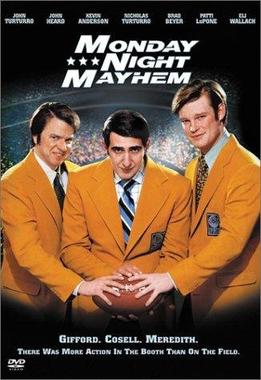
In the late 1960s, television coverage of football is dull and boring.  The games are played during the day and the announcers have no personality.  An executive at ABC named Roone Arledge (John Heard) changes all of that by convincing the NFL to start scheduling games for Monday night.  Arledge launches Monday Night Football, a broadcast that puts the viewers at home in the stadium.  Arledge explains that he wants cameras everywhere.  He wants the sidelines and the stands to be mic’d up.  And he wants announcers who will make the game interesting.  He picks an experienced radio announcer named Keith Jackson (Shuler Hensley), former Dallas quarterback Don Meredith (Brad Beyer), and finally an egocentric, loquacious, and opinionated sports reporter named Howard Cosell (John Turturro).  The straight-laced Jackson only lasts a season and finds himself overshadowed by Meredith’s good ol’ boy charisma and Cosell’s eccentricities.  Arledge brings in Frank Gifford (Kevin Anderson) as a replacement and changes both sports and television forever.  Monday night football becomes huge but so do the egos of the men involved.

Based on a non-fiction book by Bill Carter, Monday Night Mayhem is a look at the early days of Monday Night Football, with most of the attention being given to the mercurial Howard Cosell.  As a work of history, it’s pretty shallow.  There’s a lot of montages set to familiar 70s tunes and there’s plenty of familiar stock footage.  Beyer and Anderson do adequate impersonations of Meredith and Gifford without really digging for much under the surface.  Monday Night Mayhem is dominated by John Turturro’s performance as Howard Cosell.  Turturro doesn’t look like Cosell and he really doesn’t sound that much like Cosell but he does capture the mix of arrogance and bitterness that made Howard Cosell such a memorable and controversial announcer.  In its breezy manner, the film hits all the well-know points of Cosell’s life and career, from defending Mohammad Ali to considering a run for the Senate to trying to reinvent himself as a variety show host to the controversy when he was though to have uttered a racial slur during one of the games.  I wish the film had a bit more depth but John Turturro’s committed but bizarre performance keeps it watchable.

So, I Watched Underdogs (2013, Dir. by Doug Dearth)


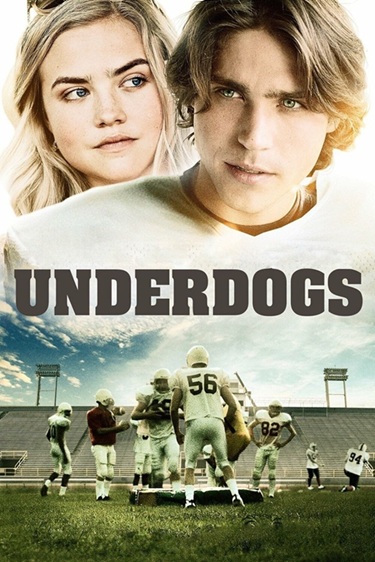
In a rural Ohio, a working class high school football teams plays an exhibition game against the rich school on the other side of town.  The working class team is coached by Vince DeAntonio (D.B. Sweeney), a former NFL offensive coordination and the son of a coach.  Vince is a tough taskmaster who tells his players that winning is not going to easy and it’s not going to be fun but he also has the connections necessary to get Joe Namath to stumble into the locker room and give a speech to his team.  The quarterback (Charlie Carver) of the rich high school is the son of the businessman (Richard Portnow) who is planning on moving his factory down to Mexico and putting the entire town out of work.  The quarterback (Logan Huffman) of the working class high school team is the son of an inventor (Willlam Mapother) who is being sued by a corporation that wants to steal his invention.  Both of the quarterbacks like the same cheerleader (Maddie Hasson).  This game is about more than just who scores the winning touchdown.  It’s about town pride.

I love a good underdog story but Underdogs didn’t seem to know what story it wanted to tell.  It spent as much time with the inventor and his court case as it did with the football team and the whole thing ended up becoming a commercial for his product.  (The movie is based on a true story.)  When it actually did get around to the football scenes, it was all too predictable.  The team was bad and then the team was good and the entire game came down to one final throw of the football with the clock counting down.  One weird thing about the movie is that it put a lot of emphasis on Vince recruiting unlikely players to his team but once he had them on the team, we hardly ever saw them again.

At least the movie’s heart was in the right place and it didn’t turn the cheerleaders into stereotypes, like so many high school football movies do.  D.B. Sweeney was okay as the coach but I don’t know if William Mapother’s character was supposed to come across as being as strange as he did.  I’m glad the underdogs proved themselves but the movie could have been better.

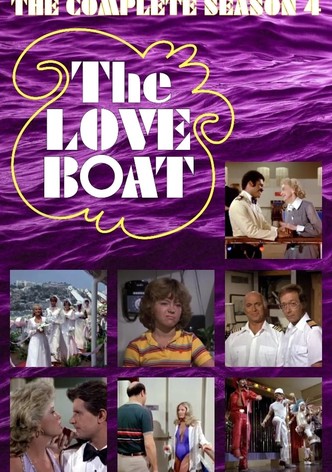
Retro Television Review: The Love Boat 4.14 “First Voyage, Last Voyage/April, the Ninny/The Loan Arranger”


Welcome to Retro Television Reviews, a feature where we review some of our favorite and least favorite shows of the past!  On Wednesdays, I will be reviewing the original Love Boat, which aired on ABC from 1977 to 1986!  The series can be streamed on Paramount Plus!

Oh, hey, Charo’s back.

Episode 4.15 “First Voyage, Last Voyage/April, the Ninny/The Loan Arranger”

(Dir by Roger Duchowny, originally aired on January 17th, 1981)

April’s back!

Played by Charo, April Lopez was one of the few recurring characters on The Love Boat.  Whereas other actors appeared frequently but always as different characters, Charo was always April whenever she boarded The Love Boat.  The first time she boarded the ship, she did so as a stowaway.  The next two times, she boarded as the cruise’s entertainment.  This season, however, April boards as someone who has grown tired of show business.  When last we saw her, April was in love with a guy named Tex and planning on playing Las Vegas.  However, when April boards this time, she quickly informs both Julie and Isaac that she and Tex are no longer a couple and Vegas didn’t work out because she was expected to play her guitar while naked.

(“They could have at least gotten you a cello,” Isaac replies.)

April wants a new career, which she gets when she meets Ty Younger (Larry Linville), who is wealthy but who also has two bratty kids who are always chasing off their nannies.  They can’t chase off April, who understands that the best way to calm a bratty child is to grab your guitar and sing to them at night.  April gives up show business to become a nanny but I don’t think it’ll last.  April is too impulsive to settle down, and Ty’s kids really are the worst.  (As well, Charo and Larry Linville didn’t exactly generate a lot of heat in their scenes together.)  April may leave the boat with a new family but hopefully, she’ll return alone in the fifth season.

Speaking of the worst, Cindy Simmons (Maureen McCormick) is dying but her parents (Ty Hardin and Kathleen Nolan) haven’t gotten around to telling her yet.  Cindy thinks that she’s made a full recovery from her recent illness.  Her parents don’t want to upset Cindy but when Cindy meets and falls in love with Paul Harris (Jay Thomas), they realize that they’re going to have to tell Cindy the truth.  Poor Cindy!  Fortunately, this is The Love Boat and Paul isn’t going to let a little thing like impending death get in the way of romance.  I’ve lost track of how many times I’ve seen Maureen McCormick on both The Love Boat and Fantasy Island.  For this episode, McCormick does a pretty good job with her role and she and Jay Thomas make for an attractive couple.

“I guess I’m still getting my sea legs,” Cindy says to Paul.

“Your legs look mighty fine to me,” Paul replies.

That’s about as witty as things get on this cruise.

Finally, Joey (Richard Kline) is a mob enforcer who has been sent to collect a debt owed by Tony Patacchio, a gambling addict.  However, Joey gets distracted when he meets a woman named Antoinette (Lisa Hartman) who enjoys gambling.  Joey falls for Antoinette and, unable to find Tony, he even spends the night in her cabin.  Hmmm …. Tony …. Antoinette …. Toni….

Yes, Joey has fallen in love with the person he was supposed to rough up.  Fortunately, Joey is willing to fix a poker game so that Toni can win enough of his money to pay off her debt.  When Toni realizes that Joey lost his money to her on purpose, she declares that she can’t take his money.  “If we were married,” Joey says, “It would be our money.”

Richard Kline is not a particularly believable debt collector.  (Tony Soprano would have tossed him in a dumpster.)  It’s also strange that his boss would send him to collect a debt without bothering to give him a physical description of the person he was supposed to intimidate.  The whole storyline was full of holes but I’m surprised to say that I did end up rooting Kline and Hartman to get together.  The two of them had enough chemistry to overcome the fact that their story made very little sense.

Previously, whenever Charo was a guest star, she dominated the entire episode, for better or worse.  With this episode, she seems kind of bored with the whole thing, as if Charo was just as fed up with show business as April.  Instead, it was Maureen McCormick and Jay Thomas who dominated the episode with Richard Kline and Lisa Hartman also getting their share of good scenes.  It makes for a bit of an uneven episode but I defy anyone not to feel something when Paul declares that he wants to spend the rest of Cindy’s life with her.  Mixing romantic melodrama and goofy comedy is what made The Love Boat a treasure of American pop culture.