Did y’all know that actor James Woods has completed two very personal musical albums in the last couple of years? First, he wrote nine songs for the 2024 album “Hear the Thunder Crack.” This album is described as… The Life of James Woods, as sung by Shooter Jennings. His latest album, “Tombstone Opera” just dropped within the last month! I recently purchased it and will be listening to it over the holiday season. Once again, Woods wrote all the lyrics, and the primary vocals are by a gentleman named Bob Wayne. I’ve listened to a couple of the songs, and they are very good! I think these are very interesting albums, and they certainly give us insight into Woods in a way that no role in a movie ever could.
I thought I’d share the song “Cafe Central” with you today, mainly because of its references to the classic Sergio Leone film ONCE UPON A TIME IN AMERICA (1984), a film I know many of you enjoy!
STRAIGHT TALK opens with Shirlee Kenyon (Dolly Parton) having a bad day in the town of Flat River, Arkansas. First, she gets fired from her job at a dance studio because she likes to talk to the customers more about their problems than she does teaching them to dance. Then she goes home to her lazy, unemployed boyfriend Steve (Michael Madsen), who’s more interested in drinking beer and bowling than talking to her. She tells him she wants to leave town and go to Chicago for a fresh start. He heads to the bar, so she packs her bags and heads to the Windy City. Upon arriving, she finds a job as a receptionist at a local radio station. Through a case of mistaken identity that can only happen in the movies, Shirlee finds herself on air as “Dr. Shirlee,” where she begins fielding calls from people with all kinds of problems. With her homespun wisdom, Dr. Shirlee soon finds herself to be the toast of Chicago. Feeling guilty that the station is advertising her as a “Doctor” when she’s not, Shirlee reluctantly continues on when her boss Alan (Griffin Dunne) convinces her she’s a “doctor of the heart.” Alan takes that simple lie and creates an entire fake public identity for Shirlee. When reporter Jack Russell (James Woods), in serious need of a story, senses that something’s not adding up with Dr. Shirlee, he convinces his editor Milo Jacoby (Jerry Orbach) to let him try to get close to the city’s new star to see if he can dig up some dirt. As he gets to know her, however, he’s charmed just like the rest of city and the two begin to fall in love. With Shirlee feeling guilty about being marketed as someone she’s not, and with Jack feeling bad about deceiving her for a scoop, is there any chance that their love can survive when the truth finally comes out?
STRAIGHT TALK is one of those movies that lives or dies based on whether or not you like its stars. This early 90’s romantic comedy was made for Dolly Parton’s fans, of which there are many. She looks beautiful, she has a great wardrobe, she sings the catchy soundtrack tunes, and she dispenses down-home country wisdom in a way that only Dolly can. And then there’s James Woods as the cynical reporter / love interest. Not traditionally handsome or known for his performances in romantic comedies, he brings his unique style to the role, and somehow it really works. As a huge fan of Woods, I may be a little biased, but I think that he has a great chemistry with Dolly. There does seem to be some basis for my claim as the two seemed to really enjoy each other on the set. Dolly has been quoted as saying that he’s “a great kisser” and a “thrill to be around.” Woods recently posted on social media that “Dolly Parton is the nicest person I’ve ever worked with…. She’s everything you imagine and so much more. Anybody who’s ever spent any time with her absolutely adores her.” I think these genuine feelings show through on the screen and provide levels of entertainment that transcend what’s on the pages of the script.
Aside from the excellent chemistry of its leads, STRAIGHT TALK does lean hard into romantic comedy cliches, and honestly that’s okay with me. I enjoyed the familiar plot lines… Will Shirlee become a star in the big city? Will reporter Jack expose her past? Will the two fall in love? Will her old boyfriend Steve show up? Will her “on-air” advice cause some unexpected problems? Well, of course, on all accounts! As these well worn stories play out against the backdrop of an early 90’s movie version of Chicago, I enjoy the movie for what it is, an entertaining fluff piece. The interesting supporting cast (Griffin Dunne, Michael Madsen, Jerry Orbach, John Sayles, Spalding Gray, etc.) do their jobs well, further enhancing my appreciation of the movie.
With all that said, I do recognize that the joy of movies is purely a subjective experience, and if you’re not a fan of Dolly Parton, you probably won’t enjoy STRAIGHT TALK. It’s not a great movie in traditional terms, but it is a great “Dolly Parton” movie. I like Dolly, and I especially enjoy her relationship with James Woods within the film, so this is another one of those movies from my youth that I like to watch every few years. I enjoy it every single time.
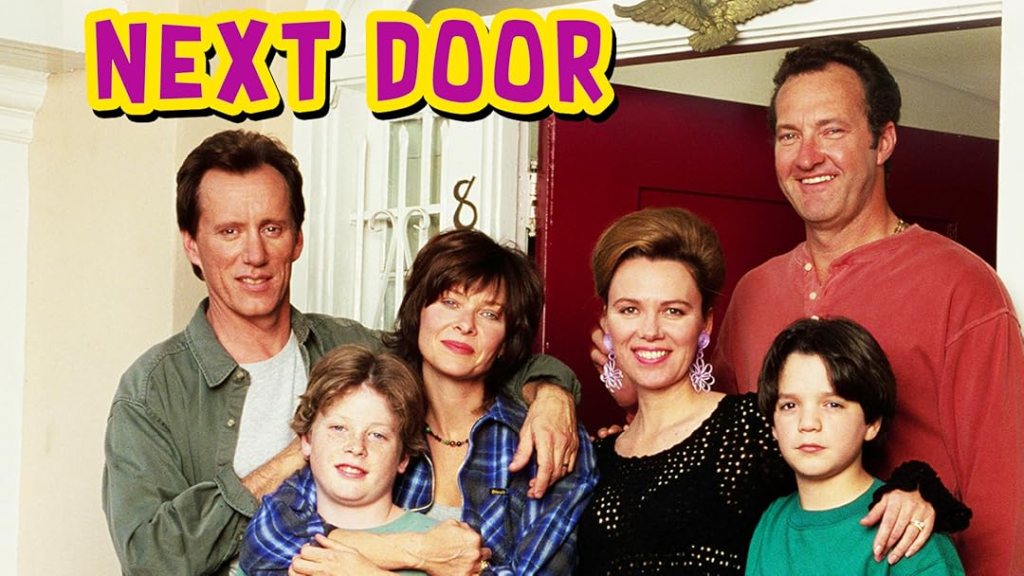
This sitcom looking picture is not a good indicator of the dark places this movie will go!
NEXT DOOR (1994) is a dark suburban satire that introduces us to college professor Matt Coler (James Woods), his lovely wife Karen (Kate Capshaw), and their son Bucky, who have recently moved out to the suburbs. As the movie begins, Matt, Karen and even Bucky seem to be slightly obsessing over their next-door neighbors, Lenny and Marci Benedetti (Randy Quaid and Lucinda Jenney). For one, Lenny and Marci enjoy engaging in sexual intercourse on their backyard lawn furniture within view of each of the Coler family members. That’s quite awkward, but more irritatingly, Lenny insists on constantly watering his front yard near Matt’s property, which is having an extremely damaging effect on Matt and Karen’s beloved azaleas. Invited over to the Benedetti’s house for a cookout, Matt and Karen hope to get to know their neighbors a little better, as well as make a polite request of Lenny to not water the area near the boundary of their yards quite so much. We soon find out that Lenny, who works at the local meat packing plant, is loud, obnoxious, smarter than he looks, and seems to have a really big chip on his shoulder towards Matt, who he doesn’t see as being much of a man. He even tells Karen that her husband is a child, and that’s why he went into teaching rather than getting “a real job.” This upsets Karen so she tells Matt it’s time to leave, but before going, they ask Lenny not to water the part of his yard near their flowers so much. That night, Lenny moves the sprinkler even closer to Matt’s yard, which puts the final death knell in the azaleas. Very annoyed, but not wanting to go too far, Matt gets even by spraying Lenny’s outdoor patio furniture with a lot of water as a prank. Lenny doesn’t handle Matt’s prank very well, and this is where things begin getting out of hand, igniting a full-blown feud between the two men. Soon the annoyances of wet furniture and dead flowers give way to outright horror involving poisoned family pets, police investigations, attempted sexual assault, and even attempted murder!
NEXT DOOR, which is a made for Showtime original, starts out as an amusing and entertaining film involving innocent pranks between James Woods’ meek teacher and Randy Quaid’s boorish butcher. As the intensity of the feud picks up between the men, and the retaliations become more and more sinister, I had to pick my jaw up off the floor as it goes to places that aren’t funny at all. The story seems to be trying to make a statement about the class divide, the survival of the fittest, and the danger that lurks behind the picket fences and in the backyards of the innocent looking neighborhoods around us. It does that job well, as I certainly sensed the real danger that the more “civilized” man found himself in when he came up against a man who didn’t really concern himself with societal norms. I have to give a lot of credit to Randy Quaid’s performance as Lenny for making me feel that way. He is simply a force of nature, and his portrayal of the beer guzzling, opinionated, blue collar bully is excellent in its unhingement! Sadly, I’ve known quite a few people who acted way too much like Lenny for my comfort. James Woods is also excellent as the somewhat timid, intelligent college professor who keeps thinking he can talk his way out of this predicament. We know how intense James Woods can be in his best roles, but he’s quite different here as the man who tries to remain reasonable until the very end of the film when he’s finally forced to take a stand for his family’s safety. He doesn’t have the showy role here, but I can definitely identify with his character, as that would be me in this situation. Kate Capshaw and Lucinda Jenney are both appealing as the suffering wives, providing some good support and wit to the proceedings, but this show belongs to the men.
NEXT DOOR is a true horror film as far as I’m concerned, because if I found myself in this kind of situation with my own neighbor, I would consider it a nightmare. There have been a couple of times in my own life where I have found myself in situations with a neighbor that made me uncomfortable. One of those times involved our next-door neighbor driving across the boundary between their yard and ours and then taking our driveway out to the main road instead of using their own, less maintained driveway. This really bothered my wife as they had never asked if they could do it, and it had practically made a “path” that looked like a road at the boundary. Since it bothered my wife, we ended up having a polite conversation with our neighbors, they understood our concerns, and we worked out a plan that worked for all of us. A different time, however, one of our neighbors across the road left their pitbull out and it attacked our small dog in our own yard. It almost killed our dog, requiring her to have emergency surgery from our veterinarian to save her leg, and it also led to high vet bills. Our neighbors refused to discuss the situation with us, and being from West Virginia, my wife wanted us to take the situation to more extreme levels, including getting local law enforcement involved. In a situation like this, you have to truly consider how far you want to take a situation and then be prepared for the whatever events could follow. There’s a lot of unknown, and it’s pretty scary to be honest with you.
Ultimately, I would have to admit that I didn’t really enjoy NEXT DOOR very much, but I did find it fascinating. I appreciated the great performances of Woods and Quaid, but the movie made me very uncomfortable. If my discomfort was director Tony Bill’s (MY BODYGUARD, FIVE CORNERS, FLYBOYS) goal, it certainly worked. I just think that the farcical nature of the black humor at the beginning didn’t quite mesh with the dark and disturbing elements at the end. Or maybe it just took me places I wasn’t really prepared to go. Either way, it’s still an interesting relic of the 90’s made-for-premium-cable-TV movie. You never knew where those movies were headed! If you’re interested, as of this writing, it’s available for streaming on Tubi.
This 1979 true crime drama opens in Los Angeles in 1963.
Rookie Detective Karl Hettinger (John Savage) has just joined the Felony Squad and met his new partner, Ian Campbell (Ted Danson, making his film debut). Ian is a tall, somewhat eccentric detective, the type who practices playing the bagpipes in the basement and who takes Hettinger under his wing.
Meanwhile, Jimmy Smith (Franklyn Seales) has just been released from prison. The nervous and easily-led Jimmy almost immediately runs into Gregory Powell (James Woods), a small-time hood with delusions of grandeur. Powell is the type who talks a big game but who really isn’t even that good of a thief. Smith and Powell form an uneasy criminal partnership. They are easily annoyed with each other but they also share an instant bond. Though the film doesn’t actually come out and say what most viewers will be thinking, there’s a lot of subtext to a brief scene where Powell appears to caress Smith’s shoulder.
One night, Hettinger and Campbell are kidnapped by Smith and Powell. Smith and Powell drive them out to an onion field. Because he’s misinterpreted the Federal Kidnapping Act and incorrectly believes that he and Smith are already eligible for the death penalty because they kidnapped two police officers, Powell shoots and kills Campbell. (The close-up image of Campbell falling dead is a disturbing one, not the least because he’s played by the instantly likable Ted Danson.) Hettinger runs and manages to escape. He saves his life but he’s now haunted by the feeling that he abandoned his partner.
The rest of the film deals with the years that follow that one terrible moment in the onion field. Treated as a pariah by his fellow cops, Hettinger sinks into alcoholism and eventually becomes a compulsive shoplifter. Smith and Powell, meanwhile, use a variety of tricks to continually escape the death penalty and to keep their case moving through the California justice system. Powell, for instance, defends himself and then later complains that he had incompetent counsel. Smith, meanwhile, is defended by the infamous Irving Karanek, a legendary California attorney who specialized in filing nuisances motions. (Later Karanek found a measure of fame as Charles Manson’s attorney. Eventually, he had a nervous breakdown in 1989, lived in his car, and was briefly suspended by practicing law.) While Smith and especially Powell quickly adjust to being imprisoned, Hettinger spends the next decade trapped in a mental prison of guilty and bitterness.
Based on a non-fiction book by Joseph Wambaugh, The Onion Field is a compelling look at a true crime case that continue to resonate today. The film can be a bit heavy-handed in its comparisons between the two partnerships that define the story. Both Hettinger and Smith are young and neurotic men who find themselves working with a more confident mentor. The difference is that Hettinger’s mentor is the cool, composed, and compassionate Ian Campbell while Smith’s sad fate is to be forever linked to the erratic Gregory Powell. While the film may have the flat look of something that was made for television, it’s elevated by the performances of its lead actors. James Woods give an especially strong performance as the cocky Powell, a loser in the streets who becomes a winner behind bars. Over the course of the film, he goes from being a joke to being the prisoner that others come to for legal advice. John Savage, meanwhile, poignantly captures Hettinger’s descent as the trauma from that night leaves him as shell of the man that he once was.
The film’s supporting cast is full of familiar faces. Christopher Lloyd and William Sanderson show up as prisoners. Ronny Cox plays the detective in charge of the onion field investigation. David Huffman plays a district attorney who is pushed to his breaking point by the obstructive tactics of Smith’s attorney. Priscilla Pointer play Ian Campbell’s haunted mother. All of them do their part to bring this sad story to life.
The Onion Field is a chillingly effective true crime drama and a look at a murder that was inspired by one man’s inability to understand federal law.
I’m a big fan of tough guy actor, Brian Dennehy. I especially liked it when he teamed up with James Woods in the badass cop/hitman flick, BEST SELLER! In honor of Dennehy’s 87th birthday in cinema heaven, I thought I’d share him pummeling a very deserving Woods in one of the film’s many standout scenes!
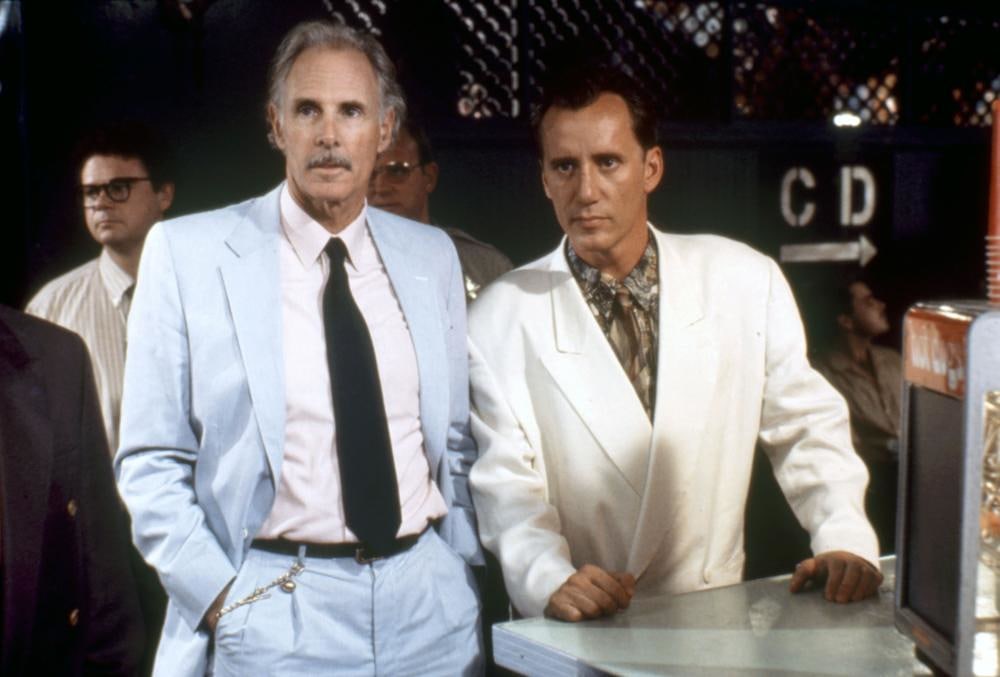
Gabriel Caine (James Woods) is a fast-talking con man fresh out of prison who’s already set up his next big scam. Along with his partner Fitz (Oliver Platt), Caine is targeting Diggstown, a small, boxing-obsessed community ruled over by the corrupt John Gillon (Bruce Dern). Gillon controls the town because he rigged a fight that left local boxing legend Charles Macum Diggs (Wilhelm von Homburg) completely brain-damaged. The scam involves getting Gillon to take a $100,000 bet that 48 year old “Honey” Roy Palmer (Louis Gossett Jr.) can defeat any ten Diggstown fighters in one 24-hour period. Once the fights start, you can bet that both sides will have lots of surprises up their sleeves, but the question is who will be standing when the final bell rings?!!
Since today is Bruce Dern’s 89th birthday, I decided to watch DIGGSTOWN, one of my favorite movies featuring the birthday boy. A box office flop when it was released in 1992, making less than $5 million at the box office, the reputation for the film seems to have gotten stronger over the years. The film has an excellent cast! James Woods exudes cockiness and intelligence as conman, Gabriel Caine. He somehow pulls off the feat of being both sleazy and very likable, which is a testament to Woods’ skills as an actor. Louis Gossett Jr. is great as “Honey” Roy Palmer. I remember when I first saw the trailer for DIGGSTOWN, I thought he was too old for the role. After watching it though, he’s able to make the boxing scenes work, especially when you consider some of the help he’s given as part of the con. With the huge personalities of Woods and Bruce Dern surrounding him, Gossett’s more grounded performance anchors the film. Bruce Dern is perfectly cast as the villainous scuzzbucket, Gillon. He’s the type of guy you really want to see get his comeuppance at the end. Now that I think about it, Gillon is such an A-hole, Caine can’t help but seem likable in comparison! Finally, I did want to give a shout out to Oliver Platt, who’s extremely funny in his role as Caine’s partner in con. It’s one of the first movies I remember seeing Platt in, and he’s great!
For DIGGSTOWN to really work though, the boxing scenes need to work and the con needs to be smart. Director Michael Ritchie (THE BAD NEWS BEARS) does a good job setting up both. The boxing sequences are well choreographed by Benny “The Jet” Urquidez, and you can’t help but root for the old guy as his opponents keep on coming. Of the 10 fights, some are funny, some are quick, and some are very intense depending on the situation. Ritchie is able to keep the stakes high enough during the boxing scenes to make sure we remain invested in the story. It’s a nice balancing act as the con plays out in the background of each fight. And what a con it is! I won’t spoil it for you, but it’s a stroke of genius that resulted in a massive amount of satisfaction for this audience member!
Overall, DIGGSTOWN is one of those movies I’m sure to watch every few years. With its great cast, punchy sense of humor, and genius triple-twist of an ending, I can’t imagine anyone leaving disappointed. I highly recommend it!
Is there anyone who plays a scuzzbucket better than Bruce Dern? He doesn’t always play a scuzzbucket, but that seems to be where his true talent lies. On his 89th birthday, I’m sharing this clip from a favorite movie of mine, DIGGSTOWN (1992), where he plays a scuzzbucket! Did I mention he’s great at it?!!
Here at The Shattered Lens, we’re celebrating Clint Eastwood’s birthday on May 31st. I decided to revisit his 1999 film, TRUE CRIME.
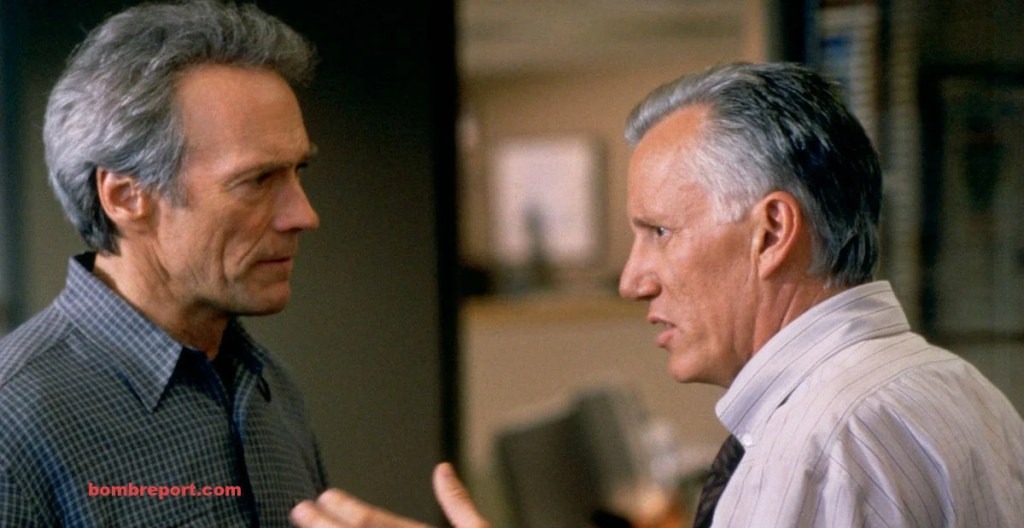
Clint Eastwood directs and stars as ace journalist, Steve Everett, who also happens to be a bad friend, a terrible dad, and an even worse husband. Literally the only thing that he’s got going for him is his “nose,” his ability to sniff out a story where no one else can. Even that has begun to fail him, mostly due to his recents bouts with alcoholism, which he seems to somewhat have a handle on at the time of this story. When a young, beautiful colleague tragically passes away in an auto accident, Steve is given her previous assignment to cover the execution of convicted murderer Frank Beechum (Isaiah Washington). Not the kind to write a human interest “puff piece” like the Oakland Tribune is wanting, Everett begins digging into the past and pretty soon that nose of his starts telling him that Beechum is a victim of circumstantial evidence. Despite his editor Bob Findley’s (Denis Leary) objections, he’s able to convince his newspaper boss Alan Mann (James Woods) to let him dig deeper into the story. As he tries to juggle his myriad personal problems with his growing belief in Beechum’s innocence, Everett is also facing a clock that is ticking down to the midnight execution. Will he be able to find the crucial piece of evidence that will set Beechum free?
TRUE CRIME appears to be somewhat of a forgotten Clint Eastwood film. I saw it at the theater when it came out in 1999, but it was not financially successful, only bringing in $16 Million at the box office. Regardless of that, I still love the film. It’s certainly not perfect. It’s probably too long, Beechum is probably too angelic after being “born again,” and the resolution may be a little unrealistic, but I still enjoyed every second of it. One of the coolest things about Clint Eastwood is his willingness to play such flawed men on screen, yet we still love him. He’s great in this film! Anyone who’s read much of my work knows that my love of actor James Woods goes back to being in junior high and renting his movies BEST SELLER and COP. It’s such a treat seeing the legendary pair on screen together even if Woods’ role is sort of a glorified cameo. Woods is hilarious in his limited screen time. My last shout out is to Isaiah Washington as the innocent man who’s about to be put to death. After all these years and appeals, he’s accepted his fate, but the scene where he tells Everett his story and Everett tells him that he believes he’s innocent is so powerful. Add to that Washington’s scenes with his wife and daughter, and I was very much emotionally invested in this film. Washington’s performance was key to the film working, and he’s great!
Overall, TRUE CRIME is a film that takes its sweet time, but it ultimately tells a tense, engrossing story that ratchets up the tension to 10 prior to its last second resolution. I consider it very underrated and highly recommend it. I’ve included the trailer below:
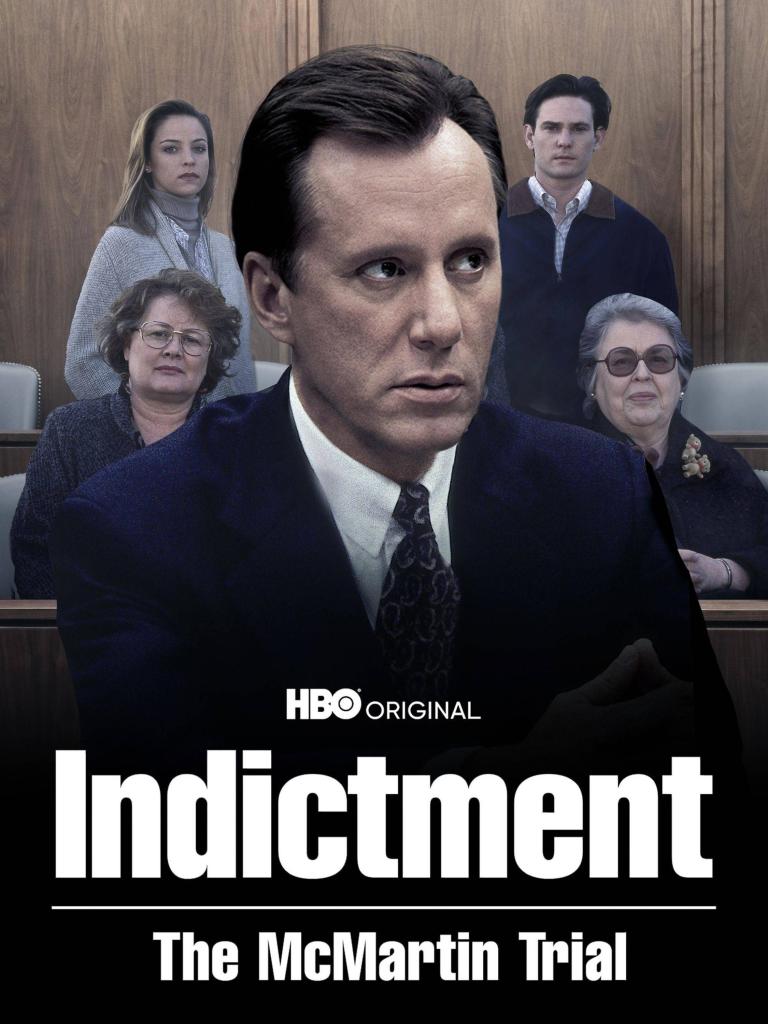
Actor James Woods is great at portraying attorneys. Whether it be as the real life Assistant D.A. Bob Tanenbaum in the excellent T.V. Movie BADGE OF THE ASSASSIN (1985), the crusading hippie Eddie Dodd in TRUE BELIEVER (1989) or the namesake of the excellent TV series SHARK (2006-2008), Woods knows how to play that unique combination of intelligence, shrewdness, and sneakiness to perfection. In 1995, he further applied those skills when he portrayed real life attorney Danny Davis in the HBO movie INDICTMENT: THE MCMARTIN TRIAL. This movie is based on the McMartin day care sexual abuse case that began with horrific allegations in 1983 and ended in 1990 with zero convictions and all charges dropped. During that time, the McMartin Trial became the longest and most expensive series of criminal trials in American history.
I’ll just go ahead and challenge any person to watch INDICTMENT: THE MCMARTIN TRIAL and not get filled with righteous anger about the complete failure of our judicial system. Add to that failure the complete breakdown of our media to cover events in a fair and impartial fashion with even the smallest shred of objectivity. Does any of this sound familiar? As good as James Woods is in the central role, the star of this film is the true story itself. We watch as various people in positions of authority and power act completely out of self interest, including Davis himself at first, with the pursuit of the truth or justice not even the slightest consideration no matter what the evidence suggests. In actuality, the truth was hidden by the prosecution in pursuit of convictions that never came. The shit that this family was put through with coerced evidence that had no chance of standing up to the slightest bit of scrutiny is disgraceful. It’s one of the most infuriating films I’ve ever seen and it’s just as relevant in 2025 as it was in 1995. The performances are spot on, beginning with Woods’ central performance as Danny Davis and moving on to Shirley Knight in a Golden Globe winning portrayal of Peggy McMartin Buckey, Mercedes Ruehl as prosecutor Lael Rubin, Lolita Davidovich as child therapist Kee MacFarlane, Sada Thompson as matriarch Virginia McMartin, and Henry Thomas as the odd but innocent Ray Buckey. Produced by Oliver Stone and directed by Mick Jackson (THE BODYGUARD, VOLCANO), this button pushing, thought provoking film would win both the Primetime Emmy and Golden Globe awards for best Made for Television Movie in 1995. It’s truly an excellent film and should be seen by any person interested in a fair judicial system or unbiased media.
Since both Eric Roberts and James Woods are celebrating a birthday today, it seems only appropriate that today’s scene of the day should feature both of them. In this scene from 1994’s The Specialist, Woods, Roberts, and Rod Steiger all compete to see who can steal a relatively simple conversational scene.



 Through the Shattered Lens