John Wayne plays Dare Rudd, a friendly rogue who aspires to be the best poker player west of the Mississippi. When he and his sidekick, Dinkey Hooley (Syd Saylor), ride into Montana, they meet up with Dare’s cousin, Tom Filmore (Johnny Mack Brown, billed as John here). Filmore needs some help on his cattle drive and Dare sure does like Tom’s girl, Judy (Marsha Hunt). Dare replaces Lynn Hardy (John Patterson) as head of the cattle drive and Lynn teams up with rustler Bart Hammond (Monte Blue) to try to get revenge. While Dinkey tries to sell lightning rods, Dare moves the herd and even finds time to play poker with notorious gambler Buck Brady (James Craig).
This is another one of the B-westerns that John Wayne made before John Ford made him a stars by casting him in Stagecoach. This one is interesting because Wayne is not playing his usual stolid do-gooder or even an expert marksman. Instead, Dare is impulsive and reckless and he’s ultimately not as smart a card player as he thinks he is. It’s rare to see John Wayne need help from anyone but that’s what he gets from Johnny Mack Brown, who shows up in time to reveal that Dare is getting cheated in his poker game. For fans of the genre, this short oater is worth watching for the chance to see two western icons acting opposite each other. Johnny Mack Brown and John Wayne would both go on to appear in a countless number of westerns. Wayne became a superstar, appearing in big budget studio films. Brown remained a mainstay on the B-circuit. They’re amusing to watch in this film as they bounce dialogue off of each other and continually try to steal scenes from one another. Brown is playing the type of no-nonsense, hard-working westerner who would later become John Wayne’s trademark character.
Based on a novel by Zane Grey, Born to the West is a fast-paced western featuring two of the best to ever ride a horse.
Outlaw Tom Sabin (James Craig) rides into Purgatory, a frontier town that is so dangerous that even the welcome sign warns that those entering should say goodbye to God.
The townspeople take one look Tom and hire him to clean up the town. The town is controlled by a ruthless saloon owner named Hoag (Paul Richards). Hoag is a self-styled intellectual and a dangerous man but he is considered to be untouchable because he is crippled and no one wants to be known as the person who shot a man in a wheelchair. Instead, they would rather hire a stranger to do it for them but Tom has more honor than they originally realized.
Hoag summons three gunmen to kill Tom. Two of the gunmen prove to be no match for Tom but then he meets the third and is shocked to discover that it’s his own brother, Johnny Naco (Brett Halsey).
Four Fast Guns is a better-than-average B-western. What sets it apart from other films about strangers being hired to clean up a town is that the characters are portrayed with more depth than usual. The towns people are not innocent victims but instead want to pay Tom to take the risks and do the dirty work that they’re not willing to do. Tom is not a cut-and-dried hero and the gunmen who are hired to kill him are not portrayed as being one-dimensional villains. Johnny Naco may be a killer but he also has a code of honor. He may be willing to kill his own brother but he’s not willing to see him humiliated. The wheelchair-bound Hoag is himself a more interesting bad guy than usually shows up in movies like this. He’s the type of bad guy who quotes Dickens and Whitman while waiting for his hired guns to do their job. Hoag feels that his cultured background sets him above the rest of the town’s rabble but he ultimately proves himself to be just as petty as those that he looks down on.
Four Fast Guns feels like a forerunner to the morally ambiguous Spaghetti westerns and films like Clint Eastwood’s Unforgiven. It is essential viewing for fans of the genre.
(With the Oscars scheduled to be awarded on March 4th, I have decided to review at least one Oscar-nominated film a day. These films could be nominees or they could be winners. They could be from this year’s Oscars or they could be a previous year’s nominee! We’ll see how things play out. Today, I take a look at the 1940 best picture nominee, Kitty Foyle!)
Kitty Foyle opens with a title card informing us that, before the film can tell us the story of Kitty Foyle, it is necessary to remind audiences of how Kitty Foyle — and so many other “white-collar” girls — arrived in their present (which is to say, 1940) situation.
We then get a strange little montage of life at the turn of the century. A woman meets a man. The man marries the woman. They’re a happily married couple. The man goes to work. The woman takes care of the house. The man comes home. Everything’s perfect. Then suddenly — oh my God, it’s the suffragettes! They’re holding rallies! They’re parading around with signs! They’re demanding the right to vote! They’re demanding prohibition! Suddenly, women are expected to be independent and to have careers…
Which leads us to New York in the 1940s, where a bunch of women in an elevator discuss how difficult it is to find a good husband, especially now that they’re all busy working as salespeople and administrative assistants. Apparently, this is the price that we all had to pay for the right to vote. On the one hand, the women who cast their first votes in 1920 elected Warren G. Harding and spared the nation from another four years of Wilsonianism. On the other hand, it’s now difficult to find a husband.
Fortunately, Kitty Foyle (Ginger Rogers) doesn’t have that problem. She has a wonderful suitor, a man who has just asked her to marry him. His name is Dr. Mark Eisen (James Craig). He may not have a lot of money but he’s handsome, he’s considerate, and he spends all of his time providing medical care to the poor and indigent. When Mark asks her to marry him, he asks her if she’s sure that she’s over that man from Philadelphia. Kitty says that she is.
Of course, as soon as Kitty returns home, that man from Philadelphia is waiting for her. Wyn Stafford VI (Dennis Morgan) is handsome, rich, and totally in love with Kitty. Of course, he’s also married to his second wife. (The identity of his first wife isn’t revealed until late in the film but you’ll be able to guess who she is.) Wyn is in love with Kitty and he wants her to run away to South America with him. Kitty says yes.
However, as Kitty is packing to leave, her reflection in the mirror starts talking to her. It turns out to be a pretty judgmental mirror. The rest of the film is an extended flashback, showing us how Kitty was raised by her single father (Ernest Cossart), how she first moved to New York, and how she met and fell in love with both Wyn and Mark. Will she run off and live in wealthy sin with Wyn? Or will she stay in New York and marry honest, hard-working Mark?
The main problem with Kitty Foyle is that there really isn’t much suspense as far as the film’s central dilemma is concerned. Mark is a living saint who heals children. Wyn is a heel who wants to abandon his wife and son so that he and Kitty can live in South America. About the only thing that Wyn has going for him is that he’s got a better sense of humor than Mark but, in 1940, that wasn’t necessarily considered to be a good thing. There’s really no question about who Kitty is going to pick and, in fact, the answer is so obvious that you kind of lose respect for Kitty when it takes her so long to make up her mind. It’s like being told you could either marry a Nobel Peace Prize winner or someone who embezzles from a charity and replying, “Let me think about it…”
Of course, the main focus of Kitty Foyle is less on the love triangle and more on Ginger Rogers’s performance as Kitty. This was one of Ginger’s first films after she stopped making films with Fred Astaire and it’s obvious that the film’s main theme was that Ginger Rogers could do more than just dance with Fred. In Kitty Foyle, she gets to make jokes. She gets to cry. She gets to fall in love. She gets a huge dramatic scene in which she mourns the loss of a child. She does it all and yes, she does it very well. Still, Kitty Foyle is never as much fun as the movies that she made with Fred.
To take my mind off the sciatic nerve pain I was suffering last week, I immersed myself on the dark world of film noir. The following quartet of films represent some of the genre’s best, filled with murder, femme fatales, psychopaths, and sleazy living. Good times!!
I’ll begin chronologically with BOOMERANG (20th Century-Fox 1947), director Elia Kazan’s true-life tale of a drifter (an excellent Arthur Kennedy ) falsely accused of murdering a priest in cold blood, and the doubting DA (Dana Andrews ) who fights an uphill battle against political corruption to exonerate him. Filmed on location in Stamford, CT and using many local residents as extras and bit parts, the literate script by Richard Murphy (CRY OF THE CITY, PANIC IN THE STREETS, COMPULSION) takes a realistic look behind the scenes at an American mid-sized city, shedding light into it’s darker corners.
Thanks to TCM’s 31 Days of Oscar, I now have several movies on my DVR that I need to watch over the upcoming month. Don’t get me wrong — I’m not complaining. I’m always happy to have any reason to discover (or perhaps even rediscover) a movie. And, being an Oscar junkie, I especially enjoy the opportunity to watch the movies that were nominated in the past and compare them to the movies that have been nominated more recently.
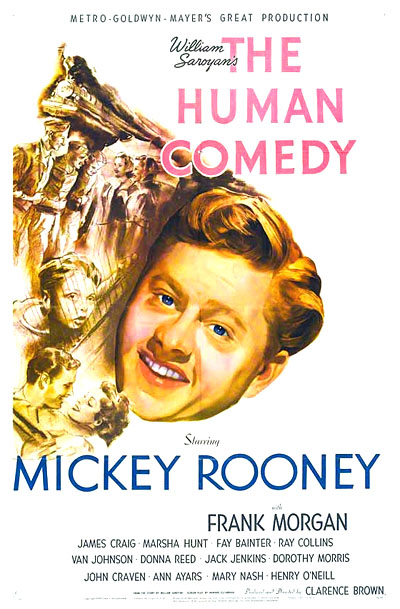
For instance, tonight, I watched The Human Comedy, a film from 1943. Along with being a considerable box office success, The Human Comedy won on Oscar (for Best Story) and was nominated for four others: picture, director (Clarence Brown), actor (Mickey Rooney), and black-and-white cinematography. The Human Comedy was quite a success in 1943 but I imagine that, if it were released today, it would probably be dismissed as being too sentimental. Watching The Human Comedy today is something of a strange experience because it is a film without a hint of cynicism. It deals with serious issues but it does so in such a positive and optimistic manner that, for those of us who are used to films like The Big Short and Spotlight, a bit of an attitude adjustment is necessary before watching.
And yet that doesn’t mean that The Human Comedy is a bad film. In fact, I quite enjoyed it. The Human Comedy is a time capsule, a chance to look into the past. It also features a great central performance, one that was quite rightfully nominated for an Oscar. As I watched Mickey Rooney in this film, I started to feel guilty for some of the comments I made when I reviewed Mickey in The Manipulator last October.
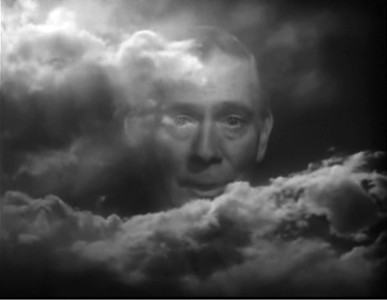
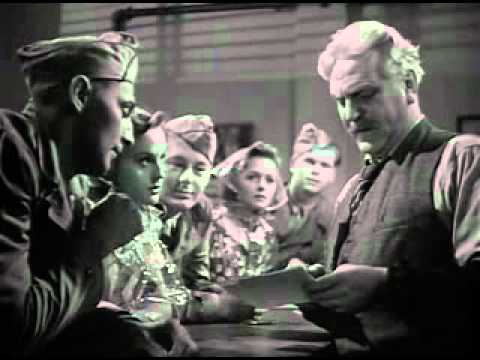
The Human Comedy opens with an overhead shot of the small town of Ithaca, California. The face of Mr. McCauley (Ray Collins, who you’ll recognize immediately as Boss Jim Gettys from Citizen Kane) suddenly appears in the clouds. Mr. McCauley explains that he’s dead and he’s been dead for quite some time. But he loves Ithaca so much that his spirit still hangs around the town and keeps an eye on his family. Somehow, the use of dead Mr. McCauley as the film’s narrator comes across as being both creepy and silly.
But no sooner has Mr. McCauley stopped extolling the virtues of small town life than we see his youngest song, 7 year-old Ulysseus (Jack Jenkins), standing beside a railroad track and watching a train as it rumbles by. Sitting on the cars are a combination of soldiers and hobos. Ulysseus waves at some of the soldiers but none of them wave back. Finally, one man waves back at Ulysseus and calls out, “Going home, I’m going home!” It’s a beautifully shot scene, one that verges on the surreal.
That opening pretty much epitomizes the experience of watching The Human Comedy. For every overly sentimental moment, there will be an effective one that will take you by surprise. The end result may be uneven but it’s still undeniably effective.
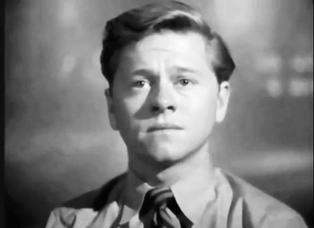
The majority of the film deals with Homer McCauley (Mickey Rooney). Homer may still be in high school but, with his older brother, Marcus (Van Johnson), serving overseas and his father dead, Homer is also the man of the house. Homer not only serves as a role model for Ulysseus but he’s also protector for his sister, Bess (Donna Reed). (At one point in the film, she gets hit on by three soldiers on leave. One of them is played by none other than Robert Mitchum.) In order to bring in extra money for the household, Homer gets a job delivering telegrams.
In between scenes of Homer in Ithaca, we get oddly dream-like scenes of Marcus and his army buddies hanging out. Marcus spends all of his time talking about how much he loves Ithaca and how he can’t wait for the war to be over so he can return home. One of his fellow soldiers says, “I almost feel like Ithaca is my hometown, too.” Marcus promises him that they’ll all visit Ithaca. As soon as the war is over…
With World War II raging, Homer’s job largely consists of delivering death notices (and the occasional singing telegram, as well). Telegraph operator Willie Grogan (Frank Morgan) deals with the burden of having to transcribe bad news by drinking. Homer, meanwhile, tries to do his job with compassion and dignity but one day, he has to deliver a telegram to his own house…
The Human Comedy is an episodic film, full of vignettes of life in Ithaca and Homer growing up. There’s quite a few subplots (along with a lot of speeches about how America is the best country in the world) but, for the most part, the film works best when it concentrates on Homer and Mickey Rooney’s surprisingly subdued lead performance. By today’s standards, it may seem a bit predictable and overly sentimental but it’s also so achingly sincere that you can’t help but appreciate it.
The Human Comedy was nominated for best picture but it lost to a somewhat more cynical film about life during World War II, Casablanca.
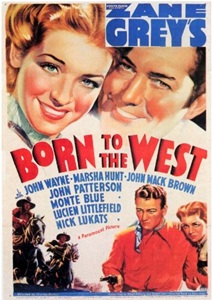 John Wayne plays Dare Rudd, a friendly rogue who aspires to be the best poker player west of the Mississippi. When he and his sidekick, Dinkey Hooley (Syd Saylor), ride into Montana, they meet up with Dare’s cousin, Tom Filmore (Johnny Mack Brown, billed as John here). Filmore needs some help on his cattle drive and Dare sure does like Tom’s girl, Judy (Marsha Hunt). Dare replaces Lynn Hardy (John Patterson) as head of the cattle drive and Lynn teams up with rustler Bart Hammond (Monte Blue) to try to get revenge. While Dinkey tries to sell lightning rods, Dare moves the herd and even finds time to play poker with notorious gambler Buck Brady (James Craig).


 Through the Shattered Lens