James Bond Review: For Your Eyes Only (dir. by John Glen)


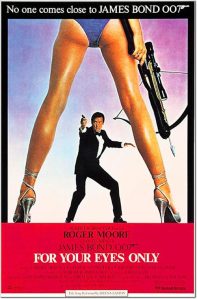
For Your Eyes Only marks a few changes in the way EON Productions wanted to go with James Bond.  With Moonraker being so over the top, the producers decided to go a little more low key and practical. After working on the 2nd unit for Moonraker and a few other Bond Films, John Glen would step up to the plate as the director for this and every 007 film leading up to Goldeneye. Instead of John Barry working on the music, Bill Conti would take over here, which ended up being a very different kind of sound for the film, one fitting of the early 80s.

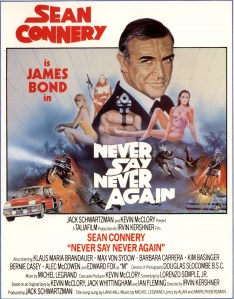
For Your Eyes Only opens with an interesting start, having Bond visit the grave of his wife, Tracy, who was killed during the events in Her Majesty’s Secret Service. Bond is informed that his helicopter is ready, but when he climbs inside, he finds that it’s under the control of someone with a serious grudge, and though we can’t see his face, we’re to assume he could be Ernst Starvo Blofeld. Supposedly, the scene, which ends with Bond reclaiming control of the helicopter and dropping the would be Blofeld into a chimney pipe, was a jab at writer Kevin McClory. Over the years, the Thunderball lawsuit caused some rifts between McClory and EON Productions. The statement made with For Your Eyes Only was that EON could come up with plenty of great stories without having to use a signature villain like Blofeld. They’d been successful with two movies back to back using Richard Kiel as the henchman Jaws, and probably felt they were doing pretty well. In reponse, McClory would give the Thunderball another try in the bond film Never Say Never Again (which isn’t part of the EON produced Bond films, and won’t be found in any of their Bond Blu-Ray / DVD compilations.

Similar to Tomorrow Never Dies, the story starts with a boat being attacked and sunk. Bond is asked to retrieve a targeting system from the ship and return it to Britain before the Russians do the same. One of the great things about the time period is that since it was pretty much the Cold War, everything was a black ops -sneak in, sneak out – scenario to avoid World War III and nukes being fired by both sides.

The Bond Girl for this film is Melina Havelock (Carole Bouquet), who I really liked here. After her parents are gunned down on their boat, she picks up a bow and arrow to take revenge. As a result, she manages to run into Bond on a number of occasions and had a real sense of calm to her (or as calm as one could be when facing a giant fellow in a scuba suit). The villain of the story, Kristatos was played by Julian Glover, who I enjoyed in Indiana Jones and the Last Crusade and currently on Game of Thrones. I didn’t care much for him in Harry Potter and the Chamber of Secrets as Hagrid’s pet spider, Aragog. One thing to note about Glover is that at one point, he was approached to actually play Bond after Connery left. An interesting casting choice if you notice him is Charles Dance as one of the henchmen and Fiddler On the Roof’s Topol, who played a former business partner of Kristatos’. I found that kind of fun, that you could see these actors here in 1981 that people are familiar with to some degree. The year this came out, Liam Neeson was in Excalibur, for example.

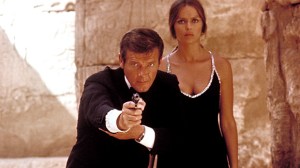
The story features a number of good moments, particularly a great snow skiing chase, a mountain climb as well as a fight between Bond and some hockey players. There’s even a well filmed underwater sequence. Of the Roger Moore Bond films, I always thought of this one and The Spy Who Loved Me as two of his best. With the mission being as small as it is, there wasn’t a lot of room for anything as wild as Moonraker. It’s a pretty tight, practical film that doesn’t rely too much on the gadgetry of the other films. It should also be pointed out that like The Spy Who Loved Me, the signature car for Moore’s Bond is still a Lotus, as I don’t believe the Aston Martins made an appearance until The Living Daylights. That was a little of a letdown for me, but otherwise, the film is beautiful.

Tomorrow, The Shattered Lens takes on Octopussy, a film that showcases just how deadly the circus can be when James Bond is involved. We’ll leave you with the theme song to For Your Eyes Only, sung by Sheena Easton.

James Bond Film Review: Moonraker (dir. by Lewis Gilbert)


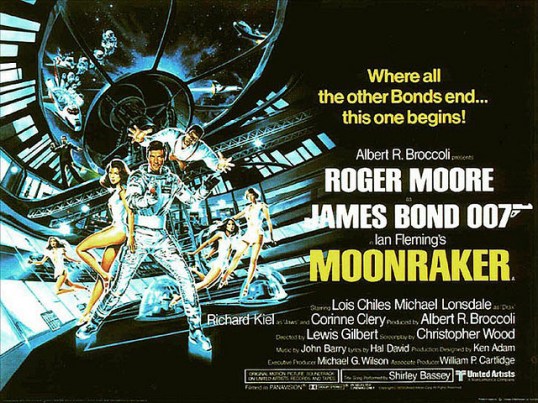
For the past two weeks, here at the Shattered Lens, we’ve been reviewing the James Bond film franchise.  We’ve reviewed the good, the bad, and the ugly of James Bond and today, we’re going to take a look at James Bond at his silliest.  Today, we’re going to review the 11th official James Bond film, 1979’s Moonraker.

Moonraker starts out with a genuinely exciting pre-credits sequence.  James Bond (Roger Moore) is on an airplane when he’s suddenly attacked by the stewardess, the co-pilot, and Jaws (Richard Kiel), the henchman with the steel teeth.  All four of them end up falling out of the plane.  In mid-air, Bond wrestles the pilot’s parachute away from him and uses it to safely land on the ground.  The pilot and the stewardess presumably plunge to a very grisly death.  Jaws, meanwhile, crashes into a circus tent and walks away without a scratch.  This scene pretty much establishes the tone of Moonraker — increasingly implausible action sequences that usually end with some sort of crowd-pleasing joke.  In short, Moonraker is Bond as pure spectacle.  Those looking for another From Russia With Love should look elsewhere.

As for the rest of the film, someone’s stolen a space shuttle and James Bond and CIA agent Holly Goodhead (Lois Chiles) team up to find it.  It turns out that the shuttle was stolen by Hugo Drax (Michael Lonsdale), who plans to wipe out life on the Earth and start a new society in space.

That’s right, in space!

Moonraker was made in 1979, at the height of the cinematic science fiction boom.  In the late 70s, everyone was going into space and James Bond wasn’t going to get left behind.  Not surprisingly, it turns out that Drax has a secret HQ in a space station that’s orbiting the Earth and Bond is not only the world’s greatest secret agent but the universe’s as well!

It also turns out that Jaws is now working for Drax and his girlfriend Dolly (Blanche Ravelec) works in the space station.  I know that a lot of Bond fans hate Moonraker because of this very subplot but seriously, just take a look at the happy couple!  They’re so cute together!

I have to admit that I have mixed feelings on Moonraker.  On the one hand, it’s the most over-the-top of Roger Moore’s Bond films and it’s certainly the silliest.  Your reaction to it will depend on just how seriously you take or want to take your Bond films.  Myself, I appreciate Moonraker as a celebration of excess but, at the same time, I can also understand why so many fans of the Bond franchise consider Moonraker to be a low point for the series.

At its weakest, Moonraker feels almost like a generic Bond rip-off as opposed to an official Bond film.  It’s obvious that most of the preproduction attention was devoted to the film’s special effects.  The rest of the film feels almost like an afterthought and several of the sequences feel as if they’ve been lifted from other Bond films.  Bond’s initial meeting with Hugo Drax is reminiscent of the golf game in Goldfinger and both Drax’s evil scheme and motivation appear to have been borrowed from The Spy Who Loved Me‘s Karl Stromberg.

Especially when compared to his witty performance in The Spy Who Loved Me, Roger Moore appears to be simply going through the motions here and he has next to no chemistry with Lois Chiles.  One gets the feeling that Bond is merely with her so that he can brag to his mates back in London that he actually hooked up with someone named Holly Goodhead.  If her name was Holly Smith, he wouldn’t have any interest in her.

On the plus side, Michael Lonsdale makes for a good villain, the film’s special effects still look good over 30 years later, and I like the way that Jaws’ storyline is resolved.  I know that a lot of people hate the fact that Jaws softens up by the end of this film but I wouldn’t have it any other way.  Richard Kiel and Blanche Ravalec are so cute together that you simply can’t help but smile at their unlikely romance.

Finally, how can you not enjoy the curiosity value of having James Bond in space?  I’m not a huge sci-fi fan.  Whenever I hear people mention Dr. Who, Star Wars, or Star Trek, my eyes roll up into the back of my head and I end up zoning out for a few hours.  But there’s just something so odd and vaguely inappropriate about the idea of James Bond floating around in a space station with a laser gun.  If nothing else, Moonraker serves as a time capsule of the late 70s, a time when even James Bond could turn up in outer space.

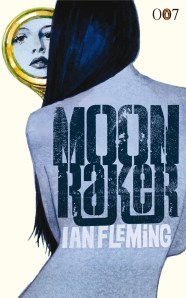
Much like The Spy Who Loved Me, Moonraker has little in common with the book that inspired it.  The literary Moonraker featured a villain named Hugo Drax but the Moonraker of the title was a nuclear missile.  Nobody went into outer space and there was certainly no one named Holly Goodhead.  Instead, Bond worked (and fell for) a fellow agent named Gala Brand.  It’s a shame that no one has ever filmed a faithful adaptation of Moonraker because it’s actually one of the best of the Bond novels.  Bond and Gala have a genuinely interesting relationship and the book has a melancholy, rather introspective feel to it.  Surprisingly, the end of the book deals with why none of Bond’s relationships last that long and makes an attempt to deal realistically with the psychological consequences of being the world’s greatest secret agent.

Surprisingly enough, the spectacular, effects-heavy Moonraker would be followed by the much more realistic and low-key For Your Eyes Only.  We’ll take a look at that film tomorrow.

Until then, here’s the Moonraker theme song:

James Bond Film Review: The Spy Who Loved Me (dir. by Lewis Gilbert)


For the past few days, the Shattered Lens has been taking a journey through the history of the James Bond film franchise.  Today, we continue that journey by taking a look at 1977’s The Spy Who Loved Me.  This was the 10th film in the “official” James Bond series and the 3rd to star Roger Moore as 007.  It was also the first of Moore’s films to be embraced by contemporary critics and it’s still considered to be one of the best films in the entire series.  It’s also one of my personal favorites.

The Spy Who Loved Me opens with one of the most of brilliant pre-credit sequences in the history of the franchise.  British and Russian submarines are mysteriously vanishing.  M (a returning Bernard Lee) summons James Bond (Roger Moore) to investigate.  Not surprisingly, Bond is with a woman at a ski resort when the summons comes.  As Bond starts to leave, the woman says, “But James, I need you.”

“So does England,” Bond replies.

Now, this was long before my time so I can’t say for sure but I always like to imagine  that line got some applause when it was first heard in theaters.  It is with that line (and, even more importantly, with his self-assured but humorous delivery of that line) that Roger Moore truly claims the role of James Bond as his own.  No, this scene seemed to be telling us, Moore would never be Sean Connery.  But he would be James Bond.

After leaving the chalet, Bond finds himself being pursued by several Russian agents.  This downhill ski chase, filmed by real people who were truly putting their lives in danger in the days before CGI, is one of the most exciting of all the chases to be found in Bond films and it builds up to a perfect climax.  After Bond manages to kill one of his pursuers, he skis right over the edge of a cliff.  Luckily, he has a parachute in his backpack and, of course, it’s a union jack parachute.  Again, I like to imagine that audiences applauded at this moment.

Bond’s escape leads to the opening credits and, even more importantly, Carly Simon singing the film’s theme song, “Nobody Does It Better.”  Seriously, I love this song.

Both MI6 and the KGB discover that the plans for a submarine tracking system are being sold on the Egyptian black market.  Suspecting that this is connected to the missing submarines, both James Bond and the Russian agent Anya Asamova (Barbara Bach) are sent to Egypt.  Bond and Anya team up to find the plans.  Along the way, they are attacked multiple times by Jaws (Richard Kiel), a hulking man with steel teeth.

Eventually, Bond and Anya discover that the man responsible for the missing submarines is Karl Stromberg (Curt Jurgens), a shipping magnate who is planning on destroying the surface world so that he can start a new society underwater.  The two secret agents work together to defeat Stromberg even though Anya assures Bond that she’s going to kill him as soon as their mission is completed.  Remember the man who Bond killed during that opening ski chase?  It turns out that man was Anya’s lover and she’s only putting off getting her revenge so that she and Bond can save the world first.

With its confident mix of humor, intrigue, and spectacular action, The Spy Who Loved Me remains one of the most popular of the Bond films.  It’s certainly one of my favorites.

Along with From Russia With Love and On Her Majesty’s Secret Service, this is the most romantic of the Bond films.  Roger Moore and Barbara Bach have a very real chemistry and, as a result, you actually care about whether or not Bond and Anya will still be together after the end credits.  As played by Barbara Bach, Anya is one of the strongest of the Bond girls.  For once, Bond and his lover are truly equals.  For anyone who doubts the importance of having a strong Bond girl, I invite them to compare this movie to The Man With The Golden Gun.

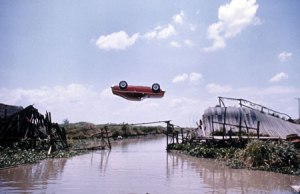
For those who are more into action than romance, The Spy Who Loved Me will not leave them disappointed.  This film features some of the best set pieces in the history of the Bond franchise.  Along with the ski chase at the start of the film, there’s also a genuinely exciting car chase that features Bond and Anya being pursued by a helicopter piloted by Caroline Munro.

(Speaking of cars, this film also features one of my favorite Bond gadgets — a car that doubles as a submarine.)

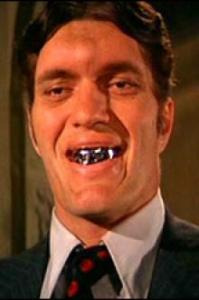
Karl Stromberg makes for an interesting villain.  His plan makes absolutely no sense but he may be the first Bond bad guy to motivated by perverted idealism as opposed to pure greed.  As you would expect from a Bond film, his secret underwater HQ is quite an impressive set.  However, the best thing about Stromberg is that he employs Jaws.  With his stainless steel teeth, Jaws was the best henchman since Goldfinger‘s Oddjob and he proved to be such a popular character that he actually returned in the next Bond film.

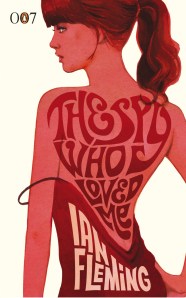
One final note: As has often been noted, The Spy Who Loved Me was the first Bond film to have absolutely nothing in common (beyond a title) with the book that it was based on.  This is largely because the literary Spy Who Loved Me wasn’t really about James Bond.  Instead, it told the life story of Vivienne Michel, a Canadian woman who just happens to meet Bond towards the end of the book.  Fleming reportedly considered this book to be a failed experiment on his part and reportedly he only sold the film rights when he was assured that only the book’s title would be used.

That said, I recently read The Spy Who Loved Me and it’s not that bad.  Vivienne Michel is a compelling character and it’s interesting to, for once, see James Bond through the eyes of a lover as opposed to the other way around.  If it is a failed experiment, it’s still an experiment that’s worth reading.

As for the cinematic James Bond, he conquered the sea in The Spy Who Loved Me so it only made sense that, in his next film, he would attempt to conquer space.  We’ll take a look at Moonraker tomorrow.

James Bond Film Review: The Man With The Golden Gun (dir. by Guy Hamilton)


Hi there!  The name’s Bowman.  Lisa Marie Bowman.  Yes, I’ve made that joke a few times over the past two weeks but so what?  Let me have my fun!  And speaking of fun, we’ve been reviewing the entire James Bond franchise here at the Shattered Lens.  Today, we’re going to take a look at 1974’s The Man With The Golden Gun, the 9th “official” James Bond film and the second Bond film to feature Roger Moore in the lead role.

The Man With The Golden Gun is Francisco Scaramanga (Christopher Lee), the world’s most feared assassin.  Living on his own private island, Scaramanga is waited on hand-and-foot by a murderous dwarf named Nick Nack (Herve Villechaize) and his mistress Andrea Anders (played by Maud Adams, who, like me, is a member of the red-headed 2%).  Every few days or so, Nick Nack arranges for a different gangster or spy to come to the island and fight a duel with Scaramanga.  Much to Nick Nack’s disappointment, Scaramanga always manages to win each duel.  However, Scaramanga remains a frustrated assassin because he’s never had the chance to take on (and kill) his hero, James Bond.

Just how obsessed is Scaramanga with Bond?  Scaramanga has his own private funhouse set up on the island and the star exhibit at that funhouse is a wax figure of Bond that Scaramanga enjoys firing golden bullets at.

Meanwhile, in London, MI6 receives one of those golden bullets with “007” etched into the surface.  M (Bernard Lee), not wishing to see his best agent killed, immediately relieves Bond from his current mission.  Bond, along with a painfully dizzy British agent named Mary Goodnight (played by Britt Ekland), responds by setting off to track down Scaramanga on his own.

Bond eventually tracks Scaramanga down to Bangkok where Scaramanga is busy scheming to steal something called a Solex agitator which, depending on who is using it, can either be the key to solving the energy crisis or it can be a deadly, solar-powered weapon.  Bond also discovers that the bullet wasn’t sent by Scaramanga but was instead sent by Andrea who wants Scaramanga dead.

Not surprisingly, this all leads to what you would expect — an elaborate car chase, a Bond girl in a bikini, and a final duel between Bond and Scaramanga.

When The Man With The Golden Gun was first released way back in 1974, the film received some of the worst reviews in the Bond franchise’s history.  A typical review came from Time Magazine’s Jay Cocks who complained that Moore “lacks all Connery’s strengths and has several deep deficiencies”, whilst Lee was “an unusually unimpressive villain.”  In a complaint that would be made about the majority of the post-Connery, pre-Craig Bond films, Cocks also criticized the film’s plot for being too dependent on both Bond and Scaramanga using implausible gadgets.

While most of the Bond films were treated dismissively by critics when they were first released, the majority of them have also come to be seen in a more positive light  as the years have passed.  The Man With The Golden Gun, however, is an exception to that rule.  Nearly four decades after first being released, The Man With The Golden Gun still has a reputation for being a disappointment.  While Christopher Lee has rightly come to be recognized as one of the best Bond villains, the film itself is still regularly dismissed as one of the worst of the Bond films.

The Man With The Golden Gun‘s flaws are pretty obvious.

As played by Britt Ekland, Mary Goodnight is perhaps one of the most useless Bond girls ever and pretty much confirms every accusation of sexism that’s ever been made against the Bond films.  It’s hard not to wish that the role of Goodnight had been played by Maud Adams who, as Andrea Anders, proves to be one of the best of the Bond femme fatales.

Redneck Sheriff J. W. Pepper (Clifton James) was an acquired taste when he first showed up in Live and Let Die and those who were annoyed by his character the first time will probably not be happy when he implausibly pops up in this film, vacationing in Bangkok and somehow getting involved in yet another car chase.

Finally, while Roger Moore’s performance as James Bond has always been rather underrated, it’s hard to deny that he looks a bit ill-at-ease in this film.  As opposed to Live and Let Die (which was clearly written to match Moore’s interpretation of the role), The Man With The Golden Gun feels like it was written for Sean Connery’s more ruthless interpretation of the role.  There’s a rather ugly scene where Bond roughly slaps Andrea to get her to tell him about Scaramanga.  It’s the type of thing that you could imagine Connery doing without a second thought but Moore seems uncomfortable with it.  His Bond simply doesn’t have the sadistic streak that hid underneath the surface of Connery’s interpretation.

That said, The Man With The Golden Gun is something of a guilty pleasure of mine.  The Man With The Golden Gun is one of the Bond films that I always make a point to catch whenever it shows up on television and I certainly had a better time rewatching it than I did when I rewatched You Only Live Twice.  The film moves along quickly enough, the car chases are a lot of fun, and Scaramanga’s funhouse is one of the best of the Bond sets.  

For all of its flaws, The Man With The Golden Gun is saved by its trio of villains. Maud Adams, Herve Villechaize, and especially Christopher Lee give three of the most memorably eccentric performances in the history of the Bond franchise.  They’re so much fun to watch that, if spending time with them also means spending time with Mary Goodnight and Sheriff Pepper, it’s a sacrifice that I’m willing to make.

The strength of Christopher Lee’s performance as Scaramanga cannot be understated.  There’s something oddly touching in the contrast between Scaramanga the steely assassin with the golden gun and Scaramanga, the insecure killer who is apparently always comparing his accomplishments to the accomplishments of James Bond.  Lee’s Scaramanga is such a compelling character that you almost regret that he can’t, in some way, be allowed to achieve some sort of victory at the end of the film.

But, of course, if that happened then it would no longer be a James Bond film.

As always, regardless of what the critics may have wished, James Bond would return.  Ironically, Moore would follow-up a what many considered to be the worst James Bond adventure with a film that many consider to be one of the best.  We’ll be taking a look at The Spy Who Loved Me tomorrow.

Until then, let’s enjoy one of the most underrated theme songs in the history of the Bond franchise.

James Bond Review: Live and Let Die (dir. by Guy Hamilton)


One year and one day ago the very first James Bond film to star Sir Roger Moore, Live and Let Die, in the title role was reviewed by Lisa Marie, and now it’s time to revisit the eight official film in the series.

With the previous Bond entry, Diamonds Are Forever, we finally see Sean Connery run out of gas when it came to playing the title role of James Bond. Yet, despite the obvious boredom Connery was having in the film the producers of the series were still wanting him to come back for another Bond film. Maybe it was his experience during the production of Diamonds Are Forever or Connery finally decided it was truly time to go the series’ producers didn’t get their wish and were in a rush to find someone new to wear the mantle o Agent 007.

They finally found their new James Bond in the form of English-actor Roger Moore and production on Live and Let Die began soon after.

Roger Moore, for me, has always been the start of the less serious, but much more fun era of the James Bond franchise. His films still had the intrigue and action of the Connery-era, but the writers and producers of the series put in more one-liners and humor in the story. We begin to see the start of this in the previous Bond film (not handled as well and came off as awkward at times), but it was in Live and Let Die and in Roger Moore that this change in the series’ tone finally hit it’s stride.

The film dials back the global domination attempts by the series of villians both SPECTRE and not. This time around Bond must investigate the deaths of three MI6 agents who had been investigating one Dr. Kananga, the despot of the fictitious Caribbean island of San Monique. Kananga (played by Yaphet Kotto) also has an alter-ego in the form of Mr. Big who runs a series of soul food restaurants as a front for his drug business. Every Bond film always tries to out-elaborate the previous one with it’s villains plans. There’s no attempts by Kananga/Big to dominate the world. His plans are pretty capitalistic in a ruthless sort of way. He wants to corner the drug market in the US by flooding the illegal drug market with his own heroin which he plans to give away for free thus bankrupting the other crime lords and drug dealers.

This plan by Kananga actually looks to be very sound and it helps that he has the beautiful seer Solitaire (played by a young and beautiful Jane Seymour) to help him outwit ad stay ahead of his competitors and the law. His plan would’ve succeeded if not for the meddling of one British super-spy named James Bond.

Live and Let Die might not have been as serious about it’s story as the early Connery films, but it definitely had a much more faster pace with more action to distinguish Moore from Connery. One particular famous action sequence involves Bond escaping from Kananga’s drug farm in the Louisiana Bayou country being chased not just by Kananga’s henchmen but by the local police in the form of Sheriff J.W. Pepper who plays the role of fool and comedy relief in the film. Even the smaller action scenes in the film had more life and fun to them like Bond escaping a gator pit by timing a run across the backs of a line of gators to safety.

Where the previous bond film’s attempt at injecting humor and more action into the story were more failures than successes in this film Roger Moore Bond film they worked in due part to Moore’s playful delivery of the one-liners and bon mots the role has become known for of late. Any trepidation that audiences and producers might have had about  Moore taking on the role that had been made famous by Connery  soon went away as this film played out.

Live and Let Die still remains my favorite of all the Roger Moore Bond films and saw it as the highlight of his time playing the character. While the follow-up films were good in their own right it was this initial Moore entry in the series where the writers, Moore and veteran Bond filmmaker Guy Hamilton were able to find the perfect balance of thrilling action and humor that the rest of the Moore-era films couldn’t replicate.

Next up for James Bond…The Man with the Golden Gun.

James Bond Review: Diamonds Are Forever (dir. by Guy Hamilton)


I think it’s a well-known fact that the Austin Powers series was spoofing the spy film of the 60’s and 70’s with it’s main target for laughs being the iconic James Bond character and his international adventures of action and intrigue. The James Bond films with each successive entry became more and more fantastic as the megalomania of each new villain became more and more cartoonish and over-the-top and the gadgets themselves started entering the realm of science-fiction (for that time and era, at least) and back-of-the-comic-book ingenuity. I think the tipping point for the series that took James Bond from action thriller to spoofing it’s own past was with Sean Connery’s last official film as James Bond with Diamonds Are Forever.

To say that Sean Connery was truly getting tired and bored with playing the character James Bond on the big screen would be an understatement. His previous Bond entry with You Only Live Twice showed him pretty much disinterested with the role and one would almost think he was phoning in his performance. After that film Connery had announced his retirement from playing Bond, but after George Lazenby also retired from the role after just one film Connery was soon back for one more ride on the James Bond train.

Diamonds Are Forever once again pits James Bond against his arch-nemesis, the leader of SPECTRE and feline connoisseur, Ernst Blofeld. This time around the role of Blofeld was played by the actor Charles Gray and the film does a good job in explaining why the character has been played by so many different actors in each entry he appeared in. It is in this early sequence in the film that we begin to see that this latest James Bond entry had jumped the shark when it came to trying to keep things even remotely believable. It’s the film’s biggest flaw an, at the same time, what made it such an interesting, fun ride.

Even the plot of the film owes more to the spoofs of the Blofeld character by way of the Austin Powers films as Bond must try to stop SPECTRE from using smuggled South African diamonds from being used to create  weaponized satellite with a massive “laser” that SPECTRE will use to destroy the nuclear arsenal of every superpower then auction off the rights to be the only nuclear power to the highest bidding country. It’s pretty much the the basic foundation of what would be the plot for the first Austin Powers, but with this film filmmaker Guy Hamilton still tried to treat the script as something that was of the serious Bond when it was more 60’s camp through and through.

Diamonds Are Forever may be the weakest of all the Connery Bond films, but it’s groovy sensibilities that celebrated the 60’s (despite the film having been made in 1971) psychedelic, swinging lifestyle poked fun at Bond’s predilection as a suave and charismatic womanizer that wouldn’t have looked out of place in a 60’s love-in. Even the action sequences was something that looked more humorous than thrilling whether it was Bond escaping SPECTRE henchmen on a moon buggy to the inept duo assassins Mr. Wint and Mr. Kidd looked more at home in an action comedy than a series that was known for serious action.

I would be remiss to not mention that this was the only time the Bond series had a redhead as a Bond Girl in the vivacious form of Jill St. John as Tiffany Case. I would also like to think that the other Bond Girl in the film, played by Lana Wood (Natalie Wood’s younger sister), was also a redhead but I’m not entirely sure since most audiences probably didn’t pay too close attention to Plenty O’Toole’s hair color. Either way this would be the only Bond film that would cast what fellow writer Lisa Marie calls the 2%.

Diamonds Are Forever might not have been the sort of return Sean Connery envisioned for himself when he agreed to return as James Bond after taking a film off, but then again this wouldn’t be the first time he would retire from the role only to come back again. Yet, despite all it’s flaws (there were many of them) the film does entertain though probably not in the way it’s filmmakers hoped it would. I do believe that it was this film that finally brought in Roger Moore as the next Bond, but also convinced the film’s producers to tailor the Bond films using some of the humorous aspect of Diamonds Are Forever but tempered to accompany the action in the story.

James Bond will soon return in Live And Let Die….

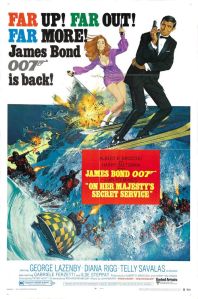
James Bond Review: On Her Majesty’s Secret Service (dir. by Peter Hunt)


By the time Sean Connery was done with You Only Live Twice, he grew tired of being Bond. After all, he’d played the role since 1962 and the ‘70s were on their way. Five movies would do that to you. After that film was done (or near the end of filming it), Connery made it known that he was done with the character and wouldn’t be returning for another installment. Imagine the impact of that. That’s like Daniel Radcliffe having said “You know what? Potter is a tosser and I’ve had it.”, Leaving right after the Order of the Phoenix. That’s not an easy role to fill.

This was the challenge that Albert Broccoli and Harry Saltzman faced in getting On Her Majesty’s Secret Service made. Before watching the movie, I watched one of the documentaries on the casting. It turns out that among the individuals that they wanted to play Bond, Timothy Dalton was offered the role. However, since he was only about 22 at the time, he felt he was too young to play the suave secret agent. The producers eventually went with George Lazenby, who was famous in Australia for commercials, but had the look they were shooting for.

To help push the changes, the marketing team concentrated on everything being “different” and “new”. The idea was that you were still getting James Bond and everything within his universe, but that the kind of Bond you were getting was something awesome. This is evidenced in the trailer and many of the promotion materials.

Broccoli and Saltzman did a search for a leading lady that would be able to support Lazenby. To this end, they recruited The Avengers star Diana Rigg. Her role as Emma Peel (which was later played by Uma Thurman in the box office adaptation) was well-known, and was used as the basis of her ability to work on an action / drama piece like Bond 6. Her character, Countess Teresa di Vicenzo remains one of the best Bond Girls on film (to me, anyway), because of how cold she is from the start of the film. he same could be said of Pussy Galore in Goldfinger, but then again, Lazenby’s Bond is somewhat different from Connery’s. Additionally, Savalas’ Blofeld came across as very dynamic, and between the two, they help to keep the story exciting when Lazenby’s talking lulls others (like the women at his dinner table) to sleep. I don’t think it’s Lazenby’s fault too much. All of the other Bonds either starred in films, like Daniel Craig or television shows, like Moore and Brosnan. For someone who just came off of commercials, Lazenby did a better than expected job, but after 5 Connery films, it’s a hell of a feat to try to take that place in people’s minds.

On Her Majesty’s Secret Service is the story of how James Bond sought out Ernst Starvo Blofeld  and managed to fall so head over heels in love that he got married. That’s basically it. In between, there’s beautiful snow in Switzerland, but OHMSS is at it’s heart very much a love story. It should also be noted that as this is the first film without Connery, there’s a lot of references to Connery’s tenure as Bond and some of these are smile inducing. Right from the start, when Lazenby’s Bond tries to save the countess from drowning herself, he gets caught up in a fight. By the time he’s able to defeat the thugs, she’s run off. No running into his arms, no “Oh..James!” embrace. All of this leads him to look at the camera and exclaim that this type of thing “never happened to the other fellow”. I liked that, I have to admit. There’s also an interesting scene where Bond decides to resign from MI6 and packs his suitcase. The items that he takes out of this drawer are ones from the first 3 films, complete with the musical cues to match them. Much of the first half of the movie works on paying homage to what was done before while trying to get everyone situated with Lazenby.

The movie moves from the beach to where he finds the Countess. After a little 60s coercion (“Talk!” *smack*), She reveals who she is and spends the evening with him, but by the next morning, she’s run off. That morning, on leaving the hotel, he’s kidnapped and is taken to the Countess’ father. The father explains to Bond that like Merida in Pixar’s Brave, Teresa is a bit spirited and that she should be wed. He even goes so far to offer Bond a million dollars, but Bond states that he enjoys the Bachelor’s taste of freedom, but does decide to follow through if the father can provide information on the whereabouts of Blofeld. This leads Bond to an office and an elaborate safe cracking sequence, the results of which give him information on genealogy. Impersonating the person who’s office he was in, he manages to sneak into an establishment in Switzerland that studies about allergies and how to cure them (but may be doing more nefarious deeds).

One cute part about the genealogy is that we’re shown the Bond Family Crest, which comes complete with the family motto “Orbis Non-Suffici”, which translates into “The World is Not Enough” This would later become the title of a future Brosnan film.

We come to find that what Blofeld really is doing is that he’s brainwashing the women he has at the center for use in planting biological weapons around the world. After an escape on skis and a snowy car chase, Bond is eventually able to stop Blofeld and his henchwoman (or at least wound him, anyway). This all leads up to one of the best endings ever devised for a Bond film, because it catches you completely off guard. If there’s any reason to keep this film on your shelf to watch, it’s because it was daring enough to avoid giving the audience the Bond ending you always see, with him heading off with the girl for one that’s ultimately more emotional and/or meaningful. To date, I feel that only Craig’s Casino Royale (which in essence owes a lot to OHMSS) comes close to actually providing something similar. It only falters in that Royale has Bond’s loss focusing him on the notion that he can’t have anyone in his life out of a lack of trust. On Her Majesty’s Secret Service gives the better reason that Bond simply has too many enemies in his life to warrant the connections others have, which makes him almost a sad character in a way.

Lazenby’s performance as Bond is a mix of hit and miss. From an action point of view, I thought he was pretty good. From an acting point of view, he played it a little too much by the book for me, which made me think that he wasn’t really the most exciting Bond there was. He didn’t have Timothy Dalton’s sense of darkness, Roger Moore’s wit, Brosnan’s narcissism or Craig’s coldness. He was just a guy who knew a lot and could punch you in the face if the need arose. Where Lazenby excelled were his interactions with Rigg. As a love story, OHMSS works just fine. As a Bond film, it’s like drinking coffee without any milk in it. You’re still given the same flavor, but it doesn’t quite taste the same. Perhaps this is why he didn’t stick around for Diamonds are Forever, which the producers did have him in mind for.

Musically, John Barry was back on board, and having to come up with something that defined the “New Bond”, he came up with an entirely new theme song. The music for On Her Majesty’s Secret Service is actually pretty damn good, and actually serves to became as much of an Official Theme as “007”, used in From Russia With Love – which actually happens to be my 2nd favorite Bond theme next to “A View to a Kill”.

Tomorrow, the Shattered Lens tackles Connery’s return to form in Diamonds are Forever. Below is the vocal theme for On Her Majesty’s Secret Service, “All the time in the World” by Louis Armstrong. Enjoy.

James Bond Film Review: You Only Live Twice (dir. by Lewis Gilbert)


In the days leading up to the American release of Skyfall, the Shattered Lens has been taking a look at the previous films in the James Bond franchise.  Today, we take a look at the 5th official James Bond film, 1967’s You Only Live Twice.

Released two years after the critically derided but financially succesful Thunderball, You Only Live Twice was a step in a new direction for the Bond series.  As Sinclair McKay explains in his brilliant book on the Bond films, The Man With The Golden Touch,  both the world and the movies changed a lot between 1965 and 1967 and You Only Live Twice reflected that change.  Director Lewis Gilbert and screenwriter Roald Dahl were newcomers to the Bond series and the film they created would serve as a prototype for the flamboyant, big budget espionage fantasies that would come to epitomize many of the later entries in the franchise.

You Only Live Twice begins with one the Bond franchise’s more elaborate precredit sequences.  During these first few minutes, the film rather boldly announces that You Only Live Twice is going to be a bit of a departure from the previous Bond films.  The film begins not with Bond but with two anonymous American astronauts orbiting the Earth in a small capsule.  The two astronauts are blandly chatting with mission control on Earth when, suddenly, another spacecraft approaches and literally swallows the American capsule whole.  One of the astronauts is hurled into space as a result and, as his body spins away, it’s obvious that Bond’s not going to be dealing with something bigger than just another guy looking to hold up Fort Knox.

The Americans blame the Russians while the Russians claim that they’re being framed by Americans and the entire world appears to be on the verge of war.  But as always happens in the Bond films, the British are there to keep everyone from overreacting.  A British diplomat is seen calming down the belligerent super powers and assuring them that MI6’s “best man” is already on the case.

(One of the undeniably charming things about the Connery and Roger Moore  Bond films is the way that the United Kingdom is portrayed as being the world’s unofficial third superpower.)

Cut to Hong Kong, where James Bond is lying in bed and asking his latest conquest, “Why do Chinese girls taste different?”  And, at this point, I think it’s fair to say that Bond is really lucky that he looks like a young Sean Connery.  Suddenly, gunmen storm the bedroom and open fire, apparently killing 007.

Oh no!  I guess the world is doomed, right?  We’re left to consider this sad reality as we watch the opening credits and listen to Nancy Sinatra sing the film’s excellent theme song.

Well, of course, James Bond isn’t really dead.  He faked his death so that he can safely go to Tokyo and investigate who was behind the attack on the space craft.  You Only Live Twice was filmed almost entirely on location in Japan and a good deal of the film’s first half is devoted to scenes of Bond simply observing Japanese culture.  It’s a bit like Lost In Translation with an espionage subplot.

After fighting a few random henchmen, Bond meets Tiger Tanaka (Tetsuro Tamba), the head of the Japanese secret service.  Tanaka seems to spend the majority of his time getting massages from the dozen or so young women who wait on him hand-and-foot.  “In Japan,” he tells Bond, “men come first, women come second.”  “I might just retire here,” Bond replies.  Uhmmm…okay.  Thank you, 1967.

In order to continue the ruse that Bond’s dead, Tanaka arranges for Bond to take on an assumed identity.  After being trained on all aspects of Japanese culture and on how to fight like a ninja, Bond is heavily disguised to look like a Japanese fisherman.  Tanaka arranges for Bond to fake marry a local girl named Kissy (Mie Hama).  Kissy is probably one of the least interesting Bond girls in the history of the franchise.  Beyond walking around in a bikini while wearing high heels, Kissy just doesn’t have much of a personality.

Bond and Tanaka’s investigation lead them to a shady industrialist named Osato and his secretary Helga Brandt (Karin Dor).  Helga is about as close as You Only Live Twice comes to featuring a strong female character.  Not only is she an assassin who has no problem with killing a man who she’s just had sex with but she’s also a redhead, just like me!

Anyway, it’s not until very late in the film that we finally meet Helga’s boss.  If for no other reason, You Only Live Twice will always be remembered for featuring one of the great Bond villains.  After being seen in the previous Bond films as just a hand stroking a white cat, Ernest Stavros Blofeld makes his first on-screen appearance here and fortunately, he’s played by Donald Pleasence.

Looking at Pleasence’s performance today, the natural tendency is to compare his Blofeld to the iconic character that he inspired, Mike Myers’ Dr. Evil.  However, one reason that Dr. Evil became such a popular character is because Donald Pleasence’s Blofeld is one of the great film bad guys.  As delivered by Pleasence in his casually off-center way, every line of Blofeld’s dialogue drips with the promise of perversion and hints of the neurosis that fuels his every action.  Blofeld spends most of the movie hiding out in a secret base that’s hidden inside a hollow volcano.  He strokes that ever-present white cat and uses a pool of piranhas to punish failure.  It is a credit to Pleasence’s performance that you never, for a second, doubt that Blofeld could very well be living in a hollow volcano.

I have to admit that You Only Live Twice is not my favorite James Bond film, though there are plenty of things that I do like about it.  Bernard Lee, Lois Maxwell, and Desmond Llewelyn all make welcome appearances and there is a genuinely exciting scene where Bond flies around in a toy helicopter.  Working on his first and only Bond film, Oscar-winning cinematographer Freddie Young captured some beautiful images of Japan and Blofeld’s volcano lair is one of the franchise’s best locations.

That said, You Only Live Twice often moves a bit too slowly for its own good and, with the exception of Blofeld and occasionally Helga Brandt, none of the film’s supporting characters are all that interesting.  Charles Gray, who later took over the role of Blofeld in Diamonds Are Forever, has a nice cameo as a decadent retired intelligence agent but he’s killed off before he can make too much of an impression.  Perhaps worst of all, Connery spends most of this film looking like he’d rather be doing anything other than play James Bond for the fifth time.  By his own account, Connery eventually grew bored with the role and that’s certainly obvious in You Only Live Twice.

Connery’s boredom can perhaps explain why, during the shooting of You Only Live Twice, it was announced that he would not be returning to play the role in the 6th Bond film.  The Bond franchise would continue with On Her Majesty’s Secret Service but it appeared that Connery would no longer be a part of it.

We’ll be taking a look at that film tomorrow.

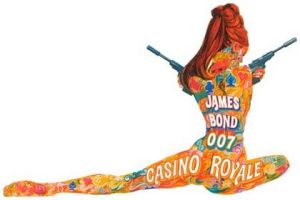
James Bond Film Review: Casino Royale (dir by Ken Hughes, John Huston, Joseph McGrath, Robert Parrish, Val Guest, and Richard Talmadge)


As you probably already know, we here at the Shattered Lens have been counting down the days until the American release of Skyfall by reviewing every single film in the James Bond franchise.  Today, we take a look at the first non-EON Bond film, the epic, psychedelic 1967 spoof Casino Royale.

Where to begin?

When Ian Fleming’s first James Bond novel, Casino Royale, was published in 1953, veteran Hollywood producer Charles K. Feldman bought the film rights.  However, Feldman didn’t buy the rights to Fleming’s subsequent novels and was forced to sit by and watch as Albert Broccoli and Harry Saltzman had unexpected success with Dr. No and the subsequent EON-produced Bond films.  Much as Kevin McClory did with Thunderball, Feldman first attempted to co-produce a serious adaptation of Casino Royale with Broccoli and Saltzman.  However, when Feldman, Broccoli, and Saltzman couldn’t come to an agreement on how each side would be compensated in the proposed production deal, Feldman decided to make Casino Royale on his own.  He also decided that, instead of trying to compete with EON by making a “straight” James Bond film, his version of Casino Royale would be a satirical extravaganza.

Feldman’s vision of James Bond is apparent from Casino Royale’s opening credits.  While the credits are definitely based on the iconic openings of the EON Bond films, they’re also designed to play up the fact that Casino Royale — in the grand tradition of the Hollywood studios at their most excessive — is meant to be a big budget, all-star extravaganza.

Casino Royale actually starts out with a pretty clever premise.  It seems that the name “James Bond,” is simply a code name that has been assigned to several British spies over the years.  As M (played by John Huston, who also directed the first third of the film), explains it, the name “James Bond” strikes such fear in the hearts of Britain’s enemies that the name must be kept alive.

(Speaking for myself, this is an idea that I kinda wish that the official James Bond series would adopt.  If nothing else, it would certainly explain how Pierce Brosnan and Daniel Craig could possibly be the same person.)

The original James Bond (played by David Niven) has long since retired to his stately country estate, where he spends his time playing the piano and complaining about how the agents who have inherited his name are sullying his reputation with excessive womanizing and violence.  It turns out the Sir James Bond is a man renowned for his “celibate image.”  At the start of the film, Bond is asked to come out of retirement by not only M but the heads of the CIA, KGB, and French secret service as well.  SMERSH, an organization of female assassins that’s led by the mysterious Dr. Noah, has been eliminating agents worldwide and only the original (and very chaste) Bond can defeat them.  Bond, however, refuses and M responds by ordering a mortar attack on Bond’s estate.  The estate is blown up but so is M and Bond soon finds himself returning to London as the new head of MI6.

Interestingly enough, David Niven was one of the actors who was considered for the role of James Bond in Dr. No.  Reportedly, Ian Fleming was quite enthusiastic for Niven to take the role but, by the time that Dr. No went into production, Niven was considered to be too old.  There’s a nice bit of irony here in seeing David Niven playing a retired James Bond who spends a good deal of the film complaining about the men who have subsequently assumed his name.

Once Niven takes over MI6, he orders that, in order to confuse SMERSH, all British agents (including female agents) will be known as James Bond.  The rest of the film is divided into episodes that feature these new James Bonds battling SMERSH and the mysterious Dr. Noah.

Among these agents, there’s the handsome Coop (played by Terrence Cooper) who has been trained to resist all sexual temptations.

There’s Mata Bond (Joanna Pettet), the daughter of Sir James Bond and Mata Hari.

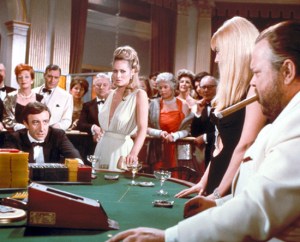
There’s Vesper Lynd (Ursula Andress) who is sent to seduce and recruit the expert gambler Evelyn Tremble (Peter Sellers) so that Tremble can beat SMERSH agent Le Chiffre (Orson Welles) at the Casino Royale.

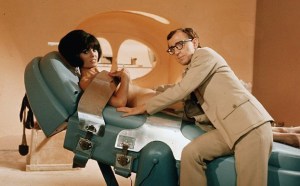
Best of all, there’s Sir James Bond’s nephew, Jimmy Bond.  Jimmy Bond is played by Woody Allen and … well, let’s just take a look at Jimmy’s first scene in the film:

Casino Royale had a notoriously troubled production history and most of those troubles seemed to center on Peter Sellers.  While the film was designed to be a broad, slapstick comedy, Sellers reportedly insisted on trying to play his role straight and even rewrote his lines to make his scenes more dramatic.  Welles eventually grew so disgusted with Sellers that he refused to be in the same room with him.  This caused quite a bit of difficulty since Sellers was in almost every scene that featured Welles.  Eventually, Sellers walked off the film and the film had to be hastily (and awkwardly) rewritten to account for his sudden absence.

When one watches Casino Royale today, it’s hard to escape the conclusion that Sellers was essentially correct.  While most of Casino Royale often feels disjointed and incoherent, the scenes featuring Sellers, Andress, and Welles are some of the strongest in the film.  Sellers’ dramatic approach doesn’t negate the film’s comedy.  If anything, it makes the comedy even stronger because Sellers actually seems to be invested in the reality his character, regardless of how ludicrous a situation that character may find himself in.

When I watched Casino Royale, I was struck by the stark contrast between the parts of the film that worked and the parts that didn’t.  This is a movie that truly swings from one extreme to another.  Either the film’s satire is working  brilliantly (mostly in the scenes featuring Woody Allen and Peter Sellers) or it’s falling completely flat (like in an extended sequence that features Deborah Kerr as a SMERSH assassin).

I found myself laughing more at the little scenes than the big set pieces.  For instance, I loved it when David Niven embraces Miss Moneypenny (Barbara Bouchet) just to be then told that she’s actually the daughter of the original Miss Moneypenny.  I don’t know much about the actor Terrence Cooper (though, according to Wikipedia, he was also a contender to take the role of James Bond in the official series) but I enjoyed the brief sequence where Moneypenny “tests” him to see if he can take on the Bond identity.  Unfortunately, the film doesn’t really have enough of these small, clever moments.

Ultimately, I found that Casino Royale works best when viewed as a time capsule.  Casino Royale was made at a time when the established major Hollywood studios (and veteran producers like Charles K. Feldman) were struggling to remain relevant.  Foreign films (including, it must be said, the James Bond films) were challenging the common assumptions of what could and what couldn’t be shown on-screen and the studio system reacted by trying to make films that would appeal to younger audiences while also reassuring older audiences that the movies hadn’t really changed that much.  The end result were films like Casino Royale that featured the occasional psychedelic sequence along with cameos from old (and safe) Hollywood stars like George Raft, William Holden, and Charles Boyer.  Casino Royale is the type of self-indulgent film that could only have been made in 1967 and, as such, it’s a valuable time capsule for all of us cinematic historians.

I also have to admit that, as excessive as Casino Royale may be, I happen to love excess.  Casino Royale might be overlong and occasionally incoherent but the costumes are simply to die for.  The film is a visual feast, if nothing else.

Casino Royale was released to scathing reviews and terrible box office but, in the years since, it has become something of a cult favorite.  Our own Trash Film Guru has identified Casino Royale as his favorite Bond film.  Myself, I found the film to be extremely flawed and yet oddly fascinating to watch.  Casino Royale is a total mess and that is both its greatest flaw and greatest strength.

Tomorrow, we’ll return to the official James Bond series by taking a look at You Only Live Twice.  

James Bond Review: Thunderball (dir. by Terence Young)


The Shattered Lens is taking on all of the Bond Films, one a day until the U.S. Release of Skyfall on November 9th. Today, we approach the fourth Bond Picture, Thunderball. Before I start, I should note that this film actually has a bit of controversy behind it. Thunderball had the potential to become one of the first Bond films, but a law suit in 1961 stating that Ian Fleming’s novel for the story was based on the screenplay for the film. Producer Kevin McClory was able to win the lawsuit and hold on to the rights. This would later result in 1983’s Never Say Never Again, with Sean Connery returning to play the same role in the same story as he did in 1965. In the meantime, Dr. No, From Russia With Love and Goldfinger were released with great success.

Before watching the movie, I watched a 1965 documentary from NBC called “The Incredible World of James Bond”, which talked about Ian Fleming, James Bond, and the overall popularity of the character. By the time Goldfinger came out, you’d find lines around theatres all around the world. People were buying colognes and watches – if it had 007 written on it, it was an easy sale. Both the books and the movies were doing extremely well. So with Thunderball being the latest release, it was similar to having perhaps the next Harry Potter or Twilight film on the way. I also learned that Q (Desmond Llewelyn) actually has a name, Major Boothroyd. That was cool to discover.

I wish I could say that I enjoyed Thunderball.  It’s the only Bond film I’ve never seen and the production values for the film were some of the most elaborate around at the time of it’s release. They went out of their way to create submersible machines and other equipment, but the fact that so much of the film took place underwater really caused me to lose interest in what was going on. Granted, it may be fun for many people, but I really wanted to them to give me a few more locales under than the major underwater harpoon fight that occurs near the film’s action climax. Both Tom Jones’ theme song (which describes Bond’s approach to things) and John Barry’s score help to set the mood of the story.

Thunderball continues the SPECTRE story started with Dr. No. Originally, this was supposed to be SMERSH, but that was a real group, much like the KGB or CIA. For movie purposes, SMERSH became SPECTRE to avoid giving any of the Bond stories an anti-nation slant. This would also be done with Quantum of Solace, the organization being something private rather than being any kind of counter intelligence group. This time around, the story opens with Bond attending the funeral of one of the SPECTRE members, and on seeing his wife getting into a car on her own (something I didn’t see as wrong), he follows her to her home to confront her. It’s revealed that the widow is actually the SPECTRE agent (I wasn’t expecting the punch that revealed it), and in the fight Bond ends up killing him. He makes a quick exit and uses a jet pack to get out of the building, where his Aston Martin is waiting for him. It was kind of interesting to see that there was that kind of technology in the 60s.

SPECTRE agent Emilio Largo (Adolfo Celi) is given the task to acquire two Nuclear weapons and decides he’s going to blow up Miami if he doesn’t get his way. Bond is assigned to stop him, and along the way he meets Domino (Claudine Auger), who assists him on this.

At the time of it’s release, Thunderball was a major hit and even won an Academy Award. It managed to come out at the height of Connery’s career as the secret agent. It does suffer from one or two flaws. As most of the story takes place on or near a beach, there are tons of underwater sequences, including a full out battle. Even Finding Nemo took some time to stay on the surface once in a while. This doesn’t make Thunderball a terrible film at all, it simply focuses the story on one element. I would have liked a little more variety.

Q’s gadgets for Bond this time around included a Geiger Counter, a rebreather, an underwater camera, and a personal flare gun, all for the life aquatic.

Overall, Thunderball’s a good film to watch if you’re doing what we’re doing here and are watching the films in a series. You may find yourself a little bothered by the amount of underwater scenes, but the movie still manages to keep some of the spy vibe of the earlier films. Below is Tom Jones’ theme to the film. Tomorrow, the Shattered Lens will take on the David Niven / Peter Sellers version of Casino Royale.