Retro Television Review: Fantasy Island 7.7 “The Wedding/Castaways”


Welcome to Retro Television Reviews, a feature where we review some of our favorite and least favorite shows of the past!  On Tuesdays, I will be reviewing the original Fantasy Island, which ran on ABC from 1977 to 1984.  Unfortunately, the show has been removed from most streaming sites.  Fortunately, I’ve got nearly every episode on my DVR.
This week, Lawrence ruins everything.

Episode 7.7 “The Wedding/Castaways”

(Dir by Bob Sweeney, originally aired on November 26th, 1983)

Ugh, this episode.

Nerdy Fred Connors (Richard Gilliland) wants to spend a weekend alone with a beautiful woman.  His favorite supermodel, Christy Robbins (Phyllis Davis), has been pressured by her manager (Steve Perry) into agreeing to spend the weekend with Fred at Pelican Cove.  Fred and Christy will have their picture taken before and after their weekend together to show just how much spending time alone with Christy Robbins will improve one’s outlook on life.

Let’s just stop here and state the obvious.  This makes ZERO sense.  Christy’s manager has no idea who Fred is.  He doesn’t even meet Fred until it’s time to him and Christy to go to Pelican Cove.  Christy is a world-famous model.  In what world would a celebrity agree to be abandoned on an isolated island with a total stranger?  The photographers aren’t staying on the island with them.  Instead, Christy and Fred are dropped off on the island and then everyone else leaves.  If I was Christy, I would get a new manager.

A rival model named Celina Morgan (Shannon Tweed) was also up for the “abandoned on an island with a possible sex maniac” gig and she’s upset that she lost out to Christy.  So, she sneaks out to Pelican Bay herself and soon, she and Christy are fighting over the right to spend their time with Fred.  It’s dumb and it makes no sense and, considering that the whole fantasy is basically two beautiful woman fighting over one dorky guy, it’s actually feels a bit demeaning and mean-spirited.

Of course, it’s nowhere near as mean-spirited as the other fantasy.  Lucy Gorman (Jeannie Wilson) is unhappy in her marriage to Dr. Jack Gorman (Gordon Thomson).  She tells Roarke that the only good thing that came out of her marriage was her daughter (Andrea Barber) but Lucy even feels jealous of her!  Lucy wants to go back to her wedding day so she can see what would happen if she left her husband at the altar and pursued another doctor (Richard Pierson).

Well, the main that would happen is that Lucy’s daughter would never be born.  But somehow, this doesn’t occur to Lucy until the fantasy has started.  How would that not occur to a mother?  This fantasy was …. I can’t even begin to describe how annoying it was.  Lucy came across as being very self-centered and kind of dumb.

I swear, the seventh season has just been terrible so far and I blame one person.
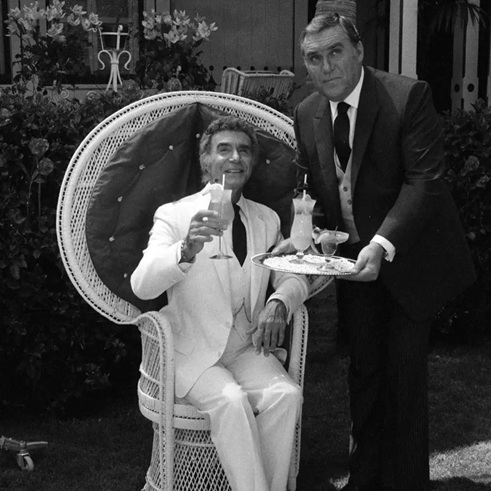
And, no, it’s not Mr. Roarke.

Seriously, ever since Lawrence showed up, the Island just hasn’t been the same.  Are we sure that Lawrence isn’t the Devil?  I mean, I know the Devil was traditionally played by Roddy McDowall on this show but I’m sure he change his appearance.  There’s something sinister about Lawrence and I don’t trust him.  He doesn’t care about Roarke and he doesn’t care about the fantasies.

What a disappointing trip to the Island.  Traditionally, the last season of any show is usually the worst but it’s still painful to watch Fantasy Island misfire like it did with this episode.
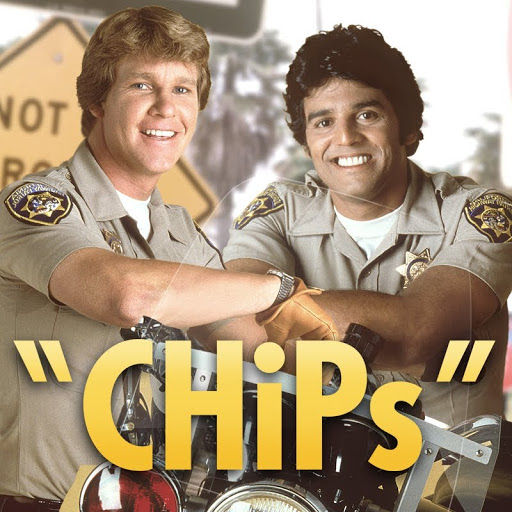
Late Night Retro Television Review: CHiPs 4.1 “Go-Cart Terror”


Welcome to Late Night Retro Television Reviews, a feature where we review some of our favorite and least favorite shows of the past!  On Mondays, I will be reviewing CHiPs, which ran on NBC from 1977 to 1983.  The entire show is currently streaming on Prime!

It’s time for the fourth season!  Ponch and Baker — but especially Ponch — continue to keep Los Angeles safe for pedestrians and motorists.

Episode 4.1 “Go-Cart Terror”

(Dir by John Florea, originally aired on September 21st, 1980)

It’s time for season 4 of CHiPs, a.k.a The Ponch Show!

Seriously, if there’s anything that really stuck out about the fourth season premiere, it’s that Baker’s character was pretty much superfluous.  Yes, Baker was out there on his motorcycle and helped Ponch catch this week’s bad guys, two thieves played by Larry Storch and Sonny Bono.  But, ultimately, it was Ponch who did the important things.

Who coached the CHP-sponsored go-cart team to victory over the fire department’s?  Ponch!

Who rescued a woman from a van after she crashed into a lake?  Ponch!

Who always knew the right thing to say?  Ponch!

Who did everyone talk to when they had a problem?  Ponch!

This episode established that Frank ‘Ponch” Poncherello is the greatest human being who ever lived.  Baker …. well, he tries.  Baker’s nice and dedicated to the job but, in the end, he can only watch with amazement as Ponch solves all of the world’s problems.

I read over on the imdb that Larry Wilcox did not enjoy working with Erik Estrada and he felt that Estrada was the producer’s pet.  Watching this episode, I can see why Wilcox would have felt like that.  It’s hard to believe that, when this show first started, Baker was the competent one while Ponch was the nervous screw-up who kept making mistakes and who always seemed to be on the verge of getting written up.  The fourth season premiere celebrates Ponch as being the supercop who the rest of Los Angeles looked up to.  Sorry, Mr. Wilcox …. you may be the better actor but it’s hard to compete with the Estrada of it all.

As for the episode itself, it was typical CHiPs.  The criminals were captured after being chased on the freeway and a bunch of kids learned an important lesson about proper go-cart safety.  When the go-cart team had to raise money to compete in the next race, Ponch told all the adults that the kids had to come up with a plan because it was their team and the whole point of the go-cart experience was to learn responsibility.  You tell ’em, Ponch!  I mean, goddamn, Ponch is the man!  Anyway, the kids held a car wash and I think the only reason they did that was so the show could have an excuse to have Randi Oakes show up in short shorts and get sprayed by a hose.  I hope Ponch talked to the producers about treating Randi Oakes with respect.

I liked this episode, even though I did feel bad for Larry Wilcox.  It was silly and fun.

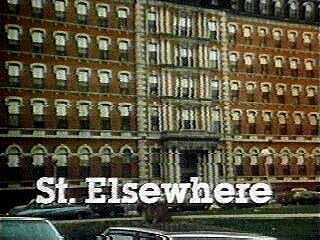
Retro Television Review: St. Elsewhere 1.21 “Baron von Munchausen”


Welcome to Retro Television Reviews, a feature where we review some of our favorite and least favorite shows of the past! On Fridays, I will be reviewing St. Elsewhere, a medical show which ran on NBC from 1982 to 1988.  The show can be found on Hulu and, for purchase, on Prime!

This week’s episode is a much better Dr. Craig episode than last week’s.

Episode 1.21 “Baron von Munchausen”

(Dir by Victor Hsu, originally aired on April 19th, 1983)

Anthony Rizzo (Louis Giambalvo) seems like a nice guy.  He’s admitted to the hospital with complaints of stomach pain and a high fever.  Dr. Morrison can’t find anything wrong with him but he does notice that Rizzo has a lot of scars.  Rizzo explains that he’s had a lot of surgeries over the course of his life and he’s got a story to go with each one of them.  Morrison brings in Ehrlich for a consult.  Ehrlich, who loves to perform surgery, suggests opening Rizzo up and doing an exploratory.  Morrison thinks it’s too early for that,  Rizzo, however, loves the idea.  Rizzo then proceeds to die on the operating table.

Ehrlich is shaken.  Morrison is angry.  However, Westphall and Craig take one look at the case and deduce that Rizzo suffered from Munchausen’s Syndrome.  For whatever reason, he was addicted to going to the hospital and having surgery.  He knew all the tricks, from using a light blub to make it look like he had a fever to pricking his finger with a needle to convince the doctors that there was blood in his urine.  It turns out that he died because of the drugs that he had been taking to help him fake his symptoms.  Both Morrison and Ehrlich are relieved to learn that Rizzo’s death was not their fault.

“So, Ehrlich lost his first patient today,” Craig says to Westphall.  “It won’t be his last.”

This was a good episode for Dr. Craig, especially after all that nonsense last week.  When Westphall finds himself in need of a doctor to speak to a group of inner city medical students, he is horrified to discover that Mark Craig is the only one available.  Craig accepts, saying that Westphall should have asked him earlier.

Westphall’s concerns are justified.  Dr. Craig is opinionated, wealthy, and more than a little prejudiced against …. well, everyone.  “My ancestors came here on the Mayflower!” Craig is quick to say.  And yet, the students love him, specifically because he doesn’t pretend to be anything that he isn’t.  Unlike Westphall, who tries give an inspiring pep talk, Craig is open about the reality of practicing medicine in what this episode refers to as being “the ghetto.”  When asked if his medical student son will be working in a ghetto clinic, Craig replies, “Why would he?”  Craig gets a standing ovation from the students, which felt like a bit much but whatever.  It was nice, for once, to see the show admitting that Craig’s blunt honesty can sometimes be more effective than Westphall’s noncommittal style of encouragement.

Afterwards, in a wonderfully acted scene, Craig asked Westphall why people don’t seem to like him,  Westphall shrugs and then says that Craig can be arrogant, rude, prejudiced, intolerant of other worldviews …. “Thank you, Donald,” Craig cuts him off.

Meanwhile, back at the hospital, a crazy woman (Micole Mercurio) is sent to the psych ward after threatening to kill Nurse Daniels.  (No, leave Shirley alone!)  Dr. Wendy Armstrong, who is one of the worst characters on this show, promptly discharges the woman and lets her leave the hospital.  “She threatened to kill me!” Shirley says while Wendy shrugs, unconcerned.  Fiscus also proves to be of no help, as he is once again feeling attracted to Kathy Martin.

Finally, Dr. White goes to a drug addict support group and walks out when things get too emotional.  Booo!  Dr. White is even worse than Dr, Armstrong!

This was a good episode.  Next week, the season finale!

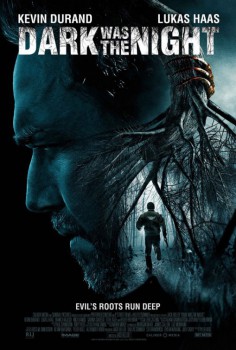
Horror Film Review: Dark Was The Night (dir by Jack Heller)


The 2014 horror film, Dark Was The Night, takes place in the town of Madison Woods.

Madison Woods is a small, isolated town that is located somewhere up north.  It’s one of those dreary blue collar towns where everyone knows everyone else.  Most of the citizens work in the logging industry, attend the same church, and drink at the same bar.  It’s not a town where much happens.  The police force consists of two guys, Sheriff Paul Shields (Kevin Durand) and his new deputy, Donny Saunders (Lukas Haas).  Donny worked in New York City before moving to Madison Woods.  Shields is currently estranged from his wife.  That’s the type of thing that passes for big news in Madison Woods.

When one of the local farmers complains that one of his horses has disappeared, Shields and Saunders assume that the horse has just run off.  When other animals start to disappear, Shields continues to insist that it’s all just a coincidence.  When the local hunters start to talk about an ancient legend of a monster that lives in the woods, Shields replies that there are no monsters and, for good measure, there’s no God as well.  (In many ways, Shields is a perfect example of the old joke about how the best way to spot an atheist is to wait a few minutes and he’ll tell you.)  Even when weird cloven footsteps start to show up around town and Shields himself spots something in his backyard, the Sheriff continues to insist that there is a rational explanation for all of this.  Meanwhile, Saunders hangs out at the bar and drinks and really, who can blame him?  As far as I can tell, it’s not like Madison Woods has a movie theater or anything like that.  It’s a really boring town.  You can either develop the beginnings of a drinking problem or you can start random fights or you can get ripped apart by the thing in the woods.  Make your choice.

Eventually, Shields and Saunders do discover that there is something lurking out in the woods.  And, despite their attempts to come up with a rational explanation, the creature proves itself to be more than just some animal.  Instead, it’s a true supernatural monster, tracking its prey through the community.  As a group of loggers discover at the start of the movie, the creature is just as quick to attack humans as it is to go after deer and other wild animals.  With the entire town locked away in the church basement (because, as Night of the Living Dead proved, the basement is always the safest place), Saunders and Shields try to figure out how to stop a monster that neither one of them has ever seen before.

Dark Was The Night was loosely inspired by a true story.  In 1885, the citizens of Topsham in the UK were stunned to wake up one cold morning and discover a series of cloven footprints in the snow.  The footprints led through the entire city and it appeared that whatever was responsible for them had stopped in front of every house and place of business.  Some claimed that the footprints belonged to the devil while others said that it was just some sort of animal.  The Devil’s Footprints, as the story became known, serves as a bit of Rorschach test.  Those inclined to believe in the supernatural have little trouble believing that the Devil visited the town of Topsham while the more rational among us assume that the footprints were left by a wild animal and then people saw whatever they wanted.  Dark Was The Night moves the story to the modern day and to America but the question remains the same.  Is there really a monster in the woods or, as Shields initially believes, are people just seeing what they want to see?  Unfortunately, the film reveals the monster’s existence within its opening minutes.  The film would have perhaps been more effective if there had at least been some mystery about whether or not Shields’s initial instincts were correct.

Dark Was The Night is a deliberately paced film, which again would be more effective if there was any mystery at all as to whether or not the monster actually existed.  On the plus side, the film is full of atmosphere and Kevin Durand and Lukas Haas are both effective as the two lawmen who find themselves in over their heads.  Fans of Lost will remember Durand as the evil Martin Keamy, who was one of the most heartless characters to ever appear on that show or any other show.  Durand gets to play the hero in Dark Was The Night and gives a good performance as a man who discovers that not everything has a rational explanation.  That said, while the film has some interesting ideas and performances, it ultimately becomes just another monster-laying-siege film and the ending is one that most viewers will see coming from miles away.  It’s not a bad film but it’s still never quite as good as one might hope.

Film Review: Crawlspace (dir by David Schmoeller)


Before moving into a new place, always do a little research.

That would seem to be the main lesson that one can take from the 1986 horror film, Crawlspace.  As the film begins, Lori Bancroft (Talia Balsam) thinks that she’s found the perfect little apartment.  It’s clean.  It’s roomy but cozy.  It’s got space for all of her stuff.  It’s perfect for hosting friends.  You can bring a date back to the place without feeling embarrassed.  The apartment even comes with a charmingly eccentric landlord, an older German gentleman named Karl Gunther.  Gunther is played by Klaus Kinksi and….

Wait …. he’s played by who?

Klaus Kinski?  You mean the infamously difficult actor who appeared in not only a countless number of horror films and spaghetti westerns but also Doctor Zhivago?  Would this be the same Klaus Kinski who was briefly Werner Herzog’s muse?  That Klaus Kinski?

Uh-oh.  That’s not good.

It soon turns out that Gunther is not quite the friendly man that he pretends to be.  Gunther’s got some issues.  For instance, he spends a lot of time intentionally burning his hand and then smiling afterwards.  And there’s his habit of playing Russian Roulette.  Throughout the film, we see him sitting at a table and putting one bullet in a gun, just so he can then point it at his head and take his chances.

Gunther also has a thing for ventilation shafts.  He loves to crawl around in them, specifically so he can spy on his tenants.  When we first meet him, he’s obsessed with Sophie (Tane McClure) but he soon turns his attention to Lori.  Often, he’ll release rats into a tenant’s apartment.  When Lori merely laughs at the rat as opposed to screaming in fear, Gunther is impressed.

Of course, Karl Gunther wasn’t always a landlord.  He used to be quite a respectable doctor.  Of course, then all of his patients started dying and Gunther’s career went downhill.  Gunther, of course, claims that he only murdered his patients because they were in pain and suffering.  However, it could be more likely that his actions had something more to do with the fact that Gunther’s father was a Nazi war criminal, a doctor who justified his crimes with the same excuses as Gunther.

If all that’s not enough to convince you that Gunther’s got some issues, you should just take a look in the attic.  That’s where Gunther spends most of his time, writing in his journals.  It’s also where he keeps jars that are full of body parts.  One jar has a tongue in it.  A pair of eyes float in the other.  There’s a finger in another.  The attic is also where Gunther keeps one of his previous tenants in a cage.  Gunther says that he likes to talk to her, despite the fact that he long ago removed her tongue….

Plot-wise, Crawlspace is pretty much your standard low-budget 80s horror film.  There’s not much here that could really be called surprising but director David Schmoeller does find some creative ways to film all of the expected mayhem and the frequent shots of Kinski crawling through the ventilation shafts are genuinely creepy.  Kinski, giving a performance that’s even more unhinged than usual, is the best thing about the film and the main reason to see it.  By making Karl Gunther the self-loathing son of a war criminal, Schmoeller and Kinski bring an interesting subtext to the film.  Gunther is more than just a slasher movie villain.  Instead, he’s the embodiment of Hitler’s hateful legacy.

As I mentioned at the start of this review, Klaus Kinski was a legendary for being difficult.  Years after both the release of Crawlspace and Kinski’s own death, director David Schmoeller released a 9-minute documentary about the experience of making a film with Kinski.  The title of that film: “Please kill, Mr. Kinski.”  Apparently, this was a request that several members of the crew made to Schmoeller over the course of filming.  (Interestingly enough, Werner Herzog would make his own Klaus Kinski documentary — My Best Fiend — in which he mentioned that, during the shooting of Fitzcarraldo in Brazil, a native chief offered to have Kinski killed.)  Please Kill, Mr. Kinski is a fascinating look at not only low-budget exploitation filmmaking but also what it’s like to have to work with a talented monster.  As of this writing, it can be viewed on YouTube.