Film Review: The Man I Married (dir by Irving Pichel)


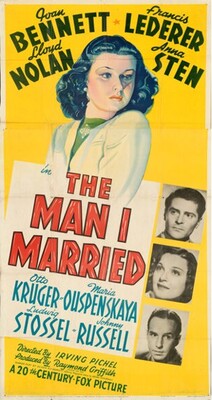
In 1940’s The Man I Married, Joan Bennett stars as Carol Cabbott Hoffman.

Carol is a New York-based art critic.  She is young, sophisticated, wealthy, and politically naive.  Because she has been married to a German for seven years, she has been keeping up with what has been happening in Germany but it’s clear that she doesn’t really understand the full story of what she’s hearing.  As she says, at one point, she has heard bad things about the Nazis but she also tries to keep an open mind and not get drawn in by “propaganda.”

Her husband, Eric Hoffman (Francis Lederer), has not been back to Germany in ten years and he says that he has little interest in ever returning.  But, when he receives a letter from his father (Otto Kruger), Eric announces that he has to return home for a visit.  Before Carol, Eric, and their son, Ricky (Johnny Russell), leave for Germany, they are approached by their friend, Dr. Hugo Gerhardt (Ludwig Stossel).  He explains that his brother has been imprisoned in a concentration camp and he asks Carol and Eric to deliver money to him and to appeal to the American embassy for help.  Carol agrees to do so.  Eric is noticeably reticent.

As soon as they arrive in Germany and Eric learns that his father wants him to take over the family’s factory, Eric starts to change.  He and a former schoolmate named Freida (Anna Sten) are a bit too happy to see each other again.  Eric insists on listening to the nightly radio broadcasts from Dr. Goebbels.  When Freida mentions that it is illegal to joke about Hitler, Eric surprises Carol by defending the law.  With Eric spending all of his time with Freida and dismissing Carol’s understandable suspicions by saying that she’s just being jealous, Carol meets an American correspondent named Keith (Lloyd Nolan) who reveals to her the truth of life in Nazi Germany.  Carol discovers that, rather than being the economically-strong paradise that Eric and Freida claim it to be, Germany is a place where many citizens live in fear of being heard saying the wrong thing and, as a result, they’ve chosen to close their eyes to what is going on around them.

The Man I Married is an interesting film.  It’s an anti-Nazi film that was released at a time when America was still technically a neutral nation.  Indeed, the film almost feels like it was made to prepare Americans for the inevitability of war with Germany.  When Keith mocks Carol for trying to be neutral about the Nazis, it’s clear that he’s meant to be speaking to the audience watching the film.  Eric begins the film as an erudite and seemingly charming man but, as soon as he arrives in Germany and is reunited with Freida, he reveals himself to be a fervent Nazi.  The film warns the audience not to trust those who were trying to excuse or dismiss Germany’s actions.

This is also one of the few films made before World War II that really acknowledged just how central anti-Semitism was to the Nazi ideology, acknowledging the concentration camps at a time when many in the West were refusing to admit they existed, either because they were in denial or because they just didn’t care.  Towards the end of the film, a major character is discovered to have had a Jewish mother and the reaction to the news reveals the hate that was at the heart of the Third Reich.

The Man I Married, with its portrayal of a populace that has convinced itself that their government is never to be questioned and that all dissent must be punished, is a film that feels just as relevant today as it did in 1940.  It’s a film that warns viewers of the risk of disbelieving their own eyes.

Film Review: The Most Dangerous Game (dir by Irving Pichel and Ernest B. Schoedsack


On a jungle island Count Zaroff awaits.

Zaroff is a Russian nobleman and a hunting enthusiast.  However, he’s grown bored with hunting the usual big game trophies.  Those don’t provide enough of a challenge for him.  Instead, he prefers to hunt humans because humans are the most dangerous game.  Humans can think.  Humans are clever.  Humans are deadly.  When big game hunter Bob Rainsford washes up on the island after a shipwreck, he is discovered by Zaroff’s men.  Rainsford discovers that Zaroff is a fan of his work.  Rainsford also learns that Zaroff is planning to hunt him next.

It’s a tale that we’ve all heard, in one form or another.  Ever since Richard Connell’s original short story was published in 1924, The Most Dangerous Game has inspired a countless number of adaptations.  Some of those have been direct adaptations while others have merely been inspired by Connell’s plot but, in the end, they all have the same thing in common.  No animal is more dangerous than man.

As far as my research has revealed, the very first cinematic adaptation of The Most Dangerous Game came out in 1932.  It was produced by Ernest Schoedsack and Merian C. Cooper, the same team that would later be responsible for the original King Kong.  Joel McCrea played Rainsford while Zaroff is played by Leslie Banks.  In order to provide some romance and perhaps to pad out the film to over an hour, a few extra shipwreck survivors are added.  There’s two sailors who don’t last long.  There’s also Eve Trowbridge and her brother, Martin.  Eve and Martin are played by Fay Wray and Robert Armstrong, both of whom would star in King Kong.  Zaroff’s imposing servant, Ivan, is played by Noble Johnson who also appeared in King Kong.  Are you picking up on a theme here?’

Other than the addition of the extra characters, this film version is pretty faithful to its source material.  Again, we have Zaroff “rescuing” Rainsford and then having a long philosophical discussion with him before announcing that it is Rainsford who will be hunted.  Unsurprisingly, the film’s Rainsford is a bit more heroic than the one who appears in the short story.  The literary Rainsford looks forward to defeating Zaroff at his own game while the film’s Rainsford is more concerned with getting off the island and protecting Eve.

All in all, it’s an entertaining film.  Of course, by today’s standards, it’s a bit creaky.  I mean, the film is 88 year old.  Still, Joel McCrea remains a convincing and compelling hero while Leslie Banks is enjoyably hammy in the role of Zaroff.  Zaroff is a role that calls for an actor who is willing to give into his most theatrical impulses and Banks doesn’t let the film down.  The jungle scenery is properly shadowy and even the miniatures used during the shipwreck sequence have a charm all their own.

Unfortunately, The Most Dangerous Game is one of those films that has slipped into the public domain.  As a result, there’s a lot of less-than perfect versions floating around.  (The version that I recently watched on YouTube was so grainy that it was nearly unwatchable.)  Fortunately, this film is a part of the Criterion Collection.  That’s the one to add to your collection.

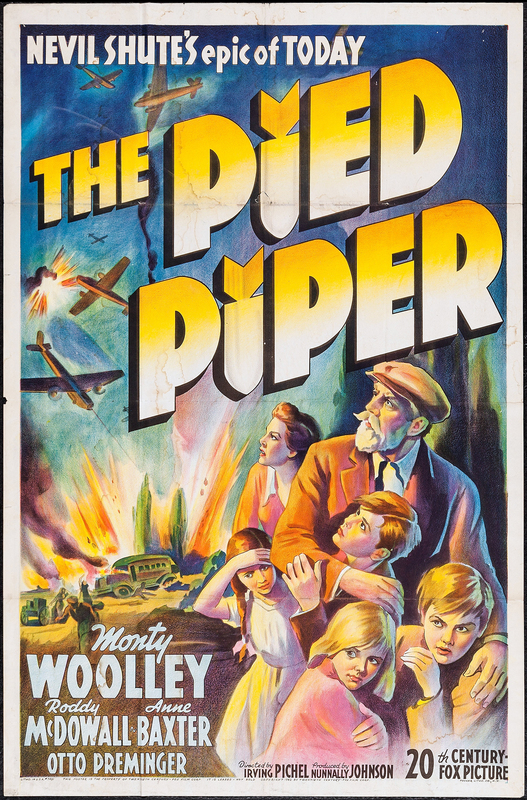
Lisa Reviews An Oscar Nominee: The Pied Piper (dir by Irving Pichel)


The 1942 Best Picture nominee, The Pied Piper, opens in Eastern France, shortly after the outbreak of World War II.

John Sidney Howard (played by Monty Woolley) is an Englishman on holiday.  He says that he just wants to enjoy some fishing before the entire continent of Europe descends into chaos.  He knows that France is going to be invaded at some point and he even suspects that the country will probably fall to the Nazis.  In his 70s and still mourning the death of his son (who was killed during an air battle over occupied Poland), Mr. Howard just wants to enjoy France one last time.  Despite the fact that the bearded Howard bears a resemblance to a thin Santa Claus, he’s quick to declare his dislike of both children and humanity in general.  He’s a misanthrope, albeit a rather friendly one.

Howard’s plans change when the Nazis invade France sooner than he expected.  With his vacation canceled, Howard just wants to get back to England.  Complicating matters is that a diplomat named Cavanaugh (Lester Matthews) has asks Howard to take his children, Ronnie (Roddy McDowall) and Sheila (Peggy Ann Garner), back to England with him.  Despite his self-declared dislike of children, Howard agrees.  However, it turns out that getting out of France won’t be as easy as Howard assumed.  After their train gets diverted by the Nazis, Howard, Ronnie ,and Sheila are forced to take a bus.  After almost everyone else on the bus is killed in a surprise Nazi attack, Howard and the children are forced to continue on foot and rely on the kindness of a young French woman, Nicole Rougeron (Anne Baxer).

Throughout the journey, Howard keeps collecting more and more children.  Everyone wants to get their children to a safe place and Howard soon has a small entourage following him.  Unfortunately, he also has Gestapo Major Diessen (an excellent Otto Preminger) watching him.  How far is Howard willing to go to ensure the safety of the children?

The Pied Piper is an interesting film, in that it starts out as something of a comedy but it then gets progressively darker as events unfold.  At the beginning of the film, it appears that the whole thing is just going to be Howard getting annoyed with the precocious Ronnie and Sheila.  But then that bus is attacked and Howard find himself accompanied by a young boy who has been left in a state of shock by the attack.  When the group is joined by a young Jewish child named Pierre, it’s a reminder that, though the film itself may have been shot on an American soundstage, the stakes and the dangers in occupied Europe were all too real.

The Pied Piper was nominated for Best Picture of the year.  Viewed today, it may seem like an unlikely nominee.  It’s a well-made movie and Monty Woolley gives a good performance as John Sidney Howard.  It’s the type of film that, due to the sincerity of its anti-Nazi message, should bring tears to the eyes of the most hardened cynic but, at the same time, there’s nothing particularly ground-breaking or aesthetically unique about it.  Still, from a historical point of view, it’s not a surprise that this competent but conventional film was nominated.  With America having just entered the war, The Pied Piper was a film that captured the national spirit.  Other World War II films nominated in 1942 included 49th Parallel, Wake Island, and the eventual winner, Mrs. Miniver.

In fact, one could argue that The Pied Piper is almost a cousin to Mrs. Miniver.  Both films are not only anti-German but also unapologetically pro-British.  Just as Greer Garson did in Mrs. Miniver, Monty Woolley is meant to be less of an individual and more of a stand-in for Britain itself.  When both Mrs. Miniver and Mr. Howard refused to surrender in the face of German aggression, these movies were proudly proclaiming that the British would never lose hope or surrender either.

Thankfully, the movies were correct.

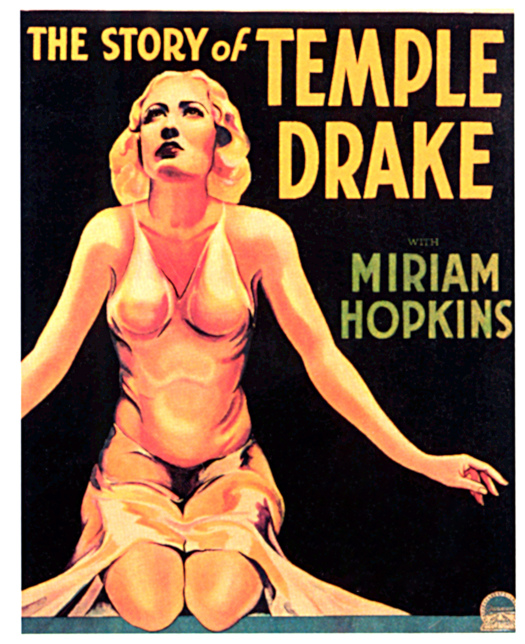
Pre-Code Confidential #24: THE STORY OF TEMPLE DRAKE (Paramount 1933)


gary loggins's avatarcracked rear viewer


I’d heard so much about THE STORY OF TEMPLE DRAKE – that it was so depraved and salacious it almost singlehandedly led to stricter enforcement of the Production Code – that it was almost a letdown when I first viewed it. I say almost because, knowing the era this adaptation of William Faulkner’s SANCTUARY was made, I understand how shocked audiences must have been. THE STORY OF TEMPLE DRAKE could be a TV Movie of the Week today, but in 1933 people couldn’t handle this level of lasciviousness.

Georgia-born Miriam Hopkins is outstanding as Southern belle Temple, though she does lay on the “sho’ nuffs” a little too thick at times. Temple, daughter of a prominent judge, is a wild child, a big tease to all the men in town. Solid, steadfast lawyer Stephen Benbow wants to marry her, but the self-centered Temple thinks he’s too dull, preferring to party…

View original post 661 more words

Halloween Havoc!: DRACULA’S DAUGHTER (Universal 1936)


gary loggins's avatarcracked rear viewer

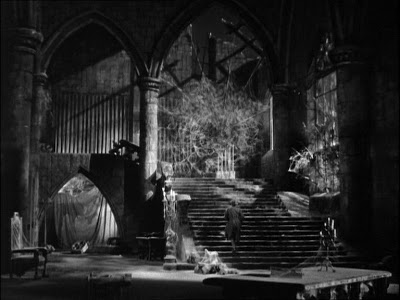
After the success of BRIDE OF FRANKENSTEIN , Universal decided it was time for a sequel to everybody’s favorite vampire, Dracula , with James Whale scheduled to direct. Whale opted out, putting DRACULA’S DAUGHTER in the hands of Lambert Hillyer , an old pro who dated back to silent William S. Hart Westerns, and was more comfortable with sagebrush sagas than Gothic horror. The result was an uneven film saved by Gloria Holden’s performance as the title character, Countess Marya Zaleska.

I’ll give Hillyer credit for some atmospheric scenes scattered throughout the movie. The opening scene at Carfax Abbey, cobwebbed as ever, picks up where DRACULA left off, with Edward Van Sloan’s Van Helsing (inexplicably renamed Von Helsing here) caught by constables shortly after staking the undead Count. The Countess burning the body of her vampiric father, hoping to free herself of her curse, is spooky, as is the return…

View original post 360 more words

Pre Code Confidential #10: Cecil B. DeMille’s CLEOPATRA (Paramount 1934)


gary loggins's avatarcracked rear viewer

cbde1

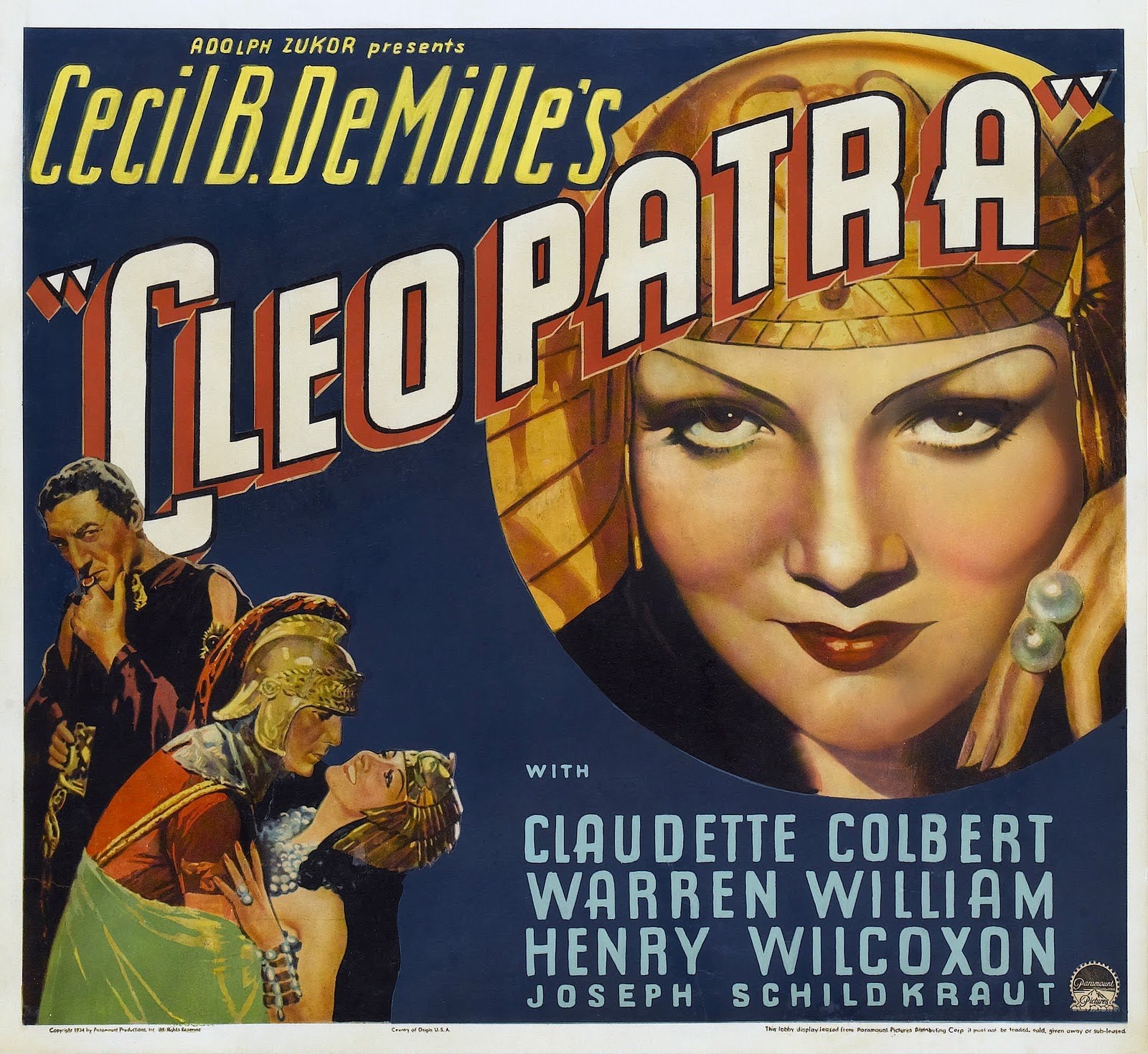
When I hear the words ‘Hollywood Epic’, the name Cecil B. DeMille immediately springs to mind. From his first film, 1914’s THE SQUAW MAN to his last, 1956’s THE TEN COMMANDMENTS, DeMille was synonymous with big, sprawling productions. The producer/director, who’s credited with almost singlehandedly inventing the language of film, made a smooth transition from silents to talkies, and his 1934 CLEOPATRA is a lavish Pre-Code spectacular featuring sex, violence, and a commanding performance by Claudette Colbert as the Queen of the Nile.

1934: Claudette Colbert in title role of Cecil B. DeMille's film Cleopatra.

While the film’s opulent sets (by Roland Anderson and Hans Dreier) and gorgeous B&W cinematography (by Victor Milner) are stunning, all eyes will be on the beautiful, half-naked Colbert. She gives a bravura performance as Cleopatra, the ambitious, scheming Egyptian queen. She’s sensuous and seductive, wrapping both Caesar and Marc Antony around her little finger, and devious in her political machinations. If I were compare her to Elizabeth Taylor in the 1963 Joseph…

View original post 392 more words

My Christmas Present to You: THE GREAT RUPERT Complete Movie (Eagle-Lion 1950)


gary loggins's avatarcracked rear viewer

rupert1

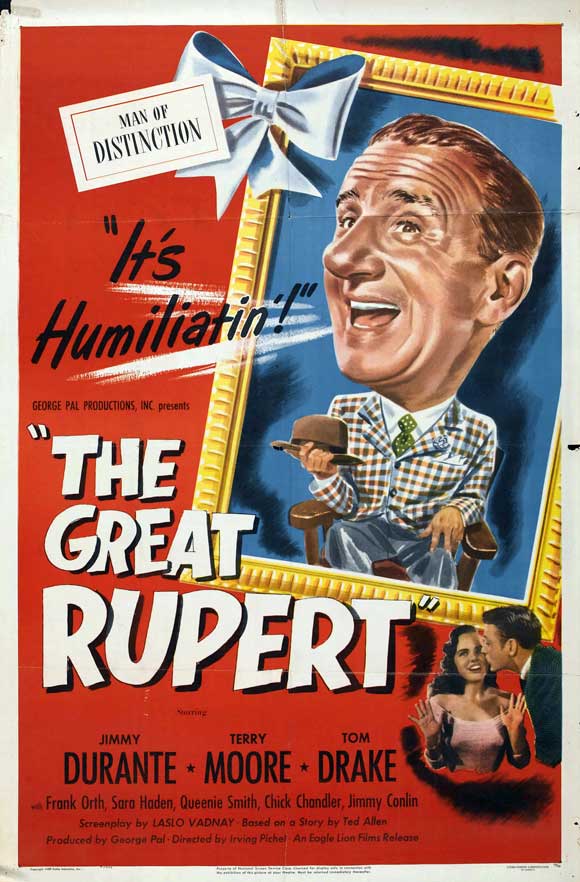
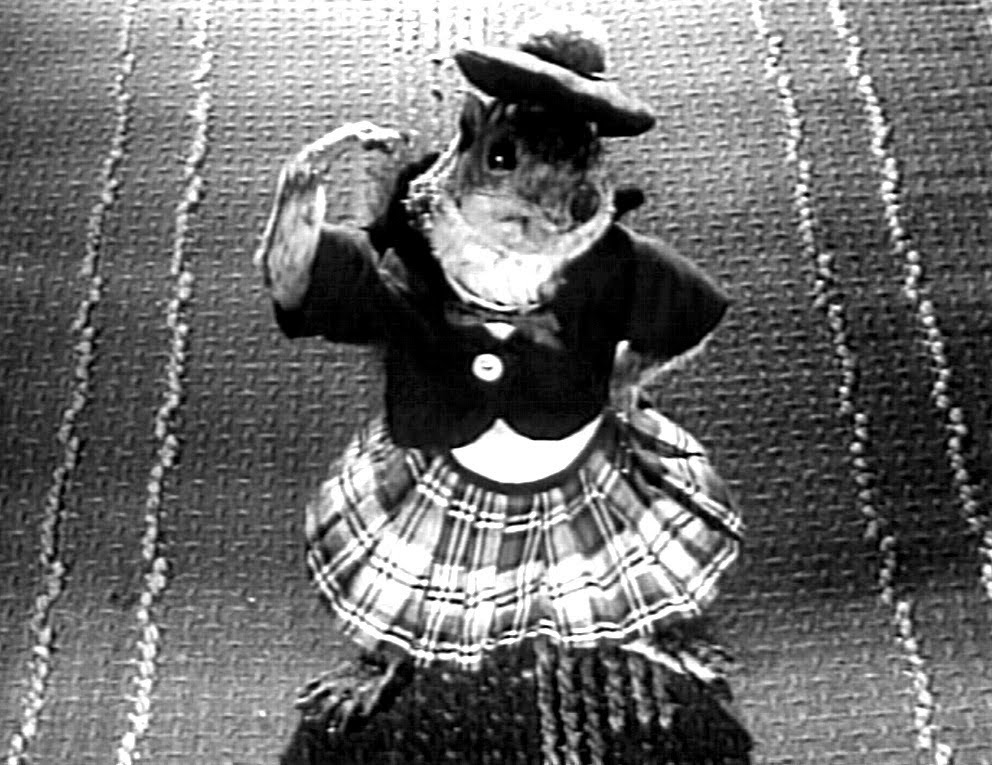
THE GREAT RUPERT is one those movies I used to catch frequently on my local public access channel; it seems like it’s been in public domain forever. Producer George Pal uses his Puppetoon magic to animate Rupert, a plucky dancing squirrel who’s “almost human” forced to forage for himself when his trainer is evicted for not paying his rent. A homeless, penniless family of circus performers, the Amendolas, move in by fast-talking landlord Dingle’s son Pete, who falls head-over-heels for daughter Rosalinda.

rupert2

The miserly Mr. Dingle keeps his cash stashed in a hole in the wall, which is where Rupert stashes his nuts. When Mrs. Amendola starts praying for a miracle, Rupert starts tossing the worthless (to him) moolah out of his hidey-hole, and she believes it’s “money from heaven”. Soon the town begins to gossip about where the Amendolas are getting all this loot, and the local cops, IRS, and FBI…

View original post 89 more words

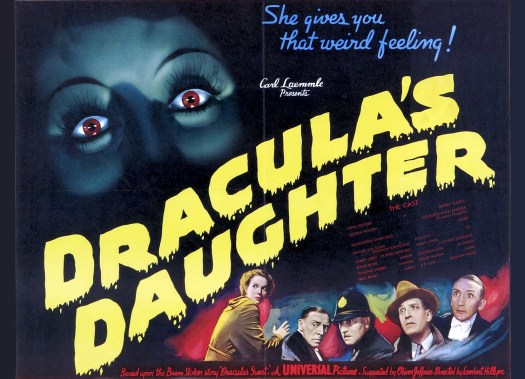
Horror Film Review: Dracula’s Daughter (dir by Lambert Hillyer)


draculas_doughter_original_poster_1936

Did you know that Dracula had a daughter!?

Well, Bram Stoker might disagree but, according to Universal Studios, he did.  Her name was Countess Marya Zaleska and, as played by Gloria Holden, she is the title character in 1936’s Dracula’s Daughter!  Like her father, the Countess was also a vampire.  The film never gets into just how she became a vampire.  Was she born a vampire or, far more disturbingly, was she once a mortal who turned into a vampire by her own father?  The film doesn’t tell us but it does establish early on that she hates being one of the undead.  Unlike her father, she struggles with her urge to drink blood.  When she discovers that Dracula has been staked, she and her servant, Sandor (Irving Pichel), steal the body from the morgue and burn it.  The Countess thinks that this will cure her of her urges.

Sadly, it does no such thing.

So, what’s a reluctant, 20th century vampire to do?  Well, she can always go to a psychiatrist and hope that science can somehow break the curse.  She ends up as a patient of Dr. Jeffrey Garth (Otto Kruger).  By coincidence, Dr. Garth has another famous patient — Dr. Edward Von Helsing.  (That’s right, they changed the “van” to a “von” in Dracula’s Daughter.  Despite the name change, Edward van Sloan returns to play the veteran vampire hunter.)

Von Helsing in on trial, accused of murdering Dracula in the previous film.  Oddly enough, nobody mentions Renfield who, seeing as how we’re told Dracula’s Daughter starts exactly where Dracula left off, would have been found dead in the crypt as well.  Even stranger, no one steps forward to defend Von Helsing.  Dr. Seward, Mina, Johnathan Harker?  Forget about them.  Not a single one is to be found while Von Helsing is accused of murder.

Bastards.

Fortunately, Von Helsing has a defense!  Since Dracula was already dead and had been for 500 years, Von Helsing could not have killed him.  Helping him out with this defense is Dr. Garth…

Meanwhile, the Countess tries to resist the urge to attack every woman that she sees.  She pours her frustrations out into painting.  One night, Sandor brings the Countess a new model, a beautiful young woman named Lil (Nan Grey).  The Countess orders Lil to undress and then, after staring at her, gives into her urges and attacks…

If you’re thinking that there’s a subtext here, that’s because there is.  (In fact, Universal’s tagline for the film was, “Save the women of London from Dracula’s Daughter!”)  Perhaps even more so than in Dracula, Dracula’s Daughter uses vampirism as a metaphor for forbidden sex.  When the Countess stares at Lil and, later, when she prepares to bite the neck of Dr. Garth’s fiancée, she is embodying the hysterical fears of a puritanical society.  When she unsuccessfully seeks a cure for her vampirism, we’re reminded that, in the 1930s, psychiatry classified homosexuality as being a mental illness.  When the Countess struggles with her urge to drink blood, she is a stand-in for everyone who has struggled with their sexuality.

Gloria Holden plays the Countess as being as much a victim as a victimizer.  Whereas Bela Lugosi turned Dracula into the epitome of evil, Gloria Holden gives a performance that is full of ambiguity.  In fact, she at times seems to be so tortured by her vampiric state that, when she finally fully embraces the fact that she’s a vampire, you have to cheer a little.  At least she’s finally being honest with herself!  At least she’s no longer making apologies or allowing society to punish her for being who she is.  Was Countess Zaleska the first reluctant vampire in film history?  I’m not sure but Holden’s performance undoubtedly set the bar by which all other self-loathing vampires should be judged.

Dracula’s Daughter holds up surprisingly well.  It’s definitely one to look for during this Halloween season.

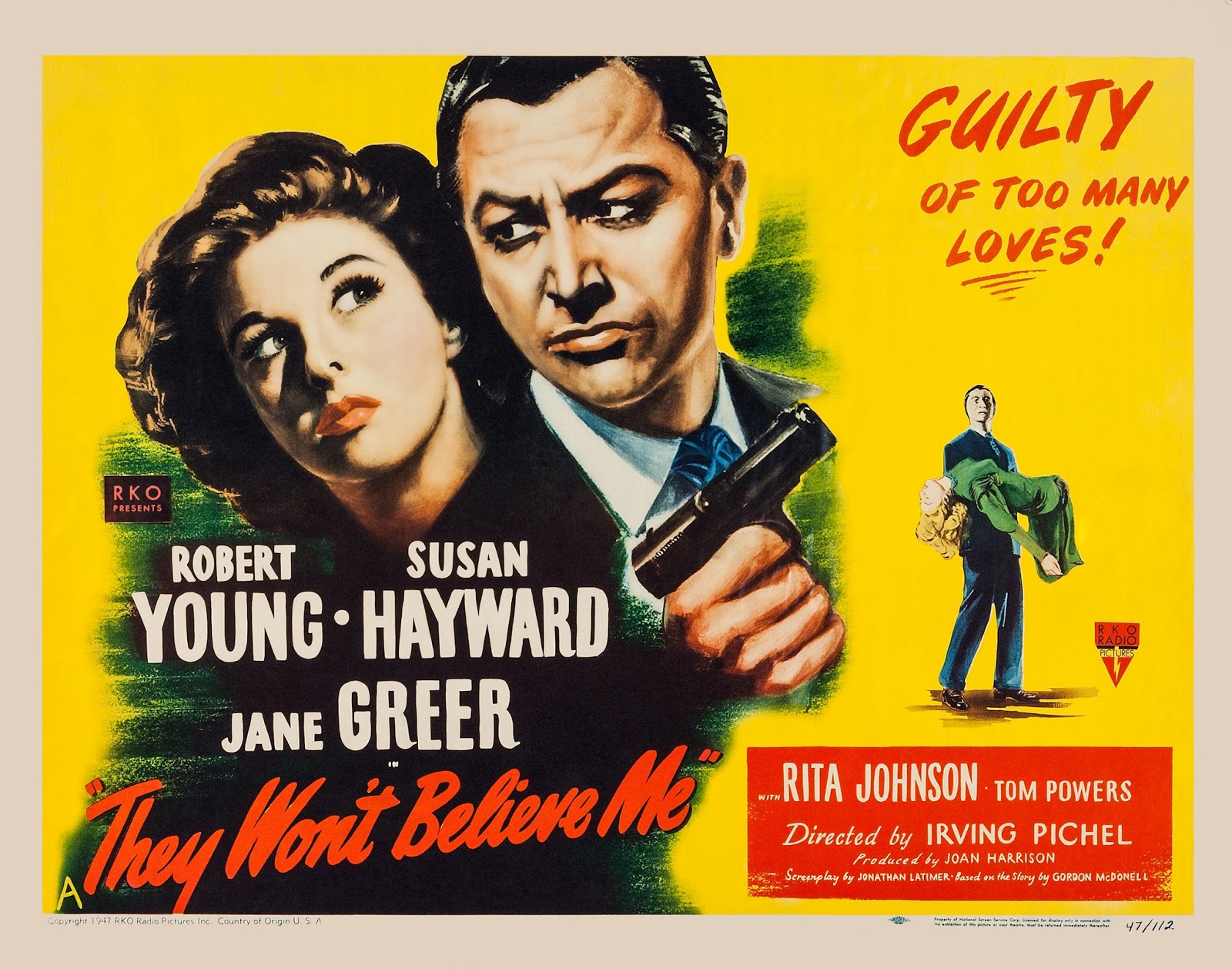
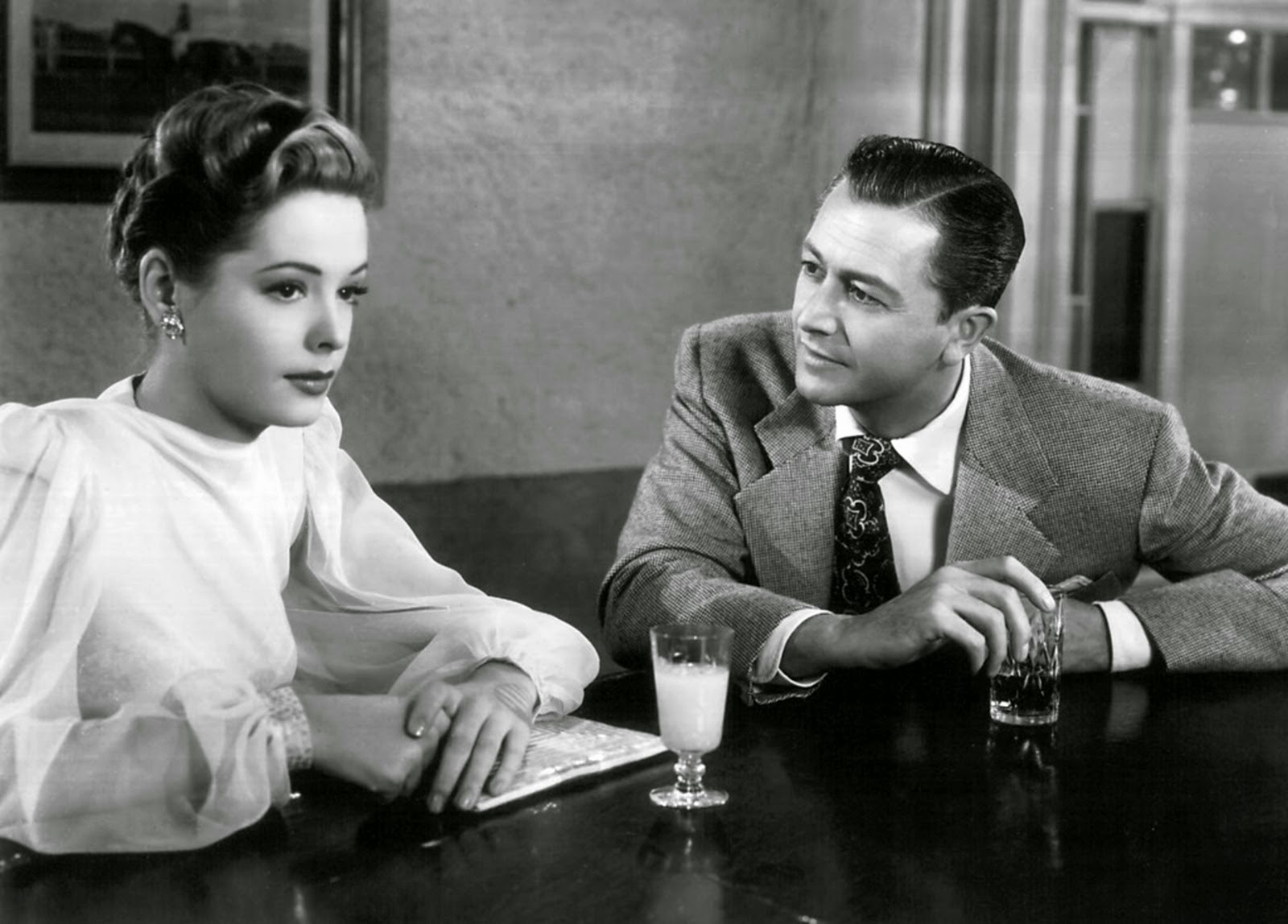
Karma’s a Bitch: THEY WON’T BELIEVE ME (RKO 1947)


gary loggins's avatarcracked rear viewer

theywont1

1947 was a peak year for film noir. There was BRUTE FORCE BORN TO KILL , DARK PASSAGE, KISS OF DEATH, THE LADY FROM SHANGHAI, OUT OF THE PAST, and NIGHTMARE ALLEY , to name but a few. THEY WON’T BELIEVE ME doesn’t get the notoriety of those I just mentioned, but it can hold its own with them all. This unheralded dark gem from the RKO noir factory boasts an outstanding cast, and a taut, twisted screenplay from hardboiled pulp writer Jonathan Latimer.

theywont2

Larry Ballantine’s on trial for the murder of his wife and his girlfriend. Larry’s a real cad, a lying and cheating weasel. He takes the stand and tells his side of the story, as the film goes into flashback to recount the sordid details. Larry’s stepping out on rich wife Greta with co-worker Janice, who gives him an ultimatum. She’s transferring to Montreal, and Larry…

View original post 778 more words

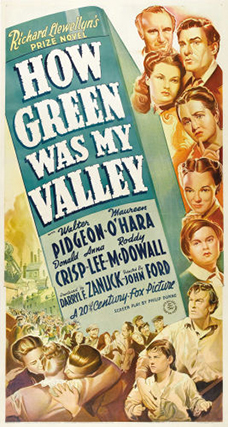
Cleaning Out The DVR #18: How Green Was My Valley (dir by John Ford)


(For those following at home, Lisa is attempting to clean out her DVR by watching and reviewing 38 films by this Friday.  Will she make it?  Keep following the site to find out!)

How_Green_Was_My_Valley_poster

Before I really get into this review, I should admit that I watched How Green Was My Valley with a bias.

Before the movie started, I was expecting to be disappointed with it.  I think that a lot of film lovers would have felt the same way.  How Green Was My Valley won the 1941 Oscar for best picture.  In doing so, it defeated three beloved films that have only grown in popularity and renown since they were first released: Citizen Kane, The Maltese Falcon, and The Little Foxes.  (As well, just consider some of the 1941 films that weren’t even nominated for best picture: Ball of Fire, The Devil and Daniel Webster, Dr. Jekyll and Mr. Hyde, High Sierra, The Lady Eve, Never Give A Sucker An Even Break, The Sea Wolf, The Wolf Man, and Sullivan’s Travels.)  Because it defeated so many great films and since we’re all used to the narrative that the Academy always screws up, there’s a tendency to assume How Green Was My Valley was really bad.

Well, after years of assumptions, I finally actually watched How Green Was My Valley?  Was it bad?  No, not really.  Was it great?  No, not all.  If anything, it felt rather typical of the type of films that often win best picture.  It was well-made, it was manipulative enough to be a crowd-pleaser while serious enough to appeal to highbrow critics, and, perhaps most importantly, it never really challenged the viewer.  Unlike Citizen Kane and The Maltese Falcon, How Green Was My Valley is a film that doesn’t require that you give it too much thought and, as such, it really shouldn’t be surprising that it was named the best picture of the year.

How Green Was My Valley was directed by John Ford and, as you might expect from Ford, it deals with a changing way of life and features good performances and a few impressive shots of the countryside.  Taking place in the late 1800s, How Green Was My Valley tells the episodic story of the Morgans, a large family of Welsh miners.  The film is narrated by Huw (Roddy McDowall), a youngest member of the family.  Though Huw’s eyes, we watch as his once idyllic and green village is transformed by the growing mining industry and blackened with soot, poverty, and death.

The film starts out as a fairly even mix of sentiment and drama.  Huw has a crush on his brother’s fiancee.  His sister, Angharad (Maureen O’Hara), has a flirtation with the new preacher, Mr. Gruffydd (Walter Pidgeon).  Much emphasis is put on communal gatherings.  There is a wildly joyful wedding celebration.  We often see the villagers in church and hear them singing both hymns and folk songs.  In their isolate village, they are are united against a changing world.

Or, at least, they think they are.  As the mining industry grows, that united front and sense of community starts to vanish.  A strike sets family members against each other, as each miner is forced to decide whether to side with management or with his fellow workers.  Each year, the wages become lower.  When management realizes that its cheaper to just continually hire new miners, several of the veteran workers are fired and end up leaving the village to seek a living elsewhere.  As new people come to the village, even Mr. Gruffydd finds himself the subject of gossip.

As for Huw, he grows up.  He goes to school, deals with a sadistic teacher, and learns how to defend himself against bullies.  And eventually, like everyone in his family, he is sent down into the mines and soon, his once innocent face is covered in soot.

And, of course, there’s a big tragedy but you probably already guessed that.  How Green Was My Valley is not a film that takes the viewer by surprise.

For the most part, it’s all pretty well done.  The big cast all inhabit their roles perfectly and Roddy McDowall is extremely likable as Huw.  Maureen O’Hara shows why she eventually became a star and even Walter Pidgeon gives a surprisingly fiery performance.  How Green Way My Valley is a good film but it’s too conventional and predictable to be a great film, which is why its victory over Citizen Kane and The Maltese Falcon will always be remembered as a huge Oscar injustice.

But, taken on its own terms and divorced from the Oscar controversy, How Green Was My Valley may be a conventional but it’s not a bad film.  It’s just no Citizen Kane.