May The Fourth Be With You: Looking Back At Star Wars


Today is Star Wars Day.  (It’s May 4th.  May the Fourth Be With You!  I’ll stop now.)  Five years ago, I ranked all of the Star Wars feature films that had been released up until that point from best to worst.  Here’s how I ranked them:

  1. The Empire Strikes Back
  2. Rogue One
  3. New Hope
  4. The Force Awakens
  5. Revenge of the Sith
  6. Return of the Jedi
  7. Solo
  8. The Rise of Skywalker
  9. The Last Jedi
  10. Attack of the Clones
  11. The Phantom Menace

Since that was a while ago, I decided to take a look back and see if I still felt the same way.  Here are my brief thoughts on each film, in order of release.

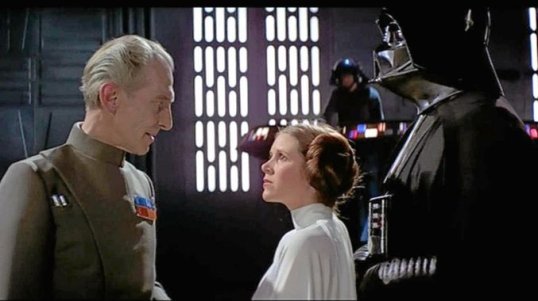
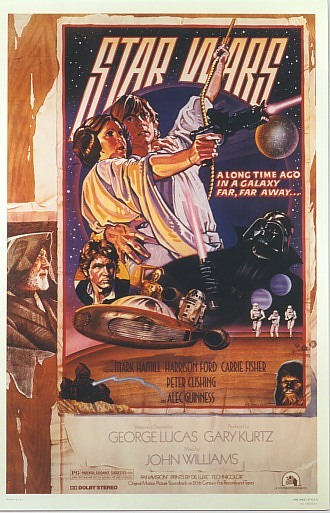
Star Wars: Episode IV — A New Hope (1977, directed by George Lucas) — A New Hope may not be the best Star Wars film but it’s still the most entertaining, even if George Lucas doesn’t seem to realize that.  A tribute to the serials and space operas that Lucas grew up with, A New Hope features great action scenes, special effects that hold up well despite not being as slick as modern CGI, and great performances from Alec Guinness and Harrison Ford.  Mark Hamill would eventually become a much better actor, though you might not guess just from his performance here.  Watching New Hope today, I really appreciate that the movie doesn’t get bogged down in overexplaining things.  We don’t need to know what the Clone Wars were specifically about or what the Kessel Run actually was.  They sound cool and that’s all that was really required.  Despite what some claim, there is absolutely no evidence that Darth Vader was meant to be Luke’s father in this move.

Star Wars Holiday Special (1978, directed by Steve Binder) — Only aired once, I debated whether to include it here or not.  I eventually did just because it features the debut of Boba Fett.  It’s as bad as you’ve heard but the special’s real since is that it’s incredibly boring.  Harrison Ford still looks happier here than he did in Return of the Jedi.

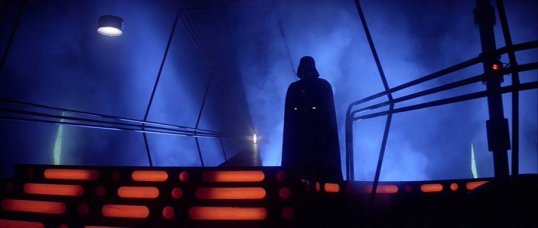
Star Wars: Episode V — The Empire Strikes Back (1980, directed by Irvin Kershner) — The best of the original trilogy, this installment was surprisingly dark, downbeat, and violent.  Mark Hamill finally started to show some signs of growth as an actor while Harrison Ford’s Han Solo continued to be the coolest rebel in the universe.  Combining the more thoughtful scenes with Yoda with the action-orientated scenes on Cloud City made this the most intelligent of the Star Wars films.  The battle on Hoth remains one of the best action scenes ever.  I think every kid who saw this movie wanted an AT-AT Walker.  I know I did.

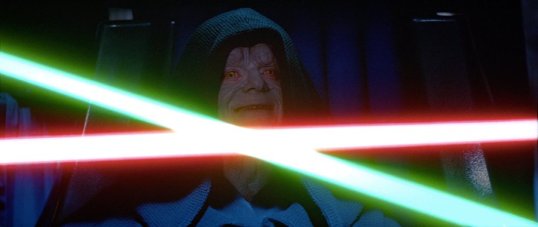
Star Wars: Episode VI — Return of the Jedi (1983, directed by Richard Marquand) — It’s not quite as bad as its reputation, largely due to the opening with Jabba the Hutt’s court.  Jabba is so grotesque and evil in this movie that it’s hard not to regret that the subsequent films made him into more of buffoon than a crime lord.  Brining back the Death Star made this film feel like a retread.  The Ewoks were created to sell toys but so was everything else in this movie.  Harrison Ford looks particularly grouchy at the end.

The Ewok Adventure (1984, directed by John Korty) and Ewoks: The Battle For Endor (1985, directed by Jim and Ken Wheat) — I guess if these had been successful, there would have been an Ewok television show.  The Ewok Adventure feels childish and features a narrator.  Battle for Endor is surprisingly violent for a movie about teddy bears.  Both films are more bland than truly bad.
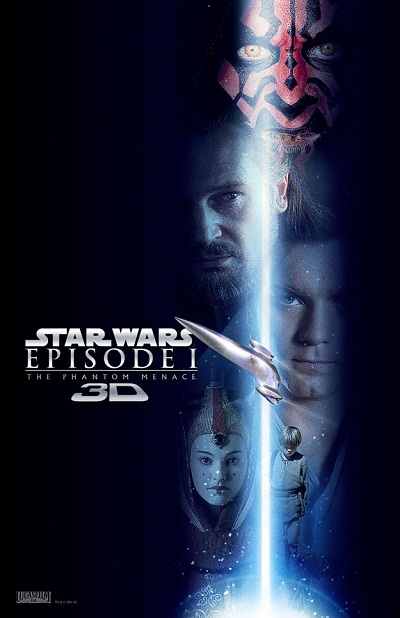
Star Wars: Episode I — The Phantom Menace (1999, directed by George Lucas) — There’s been some revisionism about this film.  Some people actually defend it now.  Not me.  It’s still pointless.  This movie started the trend of every popular film having to have an in-depth “mythology” behind it.  It turns out that the Evil Empire was all about trade routes and tariffs.  Jake Lloyd gets more blame than he deserves.  Overexplaining the Force was a sign of things to come.  This movie would feature Natalie Portman’s worst performance if not for…

Star Wars: Episode II — Attack of the Clones (2o02, directed by George Lucas) — As painfully generic as its title, this movie was responsible for Hayden Christensen having an undeserved reputation for being a bad actor.  I doubt any actor, no matter how talented, could make Lucas’s dialogue feel natural.

Star Wars: Episode III — Revenge of the Sith (2005, directed by George Lucas) — The only one of the prequels that actually added anything to what we already knew, Revenge of the Sith is dark, violent, and it doesn’t have as many slow spots as the other prequels.  Ewan McGregor finally gets a chance to act and Hayden Christensen and Natalie Portman are finally given actual characters to play.  Today, some people say it’s the best of the Star Wars films.  They’re wrong but it’s still pretty good.

The Clone Wars (2008, directed by Dave Filoni) — The only animated Star Wars film doesn’t get much attention and it does get bogged down in the mythology of the of the prequels.  No one really cares about the specifics of the Clone Wars.  The fact that it’s animated and clearly marketed at kids makes the dialogue easier to tolerate.
Star Wars: Episode VII — The Force Awakens (2015, directed by J.J. Abrams) — When this first came out, a lot of people (including myself) were so happy to have a new Star Wars film that we overrated it.  It’s hard to watch today without thinking about how bad things got after it was released but it does still hold up well as a space adventure, though Daisy Ridley’s blandness is more apparent on subsequent viewings.  The performances of Adam Driver and John Boyega still hold up.  The main attraction, though, is Harrison Ford returning as Han Solo.

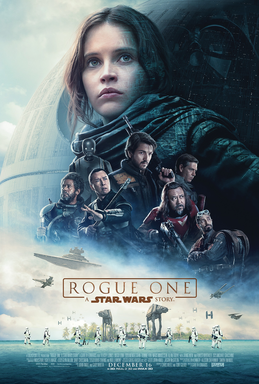
Rogue One: A Star Wars Story (2016, directed by Gareth Edwards) — The first stand-alone live action Star Wars feature film is a thrilling space adventures that holds up on subsequent viewings and works because the stakes actually feel real.  For the first time since New Hope, the Death Star is actually frightening.  This remains one of the best films in the franchise and it’s not surprising that it led to the best of the Star Wars television shows.

Star Wars: Episode VIII — The Last Jedi (2017, directed by Rian Johnson) — The haters are right about much of this film.  For all the complaints about Disney not allowing their Marvel directors much freedom, the Star Wars sequels shows what happens when a franchise isn’t sure where it wants to go.  Rian Johnson tries to bring Star Wars down to Earth but that’s not where we want Star Wars.  Rose Tico was an annoying character and her line about saving what we love deserves all of the mockery it received but Kelly Marie Tran still didn’t deserve to be run off of social media.  Turning Luke into a bitter old man was this film’s greatest sin.

Solo: A Star Wars Story (2018, directed by Ron Howard) — That this wasn’t a box office hit was the a clear warning sign that audiences were getting bored with Star Wars.  This Han Solo origin story isn’t bad.  Ron Howard could direct a film like this in his sleep.  It just feels unnecessary.  Alden Ehrenreich does his best but no one can replace Harrison Ford as Han Solo.

Star Wars: Episode IX — The Rise of Skywalker (2019, directed by J.J. Abrams) — J.J. Abrams tries to undo everything that Rian Johnson did in his film.  I don’t blame Abrams because Johnson’s film wasn’t great but just shrugging it all off doesn’t really work either.  The sequel trilogy, which started with such high hopes, ends with a whimper.  Daisy Ridley’s boring performance doesn’t help.

My rankings, as of 2025, are below:

  1. The Empire Strikes Back
  2. Rogue One
  3. New Hope
  4. Revenge of the Sith
  5. Return of the Jedi
  6. Force Awakens
  7. Solo
  8. Rise of Skywalker
  9. The Last Jedi
  10. Ewoks: Battle for Endor
  11. The Clone Wars
  12. The Ewok Adventure
  13. Holiday Special
  14. Phantom Menace
  15. Attack of the Clones

4 Shots From 4 Films: Special Star Wars Edition


4 Or More Shots From 4 Or More Films is just what it says it is, 4 shots from 4 of our favorite films. As opposed to the reviews and recaps that we usually post, 4 Shots From 4 Films lets the visuals do the talking!

Today, we wish all of our readers a happy May The Fourth Be With You Day!  It’s time for….

4 Shots From 4 Star Wars Films

Star Wars Episode IV: A New Hope (1977, dir by George Lucas, DP: Gilbert Talyor)

The Empire Strike Back (1980, dir by Irvin Kershner, DP: Peter Suschitzky)

Return of the Jedi (1983, dir by Richard Marquand, DP: Alan Hume and Alec Mills)

Rogue One (2016, dir by Gareth Edwards, DP: Greig Fraser)

4 Shots From 4 Films: Special Star Wars Edition


4 Or More Shots From 4 Or More Films is just what it says it is, 4 shots from 4 of our favorite films. As opposed to the reviews and recaps that we usually post, 4 Shots From 4 Films lets the visuals do the talking!

Today, we wish all of our readers a happy May The Fourth Be With You Day!  It’s time for….

4 Shots From 4 Star Wars Films

Star Wars Episode IV: A New Hope (1977, dir by George Lucas, DP: Gilbert Talyor)

The Empire Strike Back (1980, dir by Irvin Kershner, DP: Peter Suschitzky)

Return of the Jedi (1983, dir by Richard Marquand, DP: Alan Hume and Alec Mills)

Rogue One (2016, dir by Gareth Edwards, DP: Greig Fraser)

Film Review: Robocop 2 (dir by Irvin Kershner)


Robocop 2, the 1990 sequel to Robocop, finds Detroit on the verge of getting nuked.

No, not nuked like that! Instead, there’s a new designer drug called Nuke and it’s tearing the city apart. Of course, Detroit has problems that go beyond just the new drug. The city is almost bankrupt. OCP, under the leadership of The Old Man (Dan O’Herlihy), is still running things behind the scenes. There’s still all sorts of petty crime to deal with. To be honest, it seems like the city has gotten even more out-of-control now that Clarence Boddiker is no longer around to oversee things.

Fortunately, Robocop (Peter Weller) is still patrolling the streets! But, for how long? There are lawyers who claim that Robocop is a huge potential liability and when you consider some of the stuff that went on during the first film, it’s hard not to see their point. His ex-wife is also suing the police department, claiming that Robocop has been harassing her. Despite being a robocop, our hero is still Murphy and he’s still haunted by memories of the family he once had. Or, at least, he is for the first few minutes of the film. That storyline kind of gets abandoned, along with a lot of other storylines.

While OCP is trying to develop a second robocop, one that can be mass produced and used to replace the human police force (the majority of whom have gone out on strike), a cult leader named Cain (Tom Noonan) is attempting to take over the city’s Nuke trade. Working with Cain is the usual gang of flamboyant malcontents. His second-in-command is a sociopathic child named Hob (Gabriel Damon). Hob may be a kid but he’ll kill anyone and he’ll enjoy himself while he’s doing it.

Robocop 2 is a bit of a mess. It apparently was rushed into production after the surprise success of the first film and filming started before there was even a completed script. As a result, there are a lot of storylines and themes that are brought up and then seem to mysteriously disappear. The film duplicates Paul Verhoeven’s satirical approach to the first film’s ultra-violence but, unfortunately, it does so in the most superficial way possible. Once again, we get the cheerful and vapid news reports about impending doom and once again, the violence is completely and totally over-the-top. But none of it carries any of the bite that was present in the first film. The first film worked because director Verhoeven actually was trying to make a larger point with all of the violence and the hints of growing fascism. He was attempting to challenge the audience and to get them wonder why they found all of the terrible thing happening in Robocop to be so entertaining. The sequel was directed by Hollywood veteran Irvin Kershner who was a good, workmanlike director but who also didn’t possess Verhoeven’s subversive sensibility. Far too often, Robocop 2 just feels like it’s going through the motions.

That’s not say that Robocop 2 isn’t occasionally an effective film. Dan O’Herlihy is wonderfully amoral as the Old Man and Tom Noonan is a worthwhile villain. Though Peter Weller has said that he wasn’t happy with how the overall film turned out, he still make for a sympathetic hero and he still manages to capture Robocop’s anguish without letting us forget that the character is still essentially a machine. I’m not really a big fan of films that use evil children for cheap shocks but Gabriel Damon is frequently chilling as Hob. Detroit is such a terrible place in the Robocop films that it’s not really a surprise when an evil child pops up and start shooting people. When compared to the first film, Robocop 2 may be a disappointment but it’s hardly a disaster.

Robocop 3 on the other hand….

Horror Film Review: Eyes of Laura Mars (dir by Irvin Kershner)


The Eyes of Laura Mars opens with Barbra Streisand singing the theme song, letting us know that we’re about to see one of the most 70s films ever made.

Laura Mars (played by a super intense Faye Dunaway) is a fashion photographer who is known for the way that her work mixes sex with violence.  Some people say that she’s a genius and those people have arranged for the publication of a book of her work.  (The book, naturally, is called The Eyes of Laura Mars.)  Some people think that Laura’s work is going to lead to the downfall of civilization.  And then one person thinks that anyone associated with Laura should die.

And that’s exactly what starts to happen.

Laura has visions of her friends being murdered.  Some people believe that makes her a suspect.  Some people think that she’s just going crazy from the pressure.  John Neville (Tommy Lee Jones), the detective assigned to her case, thinks that Laura is a damaged soul, just like him.  Neville and Laura soon find themselves falling in love, which would be more believable if Dunaway and Jones had even the least amount of chemistry.  Watching them kiss is like watching two bricks being smashed together.

There’s plenty of suspects, each one of them more a 70s cliché than the other.  There’s Donald (Rene Auberjonois), Laura’s flamboyant friend.  There’s Michael (Raul Julia), Laura’s sleazy ex-husband who is having an affair with the gallery of the manager that’s showing Laura’s photographs.  And then there’s Laura’s shift-eyed driver, Tommy.  Tommy has a criminal record and carries a switchblade and he always seem to be hiding something but, to be honest, the main reason Tommy might be the murderer is because he’s played by Brad Dourif.

If there’s one huge flaw with the film, it’s that the film never explains why Laura is suddenly having visions.  Obviously, the film is trying to suggest that Laura and the murderer share some sort of psychic connection but why?  (I was hoping the film would reveal that Dunaway had an evil twin or something like that but no.)  The other huge problem that I had is that one of the more likable characters in the film is murdered while dressed as Laura, specifically as a way to distract the killer.  So, that kind of makes that murder all Laura’s fault but no one ever points that out.

Personally, I think this film missed a huge opportunity by not having Andy Warhol play one of the suspects.  I mean, how can you make a movie about a pretentious fashion photographer in the 70s without arranging for a cameo from Andy Warhol?

The other missed opportunity is that the script was written by John Carpenter but he wasn’t invited to direct the movie.  I suppose that makes sense when you consider that Carpenter actually sold his script before he was hired to direct Halloween.  (Both Halloween and The Eyes of Laura Mars came out in the same year, 1978.)  That said, Carpenter would have directed with more of a sense of humor.  Director Irvin Kershner takes a plodding and humorless approach to the material.  When you’ve got a film featuring Faye Dunaway flaring her nostrils and Tommy Lee Jones talking about how sad his childhood was, you need a director who is going to fully embrace the insanity of it all.

With the glamorous background and the unseen killer, The Eyes of Laura Mars was obviously meant to be an American giallo.  Occasionally, it succeeds but again, it’s hard not to feel that an Italian director would have had a bit more fun with the material.  In the end The Eyes of Laura Mars is an interesting misfire but a misfire nonetheless.

Cleaning Out The DVR: The Hoodlum Priest (dir by Irvin Kershner)


(I recorded The Hoodlum Priest off of TCM on January 6th of this year.)

“I’m not trying to change the world.  I’m just trying to keep the world from changing me.”

— Anti-Death Penalty Activist in The Hoodlum Priest (1961)

The Hoodlum Priest tells the story of two men who have far more in common than may first seem apparent.

Billy Lee Jackson (Keir Dullea) has spent the last few months in prison and seems to be destined to return as soon as possible.  Though he was convicted of armed robbery, the truth was that Billy was little more than a mugger and a petty thief.  It only takes one look at him to see that his tough exterior is largely an act.  Billy is angry, bitter, and often scared but tough he definitely isn’t.  As soon as Billy’s released back onto the streets of St. Louis, he teams up with his friend, Pico (Don Joslyn), and the two of them plot to crack a safe.

Father Charles Dismas Clark (Don Murray) is a Jesuit who has dedicated his life to trying to rehabilitate ex-cons like Billy.  As Father Clark explains it, he is the son of coal miners, a descendant of the original Molly Maguires.  He knows what it means to be on the fringes of society.  As opposed to his colleagues, Father Clark speaks the language of the streets.  (Of course, we’re talking about the streets of 1961 here, which means that Father Clark spends a lot of time saying stuff, “Hey, I ain’t no square!”)  Father Clark’s dream is to open up a halfway house, a place where those released from prison can stay as they try to reintegrate into society.   Helping Father Clark is a famed attorney named Louis Rosen (Larry Gates).  Opposing him and suggesting that Clark is as much a hoodlum as those he claims to be helping is a supercilious journalist named George Hale (Logan Ramsey).

At first, it appears that Billy could be one of Father Clark’s greatest success stories.  After convincing Billy and Pico to abandon their criminal plans, Father Clark arranges for Billy to get a job.  Billy even begins a rather unlikely romance with a wealthy socialite named Ellen (Cindi Wood).  However, no matter how hard Billy tries to resist, the temptation to return to his old ways remains.  While Father Clark struggles to convince people to support his halfway house, Billy finds himself drawn back into a life of crime…

The Hoodlum Priest was based on a true story.  The real Father Clark personally approached Don Murray and told him the story behind the founding of Dismas House.  Murray felt so strongly about Clark’s story that he not only starred in and produced The Hoodlum Priest but also wrote the screenplay.  (The script was credited to Don Deer, which was Murray’s nickname when he was a high school track star.)

That this film was a passion project for Murray is obvious in the intensity of his performance.  As played by Murray, Father Clark is hardly an intellectual.  Instead, he’s frequently as emotional and, at times, as angry as the people that he’s trying to help.  When Billy fails to show proper gratitude after Father Clark rescues him from being sent back to jail, Clark refuses to excuse the snub.  Clark may be sincere but he’s not going to let anyone push him around.  Director Irvin Kershner and cinematography Haskell Wexler bring a gritty realism to the film’s visuals, which keeps the film from getting overwhelmed by its own sincerity.

The Hoodlum Priest is a well-done piece of social commentary, one that features a still relevant message about the struggle of ex-cons to reintegrate into society.  Don Murray brings the same righteous authority to this film that he would later bring to Twin Peaks: The Return.  This is a good one to keep an eye out for on TCM.

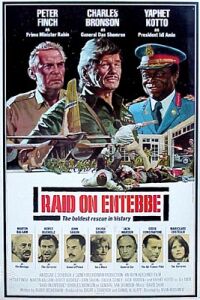
A Movie A Day #338: Raid on Entebbe (1977, directed by Irvin Kershner)


On June 27th, 1976, four terrorists hijacked an Air France flight and diverted it to Entebbe Airport in Uganda.  With the blessing of dictator Idi Amin and with the help of a deployment of Ugandan soldiers, the terrorists held all of the Israeli passengers hostage while allowing the non-Jewish passengers to leave.  The terrorists issued the usual set of demands.  The Israelis responded with Operation Thunderbolt, a daring July 4th raid on the airport that led to death of all the terrorists and the rescue of the hostages.  Three hostages were killed in the firefight and a fourth — Dora Bloch — was subsequently murdered in a Ugandan hospital by Idi Amin’s secret police.  Only one commando — Yonatan Netanyahu — was lost during the raid.  His younger brother, Benjamin, would later become Prime Minister of Israel.

Raid on Entebbe, a docudrama about the operation, was originally produced for NBC though it subsequently received an overseas theatrical release as well.  It’s an exciting tribute to the bravery of both the hostages and the commandos who rescued them.  Director Irvin Kershner directs in a documentary fashion and gets good performances from a cast full of familiar faces.  Charles Bronson, James Woods, Peter Finch, Martin Balsam, Stephen Macht, Horst Buchholz, Sylvia Sidney, Allan Arbus, Jack Warden, John Saxon, and Robert Loggia show up as politicians, commandos, terrorists, and hostages and all of them bring a sense of reality and humanity to their roles.

The film’s best performance comes from Yaphet Kotto, who plays Idi Amin as a strutting buffoon, quick to smile but always watching out for himself.  In the film, Amin often pays unannounced visits to the airport, where he lies and tells the hostages that he is doing his best to broker an agreement between the terrorists and Israel.  The hostages are forced to applaud Amin’s empty promises and Amin soaks it all up with a huge grin on his face.  Forest Whitaker may have won the Oscar for Last King of Scotland but, for me, Yaphet Kotto will always be the definitive Idi Amin.