Last of the WOOD-en Soldiers: RIP Conrad Brooks


gary loggins's avatarcracked rear viewer

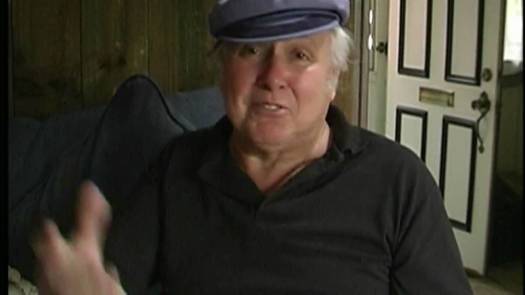
It was a fateful day in 1948 when 17-year-old Conrad Brooks, trying to break into movies, met a 24-year-old would-be filmmaker named Edward D. Wood, Jr. at a coffee and donut shop. The two men hit it off, both dreaming of Hollywood success, and worked together on an unreleased short “Range Revenge”, beginning a lasting collaboration and friendship. Conrad Brooks, who died today at age 86, will never be remembered as an actor the stature of Olivier or Brando, but his participation in the films of no-budget auteur Ed Wood will always hold a special place in the hearts of lovers of uniquely strange (some would say bad) cinema.

Young Conrad Brooks with horror icon Bela Lugosi

Brooks played several parts in Wood’s first film, 1953’s gender-bending GLEN OR GLENDA, about a man who loved to dress in women’s clothing. The director managed to get veteran horror icon Bela Lugosi

View original post 419 more words

Halloween Havoc!: THE BLOB (Paramount 1958)


gary loggins's avatarcracked rear viewer

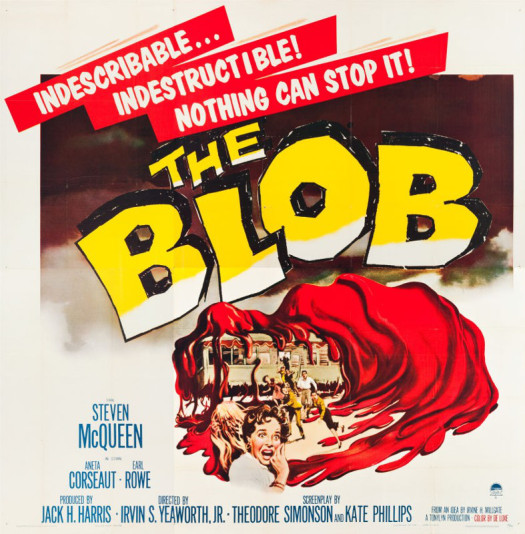
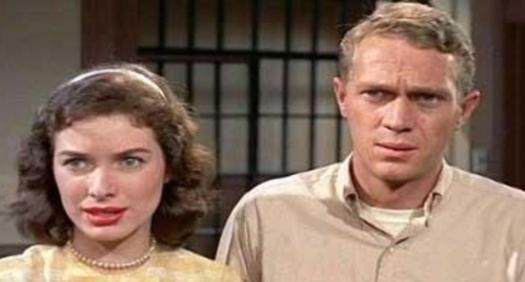
Teenagers save the world from the outer space menace known as THE BLOB in this 1958 indie-made sci-fi classic. The stars are a 28-year-old Steve McQueen (billed here as ‘Steven’), channeling his inner James Dean and cool as ever, and THE ANDY GRIFFITH SHOW’s  future Miss Helen, lovely Aneta Corsault. The cheaply made BLOB became a huge hit, and remains one of the best-loved sci-fi flicks of the 50’s.

After the peppy title tune “Beware the Blob!” (written by Burt Bacharach and Mack David), we find teens Steve (McQueen) and Jane (Corsault) out parking, as 50’s teens do, when a mysterious flying object crash lands in the distance. The curious kids investigate and come across an old man (veteran Olin Howland ) in the road, his hand covered with a purple gelatinous goo. The  geezer’s in obvious pain, so our young couple take him to Doc Hallen, who’s baffled as the goo creeps up the…

View original post 497 more words

Halloween Havoc!: NIGHT OF THE LIVING DEAD (The Walter Read Organization1968)


gary loggins's avatarcracked rear viewer

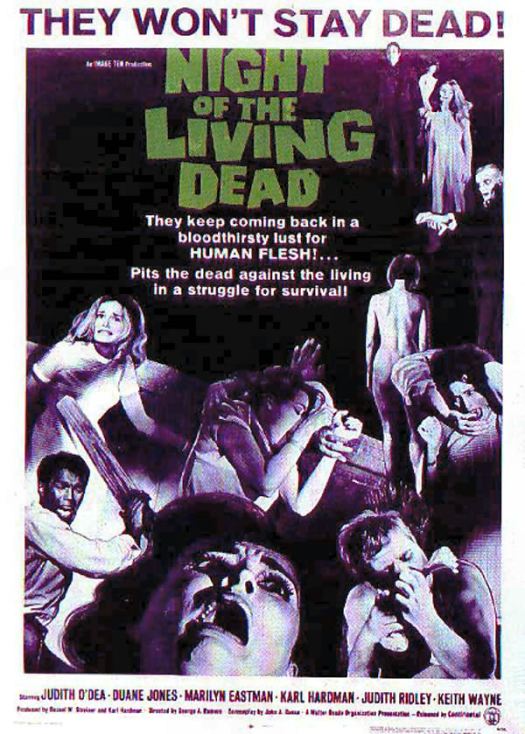
The late, great George A. Romero’s first feature, NIGHT OF THE LVING DEAD, was shot in the wilds of Pittsburgh, PA on a budget of $114,000. This unheralded,  gruesome little indie became a landmark in horror, influencing and inspiring generations of moviemakers to come. Better scribes than your humble correspondent have written countless analyses on the film, so I’m going to give you my perspective from my first viewing of the film… at the impressionable age of 13!

My cousin and I, both horror buffs, first saw it as the bottom half of a double feature in 1970. The main attraction was EQUINOX , which came highly recommended by Forrest J Ackerman , editor of the Monster Kid’s Bible, FAMOUS MONSTERS OF FILMLAND. As we eagerly awaited the main attraction, we sat through the warm-up, NIGHT OF THE LIVING DEAD. At first, we thought it was an older rerelease, because…

View original post 622 more words

Halloween Havoc!: THE TEXAS CHAINSAW MASSACRE (Bryanston Pictures 1974)


gary loggins's avatarcracked rear viewer

texas1

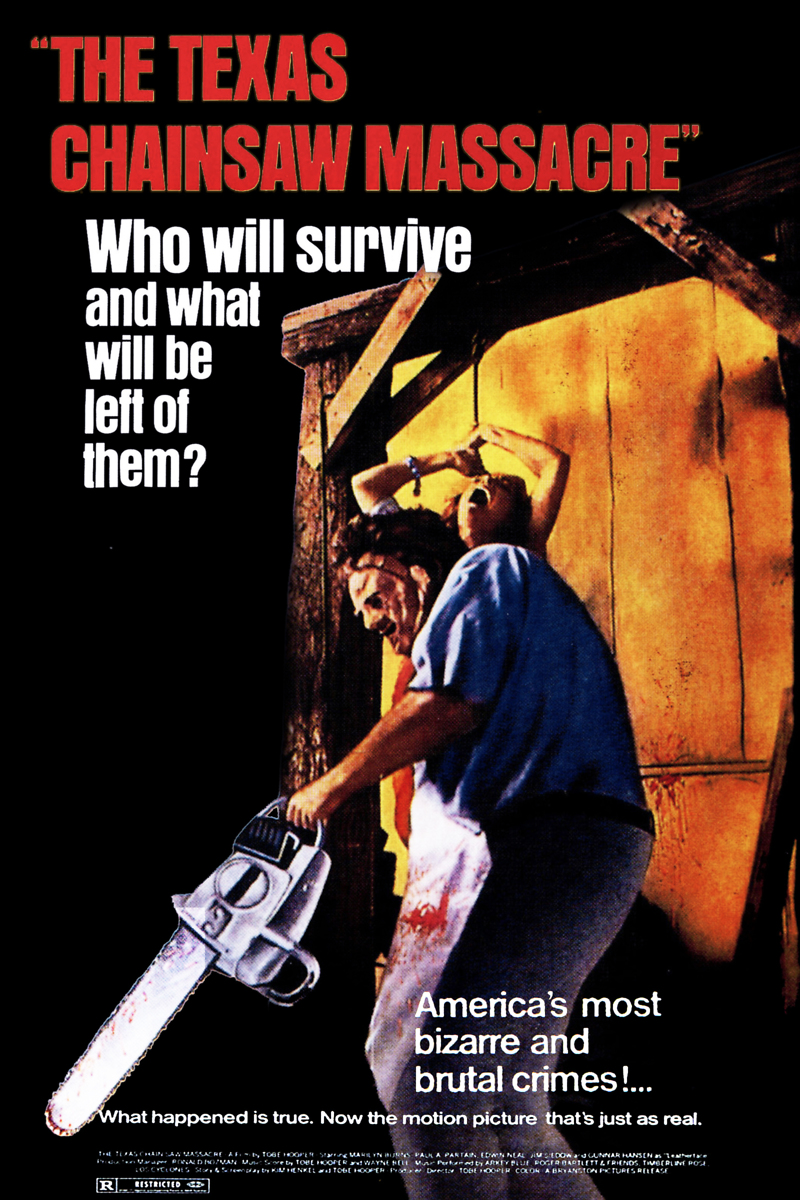
The first time I watched THE TEXAS CHAINSAW MASSACRE was at a drive-in around 1975. I remember laughing hysterically at the film; of course, I was tripping my brains out on mescaline at the time and laughed at anything! I’ve since viewed the film several times without chemical enhancement and I’m no longer laughing. I like it a lot, it’s a scary little exploitation shocker for sure, but one thing that really irks me is a  certain segment of critics who treat it as some kind of metaphor with deep meaning.

Don’t get me wrong, there’s a lot to like here. The tension is gripping, the horror relentless, and Tobe Hooper did a terrific job working with a miniscule budget. It’s just that over the years, critics have overanalyzed the thing to death, expounding on the political and cultural ramifications of it’s themes and blah, blah, blah. Whether or not all this blathering about…

View original post 615 more words

Trailer: Harbinger Down (Official)


harbinger-down-poster2

Last summer something caught my eye while scrolling up my Twitter feed. People I had been following were retweeting a Kickstarter campaign for an independent film. No, this wasn’t a Veronica Mars deal or Zach Braff begging the public for millions so he could make his own film. This was for a scifi-horror film that was going the whole practical effects route.

Harbinger Down is the brainchild of practical effects masters Alec Gillis and Tom Woodruff, Jr. whose own special effects studio Amalgamated Dynamics were instrumental in creating some of the practical effects for films such as the latest Godzilla and the underwhelming prequel for The Thing. It was their practical effects work for that prequel being replaced by CGI monsters at the very last second which convinced the two men to try and make a film using nothing but practical effects to show Hollywood bean counters and studio heads that there was still a place for the practical instead of going all-CG.

Their Kickstarter campaign to raise the funds to start Harbinger Down succeeded and in addition to the $387,000 or so raised and their own money and studio time the film began principal photography this past January. A rough trailer was shown around MArch, but now we have the first official trailer to Harbinger Down which looks like a love letter to Carpenter’s very own The Thing.

Film Review: Welcome To The Rileys (dir. by Jake Scott)


Last weekend, I went down to one of my favorite movie theaters, the wonderful Plano Angelika, and I saw one of the best — if unheralded — independent films of 2010, Welcome To The Rileys.

Kristen Stewart plays Alison, a 16 year-old runaway who, as the movie opens, is working as a stripper and prostitute in New Orleans.  One day, while at work, she meets a middle-aged businessman named Doug Riley (James Gandolfini).  Doug is in New Orleans attending a convention and he reluctantly accepts Alison’s offer of a private dance.  As soon as they’re alone together, Alison immediately offers to have sex with Doug for money.  Doug turns her down, Alison angrily accuses him of being an undercover cop, and a flustered Doug leaves the club.  Later that night, Doug happens to run into Alison again and, looking to make amends with her, he gives her a ride back to her “home,” which turns out to be an apparently abandoned and condemned row house.  Doug ends up sleeping over at the house (though again, he refuses to have sex with Alison).  The next day, Doug offers to pay Alison a hundred dollars a day if he can stay in her house while he’s in New Orleans.  Alison, who is always on the look out for extra money, agrees.  After a rough start, Doug and Alison settle into a bizarre sort of domesticity with the paternalistic Doug teaching Alison how to make a bed and Alison calling on Doug when one of her clients refuses to pay her for her services.

What Alison doesn’t know is that Doug has a wife in Indiana.  Lois Riley (played by Melissa Leo) hasn’t stepped outside of their suburban home in years.  Ever since the tragic death of their 16 year-old daughter, Lois has cut herself off from the world and her husband (even to the extent of tolerating Doug’s affair with a local waitress).  However, when Doug calls her from New Orleans and announces that he won’t be coming home for a while, Lois forces herself to leave the house.  While Doug is busy trying to escape from reality, Lois is driving down to New Orleans to try to bring him back.

When Lois reaches New Orleans, Doug introduces her to Alison and, to his surprise, the two of them almost immediately start to bond.  Lois tells Alison about how their daughter and Alison responds by telling the story (which, the film hints, might not be true) of how her own mother also died in a car accident.  Soon, both Doug and Lois have — for all intents and purposes — adopted Lois as their own daughter.  However, what neither has considered is that Alison might not want to a part of the Riley family…

Welcome To The Rileys is ultimately a touching and low-key exploration of grief, guilt, and the struggle to accept the occasionally unpleasant realities of life.  It’s also a portrait of three lost souls struggling to connect with the existence around them.  Jake (son of Ridley) Scott’s direction is properly low-key and manages to be affecting without indulging in any of the obvious tricks that one might expect to see in a film like this.  However, what makes this film ultimately work is a strong trio of lead performances from Gandolfini, Leo, and Stewart.

Playing Doug (a character that both I and the film had mixed feelings about), James Gandolfini gives a performance that’s so good that I never once found myself tempted to make any “Soproano”-related asides under my breath.  Though his Southern accent comes and goes, Gandolfini brings the perfect combination of warmth, concern, self-pity, and stubbornness to his role and he makes Doug an understandable and sympathetic — if not always likable — character.  A part of me feels that the film’s screenplay is a bit too quick to let Doug off the hook for some of his actions but, as an actor, Gandolfini never makes the same mistake.

Playing Alison, Kristen Stewart proves that it’s time to forgive her for starring in Twilight.  Her performances in Into The Wild and The Runaways provided hints that she’s actually a very talented actress but her performance here proves it.  She not only captures Alison’s sadness but, even more importantly, she doesn’t shy away from the anger that feeds off that sadness.  She never sentimentalizes her performance, there’s no moment where she pauses to let the audience know that she’s a good girl at heart.  Instead, she dares us to reject her while revealing just enough of her inner pain to make it impossible for us to do so.

However, for me, the film really belongs to Melissa Leo.  Whether she’s struggling to figure out how to drive her husband’s car or primly introducing herself to Alison (who, at the time, is dressed for work), Leo is simply amazing.  When Lois first appeared in the film, I was worried because it felt as if the filmmakers were using her agorophobia to justify Doug’s adultery.  However, Melissa Leo subtly and surely starts to peel away the layers of Lois’ outward repression until, by the end of the movie, Lois is the most vibrant character in the film.  Just check out the scene where Lois responds to a flirtatious man in a truck stop with a combination of pride, amusement, and surprise and you’ll see what great acting is all about. 

When Lois finally ends up in New Orleans, she seems to bring a whole new life to the movie.  What previously seemed to simply be a meditation on loss and sadness is instead revealed to be a celebration of life and love.  For a film that originally seemed to be about an errant husband and an angry runaway, Welcome To The Rileys eventually turns out to be a tribute to one woman who turns out to be far stronger than anyone gave her credit for.

With all the current Oscar hype surrounding films like The Social Network and The Kids Are All Right, Welcome To The Rileys is the type of low-key, subtle movie that will probably be forgotten in the rush to jump on all the more obvious bandwagons.  That’s a shame because it’s one of the best films of 2010 and one that deserves to be seen over the years to come.


A Quickie With Lisa Marie: Putney Swope (dir. by Robert Downey, Sr.)


One of my favorite recent DVD discoveries is an underground film from 1969 called Putney Swope.   Directed by Robert Downey, Sr. (who, as we all know, was the father of not only Iron Man and Sherlock Holmes but Sgt. Osiris as well!), Putney Swope is a hilarious satire of advertising, race relations, and everything in between.  It’s a must-see for anyone interested in American independent film, American satire, or just plain vulgarity in the service of art and humor.

Since the film takes place at the Truth and Soul Advertising Agency, it features several fake commercials that are so spot-on perfect that they could easily pass for the real thing if not for all the profanity and occasional nudity.  Below is my favorite Truth and Soul Commercial:

Review: The Black Waters Of Echo’s Pond (dir. by Gabriel Bolongna)


I’m going to start this review with a disclaimer.  Yesterday, I nearly died trying to see this movie.  As I was driving to the theater, I nearly collided with another car.  One of us (okay, it me) wasn’t paying attention and ran a stop sign.  We handled the near accident with the usual mix of car horns and profanity and, my heart still racing, I drove on to the theater and saw The Black Waters of Echo’s Pond.

As a result of my near death experience, I sat through this movie with one thought in my head: was seeing it worth losing my life?  While there are some movies (Suspiria, Beyond the Darkness, Zombi 2, and the Living Dead Girl, for example) that I would happily sacrifice a few years in order to see on the big screen, Black Waters is not one of them.

The film actually starts out well with a 9-minute prologue.  An archeological expedition in Turkey discovers an ancient tomb.  Inside the tomb, they find a map that is somehow linked to the Greek God Pan.  For nine minutes, we’re treated to clunky exposition (“Why, it’s what we’ve been here looking for!”  “Professor, do you mean that it’s the ancient map of Pan’s Arcadia?”  “Yes, the same Pan who was the Greek God of fertility and…”) and it seems like this movie might actually turn out to be a fun, cheerfully stupid take on the old Mummy movies that Hammer Studios released in the late 60s.

No such luck.  All the members of the expedition are promptly killed off-screen.  We jump forward to the “present day” and the entire movie quickly goes downhill.

In the present day, nine college friends get together to spend a weekend in an isolated mansion on an even more isolated island.  Why they would want to do this is never really addressed nor do you ever believe that any of the characters have a shared history or would actually be friends if not for the fact that the film demands it.  While there are some talented actors in the cast, they have absolutely no chemistry when they’re on screen together.  Since the rest of the film is pretty much dependent upon us believing that these people are all old friends, this lack of chemistry pretty much dooms the entire movie. 

(Add to that, the men in this group all appear to be having the worst bad hair day in recorded history.)
Once they’re in the mansion, the power promptly dies.  While attempting to find a fuse box, one of the friends instead discovers a board game.  Our group proceeds to play the game and soon, they’re seeing visions of murder, illicit sexual activity, and a big-horned demon.  However, none of them find this to be all that curious because they are 1) stoned and 2) incredibly stupid.

As I watched them play this cursed Jumanji death game, I found myself wondering if nobody in this film had ever seen a horror movie before.  Surely, if they had, they would realize that getting together in an isolated location, joking about sex, smoking weed, and then playing with the mysterious game that was previously walled up in the cellar is a good way to guarantee that you’re not going to be alive in the morning. 

To a certain extent, you have to be willing accept a lot of stupidity on the part of the characters in a horror film.  After all, we all know that our poor victims are always going to end up running up a flight of stairs in order to escape the killer (as opposed to going out the front door) and we forgive them for that because we know that if their actions were logical, then there would not be a movie.  However, the victims of the Black Waters of Echo’s Pond simply require us to forgive too much. 

Anyway, the game quickly starts to get weird as everyone draws cards that require them to answer increasingly personal questions.  Old resentments boil up to the surface.  One guy admits to wanting to have sex with both his girlfriend and her sister while the token responsible girl finds herself compelled to flirt with the token slut.  All of this goes on until finally, one member of the group snaps and, while everyone else is busy getting it on, proceeds to cut his best friend in half with a chainsaw.  (And no, nobody in the house hears the screams or the chainsaw because, as I mentioned earlier, they’re all incredibly stupid.)
Once that first murder is committed, everyone is soon trying to kill everyone else.  In this regard the film is remarkably similar to Mario Bava’s classic Bay of Blood (a.k.a. Twitch of the Death Nerve).  However, the constant carnage in the Bava film worked because Bava made it clear that his many murderers were all working independently from each other with just their own greed to motivate them.  Whereas in Black Waters, it is made clear from the start that everyone has been possessed by Pan.  In short, the murders have nothing to do with the people being killed or those who do the killing.  And while the murders are nicely brutal and bloody (I hate bloodless horror films), they don’t have any meaning beyond the mechanics of the film.

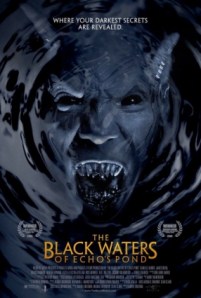
Pan (or at least I assume that its meant to Pan because it looks more like a Minotaur than anything else) shows up fairly early in the movie and he is an impressive creature with a goat’s head that features glowing eyes and long, dirty talons at the end of his fingers.  Still, I think it was a mistake on the part of the filmmaker’s to reveal him as early (and as often) as the film does.  Once Pan shows up, the movie loses all of its mystery.  We now know, for sure, that all the ensuing mayhem is the result of Pan’s supernatural malevolence.  By revealing Pan as early as it does, the film sacrifices whatever chance it may have had to be truly scary.  Instead Pan, just becomes another faceless killer and the movie, which has been advertised as a “psychological thriller,” loses its edge.
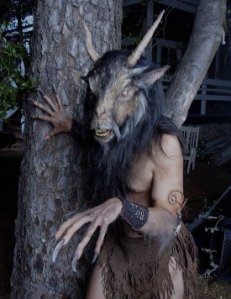
Outside of Pan, the cast is largely forgettable and they’re certainly not helped by how unlikable the majority of the characters are.  A few members of the cast do occasionally manage to offer up a few good (or, at least, memorable) moments but their efforts are sabotaged by some of the most leaden dialogue I’ve ever heard.  (It’s not a good sign that the film feels like it was dubbed into English even though it’s not.) 

The Babysitter twins from the Planet Terror segment of Grindhouse show up for instance and, even though their characters are wildly inconsistent, they both bring a lot of energy to their roles.  Incidentally, one of them gets the worst the line of the dialogue in the entire film when she says, “Shakespeare is Shakespeare!  B-movies are porn!”
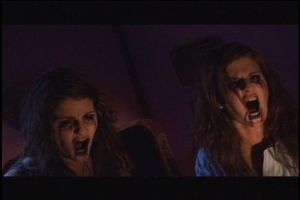
Robert Patrick plays Pete, the grizzled old-timer who gets to do the whole “Some people say the killer is still out there…” thing.  It’s not much of a role but Patrick has fun with it.

Speaking of horror film tropes, Mircea Monroe plays Veronique, the token slut.  From the minute she shows up on-screen, you know she’s doomed because she’s flirtatious, openly bisexual, and likes to show off her boobs.  (Come to think of it, if I ever find myself in a slasher film, I am fucked!)  It’s a thankless role but Monroe does her best with it and actually give Veronique a personality that goes beyond the puritan stereotype of the slasher film slut.  Her best scene is her last.  The look of mournful resignation on her face make her final fate rather sad and suggests the type of film that Black Waters could have been.

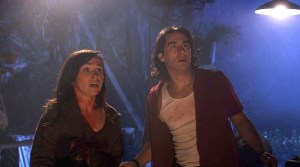
The two nominal leads are played Danielle Harris and James Duval and they both occasionally manage to transcend the shallowness of their roles.  Harris, of course, is a horror film veteran who could play her role in her sleep.  To her credit, she doesn’t.  James Duval is best known for playing Frank the Bunny in Donnie Darko.  Here, he plays ne’er-do-well Rick.  If for no other reason, the movie is worth seeing just for the way Duval delivers the line “Shit!  We’re fucked!”  It’s a line that he repeats several times and he says it with just the right combination of genuine frustration and stoner pathos.
In many ways, Black Waters On Echo’s Pond feels a lot like one Lucio Fulci’s post-Manhattan Baby efforts.  You have no doubt that the movie was made by talented people and you keep wanting it to be better than it actually is.  You find yourself clinging onto the few isolated moments that are actually effective and hoping that maybe they’ll carry you to the light at the end of the tunnel.  Unfortunately, by the end of the movie, you realize that the light was actually the train that’s just bisected you because you were too stupid to jump off the tracks.

Ultimately, the main problem with The Black Waters of Echo’s Pond is that it just is not a scary movie.  I can usually forgive a lot from a horror movie as long as there’s a handful of shocking “jump” moments.  Unfortunately, Black Waters doesn’t feature a single one.  While the gore effects are occasionally impressive, it takes more than blood to make a horror movie.  All the material was there for this to be a fun little B-movie (and not a porno, regardless of what that Babysitter Twin claims) but it just doesn’t happen.

I recently posted some of my feelings about this film over on a message board.  I quickly received a reply from a gentleman who disagreed with me.  He informed me that not only did I not have the slightest idea how difficult it is to make a movie but by criticizing this film, I was failing to support “independent film.”  “Why don’t you just go spend more of your money on Avatar again?” he asked.  Well, for the record, I hated Avatar and I do support independent film.  Just because this movie was made outside of the studios, that doesn’t make it a good film.  If you want to see a good, independent horror and/or fantasy film, go track down Baghead or Primer.  Leave the Black Waters of Echo’s Pond undisturbed.