4 Shots From 4 Films is just what it says it is, 4 shots from 4 of our favorite films. As opposed to the reviews and recaps that we usually post, 4 Shots From 4 Films lets the visuals do the talking!
Today, the Shattered Lens celebrates German director Wolfgang Petersen. It’s time for….
4 Shots From 4 Wolfgang Petersen Films
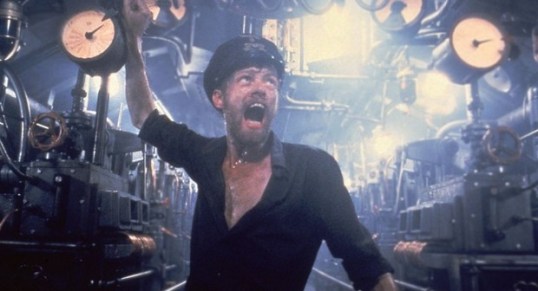
Das Boot (1981, dir by Wolfgang Petersen, DP: Jost Vocano)
The NeverEnding Story (1984, dir by Wolfgang Petersen, DP: Jost Vocano)
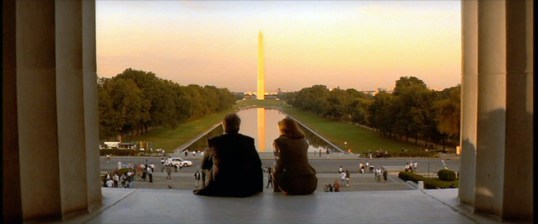
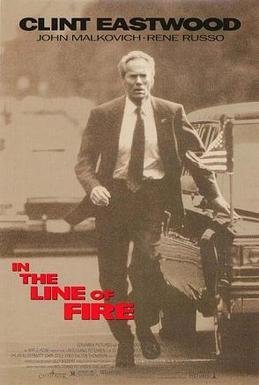
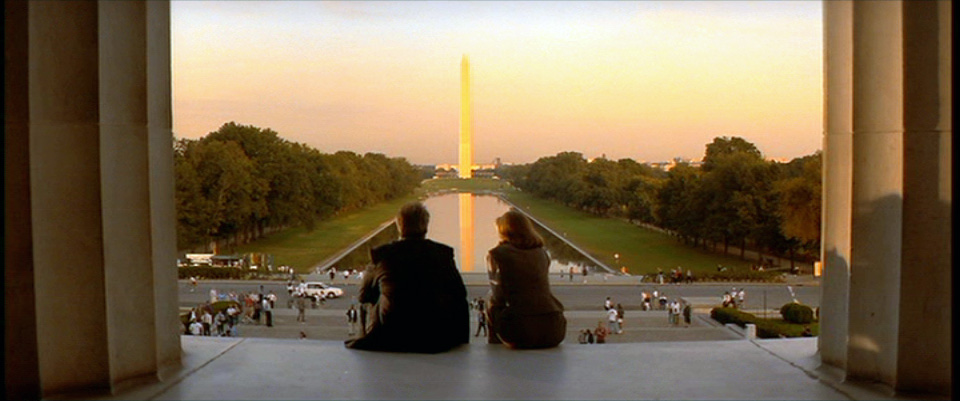
In The LIne of Fire (1993, dir by Wolfgang Petersen, DP: John Bailey)
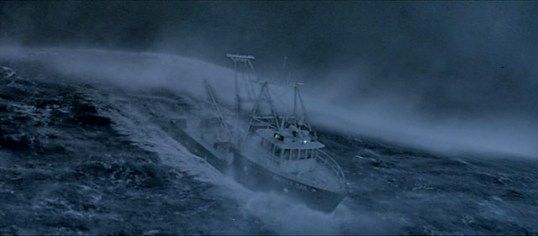
The Perfect Storm (2000, dir by Wolfgang Petersen, DP: John Seale)
Some of the best scenes in Eastwood’s 1993 film IN THE LINE OF FIRE include John Malkovich’s assassin and Clint Eastwood’s secret service agent engaging in intense conversations over the phone. I love the movie and these scenes.
Check this one out, and take note, it’s definitely NSFW!
4 Shots From 4 Films is just what it says it is, 4 shots from 4 of our favorite films. As opposed to the reviews and recaps that we usually post, 4 Shots From 4 Films lets the visuals do the talking!
Today, the Shattered Lens celebrates German director Wolfgang Petersen. It’s time for….
4 Shots From 4 Wolfgang Petersen Films
Das Boot (1981, dir by Wolfgang Petersen, DP: Jost Vocano)
The NeverEnding Story (1984, dir by Wolfgang Petersen, DP: Jost Vocano)
In The Line of Fire (1993, dir by Wolfgang Petersen, DP: John Bailey)
The Perfect Storm (2000, dir by Wolfgang Petersen, DP: John Seale)
Earlier today, it was announced that director Wolfgang Petersen had passed away. He was 81 years old and had been suffering from pancreatic cancer. Though Petersen started his career making films in his native Germany (and his 1981 film, Das Boot, remains the most Oscar-nominated German film of all time), Petersen eventually relocated to Los Angeles and established himself as a very successful director of thrillers and star-filled action films.
Last month, I watched one of Petersen’s films. First released in 1993, In The Line of Fire stars Clint Eastwood as Frank Horrigan. Frank is a veteran member of the Secret Service, still serving at a time when almost all of his colleagues have either retired or died. When we first meet Frank, he and his new partner, Al (Dylan McDermott), are arresting a gang of counterfeiters and Frank (and the then 63 year-old Eastwood) is proving that he can still take down the bad guys.
But is Frank still up to protecting the President? Of the agents that were with President Kennedy when he was assassinated in 1963, Frank Horrigan is the last one standing. He’s the only active secret service agent to have lost a president and he’s haunted by what he sees as being his failure to do his job and the feeling that America has never recovered from Kennedy’s death. Also obsessed with Frank’s history is a mysterious man who calls himself Booth. Booth (played by John Malkovich, who received an Oscar nomination for his performance) starts to call Frank. He informs Frank that he’s planning on assassinating the president, who is currently traveling the country as a part of his reelection bid. Booth views Frank as being a worthy adversary and Frank, looking for redemption, requests to be returned to the Presidential Protective Division.
While Frank struggles to keep up with both the President and the younger agents, Booth slowly and methodically puts his plan in motion. He builds his own wooden gun and tries it out on two hunters who are unfortunate enough to stumble across him. Making a heart-breaking impression in a small role, Patrika Darbo plays the bank teller who, unfortunately, comes a bit too close to uncovering Booth’s secret identity. Booth is friendly and sometimes apologetic and he quickly shows that he’s willing to kill anyone. It’s a testament to both the skill of Malkovich’s performance and Petersen’s direction that the audience comes to believe that there’s a better than average chance that Booth will succeed. He just seems to have such a strong belief in himself that the audience knows that he’s either going to kill the President or that he’s going to willingly die trying.
Meanwhile, no one believes in Frank. The White House Chief of Staff (Fred Dalton Thompson, later to serve in the Senate and run for President himself) views Frank as being a nuisance. The head of the detail (Gary Cole) thinks that Frank should be put out to pasture. Only Lilly Raines (Rene Russo), another agent, seems to have much faith in Frank. While Frank is hunting Booth, he falls in love with Lilly and she with him. (Fortunately, even at the age of 63, Eastwood still had enough of his old Dirty Harry charisma that the film’s love story is credible, despite the age difference between him and Russo.) The hunt for Booth reawakens something in Frank. Just as Booth has a psychological need to be pursued and challenged, Frank needs an enemy to which he can re-direct all of his guilt and self-loathing. Frank becomes a stand-in for everyone who fears that, because of one particular incident or tragedy, America will never regain the strength and promise that it once had. (In Frank’s case, that strength is symbolized by his idealized memories of JFK.) Defeating Booth is about more than just saving America. It’s about redeeming history.
It all makes for an very exciting thriller, one in which Eastwood’s taciturn style of acting is perfectly matched with Malkovich’s more cerebral approach. Just as the two characters are challenging each other, Eastwood and Malkovich also seem to challenge each other as actors and it leads to both men giving wonderful performances. Wolfgang Petersen not only does a good job with the action scenes but also with generating some very real suspense. The scene in which Malkovich attempts to assemble his gun under a table is a masterclass in directing and evidence that Petersen had not only watched Hitchcock’s films but learned from them as well.
As directed by Petersen and performed by Malkovich and Eastwood, In The Line of Fire emerges as a film that was more than just an exciting thriller. It was also a mediation on aging, guilt, love, redemption, and the national traumas of the past. It’s a film that stands up to multiple rewatches and as a testament to the talent of the man who directed it.
1993’s In the Line of Fire was and continues to be one of my favorite action-thrillers. What’s not to like about a film that has John Malkovich playing a rogue and mentally-unstable CIA assassin who has decided that he wants to assassinate the current President of the United States. Then there’s Clint Eastwood as the last living Secret Service agent who failed to prevent Kennedy’s assassination in Dallas.
The film was directed by Wolfgang Petersen and was both tense and thrilling in equal amounts. Yet, the film also took some time to develop the relationship between Eastwood’s aging Secret Service agent with a much younger, but capable agent played by Rene Russo. This is a relationship that starts off as quite adversarial but one that gradually moves past that into one of respect then romance.
It was the scene with the two characters taking a break from the dangers of their job to debate the role of women in the Secret Service. It makes Eastwood’s character sound very old-fashioned and while it annoys Russo’s character to no end there’s a sort of playful and flirty byplay between the two throughout the scene. It’s a scene that culminates with Eastwood’s character predicting through years of experience that Russo’s agent character has shown interest in him and thus planting the seeds of a budding romance.
This is the scene I’ve chosen to continue the march towards next week’s Valentines Day.
Occasionally, I like to do a little thing that I call “Let’s second guess the Academy.” This is when we look at the films that have won Academy Awards in the past and we ask ourselves, “Should that film have won?”
For this latest edition of Let’s Second Guess the Academy, let’s take a look at 1993. The 1993 Academy Awards were dominated by Schindler’s List. Steven Spielberg’s powerful Holocaust drama won both best picture and best director. It remains the film by which all other Holocaust dramas are judged.
But did Schindler’s List deserve to win? Or would you have preferred to see one of the other four nominees win the title of Best Picture of 1993? Let us know by voting below!
Now, here comes the fun part. Let’s say that Spielberg never got around to directing Schindler’s List. And maybe The Piano never played in the states and The Fugitive bombed at the box office. Let’s say that none of the five best picture nominees had been eligible to be nominated in 1993. Which five films would you have nominated in their place?
Below, you can vote for up to five alternative nominees.


 Through the Shattered Lens