The TSL’s Horror Grindhouse: Blood Cult (dir by Christopher Lewis)


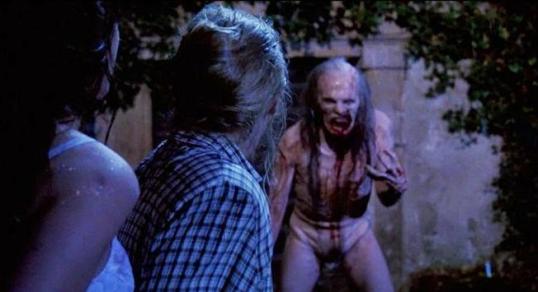
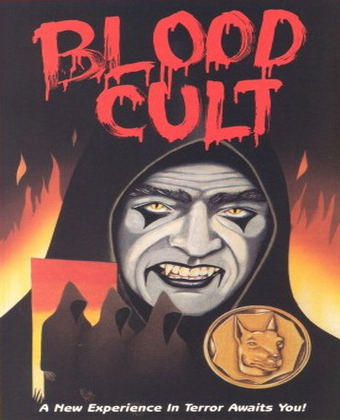
Oh no!  There are bad things happening!  On a small college campus, co-eds are being stalked and killed by a masked murderer who carries a cleaver.  With each murder, the killer chops off a limb and carries it off with him.  He also leaves behind a mysterious gold medallion, one that appears to feature an etching of a dog on it.  It’s a bit of a mess, really.

Early on, in the 1985 film, Blood Cult, a narrative crawl informs us that the events that we’re watching occurred during the previous winter.  These murders, we’re told, were “the strangest crimes in recent recorded history.”  The film opens with one of those crimes.  In an homage to Psycho and every other slasher movie ever made, the first murder occurs in a shower.  The showering victim looks straight at the camera during her scenes.  When she delivers her lines (“Is that you?  Did you get the pizza?  Did you get my anchovies?”), she does so in a flat, Oklahoma accent.  In short, these scenes proudly announce that we are watching an amateur, regional production.

Anyway, the film itself deals with Sheriff Ron Wilbois (Charles Ellis), who must solve the murders before they harm his chances of being elected to the U.S. Senate.  Fortunately, he has some help from his daughter, Tina (Judi Adelman).  Tina is a librarian, which means that she has magical research powers.  All she has to do is open up a book and, thirty seconds later, she will have discovered whatever needs to have been discovered.  Unfortunately, Tina may have some secrets of her own.  She’s also dating an rather dorky guy named Joel (James Vance).  Joel is the type of guy who, when he meets his girlfriend’s father in a diner, lazily props his feet up in the seat across from him.  I mean, come on, Joel!  At least try to impress the old man!  I kept expecting Sheriff Wilbois to yell, “Get the Hell away from my daughter!” and maybe draw his gun but apparently, that was not the Sheriff’s style.  The Sheriff’s a good, honest lawman.  He’s not the type to abuse his powers.  He just wants to solve the murders, go to the Senate, and drink a lot of Coke.  Seriously, there are so many Coke cans in this movie that, if not for the film’s amateur status, one could be forgiven for assuming that the film was produced by the Coca-Cola Corporation.
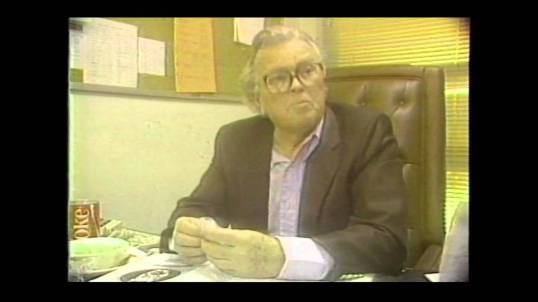
Can you spot the Coke?

There’s a twist to Blood Cult but it’s not a particularly surprising one.  In fact, there’s really nothing surprising about Blood Cult.  Some of the gore effects are effective in a low-budget way.  One victims gets beaten to death by another victim’s severed head.  That was kind of creative.  For the most part, though, Blood Cult never escapes the constraints of its low budget and its status as an amateur production.  I did feel that Charles Ellis, who was a regional theater actor, gave a fairly good performance as Sheriff Wilbois.  He came across like being a genuinely nice guy.  I would have voted for him.  The rest of the cast was forgettable at best and painfully stiff at worst.

Blood Cult is historically significant because it was actually the first movie to ever specifically be made for the home video market.  Every straight to video movie ever made is a descendant of Blood Cult.  Apparently, it was filmed in nine days, with the cast and crew taking a week off from their days jobs.  To the film’s credit, there are a few atmospheric scenes, largely because Oklahoma is a naturally atmospheric state.  But, for the most part, Blood Cult has a “Grandpa Picked Up a Video Camera And Made A Horror Film” look and feel to it.  I have a weakness for amateur, regional horror movies and the DVD of Blood Cult comes with a likable director’s commentary but, for the most part, this is a film that’s significant mostly as a piece of historical trivia.
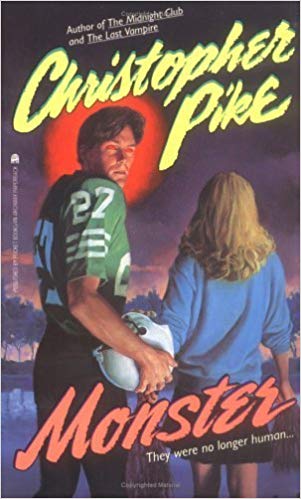
 

Horror Book Review: Monster by Christopher Pike


“They were no longer human…” the cover of 1992 first edition of Christopher Pike’s Monster announces and indeed, they’re not!  That cover, I should add, makes the book look a lot more light-hearted than it is.  It makes it look like it’s some sort of sci-fi comedy about a demonically possessed football player when there’s actually very little about this book that could be considered light-hearted.

This book is dark.  Like, seriously, dark.

It opens with popular high school student Mary Carlson walking into a party while carrying a shotgun.  She blows away a football player named Todd and then a cheerleader named Kathy and then she points the gun at her own boyfriend, Jim.  Fortunately, the new girl at school, Angela, manages to distract Kathy just long enough for Jim to take off running into the woods.  Mary goes chasing after him but she gets arrested before she guns him down as well.  It’s probably a good thing that Jim survived because, without him, how would the football team ever win another game?  After all, the team sucked just last season before all of the players and the cheerleaders suddenly got super strong!

Anyway, Mary says that she was shooting her friends because they were no longer human and, according to her, the three of them have been picking up people and killing them in a warehouse.  Police Lt. Nguyen doesn’t believe her but Angela feels a bit of an obligation to investigate Mary’s story.  And really, it’s the least she can do considering that she promptly starts flirting with Jim right after Mary’s arrested.

It quickly becomes obvious that something strange has happened to all of the school’s athletes and cheerleaders.  Maybe it has something to do with the mysterious crater from which the town gets its drinking water.  Angela notices that Jim tends to eat everything in sight, including a raw hamburger.  After she and Jim make out and she ends up getting some of his blood on her, she soon finds that she’s eating everything in sight.  Is it possible that some sort of monster has not only taken over Jim but is now taking over Angela as well!?

Yes, it is.  That’s bad news for Kevin, who is Angela’s BFF and who is totally in love with her even though she only views him as being a very good friend.  Oh, poor Kevin!  Kevin is one of the few wholly sympathetic characters in the book and he still ends up with a broken neck.  Like I said, this book is dark!

It all ends on an appropriately dark note and I guess that’s the important thing.  This book was written in 1992 and, at the time it was written, it was probably meant to be a metaphor about the dangers of having unsafe sex, as Angela is infected after fooling around with Jim.  Reading it today, though, it feels more like a commentary on just unsafe school has become over the past decade.  Mary Carlson, blowing away her friends because they’re “not human,” brings to mind so many recent gun-related tragedies.  It’s a bit difficult to read.

Anyway, Monster is a seriously dark book but still an effectively macabre story.  Nobody was as skilled at traumatizing young readers as Christopher Pike!

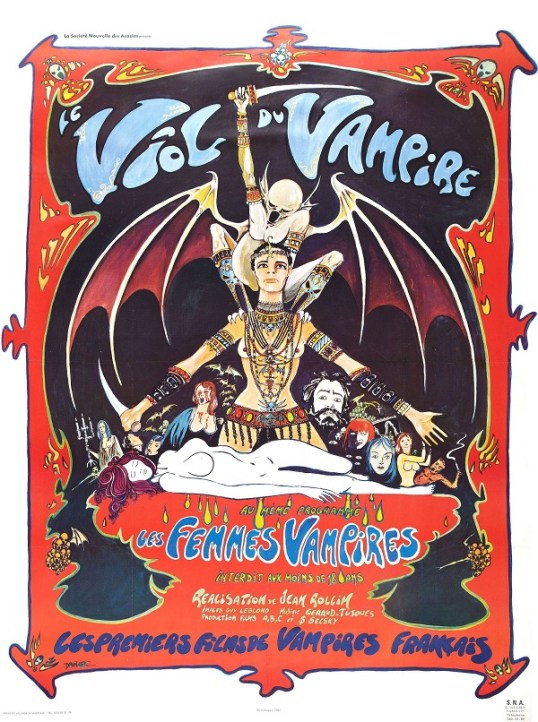
Critique Cinématographique: Le Viol du Vampire (dirigé par Jean Rollin)


Don’t worry, I’m not going to review this film in French.

I wish I could because this was the feature film debut of Jean Rollin, who made horror films that were uniquely French in both their vision and their execution.  A decade ago, I probably could have written an at least 300-word review in vaguely passable French but, unfortunately, my language skills have gotten a bit rusty as of late.  “But Lisa, what about Google translate?”  Uhmmm ….. yeah, that’s not a good idea.  The comprehension powers of Google translate are a bit overstated.

Anyway, on to the film!

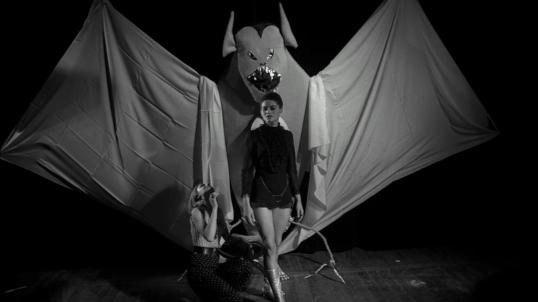
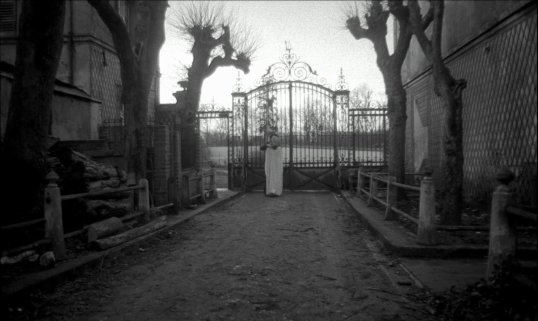
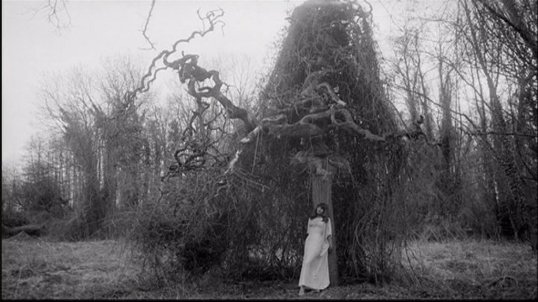
I absolutely love the wonderfully surreal films of Jean Rollin.  At his best, Rollin was responsible for some of the most visually impressive and narratively incoherent films ever made.  Believe it or not, I don’t mean incoherent in a bad way.  A Rollin film creates its own unique world, one in which things don’t necessarily have to make much sense.  A Jean Rollin movie is like a filmed dream, one in which the stories continually seem to loop back to the same group of obsessions.  There’s always an emphasis on memory and the importance of the past.  The countryside is always beautiful but also always full of menace.  There’s always a scene or two at the beach.  It’s not unusual for a Rollin film to end with the water washing away the evil, like some sort of fairy tale.  There’s usually a house in the country and Rollin’s camera loved old French architecture just as much as it loved images of people making love.  Rollin’s films often very sincerely celebrated female friendship while, at the same time, continually returning to the theme of lesbian vampires.  In fact, I think it can be argued that the best way to appreciate Rollin’s films is to sit down and watch all of them, one after another.  So many theme reoccur from film to film that ultimately, they all become a part of giant and very strange tapestry of lust, secrets, and the paranormal in France.

Le Viol du Vampire (which translates to The Rape of the Vampire in English) was Rollin’s feature directing debut.  It started out as a 30-minute short film, one that more or less made sense.  A producer then offered Rollin some money to expand the short into a feature film.  The end result was a deeply strange but visually stunning film, one in which characters who clearly died in the original short film mysteriously came back to life so that they could take part in the second part of the film.

During the first 30 minutes of the film, three Parisians are called out to a country château (because it’s not a Rollin film without a château) to investigate four sisters who believe that they’re vampires.  (One of the sisters is blind and says she became a vampire after being raped by the local peasants, hence the film’s title.)  The Parisians believe that the sisters are being manipulated by an evil old man.  The sisters believe that they are all vampires.  It turns out that they’re all right!

As I said, that part of the film makes sense.  But then suddenly, a vampire queen appears and suddenly there’s all these other vampires running around and some of them are dressed like court jesters and there’s a doctor working at a clinic who thinks that he can cure vampirism and then there’s a revolution against the queen and there’s a car chase and you’re never really sure who is who or what it is that they’re doing or why they’re doing it.  Rollin was a noted fan of the old serials and that’s how directs the final 60 minutes of Le Viol du Vampire.  Cliffhanger after cliffhanger follows twist after twist and, again, you find yourself wondering if even Rollin was able to keep up with it all.

And yet, it remains a compelling film because Rollin was such a gifted visual artist and the black-and-white cinematography is so atmospheric that it’s very easy to ignore the plot and instead just enjoy looking at the film.  I would actually suggest waiting to watch this film until you’ve seen some of Rollin’s other films.  Once you’ve experienced Rollin’s unique aesthetic vision, it’s easy to watch Le Viol du Vampire and say, “There’s the beach!  There’s the clowns!  There’s the lesbian vampires!  There’s everything that we’ve come to expect from Jean Rollin!”

Le Viol du Vampire was released in 1968.  It was released at a time when political turmoil had brought much of the French film industry to a halt.  As a result, Le Viol du Vampire was the only film playing several theaters.  If you were in France during the summer of 1968 and you wanted to go to the movies, Le Viol du Vampire was often the only option available.  As a result, a huge number of people went to this movie.  Audiences were reportedly so angered by the film’s intentional incoherence that they rioted and threw things at the screen.  It was quite a scandal but it also made Rollin a bit of a star.

Seen today, the film is still incoherent but it’s also a chance to see where one of the most interesting horror directors of the 20th Century got his start.

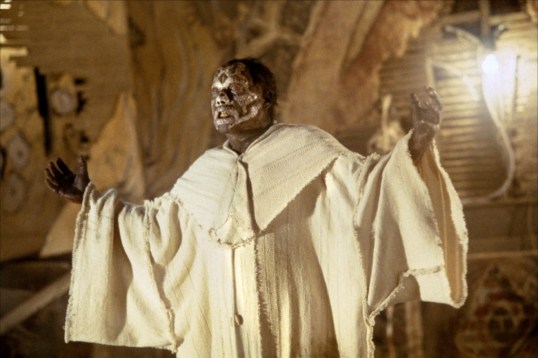
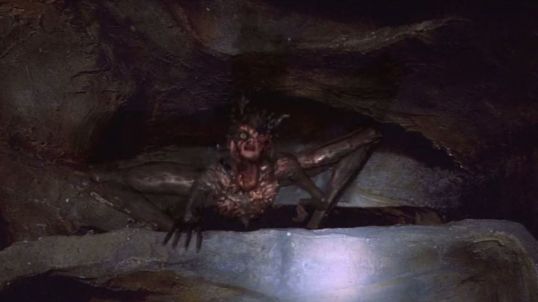
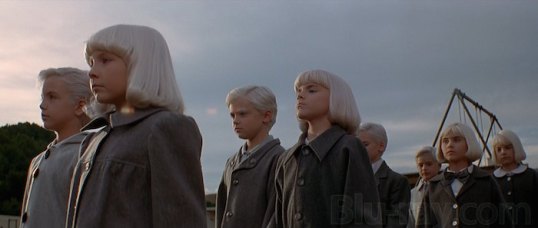
4 Shots From 4 Films: Castle Freak, Lord of Illusions, Species, Village of the Damned


4 Shots From 4 Films is just what it says it is, 4 shots from 4 of our favorite films. As opposed to the reviews and recaps that we usually post, 4 Shots From 4 Films lets the visuals do the talking!

This October, we’re using 4 Shots From 4 Films to look at some of the best years that horror has to offer!

4 Shots From 4 1995 Horror Films

Castle Freak (1995, dir by Stuart Gordon)

Lord of Illusions (1995, dir by Clive Barker)

Species (1995, dir by Roger Donaldson)

Village of the Damned (1995, dir by John Carpenter)

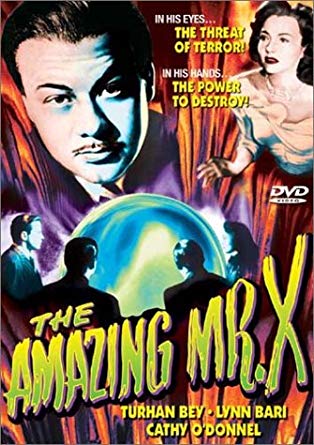
Horror Film Review: The Amazing Mr. X (dir by Bernard Vorhaus)


A woman named Christine (Lyn Bari) walks along the beach when she thinks that she hears the voice of her husband calling out her name.  The only problem is that her husband has been dead for two years.  Christine’s sister, Janet (Cathy O’Donnell), says that Christine is just hearing things and that she needs to move on from mourning.  After all, her boyfriend, Martin (Richard Carlson), is on the verge of asking Christine to marry him….

And yet, Christine can’t escape the feeling that her husband is trying to contact her from beyond the grave.  During another walk along the beach, she runs into a handsome man who introduces himself as being Alexis (Turhan Bey).  Alexis says that he’s a medium and that he has the power to speak to the dead.  Furthermore, he tells Christine that he can speak to her dead husband for her.

Despite the fact that Alexis owns a really impressive crystal ball, Martin is skeptical of his claims.  Martin even goes so far as to hire a private investigator (Harry Mendoza) to investigate Alexis’s past.  Meanwhile, though she has her suspicions, Janet finds herself falling in love with the charming Alexis….

Released in 1948, The Amazing Mr. X is an unjustly obscure little mystery film.  Though I guess it’s open to debate whether it should be considered a horror film or just a noirish thriller, The Amazing Mr. X is full of creepy atmosphere and eerie moments.  Employing expressionistic camera angles and dark lighting, director Bernard Vorhaus turns The Amazing Mr. X into a dream of dark and forbidden things.  Some of the black-and-white shots are simply stunning and the seance sequence is brilliantly done.

The film is also well-acted by a cast of actors who deserve to be better remembered.  Lynn Bari is perfectly fragile and sympathetic as the haunted Christine while Cathy O’Donnell turns the potentially boring Janet into a compelling character.  The film even makes good use of Richard Carlson’s reliable dullness by casting him as the one character who is meant to be a force of stability in Christine’s otherwise neurotic life.

That said, the entire film is stolen by Turhan Bey.  Born in Austria and of Turkish descent, Turhan Bey was nicknamed the “Turkish Delight” during his film career and, watching The Amazing Mr. X, you can see why.  Bey is so charming and so handsome that you can understand why even those who should know better would want to believe that Alexis could talk to the dead.  The Amazing Mr. X was one of the last films that Bey filmed in the United States.  He retired a few years later and returned to his native Austria, where he ran a cafe.  (40 years later, the now elderly Bey did come out of retirement and made a few appearance of television before passing away, at the age of 90, in 2012.)

Like all good mysteries, The Amazing Mr. X has a third act twist that you probably won’t see coming and it ends with the proper combination of tragedy and redemption.  The Amazing Mr. X is currently in the public domain and can be viewed on YouTube so check it out!  You won’t be sorry!

Horror On The Lens: The House On Haunted Hill (dir by William Castle)


The original The House on Haunted Hill is a classic and one that we make it a point to share every Halloween.  And since October is nearly halfway over, now seems like the perfect time to do so!

Be sure to check out Gary’s review by clicking here!

Enjoy Vincent Price at his best!

Music Video Of The Day: Fate by Boy Harsher (2018, dir by Bryan M. Ferguson)


I’m not sure if the main character in this video is an actual vampire or just someone with an addiction for raw meat and blood.  Either way, it’s obviously not an easy life.

This video was shot in Glasgow, Scotland and the atmospheric cinematography was credited to George Harwood.  It’s like a filmed nightmare, which is my favorite type of nightmare.

Enjoy!

The TSL’s Horror Grindhouse: Psycho III (dir by Anthony Perkins)


Norman Bates is back!

Released in 1986 and directed by Anthony Perkins himself, Psycho III picks up a few months after Psycho II ended.  Norman (Anthony Perkins, of course) is still free.  He’s still got his motel.  He’s still talking to his dead mother.  Of course, at the end of Psycho II, Norman was told that the woman who Norman thought was his mother actually wasn’t his mother.  Instead, Emma Spool told Norman that she was his mother, which led to Norman promptly hitting her with a shovel and then keeping her preserved body hidden away in the motel.  Got all that?  Great, let’s move on….

In Psycho III, business suddenly starts booming at the Bates Motel!  All sorts of people come by to visit.

For instance, there’s the obnoxious tourists who show up at the motel so they can watch a football game and get drunk.  Future director Katt Shea plays one of the unfortunate tourists, who ends up suffering perhaps the most undignified death in the history of the Psycho franchise.  Shea later ends up being stored in the motel’s ice chest.  At one point, the local sheriff grabs a piece of ice and tosses it in his mouth without noticing that it’s covered in blood.

And then there’s Duane Duke (a young Jeff Fahey!), who is superhot but also super sleazy.  For reasons that are never quite clear, Norman hires Duke to be the assistant manager at the motel.  Duke turns out to be thoroughly untrustworthy but he’s Jeff Fahey so he remains strangely appealing even when he shouldn’t be.

Red (Juliette Cummins) shows up at the motel so that she can have sex with Duke and then get stabbed to death while taking off her top in a phone booth.  That, I guess, is Psycho III‘s equivalent of the first film’s shower scene.  Later, Duke comes across Norman mopping up all the blood in the phone booth but he doesn’t say anything about it.  Duke knows better than to ask why there’s blood in the phone booth.

Tracy Venable (Roberta Maxwell) is a journalist whose sole purpose in life is to prove that Norman murdered Emma Spool.  Tracy’s main function in this film is to explain just why exactly so many different women have claimed to be Norman’s mother.  It’s a rather complicated story and you’ll get a migraine if you think about it for too long.

And finally, there’s Maureen (Diana Scarwid), the former nun who has lost her faith and her sanity.  She shows up at the motel and stays in Marion Crane’s old room.  She takes a bath instead of a shower and slits her wrists.  When Norman storms into the room to kill her, the barely lucid Maureen mistakes him for the Virgin Mary and sees his knife as being a crucifix.  Maureen survives and Norman is hailed as a hero for rescuing her.  Later, Norman and Maureen fall in love.  You can guess how that goes.

When compared to the first sequel, Psycho III is much more of a standard slasher film and there’s certainly never any doubt over who is doing the killing.  However, Perkins again does a great job in the role of Norman, making him both sympathetic and creepy.  Fahey, Scarwid, Maxwell, and Hugh Gillin (as the hilariously clueless sheriff) all provide good support.  There’s really not a single character in this film who doesn’t have at least one odd or memorable quirk.  Duane Duke, for instance, is one of the most amazingly sleazy characters in the history of American cinema.  Just when you think that the character can’t get any worse, he proves you wrong.

As mentioned above, Perkins directed this film.  It was one of two movies that Perkins would direct before his death.  As a director, Perkins had a good visual sense, even if he did allow the narrative to meander a bit.  There’s nothing particularly subtle about Perkins’s direction and several of the scenes — like the sex scene between Duke and Red — are so over the top that they become rather fascinating to watch.  That said, there was really no longer any need to be subtle when it came to Norman Bates and his story.

With the exception of the weird Gus Van Sant remake with Vince Vaughn, Psycho III would be the last Psycho film to be released into theaters.  It would also be Perkins’s second-to-last time to play Norman.  (The last time would be in a 1990 made-for-TV sequel, Psycho IV: The Beginning.  Despite it’s title, Psycho IV pretty much ignored everything that happened in the previous two sequels.)  Perkins passed away in 1992, at the age of 60 but the character of Norman Bates would live on, both in his own performances and in the later work of Freddie Highmore in Bates Motel.