The Abbott teachers go to a baseball game! As our readers may have noticed, my sister loves baseball so I made sure to have her watch this episode with me. She enjoyed it, which made me happy. Myself, I found myself wondering why so many shows — like Abbott with Philadelphia or Dick Wolf’s Chicago shows — take place in cities that most American hate. Like, if I was ever told that I had to pick between Philadelphia or prison, I’d probably pick prison because at least there wouldn’t be as many people yelling. Yet, Abbott is often a rather charming show and I usually love It’s Always Sunny In Philadelphia. It’s just weird how these things work.
Hell’s Kitchen (Thursday Night, Fox)
Ugh, this episode made me physically ill. I don’t think I could ever be a professional chef, not if it means having to clean every inch of a fishing boat. (I cleaned my kitchen before watching this episode and my back was killing me by the time I was finished.) As for this episode and this season, it doesn’t seem like a single chef should be trusted to cook food for anyone. Chef Ramsay is doing a lot of yelling and I agree with him.
Law and Order (Thursday Night, NBC)
This week, yet another millionaire was murdered in New York City and there was yet another crazy defense that, for whatever reason, Maroun seemed to have sympathy for. As much as I usually like the “Law” half of these shows, the “Order” part often verges on self-parody. Between Nolan Price’s wimpy summations and Maroun’s eagerness to protect the criminals, I’m surprised they ever get a conviction.
Night Flight (NightFlight Plus)
On Saturday morning, I watched a video profile of KISS, a band that I really didn’t know much about. I enjoyed the juxtaposition between the fearsome makeup and their not-at-all fearsome music.
Snub TV (NightFlight Plus)
On Friday night. Jeff and I watched an episode of this 80s music show with our friends, Patrick and Dani. It was good music. You could dance to it.
Special Forces: World’s Toughest Test (Thursday Night, Fox)
This show is just not that interesting without Jussie Smollett crying about how nobody will accept that “I just want to move on” from filing a false police report. If it was really the world’s toughest test, I don’t think a bunch of out-of-shape reality show participants would be doing as well as they are.
Twilight Zone (Prime)
This week, I watched a few classic episodes — To Serve Man, The Monsters Are Due On Maple Street, Twenty-Two (“Room for one more, honey!”), Will The Real Martian Please Stand Up, Nick of Time, and Nightmare at 20,000 Feet. If the Twilight Zone is not a part of your October viewing, you’re doing Halloween wrong!
The Vanishing Ray (NightFlight Plus)
I checked in with this 1930s serial on Friday night. The bad guys were still after the vanishing ray and the good guys were still trying to protect it. As always, this chapter ended with a cliffhanger and an invitation to return to theater next week for the next installment.
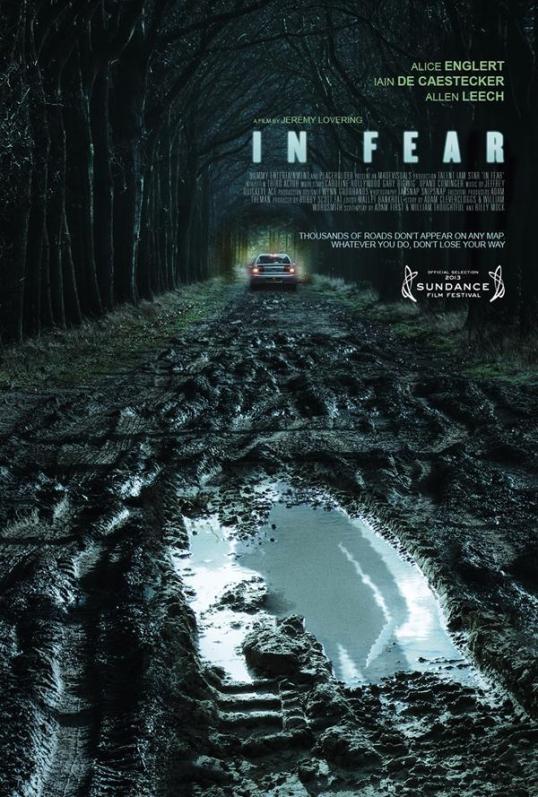
In Fear is a movie about two people who get lost while trying to drive to a festival in Ireland. Tom (Iain De Caestecker) and Lucy (Alice Englert) have only been dating for two weeks and Tom is already inviting her to a festival and going behind her back to make reservations at a hotel. Tom says, “It’s our two-week anniversary,” and that should have been red flag city. Two weeks is only 14 days. That’s a lifetime for some creatures but not humans.
Tom and Lucy drive up and down a country road, trying to find the hotel but they keep on ending up back at the same location, sitting in front of run-down fence with a sign that says “KEEP OUT” sitting on it. Lucy thinks that she sees someone following the car but Tom isn’t so sure until someone actually tries to grab Lucy. They meet a bloody man named Max (Allen Leech), who says that there are a group of madmen who are stalking Tom and Lucy because of an earlier altercation at a pub.
In Fear was scary for the first half and then, during the second half, there were some things that happened that didn’t really make much sense to me. Some of the twists felt half-baked and sometimes, the characters behaved in ways that didn’t make much sense. Of course, speaking of making sense, I wouldn’t go on a road trip with someone who I had only been dating for two weeks. Road trips are the ultimate relationship test so you better make sure that you and your partner are really compatible before you even attempt one! Tom and Lucy were sweet together but they should have waited before going to the country together. And Tom definitely shouldn’t have made hotel reservations without talking to Lucy first. A lot of trouble could have been avoided if Tom hadn’t been so eager to celebrate that two-week anniversary.
Despite those inconsistencies, In Fear was scary enough to make me jump. It’s the type of horror movie that you should not watch in the dark. I locked all the doors as soon as it was over.
So, we all know that the Grinch once tried to steal to Christmas and then his heart grew a few sizes but did you know that apparently, the Grinch also tried to steal Halloween?
Until about 9 years ago, I did not. I was going through YouTube, searching for horror films that I could share here on the Shattered Lens, and guess what I came across?
A TV special from 1977 entitled Halloween is Grinch Night!
Unlike How The Grinch Stole Christmas, Halloween is Grinch Night apparently never became a holiday classic. Perhaps that’s because Halloween is Grinch Night is not exactly the most heart-warming of holiday specials. Whereas How The Grinch Stole Christmas tells us about how the Grinch learned the true meaning of Christmas, Halloween is Grinch Night gives us a Grinch who has no redeeming features. There is no hope for this Grinch. This Grinch will steal your soul and probably drink your blood. This Grinch is pure Grinchy evil.
This is the Grinch of our nightmares.
Check out Halloween is Grinch Night below and hope the Grinch doesn’t capture you this Halloween….
Don’t worry about these dolls. They are totally at home. You should see the other walls and shelves.
They live in a little building in the back yard, just a small percentage of mom’s doll collection. Some of our friends refuse to go in the doll house. They say that can’t handle being alone with the dolls for too long. The dolls wouldn’t hurt a soul.
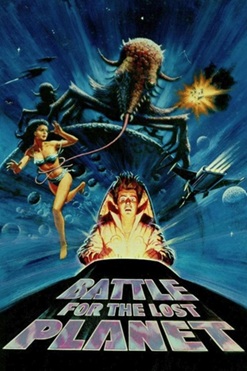
Industrial spy Harry Trent (Matt Mitler) escapes from two security guards by hiding in a space shuttle. He accidentally launches himself into orbit. As soon as he’s in space, Harry witnesses a bunch of pigmen attacking Earth. Harry spends five years exercising, eating frozen dinners, and drawing pictures of naked women on the walls o0f the space shuttle before finally returning to Earth, eager to defeat the pig men. After hooking up with Dana (Denise Crawford), Harry heads to Richmond to investigate rumors of an underground weapon that can defeat the pig people. Harry and Dana meet and team up with a biker named named Mad Dog Kelly (Joe Gentissi), who looks a lot like Sylvester Stallone in Nighthawks.
A micro-budget science fiction film that doesn’t make a shred of sense, Battle For The Lost Planet is just barely redeemed by its lack of pretension. It doesn’t take itself seriously and neither should anyone else. Nobody in the movie view Harry as being any sort of hero and even Harry admits that he’s more interested in getting laid than actually battling for the lost planet. The movie is narrated by Old Man Harry, who is writing his memoir and who has decided to title the manuscript, How I Saved The World. It looks like he’s writing his story in a ten-page notebook so saving the world was apparently very simple. Just find a super weapon and turn it on. It’s too bad no one thought of that when the Earth was being invaded!
Battle For The Lost Planet is a stupid movie but I like it.
I’ve had the Hong Kong horror flick RIGOR MORTIS (2013) sitting on my shelf for quite a few years. I remember reading a lot about it when it first came out in Hong Kong back in 2013, so I just went ahead and bought it. There was a lot of talk about it resurrecting the Hong Kong “hopping vampire” genre of films that was very popular in the 80’s, led by movies like the MR. VAMPIRE series and ENCOUNTERS OF THE SPOOKY KIND 2. My personal favorite Hong Kong films are the “heroic bloodshed” gangster films featuring actors like Chow Yun-Fat, Lau Ching-Wan and Andy Lau, but I do enjoy the idea of hopping vampires. In the spirit of October and Halloween, I decided to tear open the plastic wrap and finally give it a go!
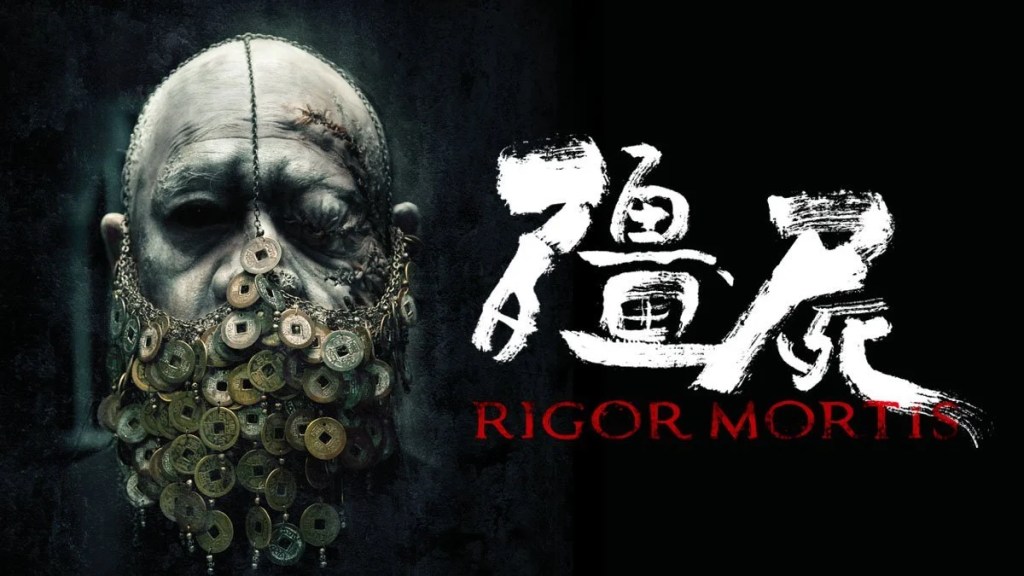
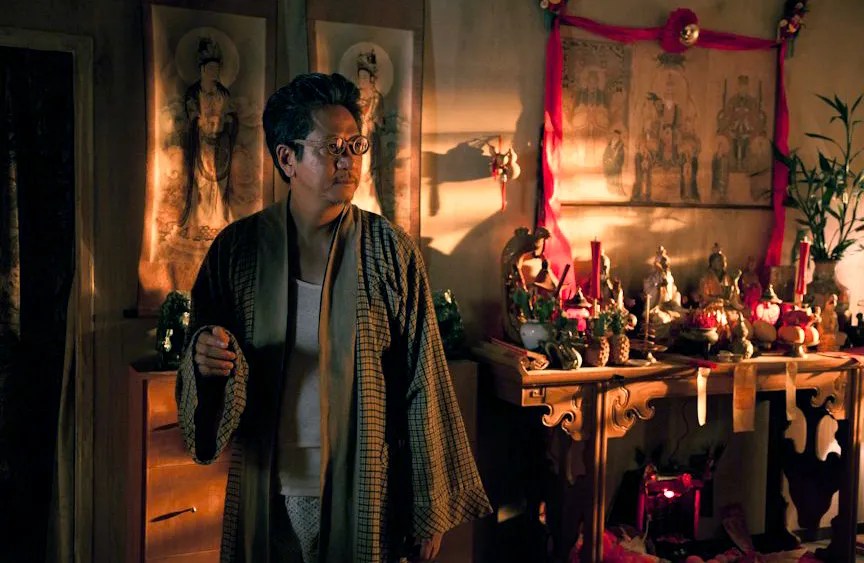
Actor Chin Siu-Ho (portrayed by Hong Kong actor Chin Siu-Ho in a Meta version of himself) is suicidal after his wife leaves him and takes away their young son. He moves into a huge, dilapidated apartment building and immediately hangs himself. As his hung body is convulsing and jerking around, the supernatural story immediately kicks in and a pair of twin sister ghosts, who just happened to die tragically in the same apartment, emerge and take over his body. Out of nowhere, Yau (Anthony Chan), a neighbor, busts through the door, cuts the noose, and smashes Chin against a wall, saving his life and driving the ghosts out in one fell swoop! Yep, there are strange things afoot in this apartment complex and Yau decides to fill Chin in on a couple of items. First, he’s a vampire hunter, but there aren’t really any vampires left in Hong Kong, so he mostly just cooks rice these days. Second, there are a lot of ghosts hanging around the building that won’t leave, but there’s really no reason to be that scared of them because most of them aren’t trying to possess anyone, with the twin sisters being a notable exception. Wouldn’t you know it though, around the same time they’re having this conversation, an older neighbor named Tung (Richard Ng) slips and breaks his neck. Rather than just letting him die, his devastated wife Mui (Hee Ching Paw) goes to see her neighbor Gau (Fat Chung), a master practitioner of the blackest of black magic. Soon Gau has Tung’s dead body covered in dirt, wearing a mask made of Chinese coins and being fed crow’s blood. In seven days, Gau tells the wife, your husband will be back. I won’t go into all the details, because there are a bunch, but soon people will start dying, a vampire will be hopping, Yau will be living up to his family’s vampire hunting legacy, and Chin will be fighting ghosts and vampires, only this time without a director yelling “CUT” when things get dangerous!
I truly appreciate a movie like RIGOR MORTIS. Actor-director-producer-singer Juno Mak was only 29 years old when he directed this film that truly does pay lots of respect to the popular MR. VAMPIRE series of films from the 80’s. His casting goes a long way in bringing back those nostalgic memories. Actors Chin Siu-Ho, Anthony Chan, Billy Chau, Richard Ng, and Fat Chung all appeared in the MR. VAMPIRE series, along with tons of other films during the golden age of Hong Kong cinema, and its fun for me to see them all here. Chin Siu-Ho especially sticks out to me because of the film he made with Chow Yun-Fat in 1986 called THE SEVENTH CURSE. And the image of a slow-motion Richard Ng, decked out in full Hong Kong vampire regalia, hopping his way towards some serious trouble, is pure fan service. That part had me sitting up with a smile on my face.
While the tributes to the Hong Kong vampire genre are all here, the tone of RIGOR MORTIS is decidedly different. Completely foregoing the elements of slapstick and comedy that existed in the 80’s films, Mak has made a moody, supernatural film that’s full of emotionally damaged characters in need of some sort of purpose or redemption. Most of the characters are incapable of dealing with the difficult events of their life even remotely in a positive way, and it’s their collective bad decisions that lead to so much of the death and destruction in the film. Chin doesn’t know how to deal with his divorce, so he tries to kill himself, unleashing the twin sister ghosts. Auntie Mui so hates the prospect of being alone that she wants to bring back her dead husband, unleashing the vampire. And when the vampire and twin sister ghosts join forces, things get really crazy! Now that I write out the things that Chin and Mui are dealing with, Yau’s situation doesn’t really seem that bad. Sure, he may not get to fight vampires like his dad did, but is that any reason to mope around? Chin tells him that he makes the best glutinous rice in Hong Kong, and since Chin has been a successful actor, I’m sure he’s had a lot of the best glutinous rice around. The compliment doesn’t move Yau in any way, with the man brushing it off as meaningless. It’s actually kind of sad that Yau finding his purpose requires a supernatural unleashing of evil and many tragic victims. Come on Yau!
Since Director Mak is going for melancholy horror, to be truly successful, a movie like RIGOR MORTIS really needs good performances from its cast, and it needs to be somewhat scary. Chin Siu-Ho is good as the former actor whose life has turned into a dumpster fire. He’s introduced to us wearing shades that would have been perfectly at home on Chow Yun-Fat’s face in the Hong Kong Classic A BETTER TOMORROW (1986). I enjoyed that nod to Hong Kong’s legacy of cool action stars. Thinking back on it now, I may have criticized his character’s moping around, but Anthony Chan’s performance as the vampire hunter Yau is probably my favorite performance of the film. He’s a man who doesn’t care, until he does, and then he’s all in. I also liked Kara Hui as a woman whose life was destroyed in the same apartment that Chin now lives in, and who now just kind of wanders around the building with her son Pak. Her character is somewhat peripheral to the main story, but there is definitely something appealing about her performance. Heck, it may just be that she’s really pretty. Old veterans like Richard Ng, Fat Chung, and Hee Ching Paw give solid, professional performances just as you’d expect them to.
So, the performances in RIGOR MORTIS are good, but is the film scary? I will say that if there would be any criticism I would level at the film, it’s the fact that I just didn’t find it very scary, or really even that spooky for that matter. The setting, the dilapidated apartment building, seems like a perfect background for jump scares, yet there are very few. Mak seemed to prioritize special effects driven visuals over sending shivers down our spines. That’s not necessarily a bad thing because Mak does find some true horror in his story. For example, one of the most horrific scenes in the film is our first real image of the dangerous vampire, whose fingernails grow in front of us as it sets its sights on a truly innocent young victim, a scene that proves that no one is safe in the world of this film. However, if you’re looking for a movie that’s going to make you jump throughout its hour and forty-five-minute runtime, this film did not have that effect on me.
Ultimately, I would give RIGOR MORTIS a solid recommendation to any person who might appreciate a modern take on Hong Kong horror films of the 1980’s. I’d also recommend it to people who enjoy visually impressive horror films that rely more on mood than outright scares. I probably would not recommend it strongly to those who insist on lots of gotcha moments in their horror films. For me personally, I enjoyed it very much, and I’m glad I finally got around to watching it. It may be time to pull out my old DVD of MR. VAMPIRE for a revisit!
One of the great things about the original, 1958 version of The Fly is that, even though it starred Vincent Price, Price didn’t play the Fly. Instead, for once, Price was allowed to be the voice of reason, the guy who said, “Maybe don’t mess around with the laws of time and space.”
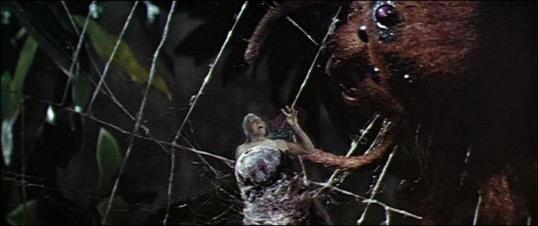
Today’s scene that I love is from the ending of the original Fly. Supposedly, Price had a hard time filming this scene because whenever he heard the recording of David Hedison crying out, “Help me!,” he would start laughing. Still, if you know what spiders actually do to the flies that they capture, you can’t help but sympathize with our misdirected scientist in the web. Destroying him with a rock was probably the most merciful thing that anyone could do.
In 1957, the Commission — the governing board that regulated organized crime in America — seemed like it was on the very of collapsing. Bugsy Siegel was dead. Lucky Luciano had been exiled to Sicily. Meyer Lansky was more concerned with running his casinos in Cuba than with keeping track of who was angry with who in America. The ruthless Vito Genovese was moving in on everyone’s business and was suspected of being behind the assassination of Albert Anastasia and the shooting of Frank Costello.
Genovese, looking to solidify his control and perhaps bring some peace to the warring factions, called for a summit in upstate New York, at the estate of Joseph Barbara. Bosses from across the country gathered in Apalachin, New York. It started out as a nice weekend, with stories being told and fish being grilled. But then, suddenly, the cops showed up and 50 of the country’s most powerful mobsters made a run for it. Many of them ducked into the woods, where they were subsequently rounded up by the cops.
In the end, several mobsters were arrested and convicted of various crimes. All of those convictions were overturned on appeal. However, the arrests revealed to America that the Mafia wasn’t just an urban legend. Up until the bust at Apalachin, FBI director J. Edgar Hoover insisted that there was no such thing as the Mafia. After the bust, Hoover not only acknowledged that the Mafia existed but he also started a special division of the FBI to deal with it.
(Not that it did much good, of course. Being exposed still didn’t stop the Mafia from fixing the vote in Illinois during the 1960 presidential election.)
The 2019 film Mob Town details the events leading up to the Apalachin Conference. Robert Davi is properly intimidating as the ruthless Vito Genovese. The film’s director, Danny A. Abeckaser, plays Joseph Barbara while Jami-Lyn Sigler plays Barbara’s wife, tasked with putting together a dinner for a growing list of guests. Josephine Barbara goes from being happy about her husband working his way up the ranks of the mob to growing increasingly frustrated as the number of expected bosses rises from 30 to 50 and I have to say that I could very much relate to Josephine. Finally, David Arquette plays Edgar Croswell, the New York state trooper who figured out that something big was happening at the Barbara place. Croswell spends most of the film trying to get people to take him seriously. At the end of the film, he gets a congratulatory call from President Eisenhower. I’m enough of a history nerd that I appreciate any film that ends with a congratulatory call from President Eisenhower.
Mob Land was obviously made for a low-budget and it doesn’t always move as quickly as one might like. When Croswell isn’t trying to expose the mob, he’s pursuing a romance with Natalie (Jennifer Esposito) and Arquette’s permanently dazed expression doesn’t always make him the most convincing state trooper. It’s an uneven movie that traffics in almost every mob cliche but I can’t be too critical of it. Robert Davi was a more convincing Genovese than Robert De Niro was in Alto Knights. I appreciated the scenes of the Barbaras trying to get their place ready for the meeting. That was mob action to which I could relate.
This October, I’m going to be doing something a little bit different with my contribution to 4 Shots From 4 Films. I’m going to be taking a little chronological tour of the history of horror cinema, moving from decade to decade.
Today, we start the savage 70s!
4 Shots From 4 Horror Films
The Shiver of the Vampires (1970, dir by Jean Rollin)
The Abominable Dr. Phibes (1971, dir by Robert Fuest)
The Last House On The Left (1972, dir by Wes Craven)




 Through the Shattered Lens