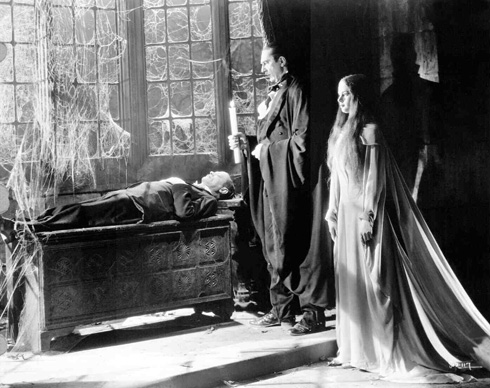
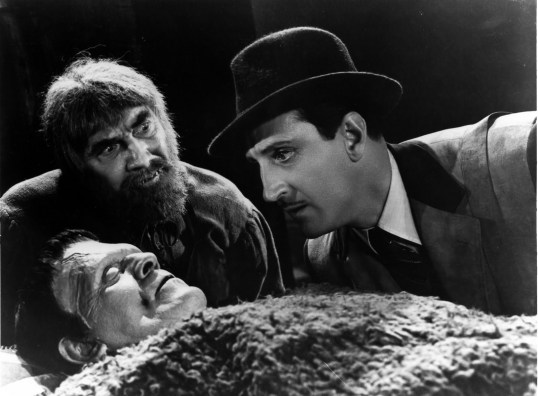
Horror on TV: Ghost Story 1.1 “The Dead We Leave Behind” (dir by Paul Stanley)


During the month of October, we like to share classic episodes of horror-themed television.  That was easier to do when we first started doing our annual October horrorthon here at the Shattered Lens because every single episode of the original, black-and-white Twilight Zone was available on YouTube.  Sadly, that’s no longer the case.

However, there is some good news!  Twilight Zone may be gone but there are other horror shows on YouTube!  For instance, I’ve discovered that, in 1972, there was a horror anthology series that was originally called Ghost Story.  It was produced by William Castle and each episode featured a different guest star having to deal with the supernatural.

The show made its debut on September 15th, 1972.  In this episode, Sebastian Cabot (playing the role of the mysterious Winston Essex) introduces a story about the mortality and technology.  Jason Robards and Stella Stevens are a married couple who discover that their television cannot only predict the future but that also one of them is going to die!

Enjoy the first episode of Ghost Story!

Bela Lugosi As Henry Frankenstein?


When it comes to the 1931 film version of Frankenstein, the piece of trivia that everyone seems to know is that Bela Lugosi was the original choice to play the Monster.

As the story goes, Lugosi had just finished filming Dracula and Universal’s Carl Laemmle felt that it would only make sense for Lugosi to play the lead role in Universal’s second horror adaptation.  Not only would Lugosi be firmly established as Universal’s favorite monster but it would also reunite him with Edward van Sloan and Dwight Frye, both of whom played prominent supporting roles in Dracula.  However, the story continues, Lugosi turned down the part when he saw that the monster wouldn’t have any dialogue.

Well, the story is partially right.

The truth of the matter is that Frankenstein was one of several books to which Universal had the rights.  And when Lugosi learned that one of the studio’s directors, Robert Florey, was interested in directing a film based on Mary Shelley’s novel, he did meet with Florey to say that he was intrigued by the idea of playing the monster.  Lugosi even did a makeup test, one in which the proposed look of Lugosi’s monster reportedly owed much to 1920’s The Golem.  As a director, Florey was heavily influenced by German expressionism so it makes sense that he would look to The Golem for inspiration.
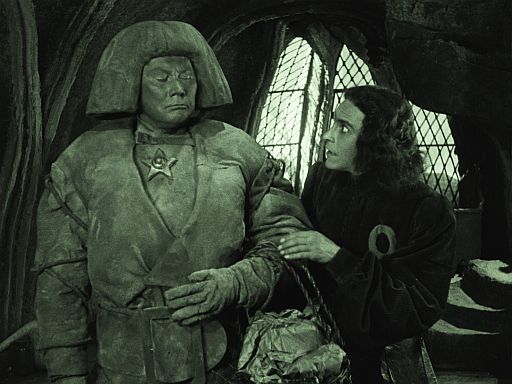
The Golem (1920, dir by Paul Wegner and Carl Boese)

Lugosi eventually lost interest in the role, not because of the lack of dialogue but because he felt that he wouldn’t be able to give a good performance while made up to look like the Monster.  His face would be barely visible and, as an actor, Lugosi naturally wanted to be recognized.  Lugosi had no objections to the script because the script itself hadn’t been written.  When Lugosi lost interest, so did Florey.

Instead, the project was taken on by director James Whale, who specifically asked for the project because he felt it would be a change-of-pace from the war movies that he had been directing.  Universal suggested John Carradine for the role of the Monster.  Whale, however, spotted Boris Karloff sitting in the studio’s cafeteria and specifically asked him to test for the role.  Karloff, with his imposing frame but gentle manner, more aligned with Whale’s version of the Monster as essentially being a child who is easily angered but ultimately more of a victim than a victimizer.

From the start, Whale also wanted Colin Clive to play Henry Frankenstein and Mae Clarke to play Elizabeth.  The studio, who wanted at least one star in the film, tried to convince him to go with Leslie Howard as Henry and Bette Davis (who, at that time, was just starting her career) as Elizabeth.  While the studio was willing to substitute the more glamorous Clarke for Davis, they were a bit less enthusiastic about Colin Clive as Henry.  If Whale was that opposed to Leslie Howard, the studio suggested, how about Bela Lugosi instead?

As we all know, Whale held firm and he eventually got Colin Clive.  Still, it’s interesting to imagine Frankenstein with Bela Lugosi, in the role of Henry, bringing Karloff’s Monster to life.  Personally, I think Whale made the right decision.  Lugosi would have been a bit too obviously sinister for the role of Henry Frankenstein whereas Colin Clive really nailed the characterization of Henry being an essentially good man who allowed his own obsessions to get the better of him.  Still, it’s interesting to imagine a Frankenstein that not only reunited the stars of Dracula but which included Boris Karloff as well!  Not only would it have been Lugosi and Karloff’s first film together but who knows?  Perhaps if a Lugosi-Karloff version of Frankenstein had been as successful as the Clive-Karloff version, Lugosi and Karloff would never have started their rivalry and Lugosi could have escaped the Dracula typecasting that hampered the rest of his career.

Though they didn’t share the screen in Frankenstein, Karloff and Lugosi would go on to appear in several films together.  Unfortunately, unlike the universally beloved Karloff, Lugosi’s career would be sabotaged by his own addictions and personal demons.  Lugosi would eventually get his chance to play Frankenstein’s Monster in 1943’s Frankenstein Meets The Wolf Man.  Unfortunately, that film is considered to be one of the weaker of the Universal horror films and Bela really didn’t get much of a chance to make a huge impression as the monster.  (He was right about the difficulty of being recognized under all that makeup.)

Bela Lugosi would die in 1956, at the age of 73.

Boris Karloff passed away 13 years later, at the age of 81.
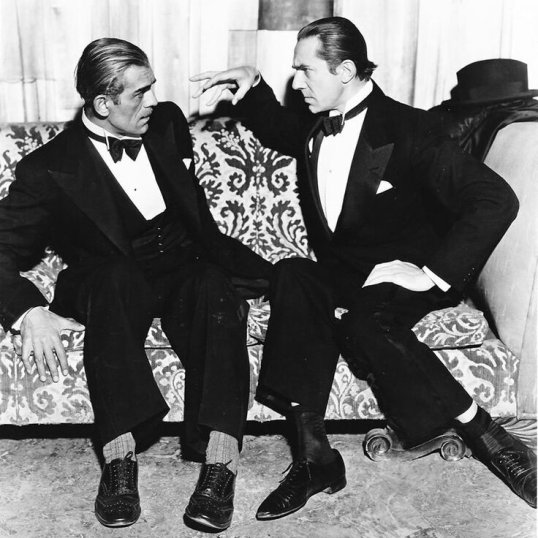
Boris and Bela
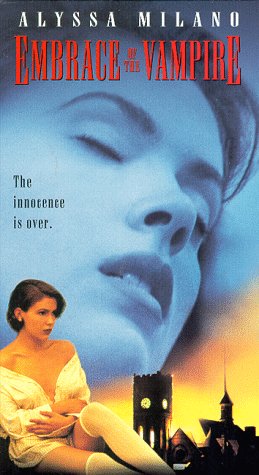
The TSL’s Horror Grindhouse: Embrace of the Vampire (dir by Anne Goursaud)


In this incredibly silly film from 1995, Martin Kemp plays The Vampire.  He doesn’t get a name but he does get a backstory.  Back when he was mortal, the Vampire pursued a secret and forbidden affair with a princess.  One day, after making love, the man who would became the Vampire was laying down next to a stream when he was approached by three naked women who proceeded to bite his neck and vampirize him.

Centuries later, the Vampire is sickly and approaching the end of his existence.  He only has three days to convince the reincarnation of his former lover to allow him to drink her blood so that he can continue to exist.  And apparently it won’t work unless she’s a virgin and unless she rejects all others and loves only him.  That sounds like a lot of rules to me and, to be honest, most of them seem to be kind of arbitrary.  Not only does The Vampire have to find the reincarnation of the Princess but he has to find her before she loses her virginity or otherwise, what?  She’ll cease to be the reincarnation?  Her love will somehow be devalued?  Her blood will no longer be worth drinking?  If this vampire has had to spend centuries only drinking blood from virgins who were in love with him, no wonder he looks so sickly.  I really think that maybe the other vampires were playing a practical joke when they explained the rules to him.  Hazing the new guy, it has consequences!

Anyway, the princess has been reincarnated as Charlotte (a young Alyssa Milano).  Fortunately, for the Vampire, Charlotte was raised in a convent and, even though she is now a college student, she’s still a virgin who blushes when she even hears the word sex.  Unfortunately, Charlotte has a boyfriend named Chris (Harrison Pruett) and she’s thinking about losing her virginity if she can convince herself that she loves Chris more than any other person that she will ever possibly meet.  So, the Vampire not only has to convince Charlotte to fall in love with him but he also has to make sure that she doesn’t have sex beforehand.  It’s going to be difficult because everyone on campus is determined to get Charlotte laid.  This has all the makings of Italian sex comedy but Embrace of the Vampire instead takes its plot very seriously.

The Vampire starts to appear in Charlotte’s dreams.  He gives her an ankh to replace the cross that Chris gave her.  Because the Ankh is a symbol of desire, just wearing it makes Charlotte more sexually aggressive and soon, she’s wearing short skirts, low-cut tops, and white stockings.  She’s also making out with Sarah (Charlotte Lewis), the photographer who lives in the dorm room next to hers.  (As played by Charlotte Lewis, Sarah is actually an interesting character and it’s a shame that the film pretty much just uses her for titillation.)  But since the Vampire’s whole thing is keeping Charlotte from losing her virginity, why would he give her something that would make her more open to sexual experiences?  Again, it’s hard not to think that the Vampire is just the victim of an elaborate practical joke.

As I said at the start of the review, Embrace of the Vampire is incredibly silly.  It’s also a film that seems to be a bit popular with viewers of a certain age.  I’m assuming that’s because of the frequent Alyssa Milano nudity and that one scene with Charlotte Lewis.  For the most part, Alyssa Milano gives a bland performance in Embrace of the Vampire.  It’s not so much that she’s bad as everything about her performance is on the surface.  One gets the feeling that there’s really not much going on with Charlotte’s inner life, both before and after she starts dreaming about The Vampire.  As The Vampire, Martin Kemp appears to be absolutely miserable.  He comes across as if he’d rather be anywhere than appearing in this movie.

That said, the film’s director got her start working with Francis Ford Coppola and she has a good eye for gothic scenery and atmosphere.  A scene where Charlotte imagines a frat party turning into a Hellish orgy is effectively done.  Jennifer Tilly has a small role as a vampire and she has said that Quentin Tarantino approached her at the Oscars to tell her that he enjoyed the movie.  It’s a silly movie (yes, third time I’ve used that specific term and that should tell you just how silly it is) but, for better or worse, it epitomizes an era.

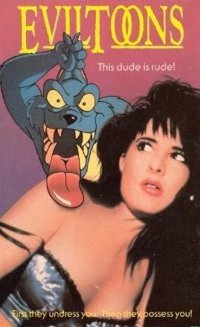
Evil Toons (1992, directed by Fred Olen Ray)


Evil Toons opens, disturbingly enough, with David Carradine hanging himself.  Carradine is playing Gideon Fisk, the owner of both a run-down mansion and an ancient book that appears to be bound in human skin.  Though Fisk kills himself, he still appears several years later so that he can deliver a copy of the book to the four girls who have been hired to clean his home.

The girls are all students at Miskatonic University, a name that will be familiar to any fans of the work of H.P. Lovecraft.  (Those same fans will also have figured out that the book is the Necronomicon.)  Jan (Barbara Dare) and Terry (Suzanne Auger) want to get the house cleaned so they can get paid.  Roxanne (Madison Stone) wants to party overnight with her idiot boyfriend, Biff (Don Dowe).  Shy and intellectual Megan (Monique Gabrielle) is mostly just worried about surviving until morning.  After the girls open the book, they get Megan to translate the Latin writing within.  This brings to life a cartoon monster, one who looks much like a combination of the Big Bad Wolf and the Tasmanian Devil but which is far more bloodthirsty and horny than either of them.  After killing one of the girls and possessing her body, the Monster stalks the other inhabitants of the house.

Not meant to be taken seriously in any way shape or form, Evil Toons was made by Fred Olen Ray for $150,000.  That probably explains why, despite the title, there’s only one evil toon and it only gets a minute and a half of screen time before possessing its first victim.  Most of the dialogue is deliberately obtuse, with none of the girls showing any alarm upon realizing that forcing Megan to translate the book has condemned everyone to an eternity of torment.  The good thing is that there are enough funny lines to hold your interest and the cast is game (and frequently undressed, which is probably why this film still has a cult following).  Monique Gabrielle proves that she can scream with the best of them while Madison Stone is genuinely funny as Roxanne, delivering her lines with a playful quirkiness and even indulging in a little physical comedy with a hard-to-open wine bottle.

Fans of B-horror will be happy to see Dick Miller in the role of Burt, the man who hires the girls to clean up the house.  After leaving the girls at the house, Burt goes home and watches Bucket of Blood (starring Dick Miller, of course) on television.  “How come that guy never won an Academy Award?” Burt asks.  Burt’s wife is played by scream queen Michelle Bauer, who gets a guest starring credit for a two-minute role that consists of her reminding Burt what Friday night is supposed to be for.

Evil Toons is undeniably dumb but I laughed more than I was expecting too.  I think it helps that the movie confirmed what anyone who grew up watching Saturday morning cartoons has always suspected.  Most cartoon characters aren’t that innocent, especially the ones that are drawn in the margins of the Necronomicon.

Game Review: Deep in The Spooky, Scary Woods (2022, Healy)


The full title of this piece of Interactive Fiction is: I Was Too Lazy to Get Started on My EctoComp Entry at a Reasonable Time But I Still Wanted to Enter So I Crapped Out This Masterpiece Or: Deep in the Spooky, Scary Woods.

Hey, don’t be so hard on yourself!  It’s better than anything that I’ve come up with recently.  In this Choose Your Own Adventure style game, you’re in the woods, the spooky, scary woods!  You can cry if you want.  You can build a fire.  You can try to text a friend.  But what you have to be prepared for is that eventually, a witch is going to want to join you and you might very well find your way to Dracula’s castle.  How will you handle it?  How will you interact with the supernatural?  What choices will you make?  Will you get the good or the bad ending?  Play to find out!

Even thought the author states that this game was just something that was put together in an hour, I always enjoy games like Deep In The Spooky Scary Woods.  That’s because I’ve played enough pompous and self-important Interactive Fiction games that I can not help but enjoy one where the whole point is to get the player to laugh and poke fun at the whole genre.  Sometimes, you’re in the mood for Interactive Fiction that is big and complex and full of subtext.  Sometimes, you just want to play something that’s fun, that’ll keep you amused, and which will take less than 15 minutes to complete.

Play Deep In The Spooky Scary Woods!

Horror Scenes That I Love: Edward Van Sloan Introduces Frankenstein


For our first Scene that I love for this year’s Horrorthon, I’m sharing the opening of the 1931 classic, Frankenstein.  The scene below features neither Colin Clive or Boris Karloff.  Instead, Edward Van Sloan breaks the fourth wall and, in his humorously avuncular way, lets the audience know what’s in store for them.

Today, of course, we all know the story of Frankenstein and his monster.  However, imagine how audiences in 1931, many of whom probably knew nothing about the story they were about to watch, must have felt when Edward Van Sloan specifically took a minute to warn them that they were about to see something terrifying.  You have to remember that Van Sloan was talking to the first generation of regular filmgoers and he was introducing them to one of the first true horror films of the sound era.  Today, it’s easy to smile when Van Sloan says, “You can’t say we didn’t warn you.”  In 1931, I imagine it probably sounded more like a dare.  Van Sloan was asking, “Do you have the courage to stay in theater?”  It’s kind of charming, isn’t it?

Edward Van Sloan was a bit of fixture when it came to the early Universal horror films.  Not only did he play Henry Frankenstein’s mentor but, in the same year, he played Prof. Van Helsing in Dracula.  He also had a key supporting role in The Mummy.  When it came to explaining the supernatural and the undead, no one else did it with quite the class of Edward Van Sloan.

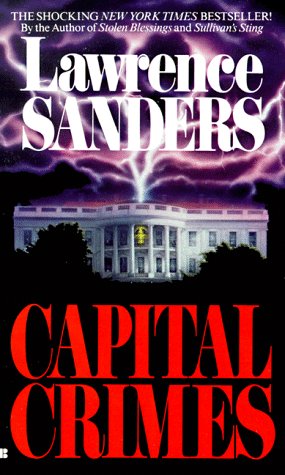
Novel Review: Capital Crimes by Lawrence Sanders


Tell me if the plot of the 1990 novel, Capital Crimes, sounds familiar.

The President of the United States is struggling.  The economy is bad.  The U.S. is long ground internationally.  The President’s approval ratings are plummeting.  The members of his own party are searching for a way to get rid of him.  However, the President himself is more concerned about the health of his son, a hemophiliac who seems destined to suffer an early death if he’s not somehow cured of his condition.

Everything looks hopeless until the President meets Brother Kristos.  Brother Kristos is a wild holy man from the backwoods, a sensualist who drinks vodka, believes that the best way to worship is to have an orgy, and who claims that he has a direct line to God and that he can heal the President’s son.  Kristos not only makes the claim but he backs it up by actually doing it.  The President and his wife soon become dependent on the mysterious Kristos.  Kristos goes from being an obscure cult leader to one of the most powerful men in the country but is he a servant of God or the Devil?  While Kristos sets about seducing all of the women in Washington, others try to investigate his background.  Is Kristos a charlatan or does he truly have magical powers?

If this sounds familiar, that’s probably because you’re familiar with Rasputin, the Russian monk who became a shadowy and much-feared influence on the family of Nicholas II, the final Tsar of Russia.  In fact, Capital Crimes so closely follows the story of Rasputin that you kind of have to wonder why no one in the book ever seems to pick up on the connection.  Russia exists as a rival to the United States in Capital Crimes and, as such, one assumes that Rasputin must have existed as well.  And yet no one in the book ever says, “Hey, remember when this happened before and it didn’t end well?  Maybe we shouldn’t invite the unwashed holy man to live in the White House?”

Capital Crimes is one of the books that I found in my aunt’s paperback collection.  I read it a few weeks ago and, beyond the fact that it was so obviously based on the story of Rasputin, there wasn’t anything particularly memorable about it.  The reader is continuously told that Brother Kristos is incredibly charismatic and that his piercing stare can hypnotize almost anyone but telling and showing are two different things and Kristos is such a ludicrous figure that it’s hard to take him seriously.  (Then again, I imagine many initially said the same thing about Rasputin.)  The book flirts with suggesting that Kristos actually does have supernatural powers but it neve really commits to the idea, which is a shame.  If you’re going to write a book about a Rasputin in the White House, you might as well go all out and fully embrace the supernatural aspect of the story.  Instead, the book gets bogged down in the political machinations of all the people who would like to replace the president.  It’s a bit dull.

The book is credited to Lawrence Sanders, who I know wrote quite a few best sellers and who is usually listed among the better thriller writers.  Capital Crimes feels extremely sloppy and derivative so I’m going to assume that it was written strictly for the money.  That’s not necessarily a criticism, of course.  Money’s a good thing!  But so is an interesting plot.

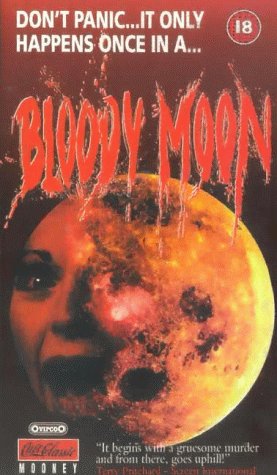
International Horror Film Review: Bloody Moon (dir by Jesus Franco)


A 1981 West German/Spanish co-production, Bloody Moon open with a disfigured man named Miguel (Alexander Waechter) putting on a Mickey Mouse mask and sneaking into a party being held on the campus of a private school that is known as (deep breath) Europe’s International Youth-Club Boarding School of Languages.  It’s a school that is meant for the young, the rich, and the unburdened.  In short, it’s not a place for Miguel at all.

With his face safely hidden behind the smiling image of Disney’s favorite mouse, Miguel meets a young woman who is dancing by herself.  She mistakes him for her boyfriend and heads into a nearby bungalow with him.  They start to make love but — uh oh! — the mask falls off!  The woman screams at the sight of Miguel’s scarred face.  Miguel grabs a pair of scissors and stabs her to death while Mickey Mouse’s smiling face smiles on the floor.  (One can only imagine how Disney reacted to this film.)

A few years later, Miguel is being released from a mental hospital.  He’s released into the custody of his sister, Manuela (Nadja Gerganoff).  Miguel’s doctor (played by the film’s director, Jesus “Jess” Franco) says that Miguel should be fine as long as he’s not around anything that reminds him of the incident.  Manuela says that she’ll look after him and then promptly takes him back to the school where he committed the murder.  What part of not reminding him did she fail to understand?

Manuela does actually have an excuse for bringing Miguel to the school with her, though.  She and her aunt, Countess Maria (Maria Rubio), own the school.  Countess Maria is an angry, wheelchair-bound woman who is convinced that Manuela wants to kill her so that she can take over the school and it does seem that Manuela does have some hostility towards her aunt.  Of course, another reason for bringing Miguel back to the school to live with her is that he and Manuela have an incestuous relationship …. or, at least, they did.  Now that Manuela refuses to sleep him, Miguel is reduced to lurking around campus and staring at all the students while they sunbathe topless at the pool.  While Manuela stands naked in her room and stares at the moon (the bloody moon?), Miguel is hunched down in the shrubbery and peeping through windows.

Among the students is Angela (Olivia Pascal).  Angela is upset because she discovered a dead body but no one’s willing to believe her because she also enjoys reading mystery novels.  Angela knows that someone is committing murders on campus but is it Miguel or it is Professor Alvaro (Christoph Moosbrugger) or could it even be the enigmatic Bueno (Otto Retzer), a bald guy who seems to randomly pop up around campus?  Can Angela convince her remarkably stupid classmates that there’s a murderer on campus before it’s too late?

Bloody Moon was one of the many films directed by the Spanish auteur and former Orson Welles collaborator, Jesus Franco.  In a career that lasted over 60 years, Franco directed at least 173 feature films.  (It’s felt that he actually directed quite a bit more, usually under a pseudonym.  Franco, himself, claimed that he didn’t really remember how many films he had directed.)  As a director, Franco is remembered for his low budgets, his unapologetic embrace of the sordid, his rather casual attitude towards maintaining continuity from one scene to another, and for occasionally framing an interesting shot or two.  By his own admission, Bloody Moon was not a personal project for Franco.  It’s something that he did for the money, as a director-for-hire.  However, Bloody Moon is unmistakably a Franco film.  The budget is low.  The subject matter is often so sordid that it borders on parody.  As far as continuity goes, Angela goes from wearing a nightshirt when she discovers a dead body inside her bungalow to wearing a colorful sweater when she runs outside in a panic.  (I guess she could have stopped to change clothes with a dead body on the bed and a killer lurking somewhere in the bungalow but I doubt it.  When there’s a dead body on your bed, modesty should be the least of your concerns.)  And yet, as silly as it all is, there are moments when Bloody Moon does achieve a certain dream-like intensity.  The mix of badly dubbed performers, sudden jump cuts, bloody violence, and the total lack of narrative logic makes Bloody Moon feel a bit like a filmed nightmare.  It works despite itself.

Bloody Moon is one of the films that was, for a while, banned in the UK due to its violence and bloodshed.  And indeed, there is a lot of blood and the violence is a bit more graphic than what one might expect to find in the American slasher films that Bloody Moon was obviously meant to capitalize upon.  This film is notable for just how cruel the killer is.  Not even Michael Myers or Jason Voorhees resorted to using a giant radial saw.  That said, this is one of those films that has a reputation for being bloodier than it actually is.  The majority of the film is taken up with scenes of people wandering around campus, either searching for their friends or stalking a potential victim.  Personally, I felt the nonstop searching scenes added to the film’s dreamlike feel but I imagine those who only watch films like this for the kills will find it all to be a bit slow.

Bloody Moon was clearly made to capitalize on the success of American slasher films like Halloween and Friday the 13th.  That said, Bloody Moon has more in common with the Italian giallo genre, right down to the whodunit nature of the plot, the ludicrously sleazy motives of the killer, and the total lack of intentional comic relief.  Like so many giallo films, Bloody Moon takes place in a world where everyone’s either a victim or a killer and no one’s particularly likable.  It’s not one of Franco’s personal films but there’s still enough of his signature style to appeal to his fans.  As with most of Franco’s film, it will be best appreciated by those who like a little ennui mixed with their horror.

8 Shots From 8 Horror Films: The 1930s


4 Or More Shots From 4 Or More Films is just what it says it is, 4 shots from 4 of our favorite films. As opposed to the reviews and recaps that we usually post, 4 Shots From 4 Films lets the visuals do the talking!

This October, I’m going to be doing something a little bit different with my contribution to 4 (or more) Shots From 4 (or more) Films.  I’m going to be taking a little chronological tour of the history of horror cinema, moving from decade to decade.

Today, we take a look at the 1930s.

8 Shots From 8 Horror Films

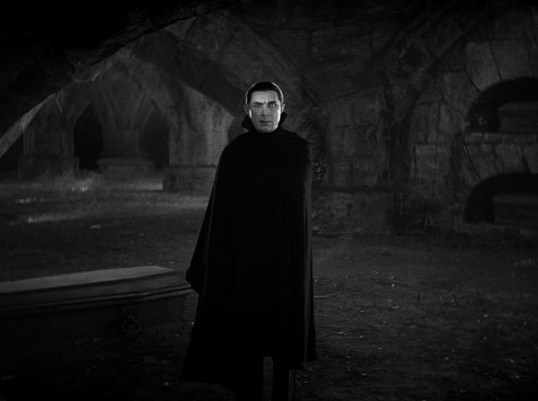
Dracula (1931, starring Bela Lugosi as the Count, Dir by Tod Browning, DP: Karl Freund)

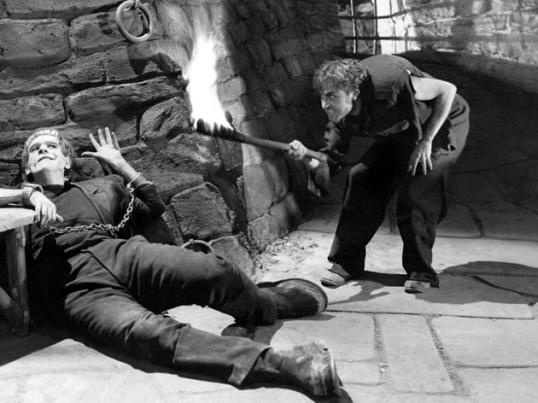
Frankenstein (1931, dir by James Whale, DP: Arthur Edeson)

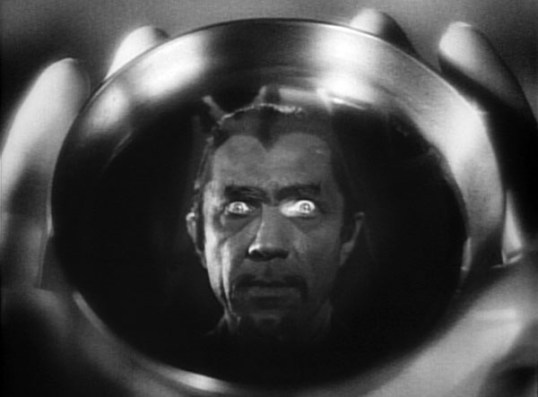
White Zombie (1932, directed by Vincent Halperin, DP: Arthur Martinelli)

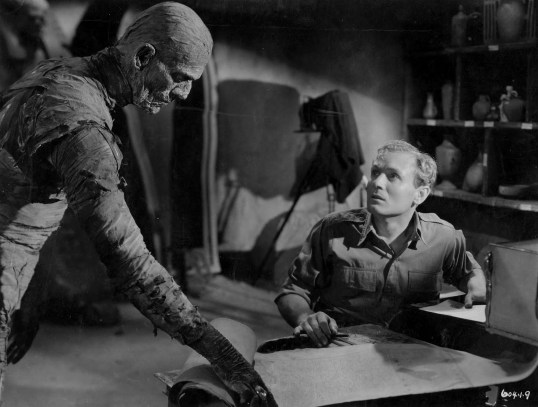
The Mummy (1932, directed by Karl Freund, DP: Charles Stumar)

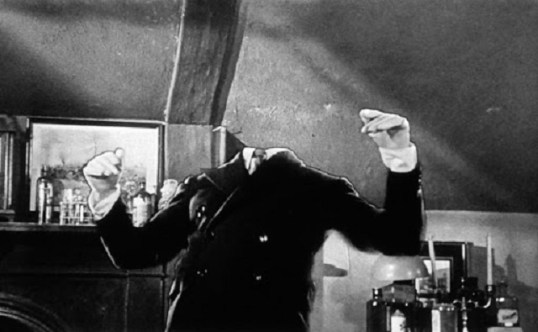
The Invisible Man (1933, dir by James Whale, DP: Arthur Edeson)

Bride of Frankenstein (1935, dir James Whale, DP: John J. Mescall)

Mark of the Vampire (1935, dir by Tod Browning, DP: James Wong Howe)

Son of Frankenstein (1939, directed by Rowland V. Lee, DP: George Robinson)

The Creepy Covers of Tales of Magic and Mystery


Tales of Magic and Mystery  promised readers a look into the world of the unknown but, despite that, it had a short print run.  The first issue came out in December of 1927.  Four issues later,  the series was canceled in 1928.  The series only ran for five issues but those five issues feature five of the best and most surreal covers that I’ve ever seen.  Unfortunately, the identity of the artist responsible for these covers is not known but they certainly make an impression.

Here, to help kick off October and Through the Shattered Lens’s annual celebration of all thing horror, are the five covers of Tales of Magic and Mystery!

December 1927

January 1928

February, 1928

March 1928

April 1928