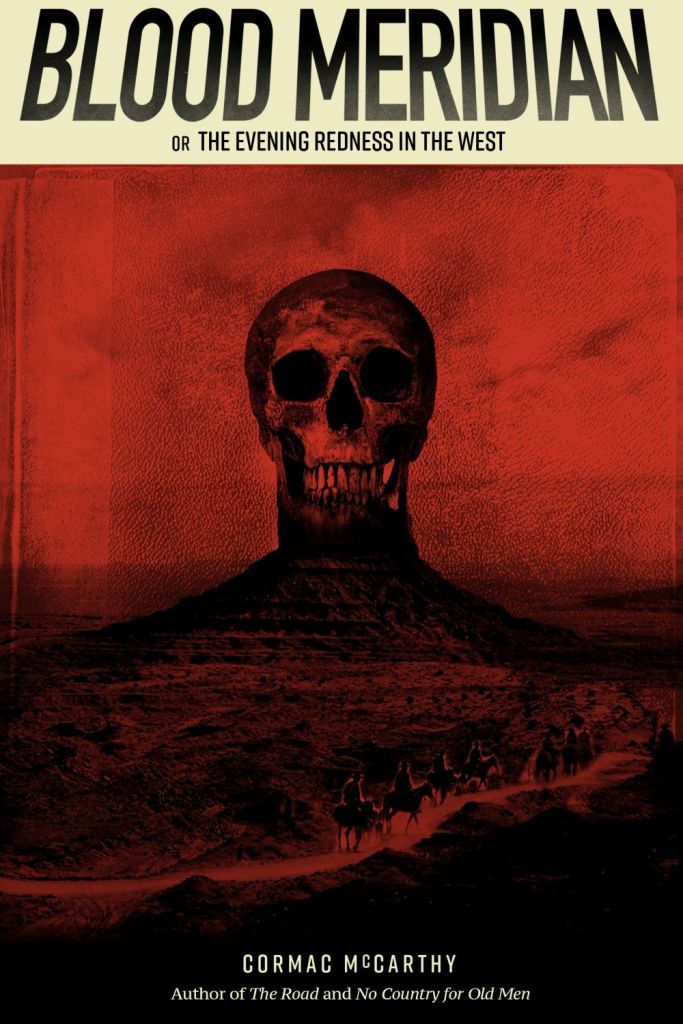
Horror Book Review: Blood Meridian (by Cormac McCarthy)


“Whatever in creation exists without my knowledge exists without my consent.” — Judge Holden

Blood Meridian initially appears to be a story set in the violent American West, but beneath the surface, it presents a profound exploration of evil—a world where history and cosmic darkness merge in a landscape drenched with blood and despair.

Cormac McCarthy’s novel defies easy classification. It follows the Kid, a teenage drifter who joins the ruthless Glanton gang of scalp hunters during the lawless 19th-century borderlands. Yet this story is not about heroism or conquest; rather, it reveals a brutal, merciless world governed by cruelty and cosmic malevolence.

No traditional heroes emerge here. Every character either inflicts horror or suffers it, trapped in an endless cycle of violence. The Kid moves passively through this brutal landscape, lacking the conviction or agency typical of Western protagonists. This moral ambiguity immerses readers in a narrative saturated by horror at every turn.

Violence permeates the novel—not merely through vivid depictions of scalping and massacres but as a fundamental force governing existence itself. Violence shapes life’s fragile and transient nature. Spilled blood binds the characters and marks a universe where death and cruelty endure indefinitely. The visceral portrayal underscores violence as a relentless ritual as pervasive and elemental as the landscape itself.

At the violent core stands Judge Holden—monstrous and compelling. His towering, hairless, albino form immediately signals his unnaturalness: massive, lacking body hair, and displaying a blank, eerily calm expression that can swiftly shift into chilling ferocity. This physical otherness aligns him with mythic terrors that transcend humanity.

Holden’s vast intellect spans languages, science, and philosophy, making him appear nearly godlike. Yet his worldview exalts war and violence as the universe’s ultimate realities. He declares, “war is god,” and insists everything exists only under his knowledge and consent. He casts violence as the ultimate power and true order, positioning himself both as agent and embodiment of these forces.

He bears striking resemblance to the archons of Gnostic thought—malevolent cosmic rulers who imprison humanity in suffering and ignorance. Holden’s bald, pale form and inscrutable nature make him a living symbol of the universe’s cold indifference to human pain and violence. He embodies cosmic cruelty and indifferent fate, physically manifesting the harsh, uncaring forces shaping mankind’s brutal destiny.

Holden shrouds the narrative with cosmic dread. His mysterious origins, command over knowledge and power, and seeming invincibility elevate him beyond mere man. He becomes an embodiment of eternal evil and incomprehensible cosmic forces that dominate the novel’s bleak universe.

The desert landscape intensifies this cosmic horror. It is not mere backdrop but a symbol of a universe indifferent to life and moral distinctions. Traditional binaries of good and evil dissolve into endless cycles of destruction. Mercy and justice vanish, replaced by an uncaring void that swallows hope and meaning. The environment thus anchors the story’s existential dread.

The Kid’s journey reveals the story’s psychological core—his slow destruction of innocence. Initially barely aware of right and wrong, he sinks deeper into the Gang’s savagery. The line between victim and perpetrator blurs until innocence disappears. This loss exposes a deeper horror: the self’s annihilation through human cruelty.

McCarthy’s prose reflects this mythic and cosmic scale. His dense, biblical cadence challenges readers but deepens the story’s epic tone. Sparse punctuation and sweeping descriptions evoke a vast, harsh world that feels inevitable and overwhelming. This rigorous style immerses readers in a mood of doom and fatalism, amplifying the narrative’s grim vision.

Philosophically, Blood Meridian meditates on timeless cosmic evil. Holden transcends mere antagonist status to become a metaphysical force of destruction, both ancient and eternal. The novel’s final scenes suggest this cosmic power will forever govern human suffering and violence.

The novel echoes ancient philosophies that portray evil as pervasive and intrinsic. Violence weaves into existence’s fabric, turning the universe into a dark battleground where malevolent forces prevail unchecked. The text confronts complex themes of fate, power, and the buried truths beneath history’s surface.

Seen holistically, Blood Meridian transcends its Western roots to emerge as a raw chronicle of violence, evil, and cosmic dread. It offers no solace or redemption—only exposure to a primal darkness where humanity’s basest impulses attain mythic significance.

This potent combination of brutal historical insight, existential horror, and mythic storytelling delivers an intense, unforgettable literary journey. The novel stands as both a frontier saga and profound philosophical inquiry into evil itself—forcing confrontation with humanity’s deepest darkness and the indifferent vastness of the cosmos.

By articulating these themes through complex narrative, striking symbolism, and demanding prose, McCarthy not only reconstructs the American West but also presents a timeless meditation on human nature and the universe—a work that challenges readers intellectually and viscerally in equal measure.

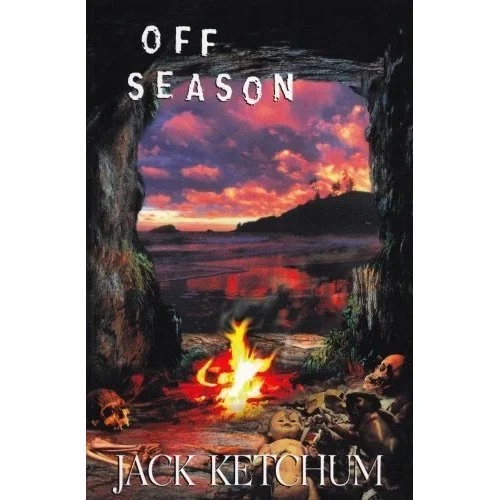
Horror Book Review: Off Season (by Jack Ketchum)


“Man is the cruelest animal.” — Friedrich Nietzsche

Jack Ketchum’s Off Season wasn’t my first venture into extreme horror, but it was an important stop along the way in my continuing exploration of splatterpunk—those raw, confrontational horror stories that don’t flinch from showing you every grisly detail. I’d already spent time in the grand guignol worlds of Edward Lee, Richard Laymon, Poppy Z. Brite, and Brian Keene, and I thought I’d built up a decent resistance to the genre’s more intense offerings. Then I opened Off Season, and within a few chapters, I realized this was going to hit differently. It’s less a fun horror romp and more of an ordeal—one that leaves you feeling like you’ve just crawled out the other side of something vicious, primal, and deeply unsettling.

Ketchum builds his novel around the infamous legend of the Sawney Beane clan—a family of cannibals who, according to folklore, hunted travelers along the Scottish coast in the 15th century. He strips that story out of its historical setting and drops it into the rocky, isolated coast of Maine, replacing the medieval backdrop with an environment that still feels dangerous and untamed. The setup is simple enough: a group of friends from New York rent a secluded cabin, expecting a peaceful getaway, and instead find themselves hunted by a clan that’s every bit as savage as their legendary counterparts. There’s a vibe here that’s partly Romero zombie survival horror, partly John Carpenter claustrophobic menace, but the big difference is that these villains aren’t supernatural—they’re unsettlingly human, real in their hunger and their primal needs. They do what they do because it sustains them, and somehow that makes them worse than any ghost or monster.

While Wes Craven’s The Hills Have Eyes mined similar ground with a more stylized, exploitation-film aesthetic, Ketchum’s take leans hard into plausibility. His cannibal clan feels like a natural, if disturbing, product of generations of isolation and inbreeding, kept alive through hunting, killing, and eating whoever wanders too close. That realism is what makes the violence hit so hard. Ketchum describes their assaults on Carla, her sister Marjie, and their companions with an unapologetically matter-of-fact tone—no flourish, no dramatics. The worst moments aren’t always the attacks themselves, but what he shows inside the clan’s cave home. Kids scamper across jagged stone like feral animals, gnawing meat straight off the bone. Adults pair up in incestuous “unions” meant only to keep the bloodline going. It’s both grotesque and disturbingly believable.

That refusal to hold anything back is part of why Off Season has been linked to splatterpunk, the horror subgenre that gained fame (and infamy) for pushing gore, moral transgression, and human depravity to the forefront. Some critics wrote it off as “horror pornography,” too focused on shock value, but fans saw it differently. In Ketchum’s hands, it’s not about gore for gore’s sake—it’s about stripping away all the comfort zones and exposing something ugly yet honest. When you finish one of these novels, you’re not left thinking “That would never happen.” You’re left thinking “That could happen. Under the wrong circumstances, that would happen.”

One of Ketchum’s storytelling choices is speed. The pacing is fast—there’s just enough time to understand who the characters are before the horror crashes down. That keeps tension high but also means the victims aren’t deeply fleshed out. They’re more representative than personal, standing in for civilization as a whole rather than pulling us into their emotional worlds. You don’t get many chances to connect with them deeply. Instead, you watch them transform from vacationers into survivors, and in some cases, those survivors become something just as savage as the people hunting them.

That shift happens in the second half, when the remaining characters fight back. The counterattack is satisfying in its own crude way, but Ketchum never dresses it up as righteous victory. The brutality of revenge feels just as ugly and unrelenting as the initial assault. By the end, what’s been preserved isn’t humanity—it’s just the body count in favor of the people we started with. The survivors get out, but they’re not unchanged. It’s not the kind of ending that makes you breathe a sigh of relief. More like an exhale that admits, “We made it, but look at what it cost.”

When Off Season first came out in 1980, it caused an immediate stir. Its content was so graphic that some bookstores wouldn’t carry it, and an edited version had to be released to calm the outrage. Years later, Ketchum went back and put out the uncut edition, restoring everything that had been stripped away. Reading that version today is reading the novel as he intended—nothing softened, nothing taken off the table. And in the world of extreme horror, that kind of authenticity is prized. It’s part of what’s given Off Season its staying power; it’s not just a book, it’s a dare.


Underneath all the blood and carnage is a question that sticks with you: If people were cut off from society long enough—if they lost the rules, the moral codes, the comforts—how far would they regress? Ketchum’s cannibals don’t feel like the spawn of evil forces. They feel like us, just pushed far enough in the wrong direction. Their behavior doesn’t come from cruelty for cruelty’s sake. It comes from basic survival drives—hunger, reproduction, and dominance. That’s why they’re such unnerving villains. They’re an evolutionary throwback you can imagine existing somewhere out there, beyond the maps, waiting for someone else to wander too close.


Finishing Off Season doesn’t give you that neat sense of closure other horror stories sometimes aim for. It doesn’t even give you release. It leaves you worn down, a little grimy, and maybe even unsettled in ways you didn’t expect. That’s the difference between horror built on supernatural scares and horror built on human brutality. The latter lingers; it’s harder to shake because you can’t make it go away just by telling yourself, “It’s only fiction.” With Ketchum, you’re never entirely sure.


As far as splatterpunk milestones go, Off Season earns its reputation. It’s both a challenge and a gut-punch—the sort of book that reminds you horror can still be dangerous. It’s not for every reader—if you’re expecting subtle ghost stories or stylish monster tales, you won’t find them here. What you’ll find instead is a grim, fast-paced nightmare about people who’ve let go of everything we’d call human and replaced it with something primal, something real in their hunger and their primal needs. And in the end, that may be the most disturbing thing about them—they’re not from another world. They’re from ours.

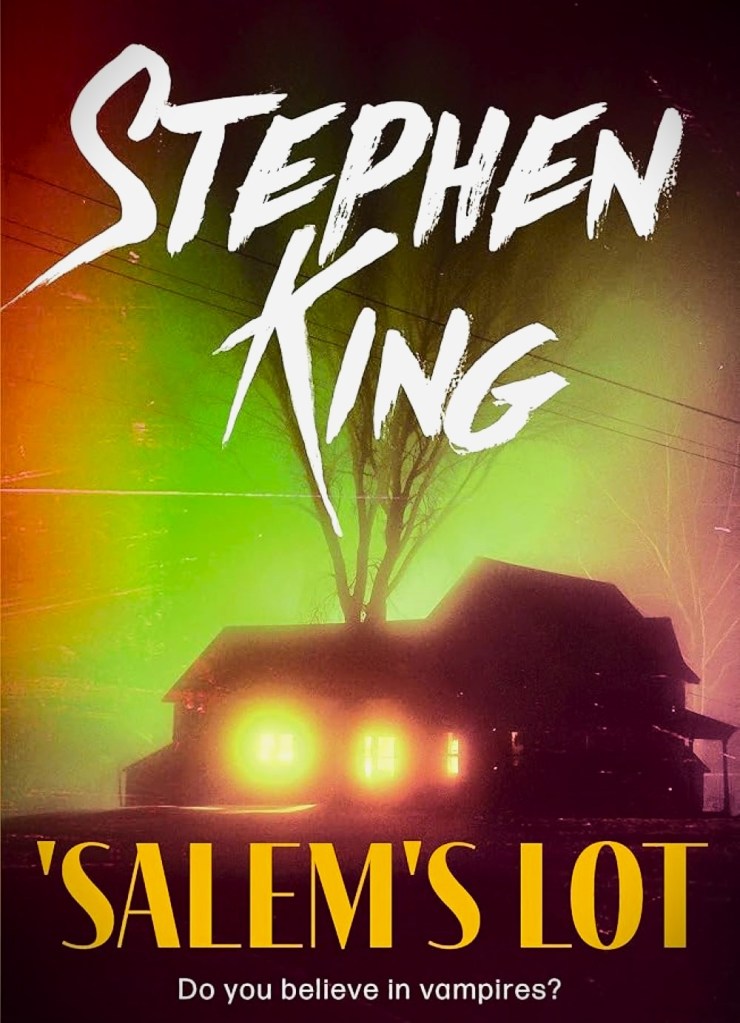
Horror Book Review: ‘Salem’s Lot (by Stephen King)


“Within, walls continued upright, bricks met neatly, floors were firm, and doors were sensibly shut; silence lay steadily against the wood and stone of Hill House, and whatever walked there, walked alone.”
—Shirley Jackson, The Haunting of Hill House

Stephen King’s Salem’s Lot opens with an unsettling and bold narrative choice. Instead of introducing the main characters or setting a conventional stage, the novel begins by showing two nameless figures—an older man and a younger companion, burdened by events already passed. These itinerants are fleeing a terrible evil, seeking refuge in a small Mexican village, suffused with mystery and dread. This brief but cryptic prologue hooks the reader immediately with a pervasive sense of unease and unanswered questions: who are these men, and what horror haunts them so far from home?

This unsettling beginning is not only risky but masterful. King, in just his second published novel, chooses to forgo straightforward exposition and instead promises that the narrative will move backward, retracing the dark events that led to this moment of flight and loss. The prologue casts a shadow into the past, preparing readers for a story where the darkness is already present and will only deepen.

Rewinding, the narrative places us in the small New England town of Jerusalem’s Lot—known to its inhabitants simply as “The Lot”—a quintessential small town in 1970s Maine. Here, Ben Mears, a novelist haunted by childhood trauma centered on the forbidding Marsten House, returns home with the intention of writing about the old mansion. The Marsten House is not just a setting; it is a malignant presence perched over the town like an ominous sentinel. Ben’s youth intrudes everywhere in his memory of that house—a place where something unknowable once touched him—and now, as an adult, he confronts both that past and the house again, its shadow casting unease over the town.

Ben isn’t the only arrival. Richard Straker sets up an antique shop, accompanied by his rarely seen partner, Kurt Barlow—an inscrutable figure whose very mention deepens the novel’s pervasive tension. King reveals Barlow’s presence slowly and indirectly, heightening the atmosphere without immediate confrontation.

King excels at immersing readers in the rhythms of small-town life. Through detailed observation of everyday routines, gossip, and personalities, he crafts a believable, textured community. Each townsperson—whether skeptical official, gossip-prone neighbor, child, or elder—is vividly realized, not as a simple archetype but as a living, breathing individual. Yet beneath this surface of normalcy lurks a pervasive darkness: secrets, resentments, and moral frailties accumulate like hidden mildew in the town’s corners.

In this, Salem’s Lot evokes the spirit of Peyton Place, the classic fictional small town where scandal and hypocrisy fester beneath neighborly facades. King’s Jerusalem’s Lot feels like a much darker cousin—a town where those faults and hidden sins once fodder for gossip become the very soil from which real, supernatural evil springs. While Peyton Place explored human failings within social dynamics, Salem’s Lot reveals how those failings create openings for Kurt Barlow’s vampiric menace. The town’s insularity, mistrust of outsiders, and collective denial become liabilities dooming it—not just morally, but existentially.

At the heart of this encroaching nightmare stands the Marsten House, a building elevated beyond mere backdrop into a living entity. Like Shirley Jackson’s Hill House, Richard Matheson’s Belasco House in Hell House, and King’s own later Overlook Hotel, the Marsten House is steeped in decades of violence and evil. Its walls seem to soak up past horrors; its windows serve as more than architectural features—they are eyes into the house’s dark soul. This physical presence is sinister and predatory, complicit in the nightmarish events it enables. To enter the house is to step into something corrupt and breathing, an organism as alive and malign as the vampire it conceals.

What makes Salem’s Lot especially powerful is how King integrates the supernatural into the texture of daily life. The fantastical elements do not feel imposed or alien but grow organically from the social dynamics, habits, and vulnerabilities of this small town. The horror is inevitable precisely because it grows from recognizable human weaknesses and communal blind spots. This fluid blending invites readers to experience terror as an intimate shattering of the ordinary, a disruption of the familiar.

Relationships anchor the emotional core of the narrative. Ben’s romance with Susan Norton, the steady wisdom of Matt Burke, the youthful courage of Mark Petrie—their humanity keeps the terror grounded and poignant. As vampirism spreads, these bonds are tested and shattered. Community, which once defined the town’s identity, fractures under suspicion and fear. Friends become threats; homes become prisons.

The looming Marsten House is a perfect emblem of this dual threat: a predator perched within the community itself. As Barlow turns neighbors into monsters, the house’s silent complicity looms ever larger. It is as much a character as any human, a sentinel feeding on the decay of place and spirit alike.

As the novel hurtles toward its climax, King heightens the tension with vivid, claustrophobic scenes inside the haunted mansion. The house’s corridors and rooms twist into traps, its atmosphere suffocating and oppressive. King’s mastery of sensory detail brings a visceral dimension to the horror, blending psychological terror with physical menace.

The conclusion returns to the somber tone of the prologue. Although some survive, the town is hollowed out—a ghostly husk abandoned to darkness. Evil is not eradicated but waits patiently, ready to thread its way back through the cracks. The cycle of horror, loss, and exile continues.

Stephen King’s unique strength in Salem’s Lot lies not only in his richly developed characters and finely drawn community but in how seamlessly he introduces supernatural horror into what reads like a real-time study of small-town life. The fantastical elements grow naturally from the social fabric, making the terror feel inevitable rather than contrived. This synthesis of realism and fantasy deepens the novel’s power.

King’s portrayal of Jerusalem’s Lot as a place rotting from within yet clinging to its veneer of normalcy offers a chilling echo of Peyton Place. But while Metalious’s town suffocated under scandal, Salem’s Lot is consumed by predation—the vampire feasting not only on blood but on the fractures of belonging and trust. It is both eerily familiar and profoundly alien: a place where monsters live not just in shadows, but in whispered suspicions and buried sins.

Through this blend of gothic haunted-house traditions, social critique, and psychological realism, Salem’s Lot endures as a masterpiece of horror. The Marsten House is not merely a setting but a sentinel, symbolizing accumulated evil watching over a doomed community. King’s novel terrifies not only with its monsters but with its intimate knowledge of how everyday life can harbor the seeds of nightmare beneath a calm surface.

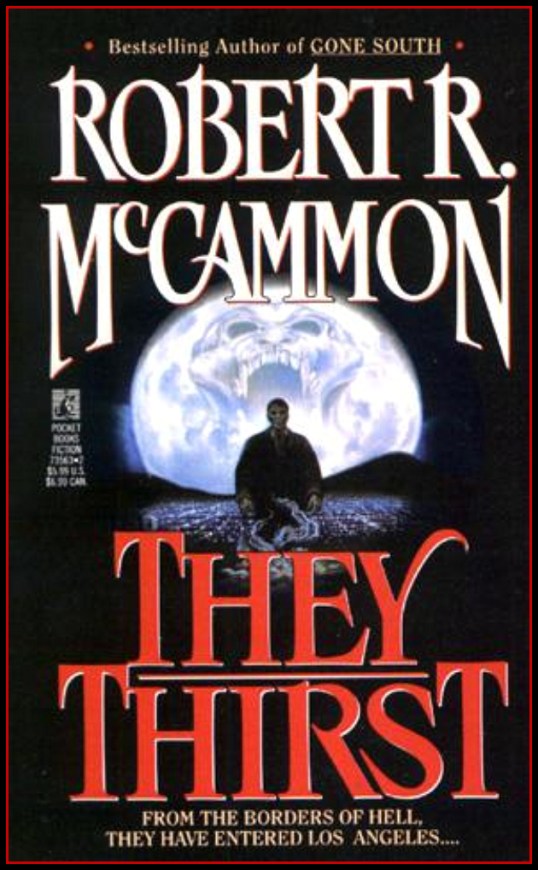
Horror Book Review: They Thirst (by Robert R. McCammon)


Robert McCammon’s 1981 novel They Thirst stands as a significant yet often overlooked contribution to the vampire horror genre and to modern horror literature more broadly. The novel deftly marries Gothic vampire traditions with contemporary anxieties surrounding urban decay, societal collapse, and the limitations of scientific reasoning. McCammon’s approach—transforming vampirism from a supernatural curse into a viral, apocalyptic force—presents a fresh perspective that elevates the narrative beyond conventional monster fiction. The result is a richly detailed and thought-provoking story that explores not just the nature of evil, but humanity’s fragile relationship with belief, knowledge, and survival.

The novel’s geographical and thematic scope is ambitious from the outset. It begins in Eastern Europe, grounding the story firmly in vampire mythology, before making a dramatic shift to Los Angeles, California. This transition is more than a change of location; it serves as a potent narrative device. While Stephen King’s ’Salem’s Lot confines the vampire threat to the insular setting of a small New England town, They Thirst imagines an entire sprawling metropolis consumed from within. Los Angeles—with its sprawling excesses, cultural contrasts, and complicated history—becomes a perfect backdrop for the ancient evil of McCammon’s story. In many ways, the city and the novel’s antagonist are made for one another: Vulkan, a 13th-century Hungarian prince turned vampire, and his undead legion prey on humanity’s vulnerable underbelly, just as Los Angeles has often been depicted as a city feeding off the dreams—and the desperation—of its most naive and downtrodden residents.

This parallel between city and vampire empire is one of the novel’s strongest thematic elements. Both embody forms of false promise: Los Angeles offers fame, wealth, and a kind of modern immortality through celebrity culture, while Vulkan offers literal immortality through vampirism. Yet both promises are double-edged. The city’s glittering surface conceals poverty, violence, and spiritual emptiness; Vulkan’s offer of eternal life masks the curse of undeath and loss of humanity. In that sense, Vulkan and Los Angeles mirror each other, feeding off hope and desperation alike. This symbiotic relationship deepens the horror: it’s not just that vampires invade the city, but that they thrive there because the city, in its essence, is already broken and hungry.

The antagonist, Prince Vulkan, represents the archetypal vampire lord but is also reimagined as a force of apocalyptic renewal. His ambition is to establish a vampiric empire within Los Angeles, turning the city into a dark kingdom under his rule. The irony of this choice is palpable; Los Angeles is a city obsessed with youth, image, and perpetual reinvention, and Vulkan exploits those cultural values by offering something seemingly eternal. His infiltration begins subtly—with grave robberies, disappearances, and escalating violence—until the infestation becomes impossible to ignore. The city’s sprawling nature, its labyrinthine neighborhoods, and its social divides become the perfect terrain for an epidemic to spread unchecked.

McCammon stays true to Bram Stoker’s legacy, incorporating essential vampire lore: vulnerability to sunlight, the necessity of native soil in coffins, and the insatiable craving for blood remain central to the story. But he sets these paranormal elements against a starkly modern world, making their impact feel immediate and unavoidable. One striking subplot involves a wealthy coffin manufacturer whose industrial-scale production unwittingly supports Vulkan’s legion by supplying coffins in large quantities. This detail reinforces the novel’s critique of modernity: progress and capitalism, while often celebrated, can be co-opted by darkness when divorced from awareness and wisdom.

Central to the narrative is the novel’s sharp examination of science and superstition. McCammon critiques modern rationalism’s limits when confronted with the inexplicable. As the vampire epidemic grows, institutions built on evidence and strict rationality—police departments, medical professionals, the press—are shown to be inadequate. Police officers demand forensic proof; scientists dismiss eyewitness accounts as hysteria or fabrication; journalists prioritize sensationalism over truth. This widespread skepticism, while understandable in a culture founded on empiricism, ironically becomes what allows the vampires to thrive. McCammon suggests that humanity’s overreliance on logic and denial is itself a fatal vulnerability. The story implies that what civilization labels “superstition” may hold the very keys to survival against threats outside the realm of science.

This tension—between modern science and the supernatural—gives the novel a distinctively unsettling atmosphere. The city’s collapse is not solely due to the vampires themselves but also because humanity’s intellectual arrogance leaves it vulnerable. The horror grows as reason twists into denial, and disbelief becomes as lethal as the vampires’ bite. McCammon doesn’t dismiss science but critiques a worldview that excludes anything it can’t measure or rationalize. The vampires are, in a way, as much the product of this intellectual blindness as they are physical monsters.

From this thematic core comes one of the novel’s most compelling characters: Detective Andy Palatizin. A man haunted by his past in Hungary, Palatizin has already faced these same creatures in his youth. His instincts and knowledge make him an outlier in the modern police force, where skeptics and bureaucrats dismiss his warnings as superstition. Palatizin’s struggle embodies the tension between ancient wisdom and modern disbelief. Alongside him are characters who represent various facets of Los Angeles life: Wes Richer, a hopeful comedian whose life is upended by the chaos; Solange, his psychic partner who senses the darkness; Tommy Chandler, a youth thrust unwillingly into the fight against evil; and Kobra, a dangerous albino gang leader whose alliance with Vulkan underscores the novel’s bleak view of human nature. Through these characters, McCammon presents a cross-section of humanity reacting to incomprehensible horror in ways both brave and flawed.

The novel’s pacing builds steadily, escalating from subtle unease to urban apocalypse. McCammon’s detailed descriptions of Los Angeles falling apart—freeways clogged with abandoned vehicles, entire neighborhoods burned out, power grids failing—create a vivid portrait of a civilization unraveling. It is in this progression that They Thirst transcends the conventional vampire tale, transforming into a mythic story of apocalypse. The battle grows beyond individual survival into a symbolic contest between light and darkness, belief and denial.

In this way, They Thirst invites comparison not only to ’Salem’s Lot but also to Stephen King’s The Stand. Both novels begin with localized catastrophe but evolve toward apocalyptic narrative arcs that weigh heavily on the theme of good versus evil. Palatizin’s final confrontation with Prince Vulkan mirrors the spiritual and philosophical duels seen in The Stand—a struggle not only between man and monster but between faith and nihilism. This heightened mythic tone gives They Thirst a resonance that extends beyond its genre, engaging with questions about human nature, belief, and the limits of reason.

The novel’s themes also echo the Japanese vampire tale Shiki, which similarly explores a community’s devastating response to supernatural infection and the corrosive effects of denial. Although Shiki is set in a small rural village as opposed to a vast city, both stories articulate the dangers of refusing to confront inconvenient truths, particularly when those truths conflict with scientific rationality or cultural blindness. McCammon’s choice of Los Angeles as a setting magnifies this theme, illustrating how sprawling urban environments—with their anonymity, social stratification, and competing belief systems—become fertile ground for supernatural and existential threats alike.

Moreover, They Thirst represents a crucial moment in Robert McCammon’s development as a writer of expansive horror fiction. The novel’s sophisticated interplay between individual characters and large-scale disaster foreshadows the narrative techniques he would later perfect in Swan Song. If They Thirst can be considered McCammon’s ’Salem’s Lot—an exploration of vampirism growing into an epic struggle—then Swan Song stands as his The Stand—a sweeping post-apocalyptic saga combining horror, hope, and human resilience on a grand scale. Seen in this light, They Thirst is not only a memorable and impactful vampire narrative but also the author’s foundational work in epic horror storytelling.

In sum, They Thirst is a novel of considerable ambition and thematic richness. It successfully unites Gothic vampire mythology with contemporary social concerns, delivering a story that is both thrilling and intellectually engaging. The interplay of science and superstition, the vivid portrayal of Los Angeles as a city on the brink, and the moral complexity of its characters elevate the book beyond simple genre fare. This novel offers a challenging and unforgettable journey — a reminder that some darkness is older than reason and that even the brightest city lights may hide the longest shadows.
Would further assistance be welcome in preparing this review for publication or tailoring it to a specific format or audience?Robert McCammon’s 1981 novel They Thirst stands as a significant yet often overlooked contribution to the vampire horror genre and to modern horror literature more broadly. The novel deftly marries Gothic vampire traditions with contemporary anxieties surrounding urban decay, societal collapse, and the limitations of scientific reasoning. McCammon’s approach—transforming vampirism from a supernatural curse into a viral, apocalyptic force—presents a fresh perspective that elevates the narrative beyond conventional monster fiction. The result is a richly detailed and thought-provoking story that explores not just the nature of evil, but humanity’s fragile relationship with belief, knowledge, and survival.

The novel’s geographical and thematic scope is ambitious from the outset. It begins in Eastern Europe, grounding the story firmly in vampire mythology, before making a dramatic shift to Los Angeles, California. This transition is more than a change of location; it serves as a potent narrative device. While Stephen King’s ’Salem’s Lot confines the vampire threat to the insular setting of a small New England town, They Thirst imagines an entire sprawling metropolis consumed from within. Los Angeles—with its sprawling excesses, cultural contrasts, and complicated history—becomes a perfect backdrop for the ancient evil of McCammon’s story. In many ways, the city and the novel’s antagonist are made for one another: Vulkan, a 13th-century Hungarian prince turned vampire, and his undead legion prey on humanity’s vulnerable underbelly, just as Los Angeles has often been depicted as a city feeding off the dreams—and the desperation—of its most naive and downtrodden residents.

This parallel between city and vampire empire is one of the novel’s strongest thematic elements. Both embody forms of false promise: Los Angeles offers fame, wealth, and a kind of modern immortality through celebrity culture, while Vulkan offers literal immortality through vampirism. Yet both promises are double-edged. The city’s glittering surface conceals poverty, violence, and spiritual emptiness; Vulkan’s offer of eternal life masks the curse of undeath and loss of humanity. In that sense, Vulkan and Los Angeles mirror each other, feeding off hope and desperation alike. This symbiotic relationship deepens the horror: it’s not just that vampires invade the city, but that they thrive there because the city, in its essence, is already broken and hungry.

The antagonist, Prince Vulkan, represents the archetypal vampire lord but is also reimagined as a force of apocalyptic renewal. His ambition is to establish a vampiric empire within Los Angeles, turning the city into a dark kingdom under his rule. The irony of this choice is palpable; Los Angeles is a city obsessed with youth, image, and perpetual reinvention, and Vulkan exploits those cultural values by offering something seemingly eternal. His infiltration begins subtly—with grave robberies, disappearances, and escalating violence—until the infestation becomes impossible to ignore. The city’s sprawling nature, its labyrinthine neighborhoods, and its social divides become the perfect terrain for an epidemic to spread unchecked.

McCammon stays true to Bram Stoker’s legacy, incorporating essential vampire lore: vulnerability to sunlight, the necessity of native soil in coffins, and the insatiable craving for blood remain central to the story. But he sets these paranormal elements against a starkly modern world, making their impact feel immediate and unavoidable. One striking subplot involves a wealthy coffin manufacturer whose industrial-scale production unwittingly supports Vulkan’s legion by supplying coffins in large quantities. This detail reinforces the novel’s critique of modernity: progress and capitalism, while often celebrated, can be co-opted by darkness when divorced from awareness and wisdom.

Central to the narrative is the novel’s sharp examination of science and superstition. McCammon critiques modern rationalism’s limits when confronted with the inexplicable. As the vampire epidemic grows, institutions built on evidence and strict rationality—police departments, medical professionals, the press—are shown to be inadequate. Police officers demand forensic proof; scientists dismiss eyewitness accounts as hysteria or fabrication; journalists prioritize sensationalism over truth. This widespread skepticism, while understandable in a culture founded on empiricism, ironically becomes what allows the vampires to thrive. McCammon suggests that humanity’s overreliance on logic and denial is itself a fatal vulnerability. The story implies that what civilization labels “superstition” may hold the very keys to survival against threats outside the realm of science.

This tension—between modern science and the supernatural—gives the novel a distinctively unsettling atmosphere. The city’s collapse is not solely due to the vampires themselves but also because humanity’s intellectual arrogance leaves it vulnerable. The horror grows as reason twists into denial, and disbelief becomes as lethal as the vampires’ bite. McCammon doesn’t dismiss science but critiques a worldview that excludes anything it can’t measure or rationalize. The vampires are, in a way, as much the product of this intellectual blindness as they are physical monsters.

From this thematic core comes one of the novel’s most compelling characters: Detective Andy Palatizin. A man haunted by his past in Hungary, Palatizin has already faced these same creatures in his youth. His instincts and knowledge make him an outlier in the modern police force, where skeptics and bureaucrats dismiss his warnings as superstition. Palatizin’s struggle embodies the tension between ancient wisdom and modern disbelief. Alongside him are characters who represent various facets of Los Angeles life: Wes Richer, a hopeful comedian whose life is upended by the chaos; Solange, his psychic partner who senses the darkness; Tommy Chandler, a youth thrust unwillingly into the fight against evil; and Kobra, a dangerous albino gang leader whose alliance with Vulkan underscores the novel’s bleak view of human nature. Through these characters, McCammon presents a cross-section of humanity reacting to incomprehensible horror in ways both brave and flawed.

The novel’s pacing builds steadily, escalating from subtle unease to urban apocalypse. McCammon’s detailed descriptions of Los Angeles falling apart—freeways clogged with abandoned vehicles, entire neighborhoods burned out, power grids failing—create a vivid portrait of a civilization unraveling. It is in this progression that They Thirst transcends the conventional vampire tale, transforming into a mythic story of apocalypse. The battle grows beyond individual survival into a symbolic contest between light and darkness, belief and denial.

In this way, They Thirst invites comparison not only to ’Salem’s Lot but also to Stephen King’s The Stand. Both novels begin with localized catastrophe but evolve toward apocalyptic narrative arcs that weigh heavily on the theme of good versus evil. Palatizin’s final confrontation with Prince Vulkan mirrors the spiritual and philosophical duels seen in The Stand—a struggle not only between man and monster but between faith and nihilism. This heightened mythic tone gives They Thirst a resonance that extends beyond its genre, engaging with questions about human nature, belief, and the limits of reason.

The novel’s themes also echo the Japanese vampire tale Shiki, which similarly explores a community’s devastating response to supernatural infection and the corrosive effects of denial. Although Shiki is set in a small rural village as opposed to a vast city, both stories articulate the dangers of refusing to confront inconvenient truths, particularly when those truths conflict with scientific rationality or cultural blindness. McCammon’s choice of Los Angeles as a setting magnifies this theme, illustrating how sprawling urban environments—with their anonymity, social stratification, and competing belief systems—become fertile ground for supernatural and existential threats alike.

Moreover, They Thirst represents a crucial moment in Robert McCammon’s development as a writer of expansive horror fiction. The novel’s sophisticated interplay between individual characters and large-scale disaster foreshadows the narrative techniques he would later perfect in Swan Song. If They Thirst can be considered McCammon’s ’Salem’s Lot—an exploration of vampirism growing into an epic struggle—then Swan Song stands as his The Stand—a sweeping post-apocalyptic saga combining horror, hope, and human resilience on a grand scale. Seen in this light, They Thirst is not only a memorable and impactful vampire narrative but also the author’s foundational work in epic horror storytelling.

In sum, They Thirst is a novel of considerable ambition and thematic richness. It successfully unites Gothic vampire mythology with contemporary social concerns, delivering a story that is both thrilling and intellectually engaging. The interplay of science and superstition, the vivid portrayal of Los Angeles as a city on the brink, and the moral complexity of its characters elevate the book beyond simple genre fare. This novel offers a challenging and unforgettable journey — a reminder that some darkness is older than reason and that even the brightest city lights may hide the longest shadows.
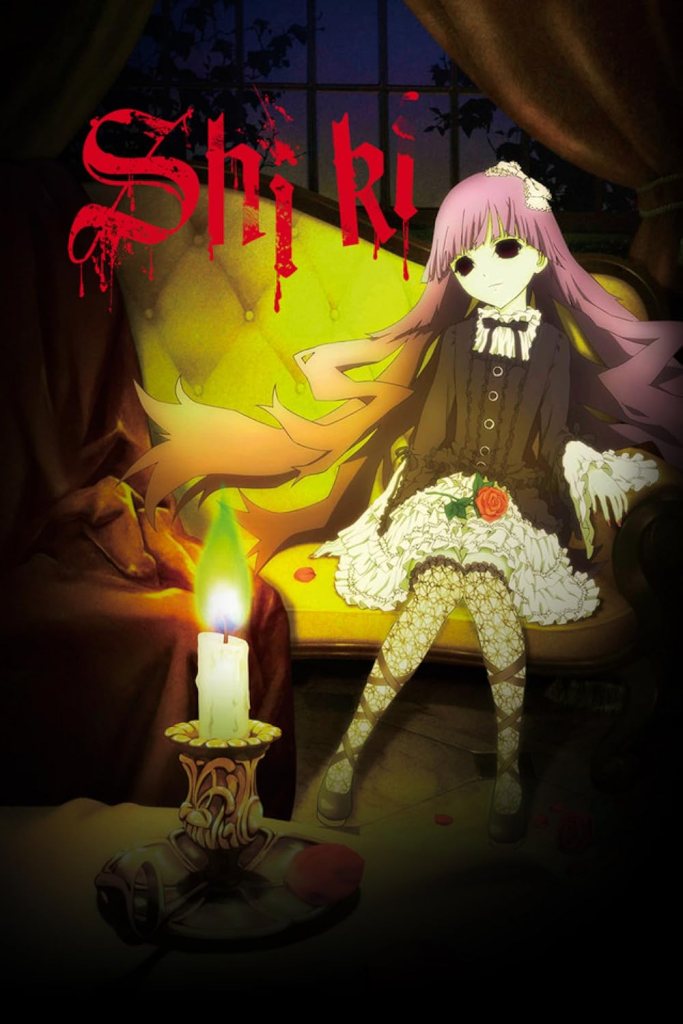
Anime You Should Be Watching (Horror Edition): Shiki (dir. by Tetsurō Amino)


The anime adaptation of Shiki, based on Fuyumi Ono’s acclaimed horror novel and directed by Tetsurō Amino, stands as a rare specimen in the horror genre. Rather than relying on quick shocks, excessive gore, or typical jump scares, Shiki unsettles its audience through atmosphere, moral erosion, and the slow, relentless unraveling of human conscience. Premiering in 2010, the series unfolds at a measured, almost meditative pace, transforming what could have been a simple vampire tale into a profound meditation on survival, faith, fear, and the delicate boundary between life and death when everything is pushed to the brink.

The story is set in Sotoba, a small, isolated village nestled precariously near a larger modern metropolis. The residents of Sotoba live tightly woven lives, their routines and social bonds preserved with careful attention over generations. This fragile peace shatters when a mysterious wave of deaths begins sweeping through the population. At first, these fatalities are dismissed as consequences of the harsh local climate—heatstroke, seasonal illnesses, and the inevitable toll of old age. Yet, as the body count rises, the truth reveals itself to be much darker: the deceased are rising as vampires, known locally as “shiki” or “corpse demons,” creatures that survive by feeding on the living.

What distinguishes Shiki from many other vampire narratives is its refusal to paint the conflict in stark black-and-white terms of good versus evil. The shiki are portrayed not as mindless monsters but as tormented souls, burdened by memories, emotions, and guilt over what they have become and the horrors they must commit to survive. Conversely, the human villagers—once caring and close-knit neighbors—succumb to suspicion, fear, and eventually cold-hearted survival instincts. The real horror emerges as morality frays and the line between human and monster becomes irrevocably blurred.

Unlike classic horror tales set in small towns—such as Stephen King’s ’Salem’s Lot, where a seemingly idyllic village hides sinister supernatural forces—Shiki offers a nuanced inward gaze. For instance, the novel They Thirst situates vampirism within a sprawling urban landscape, where anonymity accelerates chaos and alienation. In contrast, Shiki uses the microcosm of Sotoba to emphasize intimate, communal decay. The focus is not just on the physical threat, but on the erosion of social bonds and moral fabric, revealing how fragile human civility truly is under stress.

While ’Salem’s Lot depicts vampires as a pure evil contaminating a tight-knit community—highlighting themes of moral corruption and contamination—Shiki explores moral ambiguity with far greater depth. The vampires, including the enigmatic Sunako Kirishiki, retain their memories, emotions, and even remorse. Both vampires and humans carry guilt and anguish, complicating simplistic notions of villainy. The villagers—their friends, family, and neighbors—begin to see the suffering of the vampires while realizing their own brutal deeds. The narrative challenges viewers to question whether survival excuses the loss of morality or if it is possible to retain one’s spirit even amid brutal chaos.

At the heart of the series are characters who embody competing moral philosophies. Natsuno Yuki, a cynical teenager newly transplanted to Sotoba from the city, provides both an insider and outsider’s perspective. His disillusioned view highlights how fear, suspicion, and grief can unravel even the most intimate relationships. Natsuno serves as a rational voice within a community unraveling into paranoia and despair, offering a reflection of the audience’s own struggle to comprehend the incomprehensible.

Dr. Toshio Ozaki exemplifies the desperate human desire for order amid chaos. Initially, he seeks to explain away the deaths with rational, scientific explanations grounded in medicine. However, when superstition and supernatural realities intrude, Ozaki is compelled to confront truths beyond his understanding. His leadership in trying to save Sotoba begins with scientific resolve but soon descends into moral compromise. As hysteria spreads, the villagers’ collective violence explodes into ruthless slaughter, justified as necessary to preserve survival. Ozaki’s internal conflict—balancing ethical convictions against brutal necessity—reflects the series’ central question: at what point does the will to survive erode the soul?

Set against this turmoil is Sunako Kirishiki, the quiet yet profoundly troubled leader among the shiki. Though she has lived for centuries and suffers deeply from a sense of divine rejection—believing God has forsaken her—Sunako retains a core spirituality that anchors her sense of morality. Even as she is forced to kill in order to survive, she wrestles with guilt and her faltering faith. Her belief that divine rejection is not synonymous with divine abandonment acts as a form of moral defiance, preserving her fragile humanity amid brutal circumstances.

This spiritual resilience is deepened through her relationship with Seishin Muroi, a local junior monk and published author. Muroi, gentle and introspective, offers a unique perspective on the tragedy unfolding in Sotoba. His dual roles as a religious figure and a thoughtful writer allow him to interpret the crisis with spiritual depth and philosophical insight. His literary works—admired by the Kirishiki family, especially Sunako—explore mortality, suffering, and the search for meaning beyond pain. As a monk, Muroi embodies faith and compassion; as an author, he grapples with existential ambiguities, granting him a rare wisdom in navigating the village’s descent.

Muroi’s role makes him both observer and actor in Sotoba’s unraveling. His spiritual duties compel him to provide comfort and guidance, while his writings deepen his understanding of human and supernatural suffering. This duality shapes his interactions with Sunako and others, serving as a pathway for faith and empathy to endure amid horror and despair.

Sunako’s friendship with Muroi becomes central to her moral endurance. In contrast to Tatsumi, the Kirishiki family’s pragmatic and ruthless jinrō guardian who views survival through a cold, utilitarian lens, Muroi offers a moral counterpoint grounded in mercy and hope. Through his compassionate presence and reflective insights, Sunako finds a way to renew her faith. Although she feels forsaken, Muroi’s influence rekindles the fragile spark of belief in her that prevents her humanity from being swallowed by despair.

The thematic contrast between Muroi and Tatsumi becomes a fulcrum for Shiki: survival devoid of soul versus survival with spirit. Muroi’s continuing faith—soft, tentative, but persistent—demonstrates that even in the bleakest conditions, moral conviction need not fade entirely. His dual lens as monk and author enriches the narrative, bridging theology and philosophy while threading through the story’s core existential dilemmas.

Amino’s direction amplifies these themes through patient pacing and subtle storytelling. The mounting tension grows slowly through quiet, contemplative moments and lingering visuals—the hum of cicadas, shifting light through leaves, the barely audible footsteps in the dark. Ryu Fujisaki’s stylized character designs convey unease with elongated features and a surreal sheen, while Yasuharu Takanashi’s sparse, mournful score melds choral lamentations with haunting silences. Together, these elements create an immersive atmosphere steeped in dread and melancholy.

By the series’ climax, the distinction between human and shiki dissolves into near indistinguishability. Both sides bear the scars of survival—physical, psychological, and spiritual. The violence ceases, but the damage lingers, leaving survivors hollow, burdened by guilt and loss. Yet amidst the ruins of a shattered community, Sunako’s renewed faith, forged under Muroi’s guidance, flickers faintly—an emblem of hope that refuses to be extinguished.

The final scene distills this weighty truth without grandiosity or closure. There are no victors, no absolutes—only profound loneliness in survival. The living bear wounds deeper than any inflicted by fang or bullet. But in this quiet aftermath, Sunako’s fragile faith, buoyed by Muroi’s steadfast compassion, pulses as the last vestige of what it means to remain human: choosing faith and empathy even when everything else seems lost.

Shiki closes not with resolution but with a haunting reminder: survival is incomplete without humanity, and faith—however delicate—is the courage to hold onto that humanity when all else has fallen away.

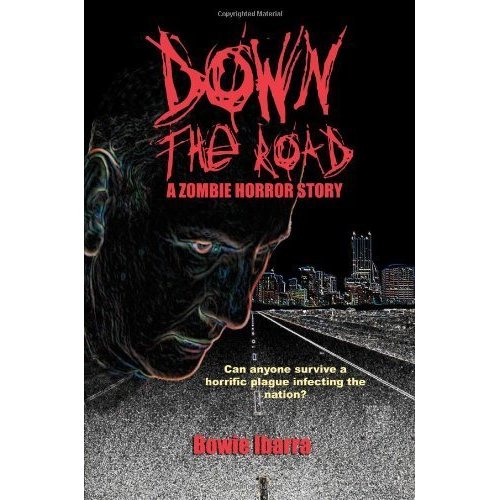
Horror Review: Down the Road (by Bowie Ibarra)


Down the Road by Bowie Ibarra is part of the renaissance of the zombie tale. While not a great novel, Ibarra’s first foray into novel length (though I would categorize this tale more as an extended novella than a full-blown novel) storytelling hits more than it misses.

Ibarra uses the the so-called “Romero Rules” in regards to the topic of the flesh-eating zombies in Down the Road. There are none of the Olympic-level sprinters of the recent trend in modern zombie films (Dawn of the Dead remake) and Ibarra’s zombies remain slow, shambling creatures with the barest of motor functions and instinct (unlike the demon-possessed undead of Brian Keene’s great, albeit nihilisitic The Rising and City of the Dead). The story’s told through the point of view of the main character, George Zaragoza, a high school teacher in an Austin school. The story starts off in quick form with George quickly going through preparing to leave the city to head for his boyhood home. There’s not of the so-called “origin” chapters that usually used to explain how the crisis first began and where. Instead the reader gradually learns from George’s interaction with people he meets during his roadtrip home about what exactly has been happening the past couple of weeks.

To say that George’s travels once he leaves Austin was eventful would be an understatement. He doesn’t just have to deal with the growing numbers of undead roaming the roads, by-ways and towns in his path, but also the danger of looters and criminals. Ibarra gives FEMA and Homeland Security top-billing as the living danger to bookend the growing undead. I may not agree with all his characterization of those two government agencies, but he does describe vividly just how quickly such organizations can go from protecting its citizens to posing a bigger danger in the end.

But his travels was not just about one dangerous crisis after the other. George meets up with other survivors who show and make him feel alive and give him some hope that not everyone has devolved to their most basest instinct. It’s in some of these encounters that Ibarra has injected a bit more sex in a zombie tale that other authors have not ventured deeply into. Who said a zombie tale meant character’s libido has to be suppressed or be non-existent. How Ibarra came about in creating the situations for the sex scenes might seem incredulous at first, but who said such things couldn’t occur in high stress situations especially when people find themselves trying to survive day0by-day or even hour-by-hour.

Overall, Ibarra’s first work looks to be a work of love by a fan of all things zombie and who knows exactly what other fans just like him want from their zombie tales. He doesn’t overdo in layering his story with layers upon layers of themes and social commentary. While the theme of how far an individual will go to survive in a crisis is there, Ibarra still sticks to keeping the story moving quickly from one end to the other. I actually thought the novel as too short. He had so much ideas introduced in the first couple chapters that I think he could’ve added another 150 pages and not lose the reader’s interest. But I’m assuming that’s where the sequel novel comes in.

Down the Road: A Zombie Horror Story by Bowie Ibarra is a very good first try by a new writer in keeping the tradition of the zombie tale alive during this second Golden Age for the subgenre. While there’s flaws in this first novel, the story itself moved at such a fast pace that I barely noticed the flaws until after I was done and by then I was already hooked by the world he had put on paper. I hope that with all the feedback he’s received from fans and fellow writers both, Ibarra’s sequel to this novel will be less of a jewel in the rough and more of the polished gem that I feel he has in him to write. I highly recommend this first novel to all fans of the zombie genre. They won’t be disappointed.

Review: World War Z (written by Max Brooks)


I was one of many who heard about Max Brooks’ satirical guide book The Zombie Survival Guide: Complete Protection from the Living Dead. Being a huge fan of George A. Romero’s Dead series of films and just the zombie subgenre in general, I was intrigued by the release of this guidebook. From the first page to the last I was impressed, entertained, and hooked on Brooks’ serio-comic take on how to survive a zombie outbreak. One section of the book which really caught my interest and has remained a favorite to reread over and over was the final one which details the so-called “historical” instances of past zombie outbreaks throughout history. From as far back as Ancient Egypt and Rome up to the late 1990’s. My only gripe about that section of the book was that it was all-too-brief. I felt that it could’ve been made longer and even would’ve made for a fine book on its own. Maybe I wasn’t the only one to have wished for such a thing to happen for it seems that Brooks himself might have thought the same thing. His latest book in his trip through the zombie genre is titled World War Z: An Oral History of the Zombie War and it takes the final chapter of his previous book and expands on it. But instead of using past “historical events” to tell his story Brooks goes into the near future to describe what would happen if the zombies ever did bring the human race to the brink of extinction and how humans finally learned how to fight back and take back the world.

World War Z is a fictional account of a worldwide outbreak of the living dead in the near future and judging from some of the descriptions of places and events in the beginning of the book it won’t be too far in the future. WWZ is done in an interview-style format with each chapter consisting of first-person interviews of individuals who lived through the Zombie War from its initial outbreak to it’s final battles and mop-up operations. The sampling of survivors interviewed range from soldiers who fought the losing battles in the early going of the war when lack of information, outdated tactics, and illogical reactions to the zombie outbreak contributed to humanity almost losing the war. These soldier survivors explain how humanity became its own worst enemy when it came to protecting its own and combating the growing ranks of the zombies. Some of the mistakes were unavailable as information on how to combat the zombies were far and few and even then most were unreliable. Some mistakes on the other hand many today would consider as unconscionable as war-profiteers and those willing to keep a hold on their own power and who would sacrifice their own people to keep it so.

There’s also the regular people who survived the war and who made great contributions during the dark days when humanity were pushed into isolated and fortified pockets of resistance as everywhere around them the zombie army grew exponentially. Some of these people were just children when the outbreak first began as rumors and unsubstantiated news reports. It’s the words of those children now adults that show how war and conflict really takes the biggest toll on the smallest and helpless. One could substitute the wars in Iraq, Afghanistan, The Balkans and even Africa in lieu of Brooks zombie war and this book would still resonate. There’s a particular entry of how children left to their own devices to try and survive alone in the wild with zombies all around have turned feral to the point that their capacity to learn and develop into adulthood has become stunted or even halted permanently.

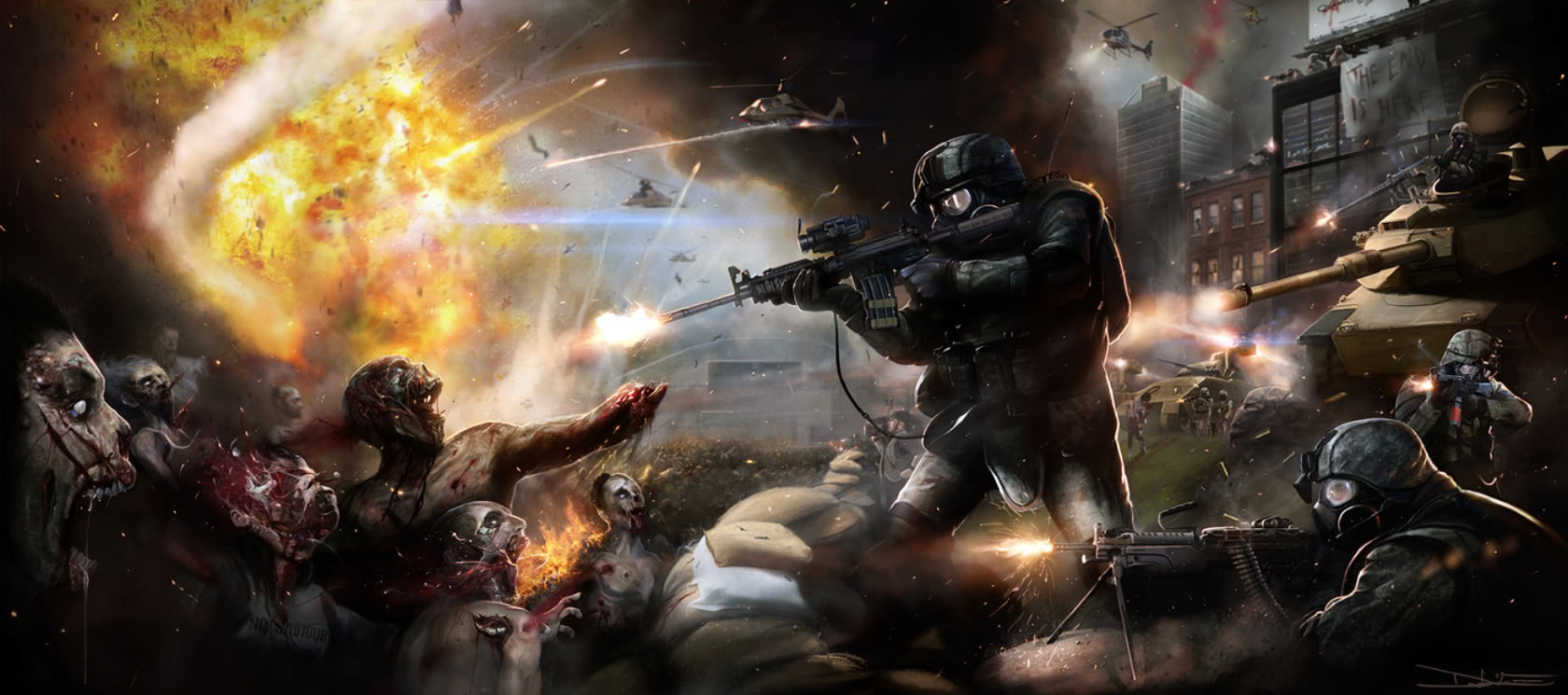
World War Z: Battle of Yonkers

Battle of Yonkers

Brooks’ novel also puts in little veiled references to the events occurring now in the real world. There’s mention of the unpopular war in the Persian Gulf as having a detrimental effect on the morale of troops once they returned home and how this helped make the initial fight to stem the tide of the zombies a losing proposition from the outset. There’s also mention of Iran as having acquired a nuclear arsenal and how this leads to an incident early in the Great Panic of the zombie outbreak that speaks volume of what could happen if unstable states acquire weapons of mass destruction. Brooks’ also gives a prescient look into a near future where the US and Europe stop being the economic superpowers of the world and step aside for the economic juggernaut that is China and India. All these inferences of today’s geopolitical and economical events mirrors what might just come into fruition.

The interview format really gives the book a sense of realism despite the outrageous and fantastical nature of the book. As I read the book I was reminded of Stephen A. Ambrose’s books on the men and women who fought during World War 2. Ambrose also used interviews and personal accounts to make up the bulk of his books like in Citizen Soldiers and Band of Brothers. Having a personal take on the events gave his books more emotional impact and really brought the emotions of the conflict to those who never experienced it. The same could be said about Max Brooks’ World War Z. Even though the novel was speculative fiction from beginning to end it still made the reader think of how such an event, if it ever came to pass, could be so tragic, disheartening but in the end uplifting as it once again shows that humanity could still pull itself together through all its petty misunderstandings to survive. On a more stylistic point, Brooks’ novel shares some similarities to Theodore Judson’s sci-fi epic Fitzpatrick’s War. Judson’s book also tries to chronicle a future war which was shaped by religious and ideological forces. Where Judson goes way into the future of an alternate Earth, Brooks smartly stays to a more foreseeable future that readers of his book would most likely see happen; hopefully a much brighter and less-zombified one.

Brooks’ decision to forgo the usual linear and narrative style for this book also allowed him a certain bit of freedom to introduce one-shot characters in addition to those who appear regularly. In a more traditional novel such one-shot characters would seem useless and even unnecessary, but in this interview format it makes more sense since it’s really just a collection of personalities trying to describe their own take of the Zombie War they lived through. Some people I know who have read the novel have said that there’s little or no talk of love and relationships in World War Z. I, for one, was glad that Brooks didn’t try to force certain “interviews” where it talks of survivors finding love and relationships during the outbreak, through the war and all the way to the mop-up. This book chronicles tales of survival and horror. As much as a tale of love would’ve been a change of pace to all the death and horror in the interviews it would’ve been too drastic a change of pace. I would think that the last thing that most people would have in their minds when trying to survive day-to-day, if not hour-to-hour would be to stop for a moment and have sex, cuddle or other less-than survival behaviors.

All in all, Max Brooks’ World War Z: An Oral History of the Zombie War takes a serious look at a fictional and fantastical premise and event with a serious eye. The book manages to be tragic and terrifyingly spot-on about how the world governments today could fail when confronted by such a horror of tremendous proportions. Unlike his more satirical first book on the zombie subject, World War Z shows the flaws and failings of humanity and how it almost led to its extinction, but it also shows humanity’s stubbornness in the face of total annihilation and how it could come together in cooperation to not just survive but take back the world. In times of extreme adversity man can be brought to his knees but also show his resilience. A great novel and one that deserves reading from not just fans of the horror and zombie subgenre, but those who enjoy taking a peek into what could be, no matter how outrageous.