Review: By Dawn’s Early Light (dir. by Jack Sholder)


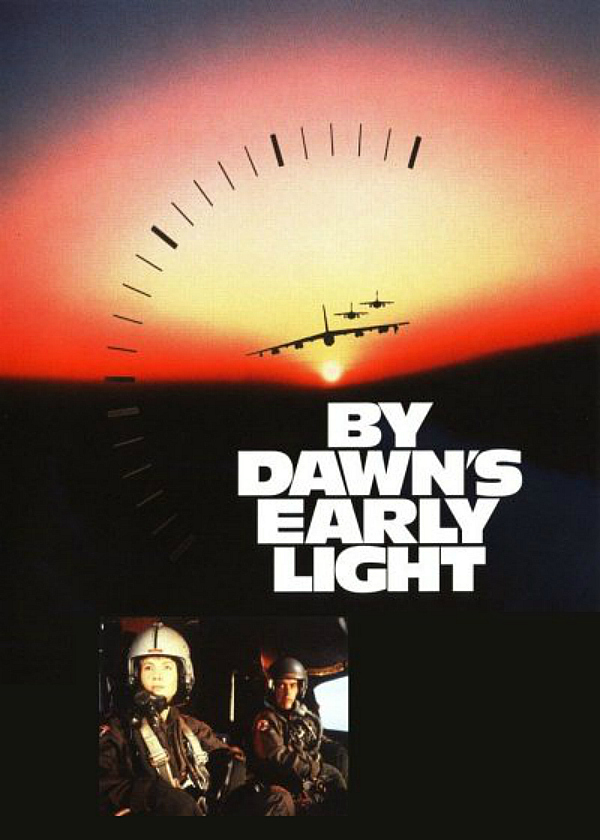
1990’s By Dawn’s Early Light is a film adaptation by HBO of William Prochnau’s novel Trinity’s Child. The film, when it first aired on HBO, seemed dated since the Soviet Union was ultimately going through its death throes as the military build-up initiated during the Reagan Administration crippled the USSR economically (they too tried to match the build-up in conventional and nuclear forces). Yet, despite the ending of the Cold War, recent events domestically and around the world has shown that the world never truly left behind the shadow of nuclear war.

The film is simplicity in the way the plot unfolds. A failed coup by dissident Soviet military commanders fails, but it’s after-effects of creating a “hot war” between the US and the USSR succeeds as both US President and Soviet Premiere make mistakes in their decisions. Decisions heavily influenced by their military commanders who see only black and white in how their respective nations should respond militarily. By Dawn’s Early Light shares some similarities to the classic 60’s Cold War films like Dr. Strangelove and Fail-Safe. Both films deal with the human frailties and flaws helping influence events that could lead to nuclear Armageddon for the whole planet. By Dawn’s Early Light concentrates on several storylines to highlight the stress and difficulties individuals must face to either follow their orders to their inevitable conclusion or allow their conscience to help make the moral decisions in trying to stop the madness spiraling out of control. Though some people’s decisions are left wanting, the film ends with a glimmer of hope that may just bring the world from the brink of annihilation.

The acting by the cast of Rebecca DeMornay, Powers Boothe, James Earl Jones, Darrin McGavin, Martin Landau and Rip Torn are well done. Rebecca DeMornay and Powers Boothe anchor one of the subplots as romantically involved B-52 crew pilots whose conflict comes from their own intimate closeness affecting command decisions and from the stress of families lost by the rest of the bomber crew. Darrin McGavin, Rip Torn and Martin Landau anchor the other subplot of competing Presidents. One a physically incapacitated US leader trying to avert escalating the conflict to the point of no return with another recently sworn in who fears of losing a nuclear war and thus wanting to strike back full and hard. In between these two leaders is the diabolical performance by Rip Torn as a warmongering Army colonel who sees only winning the war as the only objective. At times, the performances do become hampered by the simplicity of the script, but the cast power through to the end.

In the end, the film might look a bit dated in its production design (this was 1990 and many years before HBO became known for premiere television production) but the story itself is very current and relevant.  What might have been a nice Cold War relic fairy tale when it first aired in 1990 on HBO has taken on more of a cautionary tale as more nations begin to acquire nuclear weapons with some of these nations not just enemies of the US and the world in general, but also led by men whose hold on sanity seem tenuous at best. By Dawn’s Early Light is a great piece political “what if” that hopefully remains just that and not a prediction of reality to come.

Scenes I Love: Newsroom


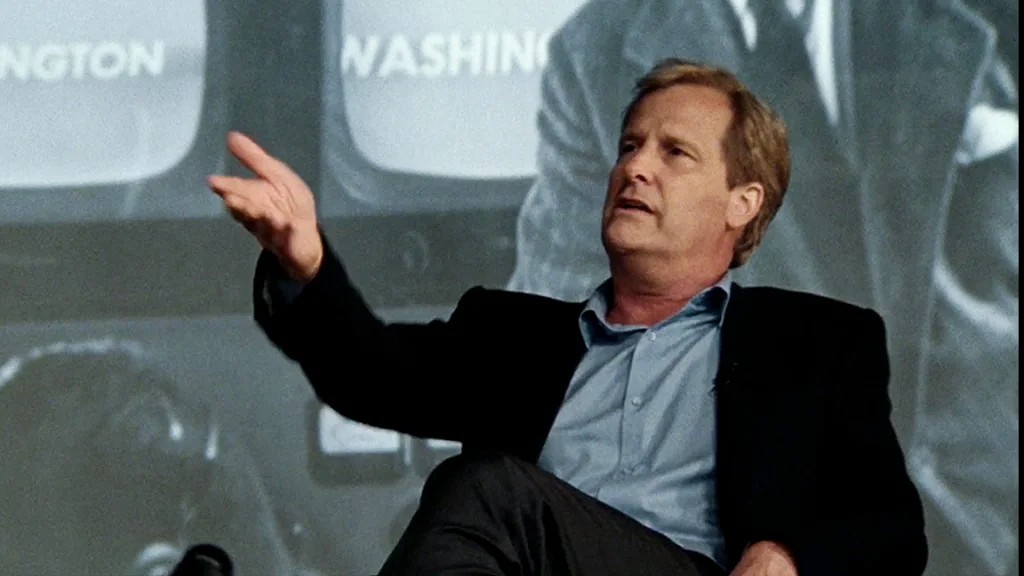
No matter what side of the ideological aisle one stands on this speech should be watched, debated and studied not just for the powerhouse acting throughout the monologue but as to its content.

There’s opinions and discussion to be had about differing takes on the first half of the speech, but it’s the latter half when Will McAvoy (played with an equal amount of life-earned cynicism and hope by Jeff Daniels) explains why we as a country has lost its way and how we’ll never get back on track until we realize there is a problem and a problem to be solved not through hate and fear but through understanding and hope.

“We sure used to be. We stood up for what was right! We fought for moral reasons, we passed and struck down laws for moral reasons. We waged wars on poverty, not poor people. We sacrificed, we cared about our neighbors, we put our money where our mouths were, and we never beat our chest. We built great big things, made ungodly technological advances, explored the universe, cured diseases, and cultivated the world’s greatest artists and the world’s greatest economy. We reached for the stars, and we acted like men. We aspired to intelligence; we didn’t belittle it; it didn’t make us feel inferior. We didn’t identify ourselves by who we voted for in the last election, and we didn’t scare so easy.

And we were able to be all these things and do all these things because we were informed. By great men, men who were revered. The first step in solving any problem is recognizing there is one—America is not the greatest country in the world anymore.”

I’m sure there’ll be those who will disagree vehemently about the scene’s message and content. Yet, no one seem to be able to find a strong argument as to why they disagree or debunk what was said in the monologue.

The decade since Newsroom aired it’s final episode we see more and more the truth in Will McAvoy’s words and it may take a decade or decades to right the ship.

6 Things I Am Looking Forward To In May


Welcome to the month of May!  Here’s a few things that I’m looking forward to over the next 31 days!

  1. Cannes Film Festival

The 76th annual Cannes Film Festival will be taking place from May 16th to May 27th!  Along with discovering which films will be honored by the Ruben Ostlund-led jury, we will also be getting initial reactions to Asteroid City, Indiana Jones and the Dial of Destiny, and Killers of the Flower Moon.  While doing well at Cannes is hardly a requirement for being an Oscar contender, it certainly doesn’t hurt.

2. Guardians of the Galaxy Volume 3

Admittedly, I’ve kind of grown a bit weary of the MCU.  I’m among those who feel like it all should have just ended with Tony Stark’s funeral at the end of Endgame.  However, I’m still looking forward to the third Guardians of the Galaxy film.  Seriously, who can resist Peter Quill, Groot, Drax, Rocket, and Gamora?  Plus, James Gunn is once again in the director’s chair.  Hopefully, they can bring some fun back to the MCU because, after The Eternals and all that, the MCU could definitely use it.  Guardians of the Galaxy Volume 3 is due to open on the 5th.

3. Fast X

I can’t help it.  I like fast cars and I like movies about fast cars.  Despite the fact that the franchise has started to show its age, I’ll always be willing to check in on the adventures of Toretto and the gang.  Fast X opens on May 19th.

4. Your Hurt My Feelings

I’ve heard very good things about the latest film from Nicole Holofcener and also about Julia Louis-Dreyfus’s starring performance.  You Hurt My Feelings opens on May 26th.

5. The Finale of Barry

HBO’s Barry is set to wrap up its story on May 28th.  I can’t wait to see how it all ends, even if I am a bit worried that all of my favorite characters are going to be dead by the time the final credits roll.

6. The Televised Coronation of Charles III

Seriously, how often do you get to watch a coronation?  We’ll get our chance on May 6th!  If nothing else, it’ll remind those of us in America of why we had a revolution.  Or, depending on how Charles does, it’ll make us reconsider the revolution in the first place.  Either way, it’ll get some sort of reaction.

What are you looking forward to in the month of May?

Horror on TV: Tales From The Crypt 6.15 “You, Murderer” (dir by Robert Zemeckis)


To be honest, tonight’s episode of HBO’s Tales From The Crypt isn’t really a traditional horror story.  Instead, it’s a somewhat satiric homage to film noir.  But I’m going to share it anyway. Halloween is about more than just ghouls and ghosts and goblins, right?

You, Murderer is an experiment that doesn’t quite work but is interesting all the same.  This episode is basically one long POV shot.  Whenever our protagonist sees his reflection, we see Humphrey Bogart staring back at us.  Actual footage of Bogart was used in the show.  Sometimes it work, sometimes it just looks strange.  But it’s always interesting!

This episode originally aired on January 25th, 1995.  Enjoy!

https://youtu.be/4b45ytx3Ft4

Horror On TV: Tales From The Crypt 5.7 “House of Horror” (dir by Bob Gale)


Tonight’s excursion into televised horror is the 7th episode of the 5th season of HBO’s Tales From The Crypt!  

House of Horrors has everything that you could possibly want from a Tales From The Crypt episode!  A dumbass idiot frat boy (played by Kevin Dillon) forces three pledges to enter  a supposedly haunted house.  Mayhem ensues.  This episode is full of atmosphere, dark humor, plot twists, and unexpected turns and it features two wonderfully over-the-top performances, one from Dillon and one from Meredith Salenger as a Southern-accented sorority president who may have a secret of her own.

This episode originally aired on October 27th, 1993 and is currently celebrating its 30th birthday.

Enjoy!

Horror on TV: Tales From The Crypt 3.7 “The Reluctant Vampire” (dir by Stephen Hopkins)


The Reluctant Vampire was the 7th episode of the 3rd season of HBO’s Tales From The Crypt!  It stars Malcolm McDowell as a vampire who is a little bit too nice for his own good.  Seriously, you can’t go wrong with Malcolm McDowell as a vampire.

The Reluctant Vampire originally aired on July 10th, 1991.

Enjoy!

Here’s The Third Trailer for HBO’s House of the Dragon!


Below, you will find the third trailer for House of the Dragon, HBO’s Game of Thrones prequel!  I’m not really sure if I’m ready to take on yet another show that will inevitably have a complicated mythology to try to keep straight but, on the other hand, I do like dragons.

Scenes I Love: Berkman Goes Boom from Barry


Today’s scene that I love is a fairly recent one.  

On Sunday’s episode of HBO’s Barry, hitman-turned-actor Barry Berkman (played by Bill Hader) accepted a contract to blow up a house and the Bolivian gangsters within.  He was given a bomb which had been purchased on the Dark Web and which, unfortunately, had been programmed to continually repeat a phrase in Japanese.  He was also given the Detonator App (developed by KABOOM), which would allow him to remotely detonate the bomb.

The only problem is that the app didn’t seem to be working and as Barry tried to figure out why, some of the gangsters heard the bomb “speaking” underneath the house.  Meanwhile, Fernando — who was not supposed to be in the house when the bomb went off — showed up to talk to his father-in-law.  While Fernando discovered that his own secrets were no longer secret, Barry wondered if he would even be able to get the bomb to go off.

Customer service to the rescue!

As I said, I saw this scene on Sunday and, as Monday comes to a close, I’m still laughing about it.  It almost makes me want to get a job at Kaboom.  This is a wonderfully executed and detailed scene and one of the best that I’ve seen so far this year.

“Alright, sounds like we were successful….”


Documentary Review: Ernie & Joe: Crisis Cops (dir by Jennifer McShane)


The new documentary Ernie & Joe: Crisis Cops opens with police body cam footage of a man getting gunned down in the doorway of his own house.

Why was the man shot?  Because he was holding a screwdriver and he apparently didn’t drop it quickly enough.  Why were the police there in the first place?  They had been called by the man’s mother, who warned the police that her son was schizophrenic and that he was hearing voices.  When the cops shoot him, the man’s mother can be heard screaming in the background, begging the cops not to kill her son.  But kill him, they did.  He died for the crime of holding a screw driver while having mental health crisis.

Unfortunately, that’s a scenario the seems to be happening more and more frequently in the United States.  The police are trained to quickly take control of dangerous situations, to show no emotion, and to bark out orders.  How many times do we hear it whenever someone is gunned down for not immediately dropping whatever they were holding their hands?  “If he had just done what the police said, he’d still be alive.”  We hear that a lot but what if, like the man holding that screwdriver, you’re already hearing voices before the police start screaming at you to show them your hands.  What if you’re already disorientated and not sure what’s real and what’s not?  What then?

Unfortunately, it’s rare that the police are trained on how to deal with someone suffering from mental issues.  Ernie Stevens and Joe Smarro are two cops in San Antonio who are trying to change that.  As members of the SAPD’s mental health unit, Ernie and Joe are advocates for changing the way that the police deal with the most vulnerable members of society.  As they explain at one of their training sessions, the police academy will spend days teaching recruits how to draw and fire their weapon without devoting one minute to discussing how to deal with someone who might be hearing voices or who might be suicidal.  Ernie and Joe argue for compassion over brute force.  (Unfortunately, while some cops are seen nodding along with Ernie and Joe’s lessons, several others are seen smirking and rolling their eyes.)

Shot in the style of cinéma vérité, the film follows Ernie and Joe as they deal with cases and attempt to teach their fellow cops that brute force is not always the solution.  At one point, we watch them deal with someone who is threatening to jump off an overpass.  We also listen as Joe, a former Marne, discusses seeing a child blown up in Iraq and how he is still haunted by PTSD.  Ernie, meanwhile, is a family man who goes to church every Sunday and who is looking forward to soon retiring from police work.  The film follows them as they talk, joke, and occasionally bicker like an old married couple.  It’s a good, if somewhat low-key, documentary.  One watches it and hopes that other police departments will learn from San Anotnio’s success.

As I watched the film, I found myself thinking about Vanessa Marquez.  Vanessa was a former actress and a longtime member of the #TCMParty on twitter.  Vanessa was always very open about her own health struggles.  14 months ago, the police showed up at Vanessa’s house in South Pasadena, California.  They say they were doing a welfare check.  They say that Vanessa was in obvious mental distress and that Vanessa resisted their attempts to force her to go to the hospital to be checked out.  The police say that Vanessa pointed a BB gun at them.  Unfortunately, we only know what the police said happened but Vanessa is not her to tell her side of the story.  She was shot and killed.  At the time, it was big news but, as always happens, the media eventually moved on to something else.  After all this time, we still don’t know what really happened the day that Vanessa Marquez was killed in her own home.  We probably never will.

Watching the documentary, I found myself wondering what would have happened if it had been Ernie and Joe or, at the very least, a cop with a similar outlook and compassion who showed up at her house on that day.  Would Vanessa still be with us, watching movies on TCM and tweeting about her experiences in Hollywood?  No one can say for sure but I think she would be.

Hopefully, this documentary will serve as a wake up call for some people.  One need not lose their compassion just because they put on a uniform.  In fact, it’s essential that they don’t.

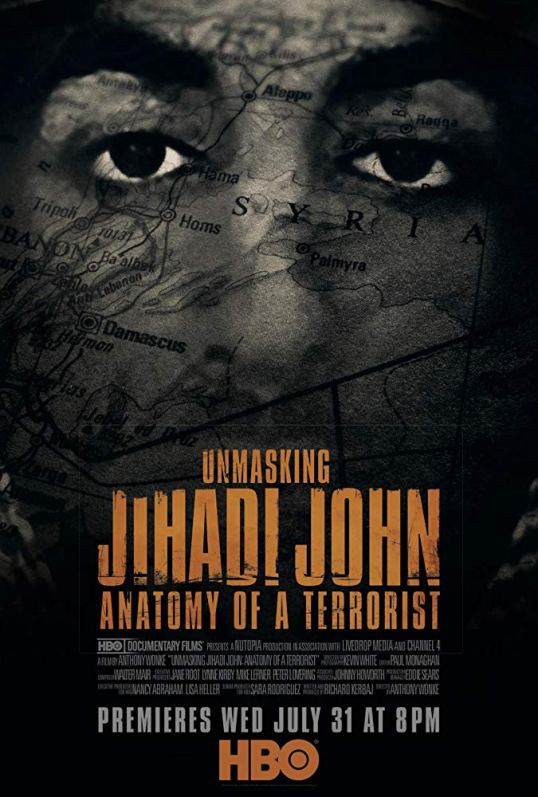
Documentary Review: Unmasking Jihadi John: Anatomy of a Terrorist (dir by Anthony Wonke)


Who was Jihadi John?

He was the black-clad terrorist who haunted the news in 2014 and 2015.  He was the faceless man with the London accent who was frequently filmed standing in the desert, taunting Barack Obama and David Cameron before then beheading a hostage.  In total, Jihadi John was filmed either beheading or directing others to behead 29 hostages.  Among his victims were American journalist James Foley and British aid worker David Haines.

Up until he was apparently blown up by a drone strike in 2015, Jihadi John was, for many of us in the West, the best-known member of ISIS.  When we heard the word “ISIS,” he was the one we pictured.  Because his face was always covered, his identity was unknown.  All we knew about him was that he spoke perfect English with a British accent.  He was like a creature sprung from a nightmare, a monster who materialized out of nowhere and taunted us for our inability to defeat him.  There was much speculation about who Jihadi John was.  Even after we found out that he was probably a Kuwait-born British citizen named Mohammed Emwazi, we still wondered how this man came to be standing in the desert, being filmed as he committed terrible crimes.

The new HBO documentary, Unmasking Jihadi John, is an investigation into the origins of terrorism.  The film attempts to reconstruct Emwazi’s early life as an outsider in the UK.  His teachers describe him as being quiet and somewhat forgettable.  Video from that period shows a skinny and awkward-looking teenager, one who covered his mouth whenever he spoke because he had once been taunted for having bad breath.  When he was ten, he wrote that he wanted to be a soccer player.  A few years later, he was caught on video, smiling while sitting in a computer lab.  And then, just a few years after that, he was in Syria, committing horrific acts of evil.  And make no mistake about it — the Emwazi who we see waving a knife while condemning the West is evil.  Evil comes in many disguises and will often try to justify itself by hijacking a religion or an ideology.  But in the end, evil is evil.

Because Emwazi was vaporized in 2015, he’s not around to explain just what exactly led him to join ISIS.  The film speculates that Emwazi initially joined because he was looking for both a surrogate family and a place where he actually belonged.  The documentary contains clips from several ISIS propaganda videos and what’s interesting is that the images that ISIS used — children playing in the streets, men working together to rebuild a city, and friends hugging each other — are many of the same images that one would expect to find in western advertising.  They’re seductive images, ones that offer up a promise of a better life as long as you follow orders and don’t question authority.  They were exactly the type of images designed to appeal to someone like Emwazi (and countless others), who had a need to feel as if they belonged to something bigger than themselves.

If the first half of the documentary focuses on Emwazi and the founding of ISIS, the second half deals with the aftermath of Emwazi’s actions.  Interviews, with the hostages who survived and the families of those who did not, drive home the pain that was caused by the actions of ISIS as a whole and Emwazi in specific.  It’s in those interviews that we are reminded that Emwazi’s evil cannot be excused by a turbulent childhood or misplaced idealism.  Towards the end of the documentary, the man who controlled the drone that fired the missile that ended Emwazi’s life is interviewed.  When we watch the grainy and coldly impersonal footage of Emwazi’s car blowing up, we feel no sympathy for the man who was called Jihadi John.   As to whether or not there’s joy to be found there, well, that’s up to the viewer to decide for themselves.

It’s a compelling documentary but it’s also frustrating, if just because it poses a question that may be impossible to answer.  Why does evil exist?  How can one go from being a normal, if awkward, teenager to being a savage murderer?  Like the rest of us, the documentary can only wonder why.