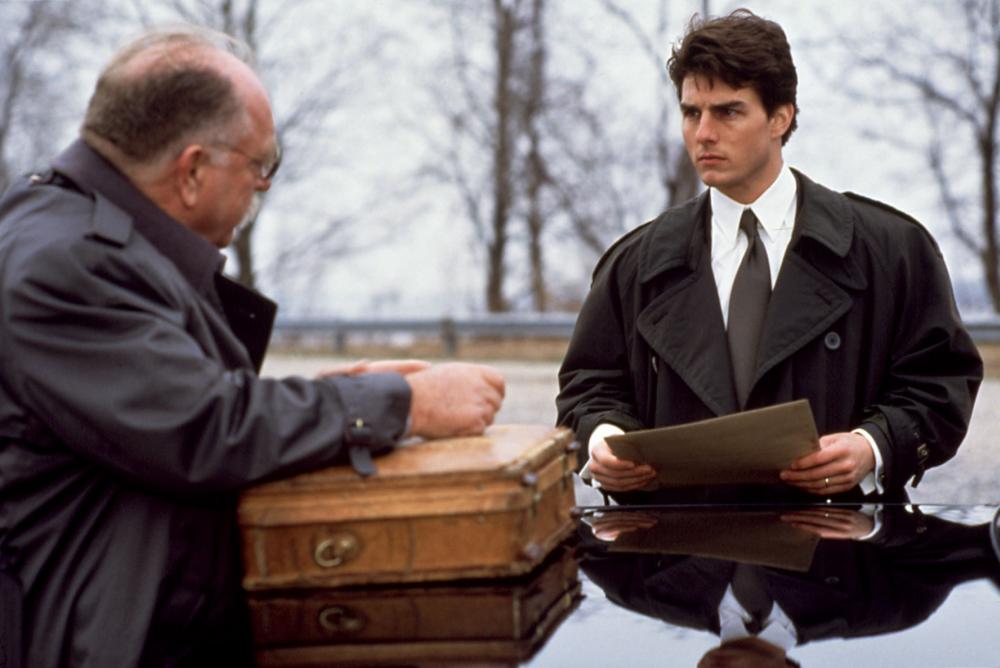
Brad reviews THE FIRM (1993), starring Tom Cruise!


In honor of Tom Cruise’s 63rd birthday, I decided to watch THE FIRM, which is based on the 1991 novel from author John Grisham. Cruise stars as the brilliant Harvard law graduate Mitch McBride, who convinces his wife Abby (Jeanne Tripplehorn) to move to Memphis, TN, so he can join the prestigious Memphis law firm of Bendini, Lambert & Locke. With the help of his veteran mentor Avery Tolar (Gene Hackman), Mitch seems to be excelling at his job, and everything is just so perfect. Unfortunately, the good times don’t last as Mitch starts to notice some suspicious stuff going on with the firm, beginning with the mysterious deaths of two of his fellow attorneys. He’s soon approached by FBI agents, led by Wayne Tarrance (Ed Harris), who tell him that there are nefarious deeds taking place at the firm, including the laundering of money for the Chicago mob. When Mitch starts questioning the activities of the firm, he finds himself the subject of blackmail and intimidation from the firm’s security officer William Devasher (Wilford Brimley) because the firm will do anything to protect its secrets. Mitch is soon caught between betraying his corrupt employers, who are threatening to kill him, and the FBI, who is pressuring him to expose the firm’s criminal activities. Not wanting to lose his life, go to jail, or get disbarred, Mitch devises an extremely risky plan to outsmart the firm and the FBI, but is even he brilliant enough to pull this one off?!

Back in the early 90’s, it seemed that every other movie being released was adapted from a John Grisham novel, and the very first of those adaptations was THE FIRM in 1993. Extremely successful at the box office, THE FIRM grossed over $270 million worldwide, setting the stage for five new movies based on Grisham novels over the next five years. THE FIRM was not only financially successful, it’s also an extremely effective movie that showcases a 30-year-old Tom Cruise at his very best. Director Sydney Pollack crafted a creepy and paranoid thriller, using a slow-burn buildup that relies on Cruise’s ability to believably go from naïve and starstruck at the beginning, to scared and desperate during the middle portion of the film, and ultimately to resourceful and intelligent at the end, as he navigates the dangerous situations he finds himself in. It’s a dynamic, intense performance, and even with a huge supporting cast of excellent actors around him, Cruise dominates every frame of this film. Other performances that stand out to me are Jeanne Tripplehorn as Mitch’s wife Abby, Wilford Brimley as the firm’s enforcer, Gary Busey and Holly Hunter as a private investigator and his administrative assistant from Little Rock, and David Strathairn as Mitch’s jailbird brother in Arkansas. Gene Hackman is good in his role as Mitch’s corrupted mentor Avery Tolar, but his character is not one of my favorites from the legendary actor. His character has accepted his corruption and learned to cope with it over the years through alcohol and womanizing, just so he can keep making the money. He knows better and that’s the part that ultimately makes him the most pathetic. Ed Harris is also good in the film as the FBI Agent, but his character is kind of an asshole, and it’s fun to see Mitch outsmart him.

I also like the Memphis, Tennessee locations showcased in THE FIRM, locations that I’ve been to many times, such as Beale Street, Mud Island, and The Peabody Hotel. Early in the movie, Cruise’s character flips right along with the “Beale Street flippers,” popular Beale Street entertainers who perform nightly for tips. I’ve given them some of my cash over the years! And the chase sequence that starts at Mud Island and spills over into downtown Memphis is one of the most exciting parts of the movie. My home state of Arkansas even gets in on the action when Mitch meets FBI agent Wayne Tarrance at the Southland Greyhound Park located in West Memphis, Arkansas. The greyhound race track no longer exists at that location, as the final dog race was held on December 31, 2022. The site has now become the Southland Casino, one of three operating casinos in Arkansas, with the other two being the Oaklawn Casino in Hot Springs and The Saracen Casino in Pine Bluff. I also like the fact that the sleazy private investigator, played by Gary Busey, is from Little Rock, Arkansas. I commute to Little Rock daily to work at my accounting and tax firm, and it’s fun imagining that there could be an “Eddie Lomax” somewhere around here.

THE FIRM may not be a perfect film… some fat could have been trimmed out as it runs for over two and a half hours, a lot of time for a “thriller;” and while effective on paper, I also can’t help but wonder if the resolution would have worked quite as well in real life as it’s portrayed in the film. I still love the movie and consider it to be one of Tom Cruise’s best. I revisit it quite often, and I’m glad his birthday gave me another excuse to watch it again today!

Film Review: Into the Wild (dir by Sean Penn)


He went looking for America but couldn’t find it.

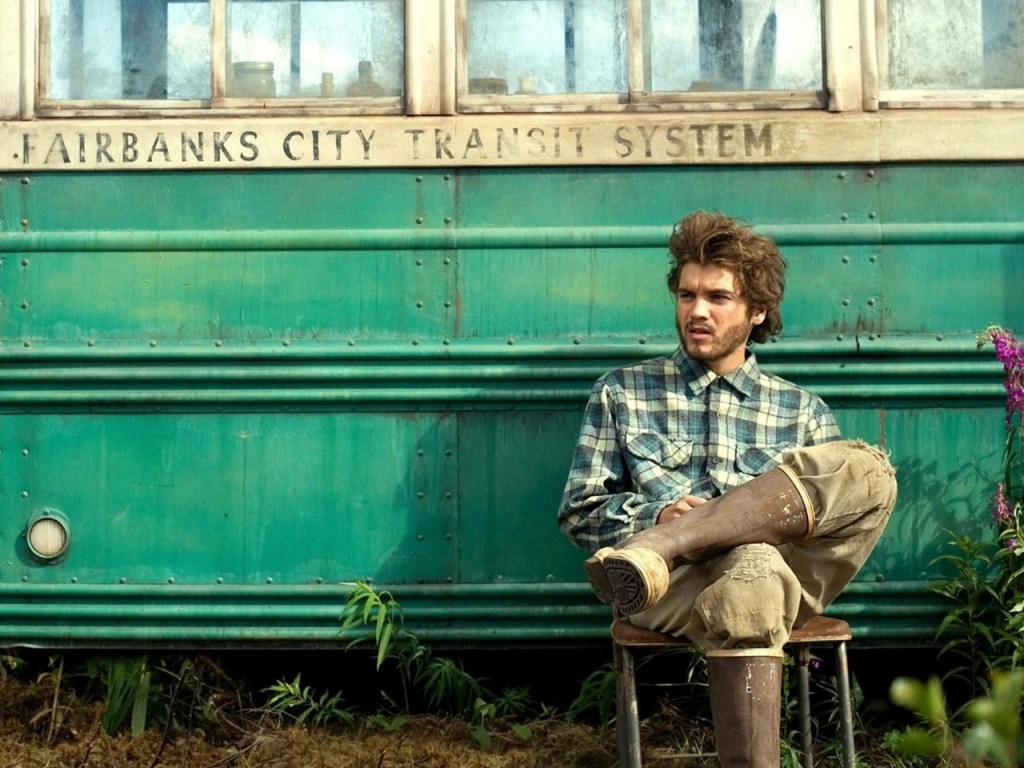
That’s not actually the tag line that was used to advertise 2007’s Into The Wild but perhaps it should have been.  Based on the true story of Chris McCandless, a college graduate who gave away all of his money and then roamed the country for two years before starving to death in an abandoned bus in Alaska, Into The Wild seems to be Sean Penn’s attempt to make a modern-day Easy Rider.  Just as Dennis Hopper and Peter Fonda crossed the country and met several different people over the course of that seminal road film, Into The Wild follows Emile Hirsch’s Chris McCandless as he takes on the identity of Alexander Supertramp and hikes across the continent.  Along the way, he meets and befriends hippies (Catherine Keener and Brian H. Dierker), blue collar workers (Vince Vaughn), wayward teenagers (Kristen Stewart), and, most poignantly, a retired man (Hal Holbrook) who sincerely tries to help Chris make peace with his wanderlust.

You would think that this would be the type of film that would bring out Sean Penn’s worst directorial instincts but Penn actually directs with a very real sensitivity and a willingness to see the good in just about everyone that Chris meets.  It is true that, especially at the start of the film, Chris can sometimes be a bit difficult to take.  He’s so self-righteous and sure of himself.  He mistakes his college diploma for being a badge of experience and occasionally, he can come across as being incredibly condescending.  But, as the film progresses, Chris starts to realize that he doesn’t know everything and that he can’t do everything by himself.  Sometimes, he does need help, even if he doesn’t want to admit it.  The film’s most moving moments feature Chris and Hal Holbrook’s Ron Franz.  Ron has the years of experience that Chris lacks and Ron also becomes one of the few people to whom Chris is willing to truly listen.  And yet, when Ron offers to adopt Chris and give him a permanent home, Chris’s response is to promise to talk to him about it when Chris returns from Alaska.  As Chris leaves, it’s obvious that Ron knows that he’s never going to see Chris again.  Dying in Alaska, Chris finally makes some sort of inner peace with the parents (William Hurt and Marcia Gay Harden) and the sister (Jena Malone) that he earlier abandoned.  It’s an amazingly touching scene.  Penn, whose other directorial efforts have been a bit didactic, seems to be willing to grant a certain grace to everyone in the film, even those whose politics or cultural attitudes he might not necessarily share.  Penn not only captures the visual beauty of the America wilderness but also the beauty of the people, a beauty that too many other directors chose to downplay.

It’s a strong film and certainly the best of Penn’s directorial efforts.  Emile Hirsch is not always likable as Chris but, then again, the heart of the film is found in the people that Hirsch meets and Penn gets excellent performances from his entire supporting cast.  Hal Holbrook received a much deserved Oscar nomination.  I also liked Vince Vaughn’s performance as guy who teaches Chris about hard work before getting arrested for stealing cable and also Jena Malone as Chris’s sister, the one person who understands him, even if she’s not invited to travel with him.

Into The Wild is a poignant portrayal of  both wanderlust and the often-neglected corners of America.  Did Chris find a little of something that he was looking for before he died in that bus?  One can only hope.


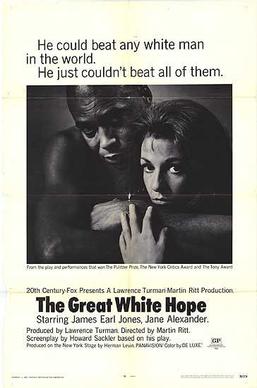
The Great White Hope (1970, directed by Martin Ritt)


The year is 1910 and the sports world is in a panic.  For the first time, a black man has won the title of the heavyweight champion of the world.  Jack Jefferson (James Earl Jones) had to go to Australia because no American city would agree to host the fight but he came out of it victorious.  The proud and outspoken Jefferson finds himself targeted by both the white establishment and black activists who claim that Jefferson has not done enough for his community.

It’s not just Jefferson’s success as a boxer that people find scandalous.  It’s also that the married Jefferson has a white mistress, a socialite named Eleanor Brachman (Jane Alexander, in her film debut).  While boxing promoters search for a “great white hope” who can take the title from Jefferson, the legal authorities attempt to arrest Jefferson for violating the Mann Act by supposedly taking Eleanor across state lines for “immoral purposes.”  Jefferson and Eleanor end up fleeing abroad but even then, their relationship is as doomed as Jefferson’s reign as the heavyweight champ.

Based on a Pulitzer-winning stage play by Howard Sackler, The Great White Hope features Jones and Alexander recreating the roles for which they both won Tonys.  Both Jones and Alexander would go on to receive Oscar nominations for their work in the film version.  It was the first nomination for Alexander and, amazingly, it was the only nomination that Jones would receive over the course of his career.  (It surprises me that he wasn’t even nominated for his work in Field Of Dreams.)  Both Jones and Alexander give powerful performances, with Jones dominating every scene as the proud, defiant, and often very funny Jack Jefferson.  Jones may not have had a boxer’s physique but he captured the attitude of a man who knew he was the best and who mistakenly believed that would be enough to overcome a racist culture.  (Speaking of racist, legendary recluse Howard Hughes reportedly caught the film on television and was so offended by the sight of Jones kissing Alexander that he thought about buying NBC to make sure that the movie would never be aired again.)  Hal Holbrook, Chester Morris, Moses Gunn, Marcel Dalio, and R.G. Armstrong all do good work in small roles.

Unfortunately, The Great White Hope still feels like a filmed stage play, despite the attempts made to open up the action.  Martin Ritt was a good director of actors but the boxing scenes are never feel authentic and the middle section of the film drags.  Jones and Alexander keep the film watchable but The Great White Hope is never packs as strong of a punch as its main character.

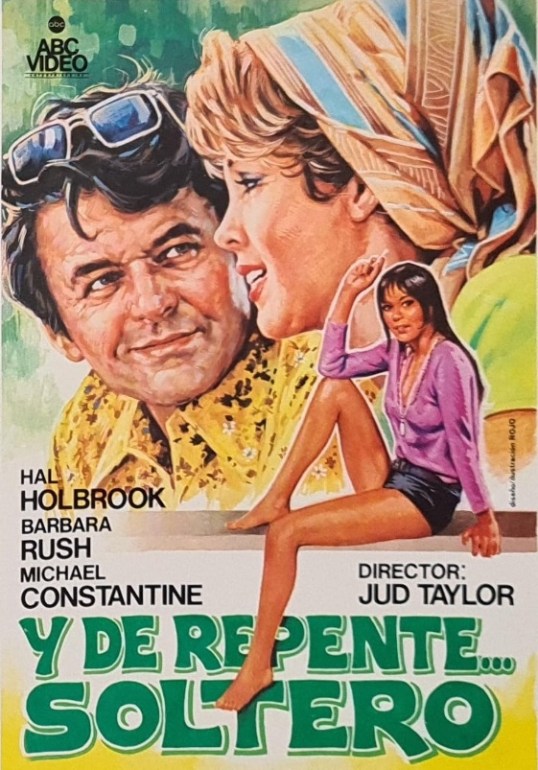
Retro Television Reviews: Suddenly Single (dir by Jud Taylor)


Welcome to Retro Television Reviews, a feature where we review some of our favorite and least favorite shows of the past!  On Sundays, I will be reviewing the made-for-television movies that used to be a primetime mainstay.  Today’s film is 1971’s Suddenly Single!  It  can be viewed on YouTube.

Suddenly Single opens with middle-aged Larry Hackett (Hal Holbrook) loading his suitcases into the back of his car.  His neighbors (David Huddleston and Pamela Rodgers) come over to say goodbye.  Larry has just gotten divorced and, as a result, he’s lost his perfect house in the suburbs.  Now, he’s going to have to move into the city and start a new life but he assures his neighbors that he’ll be okay and that there aren’t any hard feelings between him and his ex, Joanne (Cloris Leachman).  Sometimes, marriages just don’t work out….

Then Joanne shows up….

With her new husband, Ted (Fred Bier)!

While Larry can only watch, Ted insists on picking up Joanne and carrying her over the threshold of what used to be Larry’s house.  As it dawns on him that Joanne was having an affair during the final days of their marriage, Larry is understandably miffed.

Larry just isn’t ready to find himself in the world of the early 70s.  He’s an extremely conservative pharmacist who will now have to deal with hippies and the single scene.  His co-worker (Harvey Korman) encourages Larry to hit the bars.  Marlene (Agnes Moorehead) encourages him to figure out what he wants to do with his life.  His new and much younger neighbor, Jackie (Margot Kidder), tells him that he needs to get a gym membership and be more open-minded.  At first, Larry pursues a relationship with the classy Evelyn Baxter (Barbara Rush) but then he’s drawn to Jackie.  And Jackie, oddly enough, is drawn to him….

Quicker than you can say Breezy, Larry is dating the much younger Jackie and he’s starting to wear hip clothes and hang out with cool, long-haired people.  When he runs into his old neighbors on the street, he discovers that he no longer has much in common with them.  However, Larry still finds himself becoming jealous and possessive of Jackie, who is not the type of to give up her freedom for a relationship.  In the end, Larry is forced to admit that, while he has become more open-minded following his divorce, he still can’t magically change who he is.

Suddenly Single has a great cast and it’s not surprising that it’s a well-acted film.  At the same time, Larry can be a bit of a jerk.  Evelyn is the nicest person in the entire movie and Larry basically breaks her heart so that he can pursue an obviously doomed relationship with the younger Jackie.  It’s a bit sad to watch because everyone but Larry can see what he’s doing.  Larry may be wiser by the end of the film but that’s small solace to Evelyn.  Suddenly Single is about flawed characters and, as such, it can be easy to get annoyed with Larry and Jackie while also appreciating the fact that, like all of us, they’re just trying to figure out life as they go along.

Suddenly Single acts as a bit of time capsule and watching it is as probably as close as one can get to 1971 without a time machine.  It’s a trip to the past with some of the best actors of the era.

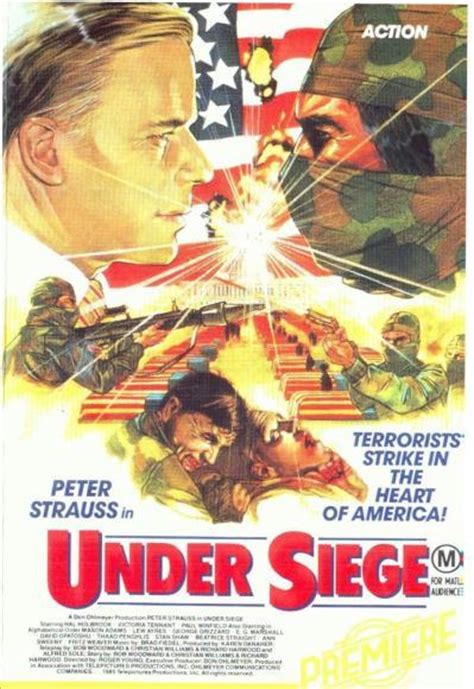
Under Siege (1986, directed by Roger Young)


Let’s say that you are the governor of Arkansas and, once again, your state is running out of money and will soon not be able to afford to pay its bills.  What do you do?

That was the problem facing Governor Bill Clinton in 1986.  His solution was to allow a big Hollywood production to come down to Little Rock and film someone throwing explosive devices at the state capitol.  The capitol building at Little Rock looks like a smaller version of the capitol building in Washington D.C.  The producers of Under Siege needed to shoot a scene where terrorists attempt to blow up Congress.  Even though the state capitol wasn’t actually blown up in the film, the dome did end up with extensive burn marks that were visible for years afterwards.  Many people in Arkansas were not amused that they had to allow a film crew to set their capitol on fire just to pay the bills.  Still, if Bill Clinton hadn’t agreed to blow up the state capitol building, Arkansas could have gone bankrupt and then he probably would have lost his reelection bid in 1986.  If Bill Clinton wasn’t reelected, he never would have been elected to the presidency in 1992, Hillary Clinton would never have been elected to the Senate in 2000 and, in 2016, the Democrats wouldn’t have been stuck with the only possible nominee who could have actually lost to Donald Trump.  When you look at it that way, Under Siege is one of the most significant films ever made.

As for the film, it’s a 3-hour, made-for-TV movie about what happens when Islamic extremism hits home.  Notorious terrorist Abu Ladeen (Thaao Penghlis) has managed to sneak into the United States and is hiding out in Detroit.  He directs a series of attacks on beloved American institutions.  Not only is the Capitol Building bombed but a mall is also attacked.  While President Maxwell Monroe (Hal Holbrook, who was born to play presidents) tries to keep America from falling apart, his hawkish advisers tell him that now is the time to launch a strike against Iran, despite Iran claiming to have nothing to do with the attacks.  Only the director of the FBI, John Garry (Peter Strauss), and the Secretary of Defense, Andrew Simon (Paul Winfield), argue that the president should exercise caution.  Garry is convinced that the attacks are the result of homegrown, domestic extremism and not an international conspiracy.  Garry is a very hands-on FBI director.  He’s the type of FBI director who will chase a terrorist down a street in Washington D.C.  Let’s see James Comey do that shit.

Under Siege probably seemed outlandish in 1986 but it seems prophetic today.  The film’s depiction of both terrorism and the government’s shady response to it turned out to be accurate.  That doesn’t mean that it’s a very good movie.  It was co-written by Bob Woodward of Watergate and Washington Post fame, so of course John Garry is righteous beyond belief and the solution to all of America’s problem begin with contacting a newspaper editor and blowing the whistle.  America may be under siege but a strongly-worded editorial is here to save the day.

Under Siege used to regularly show up on late night television and the DVD was popular overseas.  (In France, it was called Au Revoir, America.)  Not surprisingly, after 9-11, it vanished from circulation.  If you can find a copy, watch it and ask yourself, “Would I blow up my state capitol just to pay the bills?”

Cleaning Out The DVR: The Star Chamber (dir by Peter Hyams)


Here’s a good example of why I need to clean out my DVR more regularly:

I recorded the 1983 legal thriller, The Star Chamber, off of Starz on March 14th.  I know what you’re saying.  “Big deal!  That wasn’t that long ago.”  Well, did I mention that it was March 14th, 2017?

That’s right!  The Star Chamber sat on my DVR for over a year before I finally got around to watching it last night.  You’d be justified in asking why it took me so long and I’m afraid that I really couldn’t give you a definite answer.  I can, however, tell you the four main reasons why I recorded it in the first place:

  1. I’m always intrigued whenever I come across a movie of which I haven’t previously heard.
  2. The movie was described as being about a conflicted judge and I just happen to love legal films.
  3. I really, really liked the title.  The Star Chamber?  Did that mean it took place in a room full of stars?
  4. Before I recorded The Star Chamber, I only had 55 films on the DVR.  Since I don’t like odd numbers, recording The Star Chamber took care of that problem.

As for the film itself, The Star Chamber is another one of those movies where a group of vigilantes end up getting pissed off because liberal California judges are letting too many murderers go free because of pesky, constitutional technicalities.  The twist here is that the vigilantes are the same judges who keep tossing out evidence and ruling that confessions are inadmissible in court.  After spending their day setting free the dregs of society, the judges all gather in a nearby house and review the evidence before voting on whether or not they believe the accused was actually guilty.  If the verdict is guilty, the judges promptly hire a hit man who proceeds to clean up the streets.

The newest member of this tribunal is Judge Steven R. Hardin (Michael Douglas).  Hardin is haunted by the technicalities that forced him to toss out a case against two accused of child murderers.  (Making things even worse, the child’s father commits suicide afterward.)  Despite his initial reservations, Judge Hardin signs off on hiring an assassin to take the two men out.  But, when it becomes apparent that the two men actually were innocent, Judge Hardin is horrified to discover that there’s no way to call off the hit…

The Star Chamber is an oddly constructed movie.  When the movie starts, it feels like a typical police procedural.  From there, the movie turns into a rather talky examination of the U.S. legal system, with Judge Hardin trying to balance his idealism with the often frustrating reality of what it takes to uphold the law.  The movie then briefly turns into a conspiracy film, featuring middle-aged men in suits holding secret meetings and debating whether or not they’re serving the greater good.  And then, towards the end of the movie, it turns into an action film, with Judge Hardin being chased by two drug dealers, a contract killer, and a suspicious police detective (Yaphet Kotto).  Judge Hardin may start the movie as a conflicted liberal but he ends at someone who can blow up the entire second floor of a drug lab.  In many ways, The Star Chamber is a deeply silly film but, as directed and co-written by Peter Hyams, it’s also just pulpy enough to be entertaining.  The dialogue may be over-the-top but so is Michael Douglas’s performance so it all evens out in the end.

It may have taken me a while to get around to watching The Star Chamber but I’m glad that I finally did.  It’s a ludicrous film and all the more entertaining as a result.

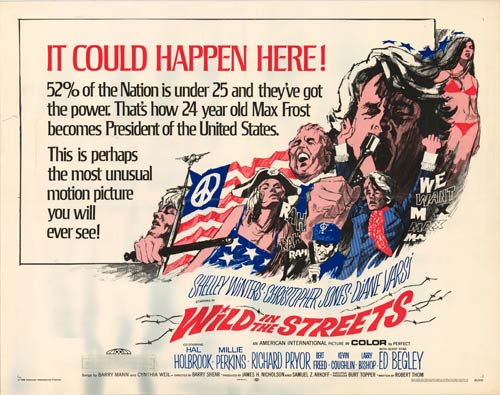
Rockin’ in the Film World #4: WILD IN THE STREETS (AIP 1968)


gary loggins's avatarcracked rear viewer

max1

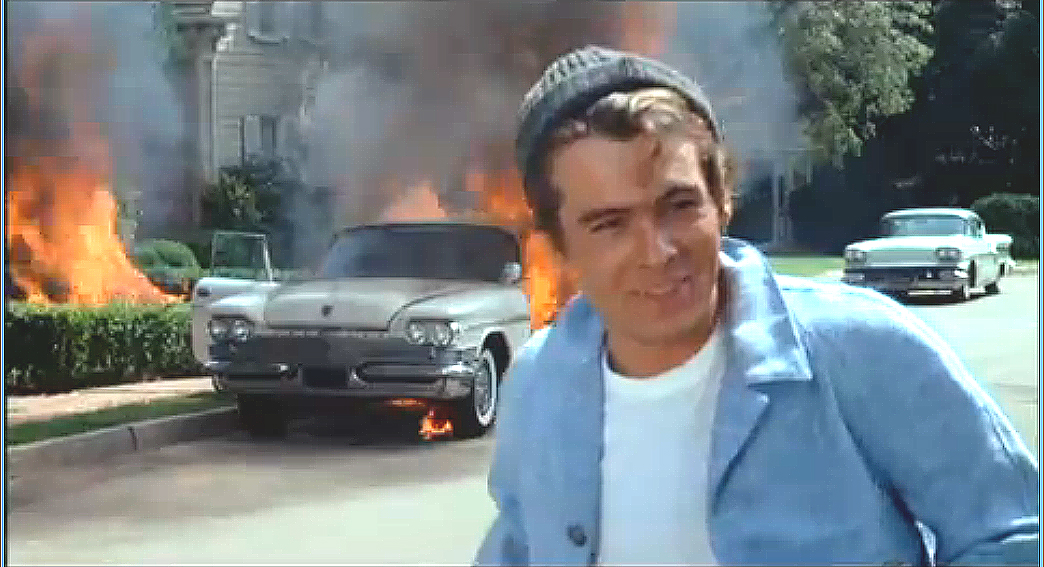
If you think today’s political climate is tumultuous and crazy, wait’ll you get a load of WILD IN THE STREETS. Filmed in the chaotic year 1968, this satirical look at the counter-culture vs the establishment revolves around a power-mad rock star whose call to lower the voting age to 14 results in him becoming President of the good ol’ USA, and sticking it to the over 30 crowd by interring them in concentration camps loaded with LSD-spiked water supplies!

max2

Christopher Jones is Max Frost, née Flatow, the charismatic leader of rock band Max Frost and the Troopers. Pre-credits flashbacks show Max’s unhappy childhood with an overbearing mother (Shelley Winters at her over-the-top best) and abrasive dad (Bert Freed). Max learns to hate all adults and dabbles in making LSD and bombs. After he blows up dad’s car, the rebellious Max leaves home and winds up becoming a mega rock star rivaling the…

View original post 945 more words

Embracing the Melodrama #25: The People Next Door (dir by David Greene)


people_next_door

For the past week, I’ve been reviewing — in chronological order — fifty of the most, for reasons good and bad, memorable  film melodramas of all time.  I started with a film from 1916 called Where Are My Children? and now, as we reach the halfway mark, we also reach the 70s.  There were several reasons why I wanted to start the 70s with the 1970 drugs-in-the-suburbs melodrama, The People Next Door.  First off, not many people seem to have heard of it and I always enjoy discovering and sharing previously obscure films.  But, even more importantly, The People Next Door stars Eli Wallach, the great character actor who recently passed away at the age of 98.  Needless to say, Wallach is great in The People Next Door but then again, when wasn’t Wallach great?

At first glance, the Masons appears to be your typical suburban family.  Patriarch Arthur (Eli Wallach) may be a bit strict but he works hard to provide his family with a good life.  Wife Gerrie (Julie Harris) may seem to be a bit nervous at times but she still works hard to maintain a perfect home.  Son Artie (Stephen McHattie) may have long hippie hair and he does devote a lot of time to his band but otherwise, he seems to be a good kid.  And then there’s 16 year-old Maxie (Deborah Winters), who is blonde and pretty and overall the ideal American girl.  Even better the Masons live next door to the friendly Hoffmans, perfect David Hoffman (Hal Holbrook), his perfect wife Tina (Cloris Leachman), and their perfect teenage son, Sandy (Don Scardino).

But guess what?

Nobody’s perfect!

Arthur is actually a smug and overbearing bully whose constant bragging hides his own dissatisfaction with how his life has turned out.  He is jealous of his son’s future and his over protectiveness of his daughter takes on a distinctly disturbing tone as the film progresses.  Arthur is also having an affair with his secretary (Rue McClanahan).

Gerrie knows about Arthur’s affair but chooses to look the other way.  She goes through her day in a haze of smoke provided by the cigarettes that she is constantly smoking.  Like Arthur, she cannot understand her children.  Unlike Arthur, she does realize that she doesn’t have all the answers.

Artie may be a good kid but he feels totally and thoroughly alienated from the rest of the family and, because of his long hair, he is the constant subject of Arthur’s abuse.

And then there’s Maxie, who everyone believes to be perfect and wholesome until one night when she’s discovered tripping on LSD.  Arthur immediately assumes that Artie must have given his sister the drugs and kicks Artie out of the house.  However, what Arthur doesn’t realize, is that Maxie is actually getting the drugs from clean-cut Sandy.  Sandy doesn’t use himself but he has no problem with dealing.

To Arthur and Gerrie’s shock, Maxie tells them that she’s been using drugs for a while and she’s sexually active as well!  When Arthur subsequently discovers Maxie snorting cocaine and living with a naked biker, it’s naturally time for everyone to get into family therapy.  Unfortunately, the therapy doesn’t really help that much and soon, Maxie is again dropping acid and dancing naked on the front lawn…

As you can probably guess from the description above, The People Next Door is one of those families-in-crisis melodramas where everything that possibly can be wrong with a family is wrong with this family.  It’s always easy to dismiss well-intentioned films like this and The People Next Door has its share over-the-top moments.  But, at the same time, the film actually works better than most of the Suburban Hell melodramas of the early 70s.

That’s largely due to the performances, with Eli Wallach in particular giving an explosive performance as an all too plausible monster and Hal Holbrook and Cloris Leachman very believably bringing to life another family which turns out to be not quite as ideal as they first appear to be.  And then there’s Deborah Winters, who starts out as being so mannered that you think she’s going to give a bad performance but then, as the film progresses, you realize that Maxie is the one giving the performance because that’s the only way she can survive her “perfect” family.

I first came across The People Next Door on YouTube and, considering how much I love exposing people to obscure films, I was really looking forward to sharing it with you on this site.  But guess what?  In the three weeks between me watching this film and me staring this post, The People Next Door was taken down from the site.  I guess somebody is really dedicating to protecting the copyright on a film that hardly anybody in the world has actually heard of.

So, unfortunately, I can only share the trailer.

Watch it below!

44 Days of Paranoia #19: Capricorn One (dir by Peter Hyams)


Last night, the temperature plunged here in Texas.  When I woke up this morning, I was confronted with a world that was literally frozen.  Needless to say, nobody in Dallas went to work today.  Instead, we all sat in our houses and tried to keep ourselves entertained.  I kept myself occupied by watching a film that was initially released way back in 1978 and which takes place in my home state.

The name of that film was Capricorn One and it’s the latest entry in the 44 Days of Paranoia.

Capricorn One begins with three astronauts preparing to take the fist manned space flight to Mars.  James Brolin is the stoic leader.  Sam Waterston is the guy who has a joke for every occasion.  And O.J. Simpson is … well, O.J. really doesn’t have much of a personality.  He’s pretty much just along for the ride.

However, it turns out that there really isn’t going to be a ride.  Just as the countdown begins, the astronauts are ordered to leave the capsule.  They are then transported to secret base in the Texas desert.  It’s here that they have a meeting with the Head of NASA, who is played by Hal Holbrook.  (It’s simply not a 70s conspiracy film if Hal Holbrook isn’t somehow involved).  Holbrook proceeds to deliver a stirring monologue where he talks about how he and Brolin have always dreamed of sending a manned flight to Mars.  However, as Holbrook explains, the life support system on the crew’s ship was faulty.  If Holbrook had allowed them to be launched, they would have died as soon as they left the Earth’s atmosphere.  However, if the mission had been canceled then there was a chance that the President would use that cancellation as an excuse to cut NASA’s funding.

So, as Holbrook explains, an empty spaceship has been launched into space.  As far as the American public is concerned, the three astronauts are currently on their way to Mars.  Now, in order to save the space program, they are going to have to fake the mission.  In a studio, a fake alien landscape has been set up and it’s from that studio that Brolin, Waterston, and Simpson will pretend to explore Mars.

Brolin, Waterston, and Simpson reluctantly agree to cooperate with the plan.  However, after doing the first fake broadcast, Brolin starts to have second thoughts.  Realizing that he can’t trust the three astronauts to keep a secret, Holbrook announces that the capsule’s heat shields failed during re-entry and that the crew of Capricorn One is now dead.  Now, all he has to do is have the three of them killed for real.

Meanwhile, a NASA technician (Robert Walden) stumbles onto evidence of the deception.  He subsequently vanishes but not before he tells reporter Elliott Gould about his suspicions.  While the three astronauts try to escape from Holbrook’s agents, Gould tries to find out what really happened to Capricorn One.

It’s probably half-an-hour too long, the plot is full of holes (the least of which being why Holbrook waited until after he had announced the fake deaths to order the real deaths), and director Peter Hyams allows a few scenes to run on and on while others seem to end with a jarring abruptness.  However, for the most part, Capricorn One is a well-acted and solidly entertaining film.  However, there are two things that make Capricorn One especially memorable.

First off, Capricorn One features one of the most exciting action sequences that I have  ever seen.  It occurs while Gould is investigating Walden’s disappearance.  After visiting Walden’s apartment and discovering that it’s inhabited by a woman who claims to have never heard of his friend, Gould is driving away when he discovers that his brakes have been disabled.  The car then starts to accelerate and Gould finds himself desperately trying to regain control as the car careens through the streets of Houston.  The scene is shot almost entirely from Gould’s point-of-view and, for five minutes, we watch as everything from other cars to unlucky pedestrians come hurtling towards the car.  For those few minutes, when the viewer and Gould become one, Capricorn One is not only exciting but it feels genuinely dangerous as well.

Secondly, Capricorn One features some of the oddest dialogue imaginable.  Peter Hyams not only directed the film but he also wrote the screenplay as well.  Watching the film, one gets the feelings that Hyams was so in love with his dialogue and with all of his quirky characters that he simply could not bring himself to cut anything or anyone.  As a result, the film is full of lengthy monologues.  When the characters speak to each other, they don’t have conversations as much as they trade quips.  Characters like Gould’s ex-wife (played by Karen Black) and his editor (David Doyle) show up for a scene or two, deliver monologues that are only tangibly related to the film’s plot, and then vanish.  Sam Waterston ends up telling the world’s longest joke while he climbs a mountain in the desert.  Towards the end of the film, Telly Savalas (who was in my favorite Mario Bava film, Lisa and the Devil) shows up as a foul-tempered crop duster and engages in a long argument with Gould who, despite being a reporter, never bothers to question why Savalas would have a crop dusting business in the middle of the desert.

But here’s the thing — it works.  As odd as some of the dialogue may be and as superfluous as some of the action is to the overall plot, it still all works to the film’s benefit.  The constant quirkiness works to keep the audience off-balance and to give Capricorn One its own unique rhythm.

Capricorn One — see it now before Michael Bay remakes it.

Other Entries In The 44 Days of Paranoia 

  1. Clonus
  2. Executive Action
  3. Winter Kills
  4. Interview With The Assassin
  5. The Trial of Lee Harvey Oswald
  6. JFK
  7. Beyond The Doors
  8. Three Days of the Condor
  9. They Saved Hitler’s Brain
  10. The Intruder
  11. Police, Adjective
  12. Burn After Reading
  13. Quiz Show
  14. Flying Blind
  15. God Told Me To
  16. Wag the Dog
  17. Cheaters
  18. Scream and Scream Again

Film Review: Lincoln (dir. by Steven Spielberg)


I am a history nerd.

If you’ve read my previous reviews here on the Shattered Lens, that’s not necessarily a major revelation.  Still, before I talk about Steven Spielberg’s latest film, the sure-to-be Oscar nominated Lincoln, you should know where I’m coming from as a reviewer.  Cinema may be my number one love but history, and especially political history, runs a close second.  To me, there is nothing more fascinating than learning how those in the past both viewed and dealt with the issues that we still face in the present.  Whereas some people take pride in being able to name every player that’s ever played for the Dallas Cowboys, I take pride in the fact that I can not only name every President and Vice President in order but I can also tell you exactly who they had to defeat in order to serve in those offices.

I love history and therefore, it was hard for me not to feel as if Lincoln was a film that was made specifically for me.  Covering the final four months of the life of the 16th president, this film tells the story of Lincoln’s struggle to pass the 13th Amendment and to bring an end to the U.S. Civil War.  The film also documents Lincoln’s troubled marriage to the unstable Mary and his son’s decision to enlist in the Union Army.  Even though Spielberg and screenwriter Tony Kushner don’t include any vampires*, there’s still a lot going on in Lincoln and it is to their credit that the film remains compelling despite the fact that everyone already knows how the story is going to end.

Daniel Day-Lewis is getting a lot of critical acclaim for his performance in the title role and, for once, I actually have to agree with the critics.  Abraham Lincoln is one of the most iconic figures in American history.  He is such an icon that, at times, it’s hard to believe that this larger-than-life figure, with his stove-pipe hat and his homely face, was an actual human being who lived and breathed and died like any other human being.  It’s easier to think of him in the same way that Jesus Christ used to be represented in films like Ben-Hur, as an inspiring character who is always standing just a little bit off-camera.  The brilliance of Day-Lewis’s performance is that he makes us believe that this legendary figure could actually exist with all the rest of history’s mortals.  For lack of a better term, Day-Lewis humanizes Lincoln.  His performance contains all the bits of the Lincoln legend: the fatalistic melancholy, the steely resolve, the quick humor, and occasional flashes of self-doubt.  The genius of the performance is the way that it takes all the legendary pieces and arranges them to create a portrait of a very believable man.

Though the film is dominated by Day-Lewis’s lead performance, the film’s supporting cast does a good job at bringing to life the people around Lincoln.  Whenever one film can manage to find roles for Hal Holbrook, David Strathairn, Jared Harris, James Spader, John Hawkes, and Jackie Earle Haley, you’ve got good reason to be optimistic about what you’re about to see.  Probably the film’s showiest supporting role goes to Tommy Lee Jones, who plays the firebrand abolitionist Thaddeus Stevens.  Admittedly, Tommy Lee Jones gives a standard Tommy Lee Jones performance here but, especially when paired with Day-Lewis’s more internal acting style, the end result is still fun to watch.  Also giving a good performance is Sally Field, who plays Lincoln’s mentally unstable wife.  Historians have rarely been kind (or fair) to Mary Lincoln but Field makes her into a difficult but sympathetic figure.  Finally, even though the role of Lincoln’s son is not a challenging one, I’m always happy whenever Joseph Gordon-Levitt shows up onscreen.

Ultimately, however, Lincoln is a Steven Spielberg film.  Spielberg is a very good director but he’s also a very safe one.  The same can be said of Lincoln as a film.  The film’s cinematography, art design, and costume design are all brilliantly done and award-worthy but it’s still hard not to occasionally wish that Spielberg would have enough faith in his audience that he wouldn’t feel the need to have John Williams provide constant musical cues to let us know what we are supposed to be feeling about what we’re experiencing.  If you’re looking for hints of moral ambiguity, an unflinching examination of the rivers of blood that flowed on the Civil War battlefield, or for an in-depth portrait of Lincoln’s personal demons (and most historians agree that he had a few), you might want to look elsewhere.  This is not Martin Scorsese’s Lincoln.  This is Steven Spielberg’s Lincoln.  This is a film that is meant to be inspiring (as opposed to thought-provoking) and, for the most part, it succeeds.

I have to admit that I went into Lincoln expecting to be disappointed.  Ever since the film first went into production in 2011, websites like Awards Daily have been hyping this film to death.  Before many of them had even seen the completed film, online critics were announcing that both the film and Daniel Day-Lewis were the clear front-runners for the Oscars in 2013.  As anyone who has read my previous reviews on this site knows, nothing turns me off more than the bandwagon mentality of the critical establishment.  Often times, when a film is embraced as vehemently and as early as Lincoln has been, I feel almost honor-bound to be a hundred times more critical of it than I would be of a film like Step Up Revolution.

However, Lincoln is a rarity.  It’s a film that, for the most part, actually lives up to all the hype.

—-

*I imagine that little joke will cause a lot of confusion to anyone who, ten years in the future, happens to stumble across this review.  To you, future reader who has forgotten all about Abraham Lincoln: Vampire Hunter, I can only apologize.