Lisa Marie’s 16 Worst Films of 2020


Well, it’s nearly February so I guess it’s time for me to start listing my picks for the best and the worst of 2020.

It’s pretty much a tradition here at the Shattered Lens that I always end up running behind as far as posting these lists are concerned.  I always think that I’m going to have everything ready to go during the first week of January but then I realize that there’s still a host of movies that I need to see before I can, in good conscience, post any sort of list.  In fact, as I sit here writing this post, I’m watching some films that could very well make it onto my best of 2020 list.

Of course, the list below is not my best of 2020 list.  Instead, below, you’ll find my picks for the 16 worst films of 2020.  Why 16 films?  Because Lisa doesn’t do odd numbers!

It probably won’t be a surprise you to see some of these films on the list.  For instance, I don’t think anyone will be shocked to see The Grudge or After We Collided mentioned.  However, I imagine that some people will be surprised to see The Trial of the Chicago 7 on the list.  What can I say?  The more I thought about it, the more it represented everything that I dislike about mainstream Hollywood filmmaking.  The fact that it’s probably going to be a major Oscar contender made it even more important to list it.  I’m sure there’s a lot of critics, for instance, who wish they had found room for Green Book when they were compiling their 2018 lists.

In the end, of course, this list is my opinion.  You’re free to agree or disagree.  That’s the wonderful thing about having an opinion.

(Also be sure to check out my picks for 2019, 20182017201620152014201320122011, and 2010!)

And now, the list:

16. John Henry (dir by Will Forbes) — I actually feel kind of bad for listing this silly B-movie as one of the worst of 2020 but it was just so slowly paced and thematically muddled that I really didn’t have a choice.

15. The Binge (dir by Jeremy Garelick) — Doing The Purge with drugs and alcohol as opposed to murder is actually a pretty cool idea so this movie has no excuse for being so dull.  There is one fun dance number that livens things up, which is why The Binge is listed at number 15 as opposed to number 3.

14. Once Upon A Time In London (dir by Simon Rumley) — London has a rich and exciting history when it comes to organized crime but you wouldn’t know that from watching this dull film.
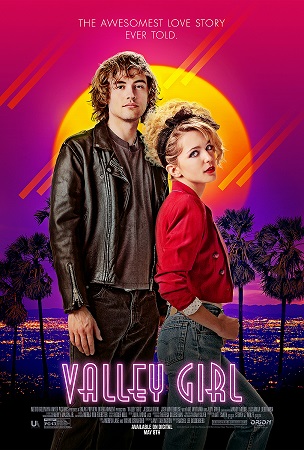
13. Valley Girl (dir by Rachel Lee Goldenberg) — This remake was a boring jukebox musical that featured 30 year-old high school students and unimaginative use of a host of 80s songs.  (A girl at the beach says that she just wants to have fun.  Can you guess what song the cast started singing?)

12. Ava (dir by Tate Taylor) — Jessica Chastain’s an assassin and …. *yawn.*  Tate Taylor was exactly the wrong director to be expected to do anything interesting with this story.

11. Blumhouse’s Fantasy Island (dir by Jeff Wadlow) — My fantasy would be for a better film.  Boom!  Roasted!  (Actually, I bet I’m the thousandth blogger to have said that.)

10. The Grudge (dir by Nicolas Pesce) — Eh.  Who cares?
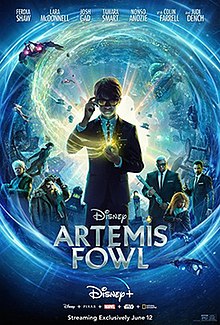
9. Artemis Fowl (dir by Kenneth Branagh) — This was a confusing movie that mixed the least interesting parts of the Harry Potter franchise with the least interesting bits of the Marvel Cinematic Universe.

8. The Murder of Nicole Brown Simpson (dir by Daniel Farrands) — I actually defended The Haunting of Sharon Tate but this semi-follow up was just too distasteful.  What was the deal with Nicole being dragged across the ceiling?  Both Mena Suvari and Nick Stahl deserve better.  So does director Daniel Farrands, for that matter.

7. The Dalton Gang (dir by Christopher Forbes) — Never has the old west looked so cheap.

6. After We Collided (dir by Roger Kumble) — This was marginally better than the first After but that’s not saying much.  The total lack of chemistry between the two romantic leads makes it difficult to care about whether or not they ever end up together.  The cloying cameo from writer Anna Todd (“What have you written?”  “Oh, this and that,”) almost made me throw a shoe at my TV.

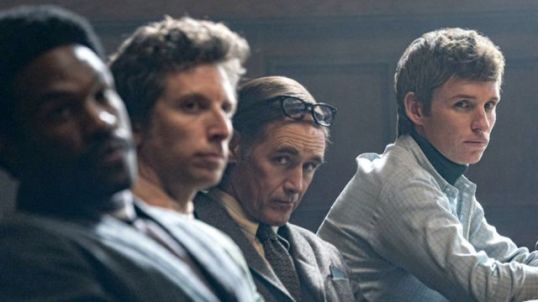
5. The Trial of the Chicago 7 (dir by Aaron Sorkin) — I liked Joseph Gordon-Levitt’s performance and the scene where Bobby Seale gets gagged in court was powerful and disturbing.  Otherwise, this movie represented Hollywood at its most vapid.

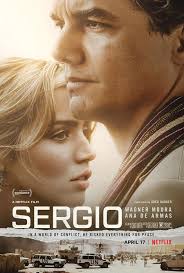
4. Sergio (dir by Greg Barker) — This was a muddled and poorly acted commercial for the United Nations.

3. A Fall From Grace (dir Tyler Perry) — Tyler Perry’s beard was the best thing about this movie.

2. The Last Thing He Wanted (dir by Dee Rees) — This was the first bad film that I saw in 2020 and it’s remained here, near the bottom of the list, for 12 months.  This movie was a muddle mess that thought it had more to say than it did.  It did feature a good performance from Willem DaFoe, which saved it from being the worst film of the year.  Instead, that honor goes to….

1. Let Them All Talk (dir by Steven Soderbergh) — This mind-numbingly dull film from Steven Soderbergh seems to be determined to troll everyone who has ever said that they’d watch Meryl Streep in anything.

Coming up tomorrow: my favorite songs of 2020!

TSL Looks Back at 2020:

  1. My Top 20 Albums of 2020 (Necromoonyeti)
  2. 25 Best, Worst, and Gems That I Saw In 2020 (Valerie Troutman)
  3. Top 10 Vintage Collections (Ryan C)
  4. Top 10 Contemporary Collections (Ryan C)
  5. Top 10 Original Graphic Novels (Ryan C)
  6. Top 10 Ongoing Series (Ryan C.)
  7. Top 10 Special Mentions (Ryan C.)
  8. Top Ten Single Issues (Ryan C)

The Things You Find On Netflix: Sergio (dir by Greg Barker)


Sergio, which dropped on Netflix last Friday, is a biopic of the Brazilian diplomat, Sérgio Vieira de Mello.  Sergio spent 34 years as a diplomat with the United Nations, going to some of the most dangerous places in the world and trying to negotiate with people who were determined to kill one another.  Sergio was so respected within the UN that he was seen as a likely candidate for Secretary-General.  Instead, in 2003, Sergio was killed in a terrorist attack while he was in Baghdad, observing the American occupation of Iraq.

Starring Wagner Moura in the title role, Sergio opens with Sergio arriving in Baghdad.  For the majority of the film, he’s buried in the rubble of his blown-up office, thinking about his past life while an American soldier (played, with quiet authority, by Garret Dillahunt) tries to dig him and his assistant, Gil (Brian F. O’Byrne) out.  Through the use of flashbacks, we watch as Sergio negotiates peace in East Timor and argues against the occupation of the Iraq.  We also watch as he meets and falls in love with Carolina (Ana de Armas), pursuing a passionate affair with her despite being married.

Sergio is a rather staid biopic.  If you’re expecting to see an Adam McKay-style screed about international diplomacy and American war crimes, that is not what this film is and we should be happy for that because, seriously, have you tried to watch The Big Short or Vice lately?  Instead, Sergio is more like a Jay Roach film without the attempts at humor.  It’s a blandly liberal biopic that is conventionally structured and a bit too convinced that the audience is going to automatically agree with its points.  Indeed, one of the film’s most glaring flaws is that it assumes that we’re all as enamored with the UN as it is.  Instead of making a case for why the UN should be taken seriously, Sergio just assumes that it is.

The other big problem with the film is that it’s just boring.  There’s nothing interesting about the film’s structure and, as portrayed in the rather bland script, both Sergio and Carolina come across as being ciphers.  We’re constantly told that Sergio is charismatic and controversial but we really don’t see much evidence of it.  The film itself doesn’t seem to know what made Sergio tick but what’s even worse is that it doesn’t seem to be particularly interested in finding out.  There’s not much interest in digging into Sergio’s mind or his motives,  The film forgets that you can portray someone as a hero and celebrate their accomplishments without necessarily idealizing them.  With the exception of one or two scenes (and there is an effective moment where one of Sergio’s assistants does call him out for putting everyone’s life in danger by refusing to accept protection from the U.S. army), Sergio is portrayed in such an idealized that he comes across as being a bit dull.  Wagner Moura is an appealing actor but there’s no depth to his performance.  Meanwhile, Ana de Armas is reduced to playing the stock girlfriend with a social conscience role.

All that said, I almost feel guilty about not liking Sergio.  The film was made with good intentions but good intentions don’t necessarily translate to compelling storytelling.


Playing Catch-Up With 6 Documentary Reviews: Packed In A Trunk: The Lost Art of Edith Lake Wilkinson, Requiem For The Dead: American Spring 2014, A Symphony of Summits: The Alps From Above, The Thread


Here are reviews of 6 documentaries that I saw in 2015:

Packed In A Trunk: The Lost Art of Edith Lake Wilkinson (dir by Michelle Boyaner)

In 1924, painter Edith Lake Wilkinson was committed to an insane asylum and lived the rest of her life in sad obscurity.  As a result of Edith’s commitment, her artwork never received the recognition it deserved.  That’s the idea behind this documentary, which follows Edith’s great-great niece as she researches Edith’s life and tries to get the art world to acknowledge Edith’s talent.  As an art history major, I really wanted to like this documentary but, unfortunately, it focused more on the self-important niece than on the artwork.  Matters were not helped by a lengthy visit with a psychic who claimed to have “contacted” Edith’s spirit.  For the most part, this was a missed opportunity.

Requiem for the Dead: American Spring 2014

This film takes a look at the hundreds of people who were murdered by someone using a gun during the Spring of 2014.  Some of the cases are examined in detail while other victims only appear for a second or two, quickly replaced by another tragedy.  The cases are recreated through 911 calls, news reports, and occasionally interviews.  It makes for sobering and sad viewing though, at the same time, it works better an indictment of our sick culture than as a call for greater gun control.

Southern Rites (dir by Gillian Laub)

Photographer Gillian Laub comes down to Montgomery County, Georgia, in order to take pictures of the town’s first integrated prom.  She sticks around to film the trial of an old white man who shot and killed a young black man.  The film has good intentions and it’s obvious that Laub is convinced that she has something important to say that hasn’t been said before but, especially when compared to the superior and thematically similar 3 1/2 Minutes, it quickly becomes obvious that neither she nor the film can offer up any new insight as far as racism in America is concerned.

A Symphony of Summits: The Alps From Above (dir by Peter Bardehle and Sebastian Lindemann)

A Symphony of Summits, which is currently available on Netflix, is basically 94 minutes of aerial footage of the Alps.  A Symphony of Summits was originally made for German television and the English-language narration track has a blandly cheerful, touristy feel to it that often doesn’t go along with the imposing images and the occasionally bloody events being discussed.  (The history of the Alps is not necessarily a peaceful one.)  My advise would be to turn down the sound, put on your favorite music, and just enjoy the beauty of the images.

Thought Crimes: The Case of the Cannibal Cop (dir by Erin Lee Carr)

Thought Crimes tells the story of Gilberto Valle, a New York Cop who, in 2013, was convicted, on the basis of comments that he made online about plotting to kidnap and eat a woman.  Valle claimed that he was just sharing a fantasy and that he had no intention of following through.  Eventually, a judge agreed with him and his conviction was overturned.  This disturbing and creepy documentary features extensive interviews with Vallee (who literally made my skin crawl) and examines some of the darkest corners of the internet.  Many times in the documentary, Vallee claimed that he would never actually hurt anyone and I didn’t believe him for a second.  (As a cop, Vallee accessed the police database to look up info on a woman he was fantasizing about abducting and cannibalizing.)  That said, Thought Crimes still raised some interesting issues about the internet as an outlet for fantasy and how seriously we should take it as an indicator for real world actions.  There are no easy answers.

The Thread (dir by Greg Barker)

The Thread is a 61 minute documentary about the Boston Marathon Bombing and how a group of wannabe detectives used Reddit and twitter to wrongly accuse a missing graduate student of being one of the bombers.  It’s interesting and occasionally cringe-inducing viewing experience, even if it really doesn’t offer up much original insight.  (Documentarians are always quicker to bemoan the rise of new media than to seriously investigate why old media collapsed in the first place.)  Among those interviewed about the rush to find a suspect is Sasha Stone, the founder and editor of AwardsDaily and yes, she is just as annoying and smugly self-important as you would expect.  (Thankfully, they did not interview Ryan Adams.)