Ghosts of Sundance Past: Minari (dir by Lee Isaac Chung)


The Sundance Film Festival is currently underway in Utah.  For the next few days, I’ll be taking a look at some of the films that have previously won awards at Sundance.

First released in 2000, Minari is a classic story of the pursuit of the American dream.

Taking place in the early 80s, the movie follows Jacob Yi (Steven Yeun), a South Korean immigrant who relocates his family from California to Arkansas.  Jacob has purchased a farm and he plans to make a fortune selling Korean produce to restaurants in Dallas.  (Dallas, I should mention, does have a very large Korean population so Jacob’s plan is not a bad one.)  Jacob is enthusiastic and confident that his plan will succeed.  His wife Monica (Han Ye-ri) is a bit less confident.  She doesn’t want to live in a mobile home and she worries about the health of her young son David (Alan Kim), who has a heart murmur.  Monica feels that her husband has dragged them out to the middle of nowhere and that he has no idea what he’s doing.  Jacob is determined to become a success and he even hires his first employee, Paul (Will Patton), a local eccentric who often walks up and down the highway with a cross on his back.

I have to admit that I was initially a bit cautious about watching Minari.  I have family from Arkansas.  When I was growing up, my family sometimes lived in Arkansas.  (When I was growing up, we moved around so much that I used to just think of Arkansas, Oklahoma, New Mexico, Louisiana, Colorado, and Texas as just being one big state that I called home.)  Arkansas is one of those states that is usually not treated particularly kindly in the movies.  For that reason, I was pleasantly surprised by Minari.  Jacob may be an outsider, as both an immigrant and a former Californian, but, for the most part, the people that he meets are kind and willing to help.  Paul is especially an interesting character.  Many movies would have treated Paul as a redneck joke but, in Minari, he’s given a certain dignity.  The cinematography is wonderful, capturing the humid beauty of not just Arkansas but the midwest in general.  Jacob and his family are 20th century pioneers, exploring what for them is a new and untouched land.

Eventually, Monica’s mother, Soon-ja (Youn Yuh-jung), comes to stay with the family.  She shares a room with David and it takes a while for David to get used to his grandmother.  (David complains that she doesn’t act like a grandmother.)  It also takes Soon-ja a while to get used to life in Arkansas.  Youn Yuh-jung won a deserved Oscar for her performance here, playing a stranger in a strange land who ultimately inspires David to find his own inner strength.  The scenes between Youn and Alan Kim are some of the strongest in the film.  Towards the end of the film, Youn has a scene that truly left me in tears.

Minari is about the pursuit of the American dream but it’s also about the strength of family.  Jacob is not always a sympathetic character but he proves himself in the end.  The film ends on an ambiguous note but I choose to believe that Jacob eventually found his fortune.

Minari won the Dramatic Grand Jury Prize and, like many so many Sundance hits in the past, it went on to be nominated for Best Picture.  It lost to Nomadland, despite Minari being a far superior film.  That’s the Academy for you.

Ghosts of Sundance Past: Waiting For The Moon (dir by Jill Godmilow)


The Sundance Film Festival is currently underway in Utah.  For the next few days, I’ll be taking a look at some of the films that have previously won awards at Sundance.

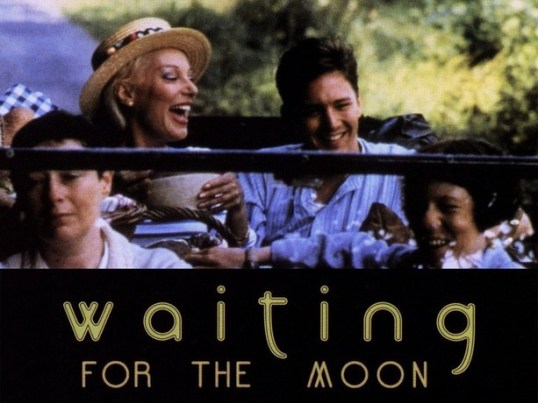
First released in 1987, Waiting For The Moon is a lowkey and fictionalized account of the relationship between Gertrude Stein (Linda Bassett) and Alice B. Toklas (Linda Hunt).

The film takes place in 1936, almost entirely at the home that Stein and Toklas shared in France.  Back in the years immediately following World War I, their home was a stopping spot for almost every writer who no longer felt at home in the conventional world.  It was the place where the members of the so-called Lost Generation met to socialize and discuss their art.  (Ernest Hemingway memorably wrote about visiting Stein and Toklas in A Moveable Feast.)  However, Waiting For The Moon takes place long after those exciting years.  Gertrude and Alice are now living a rather comfortable and settled life.  Occasionally, someone will stop by.  Hemingway (played by Bruce McGill) shows up.  Picasso stops by for a visit, though we only hear him.  But, for the most part, the film focuses on Gertrude and Alice.  The film follows them as they bicker like the old married couple that they essentially are, even if society in 1936 wasn’t willing to acknowledge it.  Alice proofreads Gertrude’s latest writing.  Gertrude waits for word from her doctor.  They talk about old times and old friends.  At one point, an aspiring writer named Henry Hopper (Andrew McCarthy) pays the two women a visit and, for a day at least, it’s like old time.  Henry is earnest and idealistic and full of plans for the future.  Unfortunately, he’s also planning on fighting in the Spanish Civil War and it doesn’t take a genius to guess that probably won’t go well.  Indeed, we learn that several of Gertrude and Alice’s old acquaintances are now fighting and dying in the Spanish Civil War.  For the so-called Lost Generation, the battle against Franco is a chance to find themselves but students of history already know how the war is going to end.  For that matter, students of history will also realize that World War II is right around the corner.  (Needless to say, the film itself offers up not a hint of the controversy that would surround Stein’s activities during the Vichy regime,)

Waiting For The Moon is a deliberately paced film, which is a polite way of saying that it’s a bit on the slow side.  That said, the scenery is beautiful and both Linda Hunt and Linda Bassett give good performances as the film’s versions of Alice and Gertrude.  Bruce McGill steals the film as the blustery Hemingway.  I’m sure Ernest would have approved.  (Could Ernest Hemingway ever be played as being anything other than blustery?)  The film captures the daydream that I think captures the fancy of many aspiring writers, the idea of being in a place where your thoughts are the center of life and all of your friends understand what it’s like to be a creative soul.

Waiting For The Moon won the Dramatic Grand Jury Prize at the 1987 Sundance Film Festival.  It’s not an easy film to find.  On Amazon, a copy on DVD runs about $52.00.  I was fortunate enough to find a copy at Half-Price Books.


Ghosts of Sundance Past: In The Company Of Men (dir by Neil LaBute)


The Sundance Film Festival is currently underway in Utah.  For the next few days, I’ll be taking a look at some of the films that have previously won awards at Sundance.

1997’s In The Company of Men is a film about two guys playing a series of very viscous jokes.

Howard (Matt Malloy) and Chad (Aaron Eckhart) are two mid-level executives who have been sent to work at a branch office for six weeks.  While Chad is talkative and aggressive, Howard is much more meek and often seems to be in awe of the far more confident Chad.  What the two men have in common is a lot of resentment and bitterness towards women.  Chad suggests that they should both date a woman at the same time and fool her into falling for both of them.  Then, they’ll both dump her at the same time.  Chad has even picked out a victim, Christine (Stacy Edwards), a deaf and introverted co-worker.

That Chad would come up with such a cruel scheme really isn’t a surprise.  From the first minute that we see Chad, we think we can tell what type of person he is.  Because this is a movie, we hold on to hope that Chad will somehow reveal that he’s not as bad as he seems but, in the end, the whole point of the film is that Chad is not only as bad as we initially think he is but he’s actually even worse.  Howard, on the other hand, comes across like a rather mild-mannered guy, the stereotypical nerdy mid-level manager who no one ever notices.  Howard could never come up with a scheme like this on his own but, once Chad suggests it, Howard agrees.  Howard is a natural follower.  He looks at Chad and he sees who he wants to be.  Chad looks at Howard and sees someone who he can easily manipulate.

Chad and Howard set their plan in motion and yes, it is difficult to watch as they both pretend to be falling in love with the sensitive Christine while making cruel fun of her behind her back.  Again, we know that at least one of the men is going to have second thoughts and try to back out of the plan.  We know this because we’re watching a movie.  We spend most of the movie hoping that Chad is going to be the one to find his conscience because Aaron Eckhart is the more charismatic of the two men and Chad is the one with whom Christine seems to be truly falling in love.  Instead, it’s Howard who falls in love with Christine while Chad remains as sociopathic as ever.  By the end of the film, Chad reveals just how manipulative he truly is and Howard discovers that Christine was not the only victim of Chad’s joke.

In The Company Of Men is not an easy film to watch.  The comments that Chad and Howard make are shockingly cruel, though one gets the feeling that they’re probably an accurate reflection of what men like Chad and Howard sound like when they’re in private.  Director Neil LaBute doesn’t make any effort to soften or excuse their misogyny.  It’s a testament to the talents of Eckhart, Malloy, and Edwards that we stick with the film.  In the end, In The Company Of Men is an unsettling portrait of misogyny and toxic masculinity, one that is made all the more disturbing by Aaron Eckhart’s charismatic performance as a truly despicable person.  The film uses Eckhart’s middle-American good looks to subversive effect and, even when he’s playing such a hateful character, there’s something undeniably fascinating about him.  You watch his performance of Chad and you’re almost desperate to find some sort of good inside of him.  It’s not there, though.  That’s what is truly frightening about In The Company Of Men.

As the 1997 Sundance Film Festival, In The Company Of Men won the Filmmaker’s Trophy.

Ghosts of Sundance Past: Longtime Companion (dir by Norman Rene)


The Sundance Film Festival is currently underway in Utah.  For the next few days, I’ll be taking a look at some of the films that have previously won awards at Sundance.

First released in 1990, Longtime Companion was one of the first mainstream feature films to deal with the early days of the AIDS epidemic.

The film follows a group of friends and lovers over the course of ten years.  The film opens with a crowded and joyous 4th of July weekend at Fire Island.  Willy (Campbell Scott) is a personal trainer who has just started a relationship with an entertainment lawyer who, due to his beard, is nicknamed Fuzzy (Stephen Caffrey).  Willy’s best friend is the personable and popular John (Dermot Mulroney).  David (Bruce Davison) and Sean (Mark Lamos) are the elder couple of the group.  Sean writes for a soap opera and one of Fuzzy’s clients, Howard (Patrick Cassidy), has just landed a role on the show.  He’ll be playing a gay character, even though everyone warns him that the role will lead to him getting typecast.  The group’s straight friend is Lisa (Mary-Louise Parker), an antique dealer who lives next door to Howard and who is Fuzzy’s sister.  The film takes it times showing us the friendships and the relationships between these characters, allowing us to get to know them all as individuals.

Even as the group celebrates the 4th, they are talking about an article in the New York Times about the rise of a “gay cancer.”  Some members of the group are concerned but the majority simply shrug it off as another out-there rumor.

The movie moves quickly, from one year to another.  John, the youngest of them, is the first member of the group to die, passing away alone in a hospital room while hooked up to a respirator.  (The sound of the respirator is one of the most haunting parts of the film.)  Sean soon becomes ill and starts to dramatically deteriorate.  It falls to David to take care of Sean and to even ghostwrite his scripts for the soap opera.  Howard’s acting career is sabotaged by rumors that he has AIDS while Willy and Fuzzy tentatively try to have a relationship at time when they’re not even sure how AIDS is transmitted.  At one point, Willy visits a friend in the hospital and then furiously scrubs his skin in case he’s somehow been infected.  When one member of the group passes, his lover is referred to as being his “longtime companion” in the obituary.  Even while dealing with tragedy and feeling as if they’ve been shunned and abandoned to die by the rest of America, the characters are expected to hide the details of the lives and their grief.

It’s a poignant and low-key film, one that was originally made for PBS but then given a theatrical release after production was complete.  Seen today, the film feels like a companion piece to Roger Spottiswoode’s And The Band Played On.  If And The Band Played On dealt with the politics around AIDS and the early struggle to get people to even acknowledge that it existed, Longtime Companion is about the human cost of the epidemic.  The film is wonderfully acted by the talented cast.  Bruce Davison was nominated for an Oscar for his sensitive performance as David.  If not for Joe Pesci’s performance in Goodfellas, it’s easy to imagine that Davison would have won.  The scene where he encourages the comatose Sean to pass on will make you cry.  Interestingly, when David gets sick himself, it happens off-screen as if the filmmakers knew there was no way the audience would have been able to emotionally handle watching David suffer any further.

Longtime Companion played at the 1990 Sundance Film Festival, where it won the Dramatic Audience Award.

Ghosts of Sundance Past: Last Night At The Alamo (dir by Eagle Pennell)


The Sundance Film Festival is currently underway in Utah.  For the next few days, I’ll be taking a look at some of the films that have previously won awards at Sundance.

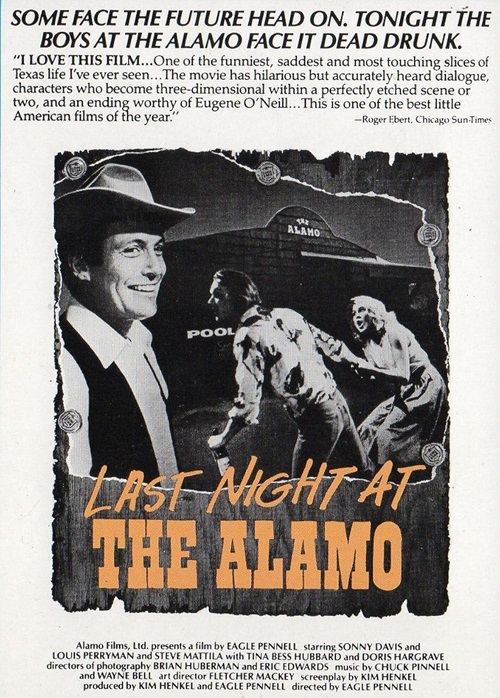
1983’s Last Night At The Alamo is the epitome of an indie film.  Filmed in black-and-white and populated with performers who possess a raw authenticity, Last Night of the Alamo takes place over the course of one long day and night.

A seedy Houston bar known as The Alamo is set to close down and the regulars come by for their final drinks.  It’s definitely a blue collar bar, a place where the conversations are loud and it seems like there’s always a possibility that a fight could break out at any minute.  Claude (Lou Perryman) shows up after getting kicked out by his wife and spends a good deal of the movie yelling and cursing into a telephone.  Ichabod (Steve Mattila), a young exterminator, spends almost the entire movie arguing with his girlfriend, Mary (Tina-Bess Hubbard).  Steve (J. Michael Hammond) is an adult who still has the personality of a high school bully.  For all the arguing and the taunting and the cursing that one hears over the course of the film, it’s also obvious that the regulars at the Alamo have formed a community of sorts.  No one is surprised when Claude starts yelling into the telephone.  That’s just Claude being Claude and he’s allowed to have his breakdown in peace.  As long as he doesn’t interrupt anyone else’s drinking, he’ll be tolerated.  It’s a very Texas attitude but then again, Last Night At The Alamo is a very Texas film.

It was written by Kim Henkel, who is probably best-known for writing the screenplay for the original Texas Chainsaw Massacre.  (Henkel also appears in the film.)  Director Eagle Pennell was one of the pioneers of the Texas film scene, making independent films about life in his home state.  (Robert Redford has said that one of the main reasons he started the Sundance Film Festival was because he was impressed with Pennell’s films and wanted to create something that would bring attention to indie filmmakers like Pennell.)  Much like many of the characters in Last Night At The Alamo, Pennell struggled with alcoholism and his promising career fizzled out as a result.  He died at the age of 49.  Legend has it that, shortly before his death, he was seen standing on a Houston streetcorner with a sign asking for either “a rich woman or a warm beer.”  Again, it’s a very Texas story.

The majority of the characters in Last Night At The Alamo look up to the bar’s best-known regular, Cowboy Regan (Sonny Carl Davis).  Cowboy is handsome and friendly, with a quick smile and a confident manner that makes him stand-out amongst the regulars at the Alamo.  He presents himself as being successful and connected and he claims that he has a friend in Austin who is going to save The Alamo from demolition.  Deep down, Cowboy is just as desperate as everyone else at the bar but he does a far better job of hiding it.  The others look up to him not so much because they believe his stories but because they want to believe them.

It’s an almost plotless film but it does a great job of capturing my home state, with its blue collar culture and its frequent embrace of hucksters like Cowboy.  Watching the film, one can see why it’s a favorite of Richard Linklater’s.  It’s a melancholy film in many regards.  Most of the characters don’t have much going for themselves.  But they do have their bar and they have the community that they bult for themselves.  The Alamo may be closing but life will continue just as surely as Ichabod and Mary will start and end every day yelling at each other.

Last Night At The Alamo was a prize winner at the 1984 Sundance Film Festival, winning the Dramatic Jury Prize.  It can be found, in all of its grainy black-and-white glory, on YouTube.

Ghosts of Sundance Past: Living in Oblivion (dir by Tom DiCillo)


As we all know, this year’s Sundance Film Festival started yesterday.

To me, Sundance has always signified the official start of a new cinematic year.  Not only is it the first of the major festivals but it’s also when we first learn about some of the films that we’ll be looking forward to seeing all year.  It seems like every year, there’s at least one successful (or nearly successful) Oscar campaign that gets it start at Sundance.  For instance, it is probable that Past Lives will receive an Oscar nomination for Best Picture on Tuesday and its campaign started with how it was received at the 2023 Sundance Film Festival.

My plan for this year is to spend the last few days of January looking at some of the films that have won awards or otherwise created a splash at previous Sundance Film Festivals.

Like 1995’s Living in Oblivion for example….

Living in Oblivion centers around the filming of an independent movie called, appropriately enough, Living in Oblivion.  The film is being directed by Nick Reve (a youngish and, I’ll just say it, hot Steve Buscemi), a filmmaker whose indie cred does not protect him from the difficulties of shooting a movie with next to no budget.  His cinematographer is Wolf (Dermot Mulroney), who is talented but pretentious and who is dating the first assistant director, Wanda (Danielle von Zerneck).  The film stars Nicole (Catherine Keener), a struggling actress who is best known for appearing in a shower scene in a Richard Gere movie.  Also appearing in the movie is Chad Palomino (James LeGros), an up-and-coming star who is appearing in Nick’s film to build up his critical reputation.  (He also assumes that Nick is friends with Quentin Tarantino.)

We don’t really learn much about the plot of the film-within-a-film.  It appears that Nicole is playing Ellen, a woman who is trying to come to terms with her abusive childhood and her romantic feelings towards her friend, Damien (played by Chad Polomino).  The scenes of the film that we see alternate between being insightful, melodramatic, and pretentious.  We see Ellen confronting her mother about her abusive childhood but we also see a dream sequence in which Ellen, who is dressed as a bride, attempts to grab an apple from Tito, a person with dwarfism (played, in his film debut, by Peter Dinklage).

To talk too much about the film’s narrative structure would be to spoil one of Living In Oblivion‘s most clever twists.  What I can safely say is that, much as with Truffaut’s Day For Night, Living In Oblivion is more concerned with the production than the film that’s being shot.  Nick struggles to keep his cool.  Nicole struggles with her fear that she’ll always just be known as the “shower girl” and with the difficulty of keeping her performance fresh through multiple retakes.  Wolf makes a point of wearing an eyepatch after claiming Wanda injured his eye and turns sullen when Nick says he doesn’t want to shoot a scene with a hand-held.  A smoke machine first produces too little smoke and then too much.  When Chad does show up on set, he is passive-aggressively tries to change the blocking of one of the film’s most important scenes.  As for the dream sequence, it’s threatened when Tito denounces the scene and his role in it as being an indie film cliche.  Throughout, director Tom DiCillo contrasts the studied structure of a finished film with the chaotic reality that goes into shooting.

Living In Oblivion is an affectionate satire, one that pokes fun at the indie film scene while also celebrating all of the hard work and different personalities that are involved in making a movie.  Steve Buscemi and Catherine Keener give heartfelt performances as two people who understand that every movie could be their last while Dermot Mulroney scores some of the biggest laughs as the self-important Wolf.  James LeGros is hilariously shallow and vain as a character who is rumored to be based on one of the biggest movie stars of the past 30 years.  (“I want an eyepatch!” Chad declares while looking at Wolf.)  Living In Oblivion is a movie that celebrates the beautiful madness of trying to shoot an important film for next to no money in a grubby warehouse.  Throughout the film, the film’s crew is forced to compromise but, at the same time, there are also the small and unexpected moments that make it all worth it.

Living In Oblivion‘s witty script deservedly won the Waldo Salt Screenwriting Award at the 1995 Sundance Film Festival.  Living in Oblivion is a celebration of both cinema and independence.

Ghosts of Sundance Past #4: Frozen River (dir by Courtney Hunt)


The 2008 film, Frozen River, tells the story of two desperate mothers.

Ray Eddy (Melissa Leo) has spent two years working as a clerk in a discount store and still cannot convince her boss to promote her to full time because, in his opinion, she’s just not “long-term employee” material.  Ray’s husband, a compulsive gambler, has vanished and taken the majority of their money with him.  Ray and her two sons live in a mobile home, where they subsist on a diet of popcorn and tang.  Every few days, a man comes by and threatens to repossess the home and leave Ray and her children homeless.  Ray always manages to talk him out of it.  If there’s anything that Ray can do, it’s talk her way out of trouble.

Lila Littlewolf (Misty Upham) is a Native American who lives on the St. Regis Mohawk Reservation and who works at a bingo parlor.  Because Lila is struggling financially and often resorts to illegal means to make ends meet, Lila’s mother-in-law has taken away her infant son.  If Ray’s defining characteristic seems to be her ability to talk her way out of trouble, Lila is quiet and often seems to be hiding from the world.

One day, while Ray is out looking for her husband, she spots Lila driving his car.  Lila claims that she found the car, sitting deserted at a gas station.  (It’s never established whether Lila is telling the truth or if she actually stole the car.)  Ray discovers that Lila makes her money by smuggling undocumented immigrants over the Canadian border and Ray soon joins her.

Frozen River takes place a few days before Christmas in Upstate New York.  There’s snow on the ground and a Christmas tree in the mobile home but there’s little holiday cheer to be found in the film.  In order to smuggle people across the border, Ray and Lila take them across the frozen St. Lawrence River and, just like the ice on the river, Ray’s occasional moments of happiness seem to be destined to only be temporary.  Just as the ice is eventually going to break, so is Ray and Lila’s operation.  One gets the feeling that it’s only a matter of time.  Ray and Lila almost immediately attract the attention of the stern State Trooper Finnerty (Michael O’Keefe).  Significantly , Finnerty’s suspicions are initially limited to only Lila and he even tries to warn Ray that she’s hanging out with a known smuggler.

Frozen River is dominated by two strong lead performances.  Melissa Leo is the one who was nominated for best actress but I actually think that Misty Upham (who tragically died a few years after this film was released) is even better.  Leo is the one who gets the big scenes and who gets to deliver all of the best lines and she does a great job with a richly written character.  Upham, meanwhile, has to largely create her character in silence.  She rarely speaks but, when she does, she makes it count.  When Ray and Lila get pulled over by Finnerty and Lila snaps that Ray will be okay because she’s white, the way Upham delivers that one line tells you so much about what has led her to be in her current situation.  When you see Upham in the background, watching Ray or Finnerty or anyone else who is standing in the way of her seeing her baby, her glare is worth a thousand monologues.  Both Leo and Upham are so good that they hold your interest even when the film’s script and direction veers towards the heavy-handed.  (Director Courtney Hunt, for the most part, does a good job of keeping things credible but it’s hard not to roll your eyes a bit when a duffel bag being carried by two refugees turns out to not contain, as Ray originally suspects, explosives but a baby instead.)

Frozen River was a hit at the 2008 Sundance Film Festival, where it won the U.S. Dramatic Grand Jury Prize.  Leo went on to receive an Oscar nomination for Best Actress, though she lost to Kate Winslet in The Reader.

Ghosts of Sundance Past #3: Crown Heights (dir by Matt Ruskin)


The 2017 film, Crown Heights, tells the story of two friends and a miscarriage of justice.

In 1980, a 19 year-old Trinidadian named Colin Warner (Lakeith Stanfield) is arrested in the Crown Heights neighborhood of Brooklyn.  Taken down to the police station, Colin is told that he has been arrested for the murder of Marvin Grant, a man who he has never heard of.  When Colin says that he is innocencent, he’s informed that eyewitnesses saw him at the scene of the crime.  Though he continues to protest his innocence, Colin is transferred to a jail where he is to await his trial.

From the start, it’s obvious that Colin didn’t have anything to do with the shooting of Marvin Grant.  What’s messed up is that the people prosecuting him know it as well.  When another prisoner tell the detectives the name of the man who actually committed the murder, his statement is ignored because he refuses to name his source.  When one of the prosecution’s witnesses testifies that he saw someone other than Colin fire the gun, the prosecutor “corrects” his witnesses’s testimony in open court. After the jury returns a guilty of verdict for Colin and another man, the judge says that he can’t be sure whether or not Colin is guilty but that he can only follow the law.  And the law says that, as an adult convicted of a crime, Colin is going to spend the rest of his life in prison.  No one in the legal establishment cares that Colin is obviously not guilty.  He’s a young black man with a minor criminal history and, by convicting him, the police can close one homicide investigation and move on to the next one.

In prison, Colin finds himself isolated, both literally and figuratively.  When he refuses to get involved with any of the prison gangs, the other prisoners shun him and he finds himself being targeted.  When a prison guard pushes Colin until Colin finally snaps and throws a punch, Colin ends up spending two years in solitary confinement.

Meanwhile, on the outside, Colin’s best friend, Carl King (Nnamdi Asomugha), attempts to prove that his friend is innocent.  That proves to be even more difficult than Carl initially expects.  No one is interested in reopening a closed case and Carl can’t even afford a good attorney to help him pursue Colin’s appeal.  Still, Carl never gives up.  He even trains to become a process server so that he can have an excuse to hang out at the court house and hopefully meet a lawyer who will be willing to take on Colin’s case.  Amazingly, that’s exactly what happens.

Of course, by this point, Colin Warner has been in prison for 20 years….

Based on a true story, Crown Heights was a hit at the 2017 Sundance Film Festival, winning the Audience Award for the U.S. Dramatic Film competition.  Watching the film, you can easily see why it was such a crowd pleaser.  Not only does the film deal with serious issues of race and economic disparity but, when watching the film, it’s impossible not to be moved by the strength of Carl and Colin’s friendship.  Despite all of the difficulties that are placed in front of him, Carl never gives up in his quest to prove Colin’s innocence and get him out of prison.  The film works as both a cry for freedom and a celebration of friendship.

The film’s execution is not quite as strong as its message.  Matt Ruskin’s direction occasionally veer towards made-for-TV (or, at the very least, made-for-HBO) territory and the film’s constant switching back and forth between Colin in prison and Carl searching for witnesses sometimes seems to prevent either storyline for really maintaining a consistent momentum.  20 years is a long time to cover in just 90 minutes and sometimes, it’s hard not to feel as if important parts of the story have been left out or, at the very least, glossed over.  That said, it’s a heartfelt film and it’s blessed with two wonderful lead performances from Lakeith Stanfield and Nnamdi Asomugha.

Crown Heights is not a perfect film but the story and the performances are powerful enough to make you think and to leave you moved.

Ghosts of Sundance Past #2: The Report (dir by Scott Z. Burns)


Remember The Report?

The Report premiered at last year’s Sundance Film Festival, where it was a hit with the critics who saw it.  Amazon acquired the distribution rights and, for the first part of 2019, The Report was one of those films that was regularly discussed as being a potential Oscar nominee.  Not only was it based on a true story but it starred Adam Driver and Annette Bening.  There are several online film critics and award bloggers who are convinced that any film featuring Annette Bening will automatically be an Oscar contender, despite the fact that it rarely seems to work out that way.

Certainly, that ended up being the case with The Report.  Despite all of the hype from Sundance, The Report kind of fizzled when it was finally released.  That it didn’t do much business at the box office makes sense because it was only given a limited release and everyone knew that it would soon be available to stream on Prime.  But even after it was made available on Prime, The Report never really seemed to make much of a dent in the public consciousness.  When the Oscar nominations were announced, The Report was not mentioned once.  Adam Driver did receive a nomination for Best Actor but it was for Marriage Story.

What happened to The Report?  It may have been too low-key for audiences (and, let’s be honest, critics) who have come to expect even a movie about a Senate committee to be experimental and overly stylized.  It could be that, even though the film was critical of the CIA and the War on Terror, it wasn’t angry enough for the same people who thought Adam McKay’s Vice was a brilliantly conceived work of political cinema.  A more realistic explanation is probably that, in this hyper political age, people didn’t want to watch a 2-hour movie about a senate staffer.  Instead, people wanted an escape from all that.

It’s understandable but it’s also a shame because The Report is a very good film.  I mean, I usually hate films like this but I was surprised by how much I liked it.

The Report deals with the efforts of Senate staffer Daniel Jones (Adam Driver) and the members of the Senate Intelligence Committee to investigate the CIA’s use of torture in the aftermath of 9-11.  Skipping back and forth through time, the film shows us how Jones was first assigned to lead an investigation into the CIA’s activities in 2005 and how, over the course of seven years, Jones puts together not one but two reports that absolutely nobody wants released.  Along the way, Jones goes from being a generally idealistic and optimistic staffer to eventually becoming the type of paranoid and obsessive man who meets with reporters in underground garages and who considers leaking classified information.  Daniel has what he believes to be proof that using torture is not only unethical but also counter-productive but, as he discovers, even the members of his own political party aren’t particularly interested in releasing his report.  Adam Driver gives a memorably intense performance of Daniel, playing him as someone whose obsession with his report sometimes threatens to push him over the edge and transform him from being a crusader to being a zealot.

Annette Bening plays Daniel’s boss, Sen. Dianne Feinstein.  It’s interesting casting and, to be honest, it doesn’t quite work.  I almost feel like it would have been better for the film to have either kept Feinstein off-screen or to have at least minimized her role.  The problem is that Dianne Feinstein is a widely-known figure and it’s jarring to see Annette Bening, another well-known figure (at least among film fans), in the role.  Bening plays Feinstein as being a ethical and serious-minded stateswoman and she does what she can with what the film gives her but, at the same time, it’s still kind of a boring performance.  The film presents Feinstein, a not uncontroversial figure, in a positive light and I’m sure some, on both the Right and the Left would say that it’s perhaps a bit too positive.  One gets the feeling that Feinstein’s main role in the film is to assure us that the system works but we just have to take one look at Adam Driver losing his mind to realize that it doesn’t.

That misstep aside, The Report still works far better than I was expecting it too.  Taking obvious inspiration from All The President’s Men, Scott Z. Burns directs the film as if it were a thriller and the deeper that Adam Driver gets into his research, the darker and more shadowy Washington D.C. seems to become.  Even though the film clearly has an agenda, Burns gives the other side a chance to make their case without presenting them as being cartoonish villains.  In other words, this is the opposite of an Aaron Sorkin or Adam McKay-style diatribe.  Instead, this is an intelligent movie about intelligent people.  It’s a film that makes some of the same points as many other similarly liberal films but it makes them without taking cheap shots or resorting to a heavy hand. Long after Vice has been forgotten, The Report will be remembered.

And, if you haven’t seen it yet, it’s on Prime!

Ghosts of Sundance Past #1: Brittany Runs A Marathon (dir by Paul Downs Colaizzo)


As we all know, this year’s Sundance Film Festival started last week on Thursday.

To me, Sundance has always signified the official start of a new cinematic year.  Not only is it the first of the major festivals but it’s also when we first learn about the films that we’ll be looking forward to seeing all year.  It seems like every year, there’s at least one successful (or nearly successful) Oscar campaign that gets it start at Sundance.  This year, for instance, people are already intrigued by Zola, Minari, Shirley, and Ironbark and it’s almost entirely due to how those films have been received at Sundance.

My initial plan for this year was to spend the last few days of January looking at some of the films that have won awards or otherwise created a splash at previous Sundance Film Festivals.  I was planning on starting last Thursday but then I came down with a terrible cold, from which I’m still recovering.

So, instead, I’m starting today.  It happens.  In the past, I would have beaten myself up over not starting on time but, if I’ve learned anything from my 10 years of writing for TSL, it’s that sometimes you just have to accept that life can be unpredictable.  Sometimes, you just have to embrace the mystery.

Anyway, to start things off, I want to take a look at one of my favorite films from last year, Brittany Runs A Marathon.

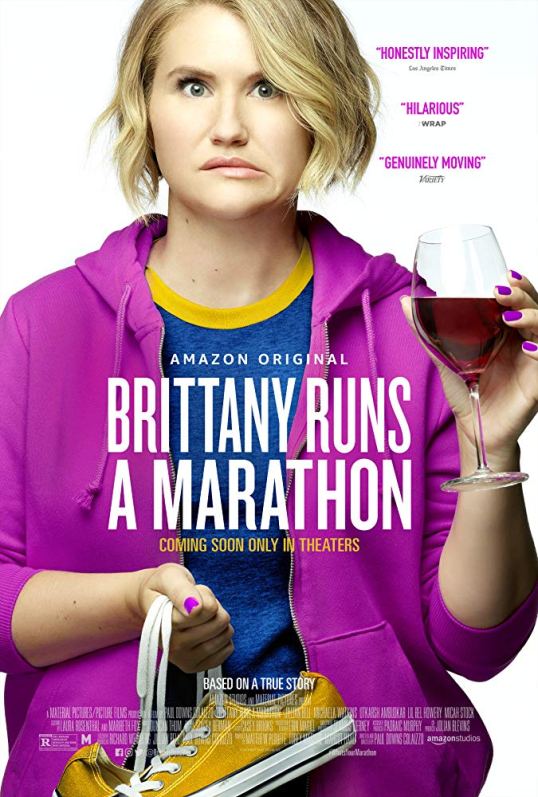
When we first meet Brittany Forgler (Jillian Bell), she is a 28 year-old New Yorker who works at a theater.  She’s single.  She’s funny.  She’s irresponsible.  She usually either drunk or hungover.  In many ways, she’s the ideal friend.  You wouldn’t necessarily want her to be your best friend, of course.  But she’s still someone who seems like she’d be the perfect member of a group, in that she can make a joke but, at the same time, she doesn’t have much of a life so you don’t have to worry about her attracting attention away from you.  Add to that, Brittany has an Adderall prescription, which she tends to abuse.  (It happens.)  Everyone loves someone who can provide them easy access to prescription medication.

In fact, it’s while she’s trying to get her prescription updated that Brittany is given some very serious news.  Her doctors informs her that she’s not very healthy.  She’s overweight and rarely gets any exercise.  Her doctor tells her that she needs to change that.  And since Brittany can’t afford to be a member of even the cheapest of gyms, it seems like the only option left is to start running.

In public.

In New York City.

Now, you can probably guess from the title that Brittany eventually comes to love running and decides that she wants to run in the New York marathon.  And you can probably guess that, about halfway through the movie, Brittany faces a crisis that causes her to consider just giving up.  As far as the running is concerned, this is a likable but occasionally predictable film.

Fortunately, Brittany Runs A Marathon is about more than just running.  It’s about growing up and taking responsibility for your life but it’s also about loving who you are, regardless of who that might be.  What makes this film so special is that Brittany doesn’t automatically become an Olympic class runner.  Nor does her life magically come together just because she manages to complete a 5k.  Instead, what makes this film so special is that it’s about Brittany finding her own happiness and accepting who she is.  When Brittany struggles, it’s impossible not to feel for her.  When Brittany succeeds, it’s impossible not to cheer.

It helps that this is also a terrifically funny film.  The dialogue is sharp and witty and Jillian Bell is one of those actresses who can make even the simplest of lines hilarious.  (She can also make them heart-breaking when she needs to.)  While Brittany is running, she’s also working as a pet sitter.  When she discovers that another pet sitter, Jern (Utkarsh Ambudkar), is essentially squatting in their employer’s house while she’s out of town, Brittany ends up moving in with him.  Everyone tells Brittany that she’s eventually going to end up sleeping with Jern.  Brittany says it will never happen.  Jern says it will never happen.  We know it will happen because Bell and Ambudkhar have such a wonderful chemistry.  They’re like a 21st century version of Tracy and Hepburn.

I wasn’t expecting much from Brittany Runs A Marathon but it’s a good film, a funny comedy with a good heart and serious points to make.  Not surprisingly, it was also loved at Sundance, where it won the Audience Award.