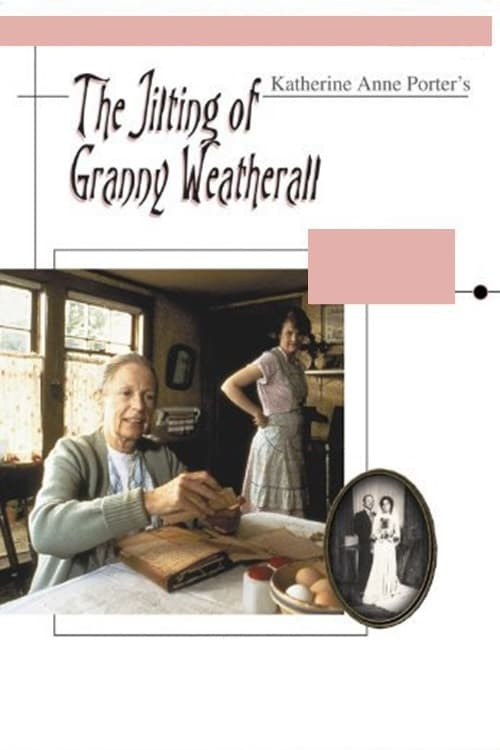
Retro Television Review: The American Short Story #16 “The Jilting of Granny Weatherall”


Welcome to Retro Television Reviews, a feature where we review some of our favorite and least favorite shows of the past!  On Saturdays, I will be reviewing The American Short Story, which ran semi-regularly on PBS in 1974 to 1981.  The entire show can be purchased on Prime and found on YouTube and Tubi.

This week, The American Short Story adapts a short story by Katherine Anne Porter.

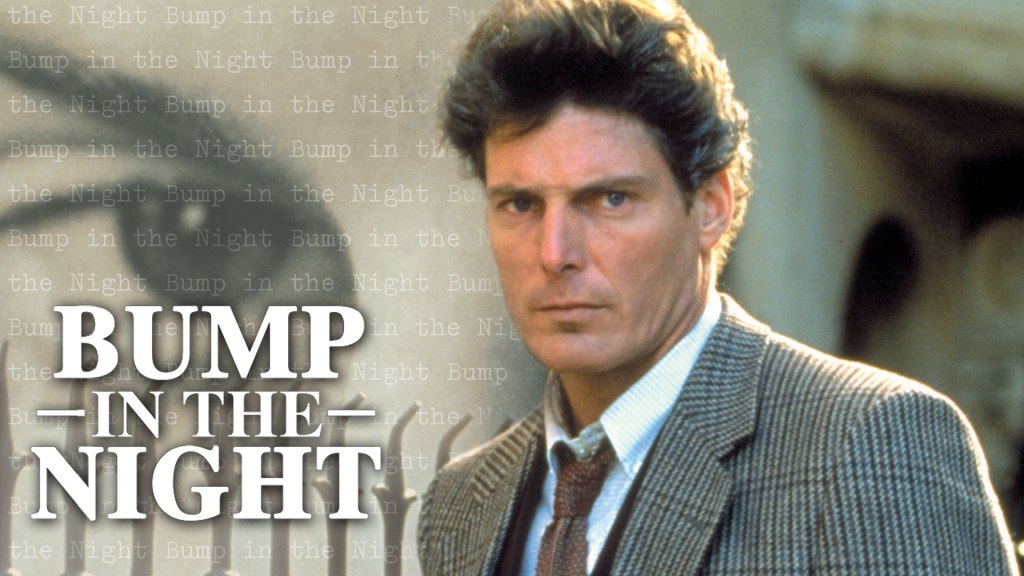
Episode #16 “The Jilting of Granny Weatherall”

(Dir by Randa Haines, originally aired 1980)

Granny Weatherall (Geraldine Fitzgerald) is dying.  While the doctor tries to comfort her and the priest tries to provide salvation, Granny obsesses on cleaning her house and getting everything in its proper place.  She thinks about how her adult daughter, Cornelia (Lois Smith), is incapable of keeping the house as clean as Granny Weatherall believes it should be.  Memories of the past and hallucinations of the present flood her mind and she remembers the time that she was jilted by a suitor and she thinks about how she has to live long enough to destroy the letters that he once wrote her.  But the coldness of death is always hovering in the background….

This episode moved a bit slowly but it was effective due to the performance of Geraldine Fitzgerald and also Randa Haines’s direction, which kept the viewer unsure of whether they were seeing reality or if they were just seeing Granny Weatherall’s dying thoughts.  The short story itself is written as a stream-of-consciousness and Haines does her best to capture that feeling in her adaptation.  One of the main problems with The American Short Story has been that most of the adaptations have struggled to capture the tone of the original stories.  The Jilting of Granny Weatherall’s visuals come very close to recreating the power of Katherine Anne Porter’s words.

Next week, The American Short Story wraps up with an adaptation of a James Thurber short story.

Retro Television Review: St. Elsewhere 2.15 “Attack”


Welcome to Retro Television Reviews, a feature where we review some of our favorite and least favorite shows of the past! On Fridays, I will be reviewing St. Elsewhere, a medical show which ran on NBC from 1982 to 1988.  The show can be found on Hulu and, for purchase, on Prime!

This week, the identity of the Ski Mask Rapist is revealed.

Episode 2.15 “Attack”

(Dir by Kevin Hooks, originally aired on February 22nd, 1984)

The Ski Mask Rapist is continuing to attack.  Off-screen, a pharmacist is assaulted while trying to catch her train.  In the hospital, a candy striper gets lost in the cavernous building and is attacked in a storage room.  When Shirley Daniels enters the storage room, she’s startled by a man wearing a pest control outfit.  She sprays him with her mace but is later told that the police do not believe that he was the rapist.  Instead, he was just a man trying to steal drugs.  When Fiscus tries to put together a list of men who will walk the women to their cars, Dr. Cavanero tells him that one of the men on his list could very well be the rapist.

Amongst themselves, the women who work at St. Eligius debate what they would do if they are attacked.  Shirley carries her mace.  Wendy says that she would use her keys as a weapon.  Jacqueline Wade says that women who don’t struggle and just submit have a better chance of surviving.  Dr. Cavanero dumps her insensitive boyfriend after he offers up a half-hearted, insincere apology for trying to force himself on her during the previous episode.  The head of the hospital’s security gives a lecture and makes the women feel like the attacks are somehow their fault.  “There’s no need to get hysterical,” he says.

(Myself, I carry mace.  I’m always scared that I’ll accidentally spray myself in the face with it but still, I carry it.)

Kathy Martin turns down the offer of a rape whistle, saying that carrying it would give her the aura of a victim.  As the episode ends, she’s attacked in the morgue.  She manages to push up the ski mask, revealing the face of …. Peter White.

It’s not really a surprise that Peter turned out to be the rapist.  I suspected it was him last week.  Rape may be classified as a sex crime but ultimately, it’s about power.  The weakest men are rapists and there’s no man on this show who is weaker than Peter White.  Before Peter attacks Kathy, we see him with a prostitute who tells him that it’s okay that he couldn’t get it up.  Peter mentions that it’s his anniversary.  Peter is weak and, looking back at the the moment he first appeared during the first season (begging Dr. Morrison to cover for him), it’s obvious that the series has been building up to the moment that he loses control.

There were other things that happened during this episode.  Geraldine Fitzgerald played a patient who Auschlander dated in his younger days.  (Now, she’s a drug addict.)  Victor and Roberta returned from their honeymoon, Victor with a painful sunburn and Roberta with a host of problems that she accidentally broadcast to the entire hospital while talking to her friend in the front office.  (You have to make sure the PA is turned off before talking about your sex life, folks.)  There was a humorous scene in which Dr. Ridley got into an argument with Roberta’s psychiatrist (Philip Sterling).  Dr. Morrison tried to figure out why his latest patient (Dan Hedaya) was suffering from sudden bouts of blindness.

In the end, though, this was a grim episode and not always an easy one for me to watch.  Honestly, if I had been a nurse or a doctor at that hospital, I would have walked as soon as it became apparent that the Ski Mask Rapist was someone inside the building.  I would have gone home and refused to come back until they caught the guy.

Kathy saw Peter’s face as he attacked her.  I fear what’s waiting for me on next week’s episode.

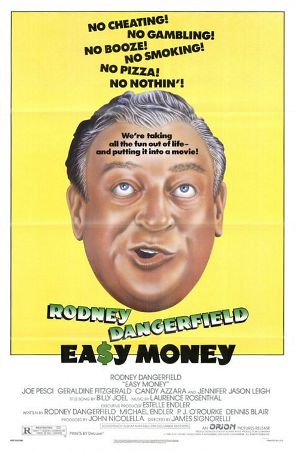
A Movie A Day #151: Easy Money (1983, directed by James Signorelli)


Rodney Dangerfield.  He didn’t get no respect but he did smoke a lot of weed.
It’s true.  Rodney first lit up in 1942 when he was a 21 year-old struggling nightclub comic.  According to his widow, the moment meant so much to Rodney that, decades later, he could still remember the room number — 1411, at the Belvedere Hotel in New York City — where he and fellow comedians Bobby Byron and Joe E. Ross smoked that first joint.  That was back when Rodney was performing under the name Jack Roy.  (His was born Jacob Cohen.)  Rodney’s first comedy career went so badly that he quit and spent the next twenty-two years as an aluminum siding salesman until he found the courage to return to the stage.  However, whether he was selling or performing, Rodney never stopped smoking marijuana.  When he was working on his autobiography, he wanted to call it My Lifelong Romance With Marijuana.  His wife convinced him to go with a different title:  It’s Not Easy Bein’ Me: A Lifetime of No Respect but Plenty of Sex and Drugs.

There’s plenty of drugs in Easy Money, which is a problem for baby photographer Monty Capuletti (Rodney, of course).  Monty likes to gamble, drink, and smoke pot, much to the disapproval of his wealthy mother-in-law (Geraldine Fitzgerald).  When she dies, she stipulates in her will that if Monty goes for a year without indulging in any of his vices, he and his family will receive 10 million dollars.  Sounds easy, right?  The only problem is that Monty really likes to eat, drink, gamble, and get high.  His best friend (Joe Pesci) doesn’t think he can do it.  His mother-in-law’s former assistant, Quincy Barlow (Jeffrey Jones), is determined to catch Monty slipping back into his old ways so that he can inherit the money.  Monty’s determined, though, to win the money for his family, especially now that his daughter (Jennifer Jason Leigh) has married the bizarre Julio (Taylor Negron).

The episodic plot is really just an excuse for Rodney to be Rodney, spouting off one liners and making snobs like Quincy look foolish.  Rodney and Joe Pesci were a surprisingly effective comedy team.  The scene where they get stoned and try to drive home without damaging the huge wedding cake in the back of the van is a hundred times funnier than it has any right being.  Even though it is hard to imagine her being, in any way, related to Rodney Dangerfield, Jennifer Jason Leigh is always a welcome presence.  Like many comedies of that era, Easy Money is uneven, with as many jokes failing as succeeding but, for Rodney Dangerfield fans, it is a must see.

My Reason to Watch WILSON (20th Century Fox 1944)


gary loggins's avatarcracked rear viewer

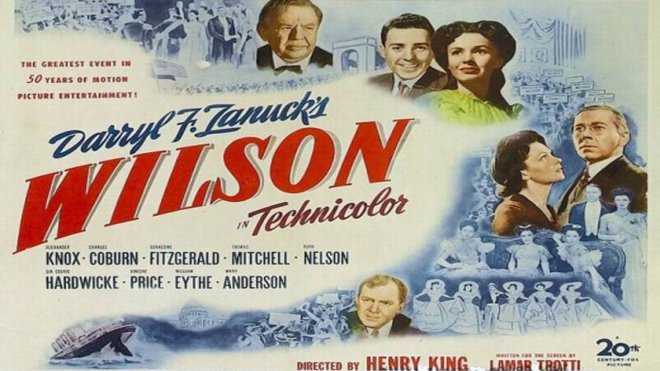
Normally I wouldn’t watch something like WILSON, producer Darryl F. Zanuck ‘s 1944 biographical box office flop about the 28th President of the United States. It didn’t sound like my cup of tea. But when I turned TCM on last night, there was Ben Mankiewicz introducing the film, so I decided I’d watch a little. I ended up watching the whole thing, and while it’s not very exciting, I did get engrossed in the movie, but not for the story.

The film itself follows the life and career of Woodrow Wilson, and his rise from President of Princeton University to Governor of New Jersey to U.S. President. How much is truth and how much fiction, I couldn’t tell you. I can tell you that character actor Alexander Knox is a dead ringer for Wilson, and pretty much carries the film with his statesmanlike manner. Ruth Nelson plays first wife Ellen, who dies a…

View original post 269 more words

Cheers for THE LAST AMERICAN HERO (20th Century Fox 1973)


gary loggins's avatarcracked rear viewer

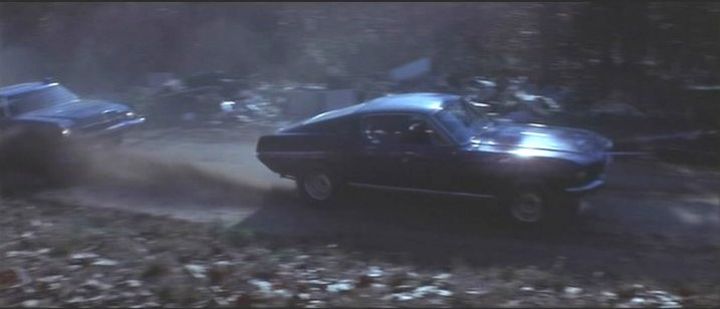
lah1

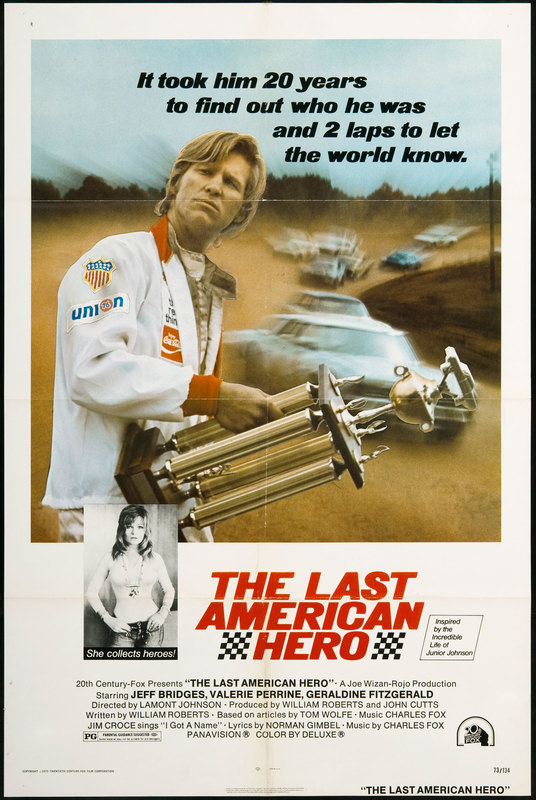
The world of NASCAR racing takes center stage in THE LAST AMERICAN HERO, a fictionalized biopic of legendary driver Junior Johnson. But this isn’t just a film about stock cars; it’s an extraordinary character study of a young man from the backwoods of North Carolina who discovers himself and what’s important to him. Jeff Bridges is outstanding in his first full-fledged starring role, demonstrating at age 24 the acting chops that have carried him to a long and prosperous film career.

lah2

Junior Jackson hauls moonshine for his Daddy on the winding backroads of  the Carolina hills, his tactics eluding the cops at every turn. He’s cocky and confident, and pisses the local law off so much they bust up Daddy’s still and send him back to prison. Junior decides to use his only marketable skill to raise money for the family while Daddy’s away – driving. He enters a demolition derby…

View original post 408 more words

Cleaning Out The DVR #6: Watch On The Rhine (dir by Herman Shumlin)


After I finished watching Around The World In 80 Days, I decided to watch the 1943 film, Watch on the Rhine.  Though both films are immortalized in the record books as a multiple Oscar nominee, Watch on The Rhine might as well have taken place in a totally different universe from Around The World In 80 Days.  Based on a play by the always politically outspoken Lillian Hellman, Watch On The Rhine is as serious a film as Around The World In 80 Days is frivolous.

It’s also somewhat infamous for being the film for which Paul Lukas won an Oscar for best actor.  When Lukas won his Oscar, he defeated Humphrey Bogart, who was nominated for his iconic performance in Casablanca.  This is justifiably considered to be one of the biggest mistakes in Oscar history and, as a result, there are people who will tell you that Watch On The Rhine is a totally undeserving nominee, despite having never actually seen the film and not being totally sure who Paul Lukas was.

Up until I watched the film yesterday, you could have included me among those people.

What’s interesting is that Watch On The Rhine almost feels like a companion piece to Casablanca.  Both films were resolutely anti-fascist, both of them dealt with a member of the Resistance trying to escape from a German agent, and both films climaxed with a gunshot.  The part played by Paul Lukas, a German engineer named Kurt Muller, feels like he could be an older version of Casablanca‘s Victor Laszlo.  Finally, whereas Casablanca centered around “letters of transit,” Watch On The Rhine centers around money.  Kurt is smuggling money to the Resistance.  Teck de Brancovis (George Coulouris), a dissolute Romanian count, demands money in exchange for not informing the Germans of where Kurt’s location.

(Of course, both Casablanca’s letters and Watch on the Rhine’s money are an example of what Hitchcock called the MacGuffin.  The letters and the money are not important.  What’s important is that both films use the thriller format to inspire viewers to support the war effort.)

The film takes place in 1940, when America was still officially neutral.  Kurt and his American wife, Sara (Bette Davis), have secretly entered the United States through Mexico.  Officially, they are only visiting Sara’s brother (Donald Woods) and mother (Lucille Watson) in Washignton, D.C.  Unofficially, they are looking for political sanctuary.  However, Kurt still finds himself drawn back to Germany, especially after he finds out that one of his friends in the Resistance has been arrested by the Gestapo.

Not surprisingly, considering its theatrical origins, Watch On The Rhine is a very talky and a very stage-bound film.  Almost all of the action takes place in one location and a good deal of the film’s running time is devoted to Kurt giving speeches.  Don’t get me wrong, that’s not a complaint.  Though the film may have been released at the height of the war, the play was written at a time when America was still officially neutral and many elected officials were adamant that, even if it meant Hitler taking over the entire continent, America should never get involved in the affairs of Europe.  Watch On The Rhine was Hellman’s attempt to both expose what was happening in Germany and to rally them to the anti-fascist cause.  Watch On The Rhine may be propaganda but its anti-Nazi propaganda and who can’t appreciate the importance of that?

When it was originally released, Watch On The Rhine was sold as a Bette Davis vehicle.  To be honest, Davis doesn’t really do much in the film.  She supports her husband and she has a few sharp words for Teck but, otherwise, her role is definitely secondary to Paul Lukas.  Davis took the role because she believed in the film’s message.  It’s a good message and, for that matter, Watch On The Rhine is a pretty good film.  It’s well-acted, intelligently written, and perfectly paced.

But what about Paul Lukas’s Oscar?  Well, let’s state the obvious.  Humphrey Bogart should have won the award for Casablanca.  That doesn’t mean that Paul Lukas doesn’t give a worthy performance.  He originated the role on stage and he does a good job of bringing the character to life on film, bringing a sincere intensity to even the most stagey of Kurt’s monologues.  Whenever Lukas speaks, he’s explaining to the filmgoers why the U.S. must take a stand against Hitler and his followers.  Considering that Watch On The Rhine was released at the height of World War II, I imagine that this, more than anything, led to Lukas winning his Oscar.

Watch On The Rhine was also nominated for Best Picture.  It was deserved nomination but, in this case, the Academy made the right decision and gave the Oscar to Casablanca.

Embracing the Melodrama Part II #31: Rachel, Rachel (dir by Paul Newman)


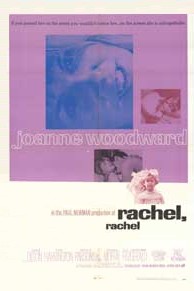
Original_movie_poster_for_the_film_Rachel,_RachelI recently saw the 1968 best picture nominee Rachel, Rachel on TCM and I have to say that, at first, I was rather underwhelmed by it.  Don’t get me wrong.  I thought it was well-acted.  I thought it managed to capture a lot of details of small town life.  I thought that, for a film made in 1968, it was surprisingly mature and nonjudgmental when it came to exploring feminine sexuality.  I was even more surprised to see a nearly 50 year-old movie that actually featured a sympathetic portrayal of a lesbian.  Just consider that the homophobic The Sweet Ride was released at the same time and you can see just how unusually progressive Rachel, Rachel was as far as this was concerned.

And yet, when I first watched Rachel, Rachel, it was difficult for me to connect with it.  And I really wasn’t sure why.  I mean, it is true that Rachel, Rachel is one of those films that moves at a very deliberate post but, trust me, I’ve seen and enjoyed many films that were a helluva lot slower than Rachel, Rachel.  But, for whatever reason, it took me two viewings to really appreciate Rachel, Rachel as a surprisingly sensitive character study.

The film is about Rachel (Joanne Woodward), a 35 year-old virgin who lives with her mother in a small Connecticut town.  Since the death of her stern and overbearing father, Rachel has lived with her mother.  She’s a withdrawn and meek woman who has frequent fantasies that veer between unrealistic happiness and nightmarish morbidity.  Her best friend, another unmarried teacher named Calla (Estelle Parsons), invites Rachel to a revival meeting and, for the first time in her life, Rachel actually allows herself to be openly passionate.  After the meeting, Calla suddenly kisses her.  Shocked, Rachel temporarily ends their friendship.

Even before the revival meeting, Rachel has run into Nick (James Olsen), a friend from high school who is in town to visit his family.  After getting kissed by Calla, Rachel ends up turning to Nick and losing her virginity to him.  Rachel believes that she’s in love with Nick and is soon fantasizing about their future children.  However, it’s obvious to everyone (except for Rachel) that Nick doesn’t quite feel the same way…

When I first saw Rachel, Rachel, I had a hard time relating to the character of Rachel.  I watched and, as much as I tried to be sympathetic, I still found myself wondering how anyone could possibly still be a virgin at the age of 35.  I mean, I understand that times were different and all but seriously!  I guess back then, people actually were serious about the whole “no sex before marriage” thing.  (That probably explains why people used to get married when they were 17.)  The film is full of largely silent flashbacks to Rachel’s youth and we see that she was raised in an emotionally repressed environment.  She was raised to wait for the right man to come along and, when he didn’t, Rachel eventually found herself as a 35 year-old virgin.

And, without getting too TMI here, let’s just say that I couldn’t relate to Rachel’s situation.

But, when I watched the film for a second time, I discovered that even if I don’t know what it’s like to be a 35 year-old virgin, a lot of Rachel’s experiences were, in their way, universal.  Consider the scene at the start of the film where Rachel fantasizes that everyone in town is staring at her as she walks down the sidewalk, all because her slip is showing.  Who hasn’t, at some point in their life, felt like everyone was staring at her and judging?  And, for that matter, who hasn’t had a Nick in their life?

Interestingly enough, Rachel, Rachel was the directorial debut of the iconic actor Paul Newman.  One thing that I’ve noticed about films directed by actors (especially first films) is that the actor-turned-director often seems to feel that he has to prove himself by indulging in as much showy cinematic technique as possible.  (And if you don’t understand what I mean, check out George Clooney’s Confessions of a Dangerous Mind.)  And, as much as I hate to admit it because I’ve never read one negative word about Paul Newman, I have to admit that Newman’s direction was one of the reasons why, at first, I found myself feeling detached from the film.

While Newman tells most of Rachel’s story in an admirably straight-forward way, he also included just a few too many arty flashbacks and fantasies.  Some of the fantasies — like the one at the start of the film that I mentioned two paragraphs ago — are handled well but others are distracting and they remind the viewer that they’re watching a film.  And Rachel, Rachel is a film that works best when it’s naturalistic.  Whenever it gets too self-consciously cinematic, it takes the viewer a few minutes to get sucked back into Rachel’s story.

But, and this is the important thing, Paul Newman also gets some great work out of his actors.  Judging from some other films in which I’ve seen him, James Olson was not a particularly good actor but he was great in Rachel, Rachel.  Estelle Parsons has been an overdramatic presence in a few films and a lot of tv shows but she’s great in Rachel, Rachel.  And then there’s Joanne Woodward, who was great in a lot of films, including Rachel, Rachel.  Newman and Woodward were married when they made Rachel, Rachel and were still married when Newman died 40 years later.  Newman reportedly directed Rachel, Rachel because he wanted Woodward to have a great role.  Woodward is on-screen throughout the entire film and Newman’s love for her is obvious in every frame.

Rachel, Rachel is a flawed and imperfect film but it’s still worth catching the next time that it shows up on TCM.

rachelrachel2

Embracing The Melodrama #8: Dark Victory (dir by Edmund Goulding)


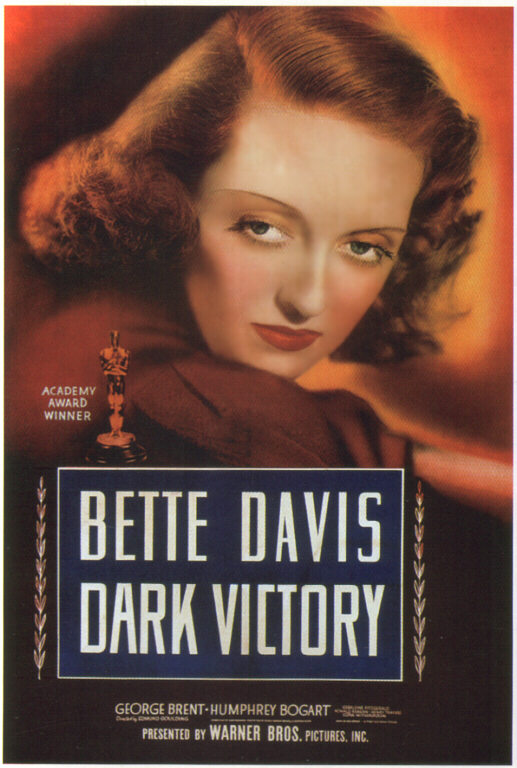
Dark-Victory

For our next melodrama, we take a look at the 1939 best picture nominee, Dark Victory.

Well, with a name like Dark Victory, you can probably guess that the story told be this film isn’t going to be a cheerful one.  Bette Davis plays Judith Taherne, a spoiled and self-centered socialite whose life revolves around hanging out with her constantly inebriated friends (one of whom is played by future President Ronald Reagan) and riding horses.  When Judith starts to suffer from double vision and headaches, she initially ignores the problem but, as her condition worsens, she finally agrees to see a doctor.

Well, as you can probably guess, the news is not good.  Dr. Parsons (Henry Travers, who is best known to us classic film lovers as Clarence Oddbody, the angel from It’s A Wonderful Life) refers her to Dr. Steele (George Brent), a brilliant neurosurgeon.  At first, Steele is reluctant to treat Judith.  He, after all, had been planning on giving up his New York medical practice so he can move to Vermont and spend his time doing research.  Judith, for her part, resents having to see him and treats him rudely.  However, when Dr. Steele discovers that Judith has a malignant brain tumor, he decides to put off moving to Vermont so that he can treat her (and, needless to say, fall in love with her as well).

After getting Judith to agree to surgery to remove the tumor, Steele discovers that the entire tumor cannot be removed and that Judith has only a few months to live.  Though Judith won’t feel any pain, she will die shortly after experiencing total blindness.  Hoping to make Judith’s last few days pleasant, Dr. Steele tells her that the surgery was a complete success and he also conspires with Judith’s loyal secretary, Ann (Geraldine Fitzgerald), to not allow Judith to find out about her terminal condition.

Steele also asks Judith to marry him and move to Vermont with him.  Judith agrees but, when she discovers Steele and Ann’s deception, she breaks off the engagement and returns to her decadent and wild ways.  Can her Irish stablehand (played by Humphrey Bogart) talk some sense into Judith before it’s too late?

If you want to nitpick, you certainly could do that with a film like Dark Victory.  Yes, the film is predictable and yes, Humphrey Bogart is a bit miscast and yes, this film probably did set a precedent for movies about independent women being both punished and redeemed by terminal illness.  Nitpick away but none of it really matters because Dark Victory works almost despite itself.

Whatever flaws the film may have, it also has Bette Davis delivering one of her best performances and making even the most overdramatic of events feel plausible and real.  Bette Davis gives a performance that runs the gamut from A to Z and then keeps running until it discovers letters that you didn’t even know existed.  (Okay, I didn’t come up with that description on my own.  A reviewer named DJ Kent said it on the IMDB but it was such a perfect description for what Bette Davis does here that I simply had to repeat it.)  Dark Victory is often described as being a “tear jerker” and, by the end of the film, I was in tears.  If even as lively and strong a character as Judith Taherne can’t beat death, what hope do the rest of us have?

But, at the same time, the film is not just about the dark.  There’s also a victory to be found in the darkness and that victory comes from the fact that even if Judith can’t beat death, she can at least face it under her own terms.  By the end of the film, you’re sad because Judith is going to eventually die but you’re also happy because she lived.

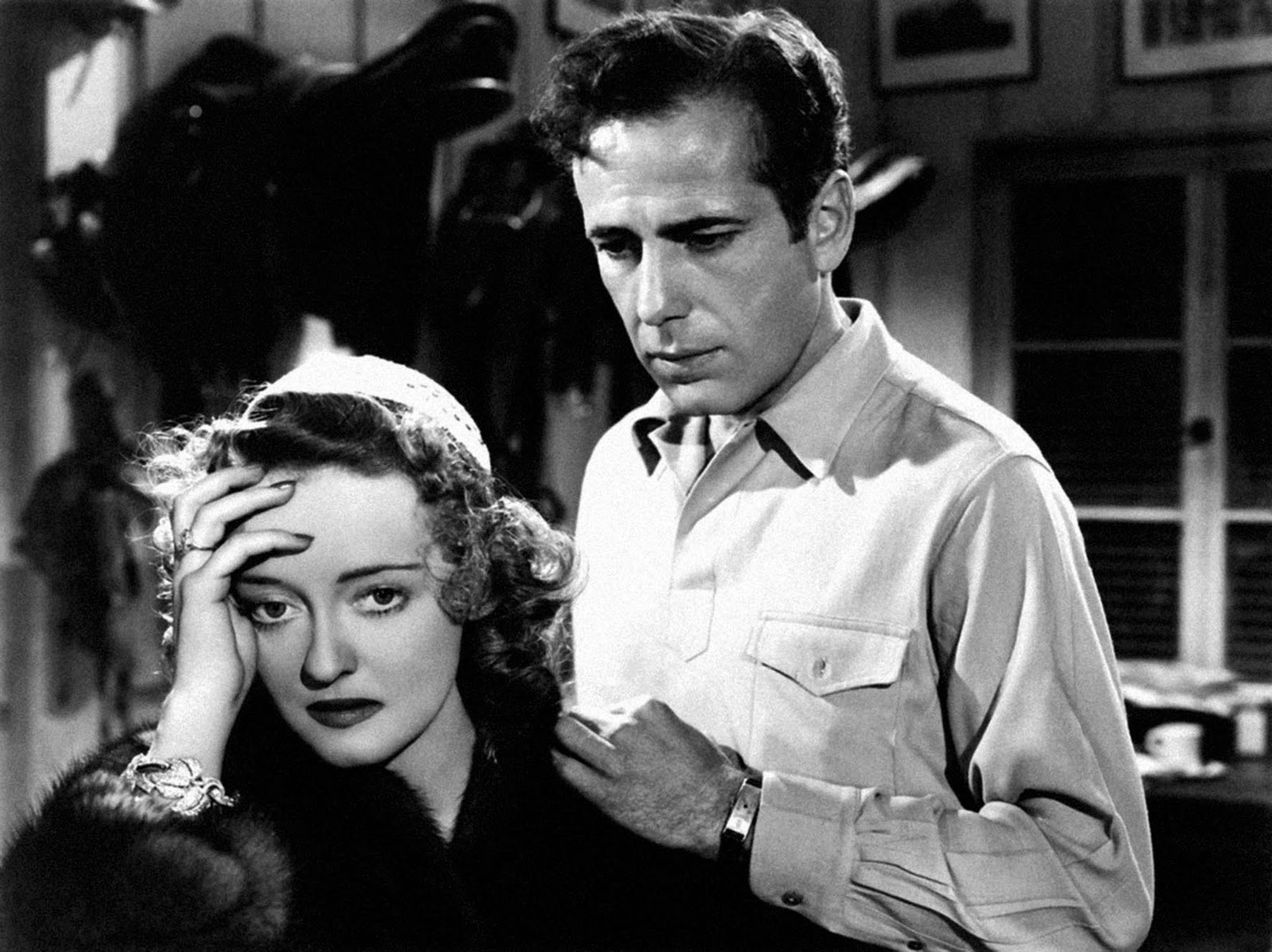
Dark Victory 3