4 Shots From 4 Films is just what it says it is, 4 shots from 4 of our favorite films. As opposed to the reviews and recaps that we usually post, 4 Shots From 4 Films lets the visuals do the talking!
Today is the birthday of one of the greatest films stars ever, Elizabeth Taylor! And you know what that means. It’s time for….
4 Shots From 4 Elizabeth Taylor Films
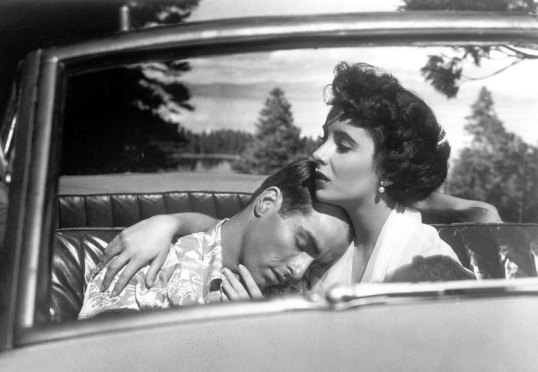
A Place in the Sun (1951, dir by George Stevens, DP: William C. Mellor)
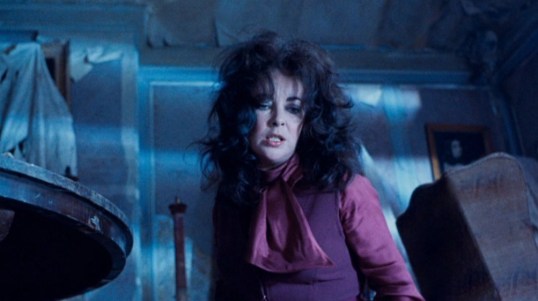
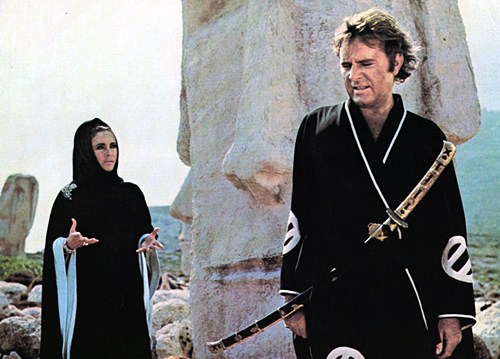
Boom! (1968, dir by Joseph Losey, DP: Douglas Slocombe)
Night Watch (1973, dir by Brian G. Hutton, DP: Billy Williams)
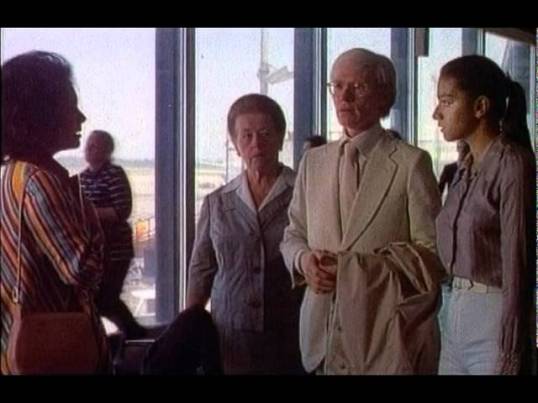
The Driver’s Seat (1974, dir by Giuseppe Patroni Griffi, DP: Vittorio Storaro)
4 Or More Shots From 4 Or More Films is just what it says it is, 4 shots from 4 of our favorite films. As opposed to the reviews and recaps that we usually post, 4 Shots From 4 Films lets the visuals do the talking!
4 Shots From 4 Texas Films
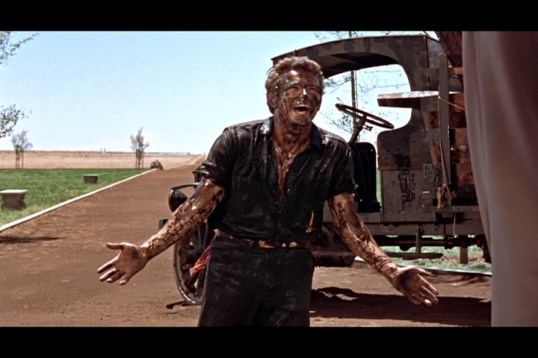
Giant (1956, Dir by George Stevens)
North Dallas Forty (1979, Dir. by Ted Kotcheff)
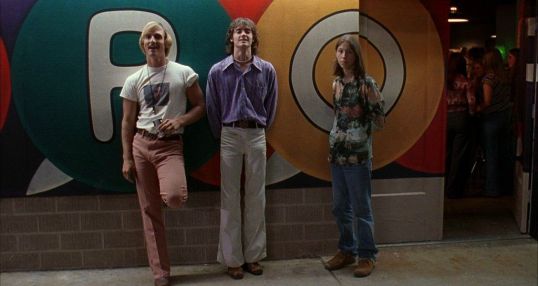
Dazed and Confused (1993, Dir by Richard Linklater)
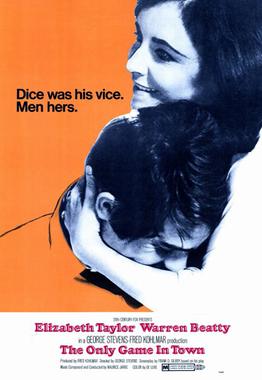
Fran Walker (Elizabeth Taylor) is an aging Vegas showgirl who has been abandoned by her married lover (Charles Braswell). A trip to a piano bar leads to her meeting pianist and gambling addict Joe Grady (Warren Beatty). Frank brings Joe home with her. Joe is trying to win $5,000 so he can leave Las Vegas and go to New York. Fran needs someone to keep her from going to back to her go-nowhere relationship. The two talk and talk. And talk.
Based on a play that closed after 16 performances, The Only Game In Town is memorable for being one of the most expensive theatrical adaptations ever produced. That’s because Taylor insisted on filming in Paris instead of Las Vegas. A set representing Fran’s tiny apartment (which is supposed to look cheap) was built on a Paris soundstage and the budget ballooned to a then unheard of $11,000,000. (By today’s standards, that would be a $90,461,391 budget for a film with two stars and only a handful of locations.) The Only Game In Town is also memorable for being the only film to feature both Elizabeth Taylor and Warren Beatty. Taylor and Beatty were actually close in age but Fran still seems to be several decades older than Joe. It was not the script’s intention but, due to the age difference, Joe comes across as being a gigolo. (Originally, Frank Sinatra was cast as Joe but he left while the sets were being made in France.) Finally, this was the final film to be directed by George Stevens, one of the great Golden Age directors who found himself struggling to keep up in a changing Hollywood. With its stagey set-up and it’s dialogue-heavy script, this film does not features Stevens’s best work.
The Only Game In Town was a huge flop when released, damaging Taylor’s already floundering career and making Beatty even more determined to eventually direct his own films. Seen today, Warren Beatty is actually pretty good in his role, even if he does come across as being too young. Elizabeth Taylor is not served well by any element of the film, from her matronly (but expensive) costumes or a script the encourages her to be shrill. The Only Game In Town was not one that anyone won.
4 Shots From 4 Films is just what it says it is, 4 shots from 4 of our favorite films. As opposed to the reviews and recaps that we usually post, 4 Shots From 4 Films lets the visuals do the talking!
Today is the birthday of one of the greatest films stars ever, Elizabeth Taylor! And you know what that means. It’s time for….
4 Shots From 4 Elizabeth Taylor Films
A Place in the Sun (1951, dir by George Stevens, DP: William C. Mellor)
Suddenly, Last Summer (1959, dir by Joseph L. Mankiewicz, DP: Jack Hildyard)
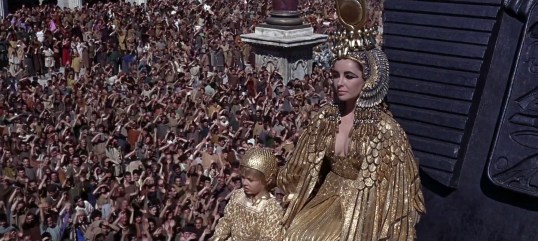
Cleopatra (1963, dir by Joseph L. Mankiewicz, DP: Leon Shamroy )
Boom! (1968, dir by Joseph Losey, DP: Douglas Slocombe)
Katharine Hepburn was famous for both her relationship with Spencer Tracy and the films that she made with him. They were such frequent co-stars and so associated with each other that “Hepburn-Tracy” became a film genre in and of itself, one that promised a bit of comedy, a bit of drama, and some sharp-witted romance. That said, I have to admit that one of my favorite of Katharine Hepburn’s film is one that she made not with Spencer Tracy but instead with Fred MacMurray. Alice Adams is a Tracy-Hepburn film without Tracy.
First released in 1935 and based on a novel by Booth Tarkington (who was quite a big deal back in the day even if, like Arrowsmith‘s Sinclair Lewis, he’s somewhat forgotten today), Alice Adams stars Hepburn as the title character. Alice is the daughter of Virgil Adams (Fred Stone) and his wife, who is only referred to as being Mrs. Adams (Anne Shoemaker). Virgil is a sickly man who has worked as a clerk at a glue factory for several years. Despite living in a rather large house and having a maid named Malena (Hatti McDaniel), the Adams family is not wealthy. However, Mrs. Adams desperately wants the family to be rich and Alice carries herself with the airs of a wealthy woman, despite the fact that everyone in town knows that she’s not. Alice love her family and is loyal to them, even if her younger brother (Frank Albertson, who later played Sam “Hee Haw” Wainwright in It’s A Wonderful Life) appears to be addicted to gambling and her mother is constantly browbeating her father for not being more ambitious. Her family may embarrass her but we know she wouldn’t trade them for all the money in the world. That’s why we like Alice, even if she does sometimes act like a snob.
However, when Alice meets and falls for the wealthy Arthur Russell (Fred MacMurray), she lies about her social background and tries to present herself as being just as rich as him. When she invites Arthur and his parents to her house for a dinner party, she frantically tries to keep up the charade of being wealthy. Meanwhile, Virgil finds himself wrongly accused of stealing from his boss (Charley Grapewin) and, as a result, the family’s financial future is put in jeopardy.
Alice Adams is a mix of screwball comedy and social drama. On the one hand, Alice’s desperate attempts to throw the perfect party are frequently very funny. Katharine Hepburn was always at her best when she played a flighty character and the contrast between Alice’s sophisticated airs and Alice’s actual personality makes me laugh every time that I watch the film. At the same time, there’s a definite undercurrent of melancholy to the film. Alice and her mother are both so desperate to be rich that they’ve both been blinded to just how wonderful their lives really are. Alice may like Arthur and Arthur definitely likes Alice but one never forgets that a part of Alice’s attraction to Arthur is that Arthur can give her the life to which she aspires.
Alice Adams features one of Hepburn’s best performances and it’s a rare Hepburn performance to which anyone watching should be able to relate. At some point in our lives, we’ve all felt like Alice. We’ve all been Alice, even if we don’t want to admit it. Fred MacMurray’s natural likability serves him well as Arthur. He comes across like a genuinely nice guy and we definitely want him and Alice to end up together.
Alice Adams was nominated for Best Picture but it lost to a much bigger production, Mutiny on the Bounty. Bette Davis beat Katharine Hepburn for Best Actress. Davis later said that she felt Hepburn should have won.
Ever since the birth of film, Robert Louis Stevenson’s Dr. Jekyll and Mr. Hyde has been a popular subject for adaptation. Not only does the classic story of a good doctor who unleashes his evil instinct via potion serve as a potent metaphor for everything from sexual repression to drug addiction, but the dual role of Dr. Jekyll and Mr. Hyde has provides an excellent opportunity for an actor to show off.
The first film adaptation of Dr. Jekyll and Mr. Hyde is believed to have been made in 1908. Two more version followed in 1912 and 1913 and then, suddenly, 1920 saw three different film versions.
The best known of the 1920 version is our film for today. This version is best remembered for John Barrymore’s powerful performance in the title role but it also holds up remarkably well as a work of cinematic horror.
The 1965 biblical epic, The Greatest Story Ever Told, tells the story of the life of Jesus, from the Nativity to the Ascension. It’s probably the most complete telling of the story that you’ll ever find. It’s hard to think of a single details that’s left out and, as a result, the film has a four hour running time. Whether you’re a believer or not, that’s a really long time to watch a reverent film that doesn’t even feature the campy excesses of something like The Ten Commandments.
(There’s actually several different version of The Greatest Story Ever Told floating around. There’s a version that’s a little over two hours. There’s a version that’s close to four hours. Reportedly, the uncut version of the film ran for four hour and 20 minutes.)
Max von Sydow plays Jesus. On the one hand, that seems like that should work because Max von Sydow was a great actor who gave off an otherworldly air. On the other hand, it totally doesn’t work because von Sydow gives an oddly detached performance. The Greatest Story Ever Told was von Sydow’s first American film and, at no point, does he seem particularly happy about being involved with it. von Sydow is a very cerebral and rather reserved Jesus, one who makes his points without a hint of passion or charisma. When he’s being friendly, he offers up a half-smile. When he has to rebuke his disciples for their doubt, he sounds more annoyed than anything else. He’s Jesus if Jesus was a community college philosophy professor.
The rest of the huge cast is populated with familiar faces. The Greatest Story Ever Told takes the all-star approach to heart and, as a result, even the minor roles are played by actors who will be familiar to anyone who has spent more than a few hours watching TCM. Many of them are on screen for only a few seconds, which makes their presence all the more distracting. Sidney Poitier shows up as Simon of Cyrene. Pat Boone is an angel. Roddy McDowall is Matthew and Sal Mineo is Uriah and John Wayne shows up as a centurion and delivers his one line in his trademark drawl.
A few of the actors do manage to stand out and make a good impression. Telly Savalas is a credible Pilate, playing him as being neither smug nor overly sympathetic but instead as a bureaucrat who can’t understand why he’s being forced to deal with all of this. Charlton Heston has just the right intensity for the role of John the Baptist while Jose Ferrer is properly sleazy as Herod. In the role Judas, David McCallum looks at the world through suspicious eyes and does little to disguise his irritation with the rest of the world. The Greatest Story Ever Told does not sentimentalize Judas or his role in Jesus’s arrest. For the most part, he’s just a jerk. Finally, it’s not exactly surprising when Donald Pleasence shows up as Satan but Pleasence still gives a properly evil performance, giving all of his lines a mocking and often sarcastic bite.
The Greatest Story Ever Told was directed by George Stevens, a legitimately great director who struggles to maintain any sort of narrative momentum in this film. Watching The Greatest Story Ever Told, it occurred to me that the best biblical films are the ones like Ben-Hur and The Robe, which both largely keep Jesus off-screen and instead focus on how his life and teachings and the reports of his resurrection effected other people. Stevens approaches the film’s subject with such reverence that the film becomes boring and that’s something that should never happen when you’re making a film set in Judea during the Roman era.
I do have to admit that, despite all of my criticism of the film, I do actually kind of like The Greatest Story Ever Told. It’s just such a big production that it’s hard not to be a little awed by it all. That huge cast may be distracting but it’s still a little bit fun to sit there and go, “There’s Shelley Winters! There’s John Wayne! There’s Robert Blake and Martin Landau!” That said, as far as biblical films are concerned, you’re still better off sticking with Jesus Christ Superstar.
4 Shots From 4 Films is just what it says it is, 4 shots from 4 of our favorite films. As opposed to the reviews and recaps that we usually post, 4 Shots From 4 Films lets the visuals do the talking!
Today is the birthday of one of the greatest films stars ever, Elizabeth Taylor! And you know what that means. It’s time for….
4 Shots From 4 Elizabeth Taylor Films
A Place in the Sun (1951, dir by George Stevens)
Suddenly, Last Summer (1959, dir by Joseph L. Mankiewicz
From 1942 to 1944, a teenage girl named Anne Frank lived in hiding.
She and her family lived in what was sometimes called The Secret Annex, three stories of concealed rooms that were hidden behind a bookcase in an Amsterdam factory. At first, it was just Anne, her older sister Margot, and their parents. Eventually, they were joined by another family and eventually a dentist, with whom Anne did not get along. Life was not easy in the concealed space and tempers often flared. As the months passed, Anne had a romance-of-sorts with Peter, the teenage son of the other family, but she wondered if she truly felt anything for him or if it was just because they were stuck together. Anne looked forward to someday returning to school and seeing all of her old friends, again. However, she knew that she could not leave the Annex until the Nazis had finally been forced out of the Netherlands. She and the other occupants had to remain in hiding and they had to remain perfectly quiet eight hours a day because they were Jewish. If they were discovered, they would be sent to the camps. So, they waited and Anne kept a diary.
Tragically, the Nazis did eventually discover the Secret Annex. Of the 8 occupants, only Anne Frank’s father, Otto, would survive the war. The rest died in various concentration camps. Anne Frank’s mother starved to death in Auschwitz. Her older sister, Margot, was 19 when she fell from her bunk and, because she was in such a weakened state, was killed by the shock. Anne Frank, it is believed, died a few days after Margot. She died at the Bergen-Belsen Concentration Camp, one of the 17,000 prisoners to succumb to Typhus. Before she died, Anne Frank spoke with two former schoolmates who were also being held at Bergen-Belsen. She told them that she had believed her entire family was dead and that she no longer had any desire to go on living.
However, Otto Frank did survive and, at the end of the war, he returned to the Secret Annex. That’s where he discovered Anne’s diary. After editing it (a process that Anne, who aspired to be a journalist, had already started doing shortly before she was arrested), Otto arranged for the publication of the diary. The Diary of A Young Girl (or, as it was titled in some countries, The Diary of Anne Frank) was a bestseller and has remained one ever since it was first published. Along with being recognized as being one of the most important books ever written, it’s also been adapted for both stage and screen.
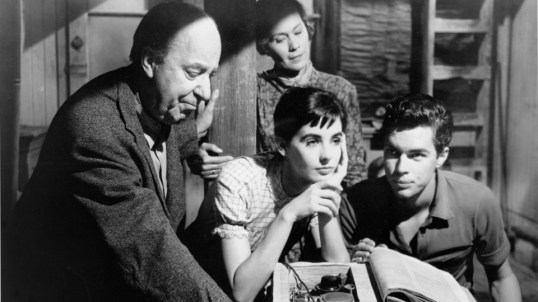
The first such screen adaptation was in 1959. It was directed by George Stevens and it starred 20 year-old Millie Perkins as Anne. (Perkins bore a great resemblance to Audrey Hepburn, who was reportedly Otto Frank’s preferred choice for the role. Hepburn turned him down, saying she would have been honored to have played the role but believed that she was too old to believable as a 14 year-old.) Joseph Schildkraut played Otto while Diane Baker played Margot and Gusti Huber played Edith Frank. The Van Daans were played by Shelley Winters and Lou Jacobi while Richard Beymer played their son (and Anne’s tentative boyfriend), Peter. Ed Wynn, who was best known as a comedian, played the role of Albert Dussell, the dentist to whom Anne took a dislike. (The surviving family of Fritz Pfeffer — who was renamed Dussell in Anne’s diary — objected to the way he was portrayed in both the book and the film.)
As a film, it has its flaws. George Stevens specialized in big productions but that was perhaps not the proper approach to take to an intimate film about a teenage girl coming-of-age under the most difficult circumstances imaginable. Because this was a 20th Century Fox production from the 50s, The Diary of Anne Frank was filmed in Cinemascope, which made the annex itself look bigger than it should. Scenes that should feel claustrophobic often merely come across as being cluttered.
But, in the end, the story is so powerful and so important that it doesn’t matter. Though the Annex was recreated on a Hollywood sound stage, the exteriors were actually filmed in Amsterdam. When we see the outside of the factory where the Frank family lived, we are seeing the actual factory. When we see repeated shots of the uniformed Nazi police patrolling the streets at night, we know that we’re seeing the actual view that Anne Frank undoubtedly saw many a night from the Annex. And because we know the story, we begin the film knowing how it’s going to end and that adds an even greater weight to each and every scene. It’s impossible not to relate to Anne’s hopes for the future and it’s just as impossible to not mourn that Anne never lived to see that future.
Stevens originally planned for the film to end with a scene of Anne at Bergen-Belsen. To their discredit, 20th Century Fox removed the scene after preview audiences complained that it was too upsetting. People should be upset while watching (or, for that matter, reading) The Diary of Anne Frank. Even today, there are people who still seem to struggle with acknowledging the enormous evil that was perpetrated by the Nazis and their allies. As a result, it’s not uncommon to find people who, when they don’t outright deny that it happened, try to minimize the Holocaust. It’s a disgusting thing. There was recently a viral video, which was released by NowThis that featured a student at George Washington University saying, “What’s going to happen if there’s another Holocaust? Well, we’re seeing what’s happening. We’re seeing people die at the border for lack of medical care. That’s how Anne Frank died. She didn’t die in a concentration camp, she died from typhus.” NowThis later said that the student meant to say that Anne Frank “didn’t die from a concentration camp, she died from typhus,” and you really have to wonder just how fucking stupid someone has to be to think that 1) that’s somehow an improvement on what was originally said and 2) that typhus and the concentration camp were not essentially the same thing. Even if one accepts that the student misspoke, it would seem that her main complaint was the the concentration camp didn’t have proper medical care, as opposed to the fact that it was specifically created to imprison and kill Jewish people. It’s an astounding combination of ignorance and antisemitism. NowThis later edited her comments out of the video, which again seems to miss the point of why people were upset in the first place. Instead of just saying, “Hey, this idiot is a Holocaust denier and, regardless of whether she hates Trump as much as we do, we want nothing to do with her,” NowThis instead said, “Well, if that comment offends you, we’ll take it out and you won’t have to hear it.” To me, that’s why The Diary of Anne Frank is still important and why it should still be read and watched and studied. There are too many ignorant people and craven, weak-willed organizations out there for us to turn our backs on teaching history.
The Diary Anne Frank was nominated for best picture of the year. While Shelley Winters won the Oscar for Best Supporting Actress, the Best Picture Oscar went to Ben-Hur. Interestingly enough, Ben-Hur’s director, William Wyler, was originally interested in directing The Diary Anne Frank before George Stevens was brought on board.
4 Shots From 4 Films is just what it says it is, 4 shots from 4 of our favorite films. As opposed to the reviews and recaps that we usually post, 4 Shots From 4 Films lets the visuals do the talking.
On this date, 64 years ago, James Dean was killed in a tragic car accident. At the time of his death, he had already filmed East of Eden, Rebel Without A Cause, and Giant. East of Eden would be the only one of his starring roles that Dean would live to see. Dean went on to be nominated for two posthumous academy awards and, in death, he became an icon that will live forever.
If James Dean were still alive today, he would be 88 years old. Would he still be acting? It’s hard to say, of course. Some actors retire and some don’t. (Robert Duvall, for instance, is 88 and still doing films. For that matter, Norman Lloyd is 104 and apparently still reading scripts.) If Dean were alive today, he wouldn’t be that much older than the stars of The Irishman.
In honor of James Dean’s career and his legacy, here are….







 Through the Shattered Lens