Retro Television Review: Fantasy Island 5.12 “The Magic Camera/Mata Hari/Valerie”


Welcome to Retro Television Reviews, a feature where we review some of our favorite and least favorite shows of the past!  On Tuesdays, I will be reviewing the original Fantasy Island, which ran on ABC from 1977 to 1984.  Unfortunately, the show has been removed from most streaming sites.  Fortunately, I’ve got nearly every episode on my DVR.
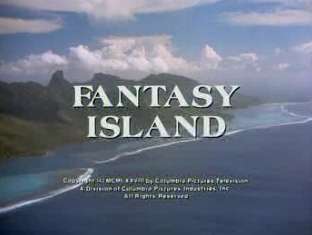
This week’s episode presents your erstwhile reviewer with a bit of an ethical quandary.

Episode 5.12 “The Magic Camera/Mata Hari/Valerie”

(Dir by Don Chaffey and Don Weis, originally aired on January 16th, 1982)

I don’t feel completely comfortable about reviewing this episode of Fantasy Island and I’ll tell you why.

Occasionally, Fantasy Island would broadcast an extra-long episode.  These episodes would typically feature three fantasies as opposed to the usual two.  Unfortunately, when these long episodes were syndicated, one of the fantasies would be edited out so the episode would fit into an hour-long slot.  Usually, the editing was not particularly smooth, either.  The end result would usually be an episode that seemed oddly paced and the performances of Ricardo Montalban and Herve Villechaize would often seem uneven as well.  As such, it’s neither easy nor particularly fair to review those edited episodes.  When it comes to reviewing, I always want to see the complete episode.

And yet, now that the original Fantasy Island is no longer streaming anywhere (seriously, what the Hell, Tubi?), I’m stuck using the episodes that I have on my DVR.  And that means reviewing the edited, syndicated versions of these episodes.

As you can probably guess, this is one of those edited episodes.  The Valerie fantasy was removed for syndication.  That’s a shame because Valerie featured the final televised performance of actor Christopher George, a charismatic B-movie veteran who is pretty popular around the Shattered Lens offices.  It also featured Michelle Phillips, though apparently she did not return as the mermaid who she played earlier on the show.  I’d love to review Valerie but I can’t.  And that sucks,

As for the other two fantasies, one is basically a remake of the Lillian Russell fantasy, except this time Martha Harris (Phyllis Davis) goes into the past and finds herself transformed into her great-grandmother, Mata Hari.  She gets to dance.  She gets to spy.  She gets thrown in prison and sentenced to death but, fortunately, her life is spared when the firing squad’s rifles are filled with blanks and she’s given a drug by one of the men who is in love with that makes her appear to be dead.  This was a enjoyable fantasy, mostly because of the costumes and the melodrama.

The other fantasy features Bob Denver, coming to the Island for the second week in a row.  This time, he’s a photographer who wants to take the type of pictures that the world’s greatest photographers couldn’t.  Because of the awkward way the fantasy was stated, the photographer ends up with a camera that takes pictures of the future.  At first, the photographer is really happy and uses his camera to commit a little insider trading.  But then he takes a picture of a newspaper and sees a headline announcing his death in a fiery auto accident.  Uh-oh!

Again, neither of the two fantasies is bad (though the second one does require a certain tolerance for Bob Denver that some people may not have) but it was hard for me to enjoy them knowing that I was missing out on a third fantasy.  For that reason, I assigning this episode a grade of incomplete.  If I ever get a chance to watch the complete episode, uncut, I’ll revisit this review but until then, I really can’t give an overall grade to this episode.

Finally, for those keeping track, both Julie and Tattoo join Roarke when it’s time to greet the guests.  That’s only second time that’s happened this season.

A Movie A Day #291: Pale Blood (1990, directed by V.V. Dachin Hsu and Michael W. Leighton)


Someone is murdering women in Los Angeles and draining them of their blood.  A mysterious detective named Michael Fury (George Chakiris) arrives from London and starts to investigate.  Fury is a vampire but he is a thoroughly modern vampire.  He even has his own special travel coffin that he takes with him on trips.  To help him with his investigation, he hires a researcher named Lori (Pamela Ludwig).  Lori is convinced that the killings are being committed by a real vampire but Michael believes that they are actually the work of a human who is only pretending to be one of the undead.  Michael is worried that this fake vampire will make real vampires look bad.  Meanwhile, a crazy photographer (Wings Hauser) stalks Michael, determined to capture a vampire of his very own.

Pale Blood went straight-to-video and does not have the budget to match its ambitions but it is still a fairly good, if overlooked, vampire movie.  George Chakiris, who is best known for his role in West Side Story, had the right look to play a brooding vampire and he and Pamela Ludwig made a good team.  Not surprisingly, the best thing about Pale Blood was Wings Hauser.  In this movie, Wings Hauser gave a performance that was demented even by the standards of Wings Haauser.  Hauser is so crazy in this movie that Pale Blood sets the standard by which all other crazy Wing Hauser performances must be judged.

One final note: the vhs cover art, which is pictured above, features a shot of Wings Hauser that was apparently lifted from a different movie.


Embracing the Melodrama Part II #25: West Side Story (dir by Robert Wise and Jerome Robbins)


West_Side_Story_poster

Nearly two weeks ago, I started on something that I call Embracing the Melodrama, Part II.  For the next month or so, I will be reviewing, in chronological order, 126 examples of cinematic melodrama.  I started things off by reviewing the 1927 classic Sunrise and now, 24 reviews later, we’re ready to start in on one of my favorite decades, the 1960s!

And what better way to start the 60s than be taking a look at the 1961 best picture winner, West Side Story?

Being a lifelong dancer, I have to admit that I’ve lost track of how many times I’ve seen West Side Story.  If you love to dance, this is one of those films that you simply have to see.  Of the various musicals that have won best picture, West Side Story is arguably the best.  Based on a hit Broadway show (which was itself rather famously based on William Shakespeare’s Romeo and Juliet), West Side Story was co-directed by the great choreographer Jerome Robbins and it features some of the greatest dance numbers ever filmed.  If you don’t get excited while watching the Sharks and the Shark Girls arguing about America, then there’s really no hope for you.  Tonight Quintet, Somewhere, A Boy Like That, Maria … even Gee, Officer Krupke, has there ever been another musical score that just leaves you wanting to sing as much as West Side Story does?

(I mean, I’ll be the first admit that I absolutely love the theme song from Santa Claus Conquers The Martians but it can’t even compare to West Side Story!)

What’s funny is that, in between viewings of the film, I always seem to forget just how good West Side Story actually is.  (Fortunately, this also means that I’m pleasantly surprised every time I watch the movie.)  In theory, this is an easy film to joke about.  It tells the story of street gangs who are apparently just as good at dancing as they are at fighting.  The all-white Jets snap their fingers and tell us that when you’re a jet, you’re the best.  The Puerto Rican Sharks are moving in on the Jets’s territory.  The two leaders of the gangs — Riff (Russ Tamblyn) and Bernardo (George Chakiris) — want to settle thing with a “rumble.”  And it’s easy for contemporary audiences to laugh because “rumble” is such an old-fashioned way of saying things that it’s now one of those terms that’s only used when one is trying to be ironic or snarky.

(For instance, I was with some friends at the movies and the people sitting behind us kept talking.  One of my friends told them to shut up.  One of the loud people replied that we were the ones who need to shut up.  As the insults escalated, I finally said, “Y’all — do we really have to have a rumble right now?”  Unfortunately, everyone was too busy arguing to appreciate my pitch perfect delivery.)

Riff’s best friend is Tony (Richard Beymer).  Tony was a co-founder of the Jets but now, he wants to move on from the gang.  He meets a girl named Maria (Natalie Wood) and the two of them fall in love.  However, Maria is Bernardo’s younger sister.  Her best friend, Anita (Rita Moreno), is Bernardo’s girlfriend.  Loving Tony, in other words, is prohibido.

And, since West Side Story is based on Romeo and Juliet, you can probably guess to what type of tragedy all of this leads.

Now, before I heap too much praise of West Side Story, I do need to admit that, in the role of Tony, Richard Beymer does not exactly radiate charisma.  He’s handsome enough but you never quite buy that he was former member of the Jets.  Since Tony’s singing voice was dubbed by Jimmy Bryant, you do believe everything that he sings.  But otherwise, Richard Beymer comes across as being stiff and rather awkward.

And it doesn’t help, of course, that he’s acting opposite Russ Tamblyn who, in the role of Riff, is a whirlwind of unstoppable energy.  Tamblyn is the one who you remember at the end of the film, followed by George Chakiris.  Compared to those two, Richard Beymer’s performance is just dull.

Fortunately, there’s Maria (played by Natalie Wood with Marni Nixon doing the singing).  Natalie Wood is one of my favorite of the classic Hollywood actresses.  She’s certainly one of the actresses with whom I most idenitfy.  With Richard Beymer sleepwalking through the role of Tony, it falls on Natalie to provide some true emotion to the film’s love story and that’s exactly what she does.  Every time I see West Side Story, I want to be Natalie Wood and I want to have a best friend like Rita Moreno and I want to meet someone like Riff…

Sorry, Tony.

West Side Story is one of the best musicals ever made.  If you’re not dancing and then crying and then dancing while crying as you watch West Side Story, then you’re doing it wrong.

http://www.youtube.com/watch?v=yA_aFprGzyc

A Psychedelic Quickie With Lisa Marie: The Big Cube (dir by Tito Davison)


I recently discovered that I have about 66 movies recorded on my DVR.  A few of these, like Bend it Like Beckham and Thirteen, are films that I always make it a point to watch whenever they show up on television.  But the majority of them are movies that I just happened to spot while going through the guide and I thought they looked intriguing.  These are movies that I have not been in any hurry to watch but, at the same time, I’m still glad to know that they’re waiting for me whenever I do feel like watching them.

Well, that time has come.  In the month of February, TCM is going to be showing a lot of old Oscar nominees which means that I need to make some space on the DVR.  For the past week, I’ve been going through all of my recorded films and watching them.  While many of them turned out to be rather forgettable, I’ve also come across quite a few that, regardless of quality, made me happy I had taken the time to set them to be recorded.

Case in point: The Big Cube.

What makes The Big Cube such a memorable film?

Four words: Lana.  Turner.  On.  Acid.

The Big Cube was first released in 1969, a fact that’s obvious during every minute of the film.  Lana Turner plays Adriana Roman, a famous stage actress who, following the final performance of a hilariously (and unintentionally) bad play, announces that she is retiring from the theatre so that she might marry the fabulously wealthy Charles Winthrop (Dan O’Herlihy).

Charles has a daughter, a spoiled brat named — wait for it — Lisa (Karin Mossberg).  Interestingly enough, despite the fact that Charles speaks with a pronounced Irish accent, Lisa speaks with a thick Swedish accent that makes the majority of her dialogue almost impossible to understand.  (Adding to the film’s general strangeness is that all of Mossberg’s dialogue is dubbed, which makes you wonder why the film’s producers didn’t, at the very least, hire a voice-over actress who could have at least sounded somewhat believable as Charles’s daughter.)  Lisa is resentful of Adriana, viewing her as competition for both her father’s affection and his money.

Since this movie was made in 1969, Lisa also spends all of her time hanging out with hippies who, in this film, are presented as being the equivalent of pure evil.  They hang out at a “hip” nightclub known as Le Dream where they spend their time secretly slipping sugar cubes laced with LSD into the drinks of strangers.  Or, as one random hippy puts it, “I’m going to cube that mother!”

The source of all of this LSD is Johnny (George Chakiris), a medical student who ends up dating Lisa and conspiring to drive her stepmother insane.  Each night, they secretly slip Adriana LSD, which leads to Lana Turner bugging out her eyes while multi-colored spiral graphs appear on the walls around her.  (And again, we’re reminded that this film was made in 1969, when all you needed to do to let the audience know someone was having a bad trip was to make excessive use of a zoom lens and color filters.)

Eventually, all of this leads to Adriana being struck with amnesia.  How can her mind be fixed?  Could the solution possibly be for Adriana’s playwright friend (Richard Egan) to write a play that reveals the conspiracy against Adriana and then to cast Adriana in the lead role?  And is it possible that along with restoring Adriana’s mind, this play will also allow her to return to the stage and discover that Egan is secretly in love with her?

The Big Cube deserves to be seen just because it’s such a weird and over-the-top film but, beyond that, it’s fascinating as a piece of history.  In 1969, mainstream Hollywood filmmakers were still struggling to figure out how to deal with the counterculture and, even more importantly, how to continue to appeal to young filmgoers who no longer had much in common with the establishment.  The end result were a collection of films that either tried desperately and earnestly to prove that, despite all appearances to contrary, the Hollywood studios really did understand and sympathize with the disaffected youth of America or films like The Big Cube in which old school movie stars like Lana Turner were menaced by long-haired men and amoral girl in miniskirts.

Perhaps not surprisingly, the evil hippy films are a lot more fun than the good hippy films and, as far as evil hippy films are concerned, The Big Cube is one of the more entertaining, even if most of the film’s pleasures are unintentional.  Not only do you get to watch some of the most evil hippies in history but you also get the once-in-a-lifetime experience of seeing Lana Turner on acid!

Seriously, what better way is there to spend 90 minutes?

(Even better, by watching The Big Cube, I could finally delete it from DVR and make some room for the next episode of Downton Abbey….)

Dance Scenes I Love: “America” from West Side Story


There’s no way that I could ever write about the dance scenes that I love without including at least one scene from 1961’s best picture winner, West Side Story.

Sadly, people tend to underappreciate West Side Story.  They focus on the fact that the singing voices of Natalie Wood and Richard Beymer are overdubbed by Marni Nixon and Jimmy Bryant, respectively.  They laugh at the sight of “tough” street kids dancing around and singing that when you’re a jet, you’re the best.

Well, they’re wrong.

West Side Story is still one of the best musicals ever made and every time I see it, it’s a magical experience for me.

I think my favorite number from the film remains America.  Watching this scene, you can tell why both Rita Moreno and George Chakiris won Academy Awards for their performances.  They both bring a lot of fire and passion to their roles and nowhere is that more apparent then in America.