Review: The Monster Squad (dir. by Fred Dekker)


“Creature stole my Twinkie.” – Eugene

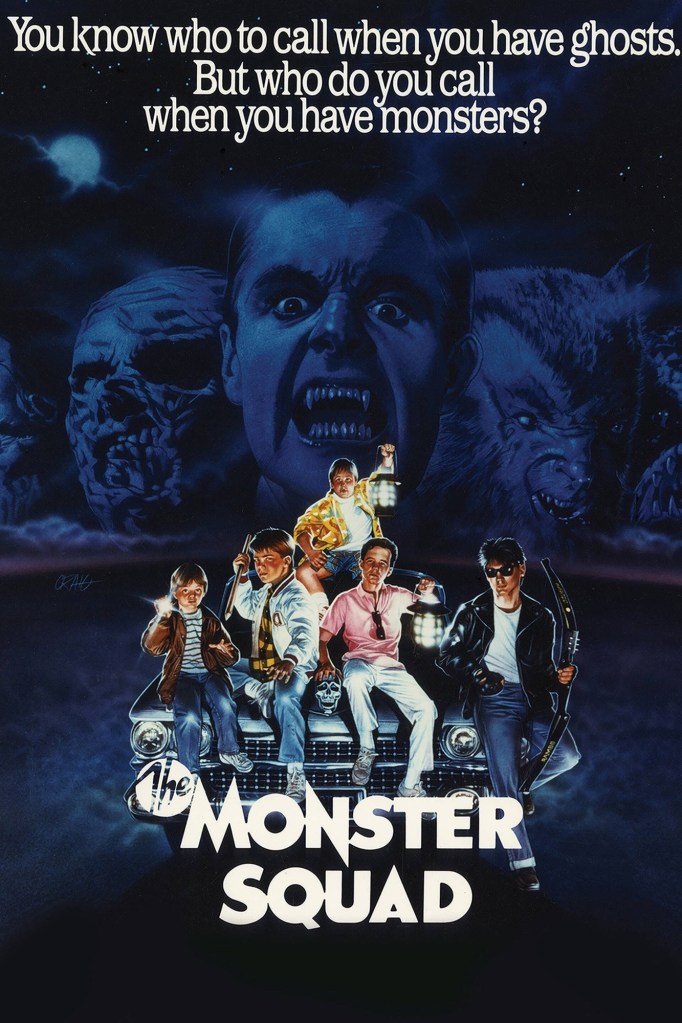
Released in 1987, The Monster Squad has lived one of those strange afterlives that cult films sometimes enjoy—ignored or even ridiculed upon release, only to become a beloved artifact for the generation that found it later on VHS. Directed by Fred Dekker and co-written with Shane Black, the movie occupies an awkward but endearing space between horror, comedy, and kids’ adventure. It never fully settles into one tone, and that’s part of both its charm and its problem. Watching it today, the film feels like The Goonies took a detour through a drive-in double feature of Dracula and The Wolf Man. It’s clunky, funny, occasionally mean-spirited, and loaded with enthusiasm—qualities that make it a thoroughly guilty pleasure for fans of ’80s genre mashups.

The story wastes no time getting into its madcap premise. A group of suburban preteens calling themselves “The Monster Squad” find that the classic Universal-style monsters are real, and worse, they’ve come to town. Count Dracula has a plan to plunge the world into darkness using an ancient amulet, and to succeed he enlists a roster of familiar faces: Frankenstein’s Monster, the Mummy, the Gill-Man, and the Wolf Man. This roster is fan-service before fan-service was a marketing term—a kid’s monster toybox brought to life. The squad, of course, must stop them, armed with comic-book knowledge, wooden stakes, and a blend of reckless courage and youthful sarcasm.

Dekker’s direction and tone play like a movie made for kids but smuggled in some heavy teenage energy. There’s violence, crude jokes, and occasional language that Hollywood would never let slip into a PG-friendly franchise today. Yet that rough edge is part of why The Monster Squad aged into cult status. It’s unapologetically of its time, operating on the belief that kids can handle scares as long as they’re fun and that suburban fantasy can, for a while at least, coexist with real danger. The movie’s depiction of childhood feels filtered through a stack of comic books and Creepshow issues—hyper absurd but still emotionally grounded in a way only ’80s adventure films seemed to pull off.

The kids themselves are a mixed bunch of believable archetypes. There’s Sean (André Gower), the de facto leader with a bedroom plastered in monster movie posters; Patrick (Robby Kiger), his wisecracking sidekick; Rudy (Ryan Lambert), the too-cool-for-school older kid who smokes, rides a bike, and somehow becomes the squad’s weapons specialist; and Eugene (Michael Faustino), the youngest, who still sleeps with his dog and writes letters to the Army for backup. They’re joined by Horace, nicknamed “Fat Kid,” played with surprising vulnerability by Brent Chalem. Each character is drawn broadly but memorably, and even when the dialogue veers into dated humor, there’s an underlying sincerity. You can tell Dekker and Black really liked these kids. They might use slingshots and one-liners, but what unites them is their intense sense of loyalty to one another—the kind of friendship that survives both bullies and broomstick-wielding vampires.

If there’s an emotional anchor, oddly enough, it’s the relationship between the squad and Frankenstein’s Monster, played by Tom Noonan in an unexpectedly gentle performance. When the creature befriends the kids, particularly little Phoebe (Ashley Bank), the film shifts momentarily from wisecracks to something close to tenderness. Noonan gives the character a shy uncertainty, a weary loneliness that offsets the visual absurdity of the rubbery monsters around him. There’s even a tinge of tragedy in his final act, which echoes Frankenstein’s literary roots—a moment of real feeling buried inside an otherwise loud and gleefully messy creature romp.

The monsters themselves, created by legendary effects artist Stan Winston, are among the film’s biggest draws. Each design feels like a loving upgrade to the old Universal look—recognizable but more feral, angular, and rooted in late-’80s aesthetics. The Wolf Man, for example, looks simultaneously comic and menacing, while the Gill-Man costume still impresses for its texture and movement decades later. The decision not to rely on stop motion or heavy opticals gives the monsters a tactile presence that CGI could never capture. There’s something about watching full-bodied suits and prosthetics move in real space that makes the threats feel tangible even when the stakes are goofy. These creatures are fun to look at, even when the script doesn’t give them much to do beyond roar and stalk across smoke-filled sets.

Shane Black’s fingerprints are all over the dialogue—the sardonic banter, the genre in-jokes, the affection for both pulp tropes and subverting them. But perhaps because the film was marketed partly as family adventure and partly as horror spoof, it often can’t decide whether to play sincere or ironic. Some scenes lean heavily on nostalgic affection for monster movies, while others feel almost mean in their mockery of small-town innocence. The tone whiplash means The Monster Squad doesn’t build much consistent momentum; one minute it’s heartfelt, the next it’s a barrage of sarcastic one-liners. Still, its rough tonal juggling has a ragtag energy that keeps it lively, and the sheer commitment to blending genres is endearing.

When it comes to pacing, the movie flies by in under 80 minutes, which turns out to be both blessing and curse. On one hand, there’s no filler—every scene moves briskly to the next piece of monster mayhem. On the other, the movie’s emotional beats and mythology barely have time to breathe. We get glimmers of backstory (like Dracula’s cryptic hunt for the amulet and Van Helsing’s prologue battle) that hint at a larger world that the film never really explores. You sense that Dekker and Black were operating under the fantasy logic of childlike storytelling: don’t explain too much, just move fast enough that no one questions it. It works, more or less, because of the film’s sheer enthusiasm, but it leaves you imagining a richer version of this story that never quite made it onscreen.

Looking back from today’s lens, some parts of The Monster Squad show their age more harshly. Certain lines and stereotypes that went unnoticed in the ’80s now feel jarring, even uncomfortable, and the film’s cavalier tone sometimes undercuts moments that should feel more innocent. Yet despite that, most viewers who revisit it with awareness of its era find themselves disarmed by its sense of fun. There’s no cynicism driving it—it’s pure genre love, messy and sincere, like a handmade Halloween costume that’s somehow cooler precisely because it’s imperfect. The film represents a time when kids’ movies were allowed to have teeth, blood, and a few scary moments, trusting that a young audience could handle being spooked without needing everything smoothed over.

For many fans, The Monster Squad works less as a polished film and more as an experience—a flashback to VHS sleepovers, bad pizza, and rewinding favorite scenes. The movie’s newfound appreciation, fueled by screenings and documentaries like Wolfman’s Got Nards, speaks to that nostalgic bond. It’s less about objective greatness and more about the feeling it preserves. Sure, some of the jokes fall flat, and the plot functions mostly as connective tissue between monster gags, but few movies embody the gleeful chaos of late-’80s pop horror as affectionately as this one does.

The Monster Squad earns its title. It’s not a flawless film, nor even a particularly coherent one, but it’s deeply fun, carried by the conviction that monsters—real or imaginary—are made to be fought with courage, humor, and friends who have your back. Watching it now is like flipping through an old comic book you used to love: you can see every crease and faded color, but that doesn’t make it any less special. And in a cinematic era saturated with irony and nostalgia pastiche, The Monster Squad still feels refreshingly earnest about its own weirdness. Maybe that’s its secret power.
Review: The Predator (dir. by Shane Black)


“Gentlemen, remember… they’re large, they’re fast, and fucking you up is their idea of tourism.” — Traeger

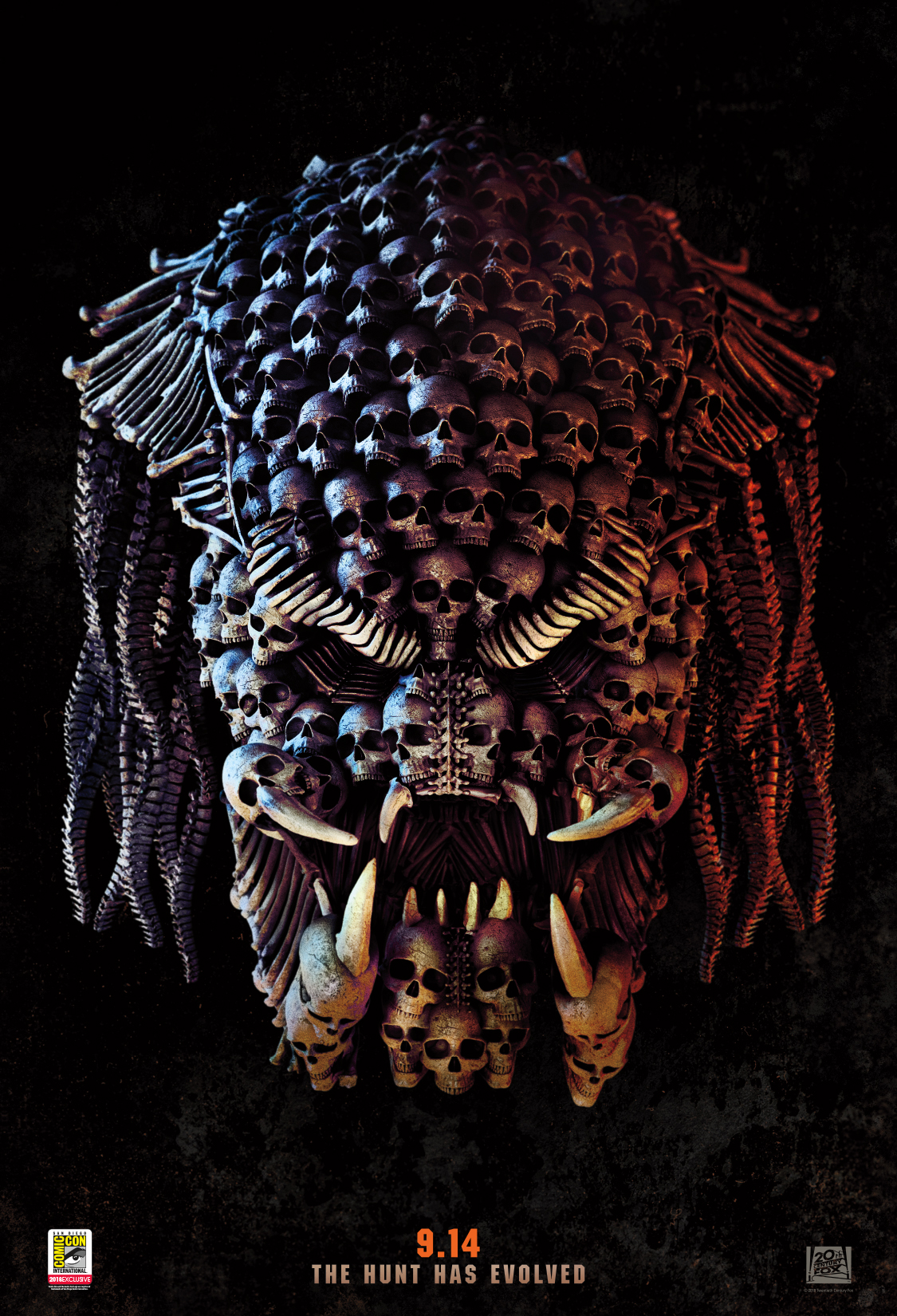
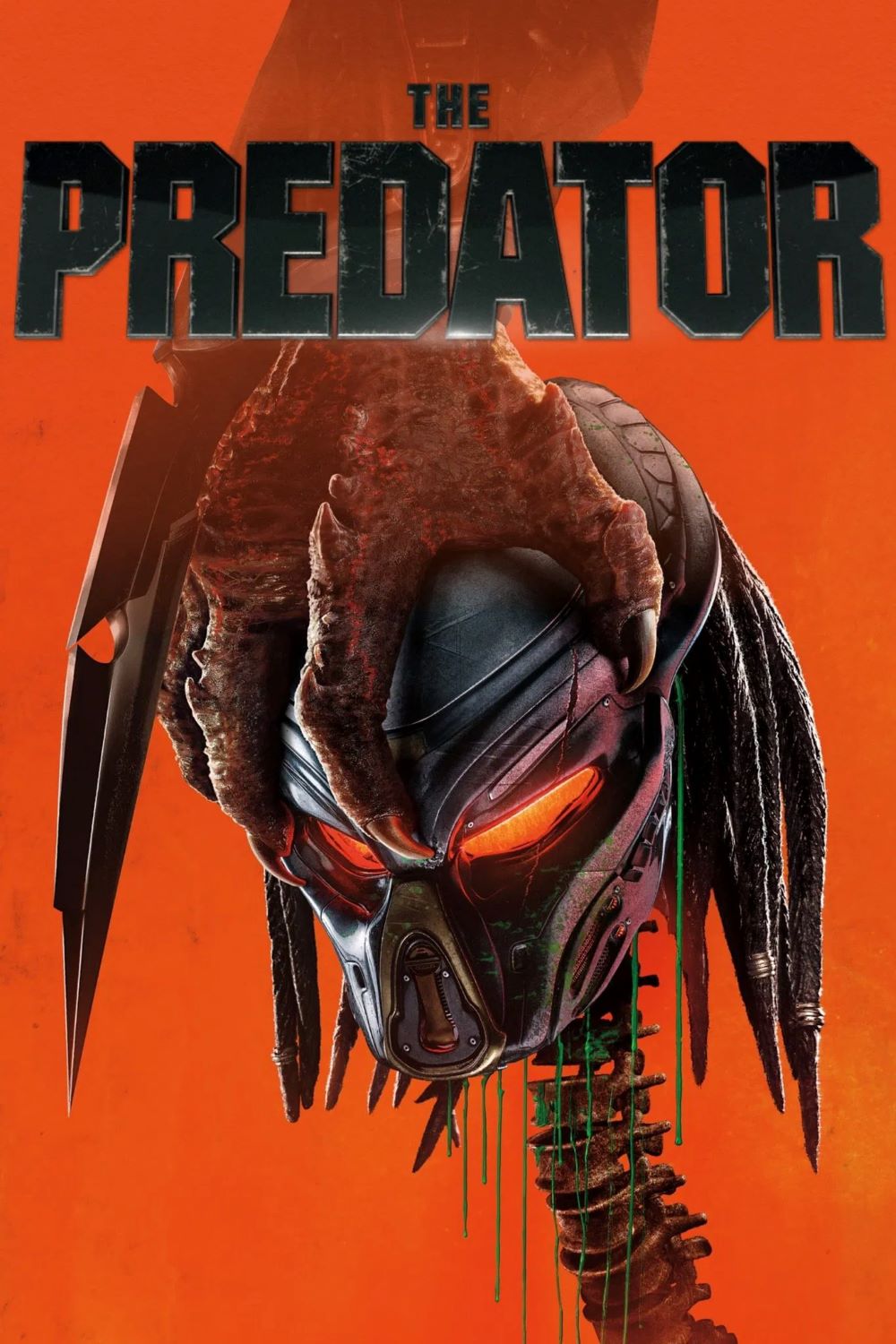
Shane Black’s The Predator (2018) lands with a bang, offering a spectacle heavy on action, gore, and the signature snarky humor Black is known for. If you come looking for a suspenseful, tightly wound survival story in the tradition of the original 1987 film, you’re in for something very different—a gonzo mashup of nostalgia, R-rated slapstick carnage, and creature-feature excess that leans gleefully into genre absurdity.

The plot barrels forward with almost reckless energy. Boyd Holbrook stars as Quinn McKenna, a sniper whose mission goes haywire when a Predator spaceship crashes to Earth. Through a sequence of provocatively silly events, McKenna’s autistic son, Rory (Jacob Tremblay), ends up with the alien’s high-tech gear, unwittingly drawing attention from both the government and the technologically advanced Predators themselves. McKenna teams up with a ragtag bunch of soldiers, each with their own collection of quirks and psychological scars, plus Olivia Munn’s biologist Casey Bracket. This time, the hunt spills out of the jungle and into suburbia, with the chaos quickly escalating as a souped-up, genetically upgraded Predator enters the mix.

Where the 1987 original thrived on tension and jungle-stalking suspense, Black’s take is more about velocity, bloody spectacle, and loud, rapid-fire banter. The tone is set early, never letting up: The jokes fly thick and fast, the action is relentless, and there’s barely a lull for actual character development. The chemistry among “the Loonies,” McKenna’s loose-cannon squad, is the highlight—Keegan-Michael Key and Thomas Jane, in particular, deliver a mix of comic relief and bruised pathos that provides Black with fertile ground for his trademark dialogue. Sterling K. Brown chews the scenery as Traeger, the government antagonist, with a kind of joyous villainy that’s hard not to enjoy, even when the narrative slides into pure chaos. Olivia Munn starts strong as a scientist thrown into the deep end but is ultimately brushed aside by the film’s mayhem-heavy set pieces.

The film’s comedic pulse is strong, sometimes to its own detriment. Shane Black fills out every moment with his specific brand of irreverence, which works best in the banter between the Loonies but can undercut the menace of the Predators themselves. The violence is over-the-top, with practical splatter and digital effects combining for set pieces that are more monstrous brawls than hunting sequences. The movie rarely worries about internal logic—kids instantly deciphering alien technology and scientists surviving actions that would doom most is par for the course here. For fans of the previous films, there are enthusiastic callbacks and plenty of Easter eggs, though these are delivered more as punchlines than as foundations for new franchise mythology.

One of the film’s major issues is its kitchen-sink approach: it tries to be a throwback action movie, a gory sci-fi thriller, and a self-aware parody all at once. The result is a film constantly threatening to come apart at the seams—some viewers will find the tonal whiplash exhausting, with jokes about mental illness and disability that are more dated than daring. The narrative bounces between subplots and characters so quickly that plot armor and convenient twists abound, while the stakes themselves grow ever more implausible. If you’re looking for slow-burn tension or the primal fear that powered John McTiernan’s or even Stephen Hopkins’ installments, you’ll find yourself unmoored by the gleeful chaos and genre self-parody that Black serves up.

Still, for all its messiness, The Predator is never boring. It’s an action movie that refuses to slow down, boldly swapping iconic mud-soaked hunting for suburban street battles, and musclebound brawn for damaged, wise-cracking outcasts. It is, in its own profane, ADD-addled way, a love letter to the kind of big, dumb, fun genre movies that Black himself helped define in the late ’80s and ’90s.

Ultimately, The Predator isn’t a triumphant reinvention of the franchise nor a true return to the original’s nerve-shredding simplicity. Fans looking to see a return to the franchise’s glory days will be sorely disappointed. However, taken on its own merits and not dragged down by the expectations brought by the franchise, the film does entertain with its wild, unruly, blood-spattered romp that wears its flaws on its sleeve and dares the audience to laugh along with the carnage. If you’re in it for straight-up monster mayhem, creative kills, and a barrage of one-liners, you’ll have a blast. If you’re looking for restraint, genre evolution, or old-school suspense, you’ll probably end up shaking your head—grinning, maybe, but shaking it all the same.

Film Review: Robocop 3 (dir by Fred Dekker)


“Oh wow, Robocop can fly!”

An odd film, Robocop 3. Released in 1993, this was the third and final film in the original Robocop franchise. While the action is still set in Detroit and Robocop is back (albeit now played by Robert John Burke) and Nancy Allen shows up long enough to get killed off, Robocop 3 feels strangely separate from the previous two Robocop films. If the first two Robocop films were dark, satirical, and over-the-top in their violence, the third film is a family friendly adventure film that reimagines Robocop as being some sort of fair housing activist.

And, on top of all that, Robocop can fly now. Admittedly, that’s because Robocop gets fitted for a jetpack that he didn’t have in the previous films but he still looks incredibly ludicrous flying through the streets of Detroit. Since the Robocop armor has always looked very bulky and very heavy, it’s hard to believe that he could fly as quickly and as smoothly as he does in this film.

There’s a new set of villains too. Rip Torn has replaced Dan O’Herilhy as the CEO. And listen, I like Rip Torn. He will always be a hero to me because he bit Norman Mailer’s ear off. But Torn is far too obviously evil in the role of the CEO. O’Herlihy smartly played the Old Man as being avuncular and amoral. You could look at him and understand how he rose to his position of prominence. Torn’s performance is a bit more cartoonish but then again, Robocop 3 is the most cartoonish of the series.

The CEO wants to tear down Old Detroit so the residents of Old Detroit are fighting back. Leading the CEO’s forces — called the Rehabbers — is Paul McDagget (John Castle), who is a complete and total madman but who, at the same time, is never quite as memorable as Kurtwood Smith or Tom Noonan. He’s really just another generic militaristic bad guy. Normally, you would expect Robocop to be on the side of the company and the police but he’s been reprogrammed by an 8 year-old hacker named Nikko (Remy Ryan). Robocop is now working with the rebels. One of the rebels is played by Stephen Root, proving once again that you never know where Stephen Root might pop up.

Robocop 3 has none of the satiric bite of the first two movies. Instead of being a symbol of authoritarianism gone beserk, Robocop becomes a generic do-gooder. The violence is toned down and, with the addition of a kid sidekick, it’s obvious that this Robocop was meant to be a safer version of the character. Unfortunately, a safe Robocop equals a boring Robocop. You watch this movie and you wonder what happened to the Robocop who shot Ronny Cox out of a window.

“My friend’s call me Murphy,” he says towards the end of the film, “You can call me Robocop.” That seemed to indicate that Robocop had quite a future ahead of him of doing the right thing and standing up to big evil corporations but Robocop 3 was such a bomb at the box office that Robocop’s further adventures would only be seen on TV. The franchise was rebooted back in 2014, in a film that my friend Mark called “Rubber Cop.” After Rubber Cop fell flat, it was announced that Robocop would be rebooted for a second time, this time with a movie that would serve as a direct sequel to the first Robocop and which would ignore the sequels and the first reboot. Personally, I think it might be time to let Robocop retire. He had a good run.

The Predator (Final Trailer)


The Predator

The teaser trailer for this Shane Black production didn’t wow me, at all. Then the first trailer came out and a red band one at that. That one was an upgrade but I was still on the fence. They’ve released more teasers, international trailers and tv spot and, once again, I was still not fully sold on the film.

Today 20th Century Fox drops the final trailer for The Predator just two weeks from it’s release date of September 14. This just days after the studio confirmed that the film will be a very hard R-rating raised my interest level.

It is this final trailer (again another red band trailer) is what finally sold me on this film as a must-see. We still know only bits and pieces of what the film will be about but the trademark Shane Black quips and smartass attitude shows up much more clearly with this last trailer.

I actually enjoyed the last Predator film and I hope this one continues the trend and just entertains it’s audience.

Here’s The Teaser Trailer For The Predator!


Despite featuring Jacob Tremblay, this is apparently not a sequel to The Book of Henry

To be honest, the trailer is kind of bleh.  Then again, it really doesn’t have to be anything spectacular.  Most people who see this film are going to see it because of The Predator name, as opposed to anything that may or may not be in the trailer.  Predator is a bit like Alien and The Terminator.  There’s always going to be, at the very least, a curiosity factor whenever a new chapter in the franchise comes out.

That said, the film is directed by Shane Black, who is a freaking genius, and the script was co-written by Fred “Night of the Creeps” Dekker.  So, I’ll give it a look.

Horror On TV: Tales From The Crypt 2.6 “The Thing From The Grave”


Welcome to tonight’s excursion into televised horror!

These old episodes of Tales From The Crypt are pretty fun, aren’t they?  Originally, I was planning on only showing Tales From The Crypt on Saturday, Sunday, and Monday but I’ve been enjoying the show so much that I’ve decided to add a Tuesday showing as well.

Tonight’s episode is called The Thing From The Grave and it originally aired on May 8th, 1990.  It stars Teri Hatcher as a model who falls in love with a photographer played by Kyle Secor (yes, the same Kyle Secor who went so brilliant over the top in The Purge: Election Year).  Hatcher’s boyfriend, an abusive asshole played by Miguel Ferrer, gets revenge but, since this is Tales From The Crypt, things don’t go quite the way that Ferrer intended.  Nothing can kill love, which is something that I’ve always believed!

This episode was directed by Fred Dekker, who also directed a brilliant film called Night of the Creeps, which I really should review someday.

Enjoy!

Horror on TV: Tales From The Crypt 1.4 “Only Sin Deep” (dir by Howard Deutch)


You may remember, from previous horrorthons, that I like to end each day in October by sharing a classic example of televised horror.  Over the previous two years, I shared several episodes of The Twilight Zone and everyone seemed to enjoy them.  I know I certainly did.

Unfortunately, I can’t do that anymore.

All of the episodes of the Twilight Zone that were on YouTube have been taken down.  Copyright infringement, they say.  And, unfortunately, Hulu is no longer allowing people to watch The Twilight Zone for free.  I can still embed Hulu videos on this site but unless you’re a subscriber, you wouldn’t be able to watch them.

Which sucks, by the way!  Seriously, I was soooooo mad when I discovered what had happened…

However, fear not!  While I may not be able to share any Twilight Zone episodes this October, it turns out that every episode of HBO’s Tales From The Crypt has been uploaded to YouTube!  And what could be more appropriate for Halloween than a little trip to the crypt?

So, with all that in mind, here’s the fourth episode of Tales From The Crypt.  It’s called Only Sin Deep and it originally aired on June 14th, 1989.  It tells the story of a prostitute named Sylvia Vane (played by Lea Thompson) who agrees to sell her beauty for $10,000 and the chance to marry a rich man.  Sylvia doesn’t take the deal seriously.  You won’t be surprised to learn that was a mistake.  Only Sin Deep is an entertaining little morality tale.  Don’t mess with karma.

(As well, I’m going to assume that the name Sylvia Vane is meant to be an homage to the name of Angela Lansbury’s character in The Picture of Dorian Gray.)

Only Sin Deep was directed by Howard Deutch, who also directed Lea Thompson in Some Kind of Wonderful.  (And, of course, he also married her.)  It was written by Fred Dekker, who directed the classic Night of the Creeps.

And yes, the story is introduced by the infamous Cryptkeeper.

Enjoy!