Today’s horror scene that I love comes from the 1931 Universal classic, Frankenstein!
Though it’s been parodied to death and often used out of context (for example, a few years ago, it was used in a freaking car commercial), the “It’s Alive!” scene from Frankenstein is still a classic piece of horror history. Colin Clive is often unfairly criticized for going overboard in this scene but let’s be honest here: if you ever reanimated a corpse, you’d probably get pretty damn excited about it.
Today’s horror scene that I love is, much like The Haunted Castle and The Monster, less a scene and more an entire movie.
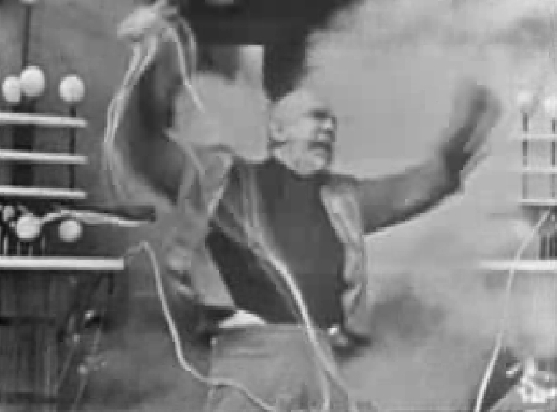
In 1910, Thomas Edison produced what is thought to be the first ever film version of Mary Shelley’s Frankenstein! Clocking in at 12 minutes and 41 seconds, this film was directed by J. Searle Dawley and stars Charles Ogle as the monster.
Admittedly, the surviving prints of this 107 year-old movie are not in the greatest condition. But I still think it’s effectively surreal and, in its way, quite creepy. While it always takes a while for modern audiences to get used to the more theatrical acting styles of the silent films, Charles Ogle still makes for a very memorable monster. I especially enjoy the tinted scenes where the monster comes to life. In the video below, it start around the 2:18 mark and it’s truly a scene that I love!
Audiences love them but the Academy has never quite felt the same way. True, there have been a few horror films nominated. The Exorcist was a major contender. Jaws was nominated. So was The Sixth Sense. Silence of the Lambs won.
But, for the most part, horror films have struggled to get Academy recognition. While the Academy has recently shown a willingness to honor science fiction, the horror genre has yet to benefit from the decision to increase the number of best picture nominees.
Because I love horror and I love movies and I love lists, here are ten horror films that I think deserved a best picture nomination:
One of the most popular and influential horror films of all time, Frankenstein was sadly ignored by the Academy. It’s certainly better remembered than the film that won best picture of 1931, Cimarron.
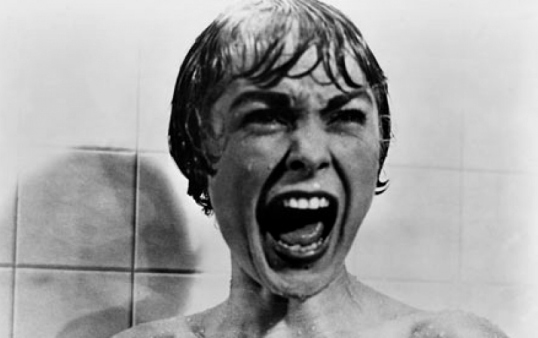
2. Psycho (1960)
Psycho may have received nominations for best director, supporting actress, cinematography, and art design but the film that made people afraid to take showers did not receive a nomination for best picture. The winner that year was a legitimate classic, The Apartment. But it’s hard not to feel that Psycho should have, at the very least, received a nominations over the other 4 films nominated.
George Romero’s zombie classic may have set the standard for zombie movies to come but it was not honored the Academy. The Academy was more comfortable with Oliver!
Few sequels have been nominated for best picture. Dawn of the Dead definitely should have been one of them. Who wouldn’t want to see, at the very least, Tom Savini’s speech as he accepted his special award for best makeup?
8) The Shining (1980)
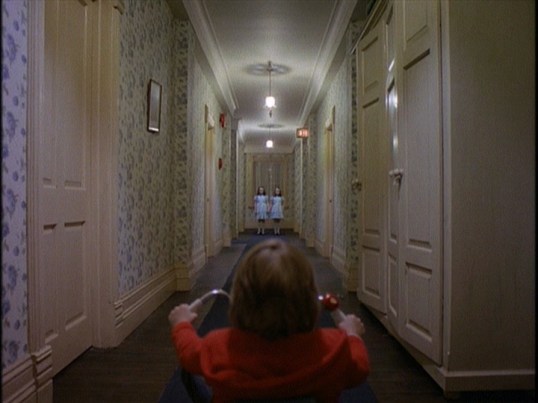
Stanley Kubrick’s film may be recognized as a classic now but the reviews, when it was first released, were mixed. So, I guess we shouldn’t be surprised that it wasn’t given any recognition by the Academy. It’s a shame because I’ve watched The Shining a few dozen times and it still scares the Hell out of me.
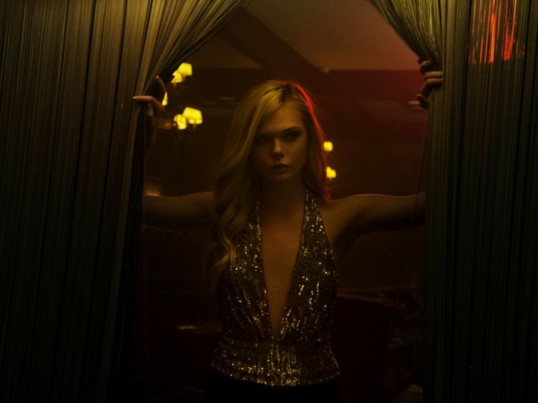
Is Nicholas Winding Refn’s The Neon Demon truly a horror movie? It’s close enough. Though the film opened to mixed reviews, it’ll be recognized as a classic in another ten years.
Early TV science fiction was dominated by kiddie programming like CAPTAIN VIDEO and TOM CORBETT, SPACE CADET. In 1951, a more adult oriented fantasy series called TALES OF TOMORROW made it’s debut on ABC. The live broadcast dramatized works by prominent writers like Arthur C. Clarke, Theodore Sturgeon, Jules Verne, and H.G. Wells. Big name stars such as Boris Karloff, Leslie Neilson, and Rod Steiger headlined many of the episodes. Lon Chaney Jr. starred in a half-hour adaptation of Mary Shelley’s FRANKENSTEIN, with John Newland (later host and director of ONE STEP BEYOND) as the scientist who creates a monster. It’s said Chaney was *ahem* a bit under the weather during this live performance (in other words, drunk as a skunk!). I’ll let you be the judge. The quality of this kinescope-to-video isn’t great, but I hope you’ll enjoy watching Lon Chaney Jr. as the monster of FRANKENSTEIN!
1935‘s The Bride of Frankenstein is usually described as being a sequel to Frankenstein, but I think it would be better to call it a continuation. In much the same way that all modern YA adaptations seem to be split into two parts, Universal split Mary Shelley’s Frankenstein into two separate films. The bare basics of The Bride of Frankenstein‘s plot — the monster learns to talk and demands that his creator build him a mate — can all be found in the original novel.
(Of course, in the original novel, the monster somehow learns how to speaks like an Oxford grad and Dr. Frankenstein destroys the female monster before bringing her to life. The monster responds by killing Elizabeth. Seriously, Frankenstein is a dark book.)
Bride of Frankenstein features one of my favorite openings of all time. Lord Byron (Gavin Gordon) and Percy Bysshe Shelley (Douglas Walton) are praising Mary Shelley (Elsa Lanchester) and the story that she’s told about how a dedicated scientist played God and created life. Mary informs them that she’s not finished and then proceeds to tell them the rest of the story. It’s a great opening because it lets us know that the rest of what we’re seeing is taking place directly inside of Mary’s mind. It frees the film from the constraints of realism and allows director James Whale to fully indulge his every whim, no matter how bizarre. When you’re inside someone else’s imagination, anything can happen and that’s certainly the feeling that you get as you watch The Bride of Frankenstein.
The Bride of Frankenstein opens with that burning windmill and a wounded Henry Frankenstein (Colin Clive) being carried back to his wife, Elizabeth (Valerie Hobson, replacing Mae Clarke). Gone is the original film’s coda, in which Elizabeth announces that she’s pregnant. And why shouldn’t it be gone? It felt awkward in the first movie and, like any good writer, Mary Shelley is fixing her story as she goes along.
While Henry is recovering, he is approached by a former mentor, Dr. Pretorious (Ernest Thesiger). Dr. Pretorious is undoubtedly an eccentric and definitely a little bit crazy but he believes in Frankenstein’s work. In fact, Dr. Pretorious has even created life on his own! He’s created a bunch of tiny people that he keeps in several glass jars. They’re impressive but, sadly, they’ll never conquer the world. Pretorious wants Frankenstein to, once again, work with him to create life. As Pretorious explains it, it’s time to usher in a new age of “God and monsters!”
(Interestingly enough, one of Pretorious’s henchmen is played by Dwight Frye, who previously played Frankenstein’s henchman, Fritz, in the first film. Frye dies in both films. Reportedly, Universal bestowed upon him the nickname, “The Man of a Thousand Deaths.” It can perhaps be argued that Dwight Frye was both the Steve Buscemi and the Giovanni Lombardo Radice of Universal horror.)
Meanwhile, the monster (Boris Karloff, credited with just his last name because, just four years after Frankenstein and the Mummy, he was already an icon) has survived the burning windmill. He’s lonely, he’s afraid, and he actually kills more people in The Bride of Frankenstein than he did in Frankenstein. And yet, he’s still the film’s most sympathetic character. With everyone constantly trying to kill him, you can understand why the monster is quick to attack every human being that he sees. He’s almost like a dog who, after years of abuse, automatically growls and bears his teeth at anyone that he sees.
And yet, the monster does eventually find a friend. A blind hermit (O.P. Heggie) invites the monster into his own home. (Of course, the hermit does not know who the monster is. He just assumes that monster is a normal man who does not know how to speak.) As time passes, the hermit teaches the monster how to say a few words and also tells the monster that there is nothing worse than being lonely. The monster learns that “Friend good.” The monster even learns how to smoke a cigar and Heggie and Karloff play these roles with such warmth (Bride of Frankenstein is not only the film where the Monster learns to talk, it’s also the one where he learns to smile) that you really start to dread the inevitable scene where everything goes wrong.
And that scene does arrive. Two hunters stop by the hermit’s shack and immediately attack the Monster. The Monster flees. The shack burns down. The hermit is led away from his only friend, apparently destined to be lonely once again.
Eventually, of course, the Monster does get his bride. The Bride is such an iconic character that it’s easy to forget that she only appears in the final ten minutes of the film. Elsa Lanchester plays both Mary and the Bride. She screams when she sees the Monster. “We belong dead,” the Monster replies and my heart breaks a little every time.
So, which is better? Frankenstein or The Bride of Frankenstein? I don’t think it’s necessary to choose one or the other. To use a metaphor that might be appreciated by Henry and Dr. Petorious, Frankenstein is the brain while The Bride of Frankenstein is the heart. They’re two good films that, when watched together, form one great film.
This October, I’m going to be doing something a little bit different with my contribution to 4 Shots From 4 Films. I’m going to be taking a little chronological tour of the history of horror cinema, moving from decade to decade.
No, not Victor von Frankenstein, though he certainly suffered greatly for playing God. How much he suffered depends on which version of the story you see or read. If you’ve read the book, you know that Victor lost his family, his love, his mentor, his best friend, and eventually his own life. Victor is usually a bit more resilient in the films. For instance, if you go by what we’ve seen in the Hammer films, Baron Frankenstein was pretty much indestructible. The only thing he lost was his sanity, sacrificed as he continually insisted on making the same mistake over and over again.
And when I say “Pity poor Frankenstein,” I’m not referring to the monster either, though he certainly deserves some sympathy as well. The monster never asked to be brought to life. He may have destroyed castles and killed people and tossed little girls into a lake but Frankenstein’s Monster rarely seemed to mean any harm. He was just scared, confused, and often abused.
Instead, when I say pity poor Frankenstein, I’m referring to the 1931 film. It’s a classic horror film, one that, after 85 years, still holds up remarkably well. It’s probably the best directed of all the Universal horror films, with James Whale bringing his own dark wit and idiosyncratic style to the film. As was often the case with films of the era, some of the performances are better than others but no one can find fault with Boris Karloff’s definitive portrayal of Frankenstein’s monster.
And yet, for a lot of filmgoers, Frankenstein will always just be that movie where Colin Clive rants, “It’s alive! IT’S ALIVE!” That scene is justifiably famous but it always bothers me when it shows up as an isolated clip, devoid of context. I’ve seen it used in documentaries. I’ve seen it used on snarky news programs where it’s almost always used to poke fun at someone. I’ve even seen it used in a car commercial.
You’ve seen it too. It’s one of those scenes that everyone has seen, regardless of whether or not they’ve sat through the entire movie:
When you watch this scene without any context, it’s easy to smirk. You might assume that the entire film is Colin Clive ranting and Dwight Frye snorting. It’s only after you’ve seen the entire film that you appreciate Clive’s performance. Throughout the entire first part of the film, Colin Clive plays Henry Frankenstein as being unstable but also rather withdrawn. He’s almost vampiric, hiding inside of his laboratory all day and only coming out at night to rob graves with the hunchbacked Fritz (Dwight Frye). He’s almost a recluse, which is why his fiancée, Elizabeth (Mae Clarke) asks his best friend, Victor (John Boles), and his mentor, Dr. Waldman (Edward Van Sloan, who also played Van Helsing in Dracula) to check in on him.
When the monster does move its hand and Clive shouts, “It’s alive!,” it’s the first sign of true emotion that Frankenstein has shown through the entire film. He’s spent a lifetime dreaming of playing God and, now that he has, it overwhelms his mind. Much like poor Ralph Norton in The Mummy, Clive sees something that defies all reason and he has a breakdown.
I have to admit that, for me, the first third of the film drags. That may not have been as much of a problem in 1931, when audiences were seeing the story for the first time and didn’t already know what was going to happen. In 1931, the slow start undoubtedly helped to build up suspense. But, when seen today, there is a temptation to say, “Get on with it!”
(Of course, I tend to say that with all Frankenstein movies, because I’m impatient and there always seems to be an endless number of scenes people digging graves and stealing brains until we finally get to the good part. If anything, the 1931 Frankenstein doesn’t take as long to get going as some of the later Hammer films, many of which treated the monster as almost an afterthought.)
Fortunately, Frankenstein does get on with it. When the monster finally comes to life and Colin Clive has his moment of divine madness (“This is what it feels like to be God!”), the film shifts in tone. If anything it becomes a bit of a dark comedy. Henry (who is noticeably more subdued after his outburst, a bit like a drug addict who is only now starting to come down after being awake for a week) and his friends now have to not only hide the monster but try to figure out how to deal with it. Every few minutes, it seems like another villager or Frankenstein relative is dropping by the castle. Having created life, Henry now has no idea what to do with it. Being God isn’t as easy as it looks. Having created life, all Henry can now do is keep the doors locked and attempt to go back to living a relatively normal life. In this case, that means preparing for his wedding.
It’s not until the sadistic Fritz torments the frightened monster with a torch that this horror classic truly becomes a horror film. And it’s significant that the true monster here is not Frankenstein’s Monster but instead Fritz. When the monster kills Fritz, he does it out of self-defense. When he strangles Dr. Waldman, it’s because Waldman was about to cut into him with scapel.
And then there’s the little girl. How this scene must have shocked audiences in 1931! It’s still shocking today, because we’re not used to children dying in movies, not even horror movies. Of course, the monster doesn’t mean to hurt the girl. The girl is the first person to show the monster any sort of kindness. It’s just that the monster doesn’t understand that the girl won’t float like the flowers.
The sequence where the girl’s father carries her body into the town square is perhaps one of the most devastating ever filmed. Not only does the father’s grief contrast with the happiness of the villagers but it also contrasts with the attitude of Henry and Elizabeth who are busy preparing from their wedding, ignorant of what Henry’s creation has done.
Or, at least, they are until the monster confronts Elizabeth in her bedroom.
I love that dress.
It all ends, of course, with a confrontation between Henry and his monster and a windmill being set aflame. There’s also a happy coda that, in the best tradition of horror, feels a bit tacked on. Fortunately, those of us who know our film history know that the story didn’t end with this film. It continued with The Bride of Frankenstein, which I’ll be reviewing tomorrow.
As for Frankenstein, it’s a classic and it’s pretty much required viewing for any film lover. Boris Karloff’s performance as the confused and often child-like monster is both poignant and menacing. Watching the film, you just wish that the world had been nicer to him.
(Then again, that approach didn’t exactly work out well for the little girl with the flowers…)
Frankenstein is so much more than just Colin Clive shouting, “It’s alive!” If you haven’t actually sat down watched the entire movie from beginning to end, you owe it to yourself to do so today.
This October, I’m going to be doing something a little bit different with my contribution to 4 Shots From 4 Films. I’m going to be taking a little chronological tour of the history of horror cinema, moving from decade to decade.
Today, we take a look at the 1910’s.
4 Shots From 4 Films
Frankenstein (1910, dir by J. Searle Dawley)
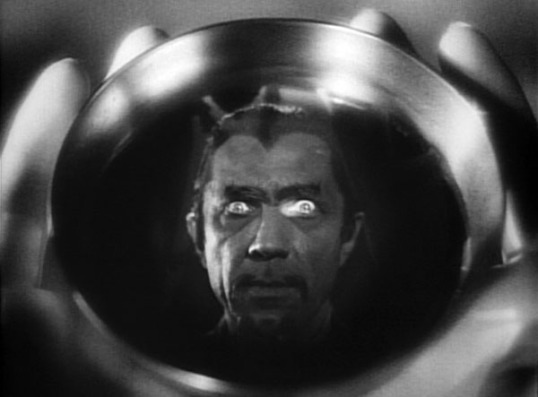
Dr. Jekyll and Mr. Hyde (1913, dir by Herbert Brenon)
The Student of Prague (1913, dir by Stellan Rye and Paul Wegener)
This scene that I love comes from the classic 1931 horror film, Frankenstein. In this poignant scene, Frankenstein’s Monster (Boris Karloff) meets young Maria. Maria is the first human to treat the Monster with true kindness. Unfortunately, the Monster does not understand that, unlike flower petals, Maria does not float.
4 Shots From 4 Films is just what it says it is, 4 shots from 4 of our favorite films. As opposed to the reviews and recaps that we usually post, 4 Shots From 4 Films is all about letting the visuals do the talking.






 Through the Shattered Lens