4 Shots From 4 Films: Celebrating Double Exposure


4 Or More Shots From 4 Or More Films is just what it says it is, 4 shots from 4 of our favorite films. As opposed to the reviews and recaps that we usually post, 4 Shots From 4 Films lets the visuals do the talking!

Today, I want to celebrate one of my favorite photography techniques, the double exposure!

4 Shots From 4 Films: Celebrating Double Exposure

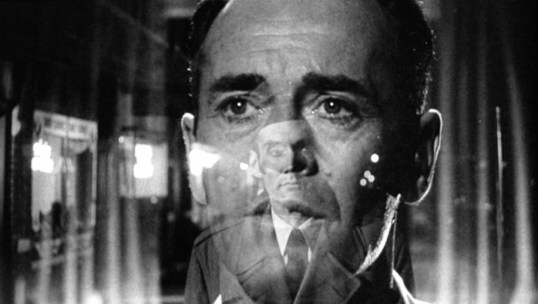
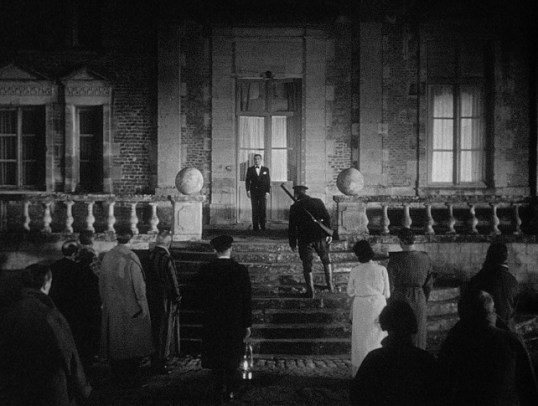
The Wrong Man (1956, Dir. by Alfred Hitchcock)

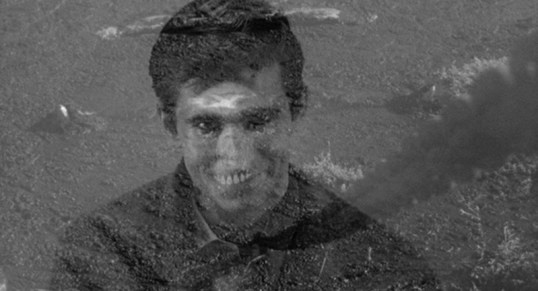
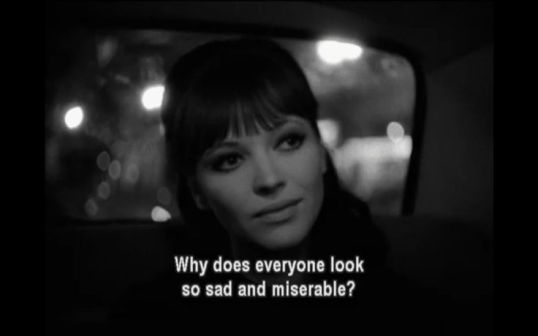
Psycho (1960, Dir. by Alfred Hitchcock)

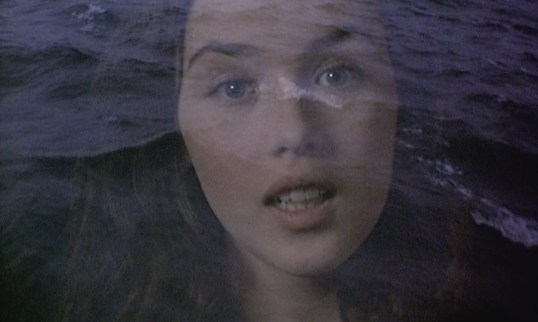
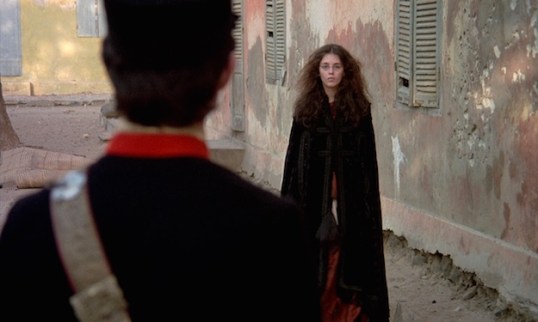
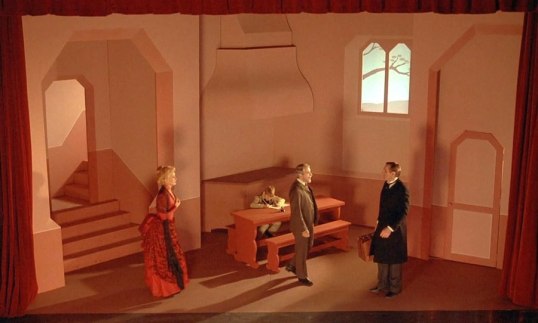
The Story of Adele H. (1975, Dir. by Francois Truffaut)

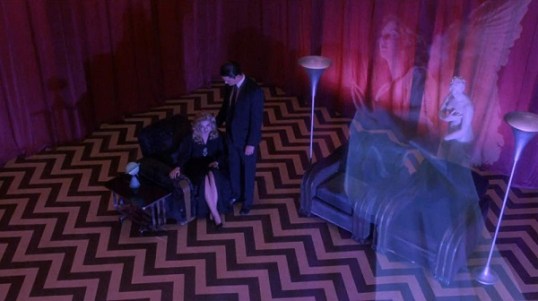
Twin Peaks: Fire Walk With Me (1992, Dir. by David Lynch)

4 Shots From 4 Films: Special French Cinema Edition


4 (or more) Shots From 4 (or more) Films is just what it says it is, 4 (or more) shots from 4 (or more) of our favorite films. As opposed to the reviews and recaps that we usually post, 4 (or more) Shots From 4 (or more) Films lets the visuals do the talking.

Today, on Jean-Paul Belmondo’s birthday, we pay tribute to French cinema!  It’s time for….

4 Shots From 4 French Films

The Rules of the Games (1939, dir by Jean Renoir, DP: Jean-Paul Alphen, Jean Bachelet, Jacques Lemare, Alain Renoir)

Alphaville (1965, dir by Jean-Luc Godard, DP: Raoul Coutard)

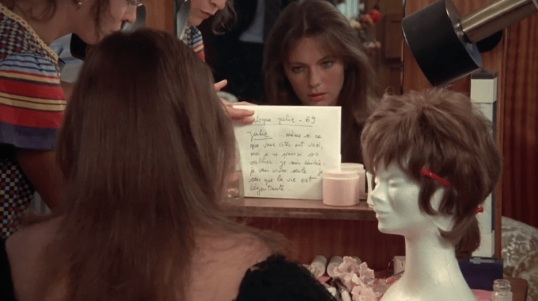
Day For Night (1973, dir by François Truffaut, DP: Pierre-William Glenn)

Night of the Hunted (1980, dir by Jean Rollin)

4 Shots From 4 Films: Special 1959 Edition


4 Or More Shots From 4 Or More Films is just what it says it is, 4 shots from 4 of our favorite films. As opposed to the reviews and recaps that we usually post, 4 Shots From 4 Films lets the visuals do the talking!

Today, let’s celebrate the year 1959!  It’s time for….

4 Shots From 4 1959 films

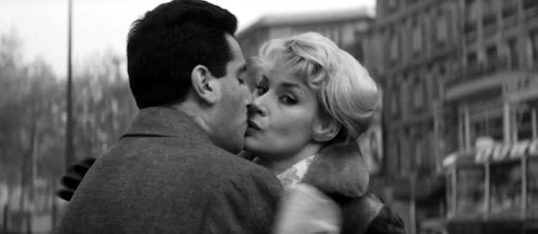
The 400 Blows (1959, dir by François Truffaut, DP: Henri Decae)

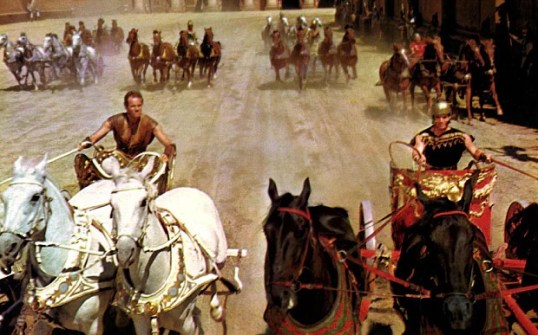
Ben-Hur (1959, dir by William Wyler, DP: Robert Surtees)

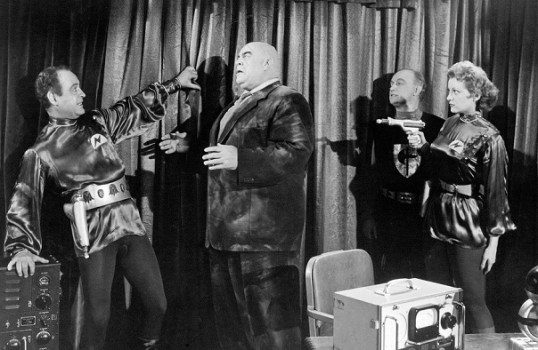
Plan 9 From Outer Space (1957, dir by Edward D. Wood, Jr., DP: William C. Thompson)

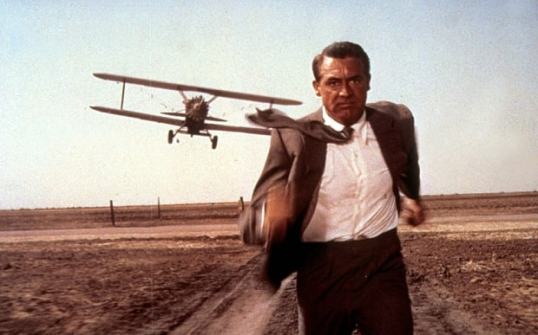
North by Northwest (1959, dir by Alfred Hitchcock, DP: Robert Burks)

4 Shots From 4 Films: Special Francois Truffaut Edition


4 Shots From 4 Films is just what it says it is, 4 shots from 4 of our favorite films. As opposed to the reviews and recaps that we usually post, 4 Shots From 4 Films lets the visuals do the talking!

Today, on what would have been his 93rd birthday, TSL pays tribute to the great Francois Truffaut.  No one captured the act of falling in love in life, people, and cinema with the skill, sensitivity, and humor of Francois Truffaut.  It’s time for….

4 Shots From 4 Francois Truffaut Films

The 400 Blows (1959, dir by François Truffaut, DP: Henri Decae)

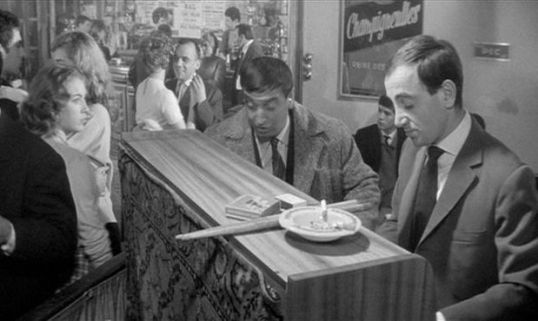
Shoot the Piano Player (1960, dir by François Truffaut, DP: Raoul Coutard)

The Story of Adele H. (1975, dir by Francois Truffaut, DP: Nestor Almendros)

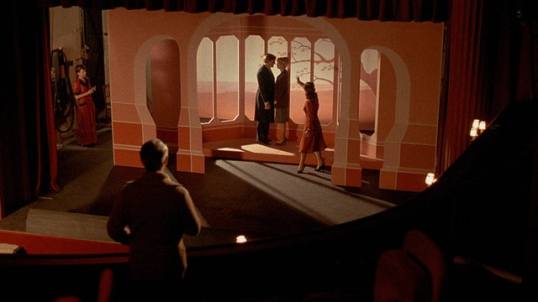
The Last Metro (1980, dir by François Truffaut, DP: Nestor Alemndros)

4 Shots From 4 Films: Special Francois Truffaut Edition


4 Shots From 4 Films is just what it says it is, 4 shots from 4 of our favorite films. As opposed to the reviews and recaps that we usually post, 4 Shots From 4 Films lets the visuals do the talking!

Today, on what would have been his 91st birthday, TSL pays tribute to the great Francois Truffaut.  No one captured the act of falling in love in life, people, and cinema with the skill, sensitivity, and humor of Francois Truffaut.  It’s time for….

4 Shots From 4 Francois Truffaut Films

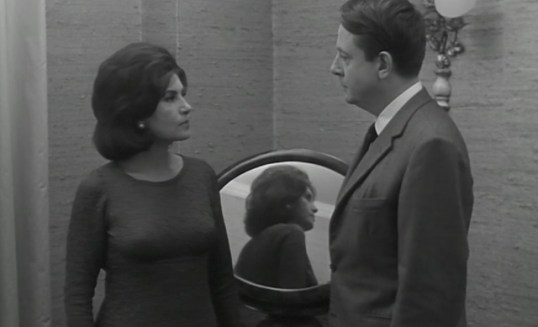
The Soft Skin (1964, dir by Francois Truffaut, DP: Raoul Coutard)

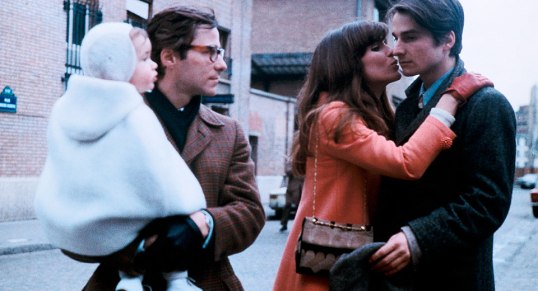
Stolen Kisses (1968, dir by Francois Truffaut, DP: Denys Clerval)

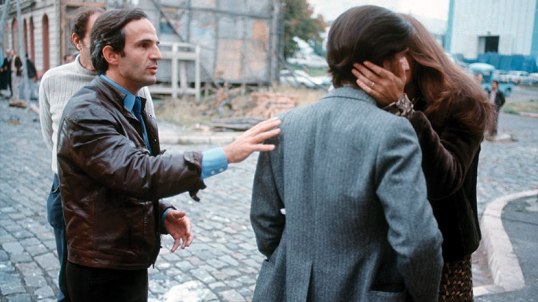
Day For Night (1973, dir by Francois Truffaut, DP: Pierre-William Glenn)

The Story of Adele H. (1975, dir by Francois Truffaut, DP: Nestor Almendros)

6 Shots From 6 Films: Special François Truffaut Edition


4 (or more) Shots From 4 (or more) Films is just what it says it is, 4 (or more) shots from 4 (or more) of our favorite films. As opposed to the reviews and recaps that we usually post, 4 (or more) Shots From 4 (or more) Films lets the visuals do the talking.

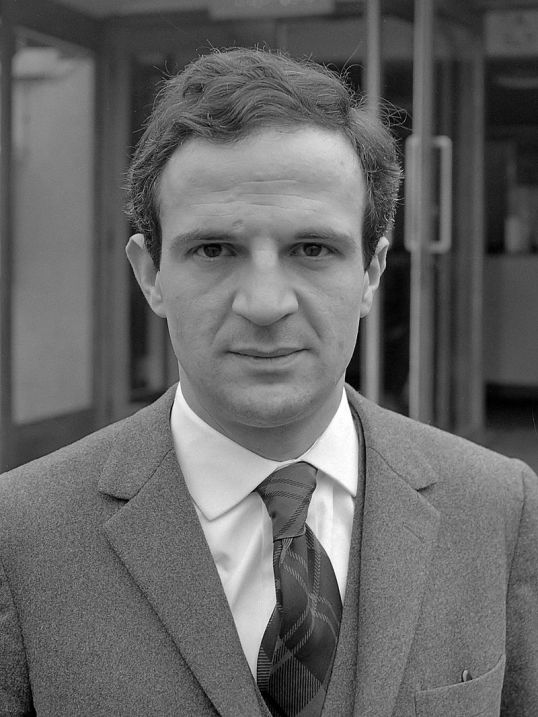
The great François Truffaut was born 89 years ago today, in Paris, France.  This French director would go on to prove that cinema is a universal language and it’s hard not to think about what type of films Truffaut would have gone on to make, if not for his tragically early death at the age of 52.  As far as I am concerned, today is a holiday dedicated to one of the most important cinematic voices of all time.

In honor of the life and legacy of François Truffaut, here are:

6 Shots From 6 François Truffaut Films

The 400 Blows (1959, dir by François Truffaut, DP: Henri Decae)

Shoot the Piano Player (1960, dir by François Truffaut, DP: Raoul Coutard)

Fahrenheit 451 (1966, dir by François Truffaut, DP: Nicolas Roeg)

Day For Night (1973, dir by François Truffaut, DP: Pierre-William Glenn)

The Story of Adele H. (1975, dir by François Truffaut, DP: Nestor Almendros)

The Last Metro (1980, dir by François Truffaut, DP: Nestor Alemndros)

4 Shots From 4 Films: Special Francois Truffaut Edition


4 Shots From 4 Films is just what it says it is, 4 shots from 4 of our favorite films. As opposed to the reviews and recaps that we usually post, 4 Shots From 4 Films lets the visuals do the talking!

Francois Truffaut, the greatest French director not named Jean Renoir or Jean Rollin, was born on February 6th, 1932.  If he was still with us, he would be 88 years old and I would like to think that he would still be making films.  The greatest director of the French new wave, Truffaut truly loved cinema and that love came through in every film he ever made.  My favorite Francois Truffaut film — and this will probably come to a surprise to no one — is Day For Night.  Seriously, if you don’t fall in love with the movie making process while watching Day For Night, you might want to get checked to make sure that you still have a heart.

In honor of what would have been his 88th birthday, here are….

4 Shots From 4 Francois Truffaut Films

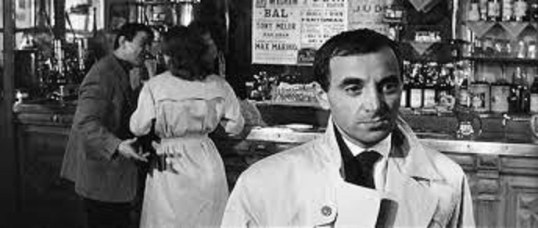
Shoot the Piano Player (1960, dir by Francois Truffaut)

Stolen Kisses (1968, dir by Francois Truffaut)

Day For Night (1973, dir by Francois Truffaut)

The Last Metro (1980, dir by Francois Truffaut)

6 Good Films That Were Not Nominated For Best Pictures: The 1950s


The Governor’s Ball, 1958

Continuing our look at good films that were not nominated for best picture, here are 6 films from the 1950s.

The Third Man (1950, dir by Carol Reed)

Now, it should be noted that The Third Man was not ignored by the Academy.  It won the Oscar for Best Cinematography and it was nominated for both editing and Carol Reed’s direction.  But, even with that in mind, it’s somewhat amazing to consider all of the nominations that it didn’t get.  The screenplay went unnominated.  So did the famous zither score.  No nominations for Joseph Cotten, Alida Valli, Trevor Howard, or even Orson Welles!  And finally, no Best Picture nomination.  1950 was a good year for the movies so competition was tight but still, it’s hard to believe that the Academy found room to nominate King Solomon’s Mines but not The Third Man.

Rear Window (1954, dir by Alfred Hitchcock)

Alfred Hitchcock directed some of his best films in the 50s, though few of them really got the recognition that they deserved upon their initial release.  Vertigo is often described as being Hitchcock’s masterpiece but, to be honest, I actually prefer Rear Window.  This film finds the master of suspense at his most playful and, at the same time, at his most subversive.  Casting Jimmy Stewart as a voyeur was a brilliant decision.  This film features one of my favorite Grace Kelly performances.  Meanwhile, Raymond Burr is the perfect schlubby murderer.  Like The Third Man, Rear Window was not ignored by the academy.  Hitchcock was nominated and the film also picked up nods for its screenplay, cinematography, and sound design.  However, it was not nominated for best picture.

Rebel Without A Cause (1955, dir by Nicholas Ray)

Nicholas Ray’s classic film changed the way that teenagers were portrayed on film and it still remains influential today.  James Dean is still pretty much the standard to which most young, male actors are held.  Dean was not nominated for his performance here.  (He was, however, nominated for East of Eden that same year.)  Instead, nominations went to Sal Mineo, Natalie Wood, and the film’s screenplay.  Amazingly, in the same year that the forgettable Love Is A Many-Splendored Thing was nominated for best picture, this popular and influential film was not.

Kiss Me Deadly (1955, dir by Robert Aldrich)

It’s unfortunate but not surprising that Kiss Me Deadly was totally ignored by the Academy.  In the mid-to-late 50s, the Academy tended to embrace big productions.  There was no way they were going to nominate a satirical film noir that featured a psychotic hero and ended with the end of the world.  That’s a shame, of course, because Kiss Me Deadly has proven itself to be more memorable and influential than many of the films that were nominated in its place.

Touch of Evil (1958, dir by Orson Welles)

Speaking of underappreciated film noirs, Orson Welles’s Touch of Evil is one of the craftiest and most brilliant films ever made.  So, of course, no one appreciated it when it was originally released.  This cheerfully sordid film features Welles at his best.  Starting with a memorable (and oft-imitated) tracking shot, the film proceeds to take the audience into the darkest and most eccentric corners of a small border town.  Everyone in the cast, from the stars to the bit players, is memorably odd.  Even the much mocked casting of Charlton Heston as a Mexican pays off wonderfully in the end.

The 400 Blows (1959, dir by Francois Truffaut)

Francois Truffaut’s autobiographical directorial debut was released in the United States in 1959 and it was Oscar-eligible.  Unfortunately, it only picked up a screenplay nomination.  Of course, in the late 50s, the last thing that the Academy was going to embrace was a French art film from a leftist director.  However, The 400 Blows didn’t need a best picture nomination to inspire a generation of new filmmakers.

Up next, in an hour or so, we continue on to the 60s!


Film Review: Fahrenheit 451 (dir by Francois Truffaut)


Tonight, HBO will be premiering a film version of Ray Bradbury’s Fahrenheit 451.  This version will star Michael B. Jordan as “fireman” Guy Montag and Michael Shannon as Montag’s boss, Captain Beatty.  It’s one of the more eagerly anticipated films of the current television season but it’s not the first version of Fahrenheit 451 to be filmed.

The first version was released, by Universal Pictures, in 1966.  It was the first (as well as only) English langauge film to be directed by the great French filmmaker, Francois Truffaut.  (It was also Traffaut’s first color film, allowing the flames to burn in bright yellow and red.)  Unfortunately, Truffaut would later describe the film as being his “saddest and most difficult” film making experience.

Though there are a few noticeable differences, the film sticks closely to the plot of Bradbury’s novel.  Guy Montag (Oskar Werner) is a “fireman” in the near future.  Montag lives in a society where books have been banned and the populace is kept to docile through a combination of pharmaceuticals and mindless television programming.  Montag’s wife, Linda (Julie Christie), is content to live life without questioning anything.  However, when Montag meets a school teacher named Clarisse (also played by Christie), all of his previous assumptions are challenged.  What if the government isn’t always right?  What if ignorance isn’t bliss?  What would happen if, instead of burning books, Montag actually read one?  After witnessing a woman choosing to self-immolate herself so that she can die with all of her books, Montag is finally ready to quit being a fireman.  But his captain (Cyril Cusack) tells Montag that he needs to go on one more call, this one to Montag’s own house.

Truffaut’s film leaves out most of the overly sci-fi elements of Bradbury’s original novel.  For instance, in the novel, Montag is terrified of the robots dogs that the firemen use but the dogs never appear in Truffaut’s film.  As well, Traffaut totally eliminates the character of Faber, the former English professor who uses a portable communicator to keep in contact with Montag.  (Today, of course, that hardly seems like science fiction.)  In Truffaut’s film, the setting is designed to appear as contemporary and familiar as possible, a reminder that the story may have been sent in the future but that the issues it dealt with were relevant to the present.  With this film, Truffaut asked the audience, “How different is the world today from the world of Bradbury’s novel?”

Truffaut’s other big departure from Bradbury’s text was to cast Julie Christie as both Clarisse and Linda.  In the book, Montag’s wife was named Mildred and Bradbury went of out of his way to establish her as being the exact opposite of Clarisse.  In Truffaut’s film, the double casting of Christie seems to suggest that Clarisse and Linda are two sides of the same character.  Montag loves them both, though each appeals to a different part of Montag’s psyche.  Linda appeals to the side of Montag that wants to just accept things the were they are and be happy.  Clarisse, meanwhile, represents the part of Montag that wants to be free to feel everything, even if it means occasionally being unhappy or uncertain.  When Montag finally meets the Book People, he discovers that they are just as fanatical about memorizing and reciting books as Linda was about watching her television shows.  Was this intentional on Truffaut’s part, a suggestion that both the government and the rebels are, like Clarisse and Linda, two sides of the same coin?

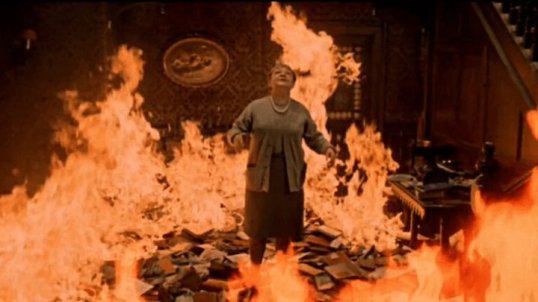
It’s an intriguing but uneven movie.  Truffaut apparently didn’t have a great working relationship with Oskar Werner and, at times, Werner doesn’t seem to be particularly invested in the role of Montag.  (Interestingly enough, it’s also been suggested that Jacqueline Bisset’s character in Day For Night was inspired by Truffaut’s experiences working with Julie Christie in this film.)  When the characters interact, the dialogue sometimes feel stiff and dull, as if Truffaut never got over his discomfort with having to direct a film in something other than his native French.  At the same time, the film is full of hauntingly beautiful images, from the defiant woman standing in the middle of her burning books to the Book People walking through the snow.  Truffaut makes brilliant use of color and the visuals are often strong enough to overcome even Oskar Werner at his most sullen.

Fahrenheit 451 is an imperfect movie but one worth seeing.  Will the new HBO version be able to match it?  We’ll find out soon enough.

http://www.youtube.com/watch?v=w0PwQOr53SA

4 Shots From 4 Films: The Soft Skin, The Bride Wore Black, The Story Of Adele H, The Green Room


4 Shots from 4 Films is just what it says it is, 4 shots from 4 of our favorite films. As opposed to the reviews and recaps that we usually post, 4 Shots from 4 Films lets the visuals do the talking!

In honor of Francois Truffaut’s birthday, here are…

4 Shots From 4 Films

The Soft Skin (1964, dir by Francois Truffaut)

The Bride Wore Black (1968, dir by Francois Truffaut)

The Story of Adele H. (1975, dir by Francois Truffaut)

The Green Room (1978, dir by Francois Truffaut)