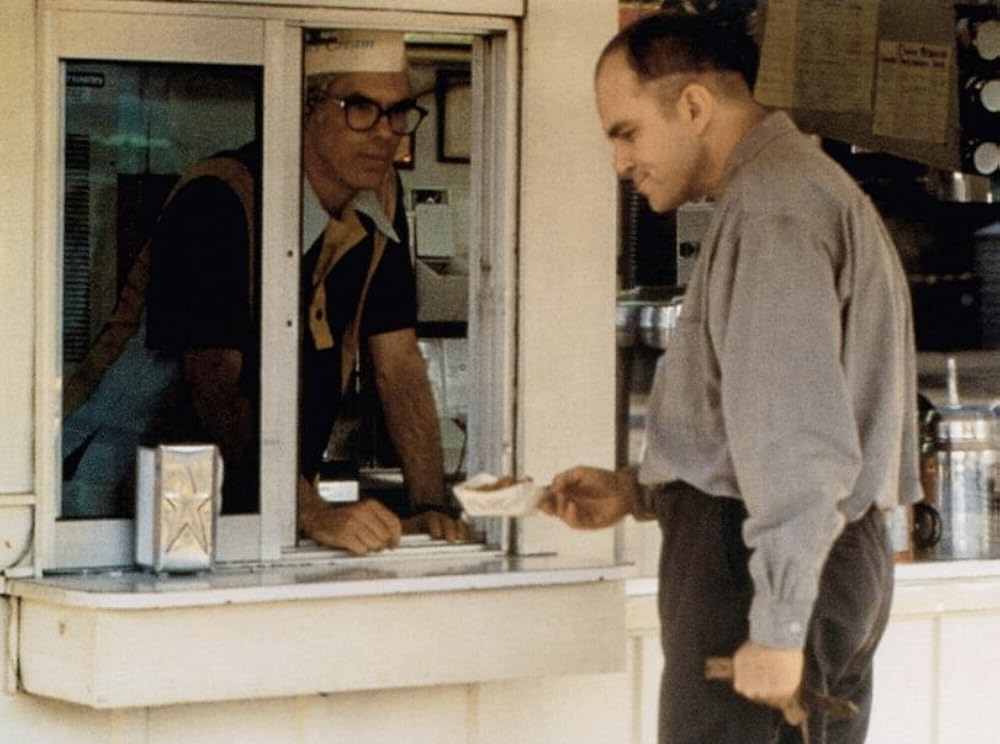
Way back in 1995, Jim Jarmusch gave Billy Bob Thornton a part in his film DEAD MAN. Well the next year, Billy Bob Thornton directed his own movie, SLING BLADE. He asked Jarmusch if he would do a small part in his movie. The resulting scene would be one of my favorites in the entire film. I still mention “French fried potaters” to this day, especially the “big ‘uns!” And I just love the fact that Jarmusch was right here in Benton, Arkansas.
The Frosty Cream is a McDonald’s now, but I love seeing the area how it was 30 years ago! Watch and enjoy!
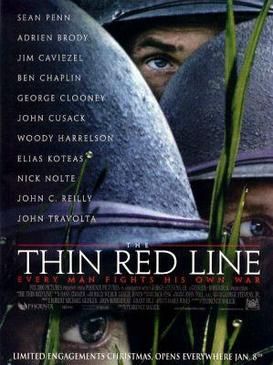
Based on a novel by James Jones (and technically, a sequel of sorts to From Here To Eternity), 1998’s The Thin Red Line is one of those Best Picture nominees that people seem to either love or hate.
Those who love it point out that the film is visually stunning and that director Terrence Malick takes a unique approach to portraying both the Battle of Guadalcanal and war in general. Whereas Steven Spielberg’s Saving Private Ryan told a rather traditional story about the tragedy of war (albeit with much more blood than previous World War II films), The Thin Red Line used the war as a way to consider the innocence of nature and the corrupting influence of mankind. “It’s all about property,” one shell-shocked soldier shouts in the middle of a battle and later, as soldiers die in the tall green grass of the film’s island setting, a baby bird hatches out of an egg. Malick’s film may have been an adaptation of James Jones’s novel but its concerns were all pure Malick, right down to the philosophical voice-overs that were heard throughout the film.
Those who dislike the film point out that it moves at a very deliberate pace and that we don’t really learn much about the characters that the film follows. In fact, with everyone wearing helmets and running through the overgrown grass, it’s often difficult to tell who is who. (One gets the feeling that deliberate on Malick’s point.) They complain that the story is difficult to follow. They point out that the parade of star cameos can be distracting. And they also complain that infantrymen who are constantly having to look out for enemy snipers would not necessarily be having an inner debate about the spirituality of nature.
I will agree that the cameos can be distracting. John Cusack, for example, pops up out of nowhere, plays a major role for a few minutes, and then vanishes from the film. The sight of John Travolta playing an admiral is also a bit distracting, if just because Travolta’s mustache makes him look a bit goofy. George Clooney appears towards the end of the film and delivers a somewhat patronizing lecture to the men under his command. Though his role was apparently meant to be much larger, Adrien Brody ends up two lines of dialogue and eleven minutes of screentime in the film’s final cut.
That said, The Thin Red Line works for me. The film is not meant to be a traditional war film and it’s not necessarily meant to be a realistic recreation of the Battle of Guadalcanal. Instead, it’s a film that plays out like a dream and, when viewed a dream, the philosophical voice overs and the scenes of eerie beauty all make sense. Like the majority of Malick’s films, The Thin Red Line is ultimately a visual poem. The plot is far less important than how the film is put together. It’s a film that immerses you in its world. Even the seeming randomness of the film’s battles and deaths fits together in a definite patten. It’s a Malick film. It’s not for everyone but those who are attuned to Malick’s wavelength will appreciate it even if they don’t understand it.
And while Malick does definitely put an emphasis on the visuals, he still gets some good performances out of his cast. Nick Nolte is chilling as the frustrated officer who has no hesitation about ordering his men to go on a suicide mission. Elias Koteas is genuinely moving as the captain whose military career is ultimately sabotaged by his kind nature. Sean Penn is surprisingly convincing as a cynical sergeant while Jim Caviezel (playing the closest thing the film has to a main character) gets a head start on humanizing messianic characters by playing the most philosophical of the soldiers. Ben Chaplin spends most of his time worrying about his wife back home and his fantasies give us a glimpse of what’s going on in America while its soldiers fight and die overseas.
The Thin Red Line was the first of Terrence Malick’s films to be nominated for Best Picture and it was one of three World War II films to be nominated that year. However, it lost to Shakespeare In Love.
Germany is living in a state of terror. A serial killer known as The Calendar Killer has been brutally murdering people across the country. The killer leaves the date of the murder on the wall, written in his victim’s blood. His victims are given the choice between killing their husband or being killed themselves. Hey, Calendar Kill — not everyone’s a murderer, okay!? Seriously, what a jerk.
(As a sidenote, who knew that Saw was popular enough to inspire a copycat in Germany? Cinema truly is the international art form.)
A few days ago, Klara (Luise Heyer) woke to a terrifying message on a wall, telling her that either she or husband would die on December 6th. Now, it’s December 6th and Klara is walking home at night. She calls a helpline for women who are outside and alone at night. Jules (Sabin Tambrea) answers. Even though Jules is soft-spoken and careful to choose his words with sensitivity, Klara is hesitant to tell her about either the Calendar Killer or her husband. When Jules finally coaxes the details out of her, she reveals that she is married to Martin (Friedrich Mucke). Martin is an prominent politician but he’s an abusive husband, one who forced Klara to take part in a humiliating orgy that was apparently inspired by watching Eyes Wide Shut one too many times.
(Saw and Eyes Wide Shut, we now know what’s inspiring the Germans.)
Klara is not only fleeing the Calendar Killer but her husband as well. When she attempts to commit suicide, Jules begs her to live and to keep fighting. Jules talks about his own tragic past, about how his wife committed suicide and he lost a child in a fire that broke out the same night. Even though Jules is not supposed to leave his apartment and is having quite a few personal issues of his own, he sets out to find Klara.
The Calendar Killer gets off to a good start but it goes off the rails as it progresses. There’s a few too many coincidences and the big twist is one that you will see coming from miles away. The problem with the twist isn’t that it’s predictable as much as it’s one that makes less and less sense the more that you think about it. It makes you realize just how implausible the whole Calendar Killer thing is. There are a few genuinely creepy scenes and Luise Heyer is a sympathetic heroine but, in the end, the film is never as thought-provoking or emotionally moving as it presents itself as being. The film attempts to end on a note of empowerment but it doesn’t quite feel earned. If the film had fully embraced its grindhouse potential, it would have been an entertaining B-movie with a worthy message. Instead, it strikes an uneasy balance between being a bloody horror film and being a message film and, as a result, it really doesn’t feel like it truly commits to either.
It’s a shame. The film definitely had potential but, in the end, it just doesn’t come together.
4 Or More Shots From 4 Or More Films is just what it says it is, 4 shots from 4 of our favorite films. As opposed to the reviews and recaps that we usually post, 4 Shots From 4 Films lets the visuals do the talking!
Today, the Shattered Lens wishes a happy birthday of one of the most important and independently minded filmmakers of the past 40 years, Jim Jarmusch!
It’s time for….
4 Shots From 4 Jim Jarmusch Films
Stranger Than Paradise (1984, dir by Jim Jarmusch, DP: Tom DiCillo)
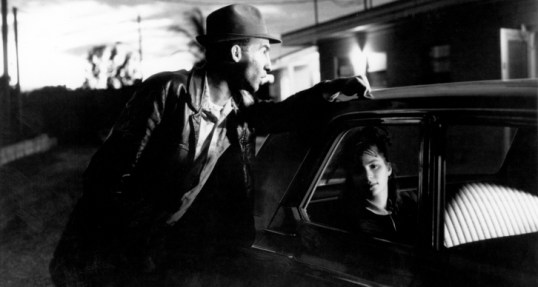
Down by Law (1986, dir by Jim Jarmusch, DP: Robby Muller)
Dead Man (1995, dir by Jim Jarmusch, DP: Robby Muller)
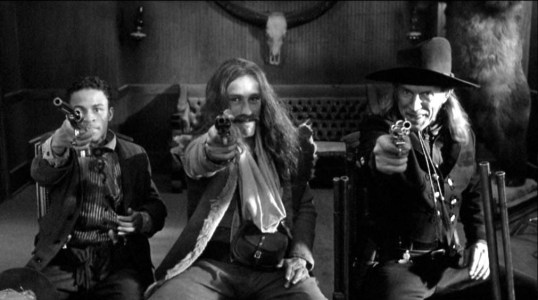
The Dead Don’t Die (2019, dir by Jim Jarmusch, DP: Frederick Elmes)
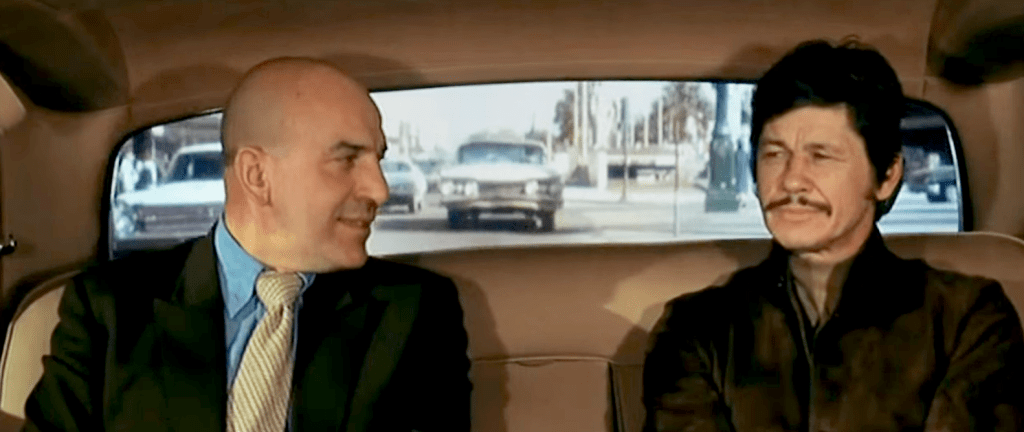
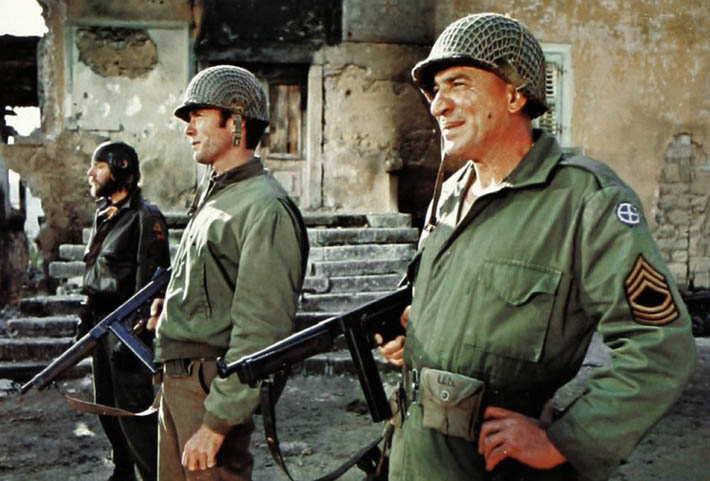
Telly Savalas was born on January 21, 1922 and he died on January 22, 1994. When I think of Savalas, I first think of his most famous character, KOJAK (1973-1978).
After that I think of his work with my movie hero, Charles Bronson. They worked together on THE DIRTY DOZEN (1967) and VIOLENT CITY (1970). They were also in the BATTLE OF THE BULGE (1965), but they didn’t share any scenes together. I’ll always remember Savalas in the movie KELLY’S HEROES (1970). This was one of my son’s favorite movies when he was growing up. He watched it constantly.
Based on this work, Telly Savalas will always be one of my favorite actors! Happy birthday, sir, and thanks for countless hours of entertainment in my life!
In the 1999 Best Picture Nominee, The Insider, the American media takes a beating.
Al Pacino plays Lowell Bergman. Bergman is a veteran newsman who, for several years, has been employed as a producer at 60 Minutes. He is a strong believer in the importance of the free press and he’s proud to be associated with both 60 Minutes and CBS News. He’s one of the few people who can manage the famously prickly correspondent, Mike Wallace (Christopher Plummer). When we first see Bergman, he and Wallace are in the Middle East and arranging a tense interview with the head of Hezbollah. It’s easy to see that Bergman is someone who will go anywhere and take any risk to get a story. It’s also apparent that Bergman thinks that the people that he works with feel the same way.
That all changes when Bergman meets Jeffery Wigand (Russell Crowe), a recently fired tobacco company executive who initially agrees to serve as a consultant for one of Bergman’s story but who leaves Bergman intrigued when he reveals that, due to a strict confidentiality agreement, he’s not allowed to discuss anything about his time as an executive. As the tobacco companies are currently being sued by ambitious state attorney generals like Mississippi’s Mike Moore (who plays himself in the film), Bergman suspects that Wigand knows something that the companies don’t want revealed.
And, of course, Bergman is right. Wigand was fired for specifically objecting to his company’s effort to make cigarettes more addictive, something that the tobacco industry had long claimed it wasn’t doing. Wigand’s pride was hurt when he was fired but he knows that breaking the confidentiality agreement will mean losing his severance package and also possibly losing his marriage to Liane (Diane Venora) as well. However, Wigand is angered by the heavy-handed techniques that his former employer uses to try to intimidate him. He suspects that he’s being followed and he can’t even work out his frustrations by hitting a few golf balls without someone watching him. When Wigand starts to get threats and even receives a bullet in the mail, he decides to both testify in court and give an interview to Wallace and 60 Minutes.
The only problem is that CBS, after being pressured by their lawyers and facing the risk of taking a financial loss in an upcoming sell, decides not to run the interview. Bergman is outraged and assumes that both Mike Wallace and veteran 60 Minutes producer Don Hewitt (Philip Baker Hall) will support him. Instead, both Wallace and Hewitt side with CBS. Left out in the cold is Jeffrey Wigand, who has sacrificed almost everything and now finds himself being attacked as merely a disgruntled employee.
Directed by Michael Mann and based on a true story, The Insider is what is usually described as being “a movie for adults.” Instead of dealing with car chases and super villains and huge action set pieces, The Insider is a film about ethics and what happens when a major media outlet like CBS News fails to live up to those ethics. (No one is surprised when the tobacco company tries to intimidate and silence Wigand but the film makes clear that people — or at least people in the 90s — expected and hoped for more from the American press.) Wigand puts his trust in Bergman and 60 Minutes largely because he believed Bergman’s promise that he would be allowed to tell his story. It’s a promise that Bergman made in good faith but, in the end, everyone from the CBS executives to the tobacco companies is more interested in protecting their own financial future than actually telling the truth. Wigand loses his family and his comfortable lifestyle and Bergman loses his faith in the network of Edward R. Murrow. It’s not a particularly happy film but it is a well-made and thought-provoking one.
Pacino and Crowe both give excellent performances in the two lead roles. Pacino, because he spends most of the film outraged, has the flashier role while Crowe plays Wigand as a rather mild-mannered man who suddenly finds himself in the middle of a national news story. (Crowe’s performance here is one of his best, precisely because it really is the opposite of what most people expect from him.) Crowe does not play Wigand as being a crusader but instead, as an ordinary guy who at times resents being put in the position of a whistleblower. (Director Mann does not shy away from showing how Bergman manipulates, the reluctant Wigand into finally testifying, even if Bergman’s motives were ultimately not malicious.) That said, the strongest performance comes from Christopher Plummer, who at first seems to be playing Mike Wallace as being the epitome of the pompous television newsman but who eventually reveals the truth underneath Wallace’s sometimes fearsome exterior.
The Insider was nominated for Best Picture. Somehow, it lost to American Beauty.
I watched the classic Terence Hill film Super Fuzz last night. As anyone who has seen the movie can tell you, the movie features a theme song that just won’t quit. It’s been stuck in my head since last night. And now, it can be stuck in yours!
There’s a man, do you see? And he looks just like you and me Didn’t he know? Everything he got don’t show
There’s a cop, do you see? And he looks like every cop on the street You will discover You can’t judge this cop by his cover
He’s a super snooper Really super trooper A wonder cop, a one like you never saw
He’s a super snooper Really super trooper A wonder cop, who roll the side of the law
There’s a stir on the floor Super snooper open the door Didn’t he know? Everything he got don’t show
He’s a super snooper Really super trooper A wonder cop, a one like you never saw He’s a super snooper Really super trooper
He’s a super snooper Really super trooper A wonder cop, a one like you never saw He’s a super snooper Really super trooper
He’s a super snooper Really super trooper A wonder cop, a one like you never saw
He’s a super snooper Really super trooper A wonder cop who roll the side of the law
Songwriters: Angelo La Bionda / Carmelo La Bionda / Timothy Touchton
Today, we wish a happy birthday to actress Geena Davis. Today’s scene that I love comes from 1996’s The Long Kiss Goodnight and features Geena Davis as a badass action movie star!
4 (or more) Shots From 4 (or more) Films is just what it says it is, 4 (or more) shots from 4 (or more) of our favorite films. As opposed to the reviews and recaps that we usually post, 4 (or more) Shots From 4 (or more) Films lets the visuals do the talking.
96 years ago today, Radley Metzger was born in New York, New York. After serving as a photographer in the U.S. Air Force, Metzger went into film distribution. He brought European “art” films to the United States and booked them in various grindhouse theaters. Like so many film distributors and producers, Metzger eventually realized that he could make a lot more many by making his own films. In the late 60s and the early 70s, Metzger was one of the pioneers of the adult film industry. He directed adult films that were distinguished by their strong sense of composition, intelligent storylines, and their sense of characterization.
Unfortunately, Metzger’s films were a bit too arty for the adult crowd and too explicit for the mainstream critics. Still, over the years, Metzger’s work has been rediscovered and appreciated by open-minded film lovers and by people like me who just happen to like artistically-minded decadence.
Today, we honor Radley Metzger with….
4 Shots From 4 Radley Metzger Films
Camille 2000 (1969, dir by Radley Metzger, DP: Ennio Guarnieri)
The Lickerish Quartet (1970, dir by Radley Metzger. DP: Hans Jura)
Score (1974, dir by Radley Metzger, DP: Frano Vodopivec)
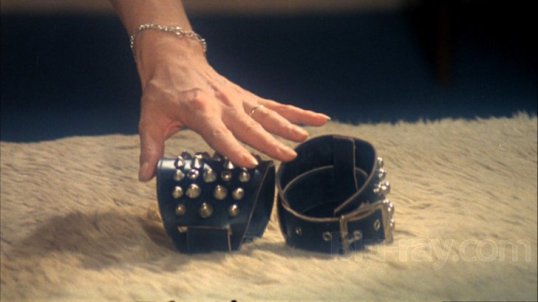
Barbara Broadcast (1977, dir. Radley Metzger, DP: Chico Carter)
In Reagan, Dennis Quaid stars at the 40th President of the United States.
Framed as a story being told by a former KGB agent (Jon Voight) who is attempting to make a younger politician understand why Russia lost the Cold War, Reagan starts with Reagan’s childhood, includes his time as an actor and as the anti-communist head of the SAG, and then gets into his political career. Along the way, several familiar faces pop up. Robert Davi plays a thuggish Russian leader. Mena Suvari plays Reagan’s first wife while Penelope Ann Miller plays his second. Xander Berekely plays George Schultz (who was just previously played by Sam Waterston in The Dropout miniseries.) C. Thomas Howell, Kevin Dillon, Dan Lauria, and Lesley-Anne Down all have small but important roles. And the usual suspects when it comes to conservative filmmaking — Nick Searcy, Kevin Sorbo, and Pat Boone — are there to compliment Voight and Davi. I was a little surprised to see that Dean Cain was not present.
As usually happens to films that feature sympathetic Republicans, Reagan was slammed by critic but better-appreciated by the audience for which the film was made. I wasn’t particularly surprised. Movie critics tend to be liberal and Reagan is very much not that. For a professional film critic, a film like Reagan must be met with snark and derision because otherwise, one would risk cancellation. Don’t get me wrong. I’m not saying that there aren’t things to criticize about Reagan the film. I’m just saying that one should always keep in mind that critics have their own individual biases. One reason why the Rotten Tomatoes score is such an unfortunate development is because it ignores the fact that most films have things that work and things that don’t work and that quality is often in the eye of the beholder. Instead, it just tells us that a film is either a 90% or a 10%.
As for Reagan, it’s definitely a bit on the heavy-handed side but, then again, I think the same can be said for just about every political film that’s come out over the last few decades. For those who claim Reagan is somehow more heavy-handed than most, I invite them to sit through Rob Reiner’s LBJ. Indeed, the only director who has really shown a willingness to admit that a President can be both good and bad was Oliver Stone and when was the last time anyone watched Nixon? Reagan is at its weakness when it tries to recreate Reagan’s time as an actor. Dennis Quaid gives a good and charming performance throughout the film but he’s also 70 years old and, in the scenes where he plays the youngish Ronald Reagan, all of the soft-lighting and Vaseline on the lens ends up making him look like a wax figure. Once Reagan gets older, Quaid is allowed to act his age and both he and the film become much more convincing. I enjoyed the film once Reagan became President, though you should understand that I have biases of my own. I’m a fan of low taxes and individual freedom, which is why I’m also not a fan of communism or, for that matter, any extreme ideology that attempts to tell people how to live or think. “Tear down this wall!” Regan says while standing in front of the Berlin Wall and it’s a rousing moment, both in reality and on film.
In the end, Reagan is a film that will be best appreciated by people who already like Ronald Reagan. Yes, the film is heavy-handed and the framing device is a bit awkward. But Dennis Quaid’s heartfelt (and, towards the end, heartbreaking) performance carries the film. The film is not at all subtle but you know what? I’ve seen a countless number of mediocre films that have portrayed Reagan negatively, often with as little nuance and just as heavy-handed an approach as Reagan uses in its positive portrayal of the man. I sat through The Butler, for God’s sake. There’s nothing wrong with having a film that looks at the man from the other side. Those who like Ronald Reagan will feel vindicated. Those who don’t will say, “What was up with that Pat Boone scene?”





 Through the Shattered Lens