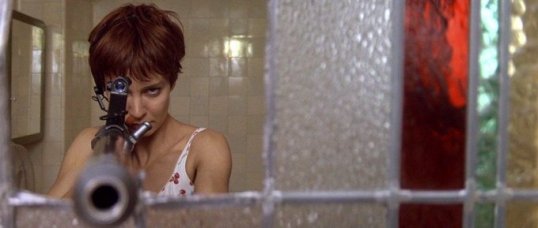
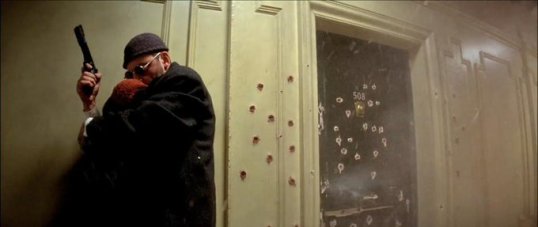
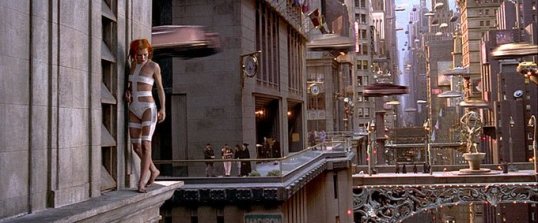
4 Shots From 4 Films: Special Francois Truffaut Edition


4 Shots From 4 Films is just what it says it is, 4 shots from 4 of our favorite films. As opposed to the reviews and recaps that we usually post, 4 Shots From 4 Films lets the visuals do the talking!

Today, on what would have been his 94th birthday, TSL pays tribute to the great Francois Truffaut.  No one captured the act of falling in love in life, people, and cinema with the skill, sensitivity, and humor of Francois Truffaut.  It’s time for….

4 Shots From 4 Francois Truffaut Films

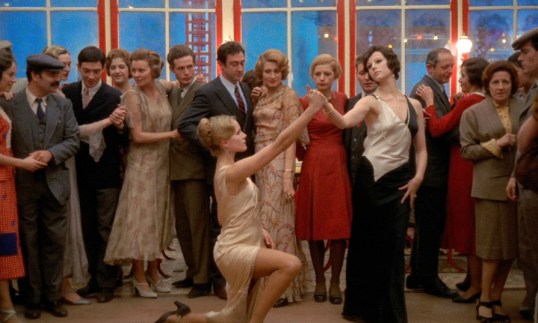
Shoot the Piano Player (1960, dir by Francois Truffaut, DP: Raoul Coutard)

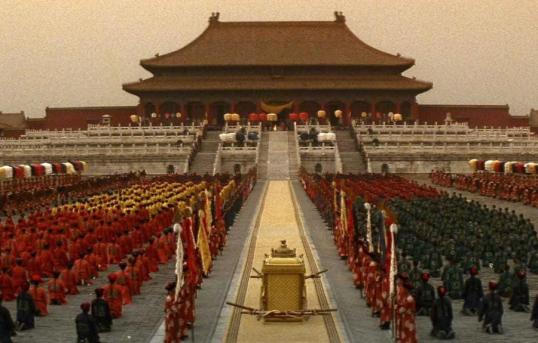
Fahrenheit 451 (1966, dir by François Truffaut, DP: Nicolas Roeg)

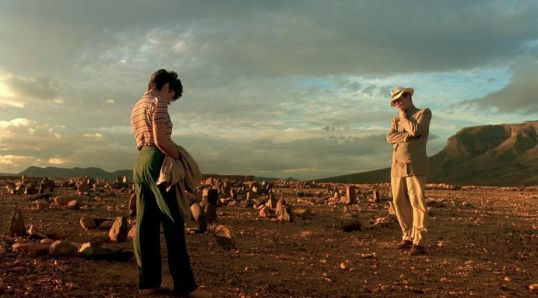
Day For Night (1973, dir by François Truffaut, DP: Pierre-William Glenn)

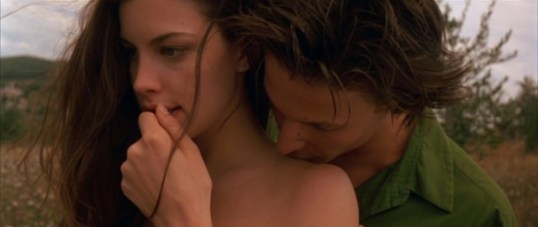
The Story of Adele H. (1975, dir by Francois Truffaut, DP: Nestor Almendros)

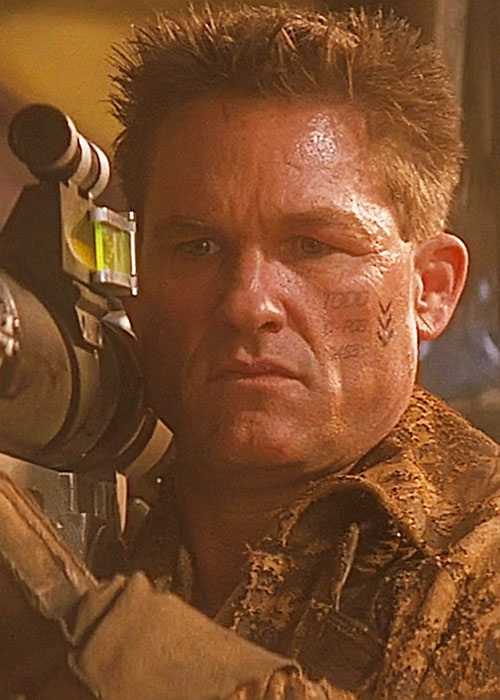
Live Tweet Alert: Join #FridayNightFlix for Cherry 2000!


As some of our regular readers undoubtedly know, I am involved in a few weekly watch parties.  On Twitter, I host #FridayNightFlix every Friday and I co-host #ScarySocial on Saturday.  On Mastodon, I am one of the five hosts of #MondayActionMovie!  Every week, we get together.  We watch a movie.  We tweet our way through it.

Tonight, at 10 pm et, I will be hosting #FridayNightFlix!  The movie?  1988’s Cherry 2000

If you want to join us this Friday, just hop onto twitter, find Cherry 2000 on Prime, start the movie at 10 pm et, and use the #FridayNightFlix hashtag!  I’ll be there happily tweeting.  It’s a friendly group and welcoming of newcomers so don’t be shy.

See you there!

Scenes That I Love: Ronald Reagan in Kings Row


Today’s scene that I love features future President Ronald Reagan, giving what he considered to be his best performance in 1942’s Kings Row.  He liked one of the lines in this scene so much that he used it as the title for autobiography.

On what would have been Ronald Reagan’s 115th birthday, here is today’s scene that I love.  38 years after this scene, Reagan would be elected to his first term, saving the country from the twin scourge of the incompetent Jimmy Carter and the pompous John Anderson.  Ronald Reagan would go on to save the world from communism, at least temporarily.  Not bad for a self-described “B-actor!”


Film Review: Rush (dir by Lili Fini Zanuck)


Because today is the birthday of the great actress Jennifer Jason Leigh, I decided to rewatch the 1991 film, Rush.

Loosely based on a true story, Rush takes place on the outskirts of Houston, Texas in the 70s.  Jack Raynor (Jason Patric) is a veteran undercover narcotics officer who is determined to take down a local drug lord named Gaines (Gregg Allman).  Raynor takes his new partner, Kristen Cates (Jennifer Jason Leigh), under his wing and trains her on how to work undercover.  He tests her joint-rolling abilities.  He has her fire a gun at cans out by the quarry.  He teaches her how to shoot-up drugs.  As he explains it, if she is going to get the local drug dealers to trust her, she is going to have to shoot up drugs in front of them.  Raynor and Cates work well together, quickly becoming lovers in real life as well as undercover life.  They manage to force one dealer, a likable but unlucky clod named Walker (Max Perlich), to turn informant.  However, their efforts to get to Gaines are threatened by their own growing addictions and Raynor’s erratic behavior.  Chief Nettle (Tony Frank) and Captain Dodd (Sam Elliott) want results but will the results be worth the cost?

(Are they ever?)

I’ve watched Rush a few times.  I have to admit that I always remember it as being better than it actually is.  Rush was the only feature film to be directed by producer Lili Fini Zanuck and it definitely has its problems.  The pace, especially during the film’s second half, is often too slow.  Visually, there a few good location shots but the film often feels rather static.  As Jack Raynor, Jason Patric gives a performance that is all method intensity with little actual depth.  Patric looks good with his long hair, his beard, and his intense eyes but there’s not much depth overall to Jack Raynor.

And yet, when the film works, it really does work.  Whatever other flaws might be present in her direction, Zanuck does capture the anything-goes, slightly ominous atmosphere that one often finds in the small towns on the carcinogenic coast.  While there’s nothing about his performance here that suggests he was a particularly talented actor, Gregg Allman is still very convincing as the menacing Gaines.  (One sign of Gaines’s power is that he never speaks unless absolutely necessary.)  Character actor Max Perlich gives a strong and poignant performance as Walker, a well-meaning goof who finds himself being manipulated by both sides in the war on drugs.  Though the soundtrack is probably best-known for its use of Eric Clapton’s Tears In Heaven, the rest of it is full of classic Southern rock.  Some of the choices are a bit obvious.  Free Bird coming on the radio just as Raynor explains that he does things his way?  That’s a lucky coincidence!  It works, though.  It’s a cool song.

Ultimately, what truly makes the film work is the performance of Jennifer Jason Leigh, who always manages to find the truth of her character even when the film sometimes seems to be determined to let her down.  While Patric gets to have the showy breakdowns, Leigh shows the audience what it’s like for someone to be trapped by not only her job but also her relationship.  The scenes between her and Walker are the strongest in the film because even though Walker is a criminal and Cates is a cop, they’re both stuck in a situation that they didn’t create.  Gaines wants the money and the power that comes from being a drug lord.  Chief Nettle wants the publicity and acclaim that comes from busting a major dealer.  If they have to sacrifice Walker and Cates to get what they want, that’s what they’re going to do.  Walker, Cates, and Raynor ultimately become pawns in a game where the victor ultimately wins very little.  If Gaines escapes justice, someone else will just come after him.  If Gaines goes down, someone else will inevitably replace him.

Rush is not a perfect film but it is a film that shows just how great a talent Jennifer Jason Leigh was and is.

Catching Up With The Films Of 2025: Ella McCay (dir by James L. Brooks)


The Winter Olympics have begun and, waking up this morning, I did what any American celebrating the 250th birthday of her country would do.  I watched curling.  I watched as Team USA defeated Team Switzerland.  I enjoyed not only watching America notch up a victory but I also enjoyed the contrast between the super-intense, super-shriekey Swiss team and the relatively mellow American team.  Watching the Americans laugh and joke while the Swiss couple yelled at each other left me feeling very patriotic and hopeful.

In fact, it left me in such a good mood that I decided it was finally time to watch Ella McCay.

It’s easy to forget now what a big deal it was when the trailer for Ella McCay was first released in August of 2025.  It was the trailer for James L. Brooks’s first film in 15 years, a political comedy for adults.  It was full of familiar faces and it looked absolutely awful.  Seriously, the trailer was so unappealing that I became rather fascinated by it.  Even the worst films can usually scrounge together enough good material to at least come up with a passable trailer.  Watching the trailer for Ella McCay, I could only wonder who was responsible for putting it together.  Who thought it was a good idea to lead off with that lengthy Woody Harrelson scene?  Who thought the wedding scene didn’t look weird?  Who didn’t take the time to do something about Spike Fearn’s hair?

There were some who said that Ella McCay shouldn’t be judged based solely on its trailer.  They pointed out that director James L. Brooks directed three films that were nominated for Best Picture, two of which were actually good.  They pointed out that Ella, her brother, and her husband were all played by British actors who had appeared on niche television shows.  Soon, there was a mini-civil war being fought on twitter between those who dismissed Ella McCay based on the trailer and those who promised that they would love the film once it was released.

Then, on December 12, the film was released, the reviews were uniformly terrible, and it tanked at the box office.  It took the film a little less than two months to go from the theater to streaming online.

Having now watched Ella McCay, I can say that …. well, yeah, it’s pretty bad.

It’s not necessarily bad for the reasons that I thought it would be.  Watching the trailer, I thought the film’s downfall would be the performances of Woody Harrelson and Jamie Lee Curtis.  Both of them looked to be acting up a storm.  Having now seen the film, I can say that both of them actually do probably about as good a job as could be expected to do with the material that they were given.  Neither one is particularly memorable but they’re not terrible either.  For that matter, Albert Brooks is amusing as Ella’s boss and mentor, Governor Bill.

Instead, the main problem with the film is that Ella McCay is not a particularly interesting or even likable character, not matter how much the film’s narrator insists otherwise.  A policy wonk from a broken home who, at the age of 34, has become lieutenant governor of some nameless state up north, Ella is boring, humorless, and ultimately more than a little annoying.  She’s the girl in elementary school who always told on the kids who talked while the teacher was out of the room.  She’s your high school classmate who got all judgey if you wore a short skirt.  She’s your self-absorbed college roommate who always had to remind you that, no matter what you were going through, her father was a philanderer and her mom was dead.  She’s the colleague who voluntarily does all the work on your group project without being asked and then complains that no one helped her.  She’s the person who insists that she can change the world but who is still so emotionally stunted and immature that, at 34, she needs her aunt to teach her primal scream therapy.  Emma Mackey gives a disjointed performance as Ella, speaking with bland intensity whenever Ella is being serious and then overacting whenever Ella has to be flustered.

As bad as Mackey was, though, she was nowhere near as bad Spike Fearn, who plays Ella’s agoraphobic younger brother, Casey.  For some reason, Casey gets a huge subplot that doesn’t really seem to go anywhere.  We’re told that Casey hasn’t left his apartment in over a year and we repeatedly see that Casey struggles to communicate with people.  The film treats most of this as being a joke and Spike Fearn gives such a twitchy performance that Casey comes across as being far more creepy than he probably should.  We’re meant to cheer when Casey reconnects with his ex but I wasn’t silently yelling at her to run as far aways as possible.  We spend so much time with Casey that it’s hard not to wonder if maybe the filmmakers themselves realized that Ella wasn’t very interesting but Casey is hardly an appealing alternative.

There’s a lot about Ella McCay that doesn’t work.  Just the fact that the film features what appears to be hastily written narration from Ella’s secretary (Julie Kavner) would seem to reveal that someone understood that the film’s mix of tones and incidents really didn’t gel.  (Having Kavner actually say, “Hi, I’m the narrator,” is a touch that is more than a bit too cutesy.)  Ella’s husband (Jack Lowden) is such an obvious and odious villain that it was hard not to feel that Ella had to have been an idiot to marry him in the first place.  There’s a weird plotline involving Ella’s state troopers trying to get overtime.  Ella gets involved in one of the most jejune scandals of all time and the film ends with on a note that leaves you wondering how the 80-something Brooks can be so naive about politics.

But really, the main problem with the film is that it never convinces me that I should want Ella McCay to be governor.  To quote Karen Black in Nashville, she can’t even comb her hair.


Scenes I Love: John Carradine in Fallen Angel


Today, we celebrate the 120th birthday of actor John Carradine.

John Carradine appeared in over 300 movies over the course of a career that spanned nearly a century.  Born in 1906, Carradine made his film debut in 1930 and worked steadily until his death in 1988.  He was so prolific that films featuring him were still being released for years after his passing.  Though he’ll probably always be most-associated with the low-budget horror and thriller films that he appeared in, Carradine was also a favorite of directors like Cecil B. DeMille and John Ford.  He played key roles in such Ford films as Stagecoach, The Grapes of Wrath and The Man Who Shot Liberty Valance.  Carradine, however, often said that his true loves were Shakespeare and the theater and that the films were just something he did so he could afford to work on stage.

In this scene from 1945’s Fallen Angel, John Carradine plays a traveling fortune teller named Prof. Madley.

4 Shots From 4 Films: Special Michael Mann Edition


4 Shots From 4 Films is just what it says it is, 4 shots from 4 of our favorite films. As opposed to the reviews and recaps that we usually post, 4 Shots From 4 Films lets the visuals do the talking!

Today, we celebrate the 83rd birthday of the great Michael Mann!  It’s time for….

4 Shots From 4 Michael Mann Films

Thief (1981, dir by Michael Mann, DP: Donald Thorin)

Manhunter (1986, dir by Michael Mann, DP: Dante Spinotii)

Heat (1995, dir by Michael Mann, DP: Dante Spinotti)

Public Enemies (2009, dir by Michael Mann, DP: Dante Spinotti)

Scenes I Love: The End of The Original Dawn of the Dead


The original Dawn of the Dead, which was released in 1978 and directed by George Romero, is not only one of the most influential horror films of all time.  (Even more so than Night of the Living Dead, Dawn was responsible for inspiring the Italian zombie boom.)  It’s also a rather dark satire of humanity and commercialism.  With the world ending, both humans and zombies head to the mall.  Briefly, the humans manage to form their own peaceful society but, inevitably, they end up screwing it all up.  The Dead may be slow and not particularly intelligent but, as poor old Steve discovered in that elevator, they’re absolutely determined to get what they want.

Dawn of the Dead ends with an apocalytpic combination of bikers, zombies, and one helicopter that has next to no fuel.  Our two remaining survivors head off in search of some place safe but we all know that helicopter isn’t going to stay in the sky for long.  In its way, the ending of Dawn of the Dead is even more bleak than the end of Night of the Living Dead.   With the end of this film, Romero’s message is clear.  Society is as dead as the creatures tearing it down.

4 Shots From 4 Films: Special George Romero Edition


4 Shots From 4 Films is just what it says it is, 4 shots from 4 of our favorite films. As opposed to the reviews and recaps that we usually post, 4 Shots From 4 Films lets the visuals do the talking!

Today would have been George Romero’s 86th birthday.

Now, those of you who have been reading us since the beginning know how important the work of George Romero has been to this site.  A mutual appreciation of Night of the Living Dead is one of the things that first brought many of us together.  It’s a film that we watch ever Halloween and Arleigh’s review of the original remains one of our most popular posts.  If this site had a patron saint, it would probably be George Romero.

And yet, Romero wasn’t just a director of zombie films.  He made many films, dealing with everything from hippie lovers (There’s Always Vanilla) to wannabe vampires (Martin) to government conspiracies (The Crazies) and eccentric bikers (Knightriders).  George Romero was one of the pioneers of independent films and today, on his birthday, we should all take a minute to consider and appreciate the man’s cinematic legacy.  It’s not just horror fans who owe George Romero a debt of gratitude.  It’s lovers of cinema everywhere.

With that in mind, here are….

4 Shots From 4 George Romero Films

Night of the Living Dead (1968, dir by George Romero, DP: George Romero)

The Crazies (1973, dir by George Romero, DP: S. William Hinzman)

Martin (1978, dir by George Romero, DP: Michael Gornick)

Dawn of the Dead (1978, dir by George Romero, DP: Michael Gornick)

Scenes That I Love: The Harvard Graduation Dance From Heaven’s Gate


How many westerns do you know that open with a graduation ceremony at Harvard?  I can only think of Michael Cimino’s Heaven’s Gate.

Today’s scene that I love comes from the controversial 1981 epic western.  Some people feel that Heaven’s Gate is a secret masterpiece.  I’m not quite one of those people but I do think the Harvard graduation scene was a great way to launch Cimino’s idiosyncratic vision of the Old West.